Home Blog Page 618

Harnessing Gen AI for Sustainable IT Transformation

0

As organizations strive to balance productivity, innovation and environmental responsibility, the need for sustainable IT practices is even more pressing. A new global study from the IBM Institute for Business Value reveals that emerging technologies, particularly generative AI, can play a pivotal role in advancing sustainable IT initiatives. However, successful transformation of IT systems demands a strategic and enterprise-wide approach to sustainability.

The power of generative AI in sustainable IT

Generative AI is creating new opportunities to transform IT operations and make them more sustainable. Teams can use this technology to quickly translate code into more energy-efficient languages, develop more sustainable algorithms and software, and analyze code performance to optimize energy consumption. 27% of organizations surveyed are already applying generative AI in their sustainable IT initiatives, and 63% of respondents plan to follow suit by the end of 2024. By 2027, 89% are expecting to be using generative AI in their efforts to reduce the environmental impact of IT.

Addressing the broader implications

Despite the growing interest in using generative AI for sustainability initiatives, leaders must first consider its broader implications, particularly energy consumption. 64% say they are using generative AI and large language models, yet only one-third of those report having made significant progress in addressing its environmental impact. To bridge this gap, executives must take a thoughtful and intentional approach to generative AI, asking questions like, “What do we need to achieve?” and “What is the smallest model that we can use to get there?”

A holistic approach to sustainability

To have a lasting impact, sustainability must be woven into the very fabric of an organization, breaking free from traditional silos and incorporating it into every aspect of operations. Leading organizations are already embracing this approach, integrating sustainable practices across their entire operations, from data centers to supply chains, to networks and products. This enables operational efficiency by optimizing resource allocation and utilization, maximizing output, and minimizing waste.

Benefits of a holistic approach

The results are telling: 98% of surveyed organizations that take a holistic, enterprise-wide approach to sustainable IT report seeing benefits in operational efficiency—compared to 50% that do not. The leading organizations also attribute greater reductions in energy usage and costs to their efforts. Moreover, they report impressive environmental benefits, with two times greater reduction in their IT carbon footprint.

Hybrid cloud and automation: key enablers of sustainable IT

Many organizations are turning to hybrid cloud and automation technologies to help reduce their environmental footprint and improve business performance. By providing visibility into data, workloads, and applications across multiple clouds and systems, a hybrid cloud platform enables leaders to make data-driven decisions. This allows them to determine where to run their workloads, thereby reducing energy consumption and minimizing their environmental impact.

Automation and sustainability

Automation is also playing a key role in this shift. With 83% of leading organizations harnessing its power to dynamically adjust IT environments based on demand.

Sustainable IT strategies for a better tomorrow

The future of innovation is inextricably linked to a deep commitment to sustainability. As business leaders harness the power of technology to drive impact, responsible decision-making is crucial, particularly in the face of emerging technologies such as generative AI.

Actions to consider

  1. Actively manage the energy consumption associated with AI: Optimize the value of generative AI while minimizing its environmental footprint by actively managing energy consumption from development to deployment. For example, choose AI models that are designed for speed and energy efficiency to process information more effectively while reducing the computational power required.
  2. Identify your environmental impact drivers: Understand how different elements of your IT estate influence environmental impacts and how this can change as you scale new IT efforts.
  3. Embrace sustainable-by-design principles: Embed sustainability assessments into the design and planning stages of every IT project, by using a hybrid cloud platform to centralize control and gain better visibility across your entire IT estate.

Conclusion

As the world continues to evolve, it is essential for organizations to prioritize sustainability and responsible decision-making. By adopting a holistic approach to sustainability, leveraging generative AI, and embracing hybrid cloud and automation technologies, businesses can drive innovation while minimizing their environmental footprint.

FAQs

Q: What is the role of generative AI in sustainable IT?
A: Generative AI can be used to transform IT operations and make them more sustainable, such as translating code into more energy-efficient languages and developing more sustainable algorithms and software.

Q: Why is a holistic approach to sustainability important?
A: A holistic approach to sustainability enables operational efficiency by optimizing resource allocation and utilization, maximizing output, and minimizing waste.

Q: How can organizations reduce their environmental footprint?
A: Organizations can reduce their environmental footprint by adopting sustainable-by-design principles, actively managing energy consumption associated with AI, and identifying their environmental impact drivers.

Q: What is the future of sustainable IT?
A: The future of sustainable IT is inextricably linked to a deep commitment to sustainability, responsible decision-making, and the adoption of emerging technologies such as generative AI.

AI-Generated Video Game Is Insanely Weird and Fun

0

Minecraft’s Quirky Gameplay and Open World Building Possibilities Remain Unmatched

Minecraft remains remarkably popular a decade or so after it was first released, thanks to a unique mix of quirky gameplay and open world building possibilities.

A New Twist: Oasis, the AI-Powered Minecraft Knock-Off

A knock-off called Oasis, released last month, captures much of the original game’s flavor with a remarkable and weird twist. The entire game is generated not by a game engine and hand-coded rules, but by an AI model that dreams up each frame.

Oasis: A Game Built on Transformer AI

Oasis was built by an Israeli AI startup called Decart in collaboration with Etched, a company that designs custom silicon, to demonstrate the potential of hardware optimized to power transformer-based AI algorithms.

Oasis uses a transformer AI model, similar to the one that powers a large language model—only trained, apparently, on endless examples of people playing Minecraft, to dream up each new video frame in response to the previous one and to user input like clicks or mouse moves. Oasis is similar to a video-generating model like Sora except a user can control its output.

Exploring Oasis

You can play Oasis online for free, and it is both fascinating and surreal to explore. Besides harboring bizarre artifacts, like misshapen livestock and stairs that go nowhere, the game has an amazing, Inception-like quality. Because each frame is generated based on what the AI model imagines should come after the frame it currently sees, the in-game world is never entirely stable, and will gladly shift and morph with a little nudging. If you stare too closely at a texture, for example, when you look up again, the block world in front of you may be completely different from the one you last saw.

Customization and Viral Fame

It’s also possible to upload your own image for Oasis to work with. I tried adding a photo of my cat, Leona, and the game turned her into a beautiful blockish landscape (sadly not a feline character in the game, but hey …).

Oasis has become a viral hit with people exploring ways to get its AI engine to hallucinate new environments. Sometimes, it can even be tricked into teleporting you to a dark moonscape resembling The End of Minecraft. It’s telling that this generative AI project is not entirely original, but rather seems to be a bizarro knock-off of the world’s most popular game (it was trained on an open source Minecraft dataset from OpenAI).

Industry Insights

“People are trying to teleport into different worlds and speed run,” says Robert Wachen, chief operating officer at Etched. “It’s one of the main reasons it went viral.”

The AI approach taken with Oasis is too inconsistent and uncontrollable to be useful for a conventional game, says Julian Togelius, a computer science professor at New York University. Generative AI has future potential for controlling in-game characters and perhaps generating scenes or worlds, he says, but it is still early. “It is very interesting and impressive technology, but at the moment it is an answer in search of a question,” Togelius says.

Frank Lantz, a game designer and director of the department for game design at New York University, says that Oasis seems to be caught in a kind of uncanny valley that prevents it from being genuinely fun to play. But he suggests that an enterprising young game designer might well figure out a way to turn that game into one people love. “This is so obviously cool and interesting,” he says.

Conclusion

Oasis is an intriguing experiment in generative AI and its potential applications in gaming. While it may not be a fully functional game, it has captured the imagination of many and sparked interesting discussions about the future of AI-powered gaming.

FAQs

Q: What is Oasis?

Oasis is a Minecraft-like game built using a transformer AI model that generates each frame of the game based on user input and the previous frame.

Q: How do I play Oasis?

You can play Oasis online for free by visiting the official website and interacting with the game using your mouse and keyboard.

Q: Can I customize Oasis?

Yes, you can upload your own images to Oasis and see how the AI model interprets them and incorporates them into the game.

Q: Is Oasis a game that can be played seriously?

Oasis is more of a curiosity than a fully functional game. While it can be fun to explore and experiment with, it lacks the depth and polish of a traditional game.

Whispers of the Digital Realm

0

Introduction
Join my Facebook Group: https://www.facebook.com/groups/theairevolution

What is the Airevolution?

The Airevolution is a movement that aims to spread awareness and promote sustainable practices to reduce our carbon footprint on the environment. By making small changes in our daily lives, we can significantly impact the health of our planet.

Our Goals

Our primary goal is to educate and encourage individuals to adopt eco-friendly habits. We believe that small actions can lead to big changes, and that collective efforts can create a significant impact.

Community Involvement

At the Airevolution, we believe that community is key. We have created a Facebook group and a Discord server where like-minded individuals can come together, share ideas, and learn from each other.

What You Can Expect

Join our community and be a part of the Airevolution! You can expect:

  • Access to eco-friendly tips and resources
  • Opportunities to participate in group discussions and debates
  • A platform to share your own eco-friendly stories and experiences
  • Collaboration with like-minded individuals

Benefits of Joining

By joining the Airevolution, you will:

  • Gain a greater understanding of sustainable living
  • Develop new skills and habits
  • Be part of a supportive and engaged community
  • Inspire others to make positive changes

Conclusion
The Airevolution is not just a movement; it’s a community that strives to make a difference. Join us today and become a part of this powerful movement.

FAQs

Q: What does the Airevolution mean?
A: The Airevolution is a movement that aims to revolutionize the way we think about sustainability and the environment.

Q: What can I expect from the group?
A: You can expect access to eco-friendly tips and resources, group discussions, and opportunities to collaborate with like-minded individuals.

Q: Is this just for environmentalists?
A: No, anyone is welcome to join regardless of their background or experience with sustainability.

Q: What are the benefits of joining?
A: By joining the Airevolution, you will gain a greater understanding of sustainable living, develop new skills and habits, and be part of a supportive and engaged community.

Q: Can I share my own stories and experiences?
A: Yes, we encourage sharing and collaboration within the community!

Ways Automation Changed the Way People Invest – Robotics & Automation News

0

There are two ways to make money. You can exchange your time and expertise for a salary. Alternatively, you can buy an asset or create a system that will make you money even while you’re away.

Having a job that pays you a fixed salary is great. But creating passive income is where you want to invest more energy. In this guide, we’ll show you how to leverage automation to make passive income conveniently. Let’s dive right in.

Blogging – Automated Content and Monetization

Blogging is an excellent way to automate your passive income. All you need is a website created through a free platform like WordPress and content that will attract people to your blog.

You can create the content, outsource the work to freelancers, or use an AI content creation tool. Regardless, the goal is to publish high-quality, informative content.

Use keyword research tools to optimize your content for high-volume keywords. Crucially, focus on evergreen content that can make you money in the long term. Then monetize your blog through paid ads or affiliate links.

If you have great content, your blog will require little maintenance. Yet, you will get paid every month. Neither ads nor affiliate links require a lot of work. Once you automate the process, all you need is to wait for profits to kick in.

Automated Passive Income Apps

Passive income apps come in all shapes and sizes. The best apps are automated so that you don’t really do anything to make money. Take the app Honeygain as an example. It pays you to share your unused Internet bandwidth.

Honeygain works with companies that require loads of Internet bandwidth TO find leads and monitor their marketing efforts every month. The app keeps your data safe. It’s also legit.

Honeygain pays you $10 to $50 per month for your unused Internet bandwidth. It’s not a lot. But you can make this automated side hustle worthwhile by installing other apps.

For example, you can install MobileXpression, Savvy Connect, or Nielsen’s Mobile Panel app. These apps stay on your phone to monitor your Internet traffic – favorites sites, social networks, and games. And they pay you up to $100 per year.

Staking Crypto

Staking involves committing some of your cryptocurrencies to help keep a blockchain such as Ethereum or Solana secure. When you stake coins, the blockchain uses them to verify transactions.

Verifying crypto transactions is important for keeping the system safe. That being said, blockchains also mint new coins every time a block of transactions has been added to the system.

These new coins are awarded to crypto owners. Now, not every blockchain supports crypto staking. For example, Bitcoin uses Proof of Work to mint new cryptocurrencies.

Blockchains that support staking use proof of stake. The best coins for staking include Ethereum, Cardano, Solana, Polkadot, and USDT. These coins pay you 3% to 20% per year as a reward.

Drop Shipping

When you think about it, dropshipping is centered on automation. Customers place an order on your website. The system sends a message to your fulfillment partners. They ship the products to the customer. You get paid.

So, why don’t you already own a drop shipping store? No, it’s not too late to get started with this business. You may need some capital to create a store and market it.

But once you become a popular brand, drop shipping could become an excellent way to make money online. Some people make up to $100,000 per month through drop shipping. So yes, it’s an excellent passive income stream.

Automated Investing in Stocks or Crypto

With auto investing, you give your broker or crypto exchange permission to invest a specific amount of money on certain assets on your behalf. This is great if you’re always forgetting to load up on stocks and altcoins.

The beauty of it is that you can invest just a small amount of money. And as long as you invest in the right assets, you will probably emerge profitable in the long term.

Historically, bitcoin and most stocks have been gaining value. Sometimes crypto prices crash. But over the years, people who held their assets made money.

Is auto investing safe? It depends on how you do it. Choose a secure stocks investment website. Do the same for crypto. Work with an exchange known to work securely.

Trading Bots

Day trading is an exhausting job. You need to learn great trading strategies. And you have to execute them perfectly to make money. Worse, 90% of day traders lose money.

Traders lose money because they involve their emotions in the trading process. Day trading bots have no emotions. If you direct a bot to take profit at a certain percentage, that’s exactly what the bot will do.

Although bots have no emotional biases, they’re not perfect. A trading bot is only as good as its programmer. If you use a bot that follows inefficient strategies, you will lose money.

Another thing is that bots need to be tweaked regularly to suit different marketing conditions. That means you need to be a programmer to have a great trading bot. Otherwise, you need to pay for a profitable bot.

Create and Sell Digital Assets

A digital asset can be a short eBook for kids, an antivirus program, or an online course. You’ll need a lot of work to create an online tool or eBook. But once it’s out there, it’s an asset that could make you money forever.

Ebooks are easy to create. But that means there are plenty of them out there. Focus on topics that haven’t been covered yet. And invest in great writing skills. If you choose to create a course, choose a niche you’re an expert in.

The only way to succeed with a digital asset is if it’s useful to people. Of course, you also need to market it. People won’t buy your course unless they know it exists.

Fortunately, you can outsource marketing and maintenance. This way, you will make money without worrying about whether your product works or not.

Mexican Artist Designs Adobe Photoshop Splash Screen

0

It’s Like a Dream Come True!

Guillermo Flores Pacheco: The First Mexican Artist to Design a Photoshop Splash Screen

"It’s like a dream come true!" declares Mexican artist Guillermo Flores Pacheco when I ask how it felt to be the first artist from his country to be asked to design a Photoshop splash screen.

The Adobe Project

When Adobe invited me to create the artwork for the Photoshop splash screen, they asked me a question that resonated very strongly within me: What does Dreaming look like to you?

I wanted to create something that was really meaningful to me, that when I saw it, it reminded me that it is possible to achieve your dreams. We often believe that magical things can’t happen to us and we often limit ourselves, but dreaming gives us the enormous possibility to go beyond any circumstance and gives us hope.

Using AI in Digital Art

The interesting thing about AI is that it is a tool, that to take full advantage of it, you must know the specific reference and be very specific in what you want to achieve. As I mentioned earlier, when I can’t find a super specific image (such as a particular animal, plant or element) AI is a great tool to get it. My technique is a mix between collage, illustration, editing and digital retouching so I’ve figured out how to balance it so far.

Influences and Style

Definitely the nature and vibrancy of my culture, the cultural manifestations of my country by Mexican artisans are handcrafted with so much attention to detail that definitely have a lot to do with what I do.

Advice for New Artists

Hard work and perseverance will always pay off, this year I celebrated 20 years as a graphic designer and I have learned something, I think it is very important to respect every project no matter what, remember that you are being part of someone else’s dream and deserve all our respect.

Photoshop Tools

I use the Polygonal Lasso tool to select elements, also the Pen tool to isolate the elements very carefully (shapes/paths), I’m old school and I like to do it in a handmade way. I also use the brush tool to create glows and shadows (digital retouching), as well as the "transform tools" to edit the images.

Photoshop Advice

Guillermo shares his five tips for getting started in Photoshop and improving your illustration:

  1. I love art history and learning about it every day, so with Firefly you must document and research to make your prompt as specific as possible, for example I really like the style of botanical illustration that was done in the 19th century, so you need to know what it looks like, who are the most relevant artists, etc.
  2. I’m a fan of the tutorials on Youtube and Instagram, however over the years I have learned to use the software in my own way, so if you have a way to get what you are looking for keep at it, BUT listen, you must also be open to optimize your processes and learn how to make it more efficient.
  3. Learn keyboard shortcuts. Trust me, you will save hours of work.
  4. Customize your work interface, add or remove the tools you use all the time.
  5. ALWAYS SAVE! Do it every five minutes, make it a habit.

Conclusion

Guillermo’s artwork is a testament to the power of creativity and imagination. His use of AI and traditional digital techniques has resulted in a unique and captivating style that is sure to inspire many. Whether you’re a seasoned artist or just starting out, Guillermo’s advice and tips are sure to help you improve your skills and achieve your creative goals.

FAQs

Q: What inspired your artwork for the Photoshop splash screen?
A: The question "What does Dreaming look like to you?" resonated strongly with me and inspired me to create something meaningful and hopeful.

Q: How do you balance traditional digital techniques with AI?
A: I use AI as a tool to get specific elements that I can’t find otherwise, and then I balance it with my own traditional digital techniques to create a unique style.

Q: What advice would you give to new artists?
A: Hard work and perseverance will always pay off, respect every project no matter what, and always save your work!

Prospecting Industry Data Lakes in the Age of Reason

0

Industries Unleash the Power of Large Language Models

Healthcare

  • Human-robotic interaction: Robots will assist human clinicians in various ways, from understanding and responding to human commands to performing and assisting in complex surgeries.
  • Digital health agents: The dawn of agentic AI and multi-agent systems will address the existential challenges of workforce shortages and the rising cost of care.
  • Drug discovery and design AI factories: Generative AI models in drug discovery can liberate scientific thinking and exploration.

Robotics and Edge Computing

  • Redefining robots: Autonomous systems that perceive, reason, plan, and act will become commonplace across industries.
  • Small language models: Energy-efficient and latency-free small language models will improve inference in various industries.

Financial Services

  • AI agents boost firm operations: AI-powered agents will improve customer experiences, drive productivity, and reduce operational costs.
  • AI factories become table stakes: AI use cases in the industry are exploding, including improving identity verification, reducing false positives, and generating new trading strategies.

Media and Entertainment

  • Let AI entertain you: AI will continue to revolutionize entertainment with hyperpersonalized content on every screen, from TV shows to live sports.

Telecommunications

  • The AI connection: Telecommunications providers will begin to deliver generative AI applications and 5G connectivity over the same network.
  • AI agents to the rescue: AI agents will perform key business functions, from suggesting money-saving plans to customers and troubleshooting network connectivity.

Automotive

  • Pedal to generative AI metal: Autonomous vehicles will become more performant as developers tap into advancements in generative AI.
  • Simulation unlocks success: New AI-based tools will enable breakthroughs in how AV development is carried out.

Energy

  • Welcoming the smart grid: Utilities around the world will embrace smart meters that use AI to broadly manage their grid networks.
  • Powering up: Delivering the optimal power stack has always been mission-critical for the energy industry.

Retail

  • Software-defined retail: Supercenters and grocery stores will become software-defined, each running computer vision and sophisticated AI algorithms at the edge.
  • Intelligent supply chain: Intelligent supply chains created using digital twins, generative AI, machine learning, and AI-based solvers will drive billions of dollars in labor productivity and operational efficiencies.

Conclusion

As industries continue to harness the power of large language models, we can expect to see significant advancements in various sectors. From healthcare to retail, AI will play a crucial role in transforming the way businesses operate and interact with customers.

FAQs

Q: What is agentic AI?
A: Agentic AI is a new category of generative AI that operates virtually autonomously, making complex decisions and taking actions based on continuous learning and analysis of vast datasets.

Q: What is the significance of edge AI?
A: Edge AI refers to the processing of data at the edge of the network, closer to the source of the data, rather than in a centralized data center. This approach reduces latency and improves real-time decision-making.

Q: How will AI impact the energy industry?
A: AI will play a crucial role in the energy industry, enabling the optimization of power grids, reducing environmental impact, and improving the efficiency of energy exploration and production.

Q: What is the future of retail with AI?
A: The future of retail with AI is software-defined retail, where stores become perpetual learning machines, optimizing layouts, and streamlining operations to improve customer experiences.

ASUS ProArt PZ13: Cool, Capable 2-in-1

0

ASUS ProArt PZ13 Caps a Trifecta of New ProArt Laptop Releases for Creative Wild Children

ASUS ProArt PZ13: Key Specifications

| CPU: | Snapdragon X Plus (3.4GHz) |
| NPU: | Qualcomm Hexagon, 45TOPS |
| Graphics: | Qualcomm Adreno GPU |
| Memory: | 16GB LPDDR5X RAM |
| Screen size: | 13.3in OLED touchscreen |
| Resolution: | 2880 x 1800 |
| Refresh rate: | 60Hz |
| Colour gamut (stated): | 100% P3 |
| Storage: | 1TB SSD |
| Connectivity: | Wi-Fi 7, Bluetooth 5.4, 2x USB-C 4.0, SD Express 7.0 card reader |
| Dimensions: | 29.77 x 20.29 x 0.90 cm |
| Weight: | 850g (without keyboard or sleeve) |

Design & Build

The ASUS ProArt PZ13 is a fascinating combination of refined and rugged. There is a protective sleeve and keyboard included (in the UK, at least) with the device, and the camo-green colour and soft-touch sturdiness to the sleeve is in stark contrast to the device inside, a sleek OLED-screen tablet computer with a 13.3-inch screen that’s either large for a tablet or small for a laptop, depending on your viewpoint.

Features

The ASUS ProArt PZ13 is kitted out with the ProArt Creator Hub that impressed me so much on the P16, and while it doesn’t have quite everything from the mothership (such as the gen-AI MuseTree software, which is missing here), it has the full colour-management suite and the brilliant AI-powered workflow and asset-management haven StoryCube.

Performance

Rather bemusingly for an ASUS ProArt computer, the compromise to be found with the PZ13 is in its pure grunt. Unfortunately, it lags a bit behind many other Copilot+ releases in our benchmarking, which mainly comes down to the fact that in order to undercut rivals on price, ASUS has opted for the lower-powered Snapdragon X Plus processor here (rather than the X Elite one found on-board many rival models).

Price

The ASUS ProArt PZ13 retails for £1,199/$1,099, which places it very competitively against its rivals, and in particular the iPad Pro. The main reason is that at this price, at least in the US and UK, you get the stylus, keyboard, stand and protective sleeve included in the purchase, which you don’t get for the iPad.

Who is it for?

The ASUS ProArt PZ13 is aimed at creative pros on the go, with its compact form factor combined with a (near-)full creative suite meaning it particularly suits content creators who want to edit videos and photos away from the office or home.

Buy it if…

  • You want everything included in your 2-in-1 purchase
  • You want a brilliant screen to take everywhere
  • You want/need extreme battery life

Don’t buy it if…

  • You need 3D graphics grunt
  • You want a more lightweight tablet-first device

Also consider

  • Microsoft Surface Pro 11
  • iPad Pro

Conclusion

The ASUS ProArt PZ13 is an excellent choice for creative professionals who need a compact and powerful device that can keep up with their demands. While it may not be the most powerful device on the market, its unique combination of features and portability make it an attractive option for those who need a device that can go anywhere.

FAQs

Q: What is the CPU of the ASUS ProArt PZ13?
A: The CPU of the ASUS ProArt PZ13 is the Snapdragon X Plus (3.4GHz).

Q: What is the resolution of the screen?
A: The resolution of the screen is 2880 x 1800.

Q: What is the weight of the device?
A: The weight of the device is 850g (without keyboard or sleeve).

Q: What is the battery life of the device?
A: The battery life of the device is 20 hours.

Q: Is the device suitable for gaming?
A: No, the device is not suitable for gaming due to its limited graphics capabilities.

Using ideas from game theory to improve the reliability of language models | MIT News

0

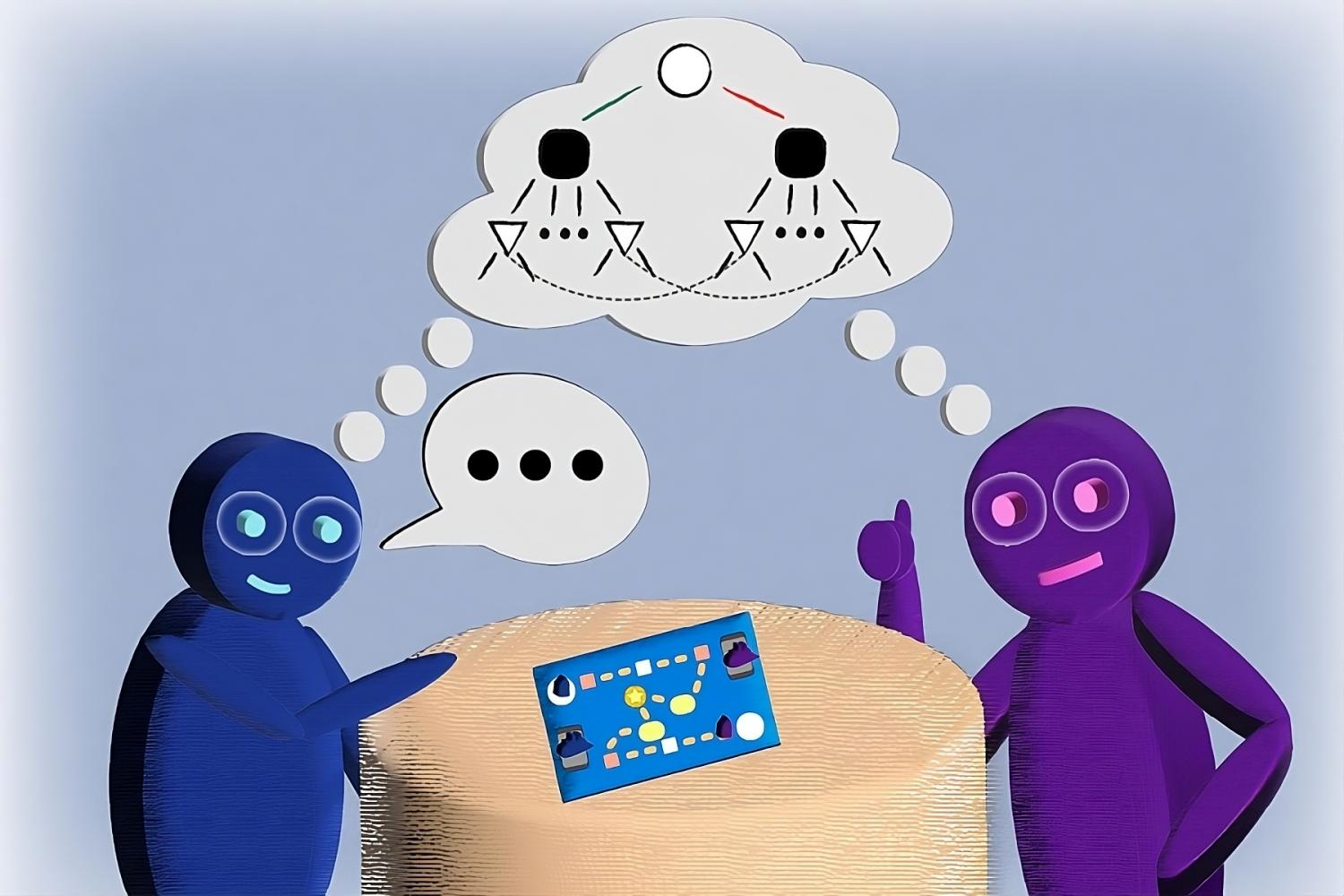
Imagine you and a friend are playing a game where your goal is to communicate secret messages to each other using only cryptic sentences. Your friend’s job is to guess the secret message behind your sentences. Sometimes, you give clues directly, and other times, your friend has to guess the message by asking yes-or-no questions about the clues you’ve given. The challenge is that both of you want to make sure you’re understanding each other correctly and agreeing on the secret message.

MIT Computer Science and Artificial Intelligence Laboratory (CSAIL) researchers have created a similar “game” to help improve how AI understands and generates text. It is known as a “consensus game” and it involves two parts of an AI system — one part tries to generate sentences (like giving clues), and the other part tries to understand and evaluate those sentences (like guessing the secret message).

The researchers discovered that by treating this interaction as a game, where both parts of the AI work together under specific rules to agree on the right message, they could significantly improve the AI’s ability to give correct and coherent answers to questions. They tested this new game-like approach on a variety of tasks, such as reading comprehension, solving math problems, and carrying on conversations, and found that it helped the AI perform better across the board.

Traditionally, large language models answer one of two ways: generating answers directly from the model (generative querying) or using the model to score a set of predefined answers (discriminative querying), which can lead to differing and sometimes incompatible results. With the generative approach, “Who is the president of the United States?” might yield a straightforward answer like “Joe Biden.” However, a discriminative query could incorrectly dispute this fact when evaluating the same answer, such as “Barack Obama.”

So, how do we reconcile mutually incompatible scoring procedures to achieve coherent, efficient predictions? 

“Imagine a new way to help language models understand and generate text, like a game. We’ve developed a training-free, game-theoretic method that treats the whole process as a complex game of clues and signals, where a generator tries to send the right message to a discriminator using natural language. Instead of chess pieces, they’re using words and sentences,” says Athul Jacob, an MIT PhD student in electrical engineering and computer science and CSAIL affiliate. “Our way to navigate this game is finding the ‘approximate equilibria,’ leading to a new decoding algorithm called ‘equilibrium ranking.’ It’s a pretty exciting demonstration of how bringing game-theoretic strategies into the mix can tackle some big challenges in making language models more reliable and consistent.”

When tested across many tasks, like reading comprehension, commonsense reasoning, math problem-solving, and dialogue, the team’s algorithm consistently improved how well these models performed. Using the ER algorithm with the LLaMA-7B model even outshone the results from much larger models. “Given that they are already competitive, that people have been working on it for a while, but the level of improvements we saw being able to outperform a model that’s 10 times the size was a pleasant surprise,” says Jacob. 

Game on

“Diplomacy,” a strategic board game set in pre-World War I Europe, where players negotiate alliances, betray friends, and conquer territories without the use of dice — relying purely on skill, strategy, and interpersonal manipulation — recently had a second coming. In November 2022, computer scientists, including Jacob, developed “Cicero,” an AI agent that achieves human-level capabilities in the mixed-motive seven-player game, which requires the same aforementioned skills, but with natural language. The math behind this partially inspired the Consensus Game. 

While the history of AI agents long predates when OpenAI’s software entered the chat in November 2022, it’s well documented that they can still cosplay as your well-meaning, yet pathological friend. 

The consensus game system reaches equilibrium as an agreement, ensuring accuracy and fidelity to the model’s original insights. To achieve this, the method iteratively adjusts the interactions between the generative and discriminative components until they reach a consensus on an answer that accurately reflects reality and aligns with their initial beliefs. This approach effectively bridges the gap between the two querying methods. 

In practice, implementing the consensus game approach to language model querying, especially for question-answering tasks, does involve significant computational challenges. For example, when using datasets like MMLU, which have thousands of questions and multiple-choice answers, the model must apply the mechanism to each query. Then, it must reach a consensus between the generative and discriminative components for every question and its possible answers. 

The system did struggle with a grade school right of passage: math word problems. It couldn’t generate wrong answers, which is a critical component of understanding the process of coming up with the right one. 

“The last few years have seen really impressive progress in both strategic decision-making and language generation from AI systems, but we’re just starting to figure out how to put the two together. Equilibrium ranking is a first step in this direction, but I think there’s a lot we’ll be able to do to scale this up to more complex problems,” says Jacob.   

An avenue of future work involves enhancing the base model by integrating the outputs of the current method. This is particularly promising since it can yield more factual and consistent answers across various tasks, including factuality and open-ended generation. The potential for such a method to significantly improve the base model’s performance is high, which could result in more reliable and factual outputs from ChatGPT and similar language models that people use daily. 

“Even though modern language models, such as ChatGPT and Gemini, have led to solving various tasks through chat interfaces, the statistical decoding process that generates a response from such models has remained unchanged for decades,” says Google Research Scientist Ahmad Beirami, who was not involved in the work. “The proposal by the MIT researchers is an innovative game-theoretic framework for decoding from language models through solving the equilibrium of a consensus game. The significant performance gains reported in the research paper are promising, opening the door to a potential paradigm shift in language model decoding that may fuel a flurry of new applications.”

Jacob wrote the paper with MIT-IBM Watson Lab researcher Yikang Shen and MIT Department of Electrical Engineering and Computer Science assistant professors Gabriele Farina and Jacob Andreas, who is also a CSAIL member. They presented their work at the International Conference on Learning Representations (ICLR) earlier this month, where it was highlighted as a “spotlight paper.” The research also received a “best paper award” at the NeurIPS R0-FoMo Workshop in December 2023.

Partnering with the ICO to Promote Responsible PET Adoption

Responsible Data Access and the Role of PETs

Last year, the CDEI launched a responsible data access programme to address the challenges organisations face to access data they need in a responsible way. A key component of this programme is our work to encourage adoption of Privacy-Enhancing Technologies (PETs).

Challenges to PETs Adoption

PETs are a set of emerging techniques that enable data access and analysis while providing stronger protections to preserve data privacy. However, there are several challenges to achieving more widespread adoption of PETs including lack of awareness and relative nascence of these technologies. CDEI’s work to address these issues has included a PETs adoption guide to raise awareness of these emerging technologies as well as the UK-US PETs Prize Challenges for driving innovation in novel PETs for financial crime prevention and pandemic forecasting.

PETs Guidance

Organisations are also uncertain of legal implications of using PETs. This week, the Information Commissioner’s Office (ICO) published new PETs guidance to explain how PETs can be used to support a data protection by design approach in line with regulatory requirements.

Cost-Benefit Analysis

Many organisations are still unsure of the value of PETs relative to their costs, which is key to supporting investment decisions in these emerging technologies. Today, we’re announcing a joint project with the ICO to develop a PETs cost-benefit analysis tool.

Joint Project

Our tool will help organisations interested in adopting PETs to better understand the costs and benefits involved and point to resources that can address challenges to adoption. This tool will form part of the CDEI’s updated PETs adoption guide, which includes a use case repository, recently updated by the Open Data Institute.

Research Findings

During an initial research phase to inform development of this tool, the CDEI conducted interviews with stakeholders from across the PETs ecosystem to understand the challenges of articulating the value and costs of PETs. We spoke to people working with a variety of PETs including homomorphic encryption, secure multi-party computation, differential privacy, synthetic data, federated learning/analytics, and trusted execution environments (TEEs).

Two key findings from our interviews were:

  • The importance of a problem-led approach rather than focusing on specific technologies
  • The need to combine quantitative and qualitative information around implementing PETs

Conclusion

By developing this tool, the CDEI and ICO hope to encourage wider adoption of PETs through understanding and addressing common challenges in implementation and highlighting the opportunities enabled by these technologies.

FAQs

Q: What are PETs and why are they important?
A: PETs are a set of emerging techniques that enable data access and analysis while providing stronger protections to preserve data privacy.

Q: What are the challenges to PETs adoption?
A: The challenges to PETs adoption include lack of awareness and relative nascence of these technologies, as well as uncertainty around legal implications and cost-benefit analysis.

Q: What is the purpose of the joint project with the ICO?
A: The purpose of the joint project is to develop a PETs cost-benefit analysis tool to help organisations interested in adopting PETs to better understand the costs and benefits involved and point to resources that can address challenges to adoption.

Q: How can I get involved in the project?
A: If you are interested in sharing your experiences or would like to receive further updates on this project, please get in touch with us at pets@cdei.gov.uk.

Robotic SuperLimbs for Moonwalker Falls Recovery

Need a Moment of Levity? Try Watching Videos of Astronauts Falling on the Moon

NASA’s outtakes of Apollo astronauts tripping and stumbling as they bounce in slow motion are delightfully relatable.

Innovating for Safety

For MIT engineers, the lunar bloopers also highlight an opportunity to innovate.

“Astronauts are physically very capable, but they can struggle on the moon, where gravity is one-sixth that of Earth’s but their inertia is still the same. Furthermore, wearing a spacesuit is a significant burden and can constrict their movements,” says Harry Asada, professor of mechanical engineering at MIT. “We want to provide a safe way for astronauts to get back on their feet if they fall.”

Designing SuperLimbs

Asada and his colleagues are designing a pair of wearable robotic limbs that can physically support an astronaut and lift them back on their feet after a fall. The system, which the researchers have dubbed Supernumerary Robotic Limbs or “SuperLimbs” is designed to extend from a backpack, which would also carry the astronaut’s life support system, along with the controller and motors to power the limbs.

Testing the Design

The researchers have built a physical prototype, as well as a control system to direct the limbs, based on feedback from the astronaut using it. The team tested a preliminary version on healthy subjects who also volunteered to wear a constrictive garment similar to an astronaut’s spacesuit. When the volunteers attempted to get up from a sitting or lying position, they did so with less effort when assisted by SuperLimbs, compared to when they had to recover on their own.

Applying the Design

The MIT team envisions that SuperLimbs can physically assist astronauts after a fall and, in the process, help them conserve their energy for other essential tasks. The design could prove especially useful in the coming years, with the launch of NASA’s Artemis mission, which plans to send astronauts back to the moon for the first time in over 50 years.

Conclusion

The SuperLimbs design is the latest application of a technology that has been in development for over a decade. The team’s goal is to provide a safe and efficient way for astronauts to recover from falls on the moon and other planets. With the Artemis mission on the horizon, the need for this technology is more pressing than ever.

Frequently Asked Questions

Q: What is the purpose of SuperLimbs?

A: SuperLimbs is a wearable robotic system designed to assist astronauts in recovering from falls on the moon and other planets.

Q: How does SuperLimbs work?

A: SuperLimbs uses a control system to direct two multijointed robotic arms that extend from a backpack. The arms physically support the astronaut and lift them back on their feet after a fall.

Q: Why is SuperLimbs necessary?

A: Wearing a spacesuit can be a physical burden, and astronauts may struggle to recover from falls on the moon or other planets. SuperLimbs is designed to ease this burden and help astronauts conserve their energy for other essential tasks.

Q: When will SuperLimbs be ready for use?

A: The team plans to test the full SuperLimbs system at NASA’s Jet Propulsion Laboratory this summer. The goal is to pair the limbs with astronaut suits and test them in low-gravity simulators, with the hope of someday assisting astronauts on future missions to the moon and Mars.