Home Blog Page 637

Trump Plans to Dismantle Biden AI Safeguards

Uncertainty Surrounding AI Regulation Under a Potential Trump Administration

That’s not the only uncertainty at play. Just last week, House Speaker Mike Johnson—a staunch Trump supporter—said that Republicans “probably will” repeal the bipartisan CHIPS and Science Act, which is a Biden initiative to spur domestic semiconductor chip production, among other aims. Trump has previously spoken out against the bill. After getting some pushback on his comments from Democrats, Johnson said he would like to “streamline” the CHIPS Act instead, according to The Associated Press.

The Elon Musk Factor

The tech billionaire spent tens of millions through a political action committee supporting Trump’s campaign and has been angling for regulatory influence in the new administration. His AI company, xAI, which makes the Grok-2 language model, stands alongside his other ventures—Tesla, SpaceX, Starlink, Neuralink, and X (formerly Twitter)—as businesses that could see regulatory changes in his favor under a new administration.

What Might Take Its Place

If Trump strips away federal regulation of AI, state governments may step in to fill any federal regulatory gaps. For example, in March, Tennessee enacted protections against AI voice cloning, and in May, Colorado created a tiered system for AI deployment oversight. In September, California passed multiple AI safety bills, one requiring companies to publish details about their AI training methods and a contentious anti-deepfake bill aimed at protecting the likenesses of actors.

A Trump Administration’s AI Policies

So far, it’s unclear what Trump’s policies on AI might represent besides “deregulate whenever possible.” During his campaign, Trump promised to support AI development centered on “free speech and human flourishing,” though he provided few specifics. He has called AI “very dangerous” and spoken about its high energy requirements.

Trump allies at the America First Policy Institute have previously stated they want to “Make America First in AI” with a new Trump executive order, which still only exists as a speculative draft, to reduce regulations on AI and promote a series of “Manhattan Projects” to advance military AI capabilities.

During his previous administration, Trump signed AI executive orders that focused on research institutes and directing federal agencies to prioritize AI development while mandating that federal agencies “protect civil liberties, privacy, and American values.”

Conclusion

With a potential Trump administration on the horizon, the future of AI regulation remains uncertain. While some predict a push towards deregulation, others foresee state governments stepping in to fill the regulatory gaps. As the situation unfolds, it’s unclear what specific policies will emerge, but one thing is certain: the impact on the AI industry will be significant.

FAQs
Q: What is the CHIPS and Science Act, and how does it relate to AI regulation?

A: The CHIPS and Science Act is a Biden initiative to spur domestic semiconductor chip production, among other aims. Trump has previously spoken out against the bill.

Q: What is the Elon Musk factor in the context of AI regulation?

A: Elon Musk is a tech billionaire who has been angling for regulatory influence in the new administration. His AI company, xAI, could see regulatory changes in his favor under a new administration.

Q: What are the potential implications of a Trump administration on AI regulation?

A: It’s unclear what Trump’s policies on AI might represent besides “deregulate whenever possible.” Some predict a push towards deregulation, while others foresee state governments stepping in to fill regulatory gaps.

Q: Are there any existing AI regulations that a Trump administration might build upon?

A: Yes, during his previous administration, Trump signed AI executive orders focusing on research institutes and directing federal agencies to prioritize AI development while mandating that federal agencies “protect civil liberties, privacy, and American values.”

Alexa’s Decade: Celebrating the Success and Chronicling the Failure

0

Alexa’s Unassuming Rise to Prominence

Alexa didn’t get a big splashy launch event, or come with a bunch of grand proclamations about being the future of anything. Instead, like a phone charger with a made-up name or a knockoff version of your favorite blush, it just kind of appeared on Amazon one day.

The Birth of the Smart Speaker Era

Ten years ago this week, on November 6th, 2014, Amazon launched the Echo and the smart speaker era. The device quickly spawned countless more, from Amazon and others. It became the emblem of a voice-first way of using technology, the “ambient computing” revolution Amazon and others came to believe would change how we do everything. Now there are Alexa devices in millions of homes, just listening and chirping away all day.

Wrestling with Alexa’s Legacy

On this episode of The Vergecast, we wrestle with what all that really adds up to. The Verge’s Jennifer Pattison Tuohy joins the show to talk about the reasons for that surprise 2014 launch, the explosive growth of the Alexa ecosystem, and the challenges Amazon and everyone else faced in trying to figure out what these smart speakers could really do. By some measures, Alexa is an undeniable hit, an utterly mainstream part of our technological lives. But for all that success, Alexa has never lived up to Amazon’s lofty goals. It’s not the ultra-powerful and ultra-versatile Star Trek computer; it’s not even a better way to shop. After all this time, it’s for music and timers. Alexa has always been for music and timers.

The Future of Alexa

There’s a big change coming for Alexa, though. We talk a lot about what the so-called “Remarkable Alexa” upgrade might mean for the virtual assistant, as Amazon shifts its underlying technology to be based on large language models and generative AI. It’s pretty clear now that Amazon’s big idea was something like the right one. Is the tech finally ready to make it real? And will Amazon ever ship the thing so we can find out? The Echo was a surprise a decade ago — maybe we’re due for another one.

Resources

If you want to know more about everything we discuss in this episode, here are some links to get you started:

Conclusion

Alexa’s unassuming rise to prominence is a testament to Amazon’s ability to innovate and adapt. As the company continues to evolve and improve its virtual assistant, it will be interesting to see how Alexa’s capabilities and impact on our daily lives continue to shape the future of technology.

FAQs

Q: What is Alexa?
A: Alexa is a virtual assistant developed by Amazon that allows users to control their smart devices, play music, and access information using voice commands.

Q: How did Alexa become so popular?
A: Alexa’s popularity can be attributed to its ease of use, affordability, and the wide range of compatible devices available.

Q: What is the “Remarkable Alexa” upgrade?
A: The “Remarkable Alexa” upgrade refers to Amazon’s plan to shift its underlying technology to be based on large language models and generative AI, which could potentially make Alexa more powerful and capable.

Q: Will the “Remarkable Alexa” upgrade make Alexa more useful?
A: It’s unclear at this point, but Amazon’s goal is to make Alexa more capable and useful, and the new technology could potentially achieve that.

Automation planning for employee safety in warehouses – Robotics & Automation News

0

By Heico Sandee, founder and CEO of Smart Robotics

Robotics and automation undoubtedly address several safety and efficiency challenges that warehouses have grappled with for years.

While efficiency and productivity are primary motivations behind automation, warehouses must prioritize the safety and well-being of those who spend most of their time around these automated systems – the employees.

Productivity and profitability mean little if warehouses are unsafe. Numbers speak for themselves as the National Safety Council reports that a worker injury costs companies an average of $38,000 in direct expenses, while indirect costs can amount up to a total of around $150,000 per accident.

Automation planning, therefore, should be centered around employee safety, striking the balance between productivity and workforce morale.

Automation can make warehouses safer for employees in contrast to traditional systems
Previously existing gaps in safety measures are being bridged by new innovations like collision-avoidance sensors, that not only handle heavy lifting but also anticipate worker movement, ensuring a safer interaction on the warehouse floor.

By taking over hazardous tasks, automation reduces the risk of injuries related to lifting, manual handling and mitigates common warehouse hazards such as slips, trips, and falls.

As a case in point, Smart Robotics’ intelligent cobot solution Smart Palletizer was implemented by an Australian milk formula manufacturer seeking to improve employee safety – a project that later received a nomination for a Safety Award for its positive impact on workplace safety.

Their previous manual stacking process involved two staff members, leading to health issues such as repetitive strain injuries and blind spots for forklifts, increasing accident risks.

The Smart Palletizer, with its compact design and easy integration into the existing processing and packaging line, allowed the manufacturer to reduce labor requirements by 50 percent, cutting costs while eliminating the safety hazards associated with manual palletizing.

Ensuring proper implementation to prevent mishaps and accidents

Thorough warehouse planning and robust safety protocols must be put in place to make sure that new systems do not inadvertently introduce new risks.

For instance, if automated systems are not properly integrated or lack adequate safety protocols, they can heighten the risk of collisions between machines and employees, leading to potential accidents or equipment malfunctions.

After all, the solution to one problem shouldn’t become another problem.

Providing warehouse employees with sufficient training to rightly interact with automated systems is a crucial step toward maintaining a safe workplace. It’s essential that there are no instances of confusion, incorrect use or unsafe interactions in the day-to-day operations.

Pedestrian safety, for instance, shouldn’t be overlooked. Warehouse staff moving between work areas, managers or supervisors conducting inspections, maintenance workers or even delivery or logistics personnel who may need to move through the warehouse on foot, all share space with forklifts, automated guided vehicles (AGVs) and other machinery, exposing them to risks of accidents.

This means that irrespective of an employee’s role or how closely they work with automated systems, everyone should receive basic training on essential protocols and safe practices on the warehouse floor.

Similarly, all employees should be familiarized with emergency procedures in the event of a system malfunction and better yet, regular maintenance and updates must not be missed to prevent such incidents in the first place.

Prioritizing mental health

Automation relieves employees of numerous repetitive and physically demanding tasks, however, such changes can also potentially introduce new stressors, including fears of job displacement, pressure to match machine efficiency, and the urgency to adapt to a highly automated environment. Therefore, change management should be considered a high-priority area.

Encouraging clear communication is one of the most fundamental tenets to be practiced to create a balanced, positive work environment. The importance of clearing the air of anxiety and addressing any concerns cannot be emphasized enough.

Regularly providing updates about changes, prompting feedback and suggestions, and creating forums for open dialogue are some of the ways in which organizations can ensure that implementations do feel enforced or one-sided.

Mental health check-ins at regular intervals, along with helpful resources such as counseling and stress management workshops, are essential during the transition phase and beyond.

These initiatives help employees navigate changes, address ensuing challenges, and promote their overall well-being. These also present opportunities for businesses to reevaluate their mental health support systems and to make warehouses less stressful places to work.

Moreover, investing time and resources in retraining and upskilling programs helps employees perceive automation as a catalyst for career advancement rather than as a threat. This contributes to greater job security and job satisfaction.

Adapting to changes is hard enough; employees shouldn’t have to stress about handling complicated systems. Automation should be designed and implemented in a user-friendly and intuitive manner, such as collaborative robots (cobots) that can work safely alongside humans.

Today, technologies are designed to directly improve safety through AI-powered sensors, predictive maintenance, and machine learning systems that proactively predict and avoid hazardous situations.

Planning for ergonomics

Workplace ergonomics has lasting implications for employees – especially so in activity-intense settings like warehouses.

Given that traditional warehousing involves substantial heavy lifting, prolonged periods of standing or walking, and repetitive movements throughout the day, it is important to understand the ergonomic challenges currently faced by employees while planning for automation.

Proposed changes must not only ensure that automated systems effectively address these issues, but they must also anticipate potential strains from new systems and work to prevent them.

For example, implementing adjustable robotic workstations and selecting cobot models designed for repetitive yet safe movements can significantly alleviate ergonomic challenges.

At its core, automation can lower the risk of hazards such as repetitive strain injuries (RSI) and discomfort resulting from repetitive body movements.

When workstations and workflows are designed consciously to fit the physical capabilities of employees, considering both their strengths and weaknesses, workers are less fatigued and can perform tasks more quickly and efficiently.

In this win-win situation, employees feel comfortable and safe in their workplaces, while organizations benefit from reduced absenteeism and a more engaged workforce.

Employee well-being

Decision makers in executive positions may not have first-hand experiences to foresee and gauge the potential impact of planned changes.

Particularly for warehouses that go from absolutely no automation to a significantly higher level of automation, it’s beneficial to include employees right in the earlier stages of automation.

Firstly, this will help identify and acknowledge employee pain points, fears and expectations regarding automation. Secondly, when employees feel involved in the process from the get-go, they are less likely to feel threatened and more inclined to embrace the collaboration.

As the primary users of automated systems on the floor, their input should be highly valued as a critical source for refining and improving these systems.

Involving employees in the easy adoption stages enables smoother transitions, eases the learning curve, and helps build a more resilient workforce.

Regular check-ins with operators regarding the user-friendliness of robotic systems and potential improvements can provide valuable insights, contributing to sustained operational excellence.

Together with upskilling opportunities, this approach prepares employees to confidently work alongside automated systems while instilling a sense of ownership and accountability over their roles in shaping a safer, more efficient workplace.

About Heico Sandee: Heico Sandee is founder and CEO of Smart Robotics, holds a PhD degree and previously acted as program manager for robotics at Eindhoven University of Technology. With more than 15 years of experience in robotics development, Heico now leads Smart Robotics in developing “intelligent, robot-independent software for flexible deployment of automated solutions”.


The Future of AI Robots

0

Despite AI Progress, Robots Remain Limited in Their Abilities

Despite stunning AI progress in recent years, robots remain stubbornly dumb and limited. The ones found in factories and warehouses typically go through precisely choreographed routines without much ability to perceive their surroundings or adapt on the fly. The few industrial robots that can see and grasp objects can only do a limited number of things with minimal dexterity due to a lack of general physical intelligence.

The Need for More Capable Robots

More generally capable robots could take on a far wider range of industrial tasks, perhaps after minimal demonstrations. Robots will also need more general abilities in order to cope with the enormous variability and messiness of human homes.

The Role of General Physical Intelligence

General excitement about AI progress has already translated into optimism about major new leaps in robotics. Elon Musk’s car company, Tesla, is developing a humanoid robot called Optimus, and Musk recently suggested that it would be widely available for $20,000 to $25,000 and capable of doing most tasks by 2040.

New Developments in Robot Learning

Previous efforts to teach robots to do challenging tasks have focused on training a single machine on a single task because learning seemed untransferable. Some recent academic work has shown that with sufficient scale and fine-tuning, learning can be transferred between different tasks and robots. A 2023 Google project called Open X-Embodiment involved sharing robot learning between 22 different robots at 21 different research labs.

Overcoming the Challenges of Robot Data

A key challenge with the strategy Physical Intelligence is pursuing is that there is not the same scale of robot data available for training as there is for large language models in the form of text. So the company has to generate its own data and come up with techniques to improve learning from a more limited dataset. To develop π0, the company combined so-called vision language models, which are trained on images as well as text, with diffusion modeling, a technique borrowed from AI image generation, to enable a more general kind of learning.

Scaling Up Learning

For robots to be able to take on any robot chore that a person asks them to do, such learning will need to be scaled up significantly. “There’s still a long way to go, but we have something that you can think of as scaffolding that illustrates things to come,” Levine says.

Conclusion

While there have been significant advancements in AI and robotics, there is still a long way to go before robots can truly perform tasks that are as complex and varied as those done by humans. However, recent developments in robot learning and the combination of different AI techniques hold promise for achieving this goal in the future.

FAQs

Q: What are the limitations of current industrial robots?

A: Current industrial robots typically go through precisely choreographed routines without much ability to perceive their surroundings or adapt on the fly. They can only do a limited number of things with minimal dexterity due to a lack of general physical intelligence.

Q: What is general physical intelligence?

A: General physical intelligence refers to the ability of a robot to perceive and adapt to its environment in a more general way, rather than being limited to a specific task or set of tasks.

Q: How will robots be able to perform tasks that are as complex and varied as those done by humans?

A: Robots will need to be able to learn and adapt in a more general way, through the combination of different AI techniques and the development of more capable robots that can take on a wider range of tasks.

The Best AI Image Generators of 2024

What is the best AI image generator overall?

Google’s ImageFX dethroned Microsoft Designer’s Image Generator as the best overall AI image generator because it generates the highest-quality, most realistic renditions for free. Google has been a dark horse in the AI space, so the company beating more well-established contenders surprised me.

ImageFX combines accuracy, speed, and cost-effectiveness and can generate images in seconds. A major plus is that the generator is easy to use for beginners and has unique features like expressive chips.

The best AI art generators of 2024

Imagen 3 in ImageFX

Google was an underdog in the image generator space, releasing its own AI generator, ImageFX, months after its competitors. The wait was worth it. ImageFX, powered by Imagen 3, can produce high-quality, realistic outputs, even of objects that are difficult to render, such as hands.

ImageFX is a standalone experience, and it’s easy to use. All you have to do is sign in to your Google account, type in a prompt, and let it do the magic for you. You can also take advantage of cool features such as “expressive chips,” which allow you to swap out elements of your prompts for more generations.

Midjourney

Best AI image generator for highest quality photos

I often play around with AI image generators because they make it fun and easy to create digital artwork. Despite my experiences with different AI generators, nothing could have prepared me for Midjourney.

The output of the images was so crystal clear that I had a hard time believing they weren’t photos that someone had taken — the software has even produced award-winning art.

Adobe Firefly

Best AI Image Generator if you have a reference photo

Adobe has been a leader in developing tools for creative and working professionals for decades. As a result, it’s not surprising that its image generator is impressive.

Accessing the generator is easy: Visit the website and type a prompt for the image you’d like generated. As you can see above, the rendered image of the hummingbird has impressive detail and is so high-quality it looks like a photo.

Conclusion

Many AI image generators on the market shine in terms of speed, quality, and affordability. That said, there isn’t much more I’d like to see from image generators that could significantly improve the offerings. Furthermore, the future of AI image generators isn’t about updating current offerings, but rather moving from one-dimensional to three-dimensional renditions.

Frequently Asked Questions

What is the best free image generator?

Google’s ImageFX is the best AI image generator because it produces the highest-quality, most realistic image for free. The photo quality even exceeds that of OpenAI’s latest model, DALL-E 3. When accessing DALL-E 3 from OpenAI’s services, you need to pay for unlimited access. Otherwise, you’re limited to two generations per day.

How do you fix a poorly generated image?

You can fix a poorly generated image by readjusting your prompt to fix the element of the image you are having trouble with. For example, if you say, “Generate an image of the beach,” and are disappointed at the way the ocean looks, you can input another prompt that says, “Generate an image of a beach with crystal blue, shallow water.” The more specific you get, the better your result will be.

Are there ethical implications with AI image generators?

AI image generators are trained on billions of images from across the internet. These images are often artworks belonging to specific artists, which an AI tool repurposes to generate your image. Although the output is different, the new image has elements of the artist’s original work that are not credited to them.

Are AI-generated images copyrighted?

Whether an AI-generated image is copyrighted depends on the terms of the generator you are using. The copyright policies also vary between subscription tiers. The best way to proceed is not to assume and to double-check before you use or publish a generated image.

How do I properly disclose that my images were AI-generated?

A good habit when using AI to generate images is to disclose that AI was involved in the process. Doing so helps build trust with your audience, as well as helps prevent misinformation from spreading. A disclosure can be as simple as something that reads, “Generated by [the name of the generator].” You will notice that at ZDNET, we always disclose when we use an AI image generator image in an article, using a disclosure such as, “Sabrina Ortiz/ZDNET via [Image generator name].”

Are there DALL-E 3 alternatives worth considering?

Many AI image generators produce better results than OpenAI’s tool. If you want to try something different, check out one of our alternatives above or the two additional options below.

Helping robots zero in on the objects that matter | MIT News

0

Imagine having to straighten up a messy kitchen, starting with a counter littered with sauce packets. If your goal is to wipe the counter clean, you might sweep up the packets as a group. If, however, you wanted to first pick out the mustard packets before throwing the rest away, you would sort more discriminately, by sauce type. And if, among the mustards, you had a hankering for Grey Poupon, finding this specific brand would entail a more careful search.

MIT engineers have developed a method that enables robots to make similarly intuitive, task-relevant decisions.

The team’s new approach, named Clio, enables a robot to identify the parts of a scene that matter, given the tasks at hand. With Clio, a robot takes in a list of tasks described in natural language and, based on those tasks, it then determines the level of granularity required to interpret its surroundings and “remember” only the parts of a scene that are relevant.

In real experiments ranging from a cluttered cubicle to a five-story building on MIT’s campus, the team used Clio to automatically segment a scene at different levels of granularity, based on a set of tasks specified in natural-language prompts such as “move rack of magazines” and “get first aid kit.”

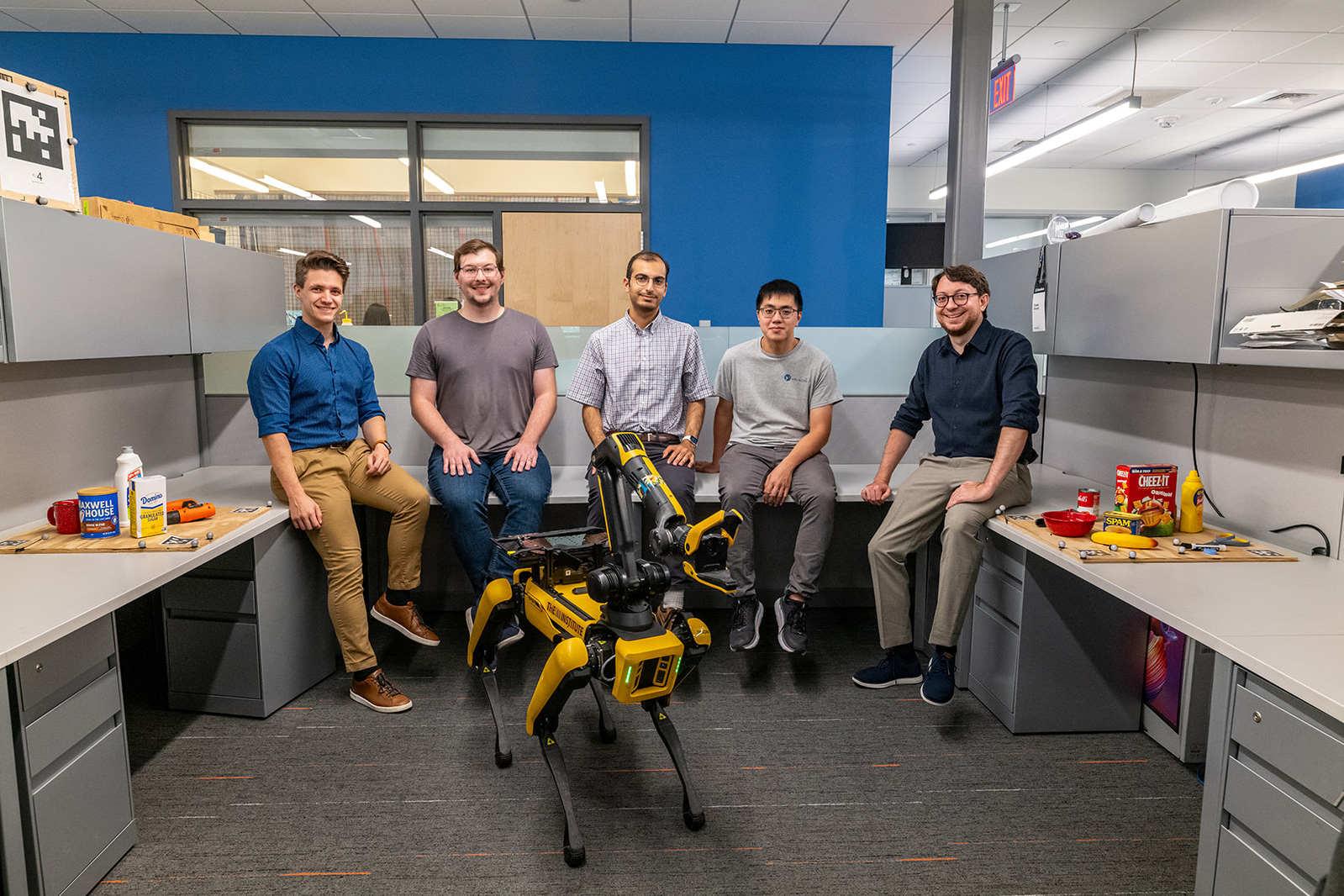
The team also ran Clio in real-time on a quadruped robot. As the robot explored an office building, Clio identified and mapped only those parts of the scene that related to the robot’s tasks (such as retrieving a dog toy while ignoring piles of office supplies), allowing the robot to grasp the objects of interest.

Clio is named after the Greek muse of history, for its ability to identify and remember only the elements that matter for a given task. The researchers envision that Clio would be useful in many situations and environments in which a robot would have to quickly survey and make sense of its surroundings in the context of its given task.

“Search and rescue is the motivating application for this work, but Clio can also power domestic robots and robots working on a factory floor alongside humans,” says Luca Carlone, associate professor in MIT’s Department of Aeronautics and Astronautics (AeroAstro), principal investigator in the Laboratory for Information and Decision Systems (LIDS), and director of the MIT SPARK Laboratory. “It’s really about helping the robot understand the environment and what it has to remember in order to carry out its mission.”

The team details their results in a study appearing today in the journal Robotics and Automation Letters. Carlone’s co-authors include members of the SPARK Lab: Dominic Maggio, Yun Chang, Nathan Hughes, and Lukas Schmid; and members of MIT Lincoln Laboratory: Matthew Trang, Dan Griffith, Carlyn Dougherty, and Eric Cristofalo.

Open fields

Huge advances in the fields of computer vision and natural language processing have enabled robots to identify objects in their surroundings. But until recently, robots were only able to do so in “closed-set” scenarios, where they are programmed to work in a carefully curated and controlled environment, with a finite number of objects that the robot has been pretrained to recognize.

In recent years, researchers have taken a more “open” approach to enable robots to recognize objects in more realistic settings. In the field of open-set recognition, researchers have leveraged deep-learning tools to build neural networks that can process billions of images from the internet, along with each image’s associated text (such as a friend’s Facebook picture of a dog, captioned “Meet my new puppy!”).

From millions of image-text pairs, a neural network learns from, then identifies, those segments in a scene that are characteristic of certain terms, such as a dog. A robot can then apply that neural network to spot a dog in a totally new scene.

But a challenge still remains as to how to parse a scene in a useful way that is relevant for a particular task.

“Typical methods will pick some arbitrary, fixed level of granularity for determining how to fuse segments of a scene into what you can consider as one ‘object,’” Maggio says. “However, the granularity of what you call an ‘object’ is actually related to what the robot has to do. If that granularity is fixed without considering the tasks, then the robot may end up with a map that isn’t useful for its tasks.”

Information bottleneck

With Clio, the MIT team aimed to enable robots to interpret their surroundings with a level of granularity that can be automatically tuned to the tasks at hand.

For instance, given a task of moving a stack of books to a shelf, the robot should be able to  determine that the entire stack of books is the task-relevant object. Likewise, if the task were to move only the green book from the rest of the stack, the robot should distinguish the green book as a single target object and disregard the rest of the scene — including the other books in the stack.

The team’s approach combines state-of-the-art computer vision and large language models comprising neural networks that make connections among millions of open-source images and semantic text. They also incorporate mapping tools that automatically split an image into many small segments, which can be fed into the neural network to determine if certain segments are semantically similar. The researchers then leverage an idea from classic information theory called the “information bottleneck,” which they use to compress a number of image segments in a way that picks out and stores segments that are semantically most relevant to a given task.

“For example, say there is a pile of books in the scene and my task is just to get the green book. In that case we push all this information about the scene through this bottleneck and end up with a cluster of segments that represent the green book,” Maggio explains. “All the other segments that are not relevant just get grouped in a cluster which we can simply remove. And we’re left with an object at the right granularity that is needed to support my task.”

The researchers demonstrated Clio in different real-world environments.

“What we thought would be a really no-nonsense experiment would be to run Clio in my apartment, where I didn’t do any cleaning beforehand,” Maggio says.

The team drew up a list of natural-language tasks, such as “move pile of clothes” and then applied Clio to images of Maggio’s cluttered apartment. In these cases, Clio was able to quickly segment scenes of the apartment and feed the segments through the Information Bottleneck algorithm to identify those segments that made up the pile of clothes.

They also ran Clio on Boston Dynamic’s quadruped robot, Spot. They gave the robot a list of tasks to complete, and as the robot explored and mapped the inside of an office building, Clio ran in real-time on an on-board computer mounted to Spot, to pick out segments in the mapped scenes that visually relate to the given task. The method generated an overlaying map showing just the target objects, which the robot then used to approach the identified objects and physically complete the task.

“Running Clio in real-time was a big accomplishment for the team,” Maggio says. “A lot of prior work can take several hours to run.”

Going forward, the team plans to adapt Clio to be able to handle higher-level tasks and build upon recent advances in photorealistic visual scene representations.

“We’re still giving Clio tasks that are somewhat specific, like ‘find deck of cards,’” Maggio says. “For search and rescue, you need to give it more high-level tasks, like ‘find survivors,’ or ‘get power back on.’ So, we want to get to a more human-level understanding of how to accomplish more complex tasks.”

This research was supported, in part, by the U.S. National Science Foundation, the Swiss National Science Foundation, MIT Lincoln Laboratory, the U.S. Office of Naval Research, and the U.S. Army Research Lab Distributed and Collaborative Intelligent Systems and Technology Collaborative Research Alliance.

Unlocking AI’s Potential for Student Wellness

How AI Can Help Schools Support Student Mental Health and Wellness

Student services teams face a huge challenge. As mental health concerns among children and adolescents have grown, student wellness is more important than ever. However, the availability of resources hasn’t grown proportionally to match the need.

School psychologists, counselors, social workers, and safety specialists are in short supply. Despite valiant efforts to provide students with the support they need, these human resources are also stretched thin. They’re typically tasked with oversight of hundreds of students each, making it nearly impossible to know every student who’s struggling and in need of support.

This is where artificial intelligence (AI) comes in. AI-powered solutions can act as an extra set of eyes and ears, helping stretched school teams identify and support at-risk students more efficiently and effectively than ever before.

How AI Can Help Schools Support Student Mental Health and Wellness

Chief among AI’s advantages are its ability to analyze vast amounts of data and identify patterns. It begs the question: How can K-12 administrative leaders harness this power to identify student mental health and wellness concerns and alleviate the burden on overstretched staff? They can with AI-powered student wellness monitoring and data collection and analysis.

AI-Powered Student Wellness Monitoring

Student wellness monitoring powered by AI is capable of continually monitoring students’ online interactions to detect signs and patterns of distress. By analyzing students’ web searches, emails, social media posts, and even interactions with AI chatbots, it identifies and alerts school personnel to these distress signals.

AI-Powered Data Collection & Analysis

While wellness monitoring plays a crucial role in identifying immediate concerns, another powerful application of AI lies in data collection and analysis.

AI-powered data collection and analysis can eliminate labor-intensive surveys, providing a holistic and current picture of student wellbeing. Unlike periodic surveys, AI-driven analysis offers ongoing, real-time data, allowing schools to identify trends and changes in student mental health quickly.

Overcoming AI Concerns

While AI offers tremendous potential, school leaders, educators, and parents may have understandable concerns about its use, especially in such a sensitive area. Let’s break down the primary concerns and explore ways to overcome them.

Privacy and Data Security

When AI is being used to analyze sensitive personal data, it’s crucial to prioritize student privacy. Look for vendors that prioritize data privacy and security as demonstrated by conformance to data privacy regulations and utilization of enterprise-grade security measures.

Human Involvement

Some worry that increased dependence on AI could lead to a decrease in crucial human interaction and support. This fear suggests that AI could someday replace humans, but AI is designed to augment and support human efforts, not displace them.

Equity and Accessibility

While there are valid concerns that AI implementation could exacerbate existing educational disparities, AI also has the potential to be a powerful tool for promoting equity. By using AI, we can overcome human bias, whether explicit or implicit, to more fairly and comprehensively identify and bridge gaps in opportunity.

Explore How AI Can Help Your School Support Student Mental Health and Wellness

By overcoming objections about AI and embracing its ability to supplement their current support resources, schools can create more comprehensive, responsive, and effective support systems. This powerful combination of technology and human care can help ensure that every student has the type of support they need to thrive in school and beyond.

Conclusion

AI is not a replacement for human professionals but a powerful tool that can augment and support their efforts. By harnessing the power of AI, schools can provide students with the support they need to succeed and thrive. With AI-powered student wellness monitoring and data collection and analysis, schools can identify at-risk students, provide targeted support, and create a safer and more supportive environment for all students.

Automating TypeScript Code Generation with Anthropic’s Claude

0

SailPoint Connectors and SaaS Connectivity

Understanding the List User Connector

SailPoint’s identity security solutions interface with various software as a service (SaaS) applications to retrieve the necessary information, such as account and access information, from an identity security standpoint. Each SaaS application implements these functionalities in slightly different ways and might expose their implementation through REST-based web APIs that are typically supported by OpenAPI specifications. SailPoint connectors are TypeScript modules that interface with a SaaS application and map the relevant identity security information (such as accounts and entitlements) to a standardized format understood by SailPoint. Based on the APIs exposed by the application, SailPoint connectors can create, update, and delete access on those accounts. SailPoint connectors help manage user identities and their access rights across different environments within an organization, supporting the organization’s compliance and security efforts.

Building a Generative AI-based Coding Assistant

In this post, we highlight how the AWS Generative AI Innovation Center collaborated with SailPoint Technologies to build a generative AI-based coding assistant that uses Anthropic’s Claude Sonnet on Amazon Bedrock to help accelerate the development of software as a service (SaaS) connectors.

The List User Function of a Connector

The following is a breakdown of what each part of the code does:

  • Imports: The code imports several types and interfaces from @sailpoint/connector-sdk. These include Context, Response, StdAccountListHandler, and StdAccountListOutput, which are used to handle the input and output of the function in a standardized way within a SailPoint environment.
  • Function definition: listUsers is defined as an asynchronous function compatible with the StdAccountListHandler. It uses the Context to access configuration details like API keys and the base URL, and a Response to structure the output.
  • Retrieve API key and host URL: These are extracted from the context parameter. They are used to authenticate and construct the request URL.
  • URL construction: The function constructs the initial URL using the hostUrl and organizationId from the context. This URL points to an endpoint that returns users associated with a specific organization.

Code Example

import { Context, Response, StdAccountListHandler, StdAccountListOutput } from '@sailpoint/connector-sdk';

const listUsers: StdAccountListHandler = async (context: Context, input: undefined, res: Response) => {
  // retrieve api key and host url from context
  let apiKey = context.apiKey;
  let hostUrl = context.hostUrl;
  let hasMore = true;

  // url construction
  let url = `https://${hostUrl}/Management/v2/organizations/${context.organizationId}/users`;

  // loop through pages
  while (hasMore) {
    // fetch response from the endpoint
    let response = await fetch(url, {
      headers: {
        'Authorization': `Bearer ${apiKey}`
      }
    });
    let results = await response.json();

    // processing users from response
    let users = results.users;
    for (const user of users) {
      const output: StdAccountListOutput = {
        identity: user.id,
        attributes: {
          user_name: user.user_name,
          first_name: user.first_name,
          last_name: user.last_name,
          user_status: user.user_status,
          membership_status: user.membership_status,
          email: user.email,
          created_on: user.created_on,
          membership_created_on: user.membership_created_on,
          ds_group_id: user.company_groups.map(group => group.ds_group_id),
          ds_group_account_id: user.company_groups.map(group => group.ds_group_account_id)
        }
      };
    }
    // pagination
    if (results.paging.next) {
      url = results.paging.next;
    } else {
      hasMore = false;
    }
  }
}

Conclusion

In this article, we demonstrated how we used Anthropic’s Claude Sonnet on Amazon Bedrock to automatically create the list user connector, a critical component of the broader SaaS connectivity. By leveraging the power of generative AI, we were able to accelerate the development of software as a service (SaaS) connectors and improve the efficiency of identity security solutions.

FAQs

Q: What is the purpose of the list user function in a connector?
A: The list user function is used to retrieve and transform user information from a SaaS application into a standardized format.

Q: What is the role of the Context object in the code?
A: The Context object is used to access configuration details like API keys and the base URL.

Q: What is the purpose of the Response object in the code?
A: The Response object is used to structure the output of the function.

Q: What is the difference between the hasMore variable and the url variable in the code?
A: The hasMore variable is used to track whether there are more pages of results to retrieve, while the url variable is used to construct the URL for the next page of results.

ARPA-H Leverages Homomorphic Encryption for Rare Disease Research

ARPA-H Awards Duality Technologies $6 Million to Develop Framework for Sharing Sensitive Patient Data

The Challenge of Rare Diseases

The phrase "rare disease" is a bit of a misnomer. While some diseases statistically are very rare, the fact is that roughly 20% of the country’s population is affected by a rare disease at some point in their lifetime. And while there is active research into rare diseases, the bulk of it is aimed at people with northwestern European backgrounds and genetics, says Kurt Rohloff, the CTO and co-founder of Duality Technologies.

"There’s much less understanding of the genetics and genetic makeup and mutation correlations between mutations and cancer or other kinds of diseases outside of the classic focus of northern and western European heritage individuals," Rohloff says. "We have a bit of an institutional bias in the world."

The Need for a Solution

Very large healthcare organizations, such as the Broad Institute, Mass General, and Intermountain Health have a large amount of valuable data themselves to conduct medical research on things like rare diseases. However, much of the data they have is skewed toward population centers with a European genetic heritage, Rohloff says.

The good news is that if those large healthcare organizations want a data set from a certain city, they have the legal resources to write data use agreement that provides the necessary privacy protections.

"There’s nothing untoward about it. They have administrative policies about how they handle the data when they take it in to keep it private and secure. All best practices. They do it right," Rohloff tells BigDATAwire.

The ARPA-H Project: SQUEEZES

The Advanced Research Projects Agency for Health (ARPA-H) in September awarded Duality Technologies a contract worth up to $6 million to develop a framework for enabling healthcare organizations to share highly sensitive patient data. If successful, the project will enable smaller healthcare organizations to securely access sensitive health data to conduct research into rare diseases, including those that have a disparate impact on racial minorities.

The project, dubbed SQUEEZES, will use Duality’s fully homomorphic encryption (FHE) technology to enable rural and native healthcare organizations in the United States to pool together their healthcare data and analyze it, but without enabling each other to read it.

How it Works

The healthcare organizations will still need to get consent from individuals before using their data for research into rare diseases. But since the data remains encrypted the entire time, the amount of legal work required to obtain the necessary consent is reduced, Rohloff says.

"All these various [organizations]… have their own data," says Rohloff, who has worked broadly in the DARPA community with Duality’s homomorphic encryption technology. "An organization would encrypt their data locally, using a local encryption key…and upload it to a server, which might be at a cancer research center. And multiple rural or tribal health agencies might do this, each encrypting with their own key."

Once all the encrypted data is centralized, it can be analyzed and used to build machine learning models within Duality’s FHE environment.

Conclusion

Building a system that enables secure collaboration on sensitive data is a complex task, but Duality Technologies is well-equipped to take on the challenge. With its fully homomorphic encryption technology and expertise in the field, the company is poised to make a significant impact in the world of healthcare research.

FAQs

Q: What is the goal of the ARPA-H project?
A: The goal of the ARPA-H project is to develop a framework for enabling healthcare organizations to share highly sensitive patient data to conduct research into rare diseases.

Q: What is fully homomorphic encryption (FHE)?
A: FHE is a type of encryption that allows data to be analyzed and processed while it is still encrypted, without having to decrypt it first.

Q: How will the data be encrypted?
A: The data will be encrypted locally by each healthcare organization using a local encryption key, and then uploaded to a server for analysis.

Q: How will the results be shared?
A: The results will be shared with each healthcare organization that contributed data, and they will be able to run an approval process with their local key to grant access to the analytic party.

Mastering AI Video Editing in Google Photos

0

Google Photos Gets New Video Editing Features

Google Photos continues to get new and improved features on a regular basis, and one of the most recent Android updates has focused on video editing. Even if you don’t have the latest Pixel 9 phone (which is required if you want to try out the weird new Reimagine tool), you can now speed up, slow down, and enhance your clips with a few taps as well as trim them down more easily.

Trim Tool

First up, we have what Google describes as “improved controls” for cutting out extraneous footage at the start and end of your clips — though, to my eyes, there’s not a huge amount that’s different here compared to the previous version of the trim tool.

The handles at each end of the clip are a little bigger and thicker, making them easier to hit with a finger press. You also get a timestamp shown onscreen as you drag those handles around, so overall, the edits are a little easier to apply.

Using the Trim Tool

  • Drag the left-hand handle to change where the video starts.
  • Drag the right-hand handle to change the video’s end point.
  • Drag the white bar between the two handles to move around the clip.
  • Tap the play button at any point to check your new footage.
  • Choose Save copy to confirm your changes and save a separate clip.

Auto-Enhance Tool

Google Photos now has a new auto-enhance feature you can access, which analyzes your clip and then applies its own choice of color enhancements, while stabilizing the video at the same time.

Using the Auto-Enhance Tool

  • Tap Video then Enhance to apply the automatic enhancements.
  • Tap the play button to see how the updated footage looks.
  • Tap Enhance again to see the difference with and without the tweaks.
  • Choose Save copy to save the enhanced video as a separate file.

Speed Tool

The new speed tool in Google Photos gives you more control over the pace of your videos for speeding up and slowing down the action. The effect can be applied to a specific section of your clip or all of it.

Using the Speed Tool

  • Tap Video and then Speed to bring up the editor.
  • Use the bars on the timeline to indicate where you want the effect to start and stop.
  • Choose a playback speed under the timeline: from 1/4 speed to 4x the speed.
  • Tap the play button to see how the video now looks.
  • Choose Done, then Save copy when you’re happy with the results, to save a separate video file.

Video Presets

Unlike the tools above, which are exclusive to Android, the AI-powered video presets are available in Google Photos for both Android and iOS. Or at least, they will be eventually — though they were announced in September, as of this writing, I haven’t yet seen the presets in the Google Photos apps on either platform.

Using the Video Presets

When they do appear, the Presets button will appear between Video and Crop in the options at the bottom of the interface. Select it, and you’ll see a choice of edits you can apply with a tap: Basic cut, Slow-mo, Zoom, and Track. These will be applied as the Google Photos AI sees fit based on the video content.

Conclusion

Google Photos is continually updating its features to make it easier for users to edit and enhance their videos. The new trim, auto-enhance, and speed tools are a great start, and the AI-powered video presets are sure to be a hit once they’re available.

FAQs

Q: Is the Reimagine tool available on all Android phones?
A: No, the Reimagine tool is only available on the latest Pixel 9 phone.

Q: Can I use the new video editing features on my iOS device?
A: Yes, the AI-powered video presets will be available on both Android and iOS devices, although the other new features are exclusive to Android.

Q: Can I use the trim, auto-enhance, and speed tools on my iPhone?
A: No, these tools are exclusive to Android devices.

Q: Can I apply the video presets to a specific section of my clip?
A: Yes, you can apply the video presets to a specific section of your clip, or to the entire clip.