Home Blog Page 638

DrEureka’s Sim-to-Real: Now Robots Can Train Themselves

0

Introduction

Have you ever thought robots would learn independently with the power of LLMs?

It’s happening now!

DrEureka is automating sim-to-real design in robotics.

In robotics, sim-to-real transfer refers to transferring policies learned in simulation to the real world. This approach is considered promising for acquiring robot skills at scale, as it allows for developing and testing robot behaviors in a simulated environment before deploying them in the physical world.

Intriguing, right?

Recently, I delved into a captivating research paper entitled “DrEureka: Language Model Guided Sim-to-Real Transfer.” This scholarly work illuminates a groundbreaking methodology guided by language models, further enhancing the efficacy and adaptability of sim-to-real transfer techniques.

Let’s dig in!

What is Sim-to-Real Transfer in Robotics?

Sim-to-real transfer in robotics involves adapting robot policies learned in simulation to perform effectively in real-world environments. This process is essential for enabling robots to execute tasks and behaviors learned in simulation with the same level of proficiency and reliability in the physical world.

Challenges of Traditional Sim-to-Real Transfer

The manual design and tuning of task reward functions and simulation physics parameters often hinder traditional sim-to-real transfer in robotics. This manual process is slow, labor-intensive, and requires extensive human effort. Additionally, the static nature of domain randomization parameters in the current framework limits the adaptability of sim-to-real transfer, as dynamic adjustments based on policy performance or real-world feedback are not supported.

A Novel LLM-powered Approach

DrEureka is a novel algorithm that leverages Large Language Models (LLMs) to automate and accelerate sim-to-real design in robotics. It addresses the challenges of traditional sim-to-real transfer by using LLMs to automatically synthesize effective reward functions and domain randomization configurations for sim-to-real transfer. The approach aims to streamline the process of sim-to-real transfer by reducing the need for manual intervention and iterative design, ultimately accelerating the development and deployment of robust robotic policies in the real world.

Automating Reward Design and Domain Randomization

The incorporation of large language models (LLMs) into robotic reinforcement learning, as demonstrated by DrEureka, represents a significant advancement in automating and enhancing the reward design process. Traditionally, creating reward functions for robots has been manually intensive, requiring iterative adjustments to align simulation outcomes closely with real-world dynamics. DrEureka, however, utilizes LLMs to automate this process, harnessing their extensive knowledge base and reasoning capabilities.

By integrating LLMs, DrEureka bypasses the need for explicit programming of reward functions. Instead, it leverages the model’s ability to understand and process complex task descriptions and environmental parameters. This approach speeds up the reward design process and enhances the quality of the reward functions generated. LLMs contribute a deeper understanding of physical interactions within varied environments, making them adept at designing nuanced and contextually appropriate rewards more likely to lead to successful real-world applications.

From Simulation to Real-World Skills

The core of DrEureka’s methodology lies in its streamlined process for translating simulated learning into real-world robotic skills. The initial phase involves using LLMs to create a detailed simulation environment where robots can safely explore and learn complex tasks without real-world risks. During this phase, DrEureka focuses on two key aspects: reward function synthesis and domain randomization. The LLM suggests optimal reward strategies and variable environmental parameters that mimic potential real-world conditions, enhancing the robot’s ability to adapt and perform under different scenarios.

Once a satisfactory level of performance is achieved in simulation, DrEureka moves to the next stage—transferring these learned behaviors to physical robots. This transition is critical and challenging, ensuring that the robot’s learned skills and adaptations are robust enough to handle the unpredictable nature of real-world environments. DrEureka facilitates this by rigorously testing and refining the robot’s responses to various physical conditions, thereby minimizing the gap between simulated training and real-world execution.

Case Study: DrEureka Enables Robots to Walk on a Yoga Ball

A standout application of DrEureka’s capabilities is demonstrated in its successful training of robots to walk on a yoga ball—a task that had not been accomplished previously. This case study highlights the innovative approach of using LLMs to design intricate reward functions and effectively manage domain randomization. The robots were trained in a simulated environment that closely replicates the dynamics of walking on a yoga ball, including balance, weight distribution, and surface texture variations.

The robots learned to maintain balance and adapt their movements in real-time, skills critical for performing on the unstable surface of a yoga ball. This achievement not only showcases DrEureka’s potential in handling exceptionally challenging tasks but also underscores the versatility and adaptability of LLMs in robotic training. The success of this case study paves the way for further exploration into more complex and diverse robotic tasks, extending the boundaries of what can be achieved through automated learning systems.

Also read: Top 15 AI Robots of the 21st Century

The Power of Safety and Physical Reasoning in DrEureka

In robot training, safety plays a crucial role in ensuring the effectiveness and reliability of the learned policies. DrEureka, an innovative sim-to-real algorithm, leverages the power of safe reward functions and physical reasoning to enhance the transferability of policies from simulation to the real world. DrEureka aims to create robust and stable policies that can perform effectively in real-world scenarios by prioritizing safety.

Why Safety Matters in Robot Training

Safety is of paramount importance in robot training, especially when it comes to deploying policies in real-world environments. Safe reward functions play a critical role in guiding the learning process of reinforcement learning agents, ensuring that they exhibit behavior that is not only task-effective but also safe and reliable. DrEureka recognizes the significance of safe reward functions in shaping the behavior of trained policies, ultimately leading to better sim-to-real transfer and real-world performance.

DrEureka’s Use of LLMs for Effective Domain Randomization

DrEureka harnesses large language models’ powerful physical reasoning capabilities (LLMs) to optimize domain randomization for effective sim-to-real transfer. By leveraging LLMs’ inherent physical knowledge, DrEureka generates domain randomization configurations tailored to the real-world environment’s specific task requirements and dynamics. This approach enables DrEureka to create robust policies that adapt to diverse operational conditions and exhibit reliable performance in real-world scenarios.

DrEureka Outperforms Traditional Methods

DrEureka has demonstrated superior performance to traditional methods in sim-to-real transfer in robotics. Using large language models (LLMs) has enabled DrEureka to automate the design of reward functions and domain randomization configurations, resulting in effective policies for real-world deployment.

Benchmarking DrEureka’s Performance

In benchmarking DrEureka’s performance against existing techniques, it is evident that DrEureka outperforms traditional methods in sim-to-real transfer. The real-world evaluation of DrEureka’s ablations has shown that the tasks demand domain randomization. DrEureka’s reward-aware parameter priors and LLM-based sampling are crucial for achieving the best real-world performance. The comparison with human-designed reward functions and domain randomization configurations has highlighted the effectiveness of DrEureka in automating the difficult design aspects of low-level skill learning.

The Importance of Reward-Aware Priors and LLM-based Sampling in Success

The importance of reward-aware priors and LLM-based sampling in Dr. Eureka’s success cannot be overstated. Using large language models to generate reward functions and domain randomization configurations has enabled DrEureka to achieve superior performance in sim-to-real transfer. The results affirm that reward-aware parameter priors and LLM as a hypothesis generator in the DrEureka framework are necessary for the best real-world performance. Additionally, the stability of simulation training enabled by sampling from DrEureka priors further emphasizes the significance of reward-aware priors and LLM-based sampling in DrEureka’s success.

Also read: Beginner’s Guide to Build Large Language Models from Scratch

Conclusion

DrEureka has proven to be a game changer in the field of sim-to-real transfer for robotics. By leveraging Large Language Models (LLMs), DrEureka has successfully automated the design of reward functions and domain randomization configurations, eliminating the need for intensive human efforts in these areas. The future of AI-powered robotics with LLM integration looks promising.

DrEureka has demonstrated its potential to accelerate robot learning research by automating the difficult design aspects of low-level skill learning. Its successful application on quadruped locomotion and dexterous manipulation tasks and its ability to solve novel and challenging tasks showcase its capacity to push the boundaries of what is achievable in robotic control tasks. DrEureka’s adeptness at tackling complex tasks without prior specific sim-to-real pipelines highlights its potential as a versatile tool in accelerating the development and deployment of robust robotic policies in the real world.

NISHANT TIWARI

Seasoned AI enthusiast with a deep passion for the ever-evolving world of artificial intelligence. With a sharp eye for detail and a knack for translating complex concepts into accessible language, we are at the forefront of AI updates for you. Having covered AI breakthroughs, new LLM model launches, and expert opinions, we deliver insightful and engaging content that keeps readers informed and intrigued. With a finger on the pulse of AI research and innovation, we bring a fresh perspective to the dynamic field, allowing readers to stay up-to-date on the latest developments.


Boosting Manufacturing Efficiency

Efficiency is a crucial aspect of any manufacturing business. By improving efficiency, companies can reduce costs, increase productivity, minimize environmental impact, and enhance customer satisfaction. In this comprehensive guide, we will explore 10 proven strategies to improve manufacturing efficiency.

Conduct a Comprehensive Analysis

Before implementing any efficiency enhancement strategies, it is essential to conduct a thorough analysis of your manufacturing process. Identify potential bottlenecks and inefficiencies that hinder productivity. By pinpointing these areas, you can develop targeted solutions to address them effectively. This analysis will serve as the foundation for your improvement initiatives.

Bottlenecks and Material Waste

Bottlenecks are points in the manufacturing process where the flow of production is restricted, leading to delays and inefficiencies. To identify bottlenecks, consider the following:

  • Examine the process flow and identify steps with prolonged wait times.
  • Determine areas where work frequently becomes backlogged.
  • Analyze machines or processes operating at maximum capacity, indicating potential bottlenecks.

Reducing material waste is a vital aspect of improving manufacturing efficiency. By optimizing material usage, you can minimize costs and reduce environmental impact. Consider the following approaches:

  • Design for manufacturability methodologies to reduce material waste from the start.
  • Implement recycling programs to repurpose scraps and outdated equipment.
  • Evaluate your shipping department to identify potential areas for improvement.

Design for Manufacturability

Embrace value engineering and design for manufacturability methodologies to reduce material waste from the start. By designing products with efficient material usage in mind, you can enhance yield and minimize surplus.

Streamline Packaging and Shipping

Evaluate your shipping department to identify potential areas for improvement. Streamline packaging processes, optimize padding materials, and explore alternative shipping methods to reduce costs and improve efficiency.

Organized Workspaces

Creating organized and efficient workspaces is crucial for maximizing productivity. Disorganized work areas can lead to wasted time searching for tools and materials. Consider the following steps:

  • Implement clear and structured organizational systems to ensure that tools, parts, and materials are easily accessible and well-organized.
  • Utilize visual cues such as color-coded labels, floor markings, and signage to enhance organization and facilitate quick identification of tools and materials.

Standardized Work Processes

Standardizing work processes is essential for improving efficiency and ensuring consistent output. By implementing standardized procedures, you can reduce downtime, enhance quality, and optimize resource utilization. Consider the following steps:

  • Create checklists and Standard Operating Procedures (SOPs) for each job and workstation.
  • Regularly review and update these documents to incorporate any process improvements.

Training and Cross-Training

Invest in comprehensive training programs to ensure that employees are well-versed in the standardized processes. Cross-training employees on multiple tasks enhances flexibility and enables effective troubleshooting and teamwork.

Preventive Maintenance

Maintaining equipment in optimal condition is crucial for minimizing downtime and maximizing productivity. Implementing preventive maintenance programs can help identify and address potential issues before they lead to costly breakdowns. Consider the following steps:

  • Conduct regular inspections of machinery and equipment to identify signs of wear or potential malfunctions.
  • Develop a proactive maintenance schedule based on manufacturers’ recommendations and the known wear patterns of your equipment.

Foster Employee Engagement

Engaged and empowered employees are more likely to contribute to improving manufacturing efficiency. Encourage open communication and provide opportunities for employees to share their ideas and suggestions. Consider the following steps:

  • Regularly seek feedback from employees regarding potential areas for improvement.
  • Invest in training programs to enhance employees’ skills and knowledge.

Continuous Improvement

Efficiency improvement is an ongoing process that requires a commitment to continuous improvement. Regularly assess your manufacturing processes, monitor key performance indicators, and implement necessary adjustments. Consider the following steps:

  • Define and track Key Performance Indicators (KPIs) to measure the effectiveness of your efficiency improvement initiatives.
  • Adopt Lean Manufacturing principles to systematically reduce waste and streamline processes.

Conclusion

By implementing these strategies, you can significantly enhance manufacturing efficiency, reduce costs, and improve overall productivity. Remember that every manufacturing operation is unique, so adapt these strategies to suit the specific needs of your business. Embrace a culture of continuous improvement and stay abreast of advancements in technology and industry best practices to remain competitive in the evolving manufacturing landscape.

FAQs

Q: What are the most common bottlenecks in manufacturing processes?
A: Common bottlenecks include machine downtime, material shortages, and inadequate training.

Q: How can I reduce material waste in my manufacturing process?
A: Consider implementing design for manufacturability methodologies, recycling programs, and optimizing material usage.

Q: What is the importance of standardized work processes in manufacturing?
A: Standardized work processes ensure consistent output, reduce downtime, and optimize resource utilization.

Q: How can I improve employee engagement in my manufacturing process?
A: Encourage open communication, provide opportunities for employee feedback, and invest in training programs.

Q: What are some key performance indicators (KPIs) to track in manufacturing?
A: Common KPIs include production cycle time, scrap rate, and equipment uptime.

Matter 1.4 Has Some Solid Ideas for the Future Home

Routers are joining the Thread/Matter melee

A whole bunch of networking gear, known as Home Routers and Access Points (HRAP), can now support Matter, while also extending Thread networks with Matter 1.4.

“Matter-certified HRAP devices provide the foundational infrastructure of smart homes by combining both a Wi-Fi access point and a Thread Border Router, ensuring these ubiquitous devices have the necessary infrastructure for Matter products using either of these technologies,” the CSA writes in its announcement.

Prior to wireless networking gear officially getting in on the game, the devices that have served as Thread Border Routers, accepting and re-transmitting traffic for endpoint devices, has been a hodgepodge of gear. Maybe you had HomePod Minis, newer Nest Hub or Echo devices from Google or Amazon, or Nanoleaf lights around your home, but probably not. Routers, and particularly mesh networking gear, should already be set up to reach most corners of your home with wireless signal, so it makes a lot more sense to have that gear do Matter authentication and Thread broadcasting.

Freeing home energy gear from vendor lock-in

Matter 1.4 adds some big, expensive gear to its list of device types and control powers, and not a moment too soon. Solar inverters and arrays, battery storage systems, heat pumps, and water heaters join the list. Thermostats and Electric Vehicle Supply Equipment (EVSE), i.e. EV charging devices, also get some enhancements. For that last category, it’s not a moment too soon, as chargers that support Matter can keep up their scheduled charging without cloud support from manufacturers.

More broadly, Matter 1.4 bakes a lot of timing, energy cost, and other automation triggers into the spec, which—again, when supported by device manufacturers, at some future date—should allow for better home energy savings and customization, without tying it all to one particular app or platform.

CSA says that, with “nearly two years of real-world deployment in millions of households,” the companies and trade groups and developers tending to Matter are “refining software development kits, streamlining certification processes, and optimizing individual device implementations.” Everything they’ve got lined up seems neat, but it has to end up inside more boxes to be truly impressive.

Conclusion

In conclusion, Matter 1.4 brings a lot of exciting changes to the smart home, including the addition of new device types and control powers, and improved support for wireless networking gear. With this new standard, users will have more flexibility and control over their smart devices, and vendors will have more opportunities to create innovative products and services.

Frequently Asked Questions

Q: What is Matter?

A: Matter is a new smart home standard that allows devices from different manufacturers to communicate with each other and work together seamlessly.

Q: What is Thread?

A: Thread is a low-power, low-bandwidth wireless communication protocol that is designed for use in smart homes and other IoT devices.

Q: What is the difference between Matter and Thread?

A: Matter is a smart home standard that allows different devices to communicate with each other, while Thread is a wireless communication protocol that is used to connect devices to the internet and to each other.

Q: What devices support Matter?

A: Many devices, including smart speakers, thermostats, and security cameras, support Matter. The list of supported devices is constantly growing as more manufacturers adopt the standard.

Q: How do I get started with Matter?

A: To get started with Matter, you’ll need to purchase a Matter-enabled device, such as a smart speaker or thermostat, and connect it to your Wi-Fi network. From there, you can use the device’s app or website to control and automate your smart home devices.

AI-Powered Binoculars

0

For Bird Identification

For bird identification when the Bird ID setting is active, the AX Visio uses a modified version of Cornell Lab of Ornithology’s Merlin Bird ID’s extensive bird database. The Mammals ID, Butterfly ID, and Dragonfly ID settings on the binoculars are powered by the Sunbird database. However, while mammals and flying insects can currently only be identified in Europe and North America, the Bird ID software works everywhere—even Antarctica.

Identification Apps

The identification apps use a combination of image recognition and geolocation, which is enabled by a built-in GPS sensor that tells the software where you are in the world. That can help it narrow down which species you’re probably looking at.

Looking Out

I’m an amateur bird watcher, and I got a chance to test out the AX Visio in the field at andBeyond Phinda Private Game Reserve in South Africa. (Swarovski flew me down there to test the binoculars in the field.) Guests at the reserve can currently rent the binoculars for $40 per day, with the proceeds benefiting local conservation projects.

User-Friendly Interface

Initially, I was overwhelmed by using a pair of binoculars powered by technology; I was worried it would be hard to master the camera and species identification. Fortunately, they’re quite user-friendly. On the bridge of the binoculars is the mode-selection wheel, which is easily rotated to move between the AX Visio’s settings, including the species identification modes for birds, mammals, butterflies, and dragonflies. There is also a mode for photography, which uses the onboard camera to snap a photo, and other settings.

Identification Process

For proper identification, the binoculars must be held steady and focused properly so the imaging system has a clear shot of the animal. When you point the binoculars at a bird, a red circle appears in your field of vision, and as long as the animal fills up most of that circle then it’s close enough to identify. Press the raised button on the top of the binoculars and within a few seconds, the name of the creature will be displayed on the screen.

Testing the Binoculars

I was impressed that the binoculars accurately identified very small birds. The AX Visio correctly identified a 5-inch-long malachite kingfisher which was clearly visible on a branch above the water 30 meters away. Later, I spotted a 9-inch-long bee-eater camouflaged in a tree 100 meters away, but it was too far for the AX Visio to identify the bird. Frustratingly, sometimes a bird would be clearly visible within the red circle but the binoculars would display an error message that there was no bird to identify.

Conclusion

The AX Visio is a powerful tool for bird identification, with a user-friendly interface and accurate identification capabilities. While it may have some limitations, it is an excellent addition to any bird watcher’s toolkit.

FAQs

Q: Can the AX Visio identify birds in any part of the world?

A: Yes, the Bird ID software works everywhere, even in Antarctica.

Q: Can the AX Visio identify mammals and flying insects outside of Europe and North America?

A: No, currently the Mammals ID and Butterfly ID settings are only available in Europe and North America.

Q: How do I use the AX Visio to identify a bird?

A: Hold the binoculars steady and focused, point them at the bird, and press the raised button on the top of the binoculars. The name of the bird will be displayed on the screen within a few seconds.

Q: Can I rent the AX Visio binoculars?

A: Yes, guests at andBeyond Phinda Private Game Reserve in South Africa can currently rent the binoculars for $40 per day, with the proceeds benefiting local conservation projects.

Implementing your first robot in manufacturing | Blog

0

Manufacturing industries are increasingly turning to industrial robots to optimize production processes, reduce costs, and address labor shortages. The integration of robots into manufacturing facilities has become more flexible and affordable, enabling existing workers to focus on higher-level tasks that enhance productivity. While many small and medium-sized manufacturers (SMMs) are considering implementing industrial robots, the process can seem daunting. However, by following a few key steps and considering expert advice, manufacturers can successfully integrate their first robot and reap the benefits of automation. In this guide, we will explore the automation journey from concept to reality, outlining the best practices for implementing your first robot in the manufacturing industry.

Step 1: Building company-wide support

Before embarking on the robot integration journey, it is crucial to gain company-wide support. Engage with senior management, plant managers, engineering teams, maintenance personnel, IT experts, safety managers, shop floor staff, and HR representatives to ensure that everyone understands the potential of robotic automation. Educate stakeholders about the short return on investment (ROI) of robotics, dispel concerns about job replacement, and emphasize the opportunities for employees to focus on quality control and higher-value tasks. By fostering a shared understanding and enthusiasm for robotics, you can lay the foundation for a successful implementation.

Step 2: Defining success criteria

To manage expectations and measure the success of your robot integration project, it is essential to establish clear criteria for success. One of the most important factors to consider is the ROI, with an average payback period of two years. However, success goes beyond financial considerations. Consider the potential for increased production, reduced cost per part, and improved worker safety. Industrial robots can work consistently and quickly, increasing production output and reducing labor costs. They also minimize the risk of personal injury, leading to cost savings associated with worker compensation, insurance, and hiring/training replacements. By defining success criteria, you can evaluate the impact of robot integration and ensure that it aligns with your goals.

Step 3: Assessing your robotic needs

Before diving into the integration process, carefully evaluate your manufacturing processes to determine where robotics can make the most significant impact. Assess the tasks that are repetitive, dangerous, or require high accuracy. Robots excel in these areas, allowing humans to focus on complex tasks that require human senses and judgment. Break down the tasks to be automated and consider the specific operations involved. For example, instead of thinking about a task in a broad sense, such as tightening screws, break it down into individual steps: removing the screw, placing the product on the jig, placing the screw in the designated location, tightening the screw, picking the finished product, and placing it in a box. By understanding the fine details of each task, you can design a robot-conducive environment and optimize the integration process.

Step 4: Creating a robot-conducive environment

To ensure a smooth integration process, it is crucial to create an environment that supports the operation of industrial robots. Consider the space requirements for the robot and any additional equipment or tools needed. Plan for storage space for equipment before and after the automated process to prevent delays. Design a realistic process flow that incorporates the tasks preceding and following the automated process. This macroscopic perspective will help you visualize the smooth flow of workers, robots, parts, products, space, and time throughout the production line. By creating a conducive environment, you can maximize the efficiency and effectiveness of your robot integration.

Step 5: Partnering with experts: robot system integrators

Implementing your first robot can be a complex process, and seeking guidance from experts can greatly facilitate the journey. Robot System Integrators such as DIY Robotics are specialized engineering firms that can assist you in planning, designing, and deploying robotic systems. They act as intermediaries between you and the robot manufacturer, ensuring a seamless installation process. Collaborate with integrators to conduct preliminary meetings, field observations, and requirements analysis. Share your budget, schedule, cycle time requirements, workspace constraints, and other specifications to ensure a comprehensive understanding of your needs. Robotics Integrators will help you select the right robot and design a system that meets your specific requirements.

Use our payload calculator, available here, to accurately determine the robot’s lifting capabilities. The DIY Robotics payload calculator anticipates the moments and inertia that your designed end-of-arm tooling will apply to your robot, ensuring optimal performance. It is an invaluable tool for making informed decisions about your robot’s payload capacity.

Book an appointment with our team to receive personalized support for your robotic integration needs. DIY Robotics is committed to providing expertise and solutions to make your robotic journey a success.

Step 6: Implementing the robot system

Once the details of the system are established, a risk assessment is conducted based on the basic design. This ensures the safety of the robot and its compatibility with your manufacturing processes. Afterward, the manufacturing and programming of the robot system commence. The design drawing of the entire robot system is completed, followed by manufacturing, testing, delivery, and installation. However, the journey does not end there. Even after successful deployment, ongoing support and maintenance are critical. Robot manufacturers and Robot Integrators provide customer support, regular inspections, and assistance in case of failures. Establish a long-term relationship with your partners to ensure the smooth operation of your robot system.

Step 7: Calculating costs and ROI

Before implementing a robot, it is essential to evaluate the potential costs and return on investment. Consider the reduced costs associated with human labor, materials, and rework. Calculate the increased production output and the potential for higher profits. Assess the impact on worker safety and the associated cost savings. Additionally, consider the initial investment required for purchasing the robot, accessories, and related equipment. By carefully analyzing the costs and potential savings, you can determine the viability of implementing a robot and develop a budget that aligns with your financial goals.

Step 8: Gathering information for integration

To ensure a smooth and efficient integration process, gather all necessary information before engaging with a robot system integrator. Collect 3-D part models, 2-D part prints with tolerances and material specifications, and work definitions. Provide machine and fixture descriptions, manuals, models, and drawings. Supplement this technical information with pictures and videos that depict the current manufacturing processes. Non-technical information such as TAKT time, process cycle times, and annual volumes can also streamline the integration process. By providing comprehensive information, you allow the integrator to make accurate recommendations and estimates for your robot system.

Step 9: Empowering your team

As you embark on the robot integration journey, it is crucial to involve your existing experts who are familiar with your current processes. These individuals possess valuable insights and can contribute to the success of the automation project. Engage them directly in the implementation process to leverage their knowledge and address any process inconsistencies or challenges that may arise. By empowering your team and building on their expertise, you can ensure a smooth transition to automated processes and maximize the benefits of robot integration.

Step 10: Identifying a robotics champion

To facilitate a successful implementation and ongoing operation, identify a robotics champion within your organization. This individual should have cross-departmental authority and the ability to facilitate collaboration between engineering and production teams. The robotics champion will work closely with the implementation team, learn the system, and ensure that the integration aligns with your goals. They will be responsible for driving rapid ROI and fostering ongoing success in utilizing the robotic system. By having a dedicated champion, you can streamline communication, address any challenges, and optimize the performance of your robot system.

Step 11: Start simple and evolve

Introducing robots into your manufacturing facility brings significant change. To ensure a smooth transition, start with simple robot implementations and gradually evolve your usage. Consider converting a manual cell to automation, training key personnel, and minimizing the impact on production. By starting small and building on early successes, you can incrementally integrate robots into your processes and improve overall efficiency. Take a measured approach, learn from each implementation, and continuously optimize your use of robots to maximize their impact.

Step 12: Continuous improvement and future projects

Implementing your first robot is just the beginning of your automation journey. As you gain experience and success, embrace a culture of continuous improvement. Regularly evaluate your processes, identify areas for optimization, and explore new opportunities for automation. Maintain a close relationship with your robot system integrator and manufacturer, leveraging their expertise for future projects. By fostering collaboration and staying at the forefront of robotics technology, you can continuously enhance your manufacturing processes and stay competitive in the ever-evolving landscape of the industry.

In conclusion, integrating your first robot into the manufacturing process is an exciting journey. By following the steps outlined in this guide, building company-wide support, defining success criteria, assessing your needs, partnering with experts, calculating costs, gathering information, empowering your team, and embracing continuous improvement, you can successfully implement your first robot and unlock the full potential of automation. Get ready for the future of manufacturing, make things more efficient, and take your business to higher levels with industrial robots.

IOS 18.2 public beta unlocks more AI features

0

Apple Releases iOS 18.2 and iPadOS 18.2 Public Beta with New Features

Apple has released iOS 18.2 and iPadOS 18.2 into public beta, bringing new features to iPhones and iPads. MacRumors was the first to spot the update, which includes access to the second wave of Apple Intelligence features.

What’s New in iOS 18.2 and iPadOS 18.2?

The public beta introduces several new features, including:

  • AI-generated custom emoji feature Genmoji
  • Image Playground feature that generates pictures
  • ChatGPT integration, allowing users to access OpenAI’s language model for free without requiring an account
  • Visual Intelligence for searching using iPhone 16 cameras
  • A more robust Siri with improved responses to queries
  • The option to use ChatGPT to answer questions instead of Siri

Waitlist for Some Features

Not all Apple Intelligence features are immediately available. Those who already had access to test the features will be able to use Writing Tools, ChatGPT, and Visual Intelligence immediately. However, Genmoji, Image Wand, and Image Playground features will require another wait until Apple notifies users that their account is eligible.

macOS 15.2 Public Beta Also Released

The public beta for macOS 15.2 has also been released, bringing many of the same features to Macs. However, Macs will not receive Visual Intelligence or Genmoji, which are iPhone and iPad exclusive features.

Conclusion

The release of iOS 18.2 and iPadOS 18.2 public beta marks a significant step forward for Apple’s Intelligence features. The addition of ChatGPT integration and Visual Intelligence capabilities will likely improve the user experience and open up new possibilities for iPhone and iPad users.

Frequently Asked Questions

Q: What is ChatGPT?
A: ChatGPT is a language model developed by OpenAI that can answer questions and generate text.

Q: Do I need an account to use ChatGPT?
A: No, access to ChatGPT is free and does not require an account.

Q: Which features are behind a waitlist?
A: Genmoji, Image Wand, and Image Playground features are behind a secondary waitlist.

Q: Will macOS users receive the same features as iPhone and iPad users?
A: No, macOS users will not receive Visual Intelligence or Genmoji, which are exclusive to iPhone and iPad.

Install Apple’s iOS 18.2 Public Beta

Apple Intelligence iOS 18.2: A Sneak Peek at AI-Powered Features

iPhone users can now download the public beta for Apple’s iOS 18.2, which brings integrated ChatGPT and other AI-inspired features. However, certain features won’t be available immediately.

Compatibility and Installation

The latest features are also available in iPadOS 18.2 for iPad and MacOS Sequoia 15.2 for Mac. To install the update, head to Settings on your iPhone or iPad and System Settings on your Mac. Go to General, select Software Update, and then allow the beta update to download and install.

Signing Up for Apple Intelligence

After installing the update, you’ll need to sign up for Apple Intelligence if you haven’t already done so. Go to Settings and select Apple Intelligence & Siri. Turn on the switch for Apple Intelligence, wait a few minutes (or longer), and you can then request access to some of the key AI-powered features.

ChatGPT and Visual Intelligence

Some of the new skills, including the Image Playground, Genmoji, and the Image Wand, won’t be available right off the bat. If you try to launch them, you’ll be prompted to request early access. The message tells you that you’ll be notified when the features are ready for you to share your feedback.

For now, you can at least take ChatGPT for a spin. Head to Settings and select Apple Intelligence & Siri. You should find the new extension for ChatGPT, which you can then set up. Sign in to ChatGPT if you have an account, and it will keep track of your conversations. Otherwise, you’re able to use it without an account. The next time you ask Siri for help that it can’t provide, it will ask if you want to use ChatGPT instead.

One other feature you’ll be able to try is Visual Intelligence. However, this one is limited to iPhone 16 users. Here, you can press and hold the Camera Control on the latest iPhone and snap a photo of a landmark or other item. In response, Apple will search on the item, providing details about it.

Conclusion

While the beta update is a good start, it’s disappointing that some features won’t be available immediately. Hopefully, this won’t be the case when the regular version of iOS 18.2 rolls out in December.

FAQs

Q: What devices are compatible with Apple Intelligence iOS 18.2?
A: iPhone 15 Pro, iPhone 15 Pro Max, all iPhone 16 models, and iPad and Mac models with an M1 chip or later.

Q: How do I install the public beta for Apple Intelligence iOS 18.2?
A: Head to Settings on your iPhone or iPad and System Settings on your Mac. Go to General, select Software Update, and then allow the beta update to download and install.

Q: Can I use ChatGPT without an account?
A: Yes, you’re able to use ChatGPT without an account. However, if you sign in to ChatGPT, it will keep track of your conversations.

Q: What is Visual Intelligence?
A: Visual Intelligence is a feature that allows you to press and hold the Camera Control on the latest iPhone and snap a photo of a landmark or other item. In response, Apple will search on the item, providing details about it.

SmartThings Blog

0

You don’t need to own a house to enjoy the perks of a smart home—your apartment can be one, too! Whether renting, owning, or managing a property, you can experience seamless, connected living with the right technology.

That’s where SmartThings and our partner, Sapphire Connected Communities, come in.

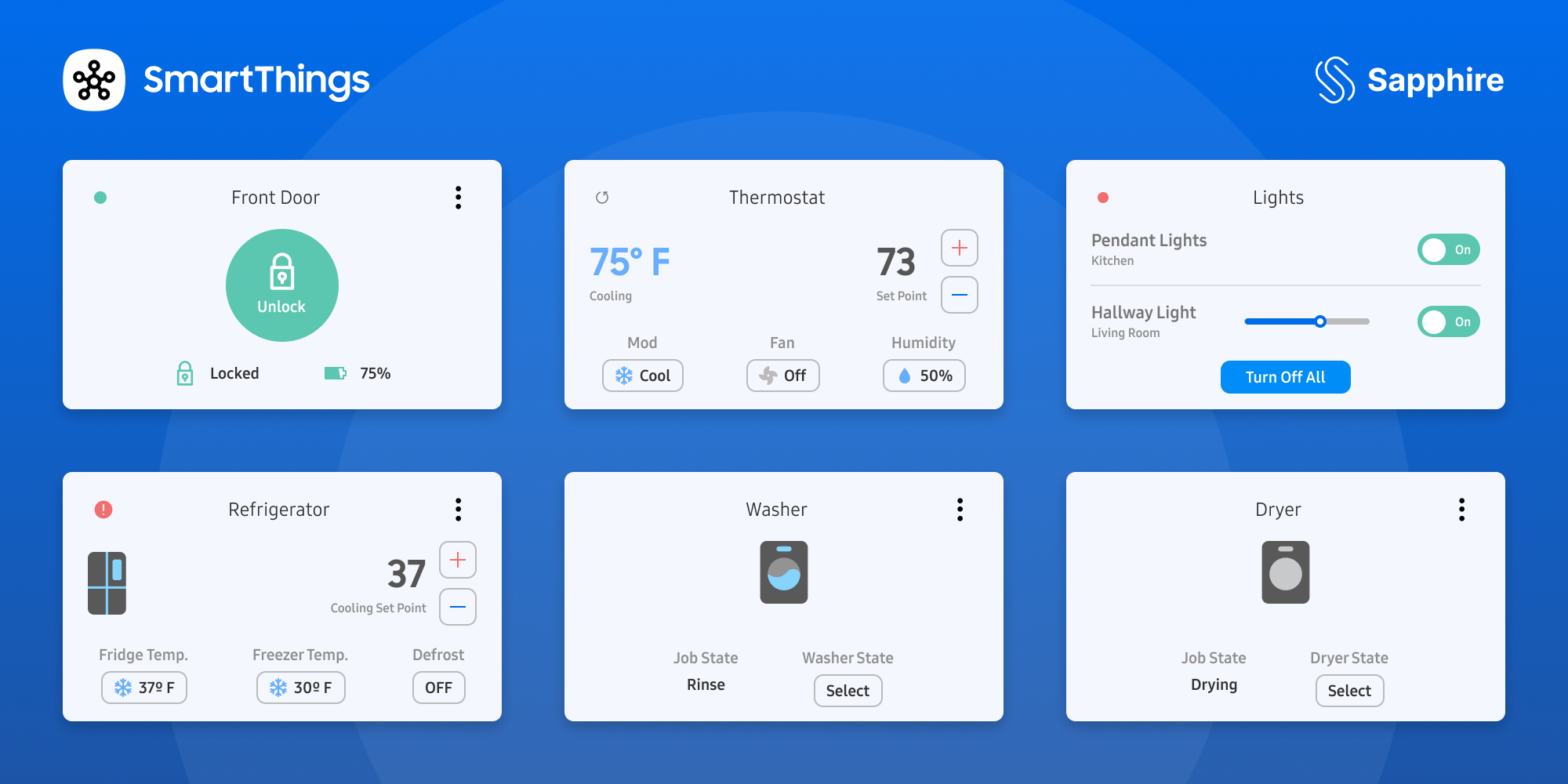
Sapphire Connected Communities is an enterprise software company that has built the first multifamily smart apartment solution on our SmartThings Pro B2B development platform. Together, SmartThings and Sapphire are redefining apartment living. Residents can enjoy all the features in the SmartThings app, and property managers will benefit from an all-in-one solution that boosts convenience, efficiency, and peace of mind for everyone.

In our latest LinkedIn Q&A, we chatted with Sapphire to discuss our partnership, how their solutions work with SmartThings, our impact on sustainability in the smart home, and more. Browse the highlights below or keep reading for the full conversation. 

The Highlights

SmartThings: What is one of the benefits of integrating with Sapphire?

Sapphire: It’s important to note that most platforms are very limited in what the resident experience can be, and if they buy devices, chances are they can’t use them at the next place they move to. With SmartThings, if a renter is living in one SmartThings community and moving to another, it’s a very seamless experience of bringing their own devices with them to continue the connected living experience. As technology changes, residents have the flexibility to add what’s important to them, leaving multifamily owners to focus on more permanent fixtures that don’t walk away and can also generate revenue. You will never move into any community needing access to a door lock, a thermostat, and a light fixture.

SmartThings: What are some of the benefits of the Sapphire platform, and why should property teams or owners adopt your technology?

Sapphire: We are the future of true planning, and here is one of our favorite examples! Traditionally, when appliances have issues, properties wait for those to be reported via work order. Depending on that particular resident’s awareness or even priority, there could be a delay in when the issue started and when it was reported. By the time there’s a visible issue with an appliance, there could be a good chance of it being in a worse state than had it been reported sooner. Appliance Diagnostics via Sapphire now gives properties the chance to be proactive versus reactive. Alerts can be managed through the Sapphire dashboard, letting the team know what the issue is and how to fix it, reducing the time spent troubleshooting while improving customer satisfaction. 

SmartThings: What are your thoughts on how a partnership like Sapphire and SmartThings push for the ESG (Environmental, Social, and Governance) initiatives multifamily owners are striving to attain?

Sapphire: Sapphire makes this possible through an enterprise-level solution, where bulk unit control comes into play. For example, in a 300-unit community, where 30% of the property is vacant. How efficient is it to send a team member out to check and change the thermostats on 90 units, especially during a hot summer day? Now, with this technology, all 90 units can have the thermostats controlled with one press of a button or even adjusted based on scheduled automation. 

Our full conversation with Sapphire

SmartThings: Hey, Sapphire! Thank you for joining us for a Q&A today. For those who are new to your brand, what is Sapphire and what is your approach to Smart Apartment Technology?

Sapphire: Hey, SmartThings! Thanks for having us. At Sapphire Connected Communities, our approach is to provide an experience for Property Management teams and Residents that is different from what they’re used to today. With our unique partnership with SmartThings, Residents can truly customize their smart homes with popular consumer products like Samsung TVs, speakers, indoor cameras, Robot Vacuum cleaners, and many more. The Resident experience is no different than SmartThings’ consumer experience, as you would traditionally see with a single-family homeowner. On the property management side, our aim is to provide enterprise smart home software that gives property management teams both the tools to manage and deploy SmartThings at scale.

SmartThings: How does our partnership benefit Multi-Dwelling Unit owners and operators? 

Sapphire: The partnership makes sense when we’re aiming for reliability, longevity, and stability in the industry. Proptech can be a very volatile industry, so partnering with an organization like Samsung and SmartThings means we can offer multifamily owners and operators peace of mind. The combination of Samsung’s established reputation, vast resources, and commitment to innovation bodes well for enduring success and global impact, and we are really able to leverage your consumer strength and global reach on the platform. Samsung and SmartThings are here to stay! 

For Sapphire users who may not be as familiar with you, could you elaborate on what makes the SmartThings platform different from any other IoT platform in the multifamily space today?

SmartThings: Our ecosystem is a big part of it. SmartThings has one of the biggest ecosystems out there, offering 6,000+ compatible devices. Through our partnership with companies like Sapphire, we can offer residents in smart apartments an enhanced connected living experience. 

So, what is one of the benefits of integrating Sapphire?

Sapphire: It’s important to note that most platforms are very limited in what the resident experience can be and if they buy devices, chances are they can’t use them at the next place they move to. With SmartThings, if a renter is living in one SmartThings community and moving to another, it’s a very seamless experience of bringing their own devices with them to continue the connected living experience. As technology changes, residents have the flexibility to add what’s important to them, leaving multifamily owners to focus on more permanent fixtures that don’t walk away and can also generate revenue. You will never move into any community needing access to a door lock, a thermostat, and a light fixture.

SmartThings: What are some of the benefits of the Sapphire platform, and why should property teams or owners adopt your technology?

Sapphire: We are the future of true planning, and here is one of our favorite examples! Traditionally, when appliances have issues, properties wait for those to be reported via work order. Depending on that particular resident’s awareness or even priority, there could be a delay in when the issue started and when it was reported. By the time there’s a visible issue with an appliance, there could be a good chance of it being in a worse state had it been reported sooner. Appliance Diagnostics via Sapphire now gives properties the chance to be proactive versus reactive. Alerts can be managed through the Sapphire dashboard, letting the team know what the issue is and how to fix it, reducing the time spent troubleshooting while improving customer satisfaction. 

SmartThings: That sounds like a win-win for everyone! The future of the smart home is simplifying routines and making sure everything works together. Can you tell us a bit more about resident support, what does it look like when residents are trying to connect their own devices via the SmartThings app?

Sapphire: One of the reasons why we also love partnering with SmartThings is because of how easy they make this process. The process is designed to be very straight, with clear instructions and automatic detection of many devices, all from within the SmartThings app. It’s easy and user-friendly. From a support standpoint, residents are offered an expanded level of support, where they can go through Sapphire for help or use SmartThings support for assistance via text, phone call, or email. There is also online content available for those who like to figure it out.

Switching gears a bit, how can a partnership like Sapphire and SmartThings push for the ESG (Environmental, Social, and Governance) initiatives multifamily owners are striving to attain?

SmartThings: SmartThings enables users to monitor and control energy usage in their homes by intelligently managing devices, such as smart thermostats, lighting, and appliances. This can lead to reduced energy consumption, lower utility bills, and a smaller carbon footprint, aligning with environmental sustainability goals. 

And with our Works With SmartThings program, we add partners to our ecosystem that also provide solutions that promote energy-efficient homes and residences. What are your thoughts on this?

Sapphire: Sapphire also makes this possible through an enterprise-level solution, where bulk unit control comes into play. For example, in a 300-unit community, where 30% of the property is vacant. How efficient is it to send a team member out to check and change the thermostats on 90 units, especially during a hot summer day? Now, with technology, all 90 units can have the thermostats controlled with one press of a button or even adjusted based on scheduled automation. 

SmartThings: What does the future look like for Sapphire with this partnership? 

Sapphire: The future of IoT alone looks promising, with continued growth and innovation. IoT used to be a luxury commodity in multifamily, and now it’s become an industry standard for working more efficiently. Overall, the future of the Sapphire and SmartThings partnership is likely to be characterized by continued innovation, improved integration experiences for property teams, and expansion outside of the unit as it evolves to meet the changing needs and expectations of users in the smart home market. With Sapphire and SmartThings, we feel we can finally deliver on a truly connected community! 

SmartThings: Are there any limitations to the Sapphire and SmartThings experience? 

Sapphire: Yes, Sapphire and SmartThings generally require the property to deploy a managed Wi-Fi network or community IoT network in order to provide a community-wide Connected Living experience. Given the expansive device integrations and extensible nature of the resident’s IoT network, the hubs need to be able to communicate seamlessly with the smart devices. A managed WiFi network ensures stable and reliable connectivity. 

SmartThings: That was very informative. Thank you to our partners at Sapphire for chatting with us today! It was great learning more about your technology and the solutions you provide to consumers, property teams, and owners. Want to know more? #DoTheSmartThings and drop a note in the comments. 

Sapphire: Thank you for having us SmartThings! 

Don’t miss our next partner Q&A! Follow us on LinkedIn and X, and to learn more about our partners, visit partners.smartthings.com/supported-devices. 

Privacy Attacks in Federated Learning

Attacks on Federated Learning: Protecting Privacy

Attacks on Model Updates

In federated learning, each participant submits model updates instead of raw training data during the training process. However, recent research has demonstrated that it’s often possible to extract raw training data from model updates. One early example came from the work of Hitaj et al., who showed that it was possible to train a second AI model to reconstruct training data based on model updates.

Figure 1: Data extracted from model updates by the attack developed by Hitaj et al. [1]. The top row contains original training data; the bottom row contains data extracted from model updates.

Figure 2: Data extracted from model updates by the attack developed by Zhu et al. [2]. Each row corresponds to a different training dataset and AI model. Each column shows data extracted from model updates during training; columns with higher values for "Iters" represent data extracted later in the training process.

How to fix it

Attacks on model updates suggest that federated learning alone is not a complete solution for protecting privacy during the training process. Many defenses against such attacks focus on protecting the model updates during training, so that the organisation that aggregates the model updates does not have access to individual updates.

Attacks on Trained Models

The second major class of attacks target the trained AI model after training has finished. The model is the output of the training process, and often consists of model parameters that control the model’s predictions. This class of attacks attempts to reconstruct the training data from the model’s parameters, without any of the additional information available during the training process.

Figure 3: Training data extracted from a trained AI model using the attack developed by Haim et al. [3]. The top portion of the figure (a) shows extracted data; the bottom portion (b) shows corresponding images from the original training data.

Figure 4: Training data extracted from a diffusion model using the attack developed by Carlini et al. [4]. Diffusion models are designed for generating images; one popular example is OpenAI’s DALL-E.

Figure 5: Training data extracted from a large language model (LLM) using the attack developed by Carlini et al. [5]. This example is from GPT-2, the predecessor of ChatGPT.

How to fix it

Attacks on trained models show that trained models are vulnerable, even when the training process is completely protected. Defenses against such attacks focus on controlling the information content of the trained model itself, to prevent it from revealing too much about the training data.

Conclusion

In this post, we have discussed the two major classes of attacks on federated learning: attacks on model updates and attacks on trained models. We have also discussed the importance of protecting privacy during the training process and the need for defenses against such attacks. In the next post, we will introduce one of the key issues for federated learning: distribution of the data among the participating entities.

FAQs

Q: What are the two major classes of attacks on federated learning?
A: The two major classes of attacks on federated learning are attacks on model updates and attacks on trained models.

Q: How do attacks on model updates work?
A: Attacks on model updates involve extracting raw training data from the model updates shared during the training process.

Q: How do attacks on trained models work?
A: Attacks on trained models involve reconstructing the training data from the trained model’s parameters.

Q: What are some common defenses against attacks on model updates?
A: Some common defenses against attacks on model updates include protecting the model updates during training and using cryptography to prevent unauthorized access to the model updates.

Q: What are some common defenses against attacks on trained models?
A: Some common defenses against attacks on trained models include controlling the information content of the trained model itself and using differential privacy to prevent the model from revealing too much about the training data.

Detecting AI-Generated Content: The Academic Challenge

When Humans Write, They Leave Subtle Signatures

When humans write, they leave subtle signatures that hint at the prose’s fleshy, brainy origins. Their word and phrase choices are more varied than those selected by machines that write. Human writers also draw from short- and long-term memories that recall a range of lived experiences and inform personal writing styles. And unlike machines, people are susceptible to inserting minor typos, such as a misplaced comma or a misspelled word. Such attributes betray the text’s humanity.

Signature Hunting Presents a Conundrum

For these reasons, AI-writing detection tools are often designed to “look” for human signatures hiding in prose. But signature hunting presents a conundrum for sleuths attempting to distinguish between human- and machine-written prose.

The ‘Burstiness’ of Human Prose

During the recent holiday break, Edward Tian, a senior at Princeton University, headed to a local coffeeshop. There, he developed GPTZero, an app that seeks to detect whether a piece of writing was written by a human or ChatGPT—an AI-powered chat bot that interacts with users in a conversational way, including by answering questions, admitting its mistakes, challenging falsehoods and rejecting inappropriate requests. Tian’s effort took only a few days but was based on years of research.

His app relies on two writing attributes: “perplexity” and “burstiness.” Perplexity measures the degree to which ChatGPT is perplexed by the prose; a high perplexity score suggests that ChatGPT may not have produced the words. Burstiness is a big-picture indicator that plots perplexity over time.

“For a human, burstiness looks like it goes all over the place. It has sudden spikes and sudden bursts,” Tian said. “Versus for a computer or machine essay, that graph will look pretty boring, pretty constant over time.”

Detectors Without Penalties

Much like weather-forecasting tools, existing AI-writing detection tools deliver verdicts in probabilities. As such, even high probability scores may not foretell whether an author was sentient.

“The big concern is that an instructor would use the detector and then traumatize the student by accusing them, and it turns out to be a false positive,” Anna Mills, an English instructor at the College of Marin, said of the emergent technology.

A Long-Term Challenge

In an earlier era, a birth mother who anonymously placed a child with adoptive parents with the assistance of a reputable adoption agency may have felt confident that her parentage would never be revealed. All that changed when quick, accessible DNA testing from companies like 23andMe empowered adoptees to access information about their genetic legacy.

Though today’s AI-writing detection tools are imperfect at best, any writer hoping to pass an AI writer’s text off as their own could be outed in the future, when detection tools may improve.

Higher Ed Adapts (Again)

“Think about what we want to nurture,” said Joseph Helble, president of Lehigh University. “In the pre-internet and pre-generative-AI ages, it used to be about mastery of content. Now, students need to understand content, but it’s much more about mastery of the interpretation and utilization of the content.”

ChatGPT calls on higher ed to rethink how best to educate students, Helble said. He recounted the story of an engineering professor he knew years ago who assessed students by administering oral exams. The exams scaled with a student in real time, so every student was able to demonstrate something. Also, the professor adapted the questions while administering the test, which probed the limits of students’ knowledge and comprehension.

Conclusion

The emergence of AI-writing detection tools has sparked a cat-and-mouse game between writers and detectors. While some computer scientists are working to make AI writers more humanlike, others are working to improve detection tools. The scientific community and higher ed have not abandoned AI-writing detection efforts—and those efforts are worthwhile. Whether motivated by a desire to ferret out dishonesty in academic pursuits, protect public discourse from malicious uses of text generators, or understand what makes prose human, all must contend with one fact: it’s really hard to detect machine- or AI-generated text, especially with ChatGPT.

FAQs

Q: What is the purpose of AI-writing detection tools?
A: AI-writing detection tools are designed to distinguish between human-written and machine-generated text, with the goal of detecting potential plagiarism, academic dishonesty, and malicious uses of text generators.

Q: How accurate are AI-writing detection tools?
A: AI-writing detection tools are not yet 100% accurate, and their accuracy depends on various factors, including the complexity of the text, the type of AI used to generate the text, and the training data used to develop the detection tool.

Q: Can AI-writing detection tools be used to detect AI-generated text in real-time?
A: Yes, some AI-writing detection tools can be used to detect AI-generated text in real-time, but their accuracy may vary depending on the specific tool and the context in which it is used.

Q: What are the potential consequences of using AI-writing detection tools?
A: The potential consequences of using AI-writing detection tools include false positives, which can lead to unnecessary stress and anxiety for students, and false negatives, which can allow AI-generated text to go undetected. Additionally, the use of AI-writing detection tools may raise ethical concerns, such as the potential for bias and the impact on academic freedom.