Home Blog Page 642

EdTech Success Strategies for 2024-25

5 Edtech Challenges K-12 Are Grappling with Right Now

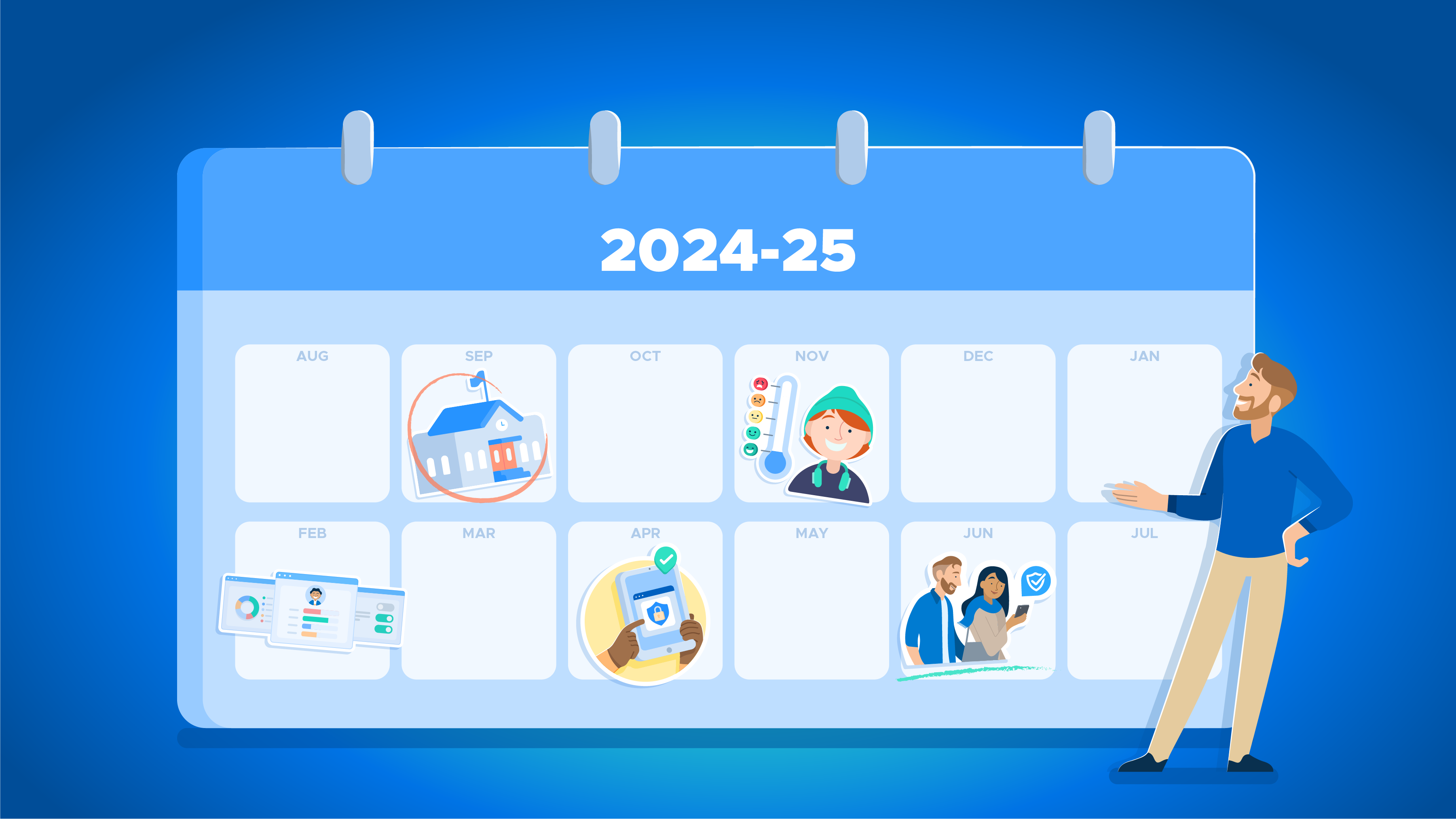
A new school year means different things to different people. The experience of an administrator is different from that of a teacher, and a teacher’s experience is different from a student’s. For K-12 edtech leaders, the start of the 2024-25 school year brought some familiar pressures, like systems to deploy and staff to train. But they’re also navigating new priorities and edtech challenges, including AI integration, student mental health, and digital equity, all while ESSER funding begins to sunset.

The CoSN 2024 State of EdTech District Leadership report sheds additional light on these issues and the unique challenges they present. If you haven’t had a chance to review the entire 55-page report, here are some of the key findings.

1. Concerns about AI in Education

Nearly all edtech leaders (97%) see benefits in artificial intelligence (AI) for education. Yet they also worry about the challenges AI presents. These include ensuring its ethical and responsible use, concerns about cheating, threats to student data privacy, and defending against new cyber risks and new forms of cyberbullying.

2. Defending Against K-12 Cybersecurity Threats

Cybersecurity remains the top concern among edtech leaders, with 99% of districts focused on improving protections. However, districts must still overcome the realities of limited budgets, lack of qualified IT security personnel, and the challenge of balancing open learning environments with robust security.

3. Supporting & Improving Student Wellbeing

Nearly all school districts report using some form of technology to support or improve student wellbeing (93%). A closer look at the data, though, suggests technology could be better utilized. For example, only 63% are taking advantage of student wellness monitoring to identify signs of bullying, violence, suicide, self-harm, and depression. Even fewer (28%) are using data analytics to assess school climate.

4. Increasing Digital Equity & Parent Engagement

Districts seem to be struggling with a growing digital divide. Just under one quarter (24%) of districts say their students have access to devices at home. At the same time, districts see a need to improve engagement with families, with 73% reporting that they’re making changes to their engagement techniques and rethinking how technology can help.

5. Using & Analyzing Data Effectively

Every day, students generate thousands of data points through their online activities, device usage, and digital interactions. This data holds the insights districts need to better serve their students. While edtech leaders recognize the opportunity, few report that their district is prioritizing initiatives to improve data visualization (23%) and implement analytics (22%), leaving them struggling to overcome this hurdle.

Today’s & Tomorrow’s EdTech Challenges by Evaluating Technology Providers Carefully

The CoSN report provides valuable insights into the issues edtech leaders are navigating. However, understanding these challenges is just the first step. You also need to understand how to mitigate these challenges.

Evaluating the technology tools you’re currently using is a great place to start. With the right technology partners by your side, your challenges won’t magically disappear, but they will be much easier to manage.

When evaluating your edtech partners and solutions, carefully consider the following:

Integrated Suite of Tools

When you’re able to consolidate several edtech needs with a single provider, you can reduce complexity, streamline edtech management, and alleviate the demands on your internal IT resources.

Designed for K-12

Prioritize partners who are singularly focused on solving your specific challenges. When you choose edtech solutions that are designed specifically for K-12 education, you’ll already be a step ahead of any challenge that comes your way.

AI-Powered Capabilities

As you navigate how to incorporate AI into your district, seek vendors that have a long track record of using AI effectively and ethically. Their expertise and guidance can help you also move forward confidently and responsibly.

Robust Cybersecurity & Data Privacy Protection

Given the critical nature of maintaining data security and privacy in schools, be sure to choose partners who have attained SOC 2 Type 2 certification, comply with all relevant data privacy regulations, and provide advanced threat protections, like 256-bit encryption and proactive identification of potential security vulnerabilities.

Proven Expertise in Student Safety & Wellness

Technology can be an invaluable resource to help districts support and improve their students’ safety and overall wellbeing. A student wellness monitoring solution like Securly Aware relies on AI analysis to protect students’ privacy, supports earlier identification of students who demonstrate risk signals, offers 24/7 expert risk analysis, and provides immediate notification of critical situations.

Tools to Support Digital Equity & Parent Engagement

Sharing the responsibility for students’ online safety with your families is a meaningful way to build school-family connections. A cloud-based school web filter like Securly Filter lets you confidently send student devices home to bridge equity gaps. The Securly Home parent app lets you give parents and caregivers control of those devices at home and gain visibility into their students’ learning and online behaviors.

Best-in-Class Customer Support

Implementation is just the beginning. Look for a technology partner that openly shares their CSAT ratings and provides dedicated customer support resources to help you quickly troubleshoot and remedy technical issues. Customer support is ultimately just as key as the products provided.

Evidence of Efficacy

Seek solutions that can demonstrate real-world impact. Case studies, testimonials from similar school districts, and data on improved outcomes are critical indicators of a technology provider’s ability to deliver value and support your needs effectively.

Minimize Your EdTech Headaches by Choosing the Right EdTech Partners

As a school district edtech leader, you’ll always have more than your fair share of challenges to manage. But by carefully choosing technology partners and solutions, you can minimize the stress of the problems you’re dealing with today—and more confidently navigate the uncertainty of what lies ahead.

Since 2013, Securly has been developing technology solutions to address the needs of K-12 edtech leaders. Today, our integrated suite of solutions is relied on by more than 20,000 districts and schools to keep their students safe, secure, and ready to learn.

Explore more by visiting www.securly.com.

FAQs

Q: What are the top edtech challenges K-12 districts are facing?
A: The top edtech challenges K-12 districts are facing include AI integration, student mental health, digital equity, cybersecurity, and data analysis.

Q: How can edtech leaders mitigate these challenges?
A: Edtech leaders can mitigate these challenges by evaluating technology providers carefully, considering integrated suites of tools, AI-powered capabilities, robust cybersecurity, and proven expertise in student safety and wellbeing.

Q: What is the importance of data privacy in schools?
A: Data privacy is critical in schools, and edtech leaders should prioritize partners who have attained SOC 2 Type 2 certification, comply with all relevant data privacy regulations, and provide advanced threat protections.

Q: How can edtech leaders support digital equity and parent engagement?
A: Edtech leaders can support digital equity and parent engagement by sharing the responsibility for students’ online safety with families, using cloud-based school web filters, and providing parents with control of devices at home.

ChatGPT Aims to Challenge Google

0

ChatGPT Search (CGS) is a Landmark Launch in the Shift from Traditional to AI Search

Now, OpenAI Competes with Google Head-on

Getting useful answers on the web can take a lot of effort. It often requires multiple searches and digging through links to find quality sources and the right information for you. The positioning is clear: ChatGPT Search is a way to get a straight answer without digging through cluttered search results or browsing websites.

CGS, which is directly integrated with ChatGPT instead of a standalone search engine, decides whether a query benefits from web results or not, and you can rerun queries through other models like o1 preview to compare the answers.

ChatGPT will choose to search the web based on what you ask, or you can manually choose to search by clicking the web search icon. It keeps the context of your search going in a conversation interface:

Go deeper with follow-up questions, and ChatGPT will consider the full context of your chat to get a better answer for you.

Collision Course

Based on recent traffic trends, ChatGPT could catch up to Google in 2 years. In the chart above, I extrapolated ChatGPT’s and Google’s total traffic over the next two years if the trend from the last six months remains constant.

This chart will probably outrage or scare you, but the chance that events unfold exactly as depicted in this chart is low. The reason I bring it up here is to consider the fact that many structural changes start slowly based on the saying “first gradually, then suddenly”.

Establishing Visibility

Monitor referral traffic to and from ChatGPT using this referral dashboard from Flow Agency. With a few tweaks, you can monitor conversions in GA4 as well. You should also monitor site crawls from LLMs and your performance on Bing. Experiment with content tweaks to improve your AI Search visibility.

Keep investing in traditional SEO because it forms the basis of AI Search and answers.

Place a Bet

The big question in this is whether you’re willing to take a bet or play it safe. Being a first-mover to SEO had massive benefits as the incumbents tend to stay incumbents, mainly caused by strong backlink profiles, robust user signals, and brand familiarity.

For now, ChatGPT uses Bing search results to ground and weigh answers, which means sites with strong visibility on Bing also have a high chance of being very visible in CGS. However, there is a chance that using Search for RAG (grounding) is just a jumping-off point until AI Search platforms have gathered enough of their data (queries and user behavior).

Looking Forward

I’m leaving you with two interesting questions:

  1. Is it a coincidence that ChatGPT Search came out three days after Apple Intelligence launched publicly? Apple is integrating ChatGPT access into experiences within iOS 18, iPadOS 18, and macOS Sequoia, allowing users to access its expertise — as well as its image- and document-understanding capabilities — without needing to jump between tools. Siri can tap into ChatGPT’s expertise when helpful.

  2. As it’s likely that more users don’t browse the web but get answers from ChatGPT, Gemini, Perplexity, etc. directly, will the open web become a place primarily for bots instead of humans? And how would that change the purpose and look of websites?

Conclusion

The information reported that OpenAI loses $5 billion a year in expenses. Just capturing 3% of Google’s $175 billion Search business would allow OpenAI to recoup expenses. OpenAI has a strategic advantage over Google: Search GPT can provide a very different, maybe less noisy, user experience than Google because it’s not reliant on ad revenue.

FAQs

Q: What does this mean for traditional search engines like Google and Bing?
A: Traditional search engines will need to adapt to the new AI search landscape and potentially integrate with AI chatbots to stay relevant.

Q: Is Google at risk of being replaced by ChatGPT Search?
A: It’s unlikely that Google will be replaced entirely, but it will need to innovate to stay competitive in the new AI search landscape.

Q: What are the benefits of ChatGPT Search?
A: ChatGPT Search provides users with a more personalized and contextual search experience, as it considers the full context of the user’s search history and preferences.

Q: How does ChatGPT Search differ from traditional search engines?
A: ChatGPT Search integrates with AI chatbots like ChatGPT to provide more accurate and relevant answers to user queries, unlike traditional search engines which rely solely on algorithms and crawled web pages.

Bridging Technology and Cultural Heritage

0

Orkhan Mammadov: A Pioneering Media Artist and AI Researcher

Early Life and Education

Orkhan Mammadov, a pioneering media artist and AI researcher from Azerbaijan, was born in 1990 in the culturally rich city of Ganja. His interest in digitizing and regenerating cultural heritage has led him to create works that explore the complex relations between cultural heritage, society, science, and human interaction.

Mammadov studied Computer Science in Baku from 2008 to 2010 before pivoting towards visual communication, which he undertook in Istanbul from 2012 to 2014. After that, he pursued Fine Arts and Experimental Media in Prague from 2014 to 2016 and Innovation Entrepreneurship in Amsterdam from 2020 to 2021. Mammadov has gathered several influences over time, with the likes of Ryoji Ikeda, Olafur Eliasson, James Turrell, Takashi Murakami, and Yayoi Kusama being chief among his many inspirations.

Artistic Style and Themes

The artist’s background in computer science and visual communication, combined with his passion for regenerating history and culture, has led him to develop a unique creative oeuvre that blurs the lines between art and technology. His striking works often feature intricate patterns inspired by traditional Kilim motifs, as well as Girih patterns found in Middle Eastern architecture.

Mammadov’s multi-layered work blurs a range of ornaments and digital artefacts, all the while working in interactive methods through the artistic production of conceptual moving images, heavy new media installations, and technical forensics applications.

Use of Artificial Intelligence and Machine Learning

Orkhan is using artificial intelligence and machine learning in order to create stunning phygital data sculptures and paintings. His works challenge our understanding of cultural heritage and re-imagine the heritage of the Middle East. Mammadov’s art is more than just visually impressive. It’s also deeply research-based. Mammadov’s works put front and center the significance of Azerbaijani and Middle Eastern tradition, history, and both tangible and intangible heritage.

Exhibitions and Recognition

Mammadov’s works have been exhibited internationally, including the Venice Biennale in 2019. He has gained recognition for his dynamic carpet installations and data sculptures, which explore themes of alienation, escapism, and the interplay between virtual and real worlds. His artistic practice is a powerful commentary on the rapid and chaotic technological changes taking place in the world, as well as a reflection on the unique challenges and opportunities facing the Middle East and Azerbaijan.

Philosophy and Approach

For Mammadov, art is a way of bridging past and present, tradition and innovation. He sees his work as an opportunity to create digital alternatives for future generations, preserving and re-imagining cultural heritage in new and exciting ways. By using mathematics, physics, and geometry to create imperfect objects, he seeks to replicate the natural world and bring its perfect order to the world of art.

Recent Projects

One of the recent projects by Orkhan Mammadov, ‘Orientalism AI data Paintings’, is an immersive exhibition in the framework of Art Dubai Digital 2023. Created by Mammadov, and presented by the Art in Space Gallery, this exhibition featured an immersive experience and a series of paintings created using a combination of AI techniques, including Object Recognition, Cluster Data Visualization, Image Classification Visualization, and GAN Visualization. These techniques were used to generate new and unique visual expressions that pay homage to the rich cultural heritage of the Middle East and North Africa, while also exploring the intersection of traditional art and modern technology.

Conclusion

With his unique vision and innovative approach, Orkhan Mammadov is a rising star in the art world, a trailblazer who’s pushing the boundaries of what’s possible in the field of new media art. As he continues to explore the intersections between culture, technology, and human experience, we can expect to see more exciting and thought-provoking works from this talented artist.

FAQs

Q: What is Orkhan Mammadov’s artistic style?
A: Orkhan Mammadov’s artistic style blends traditional and digital elements, often featuring intricate patterns inspired by traditional Kilim motifs and Girih patterns found in Middle Eastern architecture.

Q: What techniques does Orkhan Mammadov use in his work?
A: Mammadov uses a combination of AI techniques, including Object Recognition, Cluster Data Visualization, Image Classification Visualization, and GAN Visualization, to generate new and unique visual expressions.

Q: What is the significance of Orkhan Mammadov’s work?
A: Mammadov’s work challenges our understanding of cultural heritage and re-imagines the heritage of the Middle East. His art is deeply research-based and puts front and center the significance of Azerbaijani and Middle Eastern tradition, history, and both tangible and intangible heritage.

Q: Where can I find more information about Orkhan Mammadov’s work?
A: You can find more information about Orkhan Mammadov’s work on his website, www.orkhan.art, or through the Art in Space Gallery, www.artinspace.art.

A Second Trump Presidency’s Impact on Tech

0

AI Policy

A Trump presidency likely means a less constrained AI industry. Trump has promised to repeal the Biden administration’s AI executive order, which instructed agencies to create testing standards and guardrails to prevent AI from being used in discriminatory ways. Trump previously signed his own executive order covering AI safety and standards, but it did not touch on discrimination. The second Trump administration will likely deprioritize AI discrimination safeguards and discourage the use of the Defense Production Act to require more transparency, something conservatives have characterized as government overreach.

AI policy is an area where Elon Musk will likely seek to exert his influence, assuming he and Trump remain on good terms. Musk runs xAI and has been critical of incumbent players like OpenAI — a firm he co-founded but later distanced himself from and sued. Musk has supported AI safety measures like California’s controversial and ultimately vetoed SB 1047, and he previously signed a call for a moratorium on major AI developments for safety reasons. But his focus on existential risks has been criticized by some AI researchers as a distraction from more immediate risks like discrimination.

It’s also not yet clear how Trump will handle thorny copyright issues surrounding generative AI, including what information large language models are allowed to train on. AI executives, including Musk, could seek to shape how Trump views the issue in a way that’s favorable to them.

Antitrust

The antitrust enforcers of the Trump administration are expected to take a more lax approach to regulating the tech industry. This could involve reducing the scrutiny of acquisitions and mergers, making it easier for companies like Google, Amazon, Facebook, and Apple to continue their consolidation of the digital landscape.

Kids Online Safety

Trump hasn’t said much about where he stands on this topic or on the leading congressional bill on the subject, the Kids Online Safety Act (KOSA). That bill remains stalled in the House after passing through the Senate (in combination with an update to children’s data privacy law), and it’s not yet clear what could happen in future congressional sessions. Current Republican House leadership has expressed concerns that KOSA could unduly limit speech, so a Democratic House might be more open to giving it floor time, but ultimately, the concerns with the bill don’t fall entirely down partisan lines.

Adam Kovacevich, whose group has opposed KOSA, suggests Democrats should be wary of passing the bill under a Trump presidency — pointing to lead cosponsor Sen. Marsha Blackburn’s (R-TN) comments about protecting kids from transgender content online. “Democrats will have to decide whether they want to hand Trump & MAGA state law enforcers a powerful new censorship tool,” he writes.

Electric Vehicles

Electric vehicle tax credits and other climate-focused policies will likely be in jeopardy under Trump, though that might be somewhat complicated by his connection with Musk, with Tesla standing to gain from EV-friendly policies. Still, Wedbush analyst Dan Ives previously said that Tesla’s “scale and scope … could give Musk and Tesla a clear competitive advantage in a non-EV subsidy environment.”

Bloomberg Intelligence analyst Nathan Dean sees just a 30 percent chance of continued EV tax credits under Trump. He predicts continued rhetoric that EVs are “a boon to China’s economy,” alongside efforts to replace the tax credits with consumer incentives that could benefit traditional carmakers like General Motors, Ford, and Stellantis.

Semiconductor Policy

Under the Biden administration, Congress passed the bipartisan CHIPS and Science Act, which injected funds into creating a domestic semiconductor production industry — something experts say is a national security necessity and critical to maintaining control over the supply chain for important technologies including medical tech. But Trump called the bill “so bad” during his appearance on Joe Rogan’s podcast, and soon after, House Speaker Mike Johnson (R-LA) said he was open to repealing the law (though he later walked back those comments). Trump can’t undo a law on his own, but he could perhaps instruct his Commerce Department to slow-walk aspects of its rollout.

Crypto

Trump has made significant overtures to the cryptocurrency industry, headlining a major Bitcoin conference this summer and picking up significant support from prominent crypto investors like Marc Andreessen and Ben Horowitz. With Trump’s election, the industry is likely to get its top wish: the ouster of Securities and Exchange Commission Chair Gary Gensler, whom the industry views as its chief antagonist. Expect more permissive and hands-off regulation of this industry, as Trump has called for making the US a “Bitcoin superpower.”

How to Become Robotics Engineer?

0

Introduction

Robotics is rapidly emerging as one of the fastest-growing scientific domains, unlocking new technologies across various industries and daily life. From manufacturing automation to self-driving cars and medical robots, the applications of robotics are vast, making it one of the most significant technological breakthroughs of the modern century. Robotics engineering is a highly rewarding career for those passionate about creating and programming robots. This article outlines the educational requirements and steps needed to become a robotics engineer, offering essential guidance for aspiring professionals.

Overview

  • The role and responsibilities of a robotics engineer.
  • The educational path required to become a robotics engineer.
  • Essential technical and soft skills needed in robotics engineering.
  • Practical steps to gain experience and build a career in robotics.
  • Frequently asked questions about the robotics engineering profession.

What is a Robotics Engineer?

A robotics engineer is an individual that develops robots, and systems which control them. They are Mechanical engineers, electrical engineers and computer engineers who are engaged in creating robots that are able to act on their own or can support human action. Robotics engineers participate at different levels starting from conceptual designing of the robot and then especially the construction of the robot through programming and testing of the robot.

Why Become a Robotics Engineer?

Robotics engineering is an incredibly dynamic and innovative field that offers a plethora of reasons to pursue it as a career. Here are some compelling reasons why you should consider becoming a robotics engineer:

Why Become a Robotics Engineer?

High Demand for Skills

Robotics engineers are highly sought after professionals currently in such sectors as manufacturing, health care, supply chain, and entertainment and gaming. Since, the coming few years will witness demands for more automation and artificial intelligence there will be a robust demand for professionals who are specialized in creating constructing and managing robotics systems. It is for this reason that candidates with these high demands usually enjoy very high job security and lots of job offers.

Attractive Salaries

It is important to note that robotics engineers and any person that has a specific niche and skill set in robotics is well compensated for their duties and work. Several sources show that the median salary of a robotics engineer is a lot higher than the average for other engineers. When you have worked for some time, have mastered your profession and your work involves taking on big projects, you are likely to earn higher wages.

Cutting-Edge Technology

This means that handling a job in robotics entitles the individuals as technologists of the future. You can make use of modern trends in your work like artificial intelligence, machine learning, computer vision, and others. It is at such levels of exposure that one is able not only to keep the work interesting but also keep on learning as the field expands due to technological advancement.

Diverse Career Opportunities

Career opportunities availed to a robotics engineer thus include; It can range from creating robotic systems for manufacturing lines, to designing medical robots to aide in surgeries, to even self-driving cars. This has the advantage of giving you room to search for the specialty that you have interest in, or are passionate about.

Impactful Work

Robotics engineers engage in projects with societal implications in most cases, or almost all the time. For instance, robots can enhance productivity in automotive production, work in heavily poisoned areas, help surgeons in operations, and play and help the elderly or disabled individuals. That sense of knowing one is building a better world is also one of the major rewards that these professionals can get.

Creative Problem-Solving

If you like working with your brains in such a way that you have to solve intricate puzzles and exercise imagination in equal measure, you will find robotics engineering to be a wonderful career for you. Robot construction and designing entails a lot of copying and inventiveness. Every project entails some or the other complications and difficulties that cannot be solved through conventional methods and ideas.

Collaborative Work Environment

Usually robotics projects implies cooperation with specialists from different fields mechanical engineers, electrical engineers, computer scientists, and even psychological counselors. Such approach helps in developing interprofessional relations where knowledge is shared and, at the same time, you can bring in your own skills and experience.

Continuous Learning and Growth

Robotics is a progressive science, and many novelties and discoveries are made time and again. Indeed as a robotics engineer there will be great prospects to build new learning literature on the general knowledge of robotics engineering new technologies, knowledge and ability to acquire adequate knowledge and/or competence on the new trends in this field. Such an ongoing learning process adds zest and excitement to the career and is considered as a plus side of the profession.

Skills Needed to Become a Robotics Engineer

Let us now look into the skills needed to become robotics engineer.

Technical Skills

  • Mechanical Engineering: Understanding of mechanics, dynamics, and materials to design and build robot structures.
  • Electrical Engineering: Knowledge of circuit design, sensors, and actuators to control robot movements and functions.
  • Computer Science: Proficiency in programming languages such as Python, C++, and ROS (Robot Operating System) for robot control and automation.
  • Mathematics: Strong foundation in algebra, calculus, and geometry for modeling and simulating robotic systems.
  • Control Systems: Understanding of control theory and algorithms to develop precise and reliable robotic movements.

Soft Skills

  • Problem-Solving: Opportunity to view problems and generate unusual approaches within designing and testing.
  • Collaboration: Achieving good collaboration with other staffs such as engineers, designers, and programmers.
  • Communication: In particular, effective explanation and presentation of technical information for both, technical and non-technical audiences.
  • Attention to Detail: Accuracy in the development of robotic models, writing of programs and testing to confirm that the robots perform the required tasks without risks to other beings.
  • Continuous Learning: Technological education: keeping abreast with the new technological developments in the field of robotics and applying the new knowledge acquired to a particular task or project.

Roadmap to Becoming a Robotics Engineer

Becoming a robotics engineer involves a combination of formal education, hands-on experience, and continuous learning. Here is a detailed roadmap to guide you on this career path:

Obtain a Strong Educational Foundation

The most important advice is to begin with a good and strong academic base. At high school level, one should concentrate on a mathematics, physics and computer science. This is by enrolling in after school activities like science clubs, or robot building and championship if any in the school. For higher education, get a bachelor’s degree in robotic engineering, mechanical engineering, electric engineering, computer science or related courses. While still undertaking your undergraduate degree, make sure to take classes in mechatronics, control systems, programming, artificial intelligence and machine learning. One must perform projects and internships to learn practical things and must take part in the university robotics club and competitions to implement theoretical things.

Develop Key Technical Skills

The technical competencies are the core skills essential in Robotics Engineering profession. Find out more about scripting languages that are used with robotics and enhance your capacity to write and fine tune code for robotics using languages like Python, C++, and Java. Develop a good comprehension of implementing electronic circuits, Microcontrollers, Sensors and Actuators, mechanics and strength of material and basics fabrication procedures. CAD such as solid works and simulations skills to model and test the robotic system is also important.

Gain Practical Experience

They also affirms that, experience based education is important for one to learn the applicability of the knowledge that they have gained. Companies and research institutions should be sought for internships and cooperative education (co-op). Participate in research work on robotics as a member of research groups or work independent and cooperate with professors appointed for the corresponding field. Robotics competition and hackathons can be made to apply the skills learned in the class, meet with professionals, and display the acquired skills.

Pursue Advanced Education (Optional)

One should consider earning a master’s degree in robotics engineering or a related field of study in order to get more extensive information and better job offers. Should you focus on research and academics a degree in Ph. D with an emphasis in robotics or any related area prepares one for research positions and faculty positions.

Build a Professional Network

The IEEE or the RSA should be joined so as to have connections to other professionals who are in the same line of business, various sources of information and other related updates in the market. Prospective members should attend robots trade shows and conventions so they can have ideas on the recent innovations in the trade and also to network with other technocrats in this field.

In robotics as a field of science, learning is a continuous process because the prospects for its development are immense. In the same way, it is important to keep yourself up to date with new trends and technologies by reading journals, going through webinars and online courses. Get certified to increase your chances of employment by making your self qualify for better positions in the market.

Apply for Jobs and Build a Career

To begin with, one can apply for junior level jobs such as robotics engineer, robotics technician, or a research assistant. Don’t forget to adapt the resume and the cover letter pointing at several relevant skills and experiences. With time and experience, one should try to seek promotions in order to graduate from the junior position to a senior robotics engineer, project manager, or a research scientist. To enlarge its pool of knowledge and discover potential for career progression, it should constantly look for some sort of development.

Job Description and Responsibilities

A robotics engineer is professional who essentially deals with designing, building and overseeing the operations of robots and robotic related systems. These kind of work cuts across different sectors such as manufacturing, health, entertainment, and research sectors. Here is a detailed look at the typical job description and key responsibilities of a robotics engineer:

Design and Development

  • Conceptualization: Contribute to the definition and architectural design of new robotic systems. It contains a process of developing creative concepts and formulations of how the course will be implemented.
  • Prototyping: Create designs to come up with a preliminary model that will be used to evaluate the potential of the designs. This involves the utilization of computer aided design (CAD) tools and 3D printing equipment.
  • Simulation and Modeling: Employ simulation software for the purpose of simulating the outcome of robotic apparatus for various conditions. It assists in assembling performance expectations as well as possible problems before actual models are manufactured.

Programming and Coding

  • Software Development: Develop script to interact with robots and also write code that would improve on the performance of robots. This includes algorithms for Nav, Perc, and Manipulation.
  • Integration: Organize the elements that are related to the equipment’s operational framework with the software elements to guarantee that it runs efficiently. This includes dealing with such elements of a system as sensor, actuator and control equipment.
  • Testing and Debugging: Conduct thorough Rapid Prototype Testing of robotic systems to identify bugs and performance issues. Begin with virtual simulations and follow up with physical assessments for certain parts.

Research and Innovation

  • Technology Advancements: Stay updated with the latest advancements in robotics and related fields. This involves reading research papers, attending conferences, and collaborating with academic and industry experts.
  • Innovation: Continuously seek ways to improve existing robotic systems and develop new technologies. This includes working on research projects and experimenting with new ideas.

Project Management

  • Project Planning: Plan and manage robotics projects from concept to completion. This involves setting timelines, defining milestones, and ensuring projects stay on track.
  • Team Collaboration: Work closely with other engineers, technicians, and professionals from different disciplines. Effective communication and teamwork are crucial for the successful execution of projects.
  • Documentation: Maintain detailed records of design processes, test results, and project progress. Proper documentation ensures that you document all aspects of the project thoroughly and can reference them in the future.

Maintenance and Support

  • System Maintenance: Some of these measures are; Frequently check clinical robotic system in order to confirm its proper functioning. This covers matters such as the upgrading of software or replacement of worn out components as well as dealing with problems.
  • Customer Support: To assist clients especially the end-users they should be able to offer technical support and conduct some training. This entails education about how robotic systems work as well as troubleshooting when there is problems.

Safety and Compliance

  • Safety Protocols: You must ensure that you create all robotic systems according to safety requirements and use them in compliance with these standards. This include risk evaluations and the provision of other safety measures.
  • Quality Control: Conduct quality control tests in order to verify that the automatically controlled systems satisfy the prescribed standard and performance levels.

Salary Description

Robotics engineers typically enjoy lucrative salaries due to the specialized nature of their work and the growing demand for automation and advanced technologies. Here’s a more detailed breakdown of what to expect in terms of compensation:

  • Median Salary: The median salary for a robotics engineer in the United States is approximately $90,000 to $100,000 per year. This figure can vary based on factors such as location, level of experience, and the specific industry.
  • Entry-Level Salaries: For entry-level positions, robotics engineers can expect to earn between $65,000 and $85,000 annually. Entry-level salaries can vary depending on the educational background, internship experience, and the company’s size and industry.
  • Mid-Level Salaries: With a few years of experience, robotics engineers can see their salaries increase to between $85,000 and $110,000 per year. This range reflects additional responsibilities and expertise gained over time.
  • Senior-Level Salaries: Senior robotics engineers, those with significant experience and specialized skills, can command salaries ranging from $110,000 to $150,000 or more. Senior roles often involve leading projects, managing teams, and making strategic decisions.

You can know more about salary of robotics engineer from here.

Conclusion

A career in robotics engineering provides great potential for developing the technologies of high concern and relevance to many sectors. This step by step guide will help you to acquire all the skills in robotics engineering that you require, get the practical experience and thus have a fabulous career in robotics engineering. The field constitutes an exponential plane congruent with a never-ending curiosity. This requires the engineers to exercise the virtue of adaptability and the willingness to learn as a laterite.

Frequently Asked Questions

Q1. What is the minimum educational requirement to become a robotics engineer?

A. You typically need a bachelor’s degree in a relevant field such as mechanical engineering, electrical engineering, computer science, or robotics engineering.

Q2. Do I need a master’s degree to become a robotics engineer?

A. While not mandatory, a master’s degree can provide specialized knowledge and improve job prospects.

Q3. What programming languages are commonly used in robotics?

A. Common programming languages in robotics include Python, C++, and ROS (Robot Operating System).

Q4. What industries employ robotics engineers?

A. Various industries, including manufacturing, healthcare, automotive, aerospace, and research and development, employ robotics engineers.

Q5. How important is practical experience in robotics engineering?

A. Practical experience is crucial for understanding real-world applications and building a strong portfolio of projects.

Ayushi Trivedi

My name is Ayushi Trivedi. I am a B. Tech graduate. I have 3 years of experience working as an educator and content editor. I have worked with various python libraries, like numpy, pandas, seaborn, matplotlib, scikit, imblearn, linear regression and many more. I am also an author. My first book named #turning25 has been published and is available on amazon and flipkart. Here, I am technical content editor at Analytics Vidhya. I feel proud and happy to be AVian. I have a great team to work with. I love building the bridge between the technology and the learner.

Best Laptop Deals for Every Kind of User

0

Friday 2024 has officially begun over at Best Buy, which is promising doorstopper deals every week up to the official sale date on Friday, November 29. The first batch released today includes some great Black Friday laptop deals, including a massive $550 off the Dell XPS 16 with Nvidia graphics, and highly portable 2-in-1 like the Lenovo Yoga 7i for as cheap as $899.99, now $599.99!

Best Buy Black Friday Laptop Deals Live So Far

I’ve trawled through all of the Best Buy Black Friday laptop deals live so far to pick out the highlights, including a laptop for every use case, from creative pros who need the power to run demanding software, to gaming laptops and value laptops for general use and commuting.

The 6 Top Best Buy Black Friday Laptops Deals So Far

Creative Pro Laptops

  • Dell XPS 16 with Nvidia graphics: $1,549.99, now $999.99 (save $550)
  • HP ZBook 15: $2,399.99, now $1,899.99 (save $500)

Gaming Laptops

  • Lenovo Legion 5: $1,499.99, now $1,199.99 (save $300)
  • Razer Blade 15 Base Model: $1,699.99, now $1,499.99 (save $200)

Value Laptops for General Use and Commuting

  • Lenovo Yoga 7i: $899.99, now $599.99 (save $300)
  • Acer Aspire 3: $699.99, now $499.99 (save $200)

I’ve Been Reporting on Tech Deals During Black Friday for Over Five Years

I think some of these deals are as good as they’re going to get this Black Friday (for more savings, make sure you’re following our roundup of the best Black Friday laptop deals in general).

Convenience and Savings

Best Buy is promising doorstopper deals every week up to the official sale date on Friday, November 29. For more deals, keep tabs on our guides to Black Friday MacBook deals and Black Friday drawing tablet deals. If you’re looking for MacBooks specifically, see the best current prices below.

Conclusion

Best Buy’s Black Friday laptop deals are now live, offering significant savings on a range of laptops. From creative pros to gaming enthusiasts and commuters, there’s something for everyone. Remember to check back regularly for updates on the best deals.

FAQs

Q: What are the best Black Friday laptop deals at Best Buy?

A: The deals vary, but some top picks include the Dell XPS 16 with Nvidia graphics, the Lenovo Yoga 7i, the HP ZBook 15, the Lenovo Legion 5, the Razer Blade 15 Base Model, the Lenovo Yoga 7i, and the Acer Aspire 3.

Q: Are these deals exclusive to Black Friday?

A: No, Best Buy is promising doorstopper deals every week up to the official sale date on Friday, November 29.

Q: Can I get MacBook deals at Best Buy during Black Friday?

A: Yes, Best Buy typically offers MacBook deals during Black Friday. For the latest prices, see our guide to Black Friday MacBook deals.

Q: Do these deals include any extras?

A: Check the product pages for specific details on what’s included with each deal.

AI Boosts Business Growth in Southeast Asia Despite Challenges

Southeast Asian Digital Economies to Reach $263 Billion in 2023, AI to Fuel Growth

Report Highlights

The e-Conomy SEA report, jointly released by Temasek, Google, and Bain & Company, projects the Southeast Asian digital economy to expand to $263 billion in gross merchandise value (GMV) this year. The report also highlights the increasing importance of artificial intelligence (AI) in fueling the growth of the region’s digital economy.

Key Findings

  • The region’s digital economy will be fueled by increasing user sophistication and the importance of cybersecurity.
  • The profitability of the region’s digital economy is expected to reach $11 billion in 2024, up 24% from $9 billion in 2023 and 101% from $4 billion in 2022.
  • Revenues are expected to climb 14% year-on-year to hit $89 billion in 2024, with GMV clocking a 15% increase from last year.
  • The region has driven $30 billion in AI infrastructure investment in the first half of 2024, amid accelerated consumer interest in AI applications and searches about the technology growing 11 times over four years.

AI and Digital Economy Growth

  • Southeast Asia offers an attractive market for AI-enabled products and services due to its younger and growing population, high digital literacy, and smartphone penetration.
  • AI is driving value for the region’s digital economy through sector-specific and broader business use cases, such as AI-powered travel planners and generative AI-powered fraud detection.
  • Pro-innovation policies that support AI growth and governance will help create more opportunities in the digital economy.

Cybersecurity and Digital Trust

  • In an increasingly complex online landscape, building digital trust is essential to mitigate the risk of online scams and cyberattacks.
  • Cybersecurity enhancements are needed to address the growing sophistication of cyberattacks, underscoring the role of AI in helping organizations keep up.
  • Consumers in the region are showing more interest in the potential benefits of AI rather than concerns, with 42% seeking out issues related to AI’s advantages and 26% searching for issues related to AI-associated risks.

Conclusion

Southeast Asia’s digital economy will be shaped by increasing user sophistication, the growing importance of digital safety and security, and the need to unlock greater business value from AI. To fully harness the transformative potential of AI, businesses must advance beyond experimentation and invest in foundational elements, aligning AI initiatives with core business objectives to address real-world problems and create tangible value.

FAQs

Q: What is the projected growth of the Southeast Asian digital economy?
A: The region’s digital economy is projected to expand to $263 billion in gross merchandise value (GMV) this year.

Q: What is driving the growth of the digital economy in Southeast Asia?
A: Increasing user sophistication, the growing importance of cybersecurity, and the need to unlock greater business value from AI are driving the growth of the digital economy in Southeast Asia.

Q: How much investment has been driven in AI infrastructure in the first half of 2024?
A: Southeast Asia has driven $30 billion in AI infrastructure investment in the first half of 2024.

Q: What is the importance of pro-innovation policies in the digital economy?
A: Pro-innovation policies that support AI growth and governance will help create more opportunities in the digital economy.

Q: How can businesses harness the transformative potential of AI?
A: Businesses must advance beyond experimentation and invest in foundational elements, aligning AI initiatives with core business objectives to address real-world problems and create tangible value.

Chaos Goes Beyond One Person

0

The Biggest Story in Town

Eight Years Later

Eight years ago, the November US election results profoundly shocked the small staff at Backchannel, the boutique tech publication I headed. The morning after, an editor posted on our Slack that working on a technology story seemed tone-deaf, if not futile. On a plane from New York to San Francisco, I wrote a column to answer that impulse, directed as much to myself and my colleagues as it was to readers.

The Headline: "The iPhone Is Bigger Than Donald Trump"

I argued that regardless of the enormity of this event, one thing hadn’t changed; the biggest story of our time was still the technological revolution we were living through. Disruptive politicians, even destructive ones, may come and go—or refuse to go. But the chip, the network, the mobile device, and all they entailed were changing humanity, and maybe what it will mean to be human. Our job was to chronicle that epic transformation, no matter who was politically in charge.

Revisiting the Thought

This week, Trump was once again elected president despite… oh hell, I won’t go through the litany of what would seem to be slam-dunk disqualifiers. You’ve heard it all, and to the majority of voters it doesn’t matter. It’s an unbelievable story, and the next few years will undoubtedly be the stuff of history. Maybe not in a good way. Maybe in a very bad way for a country where many expected to celebrate its continuing values on America’s 250th birthday.

The Impact of Technology

Yet I’m not budging from the thought I had in 2016. As Stewart Brand once said, “Human nature doesn’t change much; science does, and the change accrues, altering the world irreversibly.” What is happening in technology and science remains the activity that will ultimately make the biggest impact on our species. Hundreds of years later, future generations (and possibly Ray Kurzweil) will look back at this time and identify it as the period when microchips and neural net software changed everything. And who was that strongman with the funny hair who crashed the country that used to occupy real estate in the Western Hemisphere?

Artificial Intelligence is Bigger than Donald Trump

Of course journalists must cover Trump’s second presidency vigorously, with relentless demands for accountability. In the short term—for some of us codgers it may be all of our remaining term!—what happens in our community and country will have a bigger influence on our daily lives than the latest version of Claude, ChatGPT, or even Apple Intelligence. (Sorry, Tim Apple.) If you lose your health care, or your reproductive rights, or find yourself in a deportation camp or a prison cell because of the policies of our returning president, the knowledge that AI, mixed reality, and quantum computers might one day redefine us won’t lessen the pain.

Conclusion

As I look back at my 2016 column, I realize that I’m not just reiterating the same thought; I’m also acknowledging that the world has changed significantly since then. The pace of technological progress has accelerated, and the stakes are higher than ever. The biggest story in town remains the technological revolution, and we must continue to cover it with dedication and passion.

FAQs

Q: What is the author’s main point?
A: The author argues that the biggest story of our time is the technological revolution, and that Artificial Intelligence is a key part of this story.

Q: Why did the author write this article?
A: The author wrote this article to reiterate their original point that the technological revolution is the biggest story in town, and to emphasize the importance of covering AI and other technological advancements.

Q: What is the author’s opinion on the Trump presidency?
A: The author is critical of the Trump presidency, but acknowledges that it will have a significant impact on the country and the world.

Q: What is the author’s message to readers?
A: The author’s message is that the biggest story in town is the technological revolution, and that we must continue to cover it with dedication and passion.

MycoMystics

0

According to ancient legends, the fly agaric mushroom serves as a portal to another realm, where the lines between dreams and reality dissolve. Those who consume its essence acquire the ability to perceive the invisible and experience the unattainable. In this surreal land of dancing colors, the air is suffused with a sense of spiritual unity. An anthropomorphic race populates this world, acting as guardians of a secret knowledge, accessible only within this shimmering, surreal underbrush.

The Guardians of the Underbrush

The inhabitants of this mystical realm are known as the Guardians of the Underbrush. They are tasked with protecting the secrets and knowledge hidden within the fly agaric mushroom’s essence. These enigmatic creatures possess a deep understanding of the mystical properties of the mushroom, allowing them to harness its power to maintain balance and harmony within their world.

The Shimmering Underbrush

The underbrush of this realm is a place of vibrant colors, where flowers bloom in every hue and the air is sweet with the scent of magic. The trees are adorned with glowing mushrooms, each one imbued with its own unique properties and powers. The Guardians of the Underbrush tend to these trees, ensuring that the balance of nature is maintained and the secrets of the fly agaric mushroom are protected.

The Magic of the Mushroom

The fly agaric mushroom is a powerful symbol of transformation and renewal. Its essence holds the key to unlocking the secrets of the universe, and those who consume it are said to gain a deeper understanding of the mysteries of the cosmos. The mushroom’s magic is said to be capable of transcending the boundaries of reality, allowing those who partake in its power to access hidden realms and dimensions.

The Secret Knowledge

The Guardians of the Underbrush guard a secret knowledge, one that holds the key to unlocking the true potential of the fly agaric mushroom. This knowledge is said to be hidden within the mushroom’s essence, waiting to be unlocked by those who are worthy. The Guardians are tasked with protecting this knowledge, ensuring that it is not misused and that its power is not exploited.

Conclusion

The fly agaric mushroom is a symbol of the mysteries of the universe, a reminder of the power of transformation and renewal. Its essence holds the key to unlocking the secrets of the cosmos, and those who partake in its power are said to gain a deeper understanding of the mysteries of the universe.

Frequently Asked Questions

Q: What is the fly agaric mushroom?
A: The fly agaric mushroom is a type of fungus that is said to have powerful magical properties.

Q: What is the purpose of the Guardians of the Underbrush?
A: The Guardians of the Underbrush are tasked with protecting the secrets and knowledge hidden within the fly agaric mushroom’s essence.

Q: What is the secret knowledge guarded by the Guardians?
A: The secret knowledge guarded by the Guardians is said to hold the key to unlocking the true potential of the fly agaric mushroom.

Q: Can anyone access the secrets of the fly agaric mushroom?
A: Only those who are worthy and possess a deep understanding of the mystical properties of the mushroom can access its secrets.

Q: What is the purpose of the underbrush in the mystical realm?
A: The underbrush is a place of vibrant colors, where the air is sweet with the scent of magic, and the trees are adorned with glowing mushrooms. It is a place where the Guardians of the Underbrush tend to the balance of nature and protect the secrets of the fly agaric mushroom.

Benefits of Predictive Maintenance in Robotic Factories | Blog

0

In the industrial realm, where efficiency, productivity, and cost-effectiveness are the keys to success, predictive maintenance in robotic is emerging as a transformative strategy. As more manufacturing companies are incorporating robotics into their operations, the need for effective and efficient maintenance has never been greater. Predictive maintenance, a proactive approach that anticipates machinery failure before it occurs, is gaining traction in robotic factories around the world. It leverages artificial intelligence, machine learning, and big data to predict the when and where of potential equipment failures.

The adoption of predictive maintenance in robotic factories is a significant step towards Industry 4.0, the next phase in the digitization of the manufacturing sector. It represents a shift from the traditional reactive maintenance approach that typically involves repairing machinery after a breakdown. This revolutionary maintenance strategy promises numerous benefits, including reduced downtime, increased productivity, and significant cost savings.

Predictive maintenance is a smart, proactive solution that ensures the smooth functioning of robotic factories. It not only helps in preventing unexpected equipment failures but also in optimizing the overall operational efficiency. As we delve deeper into this topic, we’ll explore the concept of predictive maintenance in more detail and discuss its numerous benefits.

Understanding the concept of predictive maintenance

Predictive maintenance is a method that uses data-driven, proactive maintenance strategies to predict machine failure. It collects data from various machinery sensors and uses advanced analytics to identify patterns and predict potential failures before they occur. This approach allows factory operators to schedule maintenance tasks optimally, avoid sudden equipment breakdowns, and ensure uninterrupted production.

The predictive maintenance process involves the continuous monitoring of equipment condition through sensors. These sensors collect a variety of data, including temperature, vibration levels, and other relevant indicators. Advanced analytics and machine learning algorithms then analyze this data to predict equipment failures.

Predictive maintenance is not just about preventing machine failure; it’s also about optimizing maintenance tasks. By accurately predicting when maintenance is needed, it allows companies to use their resources more efficiently, reducing both downtime and costs. With this understanding in mind, let’s delve into the top benefits of predictive maintenance in robotic factories.

Top benefits of predictive maintenance in robotic factories

The adoption of predictive maintenance in robotic factories brings a plethora of benefits. Firstly, it significantly reduces downtime by predicting machinery failure before it occurs. This proactive approach allows factories to schedule maintenance activities during non-productive hours, thereby minimizing disruption to production schedules.

Secondly, predictive maintenance helps in extending the lifespan of machinery. By identifying potential issues early, it allows for timely intervention, preventing minor issues from escalating into major problems that could cause irreversible damage to the equipment. This not only prolongs the machinery’s useful life but also reduces the need for costly replacement.

Additionally, predictive maintenance enables more efficient use of resources. By accurately predicting when maintenance is required, it allows for better planning and allocation of resources. This not only saves time and money but also enhances productivity and operational efficiency. Given these benefits, it’s clear that predictive maintenance is a game-changer for robotic factories.

Predictive maintenance vs. reactive maintenance: a comparative analysis

Predictive maintenance represents a significant shift from the traditional reactive maintenance approach. While reactive maintenance focuses on repairing machinery after a breakdown, predictive maintenance anticipates failures before they occur. This proactive approach results in reduced downtime, increased productivity, and significant cost savings.

Reactive maintenance can be costly and disruptive, as unexpected machine failures often result in production delays and loss of revenue. On the other hand, predictive maintenance allows for planned, scheduled repairs, thereby minimizing disruption and ensuring smooth, uninterrupted operations.

Moreover, predictive maintenance helps in extending the lifespan of machinery, while reactive maintenance often leads to a shorter equipment life due to the stress of unexpected breakdowns. It’s clear that predictive maintenance offers a more efficient, cost-effective, and reliable solution compared to reactive maintenance.

Key elements of implementing predictive maintenance in robotic factories

Implementing predictive maintenance in robotic factories requires careful planning and strategizing. Key elements include the installation of sensors on machinery to collect data, integration of this data into a centralized system for analysis, and application of advanced analytics and machine learning algorithms to predict equipment failures.

Effective communication is vital to ensure that all stakeholders understand the goals and benefits of predictive maintenance. Training is also essential to equip staff with the skills needed to implement and manage predictive maintenance strategies effectively.

Furthermore, it’s important to start small and scale up. Implementing predictive maintenance on a few machines initially allows for learning and adjustments before rolling it out on a larger scale.

Challenges in adopting predictive maintenance in manufacturing

Despite its numerous benefits, adopting predictive maintenance in manufacturing is not without challenges. These include the high cost of sensor technology, the need for skilled personnel to analyze and interpret data, and resistance to change within the organization.

Moreover, implementing predictive maintenance requires a significant investment in time and resources, which can be a deterrent for some companies. Additionally, the accuracy of predictive maintenance depends on the quality of data collected, and poor-quality data can lead to inaccurate predictions.

Despite these challenges, the benefits of predictive maintenance far outweigh the costs, making it a worthwhile investment for robotic factories.

Overcoming challenges: strategies for successful implementation

Overcoming the challenges associated with predictive maintenance requires strategic planning and execution. Firstly, it’s important to secure top management support, as this can help overcome resistance to change within the organization.

Secondly, investing in training can equip staff with the skills needed to effectively implement and manage predictive maintenance strategies. This includes understanding the technology, analyzing and interpreting data, and making informed decisions based on the insights gained.

Moreover, starting small and scaling up can help mitigate the risk associated with a large-scale implementation. This approach allows for learning and adjustments, thereby increasing the chances of successful implementation.

Emerging Trends in Robotic Manufacturing Maintenance

The future of predictive maintenance in robotic manufacturing looks promising. With advancements in technology, the accuracy and effectiveness of predictive maintenance are set to improve significantly, further enhancing its benefits.

Artificial intelligence and machine learning will play a crucial role in this evolution, enabling more accurate predictions and smarter maintenance strategies. Moreover, as more companies realize the benefits of predictive maintenance, its adoption is expected to increase, making it a standard practice in the industry.

In conclusion, predictive maintenance is revolutionizing the manufacturing industry. Its ability to anticipate machinery failure before it occurs, coupled with its numerous benefits, makes it a game-changer for robotic factories.

Adopting predictive maintenance may involve some challenges, but with strategic planning and execution, these can be overcome. The future of predictive maintenance looks promising, with advancements in technology set to enhance its effectiveness and adoption.

If you’re keen on unlocking the full potential of your robotic factory, now is the time to consider predictive maintenance. Embrace this transformative strategy and reap the benefits of increased productivity, reduced downtime, and significant cost savings.