Home Blog Page 66

iOS 18.4 Surprises Me

Visual Intelligence: The AI-Powered Camera Feature

Introduction

Introduced with iOS 18.2, Visual Intelligence is a groundbreaking AI-based feature that allows you to identify objects using your iPhone’s camera. With the ability to run a Google web search or ask ChatGPT to describe, summarize, or answer specific questions about the mystery item, this feature has revolutionized the way we interact with our surroundings.

Activation and Compatibility

Previously, you had to activate and press the Camera Control to trigger Visual Intelligence, which was limited to the iPhone 16 lineup. With iOS 18.4, you can now use your iPhone’s Action button instead, expanding the feature to the iPhone 15 Pro, the iPhone 15 Pro Max, and the iPhone 16e.

Convenience and Flexibility

As an iPhone 16 Pro user, you may wonder why you need to launch Visual Intelligence with the Action button. However, depending on how you’re holding your phone and the object you’re framing, you may find the Action button easier to access and press. Having both the Camera Control and Action button available gives you more flexibility when you want to call on Visual Intelligence.

Setting Up Visual Intelligence

To set up Visual Intelligence on a supported iPhone, follow these steps:

  • Head to Settings and select Action Button.
  • Swipe through the different options until you find the one for Visual Intelligence.
  • Then, simply exit the Settings screen.

Using Visual Intelligence

Now, point your phone at an object you’d like described and press down on the Action button. A screen will pop up with two choices:

  • Tap Ask to ask ChatGPT questions about the object.
  • Tap Search to run a Google search on it.

Conclusion

Visual Intelligence is a game-changing feature that has made it easier to identify objects and gather information about them. With its ability to run a Google web search or ask ChatGPT to describe, summarize, or answer specific questions, this feature has opened up a world of possibilities. Whether you’re curious about a mysterious object or want to learn more about the world around you, Visual Intelligence is an essential tool to have in your iPhone’s arsenal.

FAQs

Q: What devices are compatible with Visual Intelligence?
A: Visual Intelligence is compatible with iPhone 15 Pro, iPhone 15 Pro Max, iPhone 16e, and iPhone 16 Pro.

Q: How do I activate Visual Intelligence?
A: You can activate Visual Intelligence by pressing the Action button or Camera Control, depending on your iPhone model.

Q: What can I do with Visual Intelligence?
A: You can run a Google web search or ask ChatGPT to describe, summarize, or answer specific questions about the object.

Q: Is Visual Intelligence limited to specific objects?
A: No, Visual Intelligence can identify a wide range of objects, from everyday items to complex structures and concepts.

VW Logo Sparks Confusion and Feuds

0

Ireland’s data regulator investigates X’s use of European user data to train Grok.

0

Investigation into X’s Use of Personal Data

Background

Ireland’s data regulator, the Data Protection Commission (DPC), has opened an investigation into Elon Musk’s X over the social media platform’s use of personal data collected from European users to train Grok, a generative AI model.

Concerns Over Data Processing

The DPC will investigate how X processes personal data “comprised” in publicly accessible posts by European users for the purposes of training generative AI models. The regulator has expressed concerns that X may not have a valid legal basis for processing this data, which is a requirement under the EU’s General Data Protection Regulation (GDPR).

Previous Fines

The DPC has a history of imposing significant fines on companies that fail to comply with GDPR regulations. In the past, the agency has fined Microsoft, TikTok, and Meta a total of almost €3 billion (approximately $3.38 billion).

X’s Data Sharing Practices

In 2024, X quietly opted users in to sharing their data with xAI, Musk’s AI company, to train its AI chatbot Grok. Last month, Musk announced that xAI had acquired X. This move has raised concerns about the use of user data for AI training purposes.

Investigation Details

The DPC has the authority to impose fines of up to 4% of a company’s global revenue under GDPR rules. The agency’s latest inquiry comes after it sought a court order last year to restrict X from processing European user data for AI training.

Conclusion

The investigation into X’s use of personal data highlights the importance of transparency and accountability in the processing of user data. The DPC’s actions demonstrate its commitment to enforcing GDPR regulations and protecting the rights of European users.

FAQs

Q: What is the purpose of the investigation?

A: The investigation is to determine whether X has a valid legal basis for processing personal data from European users for the purposes of training generative AI models.

Q: What are the potential consequences of non-compliance with GDPR regulations?

A: Under GDPR rules, companies can face fines of up to 4% of their global revenue for non-compliance.

Q: Has X been fined by the DPC before?

A: No, this is the first time X has been investigated by the DPC.

Q: What is the significance of the DPC’s actions?

A: The DPC’s actions demonstrate its commitment to enforcing GDPR regulations and protecting the rights of European users.

Setup and Run Ostris AI-Toolkit UI on Runpod

0

AI-Toolkit Web UI: A Powerful Interface for Training LoRA

The AI-Toolkit is a powerful interface for training your own LoRA, providing a lot of flexibility and advanced functionality. In this post, we will explore the new web-based UI of AI-Toolkit on Runpod, which offers a clean and easy-to-use interface for training LoRA.

AI-Toolkit Resource

The AI-Toolkit is available on the Github page and is frequently updated by the author, Ostris. The toolkit allows you to train LoRA for any model, but the UI supports Flux 1.0, Flex, Wan2.1 T2V 1.3b, Wan2.1 T2V 14b, and Lumina Image.

Install AI-Toolkit on RunPod

To install AI-Toolkit on RunPod, follow these steps:

  1. Login to your Runpod account and create a new Pod with RunPod Pytorch 2.4.0 and a 24GB VRAM GPU (3090 or 4090) as a minimum.
  2. Setup your Pod with:
    • Container Disk at 100GB
    • Volume Disk at 30GB (or more if you are training larger LoRAs)
    • Expose HTTP 8675 (8888 is default for Jupyter Lab) by adding it with a comma to separate the two ports

Launch AI-Toolkit UI

To launch the AI-Toolkit UI, follow these steps:

  1. Open a new Terminal window and change directory to /workspace/ai-toolkit/ui.
  2. Run the command npm run build_and_start.

Training your LoRA on AI-Toolkit UI

To train your LoRA on AI-Toolkit UI, follow these steps:

  1. Create a Dataset by uploading images with their captions.
  2. Create a Training Job by setting up your preferences, including the choice of trigger word, steps of training, and captions for generating samples.

Conclusion

In this post, we have explored the new web-based UI of AI-Toolkit on Runpod, which offers a clean and easy-to-use interface for training LoRA. We have also covered the steps to install AI-Toolkit on RunPod and launch the UI. With this tutorial, you should be able to start training your own LoRA using the AI-Toolkit UI.

FAQs

Q: What is AI-Toolkit?
A: AI-Toolkit is a powerful interface for training your own LoRA, providing a lot of flexibility and advanced functionality.

Q: What models does AI-Toolkit support?
A: AI-Toolkit supports Flux 1.0, Flex, Wan2.1 T2V 1.3b, Wan2.1 T2V 14b, and Lumina Image.

Q: How do I install AI-Toolkit on RunPod?
A: To install AI-Toolkit on RunPod, follow the steps outlined in this post.

Q: How do I launch the AI-Toolkit UI?
A: To launch the AI-Toolkit UI, follow the steps outlined in this post.

Q: What are the requirements for training LoRA using AI-Toolkit UI?
A: The requirements for training LoRA using AI-Toolkit UI include a 24GB VRAM GPU (3090 or 4090) and a Pod with RunPod Pytorch 2.4.0.

Popeyes Spins Its Logo to Tempt Taste Buds

0

Fast food chain Popeyes is known for its legendary Louisiana-style chicken that’s hard to resist. Playing on the mouthwatering allure of its food, the brand has launched an ingenious new campaign that subtly invites fans to give in to temptation.

The ‘Hard to Say No’ Campaign

The best adverts often subvert our expectations, using clever imagery to create iconic campaigns that stand the test of time. Popeyes’ latest ads are no different, proving that subtle yet ingenious advertising can have a big impact, leaving consumers hungry for more.

The Genius of the Campaign

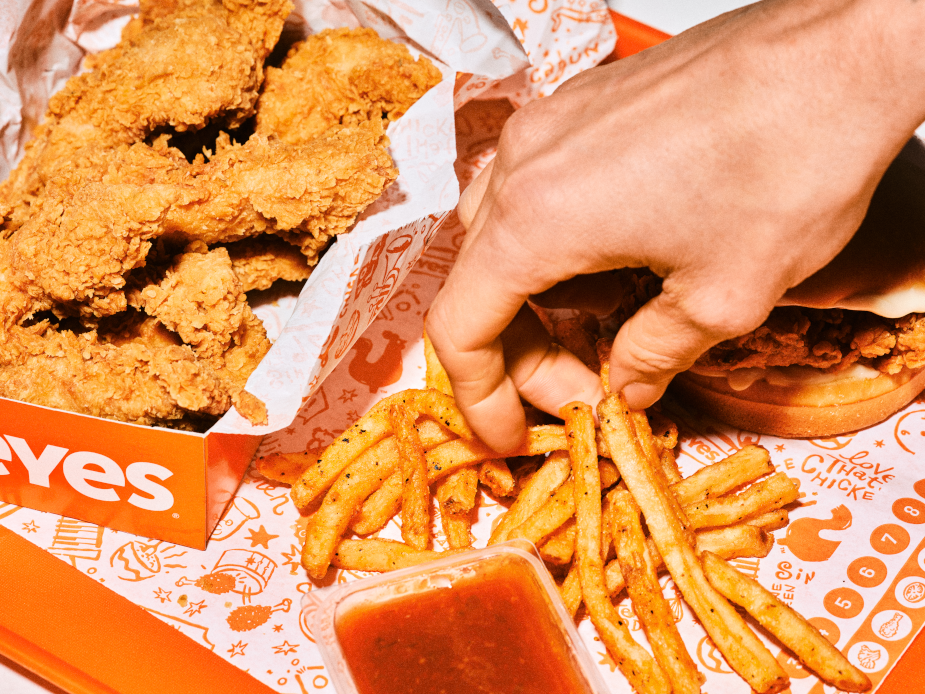
On the surface, the ‘Hard to Say No’ campaign appears fairly unassuming, with candid food shots and hungry hands reaching for a bite, but one crucial detail is missing – the Popeyes logo. (Well, the complete logo at least). While it seems the campaign commits the cardinal sin of advertising, it’s actually an ingenious subversion, replacing the Popeyes name with the simple word ‘yes’ – a subliminal invitation to indulge.

A Trend in Advertising

Brands ditching their logos in ads has been a trend in the past few months, leveraging fan recognition to create subversive campaigns. While it might seem odd to remove the key element of your brand, the technique has seen great success with competitors like McDonald’s and Kellogg’s, proving that iconic brands shouldn’t be afraid to bend the rules.

Popeyes campaign(Image credit: Popeyes/Change)

Conclusion

Popeyes’ latest campaign is a subtle yet brilliant example of minimalist branding with an ingenious twist. By removing the logo and replacing it with the word ‘yes’, the brand is inviting fans to indulge in their delicious food without explicitly promoting the brand. This campaign is a great example of how brands can think outside the box and create memorable and effective ads.

FAQs

Q: What is the ‘Hard to Say No’ campaign?
A: The ‘Hard to Say No’ campaign is a marketing campaign by Popeyes that features candid food shots and hungry hands reaching for a bite, with the brand’s logo missing.

Q: Why did Popeyes remove its logo from the campaign?
A: Popeyes removed its logo from the campaign to create a subversive and memorable ad that would grab the attention of consumers.

Q: Has this campaign been successful?
A: Yes, the campaign has been successful in creating a buzz around Popeyes and its delicious food.

Q: Is this a new trend in advertising?
A: Yes, ditching logos in ads has been a trend in the past few months, with many brands leveraging fan recognition to create subversive campaigns.

Study Research Assistance

What Types of Students Use Claude?

Anthropic analyzed 574,740 anonymized conversations between Claude and users at the Free and Pro tiers with higher education email addresses. The company found that computer science students made up the largest group of Claude users, accounting for nearly 37%, compared to much lower adoption among business, health, and humanities students.

Common Claude Queries Based on Discipline

What Do Students Use Claude For?

Anthropic categorized students’ conversations with Claude into four types, all of which were equally represented: Direct Problem Solving, Direct Output Creation, Collaborative Problem Solving, and Collaborative Output Creation.

Academic Benefits (and Costs)

The data shows students use Claude to create in nearly 40% of queries and analyze in 30% of queries. Both of these are considered complex cognitive functions, and students used Claude to execute them a combined 70% of the time.

What’s Next?

Anthropic is experimenting with a Learning Mode that emphasizes the Socratic method and conceptual understanding over direct answers, as well as partnering with universities.

Conclusion

The findings indicate several realities about AI and education — some with more potential than others. While there are legitimate worries that AI systems may provide a crutch for students, stifling the development of foundational skills needed to support higher-order thinking, the company plans to continue its research to "better discern which [interactions] contribute to learning and develop critical thinking."

FAQs

Q: What are the most common uses of Claude among students?
A: The most common uses of Claude among students are Direct Problem Solving, Direct Output Creation, Collaborative Problem Solving, and Collaborative Output Creation.

Q: Which discipline uses Claude the most?
A: Computer science students make up the largest group of Claude users, accounting for nearly 37%.

Q: What are the concerns about using Claude in education?
A: There are legitimate worries that AI systems may provide a crutch for students, stifling the development of foundational skills needed to support higher-order thinking.

Q: What is Anthropic doing to address these concerns?
A: Anthropic is experimenting with a Learning Mode that emphasizes the Socratic method and conceptual understanding over direct answers, as well as partnering with universities.

Trash to Last

0

The Good

  • Made from old semitrucks, seatbelts, and bottles
  • Weatherproof and expandable carryall
  • Every bag is unique
  • Three-year warranty

The Bad

  • So much noisy, scratchy Velcro
  • Material needs time to loosen up
  • Heavy for its size

I remember the day: a sinewy bicycle messenger skillfully weaved through honking automobiles and came to a stop at the traffic light in front of me. But instead of dropping a foot, he balanced high above his fixed-gear pedals for nearly a minute, his crossbody bag bulging against the urgent deliveries within. That was ‘90s San Francisco, when anyone could tap into that free-wheelin’ zeitgeist by wearing a messenger bag — only conformist dorks wore backpacks.

Switzerland-based Freitag got its start in 1993 with messenger bags, and it’s keeping that spirit alive with its latest, the F685 Henry. It’s heavy, water resistant, and incredibly durable because it’s made from worn seatbelts, recycled plastic bottles, and used tarps that act as walls on European trucks. That means no two Freitag bags are identical in a world of mass-produced homogeny.

Like all Freitag bags, the company leans heavily into Velcro fasteners and buckles to hold all that tarp together. There’s so much of the stuff that opening the main compartment makes a loud guttural SHHHRRRRRIIIIIIIIP that will surely draw attention at a meeting or get you kicked out of the theater. I hate that Velcro sound, and the hook and loop material tears at clothing and collects loose bits of debris over time. But this brute-force closure certainly jibes with the Freitag aesthetic. Closing the heavy-duty buckles adds percussion to the performance.

The buckles add extra security. The straps can be tucked into a sleeve at the bottom when not needed.

This side zipper is convenient to store a wallet or phone.

Yes, those are old seatbelts.

The thing I love about the Henry — and all messenger bags — is how easily the padded shoulder strap allows the bag to be swung around to the front. With the stiff top material folded just right — something that comes with practice — a little shoulder sashay let me easily access the two outer pockets, one of which is zippered and contains a key lanyard. Another zippered side pocket allows for quick access to a wallet or phone.

You can also secure the bag against your body with a three-point strap. This worked very well, but it isn’t really needed on Amsterdam’s protected bike lanes, where I don’t have to dodge in and out of cars. The bag is accented with reflectors from recycled truck contour markings, which help with visibility at night.

Here, I’ll let Freitag show off the bag’s features because its no-nonsense, just-the-facts marketing is part of the company’s charm.

As a gear bag, the Henry works best with the addition of your own camera cubes and pouches to keep things organized. Otherwise, everything will jumble together inside the main pocket. The laptop sleeve offers a modicum of padding for protection against bumps, but not enough for me to toss the bag down when I return home — I gently place it on the floor, instead.

There’s plenty of webbing to clip on or tie down items around the bag for external carry. That includes carrying a U-lock through the belts on the outer flap, for example, or a yoga mat secured underneath with integrated straps. Fortunately, all the bag’s dangly straps can be stowed inside an external sleeve on the bottom for a cleaner look.

The biggest drawback to the Henry is the stiffness and weight. Most of the bag is constructed of a tough polyester fabric created from recycled PET bottles. If it’s like my own basic Freitag messenger, then that material will become malleable over time, but the weight is ever-present. Empty, the Henry tips the scales at 3.26 pounds, which is only a few ounces heavier than the much larger 45L version of Peak Design’s Outdoor Backpack.

Conclusion

The Freitag F685 Henry is a very good messenger bag, but it’s not without its quirks. The Velcro can be loud and annoying, and the material needs time to loosen up to its full potential. However, the bag is incredibly durable and made from unique, recycled materials. If you’re in the market for a sturdy, weatherproof carryall that won’t break the bank, the Henry is worth considering.

FAQs

Q: What is the Freitag F685 Henry made of?
A: The bag is made from worn seatbelts, recycled plastic bottles, and used tarps that act as walls on European trucks.

Q: Is the Freitag F685 Henry water resistant?
A: Yes, the bag is weatherproof and can withstand exposure to water.

Q: How much does the Freitag F685 Henry weigh?
A: The bag tips the scales at 3.26 pounds when empty.

Q: Is the Freitag F685 Henry suitable for carrying laptops?
A: Yes, the bag has a laptop sleeve that offers some protection against bumps, but it’s not designed for heavy-duty laptop carrying.

Q: Can I customize the Freitag F685 Henry?
A: No, each bag is unique due to the recycled materials used in its construction.

Advocates Against Unethical AI

0

Fighting Back Against Gen AI

The first thing is that the lawsuits have stuck around, despite AI companies’ protestations that they should be thrown out. Many legal cases are ongoing, and the outcome of these will determine what material can be used to train AI models, and under what conditions.

Current Lawsuits

Most of the cases allege that use of a plaintiff’s material without their consent constitutes copyright infringement. The AI companies argue that their actions fall within the “fair use” exception to the law.

Progress in the US and Europe

In the US, a group of artists has filed a lawsuit against several companies for their use of Stable Diffusion. In the UK, one notable case is Getty Images v Stability AI.

Lobbying and EU Regulations

The European Guild for Artificial Intelligence Regulation (EGAIR) has been instrumental in achieving victories, including the approval of the EU’s AI Act, the world’s first comprehensive law relating to AI.

EU AI Act Requirements

The Act requires AI companies to:

  • label AI-generated content as such
  • provide a publicly available summary of the data used to train models
Progress and Challenges

Francesco Archidiacono, founder of EGAIR, reflects on the progress made over the last two years:

He notes that:
  • Politicians and institutions are now more informed about the issues
  • The EU AI Act explicitly states that any use of copyrighted content to train an AI model must be authorized by the rights holder
  • Some AI companies are scared of complying with the European Union’s transparency requirements

Informing the Public and the Art Community

Francesco Archidiacono emphasizes the importance of keeping the public and the art community informed about the issues surrounding AI:

Challenges and Opportunities

Francesco notes that:

  1. There is still a lack of awareness about the issues among the public and the art community
  2. There is a need for better education and resources to inform people about their rights and the impact of AI on the creative community
  3. There is a growing sense of distaste for AI-generated material, which is increasing the value of human-made work

Conclusion

The fight against unethical AI is ongoing, with lawsuits, lobbying, and education efforts underway. While there have been significant progress made, there is still much work to be done to ensure that artists’ rights are protected and that AI is used in a way that benefits society as a whole.

FAQs

Q: What are the key issues surrounding AI and artistic rights?

A: The key issues include copyright infringement, lack of consent, and the use of AI-generated content without proper attribution.

Q: What is the EU AI Act?

A: The EU AI Act is the world’s first comprehensive law relating to AI, requiring companies to obtain consent from rights holders, label AI-generated content, and provide a publicly available summary of the data used to train models.

Q: What can artists do to protect their rights?

A: Artists can opt out of AI training, inform themselves about their rights, and call out companies and individuals who use unethical generative AI.

Q: What is the role of organizations like EGAIR?

A: Organizations like EGAIR lobby governments and lawmakers to advocate for the rights of creators and push for regulations that protect artistic rights in the era of AI.

Q: What is the impact of AI on the creative community?

A: AI has the potential to both harm and benefit the creative community, depending on how it is used. While it can facilitate creativity and productivity, it can also lead to copyright infringement and the devaluation of human-made work.

The Unsung Hero in Your Doorstep

0

Amazon’s Quiet Transformation into a Healthcare Giant

In a quiet transformation from merchandising giant to (also) healthcare giant, Amazon may be positioning its sprawling logistics network and growing medical footprint to potentially save lives, starting with your front door.

Project Pulse: A Pilot Program

According to Bloomberg, back in 2023, Amazon piloted a several months-long pilot program called Project Pulse, equipping delivery vans with defibrillators and training drivers in CPR. In cities like London, Amsterdam, and Bologna, more than 100 drivers participated, with several of them receiving alerts from citizen responder apps and arriving on site. (Rescue services were reportedly already treating the victims.)

A Potential Public Relations Win

The company hasn’t moved forward with the program, but it is “evaluating the feedback and exploring additional opportunities for future programs,” an Amazon spokesperson tells Bloomberg. It would likely be a public relations win for the company, showcasing its commitment to healthcare and community involvement.

Expanding Healthcare Ambitions

It would also be a way to expand Amazon’s healthcare ambitions beyond One Medical, the primary care provider for which it shelled out $3.9 billion in early 2023. With rivals like Walgreens and Walmart retreating from primary care, Amazon could be feeling increasingly confident it can do what the others couldn’t: reshape healthcare delivery and bring more than just packages to customers’ doorsteps.

Conclusion

Amazon’s potential entry into the healthcare space could have significant implications for the industry. With its vast logistics network and growing medical footprint, the company may be well-positioned to make a meaningful impact on healthcare delivery. While the Project Pulse pilot program has not been moved forward, it is clear that Amazon is committed to exploring additional opportunities in healthcare.

FAQs

Q: What is Project Pulse?
A: Project Pulse is a pilot program piloted by Amazon in 2023, equipping delivery vans with defibrillators and training drivers in CPR.

Q: Which cities participated in the Project Pulse pilot program?
A: Cities like London, Amsterdam, and Bologna participated in the pilot program.

Q: Why did Amazon pilot Project Pulse?
A: Amazon piloted Project Pulse to explore additional opportunities in healthcare and to showcase its commitment to community involvement and saving lives.

Q: Will Project Pulse be continued?
A: Amazon has not moved forward with the Project Pulse program, but it is “evaluating the feedback and exploring additional opportunities for future programs,” an Amazon spokesperson tells Bloomberg.

Superhero Logos That Save the World

0

Here is the rewritten article:

1. Wonder Woman

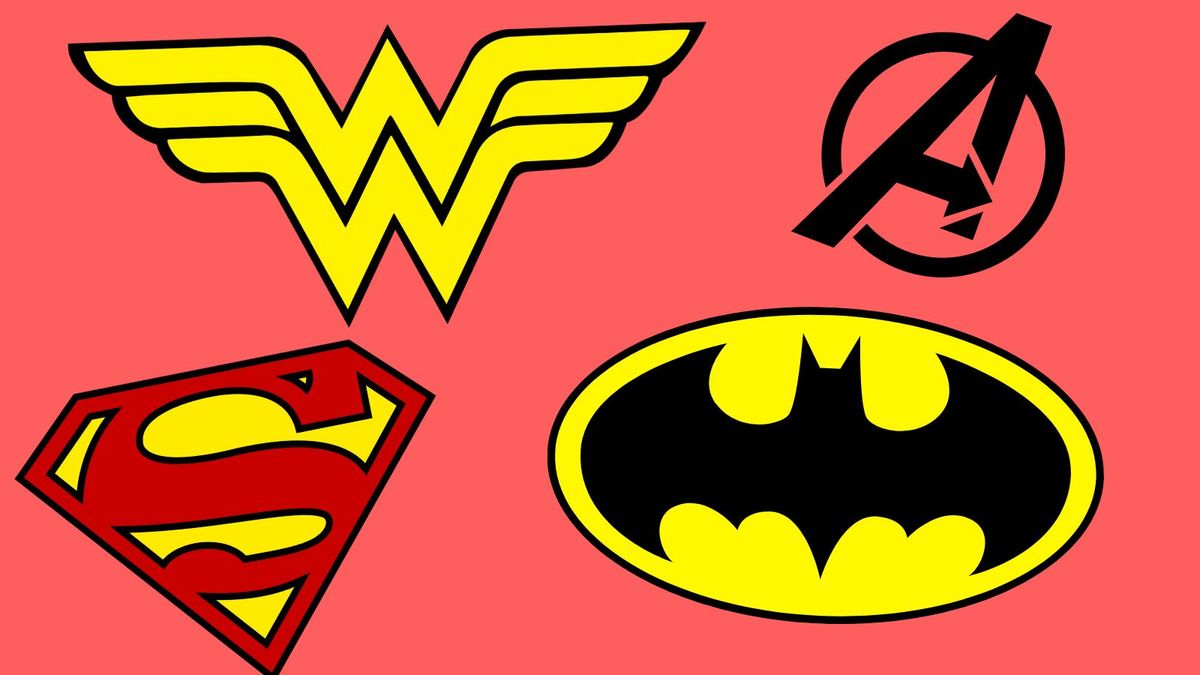
Though Wonder Woman made her debut in 1941, it wasn’t until the early 1980s that legendary graphic designer Milton Glaser (who had also designed the DC comics logo) was tasked with refreshing her identity, and gave her this instantly iconic logo. Previous logos for the character had all used the golden eagle that Wonder Woman wore as an emblem – while there was nothing especially wrong with the designs, no-one would associate them with Wonder Woman if they didn’t already know that she wore an eagle. Glaser’s genius was to deftly take the eagle motif and combine it with the character’s initials, creating an instantly iconic double-W.

When rendered in gold as it often is, this logo also takes on the appearance of a golden crown – a nod to Wonder Woman’s noble origins as Amazonian royalty. Combining so many meanings into a single, instantly identifiable emblem is a spectacular feat of design, and it’s not surprising that this logo has remained so strongly associated with the character for more than forty years. When Gal Gadot’s version of the character was introduced into the DC Cinematic Universe, it was with this logo. You don’t mess with perfection.

2. Spider-man

There have been many, many iterations of your friendly neighbourhood webslinger’s logo over his many decades of existence. Unsurprisingly, the central motif has always been a spider, but as you can see in this useful infographic by designer Ricky Franklin, there’s been a huge amount of variance in the shape, style and body of the spider itself.

For my money, the best versions of the logo are the ones from the Sam Raimi films starring Tobey Maguire, first for Spider-Man (2002) and then the slight rejig for Spider-Man 2 (2004), featured above. The design is elegant and unfussy, with the distinctive body shape of the spider rendered using simple shapes. The length of the legs implies agility, while the sharp points, pincers and subtle stings in the tail convey a sense of danger.

3. Batman

It’s effective thanks to its simplicity, with the red-and-black colour scheme mirroring the colours of Deadpool’s costume, and the white eyes staring straight at the viewer, evoking Deadpool’s well-known habit of breaking the fourth wall. In a similarly meta touch that the merc with the mouth would appreciate, this icon actually originated as part of Deadpool’s costume – it was originally on his belt buckle.

4. Deadpool

It’s red, white and blue, it’s stars and stripes, and if you’re a bad guy, it’s flying directly towards your face and hitting you with sounds like WHAP and PANG and WANK.

5. Captain America

You don’t name your character ‘Captain America’ because you’re terribly worried about subtlety or nuance. The circular stars ‘n’ stripes shield, which also doubles up as the character’s immediately identifiable logo, isn’t one of those ones where there are all these tiny hidden details and easily missable clever touches. It’s red, white and blue, it’s stars and stripes, and if you’re a bad guy, it’s flying directly towards your face and hitting you with sounds like WHAP and PANG and WANK.

In his first outing in 1941, Cap originally sported a triangular-style shield, though complaints from the people at Archie Comics regarding its similarity to their similarly patriotic ‘Shield’ character (look, there was a war on) led to a hasty rejig. From issue #2 onwards, Captain America wielded the disc-shaped shield that would become the character’s most distinctive piece of iconography.

6. Green Lantern

As we’ve seen, superhero logos tend to trade in similar colour schemes – reds, blacks, yellows, the odd bit of blue. Green Lantern’s logo immediately sticks out by being, well, green, but also by being somewhat more abstract than some of the others – it doesn’t immediately clue you in the way a big picture of a bat does.

This symbol carries multiple meanings that are important to the character, simultaneously representing both the eponymous lantern that is the symbol of the Lantern Corps, and the ring that Hal Jordan and his contemporaries use to exert their powers.

7. The Avengers

Finally we have the iconic ‘A’ from the most famous superhero team-up of modern times, the Avengers. The circle that encases the letter suggests themes of unity, while the thick, blocky lines project strength.

There’s also a right-pointing arrow contained within the A, suggesting forward momentum and a call to action. You might have assumed that this was a bit of a rip-off of the famous Fedex logo with its concealed right-pointing arrow, but remarkably it appears that the Avengers got there first, with their arrow appearing on comic-book covers as early as 1971, more than two decades before Fedex.

Conclusion

When it comes to superhero logos, the best ones are those that are simple, stylish and convey the essentials of the character. They should be instantly recognisable, and evoke the right emotions in the viewer. Whether it’s a classic design like Wonder Woman’s or a more modern take like Deadpool’s, a great logo can make all the difference in a character’s appeal.

FAQs

Q: What makes a great superhero logo?
A: A great superhero logo is one that is simple, stylish and conveys the essentials of the character. It should be instantly recognisable and evoke the right emotions in the viewer.

Q: What is the most iconic superhero logo?
A: The most iconic superhero logo is probably Wonder Woman’s logo, designed by Milton Glaser in the early 1980s.

Q: What is the significance of the right-pointing arrow in the Avengers logo?
A: The right-pointing arrow in the Avengers logo suggests forward momentum and a call to action. It also appears to have been designed before the famous Fedex logo with its concealed right-pointing arrow.