Home Blog Page 65

AI Chatbot Essentials

0

Timeline of the Most Recent ChatGPT Updates

April 2025

  • OpenAI could release GPT-4.1 next week: OpenAI may launch several new AI models, including GPT-4.1, as early as next week, The Verge reported, citing anonymous sources.
  • OpenAI has updated ChatGPT to use information from your previous conversations: OpenAI started updating ChatGPT to enable the chatbot to remember previous conversations with a user and customize its responses based on that context.
  • OpenAI is working on watermarks for images made with ChatGPT: It looks like OpenAI is working on a watermarking feature for images generated using GPT-4o.
  • OpenAI offers ChatGPT Plus for free to U.S. and Canadian college students: OpenAI is offering its $20-per-month ChatGPT Plus subscription tier for free to all college students in the U.S. and Canada through the end of May.
  • ChatGPT users have generated over 700M images so far: More than 130 million users have created over 700 million images since ChatGPT got the upgraded image generator on March 25.
  • OpenAI’s o3 model could cost more to run than initial estimate: The Arc Prize Foundation, which develops the AI benchmark tool ARC-AGI, has updated the estimated computing costs for OpenAI’s o3 “reasoning” model managed by ARC-AGI.
  • OpenAI CEO says capacity issues will cause product delays: In a series of posts on X, OpenAI CEO Sam Altman said the company’s new image-generation tool’s popularity may cause product releases to be delayed.

March 2025

  • OpenAI plans to release a new ‘open’ AI language model: OpenAI intends to release its “first” open language model since GPT-2 “in the coming months.”
  • OpenAI removes ChatGPT’s restrictions on image generation: OpenAI made a notable change to its content moderation policies after the success of its new image generator in ChatGPT.
  • OpenAI adopts Anthropic’s standard for linking AI models with data: OpenAI wants to incorporate Anthropic’s Model Context Protocol (MCP) into all of its products, including the ChatGPT desktop app.
  • OpenAI’s viral Studio Ghibli-style images could raise AI copyright concerns: The latest update of the image generator on OpenAI’s ChatGPT has triggered a flood of AI-generated memes in the style of Studio Ghibli.
  • OpenAI expects revenue to triple to $12.7 billion this year: OpenAI expects its revenue to triple to $12.7 billion in 2025, fueled by the performance of its paid AI software.
  • ChatGPT has upgraded its image-generation feature: OpenAI on Tuesday rolled out a major upgrade to ChatGPT’s image-generation capabilities: ChatGPT can now use the GPT-4o model to generate and edit images and photos directly.

February 2025

  • OpenAI cancels its o3 AI model in favor of a ‘unified’ next-gen release: OpenAI has effectively canceled the release of o3 in favor of what CEO Sam Altman is calling a “simplified” product offering.
  • ChatGPT may not be as power-hungry as once assumed: A commonly cited stat is that ChatGPT requires around 3 watt-hours of power to answer a single question.
  • OpenAI now reveals more of its o3-mini model’s thought process: In response to pressure from rivals like DeepSeek, OpenAI is changing the way its o3-mini model communicates its step-by-step “thought” process.

January 2025

  • OpenAI used a subreddit to test AI persuasion: OpenAI used the subreddit r/ChangeMyView to measure the persuasive abilities of its AI reasoning models.
  • OpenAI launches Operator, an AI agent that performs tasks autonomously: OpenAI is launching a research preview of Operator, a general-purpose AI agent that can take control of a web browser and independently perform certain actions.

FAQs

  • What is ChatGPT? How does it work?
    ChatGPT is a general-purpose chatbot that uses artificial intelligence to generate text after a user enters a prompt, developed by tech startup OpenAI. The chatbot uses GPT-4, a large language model that uses deep learning to produce human-like text.
  • When did ChatGPT get released?
    November 30, 2022 is when ChatGPT was released for public use.
  • What is the latest version of ChatGPT?
    Both the free version of ChatGPT and the paid ChatGPT Plus are regularly updated with new GPT models. The most recent model is GPT-4o.
  • Can I use ChatGPT for free?
    There is a free version of ChatGPT that only requires a sign-in in addition to the paid version, ChatGPT Plus.

Conclusion

OpenAI has made significant updates to ChatGPT in recent months, including the release of new AI models and features. The company has also faced controversy and criticism over issues such as plagiarism, copyright concerns, and capacity issues. Despite these challenges, OpenAI continues to push the boundaries of what is possible with AI technology.

Smartphone Tariffs Are Coming Back in “A Month or Two,” Says Trump Admin

0

Smartphones, Laptops, and Other Exempt Products to Face New Tariffs

Smartphones, laptops, and other products that were previously exempt from Trump’s April 9th tariffs will be lumped in with duties on semiconductors in “a month or two,” Commerce Secretary Howard Lutnick told ABC News anchor Jonathan Karl on This Week.

Exemptions Revoked

Yesterday, the Trump administration released updated guidance that excluded smartphones, laptops, and more from Trump’s new tariffs, including the 125 percent additional levy on Chinese-produced goods last week.

A Special Focus Type of Tariff

“This is not like a permanent sort of exemption,” Lutnick told Karl, saying that they will be subject later to “a special focus type of tariff” applied to the semiconductor industry, similar to automotive tariffs Trump has already issued.

Impact on iPhone Production

When asked if the new tariffs will include products like iPhones, many of which are built in China, Lutnick said that’s “correct” and that the goal is to “encourage them to reshore, to be built in America.”

Concerns Over Higher Prices

 I don’t necessarily think so. I think the idea is that we can manufacture here in America. As I said, there’s a — I saw Panasonic, the battery company. Right? A Japanese company. They built an amazing factory in Kansas, which they’re opening now. They were putting it in the ground when Donald Trump was President, just finishing now.

Conclusion

In conclusion, it appears that the exemptions for smartphones, laptops, and other products will be revoked in the coming months, and they will be subject to new tariffs on semiconductors. The goal seems to be to encourage companies to reshore and manufacture products in the United States.

FAQs

Q: What products will be affected by the new tariffs?

Smartphones, laptops, and other products that were previously exempt will be lumped in with duties on semiconductors.

Q: Why are these products being targeted?

The goal is to encourage companies to reshore and manufacture products in the United States.

Q: Will these tariffs result in higher prices for goods in the US?

Commerce Secretary Howard Lutnick does not think so, stating that the idea is to manufacture in America and that companies like Panasonic are already building factories in the US.

Comprehensive Guide to Higher Order Components in React

Here is the rewritten article:

Understanding Higher Order Components in React

In the evolving landscape of React development, design patterns play a crucial role in creating maintainable, scalable applications. Among these patterns, Higher Order Components (HOCs) stand out as one of the most powerful and elegant solutions for component logic reuse.

What Are Higher Order Components?

At its core, a Higher Order Component is not a component itself but a function that takes a component and returns a new enhanced component. The concept is inspired by higher-order functions in functional programming—functions that operate on other functions by taking them as arguments or returning them.

Composition Over Inheritance

React favors composition over inheritance for building component hierarchies. HOCs extend this philosophy to behavior sharing. Instead of creating complex inheritance trees, HOCs compose behavior by wrapping components with additional functionality.

Single Responsibility Principle

Each HOC should focus on a single aspect of functionality. This adherence to the single responsibility principle makes HOCs easier to understand, test, and maintain. For example, one HOC might handle data fetching, while another manages authentication, and a third provides theming.

Pure Function Concept

Ideally, HOCs should operate as pure functions—given the same input (component and props), they should always produce the same output (enhanced component) without side effects. This makes their behavior predictable and easier to reason about.

Render Hijacking

HOCs can control what gets rendered by the enhanced component, enabling conditional rendering based on various factors:

function withAuth(WrappedComponent, requiredRole = null) {
return function WithAuth(props) {
const { user, isLoggedIn } = useAuth();

if (!isLoggedIn) {
return <Redirect to="/login" />;
}

if (requiredRole && !user.roles.includes(requiredRole)) {
return <AccessDenied />;
}

return <WrappedComponent {...props} />;
};
}

Anatomy of a Higher Order Component

The Wrapper Pattern

The most common HOC implementation uses the wrapper pattern, where the HOC returns a new component that renders the wrapped component with additional props:

function withDataFetching(WrappedComponent, dataSource) {
return function WithDataFetching(props) {
const [data, setData] = useState([]);
const [isLoading, setIsLoading] = useState(true);

useEffect(() => {
fetchData().then((response) => {
setData(response.data);
setIsLoading(false);
});
}, []);

return (
<WrappedComponent {...props} data={data} isLoading={isLoading} />;
);
};
}

Prop Manipulation

HOCs can add, modify, or filter props before passing them to the wrapped component:

function withUser(WrappedComponent) {
return function WithUser(props) {
const user = getCurrentUser();

return <WrappedComponent {...props} user={user} />;
};
}

HOCs in Practice: Common Use Cases

Authentication and Authorization

HOCs excel at protecting routes or components that require authentication:

function withAuth(WrappedComponent, requiredRole = null) {
return function WithAuth(props) {
const { user, isLoggedIn } = useAuth();

if (!isLoggedIn) {
return <Redirect to="/login" />;
}

if (requiredRole && !user.roles.includes(requiredRole)) {
return <AccessDenied />;
}

return <WrappedComponent {...props} />;
};
}

The Philosophical Underpinnings of HOCs

Inversion of Control

HOCs implement the inversion of control principle by reversing the traditional component relationship. Instead of components defining their own behaviors, HOCs provide behaviors to components.

Declarative vs. Imperative Programming

HOCs align with React's declarative programming model. They declare what additional capabilities a component should have, rather than imperatively describing how to achieve those capabilities step by step.

Composition Chains

HOCs can be composed together to create chains of behaviors:

const EnhancedComponent = withAuth(
withTheme(
withLogging(MyComponent)
)
);

Best Practices and Common Pitfalls

Pass Unrelated Props Through

Always pass through props that the HOC doesn't specifically need to modify:

function withFeature(WrappedComponent) {
const featureProps = { feature: "value" };

return function WithFeature(props) {
return <WrappedComponent {...props} {...featureProps} />;
};
}

Use Descriptive Names

Use descriptive names for HOCs and ensure proper display names for debugging:

function withFeature(WrappedComponent) {
function WithFeature(props, ref) {
return <WrappedComponent ref={ref} {...props} />;
}

return React.forwardRef(WithFeature);
}

HOCs in the Era of Hooks

Complementary Approaches

HOCs and hooks solve similar problems but in different ways. While hooks allow for reusing stateful logic without changing component hierarchy, HOCs excel at component enhancement and transformation.

When to Choose HOCs over Hooks

HOCs remain advantageous in several scenarios:

  1. Component Wrapping
  2. Prop Transformation
  3. Render Hijacking
  4. Library Development
  5. Complex Component Logic

Conclusion

The emergence of hooks represents an evolution in React patterns rather than a replacement. Many modern React applications use both patterns where appropriate. Understanding HOCs at a theoretical level—beyond just the implementation details—provides a stronger foundation for creating maintainable, reusable React components. Whether you're using HOCs, hooks, or a combination of both, the goal remains the same: creating composable, declarative, and maintainable code that solves real problems effectively.

FAQs

Q: What is a Higher Order Component?

A: A Higher Order Component is a function that takes a component and returns a new enhanced component.

Q: When should I use HOCs?

A: Use HOCs when you need to wrap a component with additional functionality, transform props, or hijack rendering.

Q: Can I use hooks with HOCs?

A: Yes, you can use hooks with HOCs to enhance component behavior.

Q: Are HOCs deprecated?

A: No, HOCs are not deprecated. They remain a powerful pattern in React's ecosystem.

Google Preps for Agentic AI Era with ‘Ironwood’ TPU, New Models and Software

Google Cloud Unveils New AI Models and Software for Developing and Managing AI Agents

Google Cloud is gearing up for the agentic AI era in a big way, and its showing off its new wares this week at its Next conference. The company unveiled a slew of new AI models and new software for developing and managing AI agents, as well as the seventh generation of the processor at the heart of its AI Hypercomputer, a TPU dubbed Ironwood, which Google says is twice as power efficient as the previous generation.

Ironwood TPU

The seventh-gen Ironwood TPU was built from the ground up for inferencing at scale, according to Amin Vahdat, the company’s vice president of ML, systems and cloud AI. And oh my, what scale. "Ironwood will scale to over 9,000 chips per pod to meet the exponentially growing demands of thinking models like Gemini 2.5," Vahdat said during a press conference on Monday. "This scale will deliver a staggering 42.5 exaflops of compute per pod."

For perspective, the world’s number one supercomputer, El Capitan, supports 1.7 Exaflops per pod, Vahdat said. By comparison, Ironwood running on Google Cloud’s TPU-based AI Hypercomputer will deliver more than 24 times the compute power of El Capitan, he pointed out.

Other Improvements

Google Cloud has made a few other improvements to its service to help customers put all that power to use. For instance, its making its internal advanced networking technology, dubbed Google Cloud WAN, available to customers for the first time. "Our customers can now tap into the same planet-scale network that powers Google’s globally available services, including Gmail, YouTube, and search," Vahdat said. "No other technology company can offer this to its customers."

The company is also making its internal machine learning runtime, dubbed Next Pathways, available to customers. "Developed by Google DeepMind, Pathways on Google Cloud allows customers to scale out model serving to hundreds of TPUs with exceptional performance," Vahdat said.

Agent Development Kit (ADK)

Google Cloud is also rolling out a new Agent Development Kit (ADK), which it bills as a "unified development environment" that "makes it easy to build, test and operate these agents," Vahdat said. "With ADK, customers can easily build a multi-agent system in under 100 lines of code and precisely steer agent behavior with creative reasoning and strict guardrails," the Google VP said.

Agent Garden

Since growing new crops of AI agents will be so important, why not have a garden devoted to it? That’s essentially what Google Cloud is enabling with its aptly named Agent Garden, which Vahdat called a collection of ready-to-use samples and tools directly accessible in SDK. The Agent Garden will make it easy for users to connect agents to 100+ pre-built connectors, as well as to custom APIs, other integration workflows, or data stored in customers’ cloud systems. It will also support Model Context Protocol (MCP), the new protocol developed by Anthropic to connect data with models.

Conclusion

Google Cloud is positioning itself as a leader in the agentic AI era, with a slew of new AI models, software, and hardware designed to make it easier for customers to develop and manage their own AI agents. With Ironwood, Next Pathways, ADK, and Agent Garden, Google Cloud is offering a comprehensive suite of tools and services to help customers take advantage of the growing demand for AI workloads.

FAQs

Q: What is Ironwood TPU?

A: Ironwood TPU is the seventh generation of the processor at the heart of Google Cloud’s AI Hypercomputer, a TPU dubbed Ironwood, which is twice as power efficient as the previous generation.

Q: What is Agent Development Kit (ADK)?

A: ADK is a "unified development environment" that "makes it easy to build, test and operate these agents," allowing customers to easily build a multi-agent system in under 100 lines of code and precisely steer agent behavior with creative reasoning and strict guardrails.

Q: What is Agent Garden?

A: Agent Garden is a collection of ready-to-use samples and tools directly accessible in SDK, allowing users to connect agents to 100+ pre-built connectors, as well as to custom APIs, other integration workflows, or data stored in customers’ cloud systems.

Trump’s Commerce Secretary: Tech Tariff Exemptions Temporary

0

U.S. Commerce Secretary Warns Tech Industry May Not Be Safe from Tariffs

Exemptions Announced, But Semiconductors Still Under Scrutiny

The Trump administration recently announced that consumer electronics such as laptops and smartphones would be exempt from the tariffs it unveiled earlier this month. However, U.S. Commerce Secretary Howard Lutnick warned that the tech industry may not be entirely safe from new tariffs.

Targeted Tariffs Ahead

Reports indicate that tech products might still be affected by targeted tariffs, with semiconductors coming under particular scrutiny. According to Lutnick, these products will be included in the semiconductor tariffs, which are expected to be implemented in the next month or two.

Lutnick’s Vision

In an interview with ABC’s “This Week,” Lutnick stated that the goal is to “reshore” these products, meaning they will be manufactured in America. He emphasized the importance of having semiconductors, chips, and flat panels made domestically. Lutnick believes that this approach will not result in higher prices for American consumers, saying, “I don’t think so.” Instead, he envisions an “army of millions and millions of human beings screwing in little screws to make iPhones, that kind of thing” being manufactured in America.

Trump’s Response

When asked about semiconductor tariffs, President Trump replied, “I’ll give you that answer Monday.” It remains to be seen what specific details he will provide.

Conclusion

While the tech industry may have been granted temporary reprieve from tariffs, it seems that semiconductors are still in the crosshairs. The administration’s plans to “reshore” these products may not be as straightforward as Lutnick suggests, and the potential impact on American consumers remains unclear. As the situation unfolds, it will be important to monitor developments and assess their effects on the industry.

FAQs

Q: What products were exempt from the recent tariffs?

A: Consumer electronics such as laptops and smartphones were exempt from the tariffs announced earlier this month.

Q: What about semiconductors?

A: Semiconductors are still under scrutiny and are expected to be included in the upcoming semiconductor tariffs, which are expected to be implemented in the next month or two.

Q: Will tariffs result in higher prices for American consumers?

A: U.S. Commerce Secretary Howard Lutnick believes they will not, but others have expressed skepticism about the feasibility of his vision.

Q: What is Lutnick’s goal for the tech industry?

A: Lutnick aims to “reshore” tech products, meaning they will be manufactured in America, and believes this will not result in higher prices for consumers.

Trump’s Tariffs May Derail Meta’s Moonshot Projects

0

Meta’s Rocky Rollout: Unpacking the AI Industry’s Obsession with Benchmarks

Meta’s Underwhelming AI Release

Meta dropped three new AI models over the weekend: Scout, Maverick, and the still-training Behemoth, billed as the next evolution of “open-ish” AI. But instead of excitement, the response was mostly shrugs. Critics called the release underwhelming, saying it lacked the edge expected in today’s breakneck AI race. Meta’s clear attempt to claw back some attention quickly turned messy. Accusations began circulating on X and Reddit around benchmark tampering, a mystery ex-employee, and large gaps between the models’ public and private performance.

The AI Industry’s Obsession with Benchmarks

On TechCrunch’s Equity podcast, hosts Kirsten Korosec, Max Zeff, and Anthony Ha unpacked Meta’s rocky rollout, the AI industry’s obsession with looking smart on paper, and why, as Kirsten put it, “creating something to do well on a test doesn’t always translate to good business.”

What to Expect in the Full Episode

  • Equity will discuss the AI industry’s fixation on benchmarks and why it’s not always a reliable measure of success
  • The hosts will explore the implications of Meta’s underwhelming release and the accusations of benchmark tampering
  • They will also delve into the challenges of creating AI models that translate to real-world business applications

Conclusion

Meta’s AI release has sparked a heated debate about the importance of benchmarks in the AI industry. While benchmarks can provide a snapshot of a model’s performance, they are not always a reliable measure of success. The AI industry must shift its focus from looking smart on paper to creating practical, real-world applications that benefit society.

FAQs

Q: What are the three new AI models released by Meta?
A: The three new AI models are Scout, Maverick, and the still-training Behemoth.

Q: Why did critics call Meta’s release underwhelming?
A: Critics called the release underwhelming because it lacked the edge expected in today’s breakneck AI race.

Q: What are the accusations surrounding Meta’s AI release?
A: Accusations of benchmark tampering, a mystery ex-employee, and large gaps between the models’ public and private performance have been circulating on X and Reddit.

Q: Why is the AI industry obsessed with benchmarks?
A: The AI industry is obsessed with benchmarks because it provides a way to measure the performance of AI models and compare them to others. However, this obsession can lead to a focus on looking smart on paper rather than creating practical, real-world applications.

Acer Predator Z57 Review: MiniLED Display with Unbelievable DUHD Resolution

0

Why you can trust Creative Bloq
Our expert reviewers spend hours testing and comparing products and services so you can choose the best for you. Find out more about how we test.

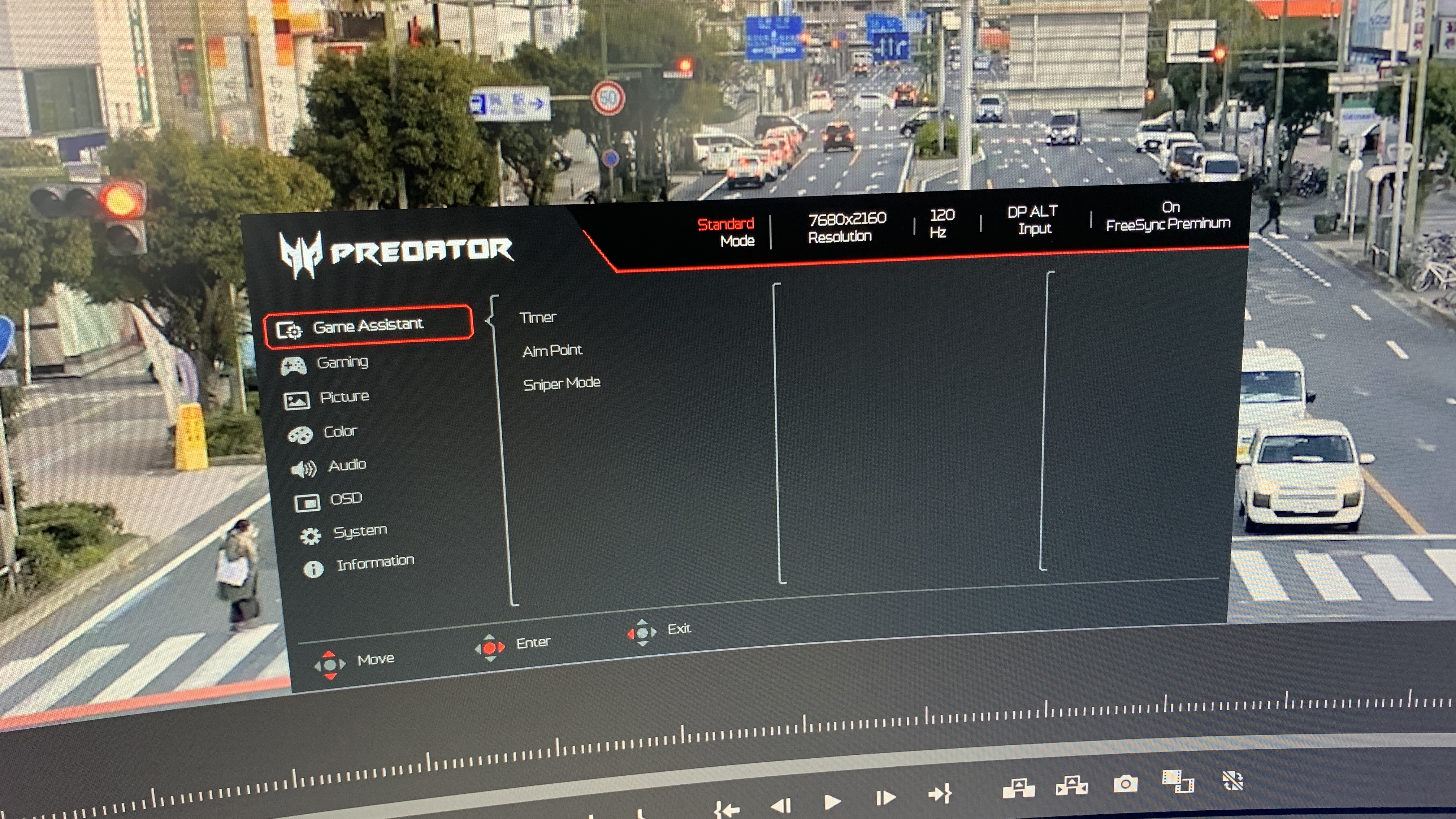
Acer Predator Z57 Review

Acer Predator Z57: Key Specifications

Screen:

57 inch 7680 X 2160 pixels (DUHD)

Inputs:

DisplayPort, HDMI, USB type C, Headphone Line Out

Speakers:

No

Adjustments:

Height adjustment 110 mm, Swivel -/+ 30 degree, Tilt 20 degrees

Dimensions:

Not specified

Weight:

Not specified

Design and Build

Features

Acer Predator Z57

Performance

Acer Predator Z57

How trade wars could impact global automation supply chains and robotics companies

0

The global robotics and automation industry is deeply interconnected, relying on highly optimized supply chains that span continents.

But as geopolitical tensions rise and trade wars escalate – particularly between the US and China – these supply chains face mounting pressure.

Tariffs, export restrictions, and shifting trade alliances are not only disrupting component flows but also forcing major players in the robotics sector to rethink their manufacturing and sourcing strategies.

The anatomy of a trade war

Trade wars typically begin when one country imposes tariffs or restrictions on imports in an effort to protect domestic industries or gain leverage in negotiations. The affected countries often retaliate, creating a cycle of escalating duties and regulatory hurdles.

While intended to stimulate local production, trade wars tend to raise costs, slow innovation, and create uncertainty – particularly in technology sectors like robotics that depend on international collaboration.

Impact on automation supply chains

1. Disrupted component flow

Robotics systems often rely on a combination of precision mechanical parts, semiconductors, sensors, and rare-earth materials. Many of these are sourced from Asia – particularly China, Taiwan, Japan, and South Korea.

When tariffs are introduced, prices for key inputs like motors, drives, chips, and actuators increase, squeezing margins for manufacturers and integrators.

2. Delay in deliveries and projects

Longer customs clearance times and compliance checks can delay shipments of vital components. This can stall deployment of robotic systems in manufacturing, logistics, and service industries, affecting downstream productivity gains.

3. Supply chain reconfiguration

In response, companies are increasingly adopting a “China+1” strategy – diversifying manufacturing to include Southeast Asia, India, or Mexico.

Others are reshoring or near-shoring operations to reduce dependency on unpredictable trade routes. However, this reconfiguration takes time and capital investment.

Effects on robotics companies

1. Cost pressures on manufacturers

Companies like Fanuc, ABB, and Yaskawa that operate global production hubs are forced to absorb or pass on higher costs, affecting pricing competitiveness.

Some, like Kuka (owned by China’s Midea Group), are caught in the crosshairs of political scrutiny, especially in Western markets.

2. Opportunities for regional players

Local automation startups and mid-sized firms in North America and Europe are sometimes insulated from tariff impacts and may benefit from increased domestic demand as governments push for “buy local” policies.

3. Uncertainty hurts investment

Trade uncertainty leads to delayed investment decisions in factory automation, particularly in sectors like automotive and electronics manufacturing where capital spending is cyclical.

Venture capital backing for hardware startups may also be affected by geopolitical risk.

US-China trade war

The US-China trade conflict has had wide-reaching implications. Tariffs on industrial robots and parts have added millions in costs for US-based systems integrators.

In response, some Chinese companies are shifting export focus to Southeast Asia and Europe, while American firms look to manufacture more within NAFTA countries.

However, decoupling is expensive – and partial at best.

Long-term trends and adaptations

  • Supply chain localization: A growing trend toward “dual sourcing” and regional self-sufficiency is emerging.
  • Strategic stockpiling: Robotics companies are building inventory buffers to hedge against future trade disruptions.
  • Political engagement: Industry associations are lobbying for exemptions and stable trade policies to protect innovation.

Between politics and progress

While trade wars are driven by national policy and politics, their ripple effects disrupt the deeply collaborative and global nature of robotics and automation.

Companies that proactively adapt their supply chains, diversify sourcing, and localize production may emerge stronger.

But as automation becomes a pillar of industrial competitiveness, it’s clear that geopolitics will increasingly shape the pace and path of technological progress.

iPads could get more Mac-like features soon

0

Apple’s Upcoming iPadOS Updates: A Step Closer to a Mac-Like Experience?

By the time Apple releases M5-powered iPads, using iPadOS may feel closer to working on a Mac, according to Bloomberg’s Mark Gurman in today’s Power On newsletter. It won’t be macOS running on a tablet, but he writes that the changes will be significant enough to make people who want such a thing happy.

Focus on Productivity, Multitasking, and App Window Management

Updates to iPadOS coming this year will be focused “on productivity, multitasking and app window management — with an eye on the device operating more like a Mac,” according to Gurman. He says these changes are due “about a year” after the release of the M4 iPad Pro, a fantastic tablet with far more power than its software demands.

A Look Back at Stage Manager

Gurman’s report doesn’t give any indication of what Apple’s updated multitasking will look like, and it’s best to reserve any excitement until we see more. Back in 2022, Apple added Stage Manager to iPadOS 16, a feature that enables windowing and also groups app windows together in a dock-like collection on the side of the display. It might have seemed like an exciting change if you wanted to be able to ditch your MacBook, but what shipped felt too half-hearted to be a useful step in the direction of a proper desktop operating system.

The Current State of iPadOS

Apple has iterated since, for instance by letting users resize windows more freely in iPadOS 17, but the approach is still much more iPad than Mac. That’s not necessarily a problem on its own unless you’re the type who wants to replace your MacBook with an Apple tablet. We’ll see how much the company moves the needle on that when it unveils iPadOS 19 in June.

Conclusion

While it’s unclear what exactly Apple has in store for iPadOS, it’s clear that the company is committed to making the experience more Mac-like. With a focus on productivity, multitasking, and app window management, it’s possible that we’ll see significant changes in the future. However, it’s also important to remember that Apple is still balancing the needs of iPad users with the needs of those who want a Mac-like experience. Only time will tell if the company can strike the right balance.

Frequently Asked Questions

Q: What is the current state of iPadOS?

Apple has been iterating on iPadOS, adding features like Stage Manager and improved window resizing, but the experience is still more iPad-like than Mac-like.

Q: What changes can we expect in the future?

Apple is expected to focus on productivity, multitasking, and app window management in upcoming updates, which could make the experience more similar to a Mac.

Q: Will iPadOS become a full-fledged desktop operating system?

It’s unclear, but it’s possible that Apple will continue to blur the lines between iPadOS and macOS, making it more difficult to tell the two apart.

Q: When can we expect to see these changes?

Apple is expected to unveil iPadOS 19 in June, which could bring significant updates to the operating system.

Smartphone Addiction Solution

0

It’s not always clear whether today’s best camera phones have made life better or worse. It’s great to have so much information at our fingertips wherever we are, but it’s also so distracting before we even get to the trap of social media doom scrolling.

Designers Propose a Simple Solution to Screen Addiction

Some people have been looking to cure their screen addiction by going low tech, leading to a resurgence of interest in dumbphones. Others resort to placing restrictions on their phone use via timers for certain apps. But one group of designers has a solution so simple it seems obvious: just cover up the screen.

Introducing Aperture

Special Projects, a British design and invention agency, has come up with a concept called Aperture, which transforms existing phone cases into a smart display that helps you stay focused. The idea is to turn the camera lens window on many phone cases around so that it covers the front of the phone instead of the back.

How it Works

Special Projects’ app will use the lens hole to show a small portion of the display and present key information from priority apps in a minimalist format. The user would be able to use voice controls and call up the information needed at any given time, be it directions via a maps app or instructions for a recipe you’re following in the kitchen. By using AI, it would remove all other distractions like ads or unnecessary information.

Features and Functionality

The Aperture case would allow users to remove the cover to use their phone normally, but the idea is that this would create just enough friction to dissuade people from automatically doing so when they’re in the middle of something else. The concept also includes some novel UI features, such as the ability for groups of people to flip their cases and recognize each other, creating fun interactions before switching off to encourage the phones’ owners to “stay present”.

Practicalities and Limitations

The Aperture is only a concept for now, and it could face some practical issues. Not all phone cases fit the other way around, so it may require a specially made case – Special Projects says it’s working with manufacturers on this. Users would also have to be comfortable granting the permissions necessary to the app that controls it.

Conclusion

The Aperture is an interesting concept that challenges the way we think about phone use. While it may not be a perfect solution, it’s at least inspiring reflection about screen time and how we can stay focused in a world where distractions are everywhere.

FAQs

Q: Is Aperture a real product?
A: No, Aperture is a concept design for now. Special Projects is working on making it a reality.

Q: Will I need a special case for my phone?
A: Yes, Aperture requires a specially made case that can be flipped around to cover the front of the phone. Special Projects is working with manufacturers to make this a reality.

Q: Will I be able to use my phone normally with Aperture?
A: Yes, you will be able to remove the cover to use your phone normally. The idea is to create just enough friction to dissuade people from automatically doing so when they’re in the middle of something else.

Q: Will I need to grant permissions to the Aperture app?
A: Yes, users would need to grant permissions to the app that controls Aperture. This would allow the app to access the necessary information and provide the desired functionality.