Home Blog Page 71

Top Print Ads of the 2020s

0

01. International Women’s Day – ‘Imagine a world’

A public service campaign by CPB London was launched on International Women’s Day’s (IWD) in 2022 to celebrate its theme #BreakTheBias. The campaign’s power comes from its stark layouts with purposely vague commands that require you to rely on memory and personal biases to fill in the details. Almost simultaneously, the subhead asks you to identify the protagonist of your memory. The media placements and prompts strongly suggest that you had imagined a stereotype, revealing your gender bias… to yourself. And, even if you hadn’t, the ads nonetheless deliver the provocative point that gender stereotypes are still pervasive.

"One of my graduate students, Amina Hassan, praised these as revealing ‘how deeply ingrained our gender biases remain in our collective thinking… it’s exactly this kind of creative, thought-provoking content that starts necessary conversations about gender roles and expectations.’ These ads are especially effective because viewers must first reckon with their own preconceived notions in the privacy of their heads, triggering true introspection before conversation."

02. UK Election 2024 – ‘Just vote’

This next one first grabbed my attention when I saw it on the back of a long-drop loo door at Glastonbury Festival last year. The naughty series of posters aimed to encourage young people to register and vote in the general election last year. It’s based on research commissioned for the campaign, which found that 40% of 18-24 year-olds think people who vote regularly are more attractive. Over half of the respondents also said voting makes people look more intelligent and a third said more trustworthy.

"Saatchi and Saatchi’s 2024 campaign to reach the younger generation to encourage them to vote uses heavily graphic layouts, a high contrasting colour palette, and playful imagery to stand out to its target audience,"

03. Specsavers – ‘Should have gone to Specsavers’ 20th anniversary

To celebrate 20 years of ‘Should’ve gone to Specsavers’, in 2022 Specsavers launched a guerrilla-style marketing campaign that cleverly conveys their instantly recognisable slogan in an understated way. "It has been effective in using humour to continue the running gag to display a paired back and distinctive billboard poster plastered incorrectly over frames on the sides of buildings, over pipes, ladders etc,"

04. Apple – ‘Shot on iPhone’

The shot on iPhone campaign really caught my attention, especially with its billboards in tube stations. I remember being drawn to the 2020 photo competition Apple hosted, where they invited photographers to submit their best images taken with the iPhone 11 and 12. "The minimal branding and lack of heavy text keeps the design clean, letting the content speak for itself. Apple allowed the images and videos to work without distracting overlays or filters, just raw beautiful visuals that highlight the devices’ capabilities."

05. British Airways – ‘Windows’

This series of 11 billboard posters, each showing a passenger looking out of a window on a BA flight not only plays on the idea of people taking images from inside a cabin, out of the window, but also acknowledges that great ads often mean saying less – or almost nothing at all. "This campaign is paving the way for a new direction in recognition branding,"

06. Brook – ‘Stop cyber flashing’

"Flashers are often seen as cowards and bullies. They need to understand that their actions are not only illegal but also harmful," says Laura Jordan Bambach, founder and chief creative officer at agency Uncharted, former president of D&AD, author, lecturer and multi-titled creative. "Working with Brook gave us an opportunity to educate and garner support to help get cyber-flashing added to the online harms bill."

07. Pepsi – ‘Better with Pepsi’

The best ads are so simple, you can’t believe someone hadn’t thought of them sooner," says Mike Perry, founder and creative director of New York-based creative agency Tavern. This ad, from 2021, was the result of Pepsi aiming to better understand consumer preferences, by commissioning third-party blind taste tests and a consumer survey to discover how burgers from Burger King, McDonald’s and Wendy’s paired with different beverages.

08. Prada

Prada’s A/W 2023 campaign is a print ad that really stands out to me. I first spotted it in Vogue and it immediately caught my attention in a way that other print ads didn’t. There’s something about the contrast between the clothes and the way Willy Vanderperre captured the imagery that really speaks to me.

09. Telstra – ‘Wherever we go’

Paper artist Kyle Bean, illustrator Ben Hasler and photographer Carl Kleiner worked together to create the graphics for these layered papercraft images. The out-of-home ads were created for a range of sizes and locations at almost 3000 sites in Australia, including special builds and painted wall murals.

10. Heinz – ‘Draw ketchup’

Participants from 18 countries were asked (anonymously) to draw a simple sketch of ketchup simply. The quality of the drawings ranged, but there was a clear common theme among most, with 97% drawing Heinz.

11. River Action – ‘Pooster’

This next print ad from 2024 aimed to highlight the gross reality of water companies making billions while polluting the UK’s rivers, created by agency Uncharted for charity River Action.

12. And a bonus final thought on Banksy

"Ad agencies can’t do good ads anymore, because the people who work in ad agencies are all scared to and the primary agenda is to keep the client rather than do bold work," says Dave Buonaguidi, ad expert, author of Blah! Blah! Blah!: Memories and advice from one of British advertising’s mavericks, and printmaker known as Real Hackney Dave. "But we have artists, who have powerful brands, they are their own clients, their own production companies and they are bold and move at speed. No rules, no marketing department full of blockers, no fearful employees with Moleskine pads and lists of reasons not to do things. This is very powerful work. No logo needed, we all know who did it. Very small budget. Big idea."

Conclusion

Print ads continue to evolve, push boundaries, and captivate audiences. From bold photography to playful use of form, these 12 ads demonstrate the power of creativity and the importance of effective communication. As we look to the future, it’s clear that print will remain a vital medium for brands seeking to connect with their audiences.

FAQs

Q: What makes these ads stand out?
A: Their bold use of photography, playful use of form, and ability to evoke emotions and spark conversations.

Q: What is the common thread among these ads?
A: A focus on creativity, simplicity, and effective communication.

Q: How do these ads use humor?
A: Through playful imagery, clever layouts, and unexpected juxtapositions.

Q: What is the significance of the Heinz ad?
A: It highlights the power of user-generated content and the importance of authenticity in advertising.

Q: What is the goal of the River Action ad?
A: To raise awareness about the impact of pollution on the UK’s rivers and to encourage action.

Build Your First MVP in Days

Launching a Startup in Record Time with AI Tools

Cursor: Your AI-Powered IDE

Cursor is an AI-powered code editor that revolutionizes how developers build software. Unlike traditional editors, Cursor harnesses the power of advanced AI models to transform the development process. Here’s what makes it stand out:

AI-Powered Code Generation

Enter a prompt, and Cursor predicts and generates entire functions based on your project context, eliminating hours of manual coding. Simply describe what you want in plain English, and Cursor translates your instructions into working code.

Natural Language Editing

Need a function that validates email addresses? Just ask for it conversationally instead of writing it from scratch. Cursor translates your instructions into working code.

Proactive Error Detection

Unlike standard debuggers, Cursor identifies potential issues in real-time as you write, significantly reducing debugging time and preventing bugs before they happen.

Whole-Project Intelligence

Cursor analyzes your entire codebase to provide suggestions that fit seamlessly with your existing architecture. This contextual awareness means generated code matches your patterns and standards automatically.

Enhanced Navigation

With its powerful codebase indexing, Cursor helps you quickly locate and understand connections between different parts of complex projects, making it easier to modify and extend existing features.

Perfect for developers who want to focus on product vision and logic while letting AI handle technical syntax and implementation details.

Entelligence AI: The AI Teammate That Never Sleeps

Entelligence has emerged as the secret weapon behind the fastest-moving product teams. Here’s what makes it a game-changer:

Intelligent PR Reviews

The customizable review bot doesn’t just flag issues, it offers one-click fixes you can implement instantly. Set priority levels to focus on critical code paths and even program positive feedback to keep your team motivated.

Documentation That Actually Lives

Auto-generated and maintained interactive documentation with architecture diagrams that evolve as your code changes. Collaborative editing in real-time means onboarding new developers takes days instead of weeks.

Manager Insights Portal

Transform engineering management with an AI-powered command center for team oversight. The intuitive chat interface allows managers to ask natural questions and receive comprehensive breakdowns of code changes, related PRs, and broader context.

Seamless Integration Ecosystem

From Slack integration to the comprehensive VSCode extension, Entelligence creates a connected environment where context is never lost, regardless of where work happens.

Perplexity AI: Your New Way to Search

Perplexity AI turns research into a simple conversation. Just chat naturally about market needs, tech stack options, or competitor features and watch as AI-powered research serves up evidence-based answers in seconds.

Tech Stack Decisions, Simplified

Ask "React Native or Flutter for my marketplace app?" and get evidence-based comparisons tailored to your specific needs.

Multi-Model Intelligence

Access powerful AI models that analyze information more comprehensively than any single search engine.

Instant Source Citations

Every claim backed by clickable references, turning hours of manual fact-checking into seconds.

Research at Conversation Speed

Simply chat about competitive analyses, market trends, or tech decisions and get synthesized insights from across the web instantly.

ChatGPT: Your AI Buddy Who Works on Weekends

ChatGPT is a tool that’s not only helping people develop MVPs but also marketing strategies. Here’s how founders are using it:

Product Ideation That Actually Works

Generate and validate dozens of feature ideas in minutes instead of hours-long brainstorming sessions.

User Story Generation

Convert vague product requirements into comprehensive user stories and acceptance criteria.

Instant Market Positioning

Test different taglines, value propositions, and marketing angles before spending a dime on campaigns.

UI/UX Prototyping Companion

Describe your interface needs conversationally and get detailed wireframe descriptions, user flows, and even CSS templates.

Tech Stack Decision Support

Feed it your requirements and constraints and get balanced analysis of technology choices.

HeyGen: Your AI Brand Ambassador

HeyGen is an AI-powered video generation tool that lets you create studio-level explainer videos in minutes – without hiring a production team or stepping in front of a camera.

AI Avatars That Look and Sound Real

Choose from over 300 ultra-realistic avatars spanning different ethnicities, ages, and personalities.

Pitch Videos in Minutes

Need a demo video for your landing page? An onboarding walkthrough for early adopters? A pitch clip for investors? Just drop in your script and choose your preferred voice + avatar combination.

Face Swap, Voice Cloning & Personalization

Make it feel personal. With advanced face swap and voice cloning features, you can even create a hyper-customized avatar version of yourself.

Conclusion

These AI tools have drastically shortened the timeline for launching a startup, allowing founders and product teams to build MVPs in just days without sacrificing quality. Whether you’re a solo founder, part of a lean startup, or leading an innovation team, these tools will help you go from idea to execution faster than ever before.

Frequently Asked Questions

Q: What is the most important tool for building an MVP?
A: The most important tool depends on your specific needs, but Cursor and Entelligence are great starting points for speeding up your development process.

Q: Can I use these tools without coding experience?
A: Yes, most of these tools are designed to be user-friendly and accessible to non-coders. However, some tools may require basic programming knowledge.

Q: Are these tools only for building MVPs?
A: No, these tools can be used for a wide range of applications, from marketing strategies to user onboarding and documentation.

Q: Are these tools free?
A: Some tools offer free trials or limited free versions, but most require a subscription or purchase.

Nvidia’s Pivotal Role in the AI Revolution

The Rise of NVIDIA: A Story of Visionary Leadership and Bold Gamble

A Visionary Leader

The ‘Benevolent Dictator’ of NVIDIA

Jensen Huang, the co-founder and CEO of NVIDIA, is a man known for his unwavering commitment to innovation and his unrelenting drive to push the boundaries of what is possible. Dubbed the ‘benevolent dictator’ of NVIDIA, Huang’s leadership has been instrumental in shaping the company into the industry leader it is today.

Early Days

From Graphics to AI

NVIDIA was founded in 1993 by Jensen Huang and a group of fellow engineers. Initially, the company focused on creating graphics processing units (GPUs) for the burgeoning PC gaming market. However, Huang had a vision for something more. He saw the potential for GPUs to be used in fields beyond gaming, and he knew that the key to unlocking this potential lay in the field of artificial intelligence (AI).

A Bold Gamble

Huang’s vision for the future of NVIDIA was not without risk. The company’s shift to AI required a significant investment of resources and a willingness to venture into uncharted territory. However, Huang was undeterred, convinced that the potential rewards outweighed the risks.

The Rise of Deep Learning

A Breakthrough in AI

NVIDIA’s gamble on deep learning paid off in 2012 with the introduction of the company’s first GPU-accelerated deep learning hardware and software platform. This breakthrough enabled researchers and developers to accelerate the training of deep neural networks, a key component of AI systems.

The Power of CUDA

The CUDA (Compute Unified Device Architecture) platform, developed by NVIDIA, allowed developers to tap into the massive parallel processing power of the company’s GPUs. This enabled the rapid acceleration of computationally intensive tasks, making it possible to train AI models in a fraction of the time it would take on traditional CPUs.

Impact and Recognition

Industry Recognition

NVIDIA’s innovative approach to deep learning has not gone unnoticed. The company has received numerous awards and recognition for its contributions to the field, including the 2020 Breakthrough Prize in Life Sciences.

Conclusion

NVIDIA’s rise to the top of the chipmaking industry is a testament to the power of visionary leadership and bold decision-making. Jensen Huang’s commitment to innovation and his willingness to take risks have enabled the company to stay ahead of the curve and capitalize on emerging trends. As the company continues to push the boundaries of what is possible, one thing is clear: NVIDIA is here to stay.

FAQs

Q: What was NVIDIA’s initial focus when it was founded?

A: NVIDIA was initially focused on creating graphics processing units (GPUs) for the PC gaming market.

Q: Why did NVIDIA shift its focus to AI?

A: NVIDIA’s CEO, Jensen Huang, saw the potential for GPUs to be used in fields beyond gaming and believed that AI was the key to unlocking this potential.

Q: What was the breakthrough that NVIDIA achieved in 2012?

A: NVIDIA introduced its first GPU-accelerated deep learning hardware and software platform in 2012, enabling researchers and developers to accelerate the training of deep neural networks.

Q: What is CUDA?

A: CUDA is a platform developed by NVIDIA that allows developers to tap into the massive parallel processing power of the company’s GPUs, enabling the rapid acceleration of computationally intensive tasks.

Professors Side with Authors

0

Professors and Publishers File Amicus Briefs Supporting Authors in Meta AI Copyright Lawsuit

A group of professors specializing in copyright law has filed an amicus brief in support of authors suing Meta for allegedly training its Llama AI models on e-books without permission.

Background

The lawsuit, Kadrey v. Meta, was filed by authors including Richard Kadrey, Sarah Silverman, and Ta-Nehisi Coates, who allege that Meta violated their intellectual property rights by using their e-books to train models, and that the company removed the copyright information from those e-books to hide the alleged infringement.

Amicus Brief

The brief, filed on Friday in the U.S. District Court for the Northern District of California, San Francisco Division, calls Meta’s fair use defense “a breathtaking request for greater legal privileges than courts have ever granted human authors.”

“The use of copyrighted works to train generative models is not ‘transformative,’ because using works for that purpose is not relevantly different from using them to educate human authors, which is a principal original purpose of all of [authors’] works,” reads the brief. “That training use is also not ‘transformative’ because its purpose is to enable the creation of works that compete with the copied works in the same markets – a purpose that, when pursued by a for-profit company like Meta, also makes the use undeniably ‘commercial.’”

Support from Publishers and Copyright Alliance

The International Association of Scientific, Technical, and Medical Publishers, the global trade association for academic and professional publishers, also submitted an amicus brief in support of the authors on Friday. So did the Copyright Alliance, a nonprofit representing artistic creators across a broad range of copyright disciplines, and the Association of American Publishers.

Meta’s Response

Hours after this piece was published, a Meta spokesperson pointed TechCrunch to amicus briefs filed by a smaller group of law professors and the Electronic Frontier Foundation last week supporting the tech giant’s legal position.

Court Ruling

Earlier this month, U.S. District Judge Vince Chhabria allowed the case to move forward, although he dismissed part of it. In his ruling, Chhabria wrote that the allegation of copyright infringement is “obviously a concrete injury sufficient for standing” and that the authors have also “adequately alleged that Meta intentionally removed CMI [copyright management information] to conceal copyright infringement.”

AI Copyright Lawsuits

The courts are weighing a number of AI copyright lawsuits at the moment, including The New York Times’ suit against OpenAI.

Conclusion

The amicus briefs filed by professors, publishers, and the Copyright Alliance demonstrate a strong opposition to Meta’s fair use defense, which could have significant implications for the future of AI-generated content and intellectual property rights. The case will continue to unfold in the coming months, but the outcome could have far-reaching consequences for creators and consumers alike.

Frequently Asked Questions

Q: What is the lawsuit about?
A: The lawsuit, Kadrey v. Meta, alleges that Meta used copyrighted e-books to train its AI models without permission, and removed the copyright information to hide the infringement.

Q: Who is supporting the authors in the lawsuit?
A: A group of professors specializing in copyright law, the International Association of Scientific, Technical, and Medical Publishers, the Copyright Alliance, and the Association of American Publishers have filed amicus briefs in support of the authors.

Q: What is Meta’s defense?
A: Meta claims that its use of copyrighted works for training its AI models is fair use, and that the authors lack standing to sue.

Q: What is the outcome of the lawsuit so far?
A: U.S. District Judge Vince Chhabria has allowed the case to move forward, although he dismissed part of it, and ruled that the authors have adequately alleged that Meta intentionally removed copyright information to conceal infringement.

Beyond Nostalgia

0

The Best Cartoons and Animated Movies of the 1970s

Fantasy and science fiction movies enjoyed a surge of interest and enthusiasm in the 1970s, and animation provided a vivid, varied, and inventive showcase for each genre.

Experimentation within the feature film format also characterised the 1970s animation scene, and a film like Belladonna of Sadness (1973), with its adult sensibility, illustrates this approach.

06. Fantastic Planet (1973)

Did you know?
Fantastic Planet was animated at the Jiří Trnka Studio in Prague. In the film The Green Knight (David Lowery, 2021), the giants are partly inspired by Fantastic Planet.

(Argos Films, 1973)

This future-set French animated feature is notable for inventive visual style and use of animation to make pointed comment about the world. Animation writer Andrew Osmond has noted the film’s “flat illustrative style” and its psychedelic visuals.

Directed by Rene Laloux, the film tells the story of resistance to oppression. Animation’s very well suited to metaphor and allegory, that’s for sure.

For animation scholar, Dr Chris Holliday, of King’s College London and Fantasy / Animation Research Network: “Fantastic Planet leans heavily into animation’s capabilities for visual allegory and metaphor as a key element of its political potency, with the collection of blue humanoids populating a series of Dali-esque landscapes dripping with suggestive imagery not diverting from or diluting its narrative of violent political oppression, but rather absolutely enforcing the terms of its critique.

05. Watership Down

Did you know?
If the dramatic intensity of Watership Down appeals, and if you are interested in another animated adaptation of Richard Adams’s writing, check out the film, The Plague Dogs (1982).

(Nepenthe Films, 1977)

An adaptation of Richard Adams’ novel of the same name, Watership Down has certainly become a classic and was produced during a period when British animation was lying quite fallow.

The film’s original director John Hubley was removed for slowing the pace of production by exploring too much experimentation.

Dr Catherine Lester, animation scholar in the Department of Film and Creative Writing at the University of Birmingham, offers this comment about Watership Down’s distinct and engaging environment work, explaining that its "use of colour becomes most excessive during moments of danger and unease, where surreal, nightmarish imagery ruptures the comparatively muted palette of the natural landscape."

04. The Rescuers

Did you know?
The Nine Old Men was a collective term for a team of animators who had begun their careers with the Disney studio in its earliest production years of the 1920s and 1930s. By the 1970s, the work and example of The Nine Old Men informed the work of animators such as Don Bluth, Richard Williams and Brad Bird.

(Walt Disney Animation Studio, 1977)

A major Disney animated release that came along in the decade immediately after the death of Walt Disney, The Rescuers proved popular.

An adaptation of Margery Sharp’s novel The Rescuers: A Fantasy, the movie tells the story of two mice, Bernard and Bianca, who work for the Rescue Aid Society. They have to travel to the Bayou to rescue a girl named Penny who has been imprisoned by Madame Medusa.

With its anthropomorphised mice, the film stays continues a Disney animated film tradition. The Rescuers showcased the animation talents of some of Disney’s ‘Nine Old Men’, namely Frank Thomas, Wolfgang Reitherman, John Lounsbery, Milt Kahl and Ollie Johnston, each working towards the end of their respective careers.

03. Wizards

Did you know?
Mark Hamill voices the character of Sean the fairy. The film was Hamill’s feature film debut, just three months before he starred in Star Wars. Ralph Bakshi went on to direct films including Fire and Ice (1983) and Cool World (1992).

(Ralph Bakshi, 1977)

Wizards was released in February 1977 and told a post-apocalyptic story about battling wizards who harness magic and technology. Certainly, Ralph Bakshi regarded it as an anti-war film.

Here’s Chris Kirshbaum, Animation Director at DNEG Animation, offering his thoughts on Wizards:

"When all the other kids my age were going crazy for Star Wars, I found myself much more entranced by the fantasy / sci-fi of Ralph Bakshi’s Wizards."

He continues: "It was the first movie that really set my tastes for animation and filmmaking, and I have been enthralled by movies of this type ever since. For those of us who felt like typical mainstream fare was too safe, Bakshi spoke to our more adventurous sides, and let us know that there was more to the world than just Disney."

For Dr Alexander Sargeant, Deputy Course Lead for BA Film at Westminster University: "Bakshi’s Wizards is like a punk rock band covering an opera."

Alexander adds: "It was made during a wave of counter-cultural sentiment rife throughout American society, which manifested throughout its story, its character design and its movement. Instead of embracing classicism and romanticism in the style of his predecessors like Walt Disney, Bakshi deliberately creates a world that seems about to die any second."

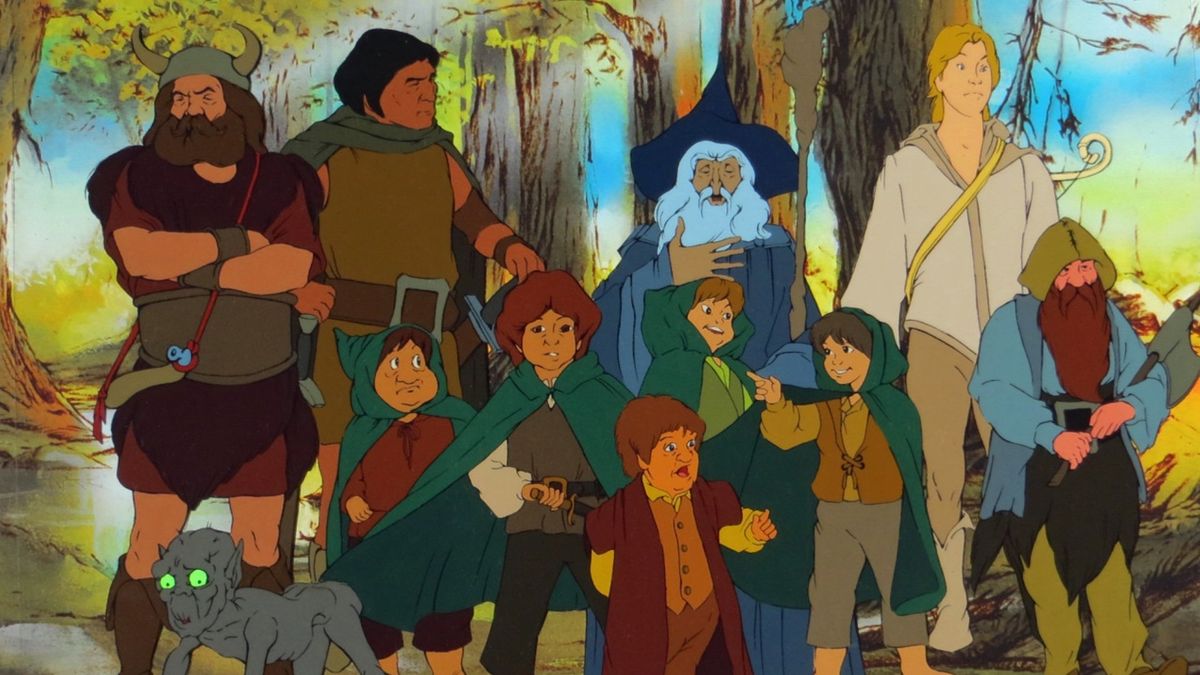
02. The Lord of the Rings

Did you know?
The film deploys the technique of rotoscoping, whereby live action reference footage is traced over onto an animation cel.

(Warner Bros / United Artists / Ralph Bakshi, 1979)

Ralph Bakshi followed Wizards with this adaptation of J.R.R.Tolkien’s The Fellowship of the Ring and the first half of The Two Towers. No second film would be produced to adapt the remainder of Tolkien’s epic tale.

Of the movie, Chris Kirshbaum, Animation Director at DNEG Animation says that "Just as Wizards started me on my artistic journey, The Lord of the Rings was the next step: it was the bridge between my book nerd, animation-nerd and art nerd, and solidified my lifelong love of escapist animation."

He adds: "Though it may seem dated by today’s standards, this interpretation was nothing less than revelatory at the time. The Lord of the Rings stood at the nexus of sci-fi, fantasy, art and film, and was the first real indication to me of just how ambitious in scope animated movies could be.”

01. Lupin III: The Castle of Cagliostro

Did you know?
Film director Steven Spielberg has expressed his enthusiasm for the film as one of the great action films. One can only wonder if it influenced the staging of action in Spielberg’s movie, The Adventures of Tintin.

(Toho Co., Ltd., Metro-Goldwyn-Mayer, Columbia Pictures, 1979)

Co-written and directed by Hayao Miyazaki, in his debut as a feature film director, Lupin III is based on a series of much-loved manga. The titular hero makes our list of the best anime characters to draw.

The film focuses on Lupin III’s quest to reach the source of counterfeit money that he has stolen from a casino. Action-heavy and with expressive character animation the film endures as an action classic.

Miyazaki went on to countless more successful, beautiful and award-winning animated films, including My Neighbor Totoro, Princess Mononoke and 2023’s The Boy and the Heron.

Conclusion

The 1970s was a decade that saw animation experimenting with new styles, themes, and techniques. The films listed above showcase the best of the decade’s animation, from the experimental to the mainstream. From the psychedelic visuals of Fantastic Planet to the action-packed adventure of Lupin III: The Castle of Cagliostro, these films continue to inspire and entertain audiences today.

FAQs

Q: What is the significance of the 1970s in animation?
A: The 1970s was a decade that saw a surge of interest in fantasy and science fiction movies, and animation provided a vivid, varied, and inventive showcase for each genre.

Q: What is the significance of Belladonna of Sadness (1973)?
A: Belladonna of Sadness is a film that illustrates the experimentation within the feature film format in the 1970s animation scene, with its adult sensibility.

Q: Who directed Fantastic Planet?
A: Fantastic Planet was directed by Rene Laloux.

Q: What is the significance of Watership Down?
A: Watership Down is an adaptation of Richard Adams’ novel of the same name and has become a classic, showcasing the animation talents of some of Disney’s ‘Nine Old Men’.

Q: Who directed The Rescuers?
A: The Rescuers was directed by Wolfgang Reitherman, John Lounsbery, and Milt Kahl.

Q: What is the significance of Wizards?
A: Wizards is a post-apocalyptic story about battling wizards who harness magic and technology, directed by Ralph Bakshi and showcasing his anti-war film.

Q: Who directed The Lord of the Rings?
A: The Lord of the Rings was directed by Ralph Bakshi.

Q: What is the significance of Lupin III: The Castle of Cagliostro?
A: Lupin III: The Castle of Cagliostro is a film that showcases the animation talents of Hayao Miyazaki, in his debut as a feature film director.

Worthless AI Marketing Agent

Understanding the Landscape and AI’s Role in Marketing

Before we get into it, let’s define what an AI agent is. An AI agent is a system designed to make decisions, take actions, and learn from outcomes without constant human direction. It’s not just a tool that responds to prompts. It can operate semi-independently to achieve a goal.

What is Good Marketing, and What Role Does AI Play?

Behind all the glitz and glamour, the fancy fonts, models, and expensive cameras, "good marketing" comes down to one thing… making your prospect feel seen. That’s literally it. Connecting with your prospect in a way that makes them say, "They understand exactly what I’m going through."

The right story can show your prospect you’re the one who truly understands their situation. AI agents treat marketing like a checklist. You need to do this, this, and this. But while there are steps, marketing isn’t just a science. It’s an art.

The Importance of Human Behavior in Marketing

The predictable thing about human behavior is that it’s usually unpredictable. Soft skills like nuance and empathy are often overlooked, yet they play a huge role and are nearly impossible to measure or predict. And therein lies the problem: these pesky humans and their unpredictability. Trolling aside, the tech is impressive and can get you 80% of the way there. But that extra 20%? That’s where good marketers make their living.

The Role of AI in Marketing

You see, good marketing has nothing to do with whether a campaign is automated or how pretty it looks. The running inside joke in the industry is that a lot of the time, winning campaigns look terrible, and imperfections in campaigns are what make them special and "winning." Sometimes, low-quality or "homemade" creative often outperforms the "studio creative."

AI marketing agents can be helpful. They can handle the repetitive stuff, like building campaigns based on the content, strategy, and information you’ve already mapped out. So, really, it’s not an AI marketing agent. It’s more like AI-powered data entry.

Conclusion

AI is Robin. But you? You, my friend, are Batman. AI is the peanut butter to your jelly… it’s not the sandwich; ya feel me. Use AI to help you save time, create reports, etc. But you must be the expert, so working on your marketing skills is crucial to maximizing AI.

Frequently Asked Questions

Q: What is an AI agent?
A: An AI agent is a system designed to make decisions, take actions, and learn from outcomes without constant human direction.

Q: Can AI marketing agents really run marketing campaigns?
A: AI can handle repetitive tasks like building campaigns based on existing content and strategy, but human behavior and creativity are still essential for successful marketing.

Q: Is AI a magic wand for marketing?
A: No, AI is not a magic wand. It can help with automation and data entry, but it’s still up to humans to create effective marketing strategies and campaigns.

Q: What’s the most important thing in marketing?
A: The most important thing in marketing is connecting with your prospect in a way that makes them feel seen and understood.

Q: Do I need to be a marketing expert to use AI?
A: Yes, using AI effectively in marketing requires a deep understanding of marketing fundamentals and the ability to work with AI tools to achieve your goals.

Samsung Galaxy Ring: Student Discount

0

Samsung Galaxy Ring Review

Introduction

As a dedicated Samsung fan, I was thrilled when the company announced its first-ever smart ring, and I’m even more excited now that it’s £80 off for a limited time. In this article, I’ll dive into the details of this amazing deal and explore what the Samsung Galaxy Ring has to offer.

The Deal

You’ll need to order the Galaxy Ring directly from Samsung and use the code SPRINGSAVE to bring the price down to £319. This is a fantastic opportunity to try out this innovative device at a fraction of the original price.

Student Discount

If you’re a student, you’re in luck! By verifying your student status with the Samsung Education Store, you can buy the Galaxy Ring at a discounted price of just £359.10. But wait, there’s more! With the discount code above also applied, the final price comes out to £279.10, which is an incredible £119.90 saving.

Features and Comparison

As much as I’m excited to try out the Samsung Galaxy Ring, I’ve never been able to justify the £399 price tag, especially since I already own the Samsung Galaxy Watch 6, which shares a lot of the same features. But with this discount, I’ve never been more tempted. The Galaxy Ring offers a sleek and stylish design, seamless integration with other Samsung devices, and a range of features that make it a compelling option for anyone looking to upgrade their wearable game.

Conclusion

The Samsung Galaxy Ring is an innovative and exciting device that’s now available at a discounted price. Whether you’re a student or just looking to treat yourself, this deal is too good to pass up. With its sleek design, seamless integration, and range of features, the Galaxy Ring is a great option for anyone looking to upgrade their wearable game.

FAQs

Q: What is the original price of the Samsung Galaxy Ring?
A: The original price of the Samsung Galaxy Ring is £399.

Q: How much is the Galaxy Ring discounted for?
A: The Galaxy Ring is £80 off for a limited time, bringing the price down to £319.

Q: Is there a student discount available for the Galaxy Ring?
A: Yes, students can buy the Galaxy Ring at a discounted price of £359.10 by verifying their student status with the Samsung Education Store.

Q: How do I get the discount code SPRINGSAVE?
A: You can get the discount code SPRINGSAVE by ordering the Galaxy Ring directly from Samsung.

Forerunner’s Long Game

0

Forerunner Ventures’ Approach to Alternative Liquidity

A New Era in Consumer Startups

Thirteen years ago, Forerunner Ventures began helping to usher in a new era of consumer startups, including Warby Parker, Bonobos, and Glossier. None has gone through a traditional IPO process. Warby Parker was taken public through a special purpose acquisition vehicle. Bonobos was acquired by Walmart. Glossier is still privately held, along with many other design-forward brands in Forerunner’s portfolio.

An Alternative to Traditional IPOs

That’s not a failure, according to Forerunner founder Kirsten Green. In today’s landscape, nearly every alternative to the traditional IPO has become the new norm.

Early Bets and Valuations

Consider that companies like fintech Chime and smart ring outfit Ōura, founded in 2012 and 2013, respectively, were also early bets for Forerunner and have achieved valuations north of $5 billion, proving their staying power in crowded markets. But while Chime has confidentially filed to go public, Ōura’s CEO has said there are no immediate plans for an IPO.

The Secondary Market

At TechCrunch’s StrictlyVC evening late last week, Green made it clear she doesn’t mind. Asked specifically whether she is bothered by Ōura’s CEO, Tom Hale, repeatedly telling the media the company is not preparing an IPO anytime soon despite strong sales, she called the outfit an “off-the-charts phenomenal company,” adding that “we haven’t even gotten to the thought around our table about selling, because we’re here for the growth that’s happening.”

She suggested instead that investors long ago adapted to a world with fewer conventional public offerings, including by turning increasingly to the once-secondary secondary market to manage liquidity and exposure.

A Shift in the Industry

She said, “We’re engaged in the secondary market, buying and selling,” Green said of Forerunner’s team, characterizing the shift as both practical and strategic. “Companies are waiting so long to go public. The venture model is generally 10-year fund lifecycles. If you now need to be a double-digit billion-dollar company to [stage] a successful IPO or [become traded] in the public markets, it takes time to get there.” The secondary market is “continuing to drive the industry” and allowing “people to unlock returns and liquidity.”

Benefits of the Secondary Market

For longtime industry watchers, it’s a remarkable shift. In the past, firms could expect a major liquidity event within a few years: an acquisition, a classic stock market debut. Yet the growing reliance on the secondary market isn’t just a response to public markets that reward scale and favor already high-performing companies.

Another major benefit, Green suggested last week, is that price discovery is more efficient when there are more participants involved — even if it ultimately means a discount to one of her deals.

Price Discovery in the Secondary Market

Green addressed, for example, Chime, the neobank that became a household name during the fintech boom. Its valuation has zigzagged wildly in recent years, from $25 billion in 2021 when it last closed a primary round of funding from a small group of venture investors, down to a reported $6 billion valuation last year on the secondary market, which typically features many more participants. More recently, it reportedly climbed again to $11 billion.

“In terms of the prices,” Green said, “if you think about it, the round that gets done, the Series D, that was a negotiation between the company and an investor. With the secondary market, you’ve got more people in the mix, right? And then when you [eventually] go to the public markets, you’ve got everybody” setting the price for what they perceive to be the value of a company.

The Importance of Being Early

Green can afford to be a little less invested, so to speak, in those later valuations. While it’s always nice to be associated with eye-popping numbers, the firm’s strategy of getting in at the ground floor gives it more wiggle room than other venture firms might enjoy. “We try to be early,” Green said, pointing to the firm’s framework of identifying major shifts in consumer behavior and pairing them with emerging business models.

Conclusion

Great companies, Green noted, need time to develop and not all growth paths look the same. Venture capital, once eager for exits, is learning to wait and, when necessary, get creative.

FAQs

  • Q: What is Forerunner Ventures’ approach to alternative liquidity?
    A: Forerunner Ventures focuses on getting in early, identifying major shifts in consumer behavior and pairing them with emerging business models, and then managing liquidity through the secondary market.
  • Q: Why doesn’t Forerunner Ventures mind that some of its companies are not going public?
    A: Green believes that investors have adapted to a world with fewer conventional public offerings and are increasingly turning to the secondary market to manage liquidity and exposure.
  • Q: What are the benefits of the secondary market?
    A: The secondary market allows for more efficient price discovery, and it provides people with the opportunity to unlock returns and liquidity.
  • Q: Why did Forerunner Ventures focus on getting in early?
    A: Green believes that getting in early gives the firm more wiggle room in terms of valuations and allows it to identify and capitalize on emerging business models.

How You Can Use Technology to Streamline Guard Services

0

You already know how messy it can get if you’re still using paper timesheets or cobbled-together spreadsheets to manage your team’s pay. Late submissions, missed hours, and manual errors all add to frustration for both you and your guards.

One small-to-midsize security company felt the same pain until it implemented payroll automation for security, which genuinely worked.

Instead of relying on handwritten logs or scattered punch-in systems, they introduced a simple mobile time-tracking tool. Guards could clock in from their phones, and all that data synced directly to their payroll processing.

Hours were calculated automatically, overtime was flagged instantly, and reports were always ready by payday. As a result, the company cut payroll processing time by more than 40% and saw fewer disputes about hours worked.

By adopting payroll automation for security, you reduce stress for your admin team, keep your guards satisfied with timely pay, and gain better control over labor costs.

And you don’t have to buy a massive enterprise suite to do it—there are flexible, customizable tools designed just for this purpose.

Build the Tools You Need Fast

Let’s face it: off-the-shelf apps rarely match the exact needs of your operation. One mid-sized firm realized this after struggling with multiple systems that couldn’t communicate. They needed a faster way to manage field reports, assign shifts, and coordinate dispatch.

Waiting months for a developer to build something custom wasn’t realistic.

So they turned to rapid application development. Using drag-and-drop platforms, they created a custom app in under two weeks. The app allowed guards to log patrol updates, submit incident photos, and message supervisors – all in real time.

It wasn’t perfect on day one, but it was theirs. When something didn’t work, they fixed it quickly.

Rapid application development gives you speed and control. You don’t have to wait on third-party timelines or settle for bloated features you’ll never use.

You create what you need, when you need it, and you stay agile as your business shifts.

Fix Invoicing Headaches with Smart Billing

Billing can become a full-time job, especially when you’re managing dozens of contracts with different rates, shifts, and terms. One guard company was struggling to keep up. They had a backlog of unpaid invoices, and clients constantly called with questions or corrections.

They switched to integrated billing solutions that connected time tracking, contract terms, and billing into a single system. Once a guard completed a shift, the hours were tied to the client’s rate and contract details.

Invoices were created automatically, with line-item breakdowns, incident reports, and shift notes.

With integrated billing solutions, nothing gets lost in the shuffle. You eliminate the need to copy-paste data between systems or chase down missing information. Clients get clear, accurate bills on time, and you get paid without the hassle.

Grow Without Losing Control

Growth sounds great – until it happens. One company landed a high-value logistics contract that nearly doubled its workload overnight.

They had to scale up fast, adding dozens of new guards across multiple sites. The problem? Their current systems weren’t built for it.

Instead of overhauling everything, they used no-code tools to build a staff onboarding and scheduling portal. The portal managed background checks, training progress, certifications, and shift availability.

As they expanded into new regions, they replicated the portal and adjusted it for local needs.

By taking control of their systems, they got stronger. With a flexible, tech-powered foundation, scaling stopped being a source of stress and became an opportunity.

Show Clients the Value You Deliver

Clients care about results, transparency, and professionalism. One guard service company created a secure client portal that pulled in data from their payroll, scheduling, and reporting tools.

Clients could log in to see real-time patrol logs, request schedule changes, and download reports.

The result? Faster communication, fewer emails, and happier clients. It also helped them stand out in competitive bids.

This integration shows your clients that you care about their time and needs. And it builds long-term trust, which matters just as much as your field work.

Conclusion: Small Tech Moves Make a Big Difference

You don’t have to be a tech company to start building more intelligent systems. With tools like payroll automation for security, rapid application development, and integrated billing solutions, you can solve real problems without a massive overhaul.

These case studies started with a specific challenge – missed hours, clunky tools, late invoices. But they all ended with custom solutions that worked, because the teams decided to act. You can do the same.

Whether you start with automating reports, building a client portal, or fixing billing, the goal is simple: get more done with fewer headaches.

Netflix is Testing a New OpenAI-Powered Search

0

New Netflix Search Feature Uses AI to Help Users Find Shows

The new search engine will let users “look for shows using far more specific terms, including the subscriber’s mood, for example, the company said,” per the report. This OpenAI-powered search will also allow users to make queries that “go well beyond genres or actors’ names.”

How it Works

The feature, which is opt in, is already available for some users to try in Australia and New Zealand on iOS.

Expansion and Availability

Netflix spokesperson MoMo Zhou confirmed to The Verge that Bloomberg’s story is accurate. Zhou says that the test will expand to the US “in the coming weeks and months” and that there aren’t currently plans for the feature outside of iOS.

Company’s Plans

“It’s early days for the feature and we’re really in a learn and listen phase for this beta,” Zhou says.

OpenAI’s Involvement

OpenAI didn’t immediately reply to a request for comment.

Company’s History with AI

In an interview on the Decoder podcast last year, The Verge’s editor-in-chief, Nilay Patel, asked Netflix co-CEO Greg Peters about how the company was thinking about AI. Here was part of his response:

We have a long history of using machine learning and artificial intelligence in our recommender systems. We’ve been doing that for 20-some years. Again, we think that our job is to be proactive about understanding where there’s technical innovation. How do we use that both to serve creators, allow them to tell their stories in more compelling ways, and also then to serve our members better user experiences?

Conclusion

The new Netflix search feature using AI technology is an innovative step towards providing users with a more personalized and efficient way to find their favorite shows. With the ability to search using specific terms, including the subscriber’s mood, users will have a more tailored experience.

FAQs

Q: Is the new search feature available for all users?
A: No, the feature is currently available for opt-in users in Australia and New Zealand on iOS, and will expand to the US in the coming weeks and months.

Q: Will the feature be available on other platforms?
A: Not currently, the feature will only be available on iOS.

Q: How does OpenAI fit into this feature?
A: OpenAI is powering the search feature, allowing for more specific and personalized searches.

Q: What is the company’s history with AI?
A: Netflix has been using machine learning and artificial intelligence in its recommender systems for over 20 years.