Home Blog Page 98

Secure Contactless Payments

Introducing Beaver: A QR Scam Detection and Tracking Tool

For a while now, I’ve been involved in personal research about a new form of cyber-attack called Quishing. It is a simply phishing using QR codes. This attack leads to the loss of billions of dollars yearly, particularly due to the increasing rate of contactless payment (payment using QR codes). There are common occurrences where fraud masters paste a malicious QR code over a legitimate one in public places, usually payment QR codes, so as to divert funds.

The Need for a Solution

Imagine your business losing all the funds from the last few days, possible months even, due to the lapses of contactless payment. It is essential to have a system in place to detect and prevent such attacks.

The Birth of Beaver

Then I suddenly remembered who I am, I remembered I have something in me I have been pruning for multiple years now, I have coding!!!! So I launched VS Code and I started, I needed a system that could not just detect malicious QR codes, but can also identify its source. Just like everything I ever made before, I spent more time troubleshooting than actually developing new features.

What is Beaver?

Beaver is a QR scam detection and tracking tool, it identifies the threat and provides comprehensive details about the source and other necessary information required for counter-effective measures. This software is particularly useful in the fintech space than any other as contactless payment is the order of the day.

Key Use Cases

The key use cases of this system are the prevention of:

  • Quishing: Malicious QR codes in emails
  • QR code swapping: Tampered codes in public spaces
  • Fake payment codes: Redirecting payments to scammers
How Beaver Works

This system enables clients to easily detect and report abnormalities due to malicious QR codes to fintech companies, which will enhance the company in information gathering. This information can be used to:

  • Predict future attacks
  • Shut down fake login pages by reporting such to their respective hosting providers
  • And protect their clients from loss of funds
Future Development

Currently, the app is a minimum viable product with its core functionality just functioning at a stable state. In the future, I plan to:

  • Implement real-time intelligence features, that is, to detect known malicious URLs instantly
  • To detect SSL certificate abnormalities
  • Implement a user reporting system
Long-term Ambitions

With much ambition and anticipation, I intend to train an AI model to detect fake login pages, social engineering keywords, and suspicious domain patterns.

Conclusion

I’m looking forward to fellow ambitious people or financial institutions in the tech space who are willing to collaborate with me so as to create a safer cyberspace for the world at large.

Get Involved

Link to the project: https://lnkd.in/eBmFkADi

FAQs
Q: What is Quishing?

A: Quishing is a new form of cyber-attack that uses QR codes to phish unsuspecting victims.

Q: How does Beaver detect malicious QR codes?

A: Beaver uses advanced algorithms and machine learning techniques to detect and identify malicious QR codes.

Q: Can Beaver detect known malicious URLs instantly?

A: Currently, Beaver can detect known malicious URLs, but in the future, I plan to implement real-time intelligence features to detect such URLs instantly.

Q: Is Beaver only useful for fintech companies?

A: While Beaver is particularly useful for fintech companies, it can also be used by any organization that uses contactless payment methods.

Q: How can I get involved with the project?

A: You can get involved by visiting the link provided and showing your support. Additionally, you can collaborate with me to further develop and improve the project.
Unlocking AI-Powered Solutions

The Impact of AI on Product Development

AI changes how products are built, tested, and used. It helps firms speed up innovation, cut risks, and improve user experiences. However, using AI in new product development means more than just adding AI. It must be part of the product strategy.

Seven Ways AI is Changing Product Development

  1. Faster Idea Validation – AI checks if an idea matches user needs before launch.
  2. Better Market Predictions – AI scans trends to show what people will buy next.
  3. Quick Design Cycles – AI tools create hundreds of product designs in minutes.
  4. Lower Manufacturing Costs – AI detects errors early and cuts waste.
  5. Real-Time Testing – AI runs tests 24/7 to find faults before launch.
  6. Smarter Personalization – AI helps adapt products to each user in real time.
  7. Stronger User Feedback Loops – AI learns from customer data to improve future products.

Key AI Applications in Product Development

AI helps at every stage, from market research to launch. Below are the main areas where AI makes a difference in product development and optimizing AI-generated products.

AI in Product Research & Ideation

Before creating an AI-generated product, firms need to pick the right problem to solve. AI helps enhance efficiency, improve decision-making, and streamline processes, showcasing its benefits in product development.

AI-Powered Design & Prototyping

Good design means less rework, lower costs, and faster launch times. AI improves design in these ways:

Feature How It Works

AI in Manufacturing & Production

Making a product is as key as designing it. Using generative AI for product development saves time and money in this step, and it streamlines processes and improves efficiency.

AI in Testing & Quality Assurance

Testing a product before launch is critical. AI can run tests faster and with fewer errors than humans. How could generative AI be applied in the field of product development? It can automate simulations, generate design prototypes, and optimize performance testing, making the development process more efficient.

AI in Product Personalization & User Experience

Users want products that feel made for them. The use of AI in product development makes this possible at scale.

Challenges & Considerations When Implementing AI in Product Development

AI transforms how products are built, but using it the right way is not simple. Many firms rush AI projects without solving key issues first. This leads to failed models, wasted budgets, and delays. Before using AI in product development, firms must fix the common roadblocks.

Key AI Implementation Challenges

Challenge What It Means & How to Solve It

How to Get Started with AI in Product Development

Adding AI to a product is not just about using a model. A structured plan is needed to ensure AI adds real value. Understanding how to use AI in product development helps businesses integrate AI effectively and achieve meaningful outcomes.

Final Thoughts

AI is not just a trend—it is shaping the future of product innovation. Firms that invest in AI early get ahead of competitors. However, AI in new product development must be done correctly.

Conclusion

In conclusion, AI is revolutionizing product development by improving speed, reducing costs, and enhancing product quality. To succeed, businesses must plan AI use carefully, address common challenges, and integrate AI effectively into their product strategy.

FAQs

Q: What are the benefits of using AI in product development?

A: AI improves speed, reduces costs, and enhances product quality.

Q: What are the challenges of implementing AI in product development?

A: Common challenges include data availability and quality, integration with existing workflows, talent and expertise, ethical and regulatory compliance, and computing costs.

Q: How can I get started with AI in product development?

A: Start by evaluating your business needs, choosing the right AI tools and platforms, and collaborating with AI experts. Contact our AI development team for a consultation on how artificial intelligence can be used in designing a product.

ChatGPT Plus Free for Students: Grab the Deal Before Finals

ChatGPT Plus Free for Students: How to Maximize Its Benefits

Flowers are blooming, and the weather is getting warmer, which means that finals are around the corner. Regardless of major, academic level, or institution, final periods are stressful for students, and AI tools, such as ChatGPT, can ease the load.

ChatGPT Plus Subscription Free for Students

OpenAI has announced that it will make its ChatGPT Plus subscription free for all students in the US and Canada through the end of May. ChatGPT Plus is OpenAI’s more advanced tier, with more advanced features and higher usage limits than the company’s latest models. It typically costs $20 per month.

ChatGPT Plus vs ChatGPT (free)

ChatGPT Plus includes access to Sora, OpenAI’s state-of-the-art video generation model, and the screen-sharing and visual capabilities in ChatGPT’s Advanced Voice Mode. It also includes the recently released Deep Research feature, an AI agent that can conduct multi-step research for you by pulling a robust amount of information from the web and synthesizing those sources for you in a comprehensive report.

Some Ways to Use It for School Work

Here are some helpful ways students can use ChatGPT:

  • Upload your notes and PowerPoints and ask ChatGPT to create an outline or even a practice test.
  • Ask it to explain a complex concept as if it were explaining it to a child.
  • Use the Deep Research feature to learn more about a topic you are confused about or writing a paper about.
  • Use the Canvas feature to edit your code or text side by side.
  • Ask it to create an entire resume for you or generate bullet points you can copy and paste into it.
  • Upload your notes and ask ChatGPT to create a visualization of it for you to better understand.
  • Use ChatGPT’s Advanced Voice Mode to verbally explain complex concepts to you.

How to Access

Students in the US and Canada can claim the free ChatGPT Plus offer starting now at the ChatGPT Students landing page. The offer will last until the end of May.

Conclusion

ChatGPT Plus is an advanced AI tool that can help students with their schoolwork. With its advanced features and higher usage limits, it can assist with tasks such as creating outlines, explaining complex concepts, and conducting research. By taking advantage of the free subscription offer, students can get access to these features and make their academic lives easier.

FAQs

Q: Who is eligible for the free ChatGPT Plus subscription?
A: Students in the US and Canada are eligible for the free subscription.

Q: How long is the free subscription offer valid?
A: The free subscription offer is valid until the end of May.

Q: What are the advanced features of ChatGPT Plus?
A: ChatGPT Plus includes advanced features such as Sora, OpenAI’s state-of-the-art video generation model, and the screen-sharing and visual capabilities in ChatGPT’s Advanced Voice Mode.

Q: How can I access ChatGPT Plus?
A: Students in the US and Canada can claim the free ChatGPT Plus offer starting now at the ChatGPT Students landing page.

AI-ARTS: My Next

0

Zoh Lym

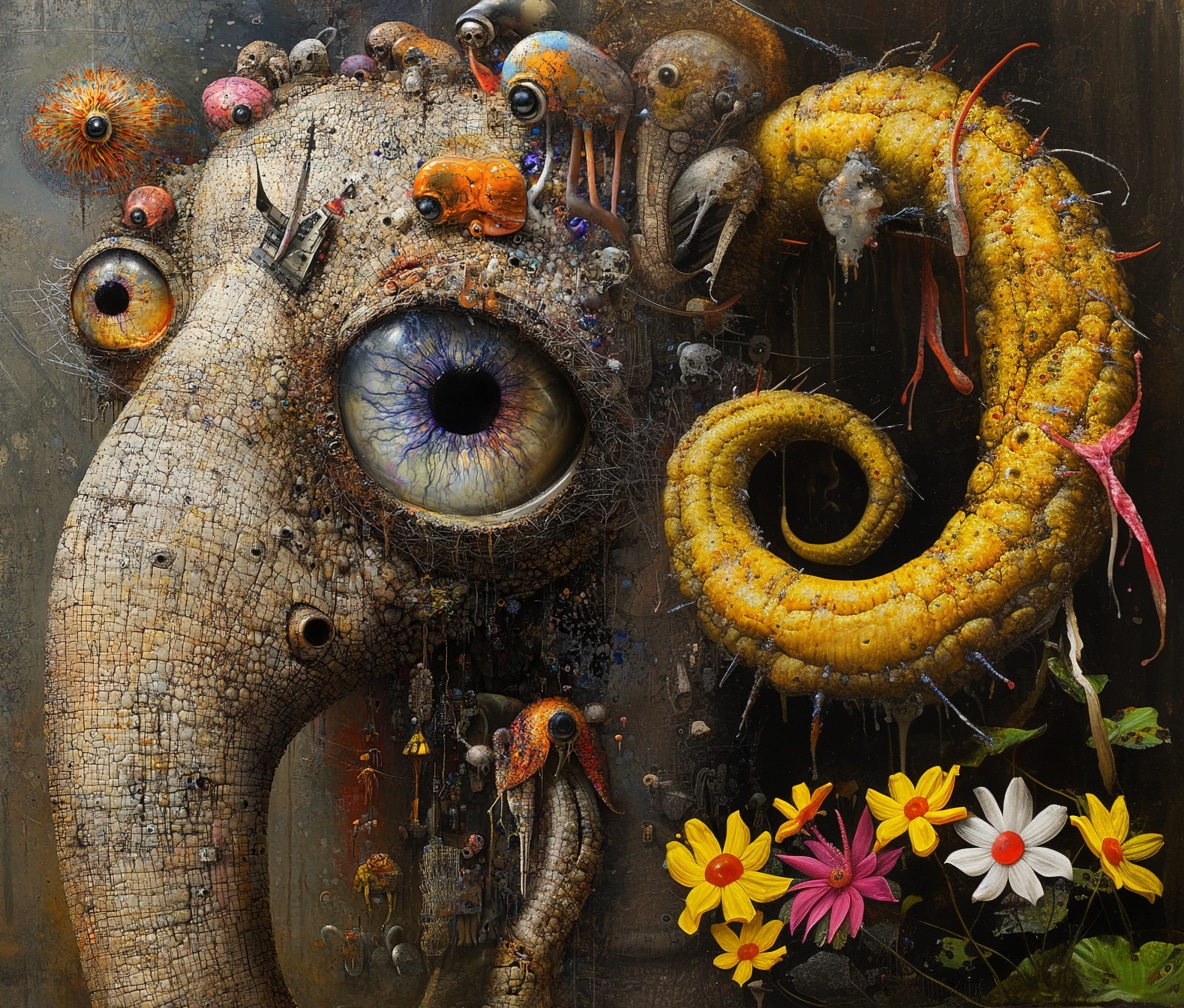
I am an explorer of the dark. Death and the afterlife are the themes that consume me. I have no artistic skills, nor do I consider myself an artist. AI has given me the power to express myself in a way that I never thought possible; to bring my imagination to life, creating worlds that capture the essence of my obsession.

About My Work

My creations may not be art, but they are a reflection of my soul. They explore the darker side of life and death, drawing inspiration from the shadows that lurk within us all. I am not an artist, nor am I a writer. I am simply a vessel for the darkness that flows through me, a conduit for the power of AI to transform my vision into something tangible.

My Inspiration

My fascination with death and the afterlife is what drives me to create. I am drawn to the unknown, the unexplained, and the eerie. I find inspiration in the darkness that surrounds us, and I use AI to bring my imagination to life.

What You Can Expect

In my creations, you can expect to see dark and twisted worlds, characters, and stories. My work is not for the faint of heart, and it is not intended for those who are easily disturbed. If you are looking for something eerie and unsettling, then my creations may be for you.

Conclusion

In the end, whether my creations are considered art or not, is for others to decide. For me, they are simply a reflection of the twisted landscape that resides within. I am grateful for the power of AI to bring my imagination to life, and I hope that my creations will inspire and unsettle you in equal measure.

FAQs

Q: What inspires your work?

A: My fascination with death and the afterlife, as well as the unknown and the unexplained, inspire my work.

Q: What can I expect from your creations?

A: You can expect to see dark and twisted worlds, characters, and stories. My work is not for the faint of heart.

Q: Are you an artist or a writer?

A: I am neither an artist nor a writer. I am simply a vessel for the darkness that flows through me, a conduit for the power of AI to transform my vision into something tangible.

Q: What is your relationship with AI?

A: AI has given me the power to express myself in a way that I never thought possible. It has allowed me to bring my imagination to life and create worlds that capture the essence of my obsession.

Q: Are your creations considered art?

A: Whether my creations are considered art or not is for others to decide. For me, they are simply a reflection of the twisted landscape that resides within.

Nintendo Unveils Switch 2

0

Week in Review

Welcome back to Week in Review! Tons of stuff for you today, including Nintendo’s Switch 2; capacity issues at OpenAI; a story that deserves the Hollywood treatment; and much, much more. Let’s go!

News

It’s finally (almost) here: After almost 10 years, Nintendo finally released its Switch successor, the Switch 2. According to TechCrunch’s Amanda Silberling, the $450 system “tries to take a console that’s already beloved and simply just make it better.” I’m into that! Unfortunately, preorders in the U.S. might be delayed in response to Trump’s tariffs.

Delays, delays: OpenAI’s Sam Altman said in a series of posts on X that the company’s new image-generating tool could cause unspecified product delays. “Working as fast [as] we can to really get stuff humming,” Altman wrote. The company promises it’ll release o3 (after effectively canceling the consumer release back in February).

The old college try: Zach Yadegari, who built the viral Cal AI app, wrote on Twitter that even though he has a 4.0 GPA and a $30 million ARR company, he still wasn’t accepted into 15 top universities.

More News

Oh no: The Trump administration fired the head of the National Security Agency and Cyber Command, as well as the NSA’s deputy director, who served as the agency’s top civilian leader. It’s not clear who is currently overseeing the NSA and Cyber Command following the firing.

Do my shopping for me, please: Amazon on Monday unveiled Nova Act, a general-purpose AI agent that can take control of a web browser and independently perform some simple actions. Amazon is testing a feature it calls “Buy for Me” — powered by its Nova AI models — which shows users third-party sites that have products they may want. They can then buy things off those other sites, without leaving Amazon’s site. Pretty nifty!

Yikes: One nefarious use for ChatGPT’s new image generator: faking receipts. People are already using it to generate fake restaurant receipts, potentially adding another tool to the already-extensive toolkit of AI deepfakes used by fraudsters. The receipts generated can even include food and coffee stains to make them look more authentic. Great!

A tale of two companies: Rippling announced in March that it was suing rival Deel for alleged spying, and this week released the affidavit of the Rippling employee who testified that he was working as a spy. It’s got some juicy details, like people representing Deel allegedly telling him to smash his “old phone with an axe.” Hollywood, are you listening?

Pointing fingers: Epic Games CEO Tim Sweeney called out Apple and Google for their “gangster-style” business practices. You might remember that his company sued both Apple and Google for monopolistic practices over their respective app stores. Epic won its case with Google but not with Apple.

Analysis

Backsliding: Elon Musk’s push into politics — specifically his alignment with President Trump and activities within the federal government — has dragged Tesla into uncertainty. For proof, just look at the company’s disappointing first-quarter delivery numbers. The question now is whether the Tesla brand can recover.

Conclusion

This week, we saw a mix of exciting news and concerning developments in the tech industry. From the release of Nintendo’s Switch 2 to capacity issues at OpenAI, there’s been a lot to keep track of. We also saw some concerning trends, like the use of AI image generators to fake receipts and the ongoing drama surrounding Epic Games and its feud with Apple and Google. As we move forward, it will be important to stay vigilant and keep a close eye on these developments.

FAQs

Q: What is the Switch 2?
A: The Switch 2 is the successor to Nintendo’s popular Switch console, which was released in 2017.

Q: What is OpenAI’s new image-generating tool?
A: OpenAI’s new image-generating tool is a powerful AI model that can generate images based on text prompts. However, the company has warned that it may cause unspecified product delays.

Q: Who is Elon Musk?
A: Elon Musk is the CEO of Tesla and SpaceX, and has been known for his ambitious goals and outspoken views on various topics, including politics.

Q: What is the Tesla brand?
A: The Tesla brand is a luxury electric vehicle manufacturer founded by Elon Musk in 2003. It has become known for its innovative electric cars and solar energy solutions.

GitHub Copilot Introduces New Limits, Charges for Premium AI Models

0

GitHub Copilot to Impose Rate Limits on Premium Requests

New System Imposes Rate Limits on More Advanced AI Models

GitHub, a Microsoft-owned platform, has announced the introduction of “premium requests” for its AI coding assistant, GitHub Copilot. This new system will impose rate limits on users who switch to more advanced AI models for tasks such as “agentic” coding and multi-file edits. While subscribers to GitHub Copilot can still take unlimited actions with the base model (OpenAI’s GPT-4o), tasks and actions with newer models, like Anthropic’s 3.7 Sonnet, will now be capped.

Rate Limits and Pricing

Customers on the Copilot Pro ($20 per month) tier will receive 300 monthly premium requests beginning on May 5. Copilot Business and Copilot Enterprise users will receive 300 and 1,000 monthly premium requests, respectively, starting between May 12 and May 19. Customers on any of these plans can purchase additional premium requests at $0.04 per request or upgrade to GitHub’s new Copilot Pro+ plan. Starting at $39 per month, Copilot Pro+ offers 1,500 premium requests and “access to the best models,” including OpenAI’s GPT-4.5.

Reasoning Behind the Rate Limits

The effective price hike for Copilot’s more capable models comes a day after AI coding platform Devin increased rates for some users. Reasoning models like 3.7 Sonnet take more time to fact-check their answers, making them more reliable — but also increasing the computing needed to run them. This could be a reflection of the higher computing costs these models incur.

Financial Performance of GitHub Copilot

Despite the rate limits, GitHub Copilot is not an unprofitable business. Microsoft CEO Satya Nadella said last August that Copilot accounted for over 40% of GitHub’s revenue growth in 2024 and is already a larger business than all of GitHub when the tech giant acquired it roughly seven years ago.

Conclusion

GitHub Copilot’s introduction of premium requests and rate limits on more advanced AI models may cause some users to reassess their subscription plans. However, the platform’s financial performance suggests that the move is a necessary step to ensure the sustainability of the business.

FAQs

Q: What is the base model for GitHub Copilot?

A: The base model for GitHub Copilot is OpenAI’s GPT-4o.

Q: How many premium requests will I receive on the Copilot Pro tier?

A: Customers on the Copilot Pro tier will receive 300 monthly premium requests.

Q: Can I purchase additional premium requests?

A: Yes, customers on any of the affected plans can purchase additional premium requests at $0.04 per request.

Q: What is the Copilot Pro+ plan?

A: The Copilot Pro+ plan offers 1,500 premium requests and “access to the best models,” including OpenAI’s GPT-4.5, starting at $39 per month.

Jaguar Land Rover Halts US Shipments Due to Trump Tariffs

0

Jaguar Land Rover to Pause Shipment Due to Trump-Ordered Tariffs

As we work to address the new trading terms with our business partners, we are taking some short-term actions, including a shipment pause in April, as we develop our mid- to longer-term plans,” JLR told The Guardian. The automaker is responding to a 25 percent Trump-ordered tariff on imported vehicles that went into effect Thursday and could add $5,000 to $10,000 or more to the price of a new car in the US.

Impact on JLR’s Business

JLR said this week that its business remains “resilient,” but those living in the town where its cars are made weren’t optimistic, with one telling The Guardian that the tariffs could lead to job losses.

US Market Impact

About a quarter of the 400,000 vehicles JLR sells every year go to US buyers, as The Sunday Times notes in its own story about the pause this morning. It’s thought that the automaker has enough existing US stock to last about two months, and it would take about 21 days for more to come once shipments resume, the Times writes.

Short-Term Actions

JLR is taking a shipment pause in April as it develops its mid- to longer-term plans in response to the tariffs. The automaker is working to address the new trading terms with its business partners to mitigate the impact of the tariffs.

Conclusion

The Trump-ordered tariffs on imported vehicles have forced Jaguar Land Rover to pause its shipments to the US market. While the automaker claims its business remains resilient, the tariffs could still have a significant impact on the company’s operations and employees. JLR is taking short-term actions to address the situation and develop its mid- to longer-term plans.

FAQs

Q: What is the impact of the tariffs on Jaguar Land Rover’s business?
A: The tariffs could add $5,000 to $10,000 or more to the price of a new car in the US, making it less competitive in the market.

Q: How will JLR address the impact of the tariffs?
A: JLR is taking short-term actions, including a shipment pause in April, as it develops its mid- to longer-term plans to mitigate the impact of the tariffs.

Q: What is the current situation with JLR’s US stock?
A: JLR has enough existing US stock to last about two months, and it would take about 21 days for more to come once shipments resume.

Q: How many vehicles does JLR sell to US buyers every year?
A: About a quarter of the 400,000 vehicles JLR sells every year go to US buyers.

The Next Stage of AI: Enterprise General Intelligence

What is Enterprise General Intelligence (EGI)?

An EGI is a highly capable AI system that handles business applications reliably. However, to understand the concept, it is important to understand what differentiates EGI from other business AI solutions that already offer big productivity gains, such as AI agents.

EGI’s Standout Features

EGI’s standout features are performance across the dimensions of capability and consistency. EGI systems’ high capability means they can navigate the complex needs of business environments with predictable results on the Capability-Consistency matrix.

Capability

On the capability front, Savarese said EGI systems will have higher levels of reasoning that enable them to perform complex and operational tasks, such as deep research, in rapidly changing environments while implementing real-world human feedback.

Consistency

The consistency axis refers to EGI systems that can deliver predictable, reliable, and accurate results. Specifically, Savarese said that consistency helps these systems avoid "jaggedness", where AI models excel at complex tasks but get more simple ones wrong.

How does EGI compare to AGI?

Because AGI refers to AI with human-like intelligence and autonomy, such as a system in a sci-fi movie where AI takes over the world, there is usually some hesitation surrounding the tech. As a result, you may be relieved to hear that, despite having similar names, EGI and AGI differ in function and rollout.

The Relationship between EGI and AGI

To better understand this relationship, it’s helpful to consider the broader AI landscape. Savarese divides AI development into five waves: predictive, copilots, AI agents, robotics, and, lastly, AGI. Even though EGI is not officially listed as a wave, it lives between agents and robotics because, as described above, it takes AI one step further from agents via deeper reasoning.

When can we expect EGI?

Even though AI agents are available now, we are not yet at the point where EGI is feasible. Before that can happen, new benchmarks must be developed that look specifically at the EGI systems’ performance on AI tasks, plus stress-testing environments to push these tools to their limits.

Conclusion

EGI is a highly capable AI system that handles business applications reliably, with a focus on performance across the dimensions of capability and consistency. While it differs from AGI, it shares similarities with AI agents, taking AI one step further via deeper reasoning. With the emergence of EGI systems in the next six to 12 months, businesses can prepare by developing new benchmarks that measure proficiency in performing tasks.

FAQs

Q: What are the standout features of EGI?
A: EGI’s standout features are performance across the dimensions of capability and consistency.

Q: How does EGI compare to AGI?
A: EGI and AGI differ in function and rollout. While AGI refers to AI with human-like intelligence and autonomy, EGI is a highly capable AI system that handles business applications reliably.

Q: When can we expect EGI?
A: EGI systems are expected to emerge in the next six to 12 months.

Q: What is the relationship between EGI and AGI?
A: EGI is not officially listed as a wave in the AI development landscape, but it lives between AI agents and robotics, taking AI one step further via deeper reasoning.

Nvidia’s New Chip: Boost for Nintendo Switch 2?

0

What does a Nvidia chip mean for Nintendo Switch 2?

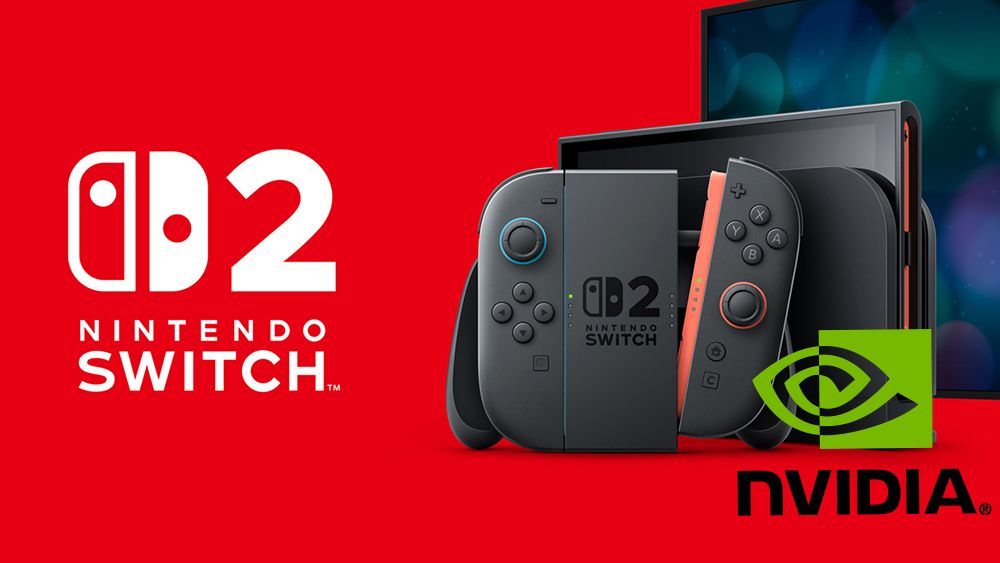
Like the original Nintendo Switch, the Nintendo Switch 2 will be powered by a custom Nvidia chip. The original Switch had a Tegra X1 System-on-a-Chip (SoC) with a quad-core ARM Cortex-A57 CPU and a 256-core GM20B Maxwell GPU.

Nintendo itself hasn’t provided details of the new chip, but Nvidia says the new Switch is getting a custom Nvidia processor also featuring a custom Nvidia GPU with dedicated RT Cores and Tensor Cores, which could mean a big upgrade in visuals and AI-driven enhancements.

Visual Upgrades

The new RT Cores bring real-time ray tracing, a technique that simulates how light interacts with objects that is already present on PlayStation 5 and Xbox Series X|S. This means Switch 2 games could have more realistic lighting, reflections, and shadows, which potentially means more immersive worlds.

Nvidia’s Tensor Cores will power AI-driven features like Deep Learning Super Sampling (DLSS), boosting resolution for sharper details without sacrificing image quality or sending power consumption too wild. They also enable AI-powered face tracking and background removal in video chat use cases, enhancing social gaming and streaming.

Performance Upgrades

Nvidia describes the overall result as 10x the graphics performance of the original Nintendo Switch, while a variable refresh rate via Nvidia G-SYNC in handheld mode should ensure ultra-smooth, tear-free gameplay.

The upgrades also mean that developers can use the latest features in game engines and better physics and optimized APIs for faster, more efficient game creation (see our pick of the best game development software).

Conclusion

The Nintendo Switch 2’s custom Nvidia chip brings a significant upgrade in visuals and AI-driven enhancements, making it a powerful gaming console. With its ability to support 4K gaming in TV mode, 120 frames per second at 1080p in handheld mode, HDR, and ray tracing, the Switch 2 is poised to deliver an immersive gaming experience.

FAQs

Q: When can I preorder the Nintendo Switch 2?

A: Preorders will open on 9 April 2025 in most countries, but US preorders will start later as Nintendo assesses the tariff situation.

Q: What is the release date of the Nintendo Switch 2?

A: The release date of the Nintendo Switch 2 is 5 June 2025.

Q: Will the Nintendo Switch 2 support 4K gaming?

A: Yes, the Nintendo Switch 2 will support 4K gaming in TV mode.

Q: What is the difference between the original Nintendo Switch and the Nintendo Switch 2?

A: The Nintendo Switch 2 has a larger screen, improved display, and a custom Nvidia chip with dedicated RT Cores and Tensor Cores, making it a more powerful gaming console.

Q: Will the Nintendo Switch 2 support ray tracing?

A: Yes, the Nintendo Switch 2 will support real-time ray tracing, enabling more realistic lighting, reflections, and shadows in games.

Q: Can I use the Nintendo Switch 2 for social gaming and streaming?

A: Yes, the Nintendo Switch 2 will support AI-powered face tracking and background removal in video chat use cases, enhancing social gaming and streaming.

The Thinking Machine

0

The Thinking Machine: Jensen Huang, Nvidia, and the World’s Most Coveted Microchip

The Challenges of Writing a Book on the Tech Industry

A challenge of writing a book on the tech industry, especially something as rapidly evolving as artificial intelligence, is that the story will be slightly out of date in the few months between the final draft being turned in and the hardback hitting the shelves. You wish you could tell the future, but you’re stuck with what you have when you send the book to the printer.

The Rise of Nvidia

For example, Stephen Witt’s "The Thinking Machine," a lively biography of the C.E.O. Jensen Huang, whose company Nvidia makes microchips that power A.I. systems like ChatGPT, came out this spring, but it recounts events only up to a mid-2024 climactic showdown between the author and his subject over the possibility of A.I. destroying humanity, which means that a line that appears in an earlier chapter — about how Elon Musk differs from Huang in temperament — mentions that the Tesla C.E.O. has "at least" 11 children. That count is now woefully behind. By most estimates, he’s up to 14.

It also means Witt’s account doesn’t include the recent drama that arose after the release of a new A.I. chatbot from the Chinese company DeepSeek. A rival to ChatGPT, the Chinese chatbot was allegedly built for a fraction of the cost, with fewer fancy chips. This bucked the accepted wisdom that the only way to improve A.I. was to shovel vast sums of money at Nvidia to buy more and more of its hardware. When the markets absorbed this fact in January, Nvidia’s stock price tumbled.

The Story of Nvidia’s Rise

Before that fall, however, there was an astonishing rise. The story of how Nvidia became the hottest investment on Wall Street and a household name is fascinating because its trajectory differs significantly from that of its Big Tech peers. For most of the time that companies like Apple, Meta, and Amazon have been around, regular people used their products and services every day. But, unless you were a hard-core gamer, you probably hadn’t heard of Nvidia until recently.

Jensen Huang’s Early Life and Career

Huang doesn’t offer Witt much on how his upbringing may have led to his current status as a technology apex predator ("I try not to analyze myself in that way," he tells Witt), but there are early glimpses of his incredible drive and focus. In 1973, at 10 years old, he immigrated to the United States from Thailand and eventually landed in Oregon, where, between homework and shifts at Denny’s, he played competitive Ping-Pong at the national level.

Nvidia’s Early Days

By the early ’90s, popular video games like Myst and Doom were coming out and the industry around personal computing was ramping up. Like many ambitious people on the West Coast, Huang had been looking for a way to rise up through the hardware market. In 1993, instead of trying to compete against giants like Intel and Sun in the general computer chip space, Huang co-founded Nvidia, a company focused specifically on P.C. video games; their chips were robust enough to process the immersive visuals that the new games were creating.

A.I. and Nvidia’s Future

This push for extra processing power would come in handy down the line, but for much of Nvidia’s history, success was far from assured. Over 30 years, the company had ups and downs, nearly facing bankruptcy and fighting off activist investors.

Huang’s tolerance for risk pulled his company through again and again. Huang was also notorious for his management style; his trademark technique is rage and yelling. In 2008, one of the company’s new graphics chips had a design flaw that caused mass customer returns and a plunge in stock price. In front of a large group in the company cafeteria, including more than a hundred executives, Huang reamed out the chip architect responsible for the error. "I still vividly remember Jensen just nonstop berating him for a good hour and a half," an employee who was there tells Witt. "Honestly, maybe it was two hours — he was just livid."

Conclusion

It’s hard not to compare Huang with Zuckerberg, Bezos, and Musk and see him as a kinder, less evil version of his tech overlord peers. For all his verbal abuse, he hasn’t attempted to reshape global society or exploit low-wage workers.

FAQs

Q: What is the main topic of the book "The Thinking Machine"?
A: The book is a biography of Jensen Huang, the CEO of Nvidia, and the company’s rise to dominance in the tech industry.

Q: What are some of the challenges of writing a book on the tech industry?
A: One of the main challenges is that the story will be slightly out of date in the few months between the final draft being turned in and the hardback hitting the shelves.

Q: What is Nvidia’s main product?
A: Nvidia makes microchips that power A.I. systems like ChatGPT.

Q: What is the future of A.I.?
A: The book leaves the reader unsure of what the future of A.I. holds, but it does suggest that Jensen Huang’s company, Nvidia, is well-positioned to continue leading the charge in the development of A.I. technology.