Home Blog Page 99

Master High-End Motion Graphics

0

Start with Research

Diving into research is my go-to approach for delving into any subject and sparking my inspiration. It’s the cornerstone of how I kick off all of my projects, including this one centered around Mistborn. Following my deep dive, I curated a mood board filled with captivating images, videos, quotes and ideas I stumbled upon. This mood board serves as my compass, guiding the visual direction and narrative trajectory of the project.

Continue Pre-production

I begin the visual planning by sketching a basic storyboard, gradually fleshing out each shot with more details before fine-tuning timing and structure. Moving over from sketches, I substituted them with simple 3D models and animated cameras crafted in Cinema 4D’s Viewport. This allowed me to build the initial cut of the animatic, paving the way for the refinement of each shot.

Create the Book

After acquiring a free-to-use model of a book, I customized it to align with my vision. Using Cinema 4D’s sculpting tools, I adjusted the asset to closely resemble my concept. I also replaced all the textures to enhance the overall appearance and bring the book in line with the aesthetic.

Mold a Coin to Meet the Aesthetic

To craft a coin suitable for the world of Mistborn, I combined various free-to-use models with my own modeling and texturing efforts. Using downloaded models as the foundation, I meticulously molded and textured a new coin to match up with the aesthetic of the fantasy universe.

Forge the Old Nails from Spikes

After modeling some basic spikes in Cinema 4D, I refined them using the Sculpt tool and applied textures to achieve the appearance of old, beaten up nails. I carefully textured each pin, beginning with editing a picture in Photoshop to create a tile.

Craft the Bracklets

For the bracelets, I wanted to include a diverse array of elements. Initially I downloaded a couple of free models to serve as the foundation. These underwent extensive modification using the sculpting toolset in Cinema 4D, as well as a complete retexturing. I created four unique bracelets from basic torus objects to mirror the intricate designs just as they’re depicted in the book.

Make Glass Vials

Starting with a cylinder, I carefully shaped the glass vials until they matched the intended basic form. Employing a Subdivision Surface, I then refined them to achieve a smoother finish.

Breaking the Vials

I created a simulation to drop a glass vial onto the floor, adjusting the collider to simulate friction and a slight bounce to mimic the shattering of glass. After refining the simulation, I implemented a Voronoi Fracture system to break the bottle into random pieces, with the focus on generating more fragments towards the bottom.

Microscopic Blood

Using X-Particles in Cinema 4D, I configured a simulation with a single emitter from a moving sphere. With a helix, I directed the particles using an xpFlowField, then generated an xpExplosiaFX simulation, configuring the parameters and using an xpKill modifier to eliminate unwanted particles.

Dripping Blood Effect

I created a simulation with a solitary emitter placed to emit from a circular source at the nail’s edge. Thanks to the xpFollowSurface modifier, I orchestrated the particles to adhere to the nail’s contours.

Narrative Symbolism

In Cinema 4D, I meticulously crafted the three symbols using a consistent approach to maintain not only a uniform appearance, but also a cohesive narrative. Each of the symbols – the nails, bracelets and bottles – represented a distinct form of magic.

Design Posters with AI Assistance

For the launch of the project campaign, I crafted three distinct posters, each representing one of the different forms of magic found within the Mistborn universe. Rendering a frame for each of these magic forms, I imported them into Photoshop. Using Adobe’s new Firefly AI tools, I created the top and bottom sections of the posters while referencing the existing frames for an accurate match.

Develop the Background

The same technique was used to create the smoke-mist backgrounds, with a distinct scene for each shot. In Cinema 4D, I developed a simulation using Pyro, adjusting parameters such as Voxel size, Density Buoyancy and Temperature Buoyancy.

Convert the Title to Mist

Here I used an old technique based on standard rendering in Cinema 4D, incorporating an Alpha channel with an animated 2D circular gradient overlaid with Turbulence. This material was applied to the extruded text for a disappearing effect.

Create the Flower

Using Firefly again, I crafted the flower featured beneath the book in one of the shots. The flower served as a pivotal element in the story, and drawing inspiration from the book’s description, I iterated multiple times, refining the text until it aligned with my vision.

Composite the Flower

After rendering, I transitioned to color grading in After Effects. With Red Giant and various plugins, I was able to craft the desired final look. To get depth of field, I used the Frischluft plugin for After Effects, initially rendering without depth, which could be enhanced later in post-production.

Conclusion

Throughout this project, I was able to combine my passion for fantasy literature and visual storytelling with my skills in motion graphics. The end result is a high-end motion graphics animation that brings the world of Mistborn to life. I hope that by sharing my process, others can learn from my experiences and apply them to their own projects.

FAQs

Q: What software did you use to create this project?
A: I used Cinema 4D and After Effects.

Q: What plugins did you use in Cinema 4D?
A: I used X-Particles and Red Giant.

Q: How did you create the blood effect?
A: I used X-Particles to create the blood effect, with a single emitter from a moving sphere and xpFlowField to direct the particles.

Q: How did you create the background?
A: I used Pyro to create the smoke-mist backgrounds, with a distinct scene for each shot.

Q: How did you create the flower?
A: I used Firefly to craft the flower, drawing inspiration from the book’s description and iterating multiple times to refine the text.


The Rise of AI PCs

The AI PC Revolution: How AI-Enabled Laptops Are Transformed Industries

The artificial intelligence (AI) boom is transforming industries and reshaping work. Now, it’s setting its sights on a long-overlooked tool: your work laptop.

The Power of AI Models

For instance, HCLTech, a consulting firm, worked with one of the largest end-to-end healthcare providers in the US to help implement a user-friendly, compliant AI clinical advisor. The clinical advisor, trained using one of the world’s largest clinical libraries, allows medical professionals to conversationally ask for the information they need to consult without spending time digging for it.

Running AI Models Locally

According to Alan Flower, EVP and head of AI & Cloud Native Labs at HCLTech, running the models locally on the device was key to effectively implementing this model.

Benefits of Running AI Models Locally

"By using the clinician’s laptop, it frees up clinician time whilst also ensuring the privacy and security of the patient’s information," said Flower. "It has that secondary advantage — it reduces the cost to run the solution since we’re not consuming expensive cloud tokens when we can use the neural processing unit on an AI PC, effectively, for free."

The Rise of AI PCs

Companies are discovering that if they want to take full advantage of AI and run models locally, they need to upgrade their employees’ laptops. This realization has introduced a hardware revolution, with the desire to update tech shifting from an afterthought to a priority and attracting significant investment from companies.

The Numbers Speak for Themselves

Researcher IDC predicts that AI PCs designed to run generative AI tasks locally will grow from nearly 50 million units in 2024 to over 167 million by 2027, eventually accounting for almost 60% of all PC shipments worldwide.

The Industry’s Response

Device manufacturers are already seeing this growing interest in AI PCs. Microsoft, a major player in the AI market, has introduced a new hardware category called Copilot+PCs, developed with partners such as HP, Dell, and Lenovo.

The Benefits of AI PCs

The benefits of AI PCs go beyond running AI models on devices. For example, a PC can overheat when it uses a power-intensive application, the fan may start blowing, and the device might begin running slowly. That situation can occur partially because the excessive workload is offloaded to the CPU or GPU, other key components of PCs.

Conclusion

As the refresh cycle for many businesses’ hardware approaches, and its advance is accelerated by other external factors, such as Microsoft’s end of support for Windows 10, many organizations are forced to purchase new devices. This leaves one question: should businesses go for legacy or AI-capable devices? Because of the productivity advantages, most industry experts agree that upgrading to AI-capable PCs is the obvious choice.

FAQs

Q: What is an AI PC?
A: An AI PC is a laptop designed to run AI models locally, using a neural processing unit (NPU) to handle AI tasks efficiently.

Q: Why is running AI models locally important?
A: Running AI models locally ensures the privacy and security of sensitive information, reduces the cost of running the solution, and frees up clinician time.

Q: What is the market demand for AI PCs?
A: Researcher IDC predicts that AI PCs will grow from nearly 50 million units in 2024 to over 167 million by 2027, accounting for almost 60% of all PC shipments worldwide.

Q: What are the benefits of AI PCs?
A: AI PCs deliver significant performance improvements for the apps users already use, leverage new CPU, GPU, and NPU architectures, and deliver significant improvements in battery life due to the inclusion of small cores and highly power-efficient NPUs.

Sunshine in a Bottle

0

The Botanist Gin Unveils a Fresh New Identity

Introducing a New Era for Botanist Gin

The Botanist Gin has introduced a sleek new identity that embodies vibrant energy and elevated class. This rebrand takes inspiration from the spirit brand’s Scottish heritage, combining organic imagery with a bright, sunset-inspired palette to create a unique back-to-nature serenity that encourages us to embrace the present.

Balancing Heritage and Contemporary Class

As with the best rebrands, Botanist Gin’s new branding combines elements of heritage with contemporary class, building a strong visual identity that expertly balances classy aesthetics with playful design. Fresh typography, a vibrant new color palette, and an invigorated brand spirit that celebrates the ‘now’ make the gin brand exude modern luxury with a fresh, revitalized boldness.

Key Features of the Rebrand

  • New Visual Identity: The rebrand features a dynamic visual identity, with select botanicals native to the area paired with a fresh color palette inspired by Hebridean sunsets.
  • Custom Font: The Botanist Infra is a custom font that captures the brand’s heritage while infusing the visuals with a premium authority.
  • Brand Platform: The All We Need Is Now brand platform invites gin drinkers to look beyond big celebrations and planned events and enjoy the moment they’re in, capturing a diverse array of moments from impromptu partying to serene at-home relaxation.

The Mindset Behind the Rebrand

"We’re not just refreshing our look; we’re evolving to meet the desires of modern luxury consumers who seek authentic moments and are intentional about how they live," says Gareth Brown, global marketing director of The Botanist Gin. "By tapping into the ‘All We Need Is Now’ mindset, we aim to elevate The Botanist experience and solidify our position as a leading super-premium gin worldwide."

Expert Insights

"This rebranding is more than a visual refresh; it’s a fundamental shift in perspective," says Dan Saxby, managing director at The Elephant Room. "We’re tapping into a powerful desire among modern luxury audiences for intentional living and genuine connection, a move away from overconsumption towards a sense of ‘enoughness’."

Conclusion

Botanist Gin’s new identity is a significant step forward in the world of luxury spirits, offering a unique blend of heritage and modernity. By embracing the present moment and inviting consumers to do the same, the brand is poised to make a lasting impact in the industry.

Frequently Asked Questions

Q: What inspired the new identity of Botanist Gin?

A: The rebrand takes inspiration from the spirit brand’s Scottish heritage, combining organic imagery with a bright, sunset-inspired palette to create a unique back-to-nature serenity.

Q: What is the main focus of the rebrand?

A: The main focus of the rebrand is to create a strong visual identity that balances classy aesthetics with playful design, while also capturing the brand’s heritage and premium authority.

Q: What is the brand platform behind the rebrand?

A: The All We Need Is Now brand platform invites gin drinkers to look beyond big celebrations and planned events and enjoy the moment they’re in, capturing a diverse array of moments from impromptu partying to serene at-home relaxation.

Here is the rephrased title: US Semiconductor Revival Under Threat from Trump’s Tariffs

0

Silicon Valley’s Relief is Short-Lived: Tariffs Create More Problems than Solutions

Silicon Valley let out a sigh of relief on Wednesday when it learned that President Donald Trump’s tariff bonanza included an exemption for semiconductors, which, at least for now, won’t be subject to higher import duties. But just three days later, some US tech companies may be finding that the loophole actually creates more problems than it solves.

A Narrow Exception

That means only a small number of American manufacturers will be able to continue sourcing chips without needing to factor in higher import costs. The vast majority of semiconductors that come into the US currently are already packaged into products that are not exempt, such as the graphics processing units (GPUs) and servers for training artificial intelligence models. And manufacturing equipment that domestic companies use to produce chips in the US wasn’t spared, either.

The Impact on the Industry

“If you are a major chip producer who is making a sizable investment in the US, a hundred billion dollars will buy you a lot less in the next few years than the last few years,” says Martin Chorzempa, a senior fellow at the Peterson Institute for International Economics.

The US Department of Commerce did not respond to a request for comment.

A 40 Percent Blended Tariff

Stacy Rasgon, a senior analyst covering semiconductors at Bernstein Research, says the narrow exception for chips will do little to blunt wider negative impacts on the industry. Given that most semiconductors arrive at US borders packaged into servers, smartphones, and other products, the tariffs amount to “something in the ballpark of a 40 percent blended tariff on that stuff,” Rasgon says, referring to the overall import duty rate applied.

Dependence on Imports and the US Economy

Rasgon notes that the semiconductor industry is deeply dependent on other imports and on the overall health of the US economy, because the components it makes are in so many kinds of consumer products, from cars to refrigerators. “They are macro-exposed,” he says.

The Harmonized Tariff Schedule (HTS)

To determine what goods the tariffs apply to, the Trump administration relied on a complex existing system called the Harmonized Tariff Schedule (HTS), which organizes millions of different products sold in the US market into numerical categories that correspond to different import duty rates. The White House document lists only a narrow group of HTS codes in the semiconductor field that it says are exempted from the new tariffs.

Packages and Categories

GPUs, for example, are typically coded as either 8473.30 or 8542.31 in the HTS system, says Nancy Wei, a supply chain analyst at the consulting firm Eurasia Group. But Trump’s waiver only applies to more advanced GPUs in the latter 8542.31 category. It also doesn’t cover other codes for related types of computing hardware. Nvidia’s DGX systems, a pre-configured server with built-in GPUs designed for AI computing tasks, is coded as 8471.50, according to the company’s website, which means it’s likely not exempt from the tariffs.

Conclusion

The exemption for semiconductors may provide some relief to US tech companies, but it is limited and may not be enough to offset the negative impacts of the tariffs. The industry is deeply reliant on imports and the overall health of the US economy, making it vulnerable to the effects of the tariffs.

FAQs

Q: What does the exemption for semiconductors mean for US tech companies?
A: The exemption means that only a small number of American manufacturers will be able to continue sourcing chips without needing to factor in higher import costs.

Q: What are the tariffs applied to?
A: The tariffs are applied to a wide range of products, including semiconductors, graphics processing units (GPUs), and servers for training artificial intelligence models.

Q: What is the Harmonized Tariff Schedule (HTS)?
A: The HTS is a complex system that organizes millions of different products sold in the US market into numerical categories that correspond to different import duty rates.

Q: Why are semiconductors important to the US economy?
A: Semiconductors are a critical component in many consumer products, including cars, refrigerators, and smartphones, making the industry vulnerable to the effects of tariffs.

Microsoft Launches Copilot Search in Bing

0

Microsoft Launches Copilot Search in Bing

Microsoft has launched Copilot Search in Bing, offering AI-powered summaries with clear links to sources for fast, conversational answers.

What is Copilot Search?

Copilot Search is a new feature in Bing that combines AI summaries with traditional search results. This means that when you search for a topic, you’ll get a concise summary of the information along with a list of relevant results. The AI-powered summaries are designed to provide a quick and easy way to understand the key points of a topic, without having to sift through a lot of information.

How Does Copilot Search Work?

Copilot Search uses artificial intelligence to analyze the information it finds on the internet and create a summary of the key points. This summary is then displayed alongside the traditional search results. The AI algorithm is designed to provide a clear and concise summary, rather than just a list of keywords or phrases.

Benefits of Copilot Search

There are several benefits to using Copilot Search. First, it can save you time by providing a quick and easy way to understand the key points of a topic. Second, it can help you to quickly identify the most relevant information on a subject, without having to sift through a lot of irrelevant results. Finally, the AI-powered summaries can help you to better understand complex topics, by breaking them down into simpler and more easily digestible information.

Transparent Source Attribution

One of the key features of Copilot Search is its transparent source attribution. This means that the AI algorithm provides clear links to the sources it uses to create the summaries, so you can verify the information for yourself. This is particularly important in today’s digital age, where misinformation and disinformation are increasingly common. By providing clear links to sources, Copilot Search helps to promote transparency and accountability in online research.

Navigating Topics Conversationally

Another benefit of Copilot Search is its ability to let you navigate topics conversationally. This means that you can start a search and then continue to refine your search by asking follow-up questions, without having to start over from scratch. This can be particularly useful when you’re researching a complex topic and need to dig deeper to find the information you’re looking for.

Conclusion

Copilot Search is a powerful new feature in Bing that can help you to quickly and easily find the information you need. By combining AI summaries with traditional search results, it provides a fast and conversational way to research topics. The transparent source attribution and conversational navigation features make it a valuable tool for anyone looking to research a topic online.

FAQs

Q: What is Copilot Search?

A: Copilot Search is a new feature in Bing that combines AI summaries with traditional search results.

Q: How does Copilot Search work?

A: Copilot Search uses artificial intelligence to analyze the information it finds on the internet and create a summary of the key points.

Q: What are the benefits of using Copilot Search?

A: The benefits of using Copilot Search include saving time, identifying relevant information, and better understanding complex topics.

Q: Is Copilot Search transparent about its sources?

A: Yes, Copilot Search provides clear links to the sources it uses to create the summaries, so you can verify the information for yourself.

Q: Can I navigate topics conversationally with Copilot Search?

A: Yes, Copilot Search allows you to navigate topics conversationally by asking follow-up questions without having to start over from scratch.

Switch 2: OmniHub

0

The Nintendo Switch 2: A Bittersweet Release

So, the most hotly anticipated (and long-awaited) console upgrade of recent times has now happened. Nintendo’s Switch 2 has had its Direct event, and we’ve now seen the design, found out about the upgrades and been given the release date and price. Are we happy? Sure. But if I’m honest, I have seen many Switch 2 concepts over the last few years – and there are a few that are cooler than what we’ve been given.

03. Ginormous Switch

Okay I realize this was never going to happen (and indeed we did get a bigger console), but it would have been a shame not to mention this incredible giant Switch concept that was actually created by Michael Pick. At 650% larger than the previous Switch OLED, this would be incredible to (try to) play – talk about an immersive experience! Michael used a combination of wood and 3D printing to make this massive console, which was 70 inches wide and 30 inches tall. It also weighed 29.5kg so not exactly portable. But it’s got that beautiful 4K screen, which would add special something to giant Mario Kart.

02. The iSwitch

For something super-sleek, how about this concept from a designer who normally focuses on Apple products? This Switch 2 concept feels like what would happen if Apple met Nintendo, and feels pretty grown-up. It’s got gorgeous rounded corners and a glossy, metallic, premium finish. Designer Ben Geskin also redesigned the UI in the style of a iOS and it feels very different.

01. Dual-screen delight

In 2023 there was a global contest that asked designers to create their idea of what the next Switch could look like. Freelancer.com received over 100 submissions, and the winner was this glorious concept from Aiden L., which combines the essence of the Nintendo DS with the core Switch 2 design. A dual screen would have been an excellent addition to the Switch – but we’ll have to make do with this patent, which apparently will allow for the use of a smartphone as a second screen. Still not quite the same though.

Conclusion

It’s clear that Nintendo has played it safe with the new design of the Switch 2. While it may not be the most exciting release, it still promises to be a great console. But it’s interesting to see what could have been, and we can’t help but feel a little disappointed that some of these concepts didn’t make it to market.

Frequently Asked Questions

  • What is the release date and price of the Nintendo Switch 2?
  • Why didn’t Nintendo include a dual-screen design in the Switch 2?
  • What are some of the upgrades that the Switch 2 has gotten?
  • What was the iSwitch concept and what was special about it?
  • Can the new Switch 2 be used as a second screen with a smartphone?

Is Scanning Spray a Thing of the Past?

0

Why you can trust Creative Bloq
Our expert reviewers spend hours testing and comparing products and services so you can choose the best for you. Find out more about how we test.

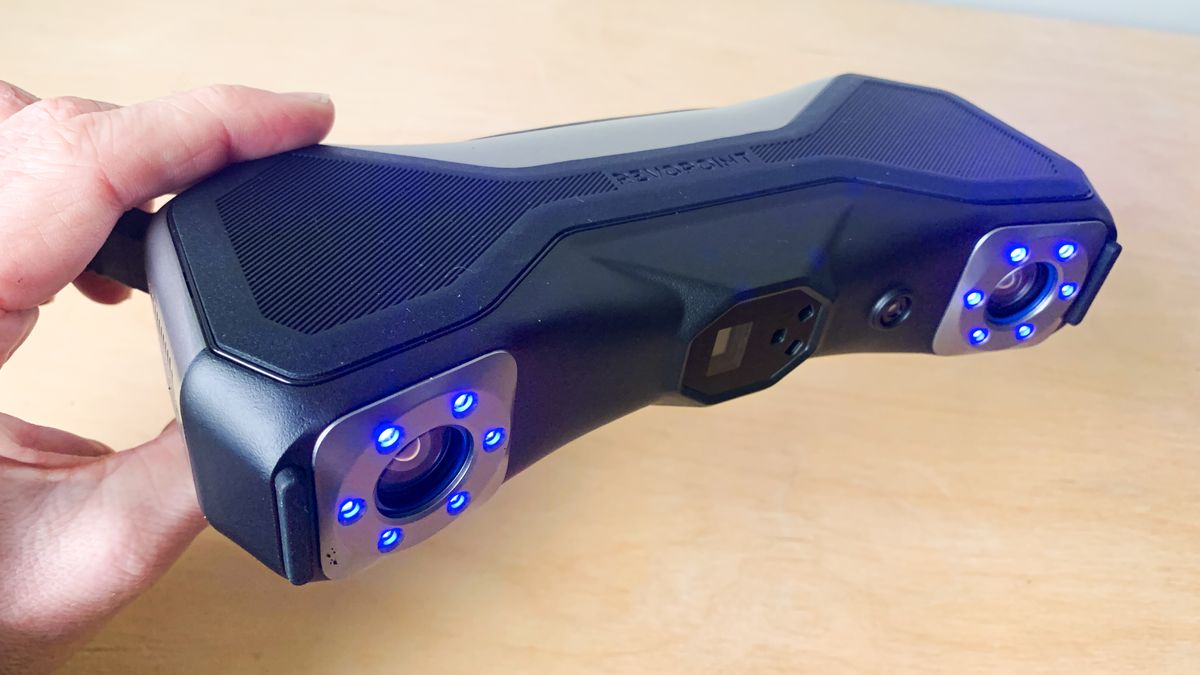
If you own one of the best 3D printers, then it won’t be long before you start thinking about purchasing one of the best 3D scanners as well. When paired together, 3D scanners and 3D printers are excellent tools to enable creatives to generate bespoke creations and print replicas of existing objects. In the past decade, technology has become so advanced that hobbyists are now able to produce the same, if not better, results that have previously been restricted to professionals.

Revopoint MetroX Scanner Review

Key Specs

Object size:

Small to medium-sized objects

Single capture:

160 x 70 mm at 200 mm

Scanning speed:

7 high-powered parallel blue laser lines / 14 crossed blue laser lines

Single-frame accuracy:

0.03mm

Dimensions:

209 × 88 × 44 mm

Weight:

508g

Compatible OS:

Windows, macOS

Price

(Image credit: Future)

The Revopoint MetroX has a high price tag of £959 / $1,099. Though at this price point, it’s a little more affordable than the Creality CR-Scan Raptor. If you want something more budget-friendly than the MetroX, then you could go for the Revopoint Mini 2 instead, although it’s not as feature-rich as the model we’re reviewing.

Unboxing

Revopoint MetroX

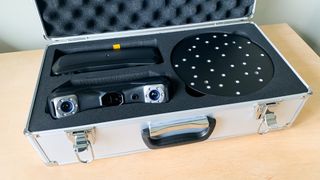
(Image credit: Future)

The MetroX scanner and all the accessories ship in a fairly sizable, durable, metal carry case. This immediately tells you that the MetroX is not a scanner that is thrown in a bag for on-the-go scanning but is instead a professional solution that you take with you to a planned location. As a result, there is an abundance of foam padding to ensure every item contained inside is kept free from damage while in transit.

Performance

Revopoint MetroX

AI Chatbot App

0

DeepSeek’s Trader Origins

DeepSeek is backed by High-Flyer Capital Management, a Chinese quantitative hedge fund that uses AI to inform its trading decisions. AI enthusiast Liang Wenfeng co-founded High-Flyer in 2015. Wenfeng, who reportedly began dabbling in trading while a student at Zhejiang University, launched High-Flyer Capital Management as a hedge fund in 2019 focused on developing and deploying AI algorithms.

DeepSeek’s Strong Models

DeepSeek unveiled its first set of models — DeepSeek Coder, DeepSeek LLM, and DeepSeek Chat — in November 2023. But it wasn’t until last spring, when the startup released its next-gen DeepSeek-V2 family of models, that the AI industry started to take notice.

DeepSeek-V2, a general-purpose text- and image-analyzing system, performed well in various AI benchmarks — and was far cheaper to run than comparable models at the time. It forced DeepSeek’s domestic competition, including ByteDance and Alibaba, to cut the usage prices for some of their models, and make others completely free.

A Disruptive Approach

If DeepSeek has a business model, it’s not clear what that model is, exactly. The company prices its products and services well below market value — and gives others away for free. It’s also not taking investor money, despite a ton of VC interest.

Conclusion

DeepSeek’s success has been met with both excitement and concern. While the company’s innovative approach to AI has garnered attention, its potential impact on the global AI landscape is still unclear. As the debate surrounding DeepSeek’s future continues, one thing is certain: the company’s rise to fame has left a lasting impression on the AI industry.

FAQs

Q: What is DeepSeek?
A: DeepSeek is a Chinese AI lab that has developed a range of AI models, including DeepSeek Coder, DeepSeek LLM, and DeepSeek Chat.

Q: Who backs DeepSeek?
A: DeepSeek is backed by High-Flyer Capital Management, a Chinese quantitative hedge fund that uses AI to inform its trading decisions.

Q: What is the controversy surrounding DeepSeek?
A: DeepSeek’s success has been met with both excitement and concern. Some have raised concerns about the company’s potential impact on the global AI landscape, while others have praised its innovative approach.

Q: Is DeepSeek’s technology available for use?
A: Yes, DeepSeek’s technology is available for use, although it is subject to certain restrictions and limitations.

Q: What is the future of DeepSeek looking like?
A: The future of DeepSeek is unclear, as the company’s success has been met with both praise and criticism. It is likely that the company will continue to develop and refine its AI models, but the extent to which it will be able to maintain its lead in the AI race remains to be seen.

What an Amazing Tool

Article

CloudBolt Accelerates FinOps with StormForge Acquisition

Modern Cloud Environments and the Importance of Kubernetes

Modern cloud environments rely heavily on containerized workloads as the cornerstone of application deployment and scalability. While containers offer portability and efficiency, they are not immune to vulnerabilities in the form of fragile integrations, misconfigurations, and issues with access control.

Kubernetes and Container Orchestration

Kubernetes, one of the most widely used container orchestration platforms, addresses some of the challenges through deployment automation, scalability, and efficient resource management. It has become indispensable for modern cloud-native deployments that prioritize both performance and cost efficiency.

CloudBolt Acquires StormForge

Recognizing the critical role Kubernetes plays, CloudBolt, a cloud cost management company, has acquired StormForge, a machine learning-driven Kubernetes resource optimization specialist. The acquisition builds on the partnership between the two companies that began in early 2024 when StormForge became the inaugural member of CloudBolt’s Technical Alliance Program (TAP).

The Acquisition and Its Impact

CloudBolt positions itself as a platform to maximize return on investment for cloud spending. The platform is built on FinOps principles, not those related to financial services, but on the foundational principles of aligning financial strategies and operational efficiency. With the acquisition of StormForge, CloudBolt gains machine learning-powered Kubernetes optimization capabilities, which will now be integrated into its FinOps platform.

The Integration and Its Benefits

The company claims that the integration of StormForge’s capabilities will speed up "insight-to-action" time, allowing quicker implementation of recommendations to improve how resources are allocated and boosting efficiency in containerized environments.

The Market Need

The market has been calling for a more unified, streamlined, and intelligent way to manage costs and optimize Kubernetes operations. CloudBolt shared a recent Cloud Native Computing Foundation survey that showed that 49% of organizations surveyed reported a rise in their cloud spending. More than two-thirds (70%) attribute this rise to workload overprovisioning.

Conclusion

The integration of StormForge’s capabilities also supports CloudBolt’s Augmented FinOps vision, which it shared in January 2024. As part of that vision, CloudBolt aims to equip organizations with tools for comprehensive cloud optimization, blending cost management, automation, and operational efficiency.

FAQs

Q: What is the significance of Kubernetes in modern cloud environments?
A: Kubernetes is a container orchestration platform that addresses challenges in deployment automation, scalability, and efficient resource management.

Q: What is the purpose of CloudBolt’s acquisition of StormForge?
A: The acquisition aims to integrate machine learning-powered Kubernetes optimization capabilities into CloudBolt’s FinOps platform.

Q: What are the benefits of the integration?
A: The integration will speed up "insight-to-action" time, allowing quicker implementation of recommendations to improve resource allocation and boost efficiency in containerized environments.

Q: What is the market need for CloudBolt’s solution?
A: The market needs a more unified, streamlined, and intelligent way to manage costs and optimize Kubernetes operations.