Home Blog Page 109

Ninja Turtles and Popeye: Shell Shocked Heroes

0

Jon Sommariva: A Lifelong Comic Book Artist

Jon is a lifelong comic book artist with a career that has spanned over two decades. His work has been published by all major comic book companies, and is known for its energetic style and chibi characters.

Featured Illustrations

Ninja Turtles 1980s Alley Cover

(Image credit: Jon Sommariva)

Popeye Cover: Olive is Fed Up

(Image credit: Jon Sommariva)

2D art; Popeye and Olive

Chibi Harley Quinn

(Image credit: Jon Sommariva)

2D art; Harley Quinn with dogs

Gracie and the Frog Balloons

(Image credit: Jon Sommariva)

2D art; a girl dressed as a frog with some inflated frogs

Frequently Asked Questions

What is Jon’s style?

Where can I see more of Jon’s work?

What is chibi art?

Who is Tom Taylor?

Marketing Essentials

0

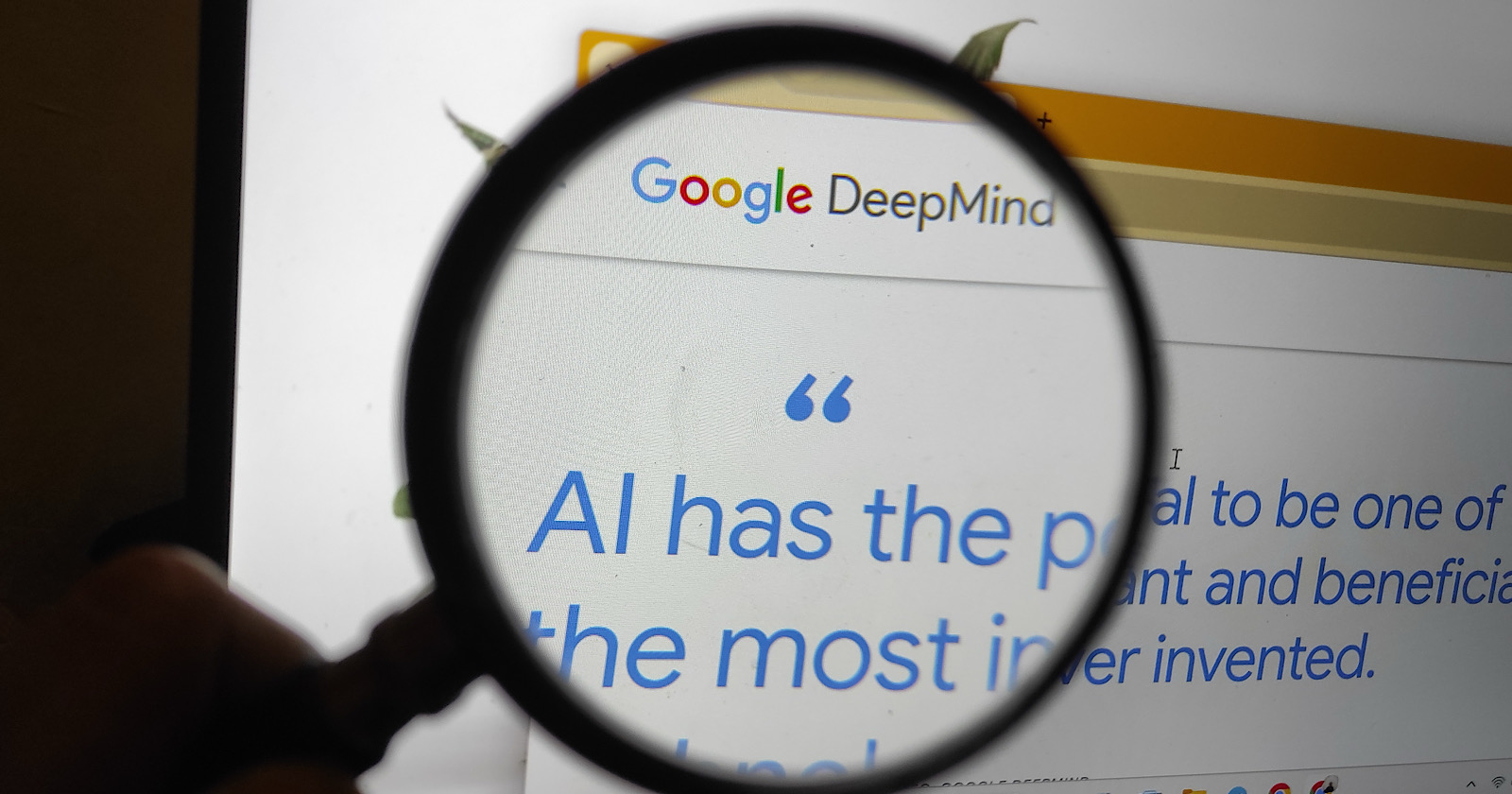
Google DeepMind Has Shared Its Plan to Make Artificial General Intelligence (AGI) Safer

Google DeepMind has shared its plan to make artificial general intelligence (AGI) safer. The report, titled “An Approach to Technical AGI Safety and Security,” explains how to stop harmful AI uses while amplifying its benefits.

Google’s AGI Timeline

DeepMind believes AGI may be ready by 2030. They expect AI to work at levels that surpass human performance.

The research explains that improvements will happen gradually rather than in dramatic leaps. For marketers, new AI tools will steadily become more powerful, giving businesses time to adjust their strategies.

The report reads:

“We are highly uncertain about the timelines until powerful AI systems are developed, but crucially, we find it plausible that they will be developed by 2030.”

Two Key Focus Areas: Preventing Misuse and Misalignment

The report focuses on two main goals:

  • Stopping Misuse: Google wants to block bad actors from using powerful AI. Systems will be designed to detect and stop harmful activities.
  • Stopping Misalignment: Google also aims to ensure that AI systems follow people’s wishes instead of acting independently.

These measures mean that future AI tools in marketing will likely include built-in safety checks while still working as intended.

How This May Affect Marketing Technology

Model-Level Controls

DeepMind plans to limit certain AI features to prevent misuse.

Techniques like capability suppression ensure that an AI system willingly withholds dangerous functions.

The report also discusses harmlessness post-training, which means the system is trained to ignore requests it sees as harmful.

These steps imply that AI-powered content tools and automation systems will have strong ethical filters. For example, a content generator might refuse to produce misleading or dangerous material, even if pushed by external prompts.

System-Level Protections

Access to the most advanced AI functions may be tightly controlled. Google could restrict certain features to trusted users and use monitoring to block unsafe actions.

The report states:

“Models with dangerous capabilities can be restricted to vetted user groups and use cases, reducing the surface area of dangerous capabilities that an actor can attempt to inappropriately access.”

This means that enterprise tools might offer broader features for trusted partners, while consumer-facing tools will come with extra safety layers.

Potential Impact On Specific Marketing Areas

Search & SEO

Google’s improved safety measures could change how search engines work. New search algorithms might better understand user intent and trust quality content that aligns with core human values.

Content Creation Tools

Advanced AI content generators will offer smarter output with built-in safety rules. Marketers might need to set their instructions so that AI can produce accurate and safe content.

Advertising & Personalization

As AI gets more capable, the next generation of ad tech could offer improved targeting and personalization. However, strict safety checks may limit how much the system can push persuasion techniques.

Looking Ahead

Google DeepMind’s roadmap shows a commitment to advancing AI while making it safe.

For digital marketers, this means the future will bring powerful AI tools with built-in safety measures.

By understanding these safety plans, you can better plan for a future where AI works quickly, safely, and in tune with business values.

Conclusion

Google DeepMind’s report outlines a clear plan to make AGI safer. The focus on preventing misuse and misalignment ensures that AI tools will be designed with safety in mind. As marketers, it is essential to understand these plans and how they will shape the future of AI in marketing.

FAQs

Q: What is artificial general intelligence (AGI)?

A: AGI refers to a hypothetical AI system that can perform any intellectual task that a human can.

Q: What is the timeline for AGI development?

A: According to Google DeepMind, AGI may be ready by 2030.

Q: How will future AI tools in marketing be affected?

A: Future AI tools will likely include built-in safety checks, limiting the potential for misuse and misalignment.

Q: How will this impact search engine optimization (SEO) and content creation?

A: Improved safety measures may change how search engines work, and AI content generators will offer smarter output with built-in safety rules.

Q: How will this impact advertising and personalization?

A: Strict safety checks may limit how much AI can push persuasion techniques, but the next generation of ad tech could offer improved targeting and personalization.

NVIDIA Blackwell Takes Pole Position in MLPerf Inference Results

In the latest MLPerf Inference V5.0 benchmarks, which reflect some of the most challenging inference scenarios, the NVIDIA Blackwell platform set records — and marked NVIDIA’s first MLPerf submission using the NVIDIA GB200 NVL72 system, a rack-scale solution designed for AI reasoning.

Delivering on the promise of cutting-edge AI takes a new kind of compute infrastructure, called AI factories. Unlike traditional data centers, AI factories do more than store and process data — they manufacture intelligence at scale by transforming raw data into real-time insights. The goal for AI factories is simple: deliver accurate answers to queries quickly, at the lowest cost and to as many users as possible.

The complexity of pulling this off is significant and takes place behind the scenes. As AI models grow to billions and trillions of parameters to deliver smarter replies, the compute required to generate each token increases. This requirement reduces the number of tokens that an AI factory can generate and increases cost per token. Keeping inference throughput high and cost per token low requires rapid innovation across every layer of the technology stack, spanning silicon, network systems and software.

NVIDIA Blackwell Sets New Records

The GB200 NVL72 system — connecting 72 NVIDIA Blackwell GPUs to act as a single, massive GPU — delivered up to 30x higher throughput on the Llama 3.1 405B benchmark over the NVIDIA H200 NVL8 submission this round. This feat was achieved through more than triple the performance per GPU and a 9x larger NVIDIA NVLink interconnect domain.

NVIDIA Hopper AI Factory Value Continues Increasing

The NVIDIA Hopper architecture, introduced in 2022, powers many of today’s AI inference factories, and continues to power model training. Through ongoing software optimization, NVIDIA increases the throughput of Hopper-based AI factories, leading to greater value.

It Takes an Ecosystem

This MLPerf round, 15 partners submitted stellar results on the NVIDIA platform, including ASUS, Cisco, CoreWeave, Dell Technologies, Fujitsu, Giga Computing, Google Cloud, Hewlett Packard Enterprise, Lambda, Lenovo, Oracle Cloud Infrastructure, Quanta Cloud Technology, Supermicro, Sustainable Metal Cloud and VMware.

Conclusion

The NVIDIA Blackwell platform has set new records in the latest MLPerf Inference V5.0 benchmarks, delivering exceptional performance across the board. The Hopper architecture continues to power AI inference factories, with ongoing software optimization leading to greater value. The NVIDIA platform is available across all cloud service providers and server makers worldwide, reflecting the breadth of its reach.

FAQs

Q: What is the NVIDIA Blackwell platform?
A: The NVIDIA Blackwell platform is a rack-scale solution designed for AI reasoning.

Q: What is the NVIDIA Hopper architecture?
A: The NVIDIA Hopper architecture powers many of today’s AI inference factories, and continues to power model training.

Q: What is an AI factory?
A: An AI factory is a new kind of compute infrastructure that manufactures intelligence at scale by transforming raw data into real-time insights.

Q: What are the goals for AI factories?
A: The goal for AI factories is to deliver accurate answers to queries quickly, at the lowest cost and to as many users as possible.

Q: What is the NVIDIA GB200 NVL72 system?
A: The NVIDIA GB200 NVL72 system is a rack-scale solution that connects 72 NVIDIA Blackwell GPUs to act as a single, massive GPU.

Q: What is MLPerf Inference V5.0?
A: MLPerf Inference V5.0 is a peer-reviewed industry benchmark of inference performance that reflects some of the most challenging inference scenarios.

DeepMind’s 145-page paper on AGI safety

0

Google DeepMind Publishes Exhaustive Paper on AGI Safety

Google DeepMind on Wednesday published an exhaustive paper on its safety approach to AGI, roughly defined as AI that can accomplish any task a human can.

AGI Controversy

AGI is a bit of a controversial subject in the AI field, with naysayers suggesting that it’s little more than a pipe dream. Others, including major AI labs like Anthropic, warn that it’s around the corner, and could result in catastrophic harms if steps aren’t taken to implement appropriate safeguards.

DeepMind’s Predictions and Concerns

DeepMind’s 145-page document, which was co-authored by DeepMind co-founder Shane Legg, predicts that AGI could arrive by 2030, and that it may result in what the authors call “severe harm.” The paper doesn’t concretely define this, but gives the alarmist example of “existential risks” that “permanently destroy humanity.”

Exceptional AGI and Superintelligent AI

“[We anticipate] the development of an Exceptional AGI before the end of the current decade,” the authors wrote. “An Exceptional AGI is a system that has a capability matching at least 99th percentile of skilled adults on a wide range of non-physical tasks, including metacognitive tasks like learning new skills.”

Off the bat, the paper contrasts DeepMind’s treatment of AGI risk mitigation with Anthropic’s and OpenAI’s. Anthropic, it says, places less emphasis on “robust training, monitoring, and security,” while OpenAI is overly bullish on “automating” a form of AI safety research known as alignment research.

Recursive AI Improvement and AI Safety

The paper also casts doubt on the viability of superintelligent AI — AI that can perform jobs better than any human. (OpenAI recently claimed that it’s turning its aim from AGI to superintelligence.) Absent “significant architectural innovation,” the DeepMind authors aren’t convinced that superintelligent systems will emerge soon — if ever.

The paper does find it plausible, though, that current paradigms will enable “recursive AI improvement”: a positive feedback loop where AI conducts its own AI research to create more sophisticated AI systems. And this could be incredibly dangerous, assert the authors.

Proposed Solutions and Challenges

At a high level, the paper proposes and advocates for the development of techniques to block bad actors’ access to hypothetical AGI, improve the understanding of AI systems’ actions, and “harden” the environments in which AI can act. It acknowledges that many of the techniques are nascent and have “open research problems,” but cautions against ignoring the safety challenges possibly on the horizon.

“The transformative nature of AGI has the potential for both incredible benefits as well as severe harms,” the authors write. “As a result, to build AGI responsibly, it is critical for frontier AI developers to proactively plan to mitigate severe harms.”

Expert Disagreements

Some experts disagree with the paper’s premises, however.

Heidy Khlaaf, chief AI scientist at the nonprofit AI Now Institute, told TechCrunch that she thinks the concept of AGI is too ill-defined to be “rigorously evaluated scientifically.” Another AI researcher, Matthew Guzdial, an assistant professor at the University of Alberta, said that he doesn’t believe recursive AI improvement is realistic at present.

“[Recursive improvement] is the basis for the intelligence singularity arguments,” Guzdial told TechCrunch, “but we’ve never seen any evidence for it working.”

Conclusion

Comprehensive as it may be, DeepMind’s paper seems unlikely to settle the debates over just how realistic AGI is — and the areas of AI safety in most urgent need of attention.

FAQs

Q: What is AGI?

A: AGI is roughly defined as AI that can accomplish any task a human can.

Q: When can we expect AGI to arrive?

A: DeepMind predicts that AGI could arrive by 2030.

Q: What are the potential risks of AGI?

A: The authors of the paper warn of “severe harm” and even “existential risks” that could “permanently destroy humanity.”

Q: What is recursive AI improvement?

A: It is a positive feedback loop where AI conducts its own AI research to create more sophisticated AI systems.

Q: What is the proposed solution to mitigate AGI risks?

A: The paper proposes techniques to block bad actors’ access to hypothetical AGI, improve the understanding of AI systems’ actions, and “harden” the environments in which AI can act.


Unpacking Meghan Markle’s As Ever Branding

0

Meghan Markle’s Lifestyle Brand: A Closer Look at the Unattainable Tradwife Fantasy

A Brand of Traditional Homemaker Aesthetics

Since its announcement early last year, Meghan Markle’s lifestyle brand, As Ever (formerly American Riviera Orchard), has been under intense scrutiny. While the logo controversies and copyright qualms have dominated the headlines, a more troubling issue lies beneath the surface – the unattainable tradwife fantasy.

As Ever’s brand aesthetic is undeniably strong, meeting at the intersection of regal tradition and minimalist Montecito glamour. The brand’s cursive logo and pastoral imagery evoke a sense of curated elegance, unattainable to many. This curated elegance seems to sell a lifestyle steeped in purity and outdated traditionalism.

A Fusion of Traditional Homemaker Aesthetics and Faux Royal Flair

While all iconic brands have their own unique identity, Markle’s brand is a fusion of traditional homemaker aesthetics embellished with faux royal flair. From its website to its Instagram page, signs of its tradwife-esque brand positioning are clear. The brand features rustic shots of Markle amongst her grassy acres of land or tinkering with styled snaps of berry-laden French toast set upon spotless linen tablecloths, creating an almost dystopian purity to As Ever’s meticulous branding.

A Lifestyle Steeped in Patriarchal Values

Hinging on Markle’s passion for "cooking, entertaining, and hostessing", the brand paints an image of high-class aesthetics that inadvertently play to stereotypical gender roles. While all luxury brands sell a ‘fantasy’ of sorts, it’s the benign traditionalism of Markle’s brand that raises concerns. Due to her monarchistic ties, Markle’s classy, regal-inspired branding was perhaps written in the stars, presenting a golden opportunity to play on (and subvert) tradition. Instead, the brand only serves to reinforce decades of regal archaism.

Conclusion

Whether Markle’s brand actively promotes a tradwife lifestyle is up for dispute, yet As Ever’s strong rooting in traditional values is undeniable. Markle’s "curated" personal involvement in the brand only intensifies its troubling implications. The brand’s strong branding and traditional values have created a lifestyle that few women can sustain – a peek behind the curtain at a dystopian wonderland of pastoral purity.

FAQs

Q: What is the tradwife fantasy?
A: The tradwife fantasy refers to the idealized lifestyle of a traditional homemaker, often characterized by a focus on domesticity, cooking, and hosting.

Q: Is Meghan Markle’s brand promoting a tradwife lifestyle?
A: While the brand does not explicitly promote a tradwife lifestyle, its traditional values and aesthetics are undeniably rooted in patriarchal values.

Q: Why is this a concern?
A: The brand’s promotion of traditional values and aesthetics inadvertently perpetuates stereotypical gender roles and reinforces decades of regal archaism.

Q: Can women relate to the brand’s lifestyle?
A: No, the brand’s lifestyle is unattainable for most women, creating a sense of exclusivity and elitism.

App Tracks Your Driving Behavior

0

Smartphone Apps and Safer Driving

The Power of Feedback and Motivation

The AAA Foundation for Traffic Safety has published a study that highlights the effectiveness of using smartphone apps to track and improve driving behavior. The research found that drivers who received regular feedback on their driving habits, either through text messages or a data dashboard, showed significant improvements in their behavior.

Usage-Based Insurance and Smartphone Tracking

The study drew inspiration from usage-based insurance (UBI) programs, which use smartphone apps to monitor driving behavior and adjust insurance premiums accordingly. These programs typically offer discounts to drivers who demonstrate safe driving habits, such as avoiding hard braking, sudden acceleration, and speeding. However, many drivers are hesitant to participate in these programs, citing concerns about being tracked and judged.

The AAA Study

To overcome these concerns, the AAA researchers designed a study that involved 1,400 participants, who were divided into four groups:

  • A control group, which did not receive any feedback
  • A standard feedback group, which received weekly feedback on all monitored behaviors
  • An assigned goal group, which received weekly feedback on a specific behavior chosen by the researchers
  • A chosen goal group, which selected their own behavior to focus on

Results

The study showed that drivers who received feedback on their driving habits tended to improve their behavior. Specifically:

  • 13% of participants reduced their speeding
  • 21% reduced their hard braking
  • 25% reduced their rapid acceleration

The Role of Feedback and Motivation

The researchers found that the key to improving driving behavior was not just the provision of feedback, but also the motivation to change. Participants reported that they were more likely to stick to safer habits if they were given a specific goal to work towards, and if they were able to track their progress.

Long-Term Effects

To determine whether the improvements in driving behavior were sustained over time, the researchers monitored the participants for an additional six weeks after the initial 12-week study. They found that the majority of participants continued to drive more safely, even without receiving feedback.

Conclusion

The AAA study suggests that smartphone apps can be a powerful tool for improving driving behavior and reducing the number of accidents on the road. By providing regular feedback and motivation, drivers can develop safer habits that can last a lifetime.

FAQs

Q: What is usage-based insurance (UBI)?

A: UBI is a type of insurance program that uses data from smartphone apps to monitor driving behavior and adjust premiums accordingly.

Q: What did the AAA study find about the effectiveness of smartphone apps in improving driving behavior?

A: The study found that drivers who received regular feedback on their driving habits showed significant improvements in their behavior, including reducing speeding, hard braking, and rapid acceleration.

Q: How did the researchers motivate participants to change their behavior?

A: The researchers found that participants were more likely to stick to safer habits if they were given a specific goal to work towards, and if they were able to track their progress.

Q: Were there any long-term effects of the study?

A: Yes, the researchers found that the majority of participants continued to drive more safely even after the initial 12-week study had ended.

Q: What does the study suggest about the potential of smartphone apps to improve driving behavior?

A: The study suggests that smartphone apps can be a powerful tool for improving driving behavior and reducing the number of accidents on the road.

Adaptive Cloud Defense: Leveraging Edge Computing

How Microsoft Cloud Helps Solve Legacy System Challenges in Defense Operations

In modern defense operations, maintaining a unified, secure, and reliable infrastructure across the battlespace is crucial. Defense organizations need to operate in a secure, coordinated, and integrated manner, connecting current and future capabilities across land, sea, air, space, and cyber domains to achieve mission outcomes.

How Microsoft Cloud Helps Solve Legacy System Challenges

Microsoft is well placed to respond to these challenges through the hyperscale cloud capabilities of Microsoft Azure, encompassing a global network of data centers, servers, and networks that power cloud services, including:

  • The Microsoft Adaptive Cloud approach, which lets organizations use cloud-native and AI technologies across hybrid, multi-cloud, edge, and Internet of Things (IoT) environments.
  • Azure Local, enabled by Azure Arc, which is a specialized offering designed to bring cloud computing capabilities directly to the edge, closer to where data is generated, and decisions need to be made.

Adaptive Cloud and Azure Local Solutions in Action

By way of illustration, consider a joint task force assigned to secure a national border as part of a multi-domain operation (MDO). The objective is to identify and address potential threats, including unauthorized crossings, smuggling activities, and aerial incursions.

Real-time Data Collection and Edge Processing

  • IoT data collection: Data is collected and processed directly from IoT devices in real-time, close to the source, reducing latency and enhancing security.
  • Edge processing: The data collected from sensors is processed and transmitted to Azure Local instances deployed at mobile command centers.
  • Local AI inferencing: Conducting real-time analysis directly within an environmental context, defense organizations can respond faster and more accurately to emergent situations using AI and machine learning models to analyze patterns, detect anomalies, and provide actionable insights to field commanders.

Command and Control (C2) Situational Awareness

The task force sustains a thorough and current operational overview by using data transmitted to Azure from Azure Local. With cloud technologies, command and control data flows seamlessly from collection to actionable insights. The C2 node assesses the situation and determines the appropriate response.

Benefits of Microsoft Adaptive Cloud and Azure Local in Defense Operations

  • Enhanced security: Azure Local instances are configured with secured-core settings and automatic data encryption by default, protecting sensitive military communications and intelligence data from cyber threats.
  • Operational flexibility: Azure Local supports disconnected operations, flexible hardware options, and scalability.

Explore Microsoft for Defense and Intelligence

Learn how Microsoft Cloud can help achieve mission outcomes to promote stability and security.

Conclusion

By using Azure Local, the joint task force’s multi-domain operation not only addresses immediate threats but also establishes a robust framework for ongoing border security enabling seamless coordination and integration across land, sea, air, cyber, and space domains.

Frequently Asked Questions

Q: What is Microsoft Adaptive Cloud?
A: Microsoft Adaptive Cloud is a cloud-native approach that lets organizations use cloud technologies across hybrid, multi-cloud, edge, and Internet of Things (IoT) environments.

Q: What is Azure Local?
A: Azure Local is a specialized offering designed to bring cloud computing capabilities directly to the edge, closer to where data is generated, and decisions need to be made.

Q: What are the benefits of using Azure Local in defense operations?
A: Azure Local provides enhanced security, operational flexibility, and scalability, enabling defense organizations to maintain a unified, secure, and reliable infrastructure across the battlespace.

Q: How does Azure Local support disconnected operations?
A: Azure Local supports disconnected operations by allowing data to be synchronized with the C2 node once connectivity is restored.

Apple’s Redesigned MacBook Pro

0

Upcoming MacBook Pro Refresh: A Significant Overhaul in 2026

Rumors and Leaks

It’s been a while since the MacBook Pro was given some design love, but rumor has it the ultimate creative laptop could be in for a significant refresh in 2026. New reports suggest the Pro is not only first in line for the cutting-edge M6 chip, but it will also receive a visual upgrade.

Improved Display and Design

According to Bloomberg’s Mark Gurman, Apple is readying a huge overhaul for the MacBook Pro range, featuring a hugely improved display, thinner design, and new chip. This could make the MacBook Pro one of the best laptops for photo editing, considering the M6 chip’s potential for improved performance.

Improved Display

The M6 MacBook Pro could enjoy the same OLED display as the M4 iPad Pro, which features a two-stack tandem OLED display. This would allow for brighter colors and much higher contrast, making a huge difference for creatives.

Thinner Design

The thinner design could mitigate the Pro’s natural drawback of being the bulkiest MacBook available. The 16-inch models in particular are beasts, so anything that’s thinner and lighter could be an enticing proposition for creatives on the go.

Shift Away from the Camera ‘Notch’

Research firm Omdia has claimed that Apple is planning to switch from a "rounded corner + notch cut" to a "rounded corner + hole cut" to house the device’s webcam. This could be a sign that Apple is moving towards adopting the Dynamic Island design language, which replaced the notch on the iPhone.

Potential Features and Upgrades

  • Improved display with higher contrast and brighter colors
  • Thinner design, making it more suitable for creatives on the go
  • New chip, M6, which could offer improved performance
  • Potential shift away from the camera ‘notch’
  • Adoption of the Dynamic Island design language

Conclusion

The upcoming MacBook Pro refresh in 2026 could be a significant upgrade for creatives. With improved performance, a new design, and potential changes to the camera layout, this could be a game-changer for those in the creative industry.

FAQs

Q: What is the expected release date of the MacBook Pro refresh?
A: The release date has not been officially announced, but rumors suggest it could be in 2026.

Q: What are the potential upgrades to the new MacBook Pro?
A: The new MacBook Pro could feature an improved display, thinner design, new chip, and potential changes to the camera layout.

Q: Will the new MacBook Pro have a Dynamic Island design?
A: There is speculation that Apple may adopt the Dynamic Island design language on the new MacBook Pro, but no official confirmation has been made.

Q: Will the M6 chip offer improved performance?
A: Yes, the M6 chip is expected to offer improved performance, making it a suitable choice for creatives.

ChatGPT’s Explosive Growth

OpenAI’s ChatGPT Breaks Revenue Records, Adds 4.5 Million Subscribers

Since OpenAI’s ChatGPT triggered an AI arms race in 2022, most tech companies have released their own chatbots. Despite the highly saturated market, OpenAI has continually released features to keep its competitive edge — a strategy that seems to be working.

Revenue Soars

A new report from The Information found that ChatGPT’s revenue soared in the past three months, with the company generating “at least $415 million per month,” reflecting a 30% increase in revenue in only three months. According to the report, this growth can be attributed to a significant increase in subscribers, with the company adding 4.5 million paying subscribers since the end of 2024.

New Features Attract Subscribers

Over the last year, OpenAI has released several updates that make an OpenAI subscription more enticing. These include access to Sora, its state-of-the-art video generation model, and the screen-sharing and visual capabilities in ChatGPT’s Advanced Voice Mode, both released in December and limited to subscribers.

Image Generation Model GPT-4o

Most recently, OpenAI unveiled its new image GPT-4o image-generation model, which boasts significant improvements over the DALL-E model that previously lived in the chatbot. Capabilities of the latest model include tackling difficult prompts, such as realistic people and, most impressively, accurate text.

Capacity Challenges

As people rushed to try the viral image generator, OpenAI CEO Sam Altman announced a day later that the rollout to the free tier would now be “delayed for a while,” only to make it available again to free users with a three-image-per-day cap a week later. Altman warned users via an X post to be patient as the company delays new releases, products break, and slow service ensues due to capacity challenges.

Long-term Goal: Artificial General Intelligence (AGI)

OpenAI has made clear that it has no plans to slow its momentum. The company’s ultimate goal is to achieve Artificial General Intelligence (AGI), the term for AI with autonomous human-level intelligence. Until now, AGI has been a North Star for AI research, and it remains a distant concept. However, working toward such an ambitious goal has accelerated OpenAI’s developments and helped it secure its lead among competitors such as Microsoft, which have taken a different approach.

Conclusion

OpenAI’s ChatGPT has broken revenue records, adding 4.5 million paying subscribers in the past three months. The company’s continuous release of new features, including the image-generation model GPT-4o, has attracted subscribers and solidified its lead in the AI chatbot market. Despite capacity challenges, OpenAI remains committed to achieving its long-term goal of Artificial General Intelligence (AGI).

FAQs

Q: What is OpenAI’s revenue per month?

A: According to a report from The Information, OpenAI’s ChatGPT generates at least $415 million per month.

Q: How many subscribers has OpenAI added since the end of 2024?

A: OpenAI has added 4.5 million paying subscribers since the end of 2024.

Q: What is OpenAI’s long-term goal?

A: OpenAI’s ultimate goal is to achieve Artificial General Intelligence (AGI), the term for AI with autonomous human-level intelligence.

Q: Has OpenAI’s revenue growth affected its capacity?

A: Yes, OpenAI’s rapid growth has posed capacity challenges, leading to delays in new releases and slow service.

AI Advisory Group

0

OpenAI Convenes Experts to Inform Philanthropic Transition

As it prepares to transition from a nonprofit corporation to a for-profit, OpenAI says it’s convening a group of experts to “help OpenAI’s philanthropy understand the most urgent and intractable problems nonprofits face today.”

Expert Group to Focus on Urgent Problems

This group, which OpenAI says will incorporate feedback from “leaders and communities” in health, science, education, and public services, particularly within OpenAI’s home state of California, will be announced in April and submit insights to OpenAI’s board of directors in the next 90 days.

Board of Directors to Consider Insights

“[T]he Board will consider these insights in its ongoing work to evolve the OpenAI nonprofit well before the end of 2025,” OpenAI wrote in a blog post. “The Board recognizes the importance of engaging with the philanthropic community and those closest to the work to help inform how OpenAI’s philanthropy can best deploy its potentially historic resources.”

Background on OpenAI

OpenAI was founded in 2015 as a nonprofit research lab. But as its experiments became increasingly capital intensive, it created its current structure, taking on outside investments from VCs and companies, including Microsoft.

OpenAI today has a for-profit org controlled by a nonprofit, with a “capped profit” share for investors and employees. But as alluded to in the blog post, the company’s intention is to transition its existing for-profit into a traditional corporation, with ordinary shares of stock. The nonprofit would receive billions of dollars to cede control.

Stakes Are High

The stakes are high for OpenAI to complete the conversion expeditiously. If it isn’t successful by the end of the year, at least one of its backers, SoftBank, could claw back billions of dollars in pledged capital.

Conclusion

The expert group convened by OpenAI aims to inform the company’s philanthropic transition and ensure that it deploys its resources effectively. With the stakes high and a tight deadline looming, OpenAI must navigate this complex process carefully to achieve its goals.

FAQs

  • What is OpenAI’s current structure? OpenAI has a for-profit org controlled by a nonprofit, with a “capped profit” share for investors and employees.
  • What is the goal of the expert group? The group aims to help OpenAI’s philanthropy understand the most urgent and intractable problems nonprofits face today.
  • When will the expert group submit its insights? The group will submit its insights to OpenAI’s board of directors in the next 90 days.
  • What are the stakes if OpenAI fails to complete the conversion? If OpenAI isn’t successful by the end of the year, at least one of its backers, SoftBank, could claw back billions of dollars in pledged capital.