Home Blog Page 110

EC2 Pricing Options

EC2 Instance Purchase Options

Introduction

There are seven types of EC2 instance purchase options available on Amazon Web Services (AWS). Each option has its unique pricing model, usage requirements, and benefits. In this article, we will explore each option in detail.

Purchase Options

1. On-Demand Instances

On-Demand Instances are billed by the second when launched. You can pay for the instances per hour or per second, with a 60-second minimum. No commitment is required for such instances.

2. Savings Plan

Savings Plan instances offer a discount when a commitment of 1 or 3 years is made to use a consistent amount per hour. Use this option when you can commit to consistent usage but do not require a consistent configuration.

3. Reserved Instances

Reserved Instances offer a discount when a commitment of 1 or 3 years is made to keep the same configuration. Use this when you need a consistent configuration and capacity reservation. Reserved Instances are offered at up to a 75% discount. While not deprecated, AWS encourages using the Savings Plan instead of Reserved Instances as the preferred way to save on EC2 instances.

4. Spot Instances

Spot Instances are heavily discounted instances that utilize unused EC2 capacity with no commitment. They are useful if your applications can tolerate interruptions. Spot Instances are offered at up to a 90% discount off the On-Demand price with no prior commitment.

5. Dedicated Hosts

Dedicated Hosts are entire physical hosts fully dedicated to running EC2 instances. Discounts are available for existing per-socket, per-core, or per-VM software licenses.

6. Dedicated Instances

Dedicated Instances are instances running on single-tenant hardware. Dedicated Hosts and Dedicated Instances are useful when software compliance requirements necessitate isolation.

7. Capacity Reservations

Capacity Reservations is an option that reserves capacity for EC2 instances in a specific Availability Zone. Capacity reservations are billed at the equivalent rate of On-Demand instances, whether they are used or not.

Conclusion

Each EC2 instance purchase option has its unique benefits and requirements. Understanding these options is crucial in choosing the right one for your needs. In my next article, I will be writing about how to choose the appropriate billing option.

Frequently Asked Questions

Q: What is the difference between Savings Plan and Reserved Instances?
A: Savings Plan and Reserved Instances both offer discounts for committed usage, but Savings Plan does not require a consistent configuration, while Reserved Instances require a consistent configuration.

Q: What are Spot Instances?
A: Spot Instances are heavily discounted instances that utilize unused EC2 capacity with no commitment.

Q: What is the benefit of Dedicated Hosts?
A: Dedicated Hosts are entire physical hosts fully dedicated to running EC2 instances, providing discounts for existing per-socket, per-core, or per-VM software licenses.

Q: What is Capacity Reservations?
A: Capacity Reservations is an option that reserves capacity for EC2 instances in a specific Availability Zone, billed at the equivalent rate of On-Demand instances.

Blockchain for Personal Data: Beyond Zero-Knowledge Proofs

Data Sharing and Monetization in the Age of AI

Data is the fuel for AI, and the more personal the data, the better. But people increasingly are disinclined to share their data without some reciprocal consideration, putting a potential lid on AI growth just as the agentic revolution starts. One possible way out of the data doldrums and towards the agentic AI promised land is the use of zero-knowledge proofs on a distributed blockchain, which an outfit called Midnight is currently pursuing.

What is Blockchain?

A blockchain is a distributed ledger of records that are linked through cryptographic hashes. Once a record, or a block, is written to the ledger, or the chain, it’s distributed to all nodes in the cluster and can be publicly inspected, meaning it’s effectively there forever in an unalterable form.

Zero-Knowledge Proofs

A zero-knowledge proof is a mathematically proven way for one party to share one piece of information in a Boolean, yes-no manner, without sharing extraneous underlying detail. For example, a zero-knowledge proof could be used to grant or deny someone access to drink at a bar. Instead of sharing a government-approved ID card, which has the requestor’s verified age but also a lot of other information that is irrelevant and potentially private, the requestor could submit a zero-knowledge proof that delivers the relevant information for that particular transaction.

Midnight’s Approach

Midnight is developing a data protection blockchain that utilizes zero-knowledge proofs to enable online businesses and their customers to conduct data-enabled commerce in a precise and trusted manner. The company’s approach allows the user or the builder of an application to selectively disclose what pieces of data will be shown to a counterparty, preventing the data from being written on the blockchain unless it’s really necessary. The real data resides with the user, on their mobile device or computer, and can only be shared with the counterparty’s consent.

Ramifications for Data Sharing and Monetization

The real power of Midnight’s approach lies in its ability to enable businesses to continue to operate without necessarily being in touch with the data, which also saves them a lot of money in terms of data security and data governance. This enables businesses to offer rewards or discounts to customers in exchange for getting access to information about them, while keeping their data private. This approach also opens up new possibilities for data sharing and monetization in the age of AI, where data is the fuel for AI and the more personal the data, the better.

Conclusion

Midnight’s approach to data sharing and monetization using zero-knowledge proofs on a distributed blockchain has the potential to revolutionize the way businesses interact with their customers’ data. By enabling businesses to selectively disclose what pieces of data will be shown to a counterparty, while keeping the underlying data private, Midnight’s technology could pave the way for a new era of trusted data sharing and monetization.

FAQs

Q: What is a zero-knowledge proof?

A: A zero-knowledge proof is a mathematically proven way for one party to share one piece of information in a Boolean, yes-no manner, without sharing extraneous underlying detail.

Q: How does Midnight’s technology work?

A: Midnight’s technology uses zero-knowledge proofs to enable online businesses and their customers to conduct data-enabled commerce in a precise and trusted manner. The company’s approach allows the user or the builder of an application to selectively disclose what pieces of data will be shown to a counterparty, preventing the data from being written on the blockchain unless it’s really necessary.

Q: What are the benefits of Midnight’s technology?

A: The benefits of Midnight’s technology include enabling businesses to continue to operate without necessarily being in touch with the data, which also saves them a lot of money in terms of data security and data governance. This enables businesses to offer rewards or discounts to customers in exchange for getting access to information about them, while keeping their data private.

Q: How does Midnight’s technology relate to AI?

A: Midnight’s technology has the potential to revolutionize the way businesses interact with their customers’ data in the age of AI. By enabling businesses to selectively disclose what pieces of data will be shown to a counterparty, while keeping the underlying data private, Midnight’s technology could pave the way for a new era of trusted data sharing and monetization that could fuel the growth of AI.

Space Solar Startup Aetherflux Raises $50M

0

Aetherflux Raises $50M to Bring Solar Power from Space to Earth

Overview

Aetherflux, a space solar startup founded by Baiju Bhatt, the billionaire co-founder of Robinhood, has raised $50 million in a Series A round as it works to launch its first low Earth orbit demonstration in 2026. The San Carlos, California-based startup aims to collect and transmit solar energy directly to “ground stations” on Earth, a concept inspired by Isaac Asimov’s 1941 short story “Reason.”

Background and Goals

The idea of harnessing solar power from space has been around for decades, but few have accomplished the feat of sending solar power from space to Earth. Aetherflux is one of them, with the goal of launching a constellation of low Earth orbit satellites to collect and transmit solar energy to the ground. The startup’s founder and CEO, Baiju Bhatt, aims to make this concept a reality, drawing inspiration from science fiction.

Series A Funding

Aetherflux has raised a total of $60 million, with the latest Series A round bringing in $50 million. The round was led by Index Ventures and Interlagos, with participation from notable investors such as Bill Gates’s Breakthrough Energy Ventures, Andreessen Horowitz, and NEA. The funds will be used to hire more engineers and invest in the technology and infrastructure needed for its first several missions.

Technology and Infrastructure

Aetherflux is using Apex Space’s Aries satellite bus, which generates power through solar panels and will send back up to a kilowatt of energy to Earth via lasers. The startup is also building its own ground stations, made up of photovoltaic arrays that convert sunlight to energy stored in batteries for later use. The team is working on building its first ground station, evaluating military sites with controlled air space.

Future Plans

The goal is to build small, portable ground stations, anywhere from 5 to 10 meters in diameter, to bring electricity to even the most remote locations. Bhatt wants to demonstrate the end-to-end power linking, showcasing the ability to generate electricity on the ground and use it to power devices.

Notable Milestones

  • Caltech’s Space Solar Power Project successfully demonstrated wireless power transfer from low Earth orbit using microwave beaming in 2023.
  • Aetherflux received an award from the Department of Defense’s Operational Energy Capability Improvement Fund to develop space solar power for the U.S. military.

Conclusion

Conclusion

Aetherflux’s technology has the potential to revolutionize the way we access energy, making it available in even the most remote locations. With the support of notable investors and a talented team, the startup is poised to make significant strides in the space solar industry.

FAQs

Q: What is Aetherflux?

A: Aetherflux is a space solar startup founded by Baiju Bhatt, the billionaire co-founder of Robinhood, that aims to collect and transmit solar energy directly to ground stations on Earth.

Q: How much funding has Aetherflux raised?

A: Aetherflux has raised a total of $60 million, with the latest Series A round bringing in $50 million.

Q: What is Aetherflux’s goal with its first mission?

A: Aetherflux wants to demonstrate the end-to-end power linking, showcasing the ability to generate electricity on the ground and use it to power devices.

Q: What technology is Aetherflux using for its satellite bus?

A: Aetherflux is using Apex Space’s Aries satellite bus, which generates power through solar panels and sends back up to a kilowatt of energy to Earth via lasers.

Q: What is the future plan for Aetherflux’s ground stations?

A: The goal is to build small, portable ground stations, anywhere from 5 to 10 meters in diameter, to bring electricity to even the most remote locations.

AI Bots Strain Wikimedia

Crawlers that Evade Detection

The Problem with AI-Focused Crawlers

Making the situation more difficult, many AI-focused crawlers do not play by established rules. Some ignore robots.txt directives. Others spoof browser user agents to disguise themselves as human visitors. Some even rotate through residential IP addresses to avoid blocking, tactics that have become common enough to force individual developers like Xe Iaso to adopt drastic protective measures for their code repositories.

The Impact on Wikimedia’s Site Reliability Team

This leaves Wikimedia’s Site Reliability team in a perpetual state of defense. Every hour spent rate-limiting bots or mitigating traffic surges is time not spent supporting Wikimedia’s contributors, users, or technical improvements. And it’s not just content platforms under strain. Developer infrastructure, like Wikimedia’s code review tools and bug trackers, is also frequently hit by scrapers, further diverting attention and resources.

Similar Problems in the AI Scraping Ecosystem

These problems mirror others in the AI scraping ecosystem over time. Curl developer Daniel Stenberg has previously detailed how fake, AI-generated bug reports are wasting human time. On his blog, SourceHut’s Drew DeVault highlight how bots hammer endpoints like git logs, far beyond what human developers would ever need.

Technical Solutions

Across the Internet, open platforms are experimenting with technical solutions: proof-of-work challenges, slow-response tarpits (like Nepenthes), collaborative crawler blocklists (like "ai.robots.txt"), and commercial tools like Cloudflare’s AI Labyrinth. These approaches address the technical mismatch between infrastructure designed for human readers and the industrial-scale demands of AI training.

The Open Commons at Risk

Wikimedia acknowledges the importance of providing "knowledge as a service," and its content is indeed freely licensed. But as the Foundation states plainly, "Our content is free, our infrastructure is not."

The Challenge of Balancing Openness and Sustainability

The organization is now focusing on systemic approaches to this issue under a new initiative: WE5: Responsible Use of Infrastructure. It raises critical questions about guiding developers toward less resource-intensive access methods and establishing sustainable boundaries while preserving openness.

The challenge lies in bridging two worlds: open knowledge repositories and commercial AI development. Many companies rely on open knowledge to train commercial models but don’t contribute to the infrastructure making that knowledge accessible. This creates a technical imbalance that threatens the sustainability of community-run platforms.

Conclusion

Better coordination between AI developers and resource providers could potentially resolve these issues through dedicated APIs, shared infrastructure funding, or more efficient access patterns. Without such practical collaboration, the platforms that have enabled AI advancement may struggle to maintain reliable service. Wikimedia’s warning is clear: Freedom of access does not mean freedom from consequences.

FAQs

Q: What is the problem with AI-focused crawlers?

A: Many AI-focused crawlers do not play by established rules, ignoring robots.txt directives, spoofing user agents, and rotating through residential IP addresses to avoid blocking.

Q: How does this affect Wikimedia’s Site Reliability team?

A: It leaves them in a perpetual state of defense, diverting attention and resources away from supporting contributors, users, or technical improvements.

Q: What technical solutions are being experimented with to address this issue?

A: Proof-of-work challenges, slow-response tarpits, collaborative crawler blocklists, and commercial tools like Cloudflare’s AI Labyrinth are being explored.

Q: Why is this a challenge for community-run platforms?

A: Many companies rely on open knowledge to train commercial models but don’t contribute to the infrastructure making that knowledge accessible, creating a technical imbalance that threatens sustainability.

Q: What can be done to resolve this issue?

A: Better coordination between AI developers and resource providers through dedicated APIs, shared infrastructure funding, or more efficient access patterns is necessary.

Maximizing AI ROI for Media Businesses

Media and Entertainment Companies Leverage AI for Growth and Efficiency

Media and entertainment executives are optimistic about the potential of artificial intelligence (AI) to enhance customer satisfaction and increase profitability. With the average return on investment (ROI) for every dollar spent on generative AI being 3.7 times, many companies are eager to explore how to best utilize this technology.

Current State of AI Adoption

A recent study conducted by Devoncroft Partners revealed that media and entertainment customers are at various stages of AI adoption. Some companies have already seen significant benefits, such as improved customer satisfaction and cost savings, while others are still experimenting with AI and its applications.

Real-World Examples

  • A theme park destination used AI-powered predictive maintenance to improve guest satisfaction and reduce labor hours by 66%.
  • A video creation service leveraged generative AI to produce high-quality videos in just two minutes, resulting in a 40% increase in customer retention and over $1 million in new revenue.
  • A sports organization used AI-powered data analysis to create engaging content for fans and drive revenue growth.

Challenges to Adoption

Despite the potential benefits of AI, media and entertainment companies face challenges in adopting this technology. Data and security concerns, as well as the need for skilled workforce, are major obstacles.

Resources for Adoption

To address these challenges, Microsoft offers various resources, including:

  • AI-powered copilot for media and entertainment companies to experiment with low-stakes opportunities.
  • Partnership with Pearson to provide AI-powered products and services for workforce skilling.
  • Secure future initiative (SFI) for prioritizing cyber safety.

Conclusion

The media and entertainment industry is on the cusp of a significant transformation, driven by the adoption of AI. Companies that can leverage AI effectively will be able to improve customer satisfaction, increase profitability, and stay ahead of the competition. With the right resources and support, media and entertainment companies can unlock the full potential of AI and drive growth in the future.

Frequently Asked Questions

  1. Q: What is the average return on investment (ROI) for every dollar spent on generative AI?
    A: The average ROI for every dollar spent on generative AI is 3.7 times.
  2. Q: What are the challenges to AI adoption in the media and entertainment industry?
    A: Data and security concerns, as well as the need for skilled workforce, are major obstacles to AI adoption.
  3. Q: What resources does Microsoft offer to support AI adoption in the media and entertainment industry?
    A: Microsoft offers AI-powered copilot, partnership with Pearson, and secure future initiative (SFI) to support AI adoption.
  4. Q: How can media and entertainment companies leverage AI effectively?
    A: Companies can leverage AI by experimenting with low-stakes opportunities, skilling their workforce, and prioritizing cyber safety.

OpenAI’s o3 Model Might Be Costlier to Run

0

Revised Results for OpenAI’s o3 AI Model: A Higher Price Tag

When OpenAI unveiled its o3 “reasoning” AI model in December, the company partnered with the creators of ARC-AGI, a benchmark designed to test highly capable AI, to showcase o3’s capabilities. Months later, the results have been revised, and they now look slightly less impressive than they did initially.

A Higher Computing Cost

Last week, the Arc Prize Foundation, which maintains and administers ARC-AGI, updated its approximate computing costs for o3. The organization originally estimated that the best-performing configuration of o3 it tested, o3 high, cost around $3,000 to solve a single ARC-AGI problem. Now the Arc Prize Foundation thinks that the cost is much higher — possibly around $30,000 per task.

A Proxy for o3 Pricing

The revision is notable because it illustrates just how expensive today’s most sophisticated AI models may end up being for certain tasks, at least early on. OpenAI has yet to price o3 — or release it, even. But the Arc Prize Foundation believes OpenAI’s o1-pro model pricing is a reasonable proxy.

For context, o1-pro is OpenAI’s most expensive model to date.

A Closer Comparison

“We believe o1-pro is a closer comparison of true o3 cost … due to amount of test-time compute used,” Mike Knoop, one of the co-founders of the Arc Prize Foundation, told TechCrunch. “But this is still a proxy, and we’ve kept o3 labeled as preview on our leaderboard to reflect the uncertainty until official pricing is announced.”

A High Price for o3 High

A high price for o3 high wouldn’t be out of the question, given the amount of computing resources the model reportedly uses. According to the Arc Prize Foundation, o3 high used 172x more computing than o3 low, the lowest-computing configuration of o3, to tackle ARC-AGI.

Pricing Rumors

Moreover, rumors have been flying for quite some time about pricey plans OpenAI is considering introducing for enterprise customers. In early March, The Information reported that the company may be planning to charge up to $20,000 per month for specialized AI “agents,” like a software developer agent.

Efficiency Concerns

Some might argue that even OpenAI’s priciest models will cost well under what a typical human contractor or staffer would command. But as AI researcher Toby Ord pointed out in a post on X, the models may not be as efficient. For example, o3 high needed 1,024 attempts at each task in ARC-AGI to achieve its best score.

Conclusion

The revised results for OpenAI’s o3 AI model demonstrate the high computing costs associated with advanced AI capabilities. While OpenAI has yet to officially price o3, the Arc Prize Foundation’s update suggests a potentially higher cost than initially estimated. As the company plans to introduce pricey plans for enterprise customers, the efficiency of these models will be crucial to their adoption and viability.

FAQs

Q: What is the revised estimated cost of o3 high to solve a single ARC-AGI problem?

A: The Arc Prize Foundation now estimates that o3 high may cost around $30,000 per task, significantly higher than the original estimate of $3,000.

Q: Why is the Arc Prize Foundation using o1-pro as a proxy for o3 pricing?

A: The Arc Prize Foundation believes that o1-pro is a closer comparison of true o3 cost due to the amount of test-time compute used. However, this is still a proxy, and the organization has kept o3 labeled as preview on its leaderboard to reflect the uncertainty until official pricing is announced.

Q: Will OpenAI’s priciest models be more cost-effective than human contractors or staff?

A: According to AI researcher Toby Ord, OpenAI’s priciest models may not be as efficient as human contractors or staff, which could impact their adoption and viability.

OpenAI Shuts Down Ghibli Craze

The Rise and Fall of Ghibli-Style Images on OpenAI

The Unexpected Phenomenon

When OpenAI released its latest image generator a few days ago, they probably didn’t expect it to bring the internet to its knees. But that’s more or less what happened, as millions of people rushed to transform their pets, selfies, and favorite memes into something that looked like it came straight out of a Studio Ghibli movie. All you needed was to add a prompt like “in the style of Studio Ghibli.”

The Studio Ghibli Effect

For anyone unfamiliar, Studio Ghibli is the legendary Japanese animation studio behind Spirited Away, Kiki’s Delivery Service, and Princess Mononoke. Its soft, hand-drawn style and magical settings are instantly recognizable – and surprisingly easy to mimic using OpenAI’s new model. Social media is filled with anime versions of people’s cats, family portraits, and inside jokes.

A Surprise from OpenAI

It took many by surprise. Normally, OpenAI’s tools resist any prompts that name an artist or designer by name, as this shows, more-or-less unequivocally, that copyright imagery is rife in training datasets.

The CEO’s Reaction

Even OpenAI CEO Sam Altman even changed his own profile photo to a Ghibli-style image and posted on X: “can yall please chill on generating images this is insane our team needs sleep” (@sama) March 30, 2025.

The Sudden Shutdown

At one point, over a million people had signed up for ChatGPT within an hour. Then, quietly, it stopped working for many. Users started to notice that prompts referencing Ghibli, or even trying to describe the style more indirectly, no longer returned the same results. Some prompts were rejected altogether. Others just produced generic art that looked nothing like what had been going viral the day before. Many are speculating now that the model was updated. OpenAI had rolled out copyright restrictions behind the scenes.

The Result: A Shift to Open-Source Models

OpenAI later said that, despite spurring on the trend, they were throttling Ghibli-style images by taking a “conservative approach,” refusing any attempt to create images in the likeness of a living artist. This sort of thing isn’t new. It happened with DALL·E as well. A model launches with stacks of flexibility and loose guardrails, catches fire online, then gets quietly dialed back, often in response to legal concerns or policy updates.

The Original Version of DALL·E

The original version of DALL·E could do things that were later disabled. The same seems to be happening here.

A Reddit Commenter’s Perspective

One Reddit commenter explained: “The problem is it actually goes like this: Closed model releases which is much better than anything we have. Closed model gets heavily nerfed. Open source model comes out that’s getting close to the nerfed version.”

The Rise of Open-Source Models

OpenAI’s sudden retreat has left many users looking elsewhere, and some are turning to open-source models, such as Flux, developed by Black Forest Labs from Stability AI. Unlike OpenAI’s tools, Flux and other open-source text-to-image tools doesn’t apply server-side restrictions (or at least, they’re looser and limited to illicit or profane material). So, they haven’t filtered out prompts referencing Ghibli-style imagery.

The Ethical Gray Area

Control doesn’t mean open-source tools avoid ethical issues, of course. Models like Flux are often trained on the same kind of scraped data that fuels debates around style, consent, and copyright. The difference is, they aren’t subject to corporate risk management – meaning the creative freedom is wider, but so is the grey area.

Conclusion

The sudden rise and fall of Ghibli-style images on OpenAI has left many users looking for alternatives. While OpenAI has taken a more conservative approach, open-source models like Flux offer a wider range of creative freedom. However, this also raises ethical concerns around style, consent, and copyright.

FAQs

Q: What is Studio Ghibli?
A: Studio Ghibli is a legendary Japanese animation studio behind Spirited Away, Kiki’s Delivery Service, and Princess Mononoke.

Q: What is OpenAI’s new model?
A: OpenAI’s new model is an image generator that can mimic the style of Studio Ghibli and other artists.

Q: Why did OpenAI stop generating Ghibli-style images?
A: OpenAI stopped generating Ghibli-style images due to copyright concerns and legal issues.

Q: What are the alternatives to OpenAI’s model?
A: Open-source models like Flux, developed by Black Forest Labs from Stability AI, offer a wider range of creative freedom, but also raise ethical concerns around style, consent, and copyright.

With AI Coaching, a Math Platform Helps Students Tackle Tough Concepts

More News from eSchool News

Challenges in Mastering Math Concepts

Math is a fundamental part of K-12 education, but students often face significant challenges in mastering increasingly challenging math concepts. Many students suffer from math anxiety, which can lead to a lack of confidence and motivation. Gaps in foundational knowledge, especially in early grades and exacerbated by continued pandemic-related learning loss, can make advanced topics more difficult to grasp later on. Some students may feel disengaged if the curriculum does not connect to their interests or learning styles.

Opportunities in Failing: Why K-12 Education Needs More Productive Struggle

Throughout my education, I have always been frustrated by busy work–the kind of homework that felt like an obligatory exercise rather than a meaningful learning experience.

Pandemic-Related Learning Loss and Device Replacement

During the pandemic, thousands of school systems used emergency relief aid to buy laptops, Chromebooks, and other digital devices for students to use in remote learning.

Transforming Student Engagement with Multimedia and Interactive Tech

Education today looks dramatically different from classrooms of just a decade ago. Interactive technologies and multimedia tools now replace traditional textbooks and lectures, creating more dynamic and engaging learning environments.

Supporting Learning Through Movement

There is significant evidence of the connection between physical movement and learning. Some colleges and universities encourage using standing or treadmill desks while studying, as well as taking breaks to exercise.

Halting Education Research in the Name of "Government Efficiency" is Incredibly Inefficient

This story was originally published by Chalkbeat. Sign up for their newsletters at ckbe.at/newsletters. In recent weeks, we’ve seen federal and state governments issue stop-work orders, withdraw contracts, and terminate…

Report Details Uneven AI Use Among Teachers, Principals

English/language arts and science teachers were almost twice as likely to say they use AI tools compared to math teachers or elementary teachers of all subjects, according to a February 2025 survey from the RAND Corporation.

COVID Still Casts a Shadow Over American School Boards

During the seven years I served on the Derry School Board in New Hampshire, the board often came first. During those last two years during COVID, when I was chair, that meant choosing many late-night meetings over dinner with my family.

Five Years On: COVID’s Impact on Schools–and What’s Next for Education

Five years ago this month, the World Health Organization officially labeled COVID-19 as a pandemic. In response, life as we knew it came to a halt, schools were canceled, and teachers rushed to transition to online learning.

Supporting Neurodiverse Students

The number of children diagnosed with developmental disabilities is on the rise, specifically attention-deficit/hyperactivity disorder (ADHD) and autism spectrum disorder (ASD).

Breaking the Bell Curve: Creating More Pathways so Every Kid Gets a Big Win

In many classrooms, success still depends on how well a student fits onto a single, familiar bell curve–the one measuring traditional academic achievement in subjects like math, reading, and writing.

Conclusion

Mastering math concepts can be a significant challenge for many students, and it is essential for educators to recognize the potential barriers to learning and adapt their instruction to meet the diverse needs of their students.

Frequently Asked Questions

Q: What are some common challenges students face in mastering math concepts?

A: Many students suffer from math anxiety, which can lead to a lack of confidence and motivation. Gaps in foundational knowledge, especially in early grades and exacerbated by continued pandemic-related learning loss, can make advanced topics more difficult to grasp later on.

Q: How can educators adapt their instruction to meet the diverse needs of their students?

A: Educators can use a variety of strategies, including providing extra support for students who need it, offering choices in how students demonstrate their learning, and using technology to engage students and provide additional resources.

Q: What is the role of technology in supporting student learning?

A: Technology can play a significant role in supporting student learning by providing additional resources, offering choices in how students demonstrate their learning, and engaging students in the learning process.

Q: How can educators support students with developmental disabilities?

A: Educators can support students with developmental disabilities by providing accommodations and modifications, offering choices in how students demonstrate their learning, and using technology to engage students and provide additional resources.

Q: What is the importance of recognizing the potential barriers to learning and adapting instruction to meet the diverse needs of students?

A: Recognizing the potential barriers to learning and adapting instruction to meet the diverse needs of students is essential for ensuring that all students have access to high-quality education and have the opportunity to succeed.

Nintendo Figuring Out Online

0

Nintendo’s Online Services Get a Boost with GameChat and More

A New Era for Nintendo’s Online Services

Nintendo’s latest Direct event, which focused on the new Switch 2, featured a surprise segment dedicated to Nintendo’s Discord-like GameChat system. This new feature allows users to join shared calls with friends, play games together, and even host video chats using the Switch 2 Camera accessory.

GameChat: A Low-Fuss Way to Play with Friends

GameChat seems to be a simple and accessible way for friends to hang out and play games together. The system uses the Switch 2’s onboard microphone to pick up voice chat, and compatible USB-C cameras can be used for video chats. While the demo video showed some limitations, such as lower framerates for shared screens and iffy sound quality, GameChat could be a major selling point for the Switch 2 and Nintendo Switch Online membership.

Other New Features for Nintendo’s Online Services

In addition to GameChat, Nintendo is also introducing other new features to its online services. These include:

  • GameShare: Allows users to share a Switch game with friends who don’t have it, making it easier to play multiplayer games together.
  • Nintendo Switch App: The app is getting a new name and will include a new section called "Zelda Notes" for help while playing The Legend of Zelda: Breath of the Wild and Tears for the Kingdom.
  • Nintendo Switch Online: The premium Expansion Pack tier will now include access to a collection of GameCube games, including The Legend of Zelda: The Wind Waker, and will allow users to access upgraded Nintendo Switch 2 Editions of certain games at no extra cost.

Conclusion

It seems that Nintendo is taking its online services more seriously than ever, with a focus on making its games better and broader its overall footprint in users’ lives. With features like GameChat, GameShare, and the updated Nintendo Switch App, the company is offering more ways for users to engage with its games and each other.

FAQs

Q: What is GameChat?
A: GameChat is a new feature that allows users to join shared calls with friends, play games together, and even host video chats using the Switch 2 Camera accessory.

Q: What is the Nintendo Switch App?
A: The Nintendo Switch App is a new name for the app that will include a new section called "Zelda Notes" for help while playing The Legend of Zelda: Breath of the Wild and Tears for the Kingdom.

Q: What is the Expansion Pack tier?
A: The Expansion Pack tier is a premium option for Nintendo Switch Online that will include access to a collection of GameCube games, including The Legend of Zelda: The Wind Waker, and will allow users to access upgraded Nintendo Switch 2 Editions of certain games at no extra cost.

Bringing Agentic AI to Enterprises

AI is Rapidly Transforming How Organizations Solve Complex Challenges

The early stages of enterprise AI adoption focused on using large language models to create chatbots. Now, enterprises are using agentic AI to create intelligent systems that reason, act, and execute complex tasks with a degree of autonomy.

Jacob Liberman on Agentic AI

Jacob Liberman, director of product management at NVIDIA, joined the NVIDIA AI Podcast to explain how agentic AI bridges the gap between powerful AI models and practical enterprise applications.

Freeing Human Workers from Time-Consuming Tasks

Enterprises are deploying AI agents to free human workers from time-consuming and error-prone tasks. This allows people to spend more time on high-value work that requires creativity and strategic thinking.

Collaboration between AI Agents and Human Workers

Liberman anticipates it won’t be long before teams of AI agents and human workers collaborate to tackle complex tasks requiring reasoning, intuition, and judgment. For example, enterprise software developers will work with AI agents to develop more efficient algorithms. And medical researchers will collaborate with AI agents to design and test new drugs.

NVIDIA AI Blueprints

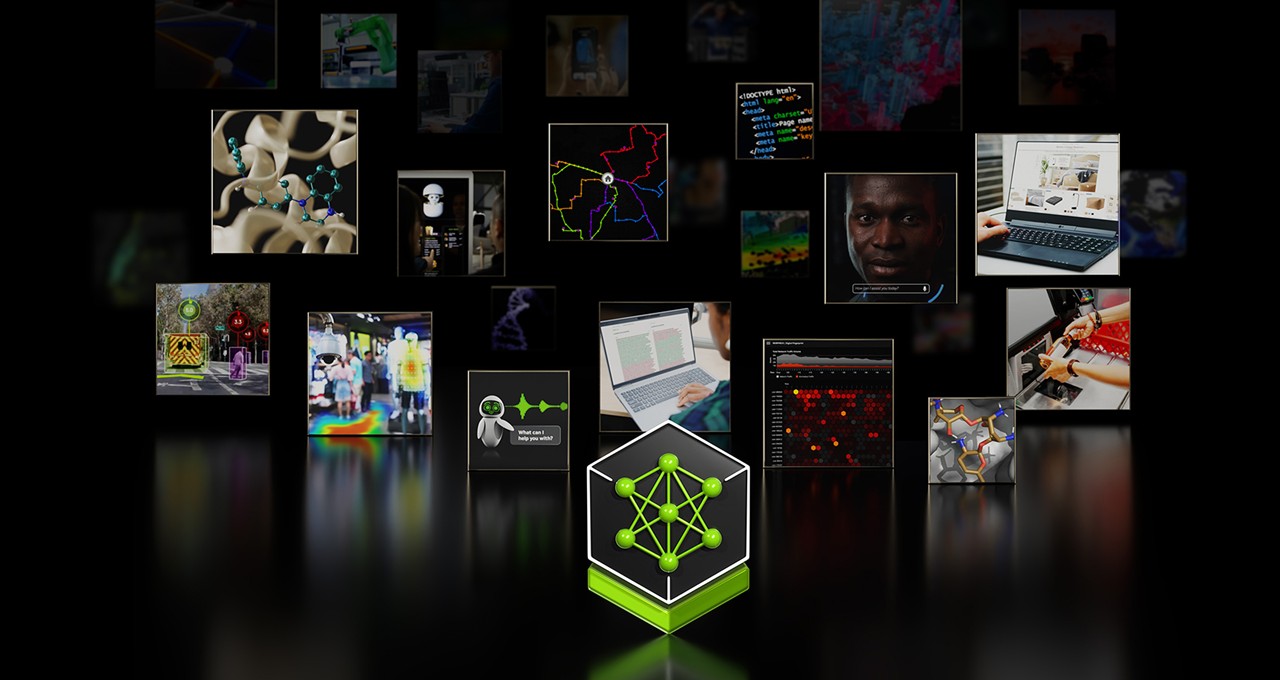
NVIDIA AI Blueprints help enterprises build their own AI agents – including many of the use cases listed above. "Blueprints are reference architectures implemented in code that show you how to take NVIDIA software and apply it to some productive task in an enterprise to solve a real business problem," Liberman said.

Customizable AI Blueprints

The blueprints are entirely open source. A developer or service provider can deploy a blueprint directly, or customize it by integrating their own technology.

Popular NVIDIA Blueprints

Liberman highlighted the versatility of the AI Blueprint for customer service, for example, which features digital humans. "The digital human can be made into a bedside digital nurse, a sportscaster or a bank teller with just some verticalization," he said. Other popular NVIDIA Blueprints include a video search and summarization agent, an enterprise multimodal PDF chatbot, and a generative virtual screening pipeline for drug discovery.

Time Stamps

1:14 – What is an AI agent?
17:25 – How software developers are early adopters of agentic AI.
19:50 – Explanation of test-time compute and reasoning models.
23:05 – Using AI agents in cybersecurity and risk management applications.

You Might Also Like…

Imbue CEO Kanjun Que on Transforming AI Agents Into Personal Collaborators
Telenor’s Kaaren Hilsen on Launching Norway’s First AI Factory
Firsthand’s Jon Heller Shares How AI Agents Enhance Consumer Journeys in Retail

Conclusion

Agentic AI is rapidly transforming how organizations solve complex challenges. By deploying AI agents, enterprises can free human workers from time-consuming tasks and enable them to focus on high-value work. NVIDIA AI Blueprints provide a flexible and customizable solution for building agentic AI systems.

FAQs

Q: What is an AI agent?
A: An AI agent is an intelligent system that reasons, acts, and executes complex tasks with a degree of autonomy.

Q: How do software developers use agentic AI?
A: Software developers are early adopters of agentic AI, using it to develop more efficient algorithms and automate repetitive tasks.

Q: What is a test-time compute and reasoning model?
A: A test-time compute and reasoning model is a type of AI model that can reason and act at runtime, using data from the environment to inform its decisions.

Q: Can AI agents be used in cybersecurity and risk management applications?
A: Yes, AI agents can be used in cybersecurity and risk management applications to detect and respond to threats, and to identify potential risks.