Home Blog Page 111

Trump Could Make Larry Ellison the Next Media Mogul

0

Larry Ellison’s Ambitions Beyond Having Fun and Surrounding Himself with Beautiful Things

For decades, Larry Ellison reveled in being the Silicon Valley executive who really knew how to have a good time. He spent as much as $200 million building a Japanese-inspired imperial villa near Palo Alto, Calif., bought the sixth-largest Hawaiian island and dated and married and divorced with never-ending zeal. Few paid much attention to exactly what his database company, Oracle, did. Sometimes, neither did Mr. Ellison. He did not show up for his keynote talk at Oracle’s annual convention in San Francisco in 2013 because he was on his yacht trying to win the America’s Cup, which he did. A biography about him was titled, "The Difference Between God and Larry Ellison: God Doesn’t Think He’s Larry Ellison."

A New Path Laid Down by His Friend Elon Musk

Now 80 years old and married for the fifth or possibly the sixth time, Mr. Ellison is expanding his ambitions beyond having fun and surrounding himself with beautiful things. Following a path laid down by his friend Mr. Musk, who has at least six companies that feed off one another, Mr. Ellison also appears to be planning to grow his corporate empire. Oracle keeps emerging as a possible bidder for TikTok, the wildly popular video app that Congress has decreed needs to divest itself of its ownership by the Chinese internet company ByteDance or be banned in the United States.

The Ellison Family’s Ambitions

The tech moguls have been unleashed. Mr. Musk, backed by President Trump, has obliterated the lines between public and private. He is blowing up government agencies and using his vast wealth to try to sway elections. Mr. Ellison, who may be closer to Mr. Trump than any mogul this side of Mr. Musk, appears to want nothing less than to bring the country under the benevolent sway of artificial intelligence, which he has said will bring about an era of bounty and harmony. One company, even if it is as successful as Oracle, might not help him get close to this goal. Several, though, might.

The Quest for Data

Mr. Ellison’s quest for data has hit setbacks. In November, a federal court in California gave final approval to a settlement over a class-action suit that accused Oracle of improperly capturing and selling individuals’ online and offline data without their permission. Oracle agreed to pay $115 million without admitting wrongdoing. During Mr. Ellison’s flamboyant heyday in the 1990s, he provided a striking contrast to what was then a relatively sober Silicon Valley. He described his office style as "management by ridicule." After Oracle had a self-inflicted near-death experience, he explained, "Oracle is run by adolescents. And that includes me."

Conclusion

The Ellison family’s ambitions are shifting from having fun and surrounding themselves with beautiful things to growing their corporate empire. With a fortune of $175 billion, there is not much left for Mr. Ellison to buy that would seriously dent his wallet. He is planning to combine thousands of databases into one enormous electronic repository, which can be mined by A.I. That will cure diseases and fix everything else, he told Tony Blair, the former British prime minister, at a symposium on reinventing government held in Dubai in February.

Frequently Asked Questions

Q: What are Larry Ellison’s ambitions?
A: Larry Ellison’s ambitions are expanding beyond having fun and surrounding himself with beautiful things to growing his corporate empire.

Q: What is Oracle’s role in TikTok?
A: Oracle is a possible bidder for TikTok, a wildly popular video app that Congress has decreed needs to divest itself of its ownership by the Chinese internet company ByteDance or be banned in the United States.

Q: What is the significance of the algorithm in the context of TikTok?
A: The algorithm is crucial to TikTok’s success, and it seems unlikely that any new owner would be able to replicate its magic.

Q: How does Elon Musk fit into this picture?
A: Elon Musk, a friend of Larry Ellison’s, has laid down a path for Mr. Ellison to follow, and Mr. Musk’s ownership of Twitter (now called X) has likely influenced Mr. Ellison’s interest in TikTok.

Is Graphic Design Dead?

0

Is Graphic Design Dead?

A Timely Discussion on the Impact of AI on Graphic Design

Designers are currently debating the impact of AI on graphic design jobs in more than one thread over on Reddit. After a week that saw Bill Gates’ unsettling premonition that only three jobs are safe from AI, a timely discussion was started by a designer new to the industry – and many professionals have chimed in with their honest thoughts.

The Uncertain Future of Graphic Design

Graphic design was recently named as one of the jobs most under threat from AI in a report from the World Economic Forum, and with many tools that now use generative AI to create graphics that would have been made by the human hand, it’s no wonder graphic designers are concerned about the future of the role.

The Power of Human Designers

As the post alludes to, a human graphic designer will always offer more than a machine – but AI’s power increases humans will need to do more to add the value to the role that AI can’t give. The Reddit user asks: "AI is advancing rapidly, and it can feel overwhelming at times. As a beginner in graphic design, the future may seem uncertain. What steps can I take to stay relevant, grow in this evolving industry, and effectively earn money from my skills?"

User Responses: Doubts and Reassurances

On the whole, responses doubt how far AI can really go, which feels reassuring. "Be more than an operator of something AI can replicate. Humans solve problems, whether it’s fixing crap artwork or discovering what a client really needs," said one user.

"Synthesizers and step-sequencers didn’t replace musicians," one comment read. "I realise it’s not quite the same thing, but I think as the technology develops we’re going to find new ways to augment what designers do rather than replacing them."

Adobe’s Take on AI in Graphic Design

Another user agrees with this, with more points on how the messaging from major developers (such as Adobe) on how AI will fit into designer’s workflows.

The Road Ahead: Can AI Replace Graphic Designers?

Listen, this AI hype is to hold share and market value. AI will not replace graphic design but it will speed up the process," they say. "The licensing and copy write issues aren’t going to go away. Use it for inspiration for mock ups, but I would continue to hone your craft on what is good Type and Design and what isn’t."

Conclusion

All of this is certainly true, there is more skill and theory involved in graphic design than simply generating images. Added to that, there is the kind of connection and strategy humans can bring to a project that AI will never be able to replicate. As another comment says: "Good thing graphic designers solve creative problems which AI can’t".

FAQs

Q: Can AI replace graphic designers?
A: No, AI will not replace graphic designers, but it will speed up the process.

Q: What can I do to stay relevant in the evolving industry?
A: Be more than an operator of something AI can replicate. Humans solve problems, whether it’s fixing crap artwork or discovering what a client really needs.

Q: Can I make money from my skills?
A: Yes, use AI for inspiration for mock ups, but I would continue to hone your craft on what is good Type and Design and what isn’t.

Q: What does the future of AI in graphic design look like?
A: AI will augment what designers do rather than replacing them.

Supporting Emergency Medical Response with Mobile Technology

Emergency Medical Services: The Power of Telemedicine

Introduction

Emergency medical services (EMS) teams are often the first responders for patients having emergency health issues. When timing and accuracy are of utmost importance, they must be exactly sure of what each patient needs. Some medical events require expertise best provided by a specialist. Depending on the distance to a medical facility or emergency department (ED), patients rely on the treatments given in the ambulance or at the scene. Rural areas are especially challenging due to longer distances between patients and EDs. Delaying patients’ access to critical treatment can affect outcomes and recovery times.

PAVES Program

A partnership between Emory University and the Washington County Regional Medical Center (WCRMC), with a grant from the U.S. Health Resources and Services Administration (HRSA), has produced the PAVES (Prehospital and Ambulatory Virtual Emergency Services) program. Spearheaded by Michael J. Carr, MD FACEP FAEMS, this program was designed to expand and improve the quality of emergency care for residents in Georgia, especially those in rural areas, to eliminate the access disparity and to bring it on par with emergency care in urban cities.

Telemedicine Brings Specialists to the Patient

PAVES brings EMS-focused telemedicine services to emergency medical technicians (EMTs) and paramedic staff treating patients across Georgia. Ambulance staff can remotely diagnose, triage, treat, and route patients to the closest local care facility best able to care for the patient.

The Technology: Mobile Decentralized Paramedicine

The WCRMC hospital ED connects to EMS staff through rugged medical tablets mounted within the ambulances. The 313MD medical tablets from DT Research are antimicrobial, fanless, and military-grade rugged with responsive, robust sunlight-readable touchscreens for detailed imaging. The tablets have front and back cameras to capture video and images. An Axis M5075-G PTZ pan-tilt-optical zoom camera added in the ambulances provides a hands-free visual feed to clearly show patient status to remote medical personnel.

Improved Patient Outcome in Any Location

The PAVES program and mobile telemedicine system have not only improved patient care no matter the location, but they also bring other benefits. According to Michael Padgett, Director of EMS, WCRMC uses the mobile telemedicine system to fill gaps in practitioner availability. Now the hospital can connect the physician in the ED or any location to help, for example, EMS staff interpret an EKG or authorize them to initiate certain medications.

Conclusion

The PAVES program has demonstrated a path for other healthcare providers to expand and improve the quality of emergency care for all residents. By bringing in technology to create a decentralized mobile telemedicine system, they have leveled many of the disparities in medical care experienced in rural environments and during patient surge events.

FAQs

Q: What is the PAVES program?
A: The PAVES program is a partnership between Emory University and the Washington County Regional Medical Center (WCRMC) to expand and improve the quality of emergency care for residents in Georgia, especially those in rural areas.

Q: What is the purpose of the PAVES program?
A: The purpose of the PAVES program is to eliminate the access disparity in emergency care between urban and rural areas by providing telemedicine services to EMS teams and patients across Georgia.

Q: How does the PAVES program work?
A: The PAVES program works by connecting EMS staff with remote medical consulting teams through video and audio conferencing, allowing them to receive guidance and support from medical specialists in real-time.

Q: What are the benefits of the PAVES program?
A: The benefits of the PAVES program include improved patient care, reduced delays in treatment, and increased access to specialized care for patients in rural areas.

NVIDIA Blackwell Achieves Massive MLPerf Inference v5.0 Performance Gains

0

Blackwell Sets the New Performance Standard in MLPerf

The compute demands for large language model (LLM) inference are growing rapidly, fueled by the combination of growing model sizes, real-time latency requirements, and, most recently, AI reasoning. At the same time, as AI adoption grows, the ability of an AI factory to serve as many users as possible, all while maintaining good per-user experiences, is key to maximizing the value it generates. Achieving high inference throughput and low inference latency on the latest models requires excellence across the entire technology stack – spanning silicon, network systems, and software.

MLPerf Inference v5.0

MLPerf Inference v5.0 is the latest in a long-running benchmark suite that measures inference throughput across a range of different models and use cases. First introduced in 2019, MLPerf Inference has been continually updated with new models and scenarios to ensure that it remains a useful tool for measuring the inference performance of AI computing platforms.

New Benchmarks

This round adds three new benchmarks:

  • Llama 3.1 405B: A 405-billion-parameter dense LLM. For the server scenario, the benchmark sets latency requirements of 6 seconds for time to first token (TTFT) and 175 ms for time per output token (TPOT).
  • Llama 2 70B Interactive: A 70-billion-parameter dense LLM. This workload is based on the same Llama 2 70B model that was first introduced in MLPerf Inference v4.0, but features more stringent latency constraints of 450 ms TTFT and 40 ms TPOT (25 tokens per second per user).
  • Relational Graph Attention Network (R-GAT): A graph neural network (GNN) benchmark. GNNs are applied in a wide range of domains, including social network analysis, drug discovery, fraud detection, and molecular chemistry.

NVIDIA Performance

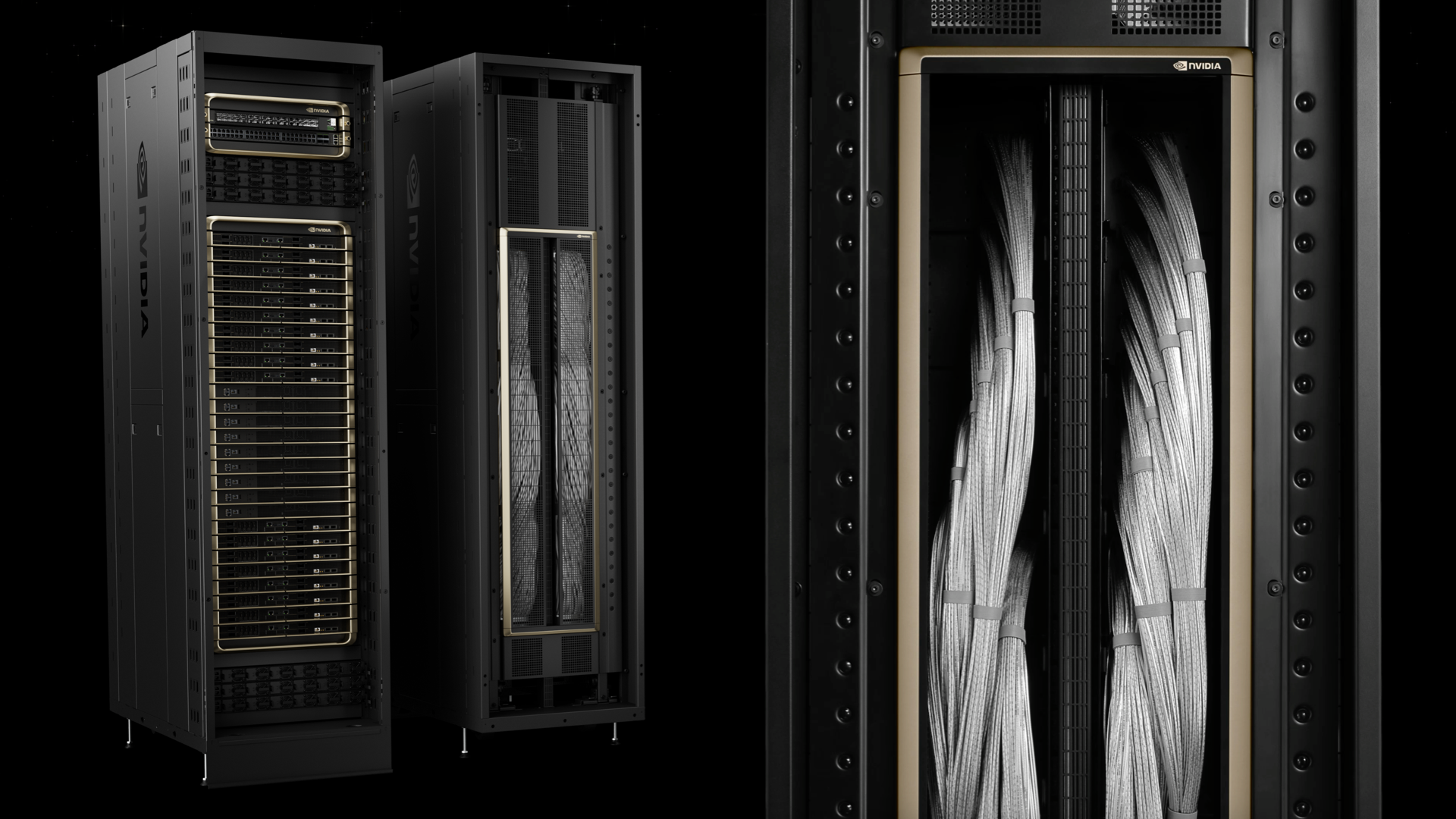
NVIDIA submitted results on every benchmark in the data center category, delivering outstanding performance across the board, including new performance results on the newly-added Llama 3.1 405B, Llama 2 70B Interactive, and GNN tests. This round, NVIDIA also submitted many results on the Blackwell architecture, using both the NVIDIA GB200 NVL72 as well as NVIDIA DGX B200, which delivered substantial speedups over the prior-generation NVIDIA Hopper architecture.

Blackwell Sets the New Performance Standard in MLPerf

The NVIDIA Blackwell architecture, introduced at NVIDIA GTC 2024, is in full production, with availability from major cloud service providers and a broad number of server makers. Blackwell incorporates many architectural innovations – including second-generation Transformer Engine, fifth-generation NVLink, FP4 and FP6 precisions, and more – that enable dramatically higher performance for both training and inference.

Hopper Continues to Deliver Outstanding Performance

The Hopper platform, first introduced in March of 2022, continued to deliver outstanding inference performance on every benchmark in MLPerf Inference v5.0, including on the newly added Llama 3.1 405B and Llama 2 70B Interactive benchmarks.

Wrapping Up

The NVIDIA Hopper platform delivers leadership performance in both training, as shown in the most recent round of MLPerf Training, as well as in MLPerf Inference, as these results show. Hopper remains an industry-leading platform three years after it was first launched, and with continued full-stack optimization, it continues to deliver performance increases on existing AI use cases and support new ones, offering high longevity.

Acknowledgments

The work of many NVIDIA employees made these outstanding results happen. We would like to acknowledge the tireless efforts of Kefeng Duan, Shengliang Xu, Yilin Zhang, Robert Overman, Shobhit Verma, Viraat Chandra, Zihao Kong, Tin-Yin Lai, and Alice Cheng, among many others.

FAQs

Q: What are the new benchmarks in MLPerf Inference v5.0?
A: The new benchmarks include Llama 3.1 405B, Llama 2 70B Interactive, and Relational Graph Attention Network (R-GAT).

Q: How does NVIDIA’s Blackwell architecture perform in MLPerf Inference v5.0?
A: NVIDIA’s Blackwell architecture delivers outstanding performance, setting a new standard for performance and energy efficiency.

Q: How does NVIDIA’s Hopper architecture perform in MLPerf Inference v5.0?
A: NVIDIA’s Hopper architecture continues to deliver outstanding performance, achieving leadership results on every benchmark in MLPerf Inference v5.0.

5 Epic Nintendo Switch 2 Surprises That Have Fans Talking

0

The Nintendo Switch 2: A New Era of Gaming

01. Nintendo Switch 2 Size

The day has finally come. After years of speculation, official Nintendo Switch 2 details have been released via today’s Nintendo Direct live stream, and Nintendo Switch 2 preorders are open. Over 1.3 million people tuned in to watch today’s launch event live on Nintendo America YouTube channel and 2.2 million via Nintendo Japan. Announcements during the 60-minute stream included several new games, but the headline news was of course the new Nintendo console, and some fans were surprised at how big an update it’s getting.

We already knew that the Switch 2 was going to be bigger than the original console. It’s been confirmed that the screen will be 7.9in instead of 6.2in. But the size jump is one aspect that’s causing debate.

02. Nintendo Switch 2 Display Specs

While the size may be controversial, fans are generally impressed with a batch of upgraded display specs for more vivid gaming. The display will have around double the pixels in a 1080p screen capable of a refresh rate of up to 120Hz. It will also have support for HDR, while the 4K dock will upscale games for TVs. HDR will be possible at 2K on TVs.

03. Nintendo Switch 2 GameChat

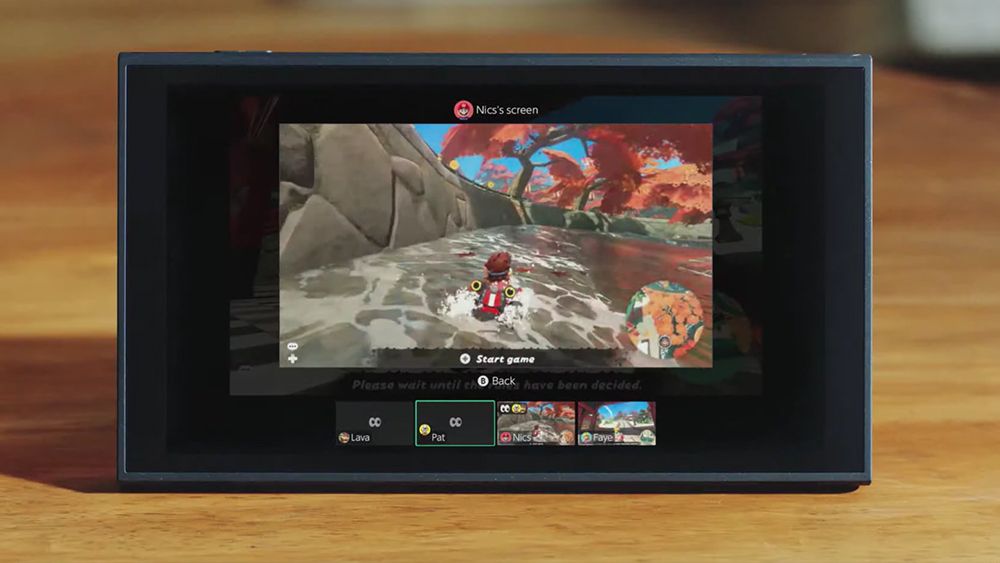
The Switch 2 sees the addition of a ‘C’ button on the right Joy Con 2 to pull up a menu for a new GameChat feature. This makes use of a new in-built microphone on the system that allows players to talk to each other while playing, including if they’re playing different games.

04. Nintendo Switch 2 Game Share

Meanwhile, fans were delighted to learn that Nintendo Switch 2 will have Game Share, a feature that will allow sharing of compatible games with up to three other systems. It also supports online play.

05. Nintendo Switch Joy-Cons work as mouse

Yes, the Switch 2 Joy-Cons can be used to provide mouse-like controls for more intuitive input in games including Metroid Prime 4. If they can indeed be used like a mouse on a PC, it could make the Switch much more interesting for shooters, but developers are saying they want to see how well they work in practice.

Bonus: Mario Kart World

Finally, we had announcements of new games coming for Nintendo Switch 2, including the one that will feature in launch bundle offers. We’re getting not Mario Kart 9…. Mario Kart WORLD.

Conclusion

The Nintendo Switch 2 has a lot to offer, from its upgraded display specs to its new features like GameChat and Game Share. With a larger screen and improved performance, it’s shaping up to be a great console for gamers. But what do you think about the specs and features? Is Nintendo delivering everything you hoped for from its next console?

FAQs

Q: When is the Nintendo Switch 2 release date?
A: The Nintendo Switch 2 will be released on 5 June.

Q: How much will the Nintendo Switch 2 cost?
A: The Nintendo Switch 2 console alone will cost $449, while the Mario Kart World bundle will cost $499 in the US. In the UK, the console will cost £395.99, and the Mario Kart bundle will cost £429.99.

Q: What are the new features of the Nintendo Switch 2?
A: The Nintendo Switch 2 features a larger screen, improved display specs, GameChat, Game Share, and Joy-Con controls that work like a mouse.

Q: What games will be available for the Nintendo Switch 2?
A: The Nintendo Switch 2 will have a range of games, including Mario Kart World, Metroid Prime 4, and more.

You Probably Don’t Know How to Write APIs Like This Using Express

Discovering a Different Approach in n8n

The Raw Server.ts File: A Custom Express Setup

The heart of n8n’s backend lies in its Server class, which extends an AbstractServer and sets up an Express-based API. This isn’t just a simple Express app with some routes slapped onto it. Instead, it dynamically loads controllers, handles webhooks, and uses middleware to configure the API.

No Traditional Route Files – Just Decorators

n8n ditches the typical route files and instead relies on TypeScript decorators for defining API endpoints. This is where it starts to feel very NestJS-like. Check out route.ts:

import type { RequestHandler } from 'express';
import { getRouteMetadata } from './controller.registry';
import type { Controller, Method, RateLimit } from './types';

const RouteFactory = (method: Method) => ({
  path: `/${string}`,
  options: RouteOptions = {},
): MethodDecorator => ({
  target,
  handlerName,
}) => ({
  routeMetadata: getRouteMetadata(target.constructor as Controller, handlerName),
  method,
  path,
});

The Decorators: A Different Way to Define APIs

This makes it easy to swap out implementations, mock dependencies in tests, and keep the code modular.

Final Thoughts

If you’re coming from a standard Express.js background, n8n’s API structure might feel alien at first. But once you get past the initial "where are the routes?" confusion, you’ll understand how decorators handle routing, authentication, and middleware injection, it starts to make a lot of sense.

Conclusion

By using decorators and dependency injection, n8n manages to keep its API modular, maintainable, and easy to extend. So, the next time you’re building an Express backend, maybe try throwing in some decorators. Who knows? You might just like it.

FAQs

Q: What is n8n?
A: n8n is a Node.js backend framework that uses TypeScript decorators for defining API endpoints.

Q: What is the benefit of using decorators in n8n?
A: Decorators help to keep the code modular, maintainable, and easy to extend.

Q: How does n8n handle routing and authentication?
A: n8n uses decorators to handle routing and authentication, making it easy to swap out implementations and mock dependencies in tests.

Q: What is the difference between n8n and traditional Express.js?
A: n8n uses TypeScript decorators for defining API endpoints, whereas traditional Express.js uses traditional route files.

Putin’s AI Blunder is a Gift to Opponents

Russia’s AI Gap: A Strategic Enabler for Its Military

Russia’s AI Challenge

Vladimir Putin does not use the internet, according to a Russian intelligence officer who defected. Nor does he have a smartphone. A decade ago, he made the people in his inner circle use typewriters. In this context, it shouldn’t be surprising that Russia has fallen so far behind on artificial intelligence.

The Factors Contributing to the Gap

Global sanctions have also prevented the country from developing a domestic AI sector. Radio Free Europe recently reported that Sberbank — Russia’s majority state-owned financial services giant — has only been able to procure 9,000 graphics processing units since Russia began a full-scale military invasion of Ukraine in February 2022 (Microsoft bought almost 500,000 last year). Russia has new trade partners, but not ones with access to large quantities of advanced semiconductors. Compounding the problem, it has lost about 10 per cent of its tech workforce to emigration since 2022.

The Consequences of the Gap

As a result of these factors, Russia is ranked 31st in the world in AI capacity by Tortoise Media’s Global AI Index, behind every major economy and even small countries like Portugal, Norway, Ireland, and Luxembourg.

The Need for Change

The country has a strong incentive to boost its capabilities. If Putin wants to extend online censorship to AI, it will need even more compute, which means more chips. It will also need access to more advanced chips as AI changes the nature of warfare.

A Strategy for the West

To address the AI gap, Ukraine’s allies must convince the Trump administration to take chips off the table in any negotiations that take place between Russia and the US. Some form of sanctions relief seems inevitable, but sanctions on semiconductors must remain in effect.

Encouraging Emigration and Internal Change

Second, Ukraine’s allies should encourage further emigration from Russia’s tech sector. Visa schemes could be set up to facilitate the flight of AI-literate graduates from Russia to the west. Lastly, Russia’s AI trajectory should be communicated to anti-Putin individuals within the Russian regime. If people around Putin can be convinced of the seismic scale of his AI blunder, discontent could grow — perhaps even to the point of destabilization.

Conclusion

Russia is using 20th-century tactics in pursuit of a 19th-century goal while the 21st century is passing it by. If AI becomes a strategic enabler, Russia’s odds of becoming a modern great power will fall. In Ukraine, Putin may hold the cards, but he’s low on chips.

FAQs

Q: What is the current state of Russia’s AI capabilities?
A: Russia is ranked 31st in the world in AI capacity by Tortoise Media’s Global AI Index, behind every major economy and even small countries like Portugal, Norway, Ireland, and Luxembourg.

Q: Why is Russia struggling to develop its AI sector?
A: Global sanctions and a lack of access to advanced semiconductors have prevented Russia from developing a domestic AI sector.

Q: What is the potential strategy for the West to address Russia’s AI gap?
A: Ukraine’s allies could convince the Trump administration to take chips off the table in any negotiations that take place between Russia and the US. Some form of sanctions relief seems inevitable, but sanctions on semiconductors must remain in effect.

A flexible robot can help emergency responders search through rubble | MIT News

0

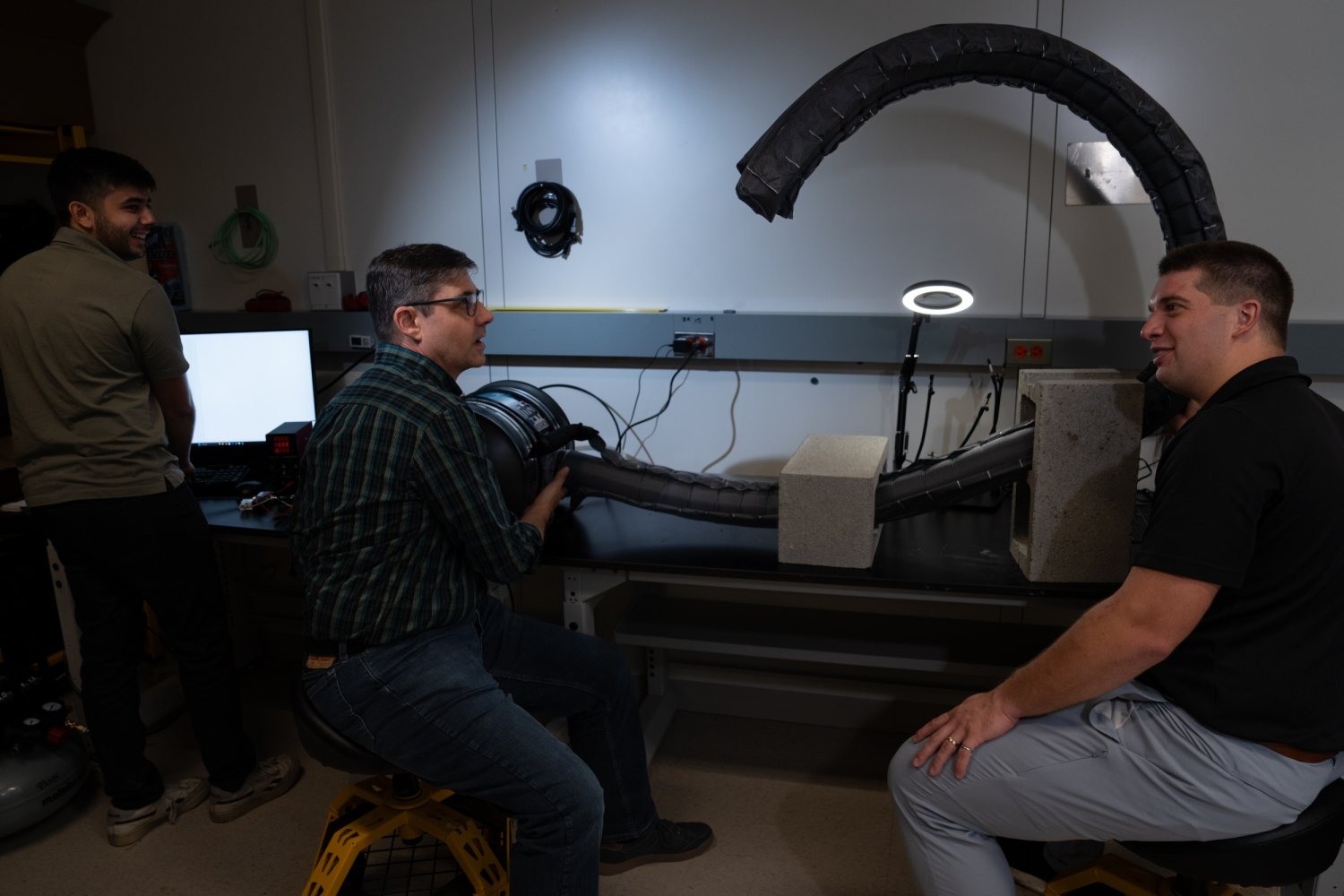
When major disasters hit and structures collapse, people can become trapped under rubble. Extricating victims from these hazardous environments can be dangerous and physically exhausting. To help rescue teams navigate these structures, MIT Lincoln Laboratory, in collaboration with researchers at the University of Notre Dame, developed the Soft Pathfinding Robotic Observation Unit (SPROUT). SPROUT is a vine robot — a soft robot that can grow and maneuver around obstacles and through small spaces. First responders can deploy SPROUT under collapsed structures to explore, map, and find optimum ingress routes through debris. 

“The urban search-and-rescue environment can be brutal and unforgiving, where even the most hardened technology struggles to operate. The fundamental way a vine robot works mitigates a lot of the challenges that other platforms face,” says Chad Council, a member of the SPROUT team, which is led by Nathaniel Hanson. The program is conducted out of the laboratory’s Human Resilience Technology Group. 

First responders regularly integrate technology, such as cameras and sensors, into their workflows to understand complex operating environments. However, many of these technologies have limitations. For example, cameras specially built for search-and-rescue operations can only probe on a straight path inside of a collapsed structure. If a team wants to search further into a pile, they need to cut an access hole to get to the next area of the space. Robots are good for exploring on top of rubble piles, but are ill-suited for searching in tight, unstable structures and costly to repair if damaged. The challenge that SPROUT addresses is how to get under collapsed structures using a low-cost, easy-to-operate robot that can carry cameras and sensors and traverse winding paths. 

Play video

How a Flexible Robot Helps Find Survivors Inside Collapsed Buildings
Video: MIT Lincoln Laboratory

SPROUT is composed of an inflatable tube made of airtight fabric that unfurls from a fixed base. The tube inflates with air, and a motor controls its deployment. As the tube extends into rubble, it can flex around corners and squeeze through narrow passages. A camera and other sensors mounted to the tip of the tube image and map the environment the robot is navigating. An operator steers SPROUT with joysticks, watching a screen that displays the robot’s camera feed. Currently, SPROUT can deploy up to 10 feet, and the team is working on expanding it to 25 feet.

When building SPROUT, the team overcame a number of challenges related to the robot’s flexibility. Because the robot is made of a deformable material that bends at many points, determining and controlling the robot’s shape as it unfurls through the environment is difficult — think of trying to control an expanding wiggly sprinkler toy. Pinpointing how to apply air pressure within the robot so that steering is as simple as pointing the joystick forward to make the robot move forward was essential for system adoption by emergency responders. In addition, the team had to design the tube to minimize friction while the robot grows and engineer the controls for steering.

While a teleoperated system is a good starting point for assessing the hazards of void spaces, the team is also finding new ways to apply robot technologies to the domain, such as using data captured by the robot to build maps of the subsurface voids. “Collapse events are rare but devastating events. In robotics, we would typically want ground truth measurements to validate our approaches, but those simply don’t exist for collapsed structures,” Hanson says. To solve this problem, Hanson and his team made a simulator that allows them to create realistic depictions of collapsed structures and develop algorithms that map void spaces.

SPROUT was developed in collaboration with Margaret Coad, a professor at the University of Notre Dame and an MIT graduate. When looking for collaborators, Hanson — a graduate of Notre Dame — was already aware of Coad’s work on vine robots for industrial inspection. Coad’s expertise, together with the laboratory’s experience in engineering, strong partnership with urban search-and-rescue teams, and ability to develop fundamental technologies and prepare them for  transition to industry, “made this a really natural pairing to join forces and work on research for a traditionally underserved community,” Hanson says. “As one of the primary inventors of vine robots, Professor Coad brings invaluable expertise on the fabrication and modeling of these robots.”

Lincoln Laboratory tested SPROUT with first responders at the  Massachusetts Task Force 1  training site in Beverly, Massachusetts. The tests allowed the researchers to improve the durability and portability of the robot and learn how to grow and steer the robot more efficiently. The team is planning a larger field study this spring.

“Urban search-and-rescue teams and first responders serve critical roles in their communities but typically have little-to-no research and development budgets,” Hanson says. “This program has enabled us to push the technology readiness level of vine robots to a point where responders can engage with a hands-on demonstration of the system.”

Sensing in constrained spaces is not a problem unique to disaster response communities, Hanson adds. The team envisions the technology being used in the maintenance of military systems or critical infrastructure with difficult-to-access locations.

The initial program focused on mapping void spaces, but future work aims to localize hazards and assess the viability and safety of operations through rubble. “The mechanical performance of the robots has an immediate effect, but the real goal is to rethink the way sensors are used to enhance situational awareness for rescue teams,” says Hanson. “Ultimately, we want SPROUT to provide a complete operating picture to teams before anyone enters a rubble pile.” 

This Tool Probes Frontier AI Models for Lapses in Intelligence

0

Article

Executive Summary

Artificial intelligence (AI) companies often claim that Artificial General Intelligence (AGI) is just around the corner. However, the latest models still require additional training to reach their full potential. Scale AI, a company that has played a key role in building advanced AI models, has developed a platform that can automatically test a model across thousands of benchmarks and tasks, pinpoint weaknesses, and flag additional training data to enhance their skills.

The Challenges of Training AI Models

Training AI models requires a significant amount of data and human labor. Large language models (LLMs) are trained on vast amounts of text scraped from books, the web, and other sources. However, turning these models into helpful, coherent, and well-mannered chatbots requires additional "post-training" in the form of humans who provide feedback on a model’s output.

Introducing Scale Evaluation

Scale AI has developed a new tool called Scale Evaluation, which automates some of this work using Scale’s own machine learning algorithms. The tool allows model makers to go through results and slice and dice them to understand where a model is not performing well, then use that to target the data campaigns for improvement.

Case Study: Reasoning Capabilities

In one instance, Scale Evaluation revealed that a model’s reasoning skills fell off when it was fed non-English prompts. The tool highlighted the issue and allowed the company to gather additional training data to address it.

Industry Reaction

Jonathan Frankle, chief AI scientist at Databricks, a company that builds large AI models, says that being able to test one foundation model against another sounds useful in principle. "Anyone who moves the ball forward on evaluation is helping us to build better AI," Frankle says.

The Future of AI Testing

Scale’s new tool offers a more comprehensive picture by combining many different benchmarks and can be used to devise custom tests of a model’s abilities, like probing its reasoning in different languages. The company’s AI can take a given problem and generate more examples, allowing for a more comprehensive test of a model’s skills.

Conclusion

The development of Scale Evaluation highlights the need for more comprehensive testing of AI models. As AI continues to advance, it is crucial that we have tools in place to ensure that these models are safe, trustworthy, and effective.

Frequently Asked Questions

Q: What is Scale Evaluation?
A: Scale Evaluation is a new tool developed by Scale AI that automates some of the work involved in testing and evaluating AI models.

Q: How does Scale Evaluation work?
A: The tool uses Scale’s own machine learning algorithms to test a model across thousands of benchmarks and tasks, pinpoint weaknesses, and flag additional training data to enhance their skills.

Q: What are the benefits of Scale Evaluation?
A: The tool allows model makers to go through results and slice and dice them to understand where a model is not performing well, then use that to target the data campaigns for improvement.

Q: How will Scale Evaluation impact the development of AI?
A: Scale’s new tool offers a more comprehensive picture by combining many different benchmarks and can be used to devise custom tests of a model’s abilities, like probing its reasoning in different languages. The company’s AI can take a given problem and generate more examples, allowing for a more comprehensive test of a model’s skills.

Simplifying VFX Virtual Production Pipelines

0

Virtual Production Takes a Leap Forward with Foundry’s Nuke Stage

A New Era of End-to-End Creative Control

Foundry, a software maker, has announced a significant advance in virtual production with its Nuke Stage Virtual Production Product. This solution aims to provide end-to-end creative content control with consistent color, flexible data format support, and interoperability with industry-standard VFX tools.

What is Nuke Stage?

Nuke Stage is a purpose-built solution for virtual production and in-camera visual effects. It links pre-production to final pixels in a single pipeline, giving VFX artists creative control while increasing efficiencies and simplifying virtual production workflows.

Key Features of Nuke Stage

  • Real-time playback of photo-realistic environments onto LED walls
  • Live compositing and layout, enabling teams to blend virtual and physical sets
  • Iteration on content in industry-standard formats, including OpenUSD and OpenEXR, OpenColorIO, and established creative toolsets, like a node-graph-based compositing environment
  • Hardware-agnostic, no need for specialist media servers or bespoke equipment
  • Linear workspace providing full support for OpenColorIO and HDR for a clear color pipeline
  • Familiar UI for those who have used Nuke products before

Industry Reaction to Nuke Stage

Dan Hall, Head of ICVFX at virtual production studio 80six, says, "Nuke Stage offers a handshake between VFX and virtual production, which has been missed in VP until now. With VP and ICVFX, it’s all about trust. Getting VFX teams on board will help to push the use of virtual production, in a meaningful way, and I see huge potential for Nuke Stage to do that."

Conclusion

Nuke Stage is a significant step forward in virtual production, providing end-to-end creative control and simplifying workflows. With its ability to link pre-production to final pixels in a single pipeline, it has the potential to revolutionize the way VFX artists work.

FAQs

Q: What is Nuke Stage?
A: Nuke Stage is a purpose-built solution for virtual production and in-camera visual effects.

Q: What are the key features of Nuke Stage?
A: Real-time playback of photo-realistic environments onto LED walls, live compositing and layout, iteration on content in industry-standard formats, and more.

Q: Is Nuke Stage hardware-agnostic?
A: Yes, Nuke Stage is hardware-agnostic, no need for specialist media servers or bespoke equipment.

Q: What is the user interface like for Nuke Stage?
A: The UI is familiar for those who have used Nuke products before.

Q: What is the potential impact of Nuke Stage on virtual production?
A: Nuke Stage has the potential to revolutionize the way VFX artists work, providing end-to-end creative control and simplifying workflows.