Home Blog Page 136

ChatGPT’s New Image Generator Creates Stunning Images

OpenAI Unveils 4o Image Generation: A Game-Changer for Creatives

Introduction

OpenAI has been expanding its ChatGPT offerings, adding AI voice assistants, file and image understanding, advanced research capabilities, and more. However, there was one glaring omission – a really capable image generator. That changed with the launch of 4o image generation, a model that tackles very difficult prompts, including realistic images and accurate text.

Key Features

4o image generation boasts many capabilities that OpenAI’s previous image generator didn’t have, such as image referencing, which can be used to render a new version of the image or as inspiration for creating a completely new work. It can also generate images on transparent backgrounds, use specific colors from HEX codes, or implement the chatbot’s advanced conversational capabilities in the generations.

Prompt Example

During a live stream demo, OpenAI CEO Sam Altman, joined by researchers Gabriel Goh and Prafulla Dhariwal, prompted 4o to create a photo from a specific POV with a flyer that included lots of text. After loading for a few seconds, it got the cinematic direction right and accurately printed all the text.

What’s New

The image generator is now accessible in ChatGPT, allowing users to refine images through a multi-turn conversation. This makes tweaking images easier and allows the model to use the context of previous generations to create new ones. Since GPT-4o has access to the web, that context is also added to creating the images.

Looser Safeguards

The new image generator also allows for more risqué content, similar to Elon Musk’s Grok model. However, OpenAI has implemented safeguards to block requests that violate content policies, including child sexual abuse materials and sexual deepfakes.

How to Access

The updated image generation features are rolling out now in ChatGPT and Sora. However, due to high demand, the rollout to the free tier has been delayed. To access the image generation, you need to be a subscriber, with options including ChatGPT Plus, which costs $20 per user per month, and enterprise and education users will be given access soon.

Conclusion

OpenAI’s 4o image generation is a game-changer for creatives, offering a range of features and capabilities that set it apart from other image generation models. With its ability to tackle difficult prompts, generate realistic images, and reference previous generations, it’s an exciting development for the world of AI.

FAQs

Q: What is 4o image generation?
A: 4o image generation is a new model from OpenAI that can generate realistic images based on text prompts.

Q: What are the key features of 4o image generation?
A: 4o image generation has many capabilities, including image referencing, transparent backgrounds, and specific colors from HEX codes.

Q: Is 4o image generation available for free?
A: Not yet, but it will be available for free for all users in the future. For now, it’s available for subscribers, including ChatGPT Plus and enterprise and education users.

Q: Can I still access DALL-E?
A: Yes, you can still access DALL-E through a dedicated DALL-E GPT.

Nintendo’s Virtual Game Cards

0

Nintendo Announces Virtual Game Cards for Seamless Game Portability

Introduction
Nintendo has announced a new feature called Virtual Game Cards, which will allow users to easily transfer their digitally downloaded games between different devices. This new feature will make it simpler for users to port over their existing Switch games to their new devices.

How it Works
Currently, Switch games can be purchased either as a physical game card or as a digital download. While physical game cards can be easily ejected and reinserted into another Switch for easy play, digital downloads have been a bit harder to port from device to device. With Virtual Game Cards, digital games will operate more like physical ones, allowing users to migrate games between devices.

Features of Virtual Game Cards
Available in late April, Virtual Game Cards will offer the following features:

  • Easy migration of digital games between devices, as long as they are connected locally the first time a game is transferred
  • Lending out games to anyone in your Nintendo Family Group, which includes up to eight people, via local wi-fi
  • Ability to lend only one game at a time to a particular person
  • Games will automatically return to the lender at the end of a 14-day borrowing period

What’s Next
While there is no official word yet on when the Switch 2 will be released, fans are eagerly awaiting more information about the console on a Nintendo Direct livestream scheduled for April 2.

Conclusion
Virtual Game Cards will revolutionize the way users play and manage their digital games on the Nintendo Switch. With its seamless portability and lending features, users will have more flexibility and control over their gaming experience.

Frequently Asked Questions

Q: When will Virtual Game Cards be available?
A: Virtual Game Cards will be available in late April.

Q: How do Virtual Game Cards work?
A: Virtual Game Cards allow users to easily migrate digital games between devices, as long as they are connected locally the first time a game is transferred.

Q: Can I lend out games to friends?
A: Yes, you can lend out games to anyone in your Nintendo Family Group, which includes up to eight people, via local wi-fi.

Q: How long can I lend out a game?
A: You can lend out a game for up to 14 days, after which it will automatically return to the lender.

Q: When can I expect more information about the Switch 2?
A: More information about the Switch 2 will be revealed on a Nintendo Direct livestream scheduled for April 2.

How Fatal Fury: City of the Wolves

0

Remaking Fatal Fury’s Art History

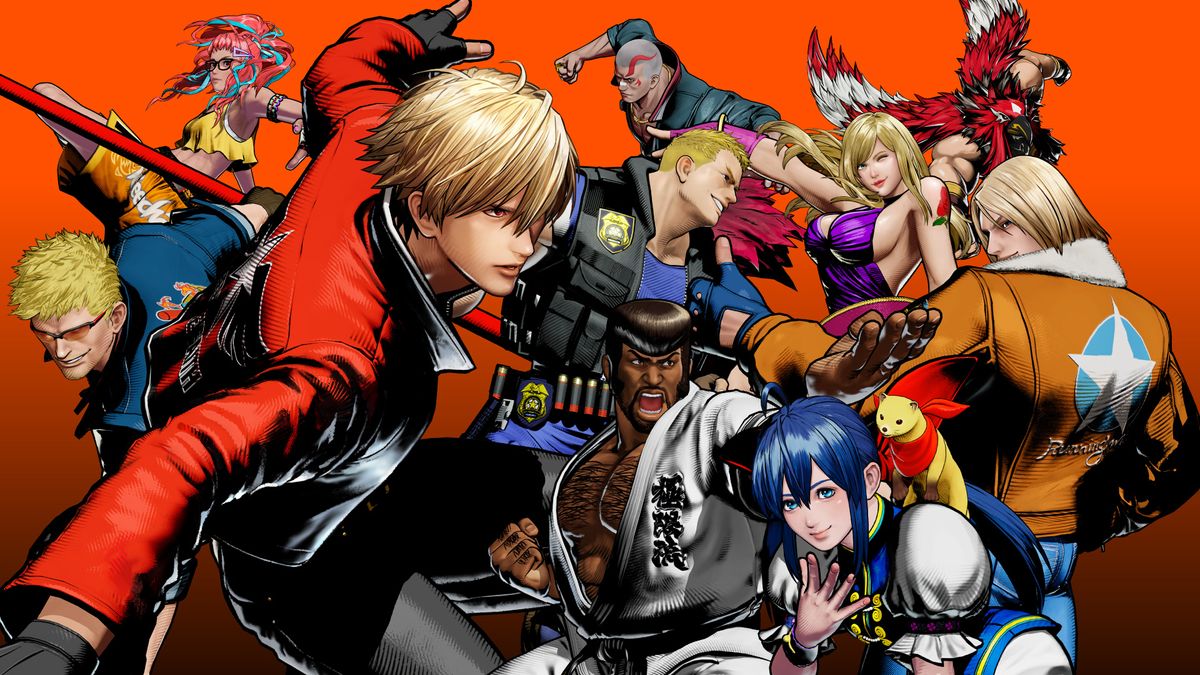
The iconic series is back with Fatal Fury: City of the Wolves, and its return is a welcome one – the dev is even having fun with its new character design, with the reveal of Christiano Ronaldo starring in the game.

Remaking Fatal Fury’s Art History

The technology used to make games 26 years ago and now is completely different. In that sense, we believe that it’s inevitable that the appearance of a game, no matter what you make, will have to eventually give off a different impression from past entries in the series.

Crafting Fatal Fury’s Character Design

Given the decades-long gap between entries, it’s important for there to be continuity in character designs. Many returning characters have kept their previous designs, such as Terry, who had already made a drastic change in Garou, ditching his signature red cap and sporting a brown leather jacket, or Hotaru Futaba with her blue and white Chinese martial arts outfit (along with her pet ferret).

But unlike The King o’ Fighters, which Kuroki and Soeda refer to as a ‘festival’, which doesn’t strictly adhere to a canonical timeline, time has nonetheless passed in the story of Fatal Fury, so there are still some ways this is expressed. Perhaps the most obvious redesign is for the series’ most popular character Mai Shiranui, who is no longer dressed in her iconic (and revealing) red kunoichi outfit, at least not by default. "Mai herself has grown as a character, though some aspects remain the same," Soeda explains. "We designed her black leather-based costume to portray the image of a stylish and cool older sister."

Fatal Fury: City of the Wolves

Fatal Fury: City of the Wolves arrives high on a wave of a new golden age of fighting games, and while the competition is fierce, its long-awaited return definitely looks fighting fit.

Crafting New Characters

When it comes to new characters to the series, such as Preecha with her vibrant colors, the old veterans give the credit to the new young generation of developers they’re working with. "Veterans like ourselves shared our opinions on characters that have existed for a long time, but for new characters, we wanted them to be created with the sensibilities of today’s youth, so I didn’t give much input," Kuroki explains. "I thought that was the best way to please both the old fans and new players."

Conclusion

Fatal Fury: City of the Wolves is a long-awaited return for the iconic series, and its new character design is a welcome one. With its blend of old and new, this game is sure to please both old fans and new players.

FAQs

Q: When does Fatal Fury: City of the Wolves release?
A: Fatal Fury: City of the Wolves releases 24 April for PlayStation 5, PlayStation 4, Microsoft Windows, Xbox Series X, and Series S.

Q: What is the story behind the new character designs?
A: The story of Fatal Fury has progressed over the years, and the new character designs reflect this. The old veterans have passed on their experience to the new generation of developers, who have created characters with the sensibilities of today’s youth.

Q: What is the difference between The King o’ Fighters and Fatal Fury?
A: The King o’ Fighters is a ‘festival’ series that doesn’t adhere to a canonical timeline, while Fatal Fury has a continuous storyline.

Bringing ‘Gen Beta’ mobile AI to life

0

Infinix Unveils ‘Gen Beta’ Mobile AI Strategy with Note 50 Series

Infinix is ushering in its ‘Gen Beta’ mobile AI strategy with the Note 50 Series, promising to bring more fun and function to daily life. The company’s vision aims to deliver AI innovations that are not only powerful, but also fun and accessible.

Infinix AI∞: Empowering Everyday Life

At the center of this initiative is Infinix AI∞, a system designed to seamlessly integrate into everyday life and enhance creativity, productivity, and entertainment. Tony Zhao, General Manager of Infinix, said, "With the launch of Infinix’s ‘Gen Beta’ AI and the latest flagship NOTE 50 Series equipped with the all-new One-Tap Infinix AI∞ features, we aim to empower all Infinix users and allow them to experience AI-driven innovation first-hand. This is more than just a product upgrade – it’s a technological revolution that encourages young people to explore, experiment, and push the boundaries of AI’s role in daily life."

XOS Beta: The Future of Mobile Operating System

Later this year, Infinix’s XOS mobile operating system will be upgraded to AIXOS Beta – a self-learning system that integrates AI to enhance various aspects of daily life. The AIXOS update brings a fresh visual overhaul, with newly-designed stock app icons and a ‘TransSans’ system font, which boasts unlimited font weight variation to perfectly suit individual preferences and visual needs.

Key Features of AIXOS Beta

  • Flash App: A redesigned animation curve that mimics the natural world, eliminating frustrating blank loading moments when opening applications, resulting in a more fluid and comfortable feel.
  • Sensory Scheduling 2.0: AI-powered, intelligently identifying usage scenarios and prioritizing the processing of related background tasks, leading to a tangible improvement in app startup speeds.
  • Memory Defragmentation: A new feature that efficiently organizes the phone’s memory, helping to maintain long-term system performance and prevent slowdowns.

One-Tap Infinix AI∞: Streamlining Interaction and Improving Daily Life

Infinix AI∞ streamlines user interaction through the One-Tap Infinix AI∞ feature, simplifying tasks like identifying landmarks, translating menus, and answering queries with a single tap. The feature supports over 1,000 different scenarios and showcases AI’s potential to simplify and enhance daily life.

Gaming Experience with Infinix AI∞

As the official mobile brand for numerous esports events, Infinix is focused on using AI to create a high-performance gaming ecosystem. The NOTE 50 Series also boasts a suite of intelligent features, including:

  • One-Tap Infinix AI∞: Activating an enhanced Folax for Esports Mode, Power Saving Mode, and more, designed to ensure uninterrupted gameplay.
  • ZoneTouch Master: Intelligently fine-tuning on-screen controls based on individual user habits, leading to greater precision.
  • XBOOST AI-powered features: Acting as an intelligent "game coach," offering tailored guidance to enhance performance.
  • AI Magic Box: Streamlining the gaming experience by accelerating in-game dialogues and automatically collecting items, allowing players to stay engrossed in the narrative.

Infinix AI∞ Beyond Smartphones

The NOTE 50 Series is Infinix’s first flagship smartphone line after the launch of Infinix AI∞, showcasing the One-Tap AI∞ function. However, Infinix’s AI vision extends beyond smartphones to a comprehensive AIoT ecosystem. The company is currently developing new ecosystem products, including AI Buds and AI Ring, designed to work seamlessly with Infinix AI∞.

Conclusion

Infinix is ushering in the ‘Gen Beta’ era, encouraging a new generation to embrace AI. With the NOTE 50 Series and Infinix AI∞, the company is poised to revolutionize the way we live, work, and play.

Frequently Asked Questions

Q: What is Infinix AI∞?
A: Infinix AI∞ is a system designed to seamlessly integrate into everyday life and enhance creativity, productivity, and entertainment.

Q: What are the key features of AIXOS Beta?
A: AIXOS Beta features include Flash App, Sensory Scheduling 2.0, and Memory Defragmentation.

Q: How does One-Tap Infinix AI∞ simplify user interaction?
A: One-Tap Infinix AI∞ simplifies tasks like identifying landmarks, translating menus, and answering queries with a single tap, supporting over 1,000 different scenarios.

Q: What is the gaming experience like with Infinix AI∞?
A: The NOTE 50 Series offers a suite of intelligent features, including One-Tap Infinix AI∞, ZoneTouch Master, XBOOST AI-powered features, and AI Magic Box, designed to enhance performance and ensure uninterrupted gameplay.

Coca-Cola Revives Iconic Campaign

0

Debranding: Coca-Cola’s ‘Share a Coke’ Campaign Returns for 2025

A Global Phenomenon Reborn

While there aren’t many brands that can get away with ‘debranding’ their ads, we’ve seen a few such as McDonald’s try ditching their logo in recent months. But perhaps the most famous example dropped all the way back in 2011 – and it’s back to jump on the trend in 2025.

The Original Campaign

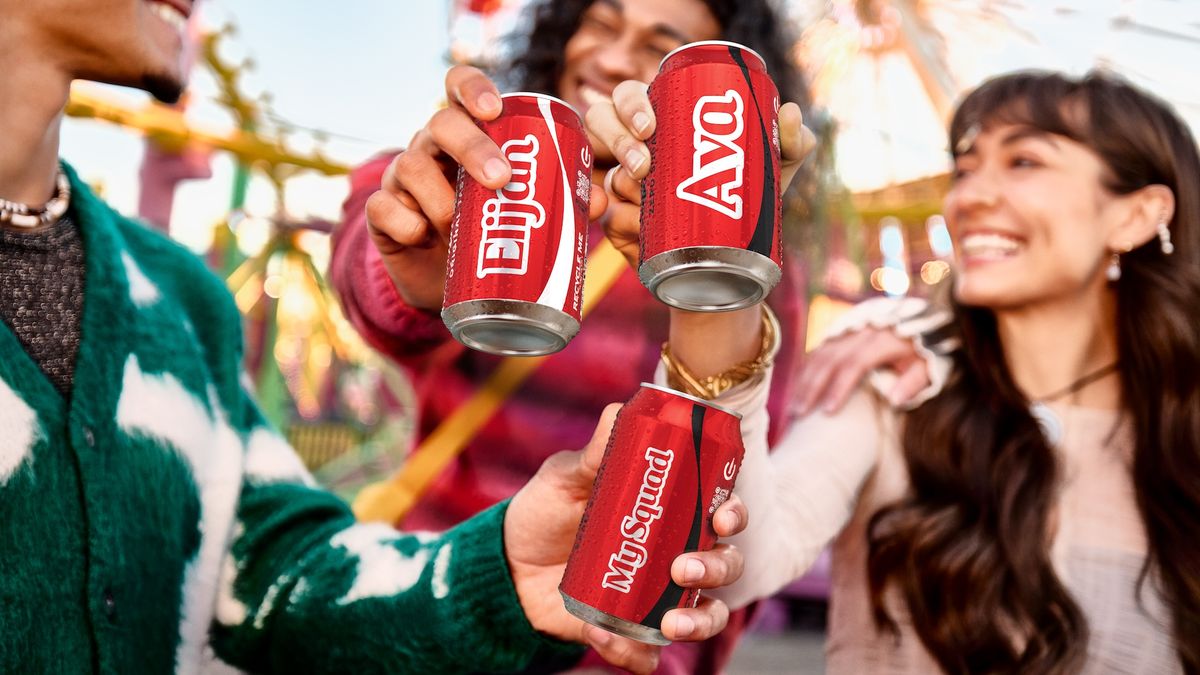
Back in 2011, Coca-Cola launched what was to become one of its most successful branding campaigns. ‘Share a Coke’ saw the Coca-Cola logo replaced by first names – which, as you might expect, drove countless people to search for their own or that of their friends – because not even the best logos of all time are a match for the feeling of personalisation. So successful was Share a Coke that the company is bringing it back for 2025, "inviting a new generation to experience the magic of personalised connection."

New Features and Digital Platforms

As well as featuring names on bottles and cans, the updated version of the campaign introduces a host of digital features. An QR code takes the customer to a digital platform featuring a ‘Share a Coke Memory Maker’, which allows them to create personalised videos.

Gen Z’s Desire for Authentic Experiences

"The first-of-its-kind campaign, which sparked a global phenomenon by swapping iconic Coca-Cola logos for personalised names, returns with an even greater focus on shareability and customisation, reflecting Gen Z’s desire for authentic experiences," reads a press release from the company.

Conclusion

It seems that tweaking or even removing logos is quite the design trend right now, with everyone from McDonald’s to Kellogg’s doing away with iconic brand assets in recent campaigns. ‘Share a Coke’ is arguably one of the most famous examples, and arguably something that only a globally recognised brand like Coca-Cola can pull off.

FAQs

Q: What is the ‘Share a Coke’ campaign?
A: The ‘Share a Coke’ campaign is a branding campaign launched by Coca-Cola in 2011, which replaced the company’s iconic logo with first names on bottles and cans.

Q: Why is the campaign returning in 2025?
A: The campaign is returning in 2025 with new features and digital platforms to reflect Gen Z’s desire for authentic experiences and personalisation.

Q: What new features are being introduced in the 2025 campaign?
A: The updated campaign introduces an QR code that takes customers to a digital platform featuring a ‘Share a Coke Memory Maker’, which allows them to create personalised videos.

Chinese AI Innovation Narrows Technology Divide with US

Chinese AI innovation is reshaping the global technology landscape, challenging assumptions about Western dominance in advanced computing.

Recent developments from companies like DeepSeek illustrate how quickly China has adapted to and overcome international restrictions through creative approaches to AI development.

According to Lee Kai-fu, CEO of Chinese startup 01.AI and former head of Google China, the gap between Chinese and American AI capabilities has narrowed dramatically.

“Previously, I think it was a six to nine-month gap and behind in everything. And now I think that’s probably three months behind in some of the core technologies, but ahead in some specific areas,” Lee told Reuters in a recent interview.

DeepSeek has emerged as the poster child for this new wave of Chinese AI innovation. On January 20, 2025, as Donald Trump was inaugurated as US President, DeepSeek quietly launched its R1 model.

The low-cost, open-source large language model reportedly rivals or surpasses OpenAI’s ChatGPT-4, yet was developed at a fraction of the cost.

Algorithmic efficiency over hardware superiority

What makes DeepSeek’s achievements particularly significant is how they’ve been accomplished despite restricted access to the latest silicon. Rather than being limited by US export controls, Chinese AI innovation has flourished by instead focusing on algorithmic efficiency and novel approaches to model architecture.

Different aspects of this innovative approach were demonstrated further when DeepSeek released an upgraded V3 model on March 25, 2025. The DeepSeek-V3-0324 features enhanced reasoning capabilities and improved performance in multiple benchmarks.

The model showed particular strength in mathematics, scoring 59.4 on the American Invitational Mathematics Examination (AIME) compared to its predecessor’s 39.6. It also improved by 10 points on LiveCodeBench to 49.2.

Market reactions and global impact

The financial markets have noticed the shift in the AI landscape. When DeepSeek launched its R1 model in January, America’s Nasdaq plunged 3.1%, while the S&P 500 fell 1.5% – an indication that investors recognize the potential impact of Chinese AI innovation on established Western tech companies.

The developments present opportunities and challenges for the broader global community. China’s focus on open-source, cost-effective models could democratize access to advanced AI capabilities for emerging economies.

Supply chain complexities and environmental considerations

The evolving AI landscape creates new geopolitical complexities. Countries like South Korea highlight the situation. As the world’s second-largest producer of semiconductors, Korea became more dependent on China in 2023 for five of the six most important raw materials needed for chipmaking.

Companies like Toyota, SK Hynix, Samsung, and LG Chem remain vulnerable due to China’s supply chain dominance. As AI development accelerates, environmental implications also loom.

The path forward in AI development

DeepSeek’s emergence has challenged assumptions about the effectiveness of technology restrictions. As Lee Kai-fu observed, Washington’s semiconductor sanctions were a “double-edged sword” that created short-term challenges but ultimately forced Chinese firms to innovate under constraints.

Jasper Zhang, a mathematics Olympiad gold medalist with a doctoral degree from the University of California, Berkeley, tested DeepSeek-V3-0324 with an AIME 2025 problem and reported that “it solved it smoothly.” Zhang expressed confidence that “open-source AI models will win in the end,” adding that his startup Hyperbolic now supports the new model on its cloud platform.

Conclusion

The path forward in AI development is not without its challenges. As countries like China and the US continue to invest heavily in AI infrastructure, the global community must address the complex issues surrounding supply chain dominance, environmental concerns, and the democratization of access to advanced AI capabilities.

FAQs

Q: What is the significance of DeepSeek’s AI model?

A: DeepSeek’s AI model is significant because it has been developed at a fraction of the cost of OpenAI’s ChatGPT-4 and has reportedly rivalled or surpassed its performance.

Q: What is the impact of China’s AI innovation on the global market?

A: China’s AI innovation is challenging Western dominance in the field and has the potential to democratize access to advanced AI capabilities for emerging economies.

Q: What are the environmental implications of AI development?

A: The development of AI infrastructure is expected to lead to significant increases in electricity consumption, with data centers potentially consuming 10% of US electricity by 2030.

Q: What is the significance of the US-China tech war?

A: The US-China tech war has led to significant changes in the global technology landscape, with China’s focus on open-source, cost-effective models and the US focusing on export controls.

Master a Basic Modelling Workflow in Blender

0

Welcome to Chef Chiovaro’s Kitchen!

Making Tasty Donuts in Blender

In this tutorial, we’ll be creating a delicious 3D donut using Blender, complete with a sweet touch of realism and a sprinkle of fun. This process is perfect for Blender beginners, and we have more tutorials in our collection to help you improve your skills.

Step 1: Prepare Your Workspace

To start, remove everything from the 3D Viewport by selecting all (A) and then deleting (X). Now, add a simple solid geometry called a torus, which is essentially a ring shape, as the base of the donut. In the Details panel, set the Major Segments to 60, Minor Segments to 20, and the Minor Radius to 0.50. Also, set the shading to Smooth and use a brownish material that resembles the fried dough.

Adding Realism to the Edges

To add a sweet touch of realism, sculpt the edges until they’re no longer uniform to get the melted sugar look. You can create a simple material without any texture in this case, using a pink color and a Roughness value of 0.300 to make it look shiny. For further realism, you can give the fried dough a better texture by adding a Noise or Cloud texture and linking it to the Normal input of the material through a Bump node.

Adding the Glaze

For the sugary glazing, all we need to do is duplicate the base of the donut, delete half of it, and place it on top of the base with the Scale increased, let’s say by 20mm. To give thickness to the glaze, we can apply the Solidify modifier.

Adding Sprinkles

Time for the final touch: sprinkles on top! There are several ways to do this, but in my opinion, the quickest is to add a sphere, select half of it, move it up a few millimeters, and then create and apply several materials with different colors. Add those sprinkles to the glaze easily by creating a particle system set to Hair and then selecting the sprinkles as the emitted object. Repeat this process for all the variations of the sprinkles, and your recipe is complete.

Conclusion

In this tutorial, we’ve created a delicious 3D donut using Blender, complete with a sweet touch of realism and a sprinkle of fun. With these simple steps, you can create your own tasty donuts and add a touch of creativity to your 3D modeling skills.

FAQs

Q: What is the best way to add realism to the edges of the donut?
A: Sculpt the edges until they’re no longer uniform to get the melted sugar look.

Q: How do I add the glaze to the donut?
A: Duplicate the base of the donut, delete half of it, and place it on top of the base with the Scale increased.

Q: How do I add the sprinkles to the glaze?
A: Create a particle system set to Hair and then select the sprinkles as the emitted object.

Q: Can I use a different material for the donut?
A: Yes, you can create a simple material without any texture in this case, using a brownish color and a Roughness value of 0.300 to make it look shiny.

Provocative AI Image Generation

Fluid Media Manipulation

OpenAI’s latest development in artificial intelligence, 4o Image Generation, has been met with excitement and concern. The new model allows users to refine images through conversation while maintaining visual consistency, analyze uploaded images and incorporate their details into new generations, and offers stronger photorealism. However, what constitutes photorealism can be subjective, and the impact on artists and graphic designers remains a pressing concern.

Examples of Intended Use Cases

OpenAI has provided examples of intended uses for the image generator, including creating diagrams, infographics, social media graphics using specific color codes, logos, instruction posters, business cards, custom stock photos with transparent backgrounds, editing user photos, or visualizing concepts discussed earlier in a chat conversation. Notably absent is any mention of the artists and graphic designers whose jobs might be affected by this technology.

Fluid Media "Reality"

The AI community has put 4o Image Generation through its paces, finding that it is quite capable at inserting someone’s face into an existing image, creating fake screenshots, and converting meme photos into the style of Studio Ghibli, South Park, felt, Muppets, Rick and Morty, Family Guy, and more. It seems like we’re entering a completely fluid media "reality" courtesy of a tool that can effortlessly convert visual media between styles. The styles also potentially encroach upon protected intellectual property. Given what Studio Ghibli co-founder Hayao Miyazaki has previously said about AI-generated artwork, it seems he’d be unlikely to appreciate the current AI-generated Ghibli fad at the moment.

Testing the Waters

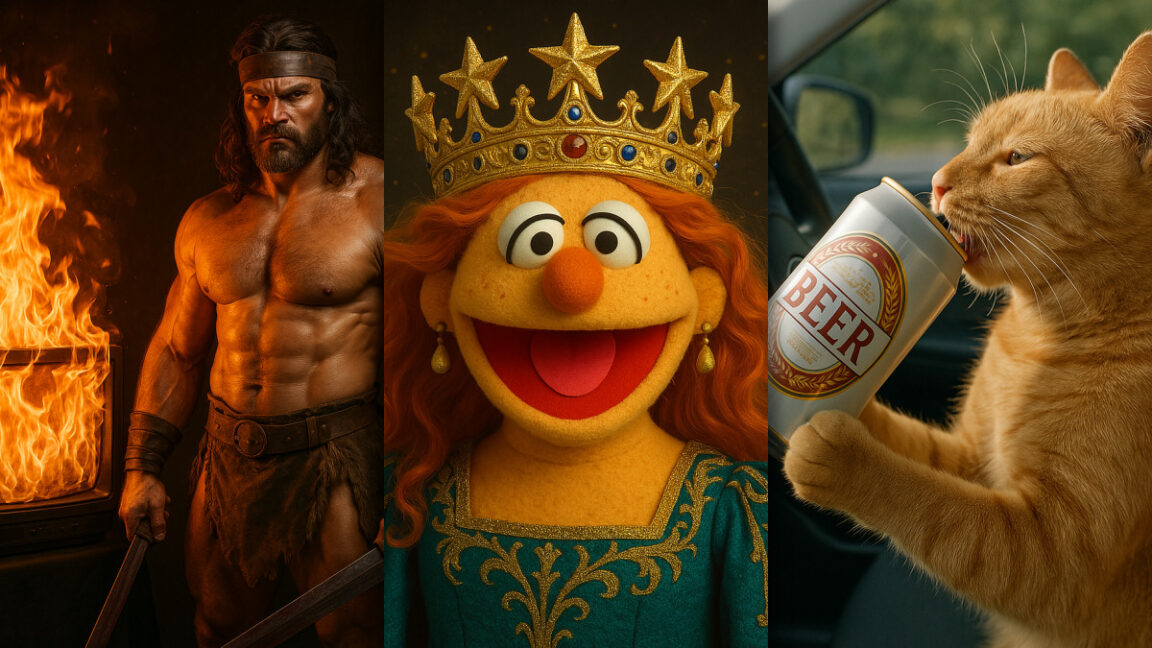
To get a sense of what 4o IG can do ourselves, we ran some informal tests, including some of the usual CRT barbarians, queens of the universe, and beer-drinking cats. The ChatGPT interface with the new 4o image model is conversational (like before with DALL-E 3), but you can suggest changes over time. For example, we took the author’s EGA pixel bio and attempted to give it a full body. Arguably, Google’s more limited image model did a far better job than 4o IG.

Conclusion

4o Image Generation is a powerful tool that can create a wide range of images with varying levels of photorealism. While it shows promise, it’s essential to consider the potential impact on the artistic community and the potential for misuse. As the technology continues to evolve, it will be crucial to strike a balance between innovation and responsibility.

Frequently Asked Questions

Q: What is 4o Image Generation?
A: 4o Image Generation is a new model from OpenAI that allows users to generate images through conversation and refine them through conversation while maintaining visual consistency.

Q: What are the intended use cases for 4o Image Generation?
A: The intended use cases include creating diagrams, infographics, social media graphics, logos, instruction posters, business cards, custom stock photos, and more.

Q: Is 4o Image Generation limited to a specific style or genre?
A: No, 4o Image Generation can convert visual media between styles, including Studio Ghibli, South Park, felt, Muppets, Rick and Morty, Family Guy, and more.

Q: Will 4o Image Generation replace human artists and graphic designers?
A: The impact on the artistic community is still a topic of concern, and it’s unclear whether 4o Image Generation will replace human artists and graphic designers or augment their work.

I Opted Out of AI Training: Does This Reduce My Future Influence?

0

The Paradox of Opting Out of AI Training

The Frustration of Opt-Out Processes

Honestly, it’s frustrating to me that users of the internet are forced to opt out of artificial intelligence training as the default. Wouldn’t it be nice if affirmative consent was the norm for generative AI companies as they scrape the web and any other data repositories they can find to build increasingly larger and larger frontier models?

The Current State of Opt-Out Processes

For now, users who don’t want to contribute to the generative models are stuck with a morass of opt-out processes across different websites and social media platforms. Companies like OpenAI and Google argue that if fair use access to all this data was taken away from them, then none of this technology would even be possible.

The Illusion of Opting Out

Even if you opt out, you’re still influencing the model. Let’s say you fill out a form for a social media site to not use or sell your data for AI training. Even if that platform respects that request, there are countless startups in Silicon Valley with plucky 19-year-olds who won’t think twice about scraping the data posted to that platform, even if they aren’t technically supposed to.

The Impact of Data on AI Models

To address the question directly and realistically, these opt-out processes are basically futile in their current state. Those who opt out right now are still influencing the model. Let’s say you fill out a form for a social media site to not use or sell your data for AI training. Even if that platform respects that request, there are countless startups in Silicon Valley with plucky 19-year-olds who won’t think twice about scraping the data posted to that platform, even if they aren’t technically supposed to.

The Value of Unique Voices and Perspectives

On one hand, your singular information is just an infinitesimally small contribution to the vastness of the dataset, so your voice, as a nonpublic figure or author, likely isn’t nudging the model one way or another. From this perspective, your data is just another brick in the wall of a 1,000-story building.

The Importance of Every Data Point

On the other hand, what if we compared this to voting in an election? Millions of votes are cast in American presidential elections, yet most citizens and defenders of democracy insist that every vote matters—with a constant refrain of "make your voice heard." It’s not a perfect metaphor, but what if we saw our data as having a similar impact? A small whisper among the cacophony of noise, but still impactful on the AI model’s output.

The Future of AI and Data Collection

Looking toward the future, the true impact your data could have on these models will likely be to inspire "synthetic" data. As the companies who make generative AI systems run out of quality information to scrape, they will enter their ouroboros era; they’ll start using generative AI to replicate human data that they will then feed back into the system to train the next AI model to better replicate human responses.

Conclusion

The question remains: does opting out of AI training reduce the influence of our unique voices and perspectives on those models? The answer is complex, and the truth lies somewhere in between. While opting out may not be futile, it’s also not a guarantee of non-influence. The true impact of data on AI models is more nuanced, and our voices are just one part of the machine.

Frequently Asked Questions

Q: What is the purpose of opting out of AI training?
A: Opting out of AI training allows individuals to opt out of having their data used for the development of artificial intelligence models.

Q: What is the effect of opting out on AI models?
A: Opting out may not completely eliminate the influence of one’s data on AI models, as other sources may still use the data for training.

Q: What is the impact of data on AI models?
A: Data can have a significant impact on AI models, shaping the quality of the output and the accuracy of the models.

Q: Can opting out of AI training reduce the influence of one’s voice and perspective on AI models?
A: The answer is complex, and the truth lies somewhere in between, as the impact of data on AI models is nuanced.

Nintendo Direct: Everything You Need to Know

0

Nintendo Direct Livestream: Our Live Updates and Theories

The Wait is Over!

Good morning Nintendo fans! We’re excited to bring you live updates and our theories on today’s Nintendo Direct livestream. We’re all set to dive into the latest news and updates on the Nintendo Switch 2 and more!

Theories and Anticipation

As the clock ticks closer to the livestream, our team is buzzing with excitement. We’ve been exchanging theories on what new titles could be announced, and we can’t wait to see if our predictions come true. From new games to updates on existing franchises, we’re ready to dive in!

What to Expect from the Livestream

  • New Games: Will we see the announcement of new titles, including rumors of a possible Mario Kart game?
  • Switch 2 Updates: Will Nintendo shed more light on the rumored Switch 2, or even give us a release date?
  • Classic Titles: Will we see updated versions of beloved classics, such as Super Mario or The Legend of Zelda?
  • Surprises: Are there any hidden gems waiting to be revealed?

Stay with Us for Live Updates!

We’ll be bringing you all the news and updates as they happen, so be sure to stick with us for the latest. We’ll be sharing our thoughts, reactions, and analysis throughout the livestream, so you won’t want to miss a thing!

Conclusion

The wait is over, and the excitement is palpable. We’re thrilled to be bringing you live updates and our thoughts on the latest Nintendo Direct livestream. Whether you’re a seasoned gamer or a newcomer to the world of Nintendo, we hope you’ll join us for an unforgettable ride!

Frequently Asked Questions

Q: What is the Nintendo Direct livestream?
A: The Nintendo Direct livestream is a live presentation by Nintendo, typically featuring updates on new and upcoming games, as well as announcements on existing titles.

Q: What can I expect from the livestream?
A: You can expect new game announcements, updates on existing titles, and possibly even revelations on the rumored Switch 2.

Q: Can I watch the livestream myself?
A: Yes, you can watch the livestream on Nintendo’s official website or through various streaming platforms.

Q: What’s the best way to follow the livestream?
A: Follow us for live updates, analysis, and reactions throughout the event!