Home Blog Page 214

Anthropic’s Claude Code tool had a bug that ‘bricked’ some systems.

0

Rocky Start for Anthropic’s Claude Code

Launch Issues with Auto-Update Function

The launch of Anthropic’s coding tool, Claude Code, has gotten off to a rocky start. According to reports on GitHub, the auto-update function contained buggy commands that rendered some workstations unstable and broken.

Buggy Commands Cause Problems

When installed at the "root" or "superuser" levels – permissions that give programs the ability to make operating system-level changes – the buggy commands would let applications modify typically restricted file directories and, in the worst-case scenario, "brick" systems.

File Permissions Issues

The problematic Claude Code auto-update commands changed the access permissions of certain critical system files. Permissions define which programs and users can read or modify files, or run certain apps. One GitHub user reported that they were forced to employ a "rescue instance" to fix the permissions of files Claude Code’s commands inadvertently broke.

Response from Anthropic

Anthropic has since removed the problematic commands from Claude Code and added a link in the program directing users to a troubleshooting guide. However, the link initially had a typo – but Anthropic has since fixed this issue.

Conclusion

The launch of Claude Code has been marred by technical issues, causing problems for some users. While Anthropic has taken steps to address the problem, the rocky start may raise concerns about the tool’s reliability and stability.

Frequently Asked Questions

Q: What were the problems with Claude Code’s auto-update function?
A: The auto-update function contained buggy commands that rendered some workstations unstable and broken.

Q: What were the consequences of installing Claude Code at the "root" or "superuser" levels?
A: Installing Claude Code at these levels allowed applications to modify typically restricted file directories and, in the worst-case scenario, "brick" systems.

Q: What did Anthropic do to address the issue?
A: Anthropic removed the problematic commands from Claude Code and added a link in the program directing users to a troubleshooting guide.

Q: Did the link to the troubleshooting guide initially have a typo?
A: Yes, the link initially had a typo, but Anthropic has since fixed this issue.

AI Reshaping Healthcare and Life Sciences

State of AI in Healthcare and Life Sciences

Transformative Potential Across Nearly Every Part of Healthcare and Life Sciences

From research and discovery to patient care and administrative tasks, AI is showing transformative potential across nearly every part of healthcare and life sciences. For example, generative AI can be used to help automate repetitive, time-consuming tasks such as summarizing and creating documents and extracting and analyzing data from reports. It can also aid in drug discovery by finding new protein structures and offer assistance to patients through chatbots and AI assistants, easing the burden on clinical and administrative staff.

Key Insights from the Survey

The survey, which polled more than 600 professionals across the globe from fields spanning digital healthcare, medical tools and technologies, pharmaceutical and biotech, and payers and practitioners, revealed robust AI adoption in the industry, with about two-thirds of respondents saying their companies are actively using the technology.

Business Impact of AI in Healthcare and Life Sciences

The healthcare and life sciences industry is seeing how AI can help increase annual revenue and reduce operational costs. Forty-one percent of respondents indicated that the acceleration of research and development has had a positive impact. Thirty-six percent of respondents said AI has helped create a competitive advantage. And 35% have said it’s helped reduce project cycles, deliver better clinical or research insights, and enhance precision and accuracy, respectively.

AI Applied Across Healthcare

Each industry segment in the survey had differing priorities in AI implementation. For instance, in the payers and providers industry segment, which includes health insurance companies, hospitals, clinical services and home healthcare, 48% of respondents said their top AI use case was administrative tasks and workflow optimization.

A Growing Dose of Generative AI

Overall, 54% of survey respondents said they’re using generative AI. Of these users, 63% said they’re actively using it, with another 36% assessing the technology through pilots or trials. Digital healthcare was the leader in generative AI use, according to 71% of respondents from the field.

Conclusion

The survey reveals that AI is having a significant impact on the healthcare and life sciences industry, with 81% of respondents saying AI has helped increase revenue and 45% realizing these benefits in less than a year after implementation. The survey also highlights the growing adoption of generative AI, with 54% of respondents using the technology. As AI continues to transform the industry, it is essential to understand the key insights and use cases that will shape the future of healthcare and life sciences.

FAQs

Q: What is the impact of AI on the healthcare and life sciences industry?
A: AI is having a significant impact on the industry, with 81% of respondents saying it has helped increase revenue and 45% realizing these benefits in less than a year after implementation.

Q: What are the top AI use cases in the healthcare and life sciences industry?
A: The top AI use cases include advanced medical imaging and diagnostics, virtual healthcare assistants, and precision medicine.

Q: How is AI being used in the payers and providers industry segment?
A: In the payers and providers industry segment, 48% of respondents said their top AI use case was administrative tasks and workflow optimization.

Q: What is the level of adoption of generative AI in the industry?
A: Overall, 54% of survey respondents said they’re using generative AI, with 63% of these users actively using it and another 36% assessing the technology through pilots or trials.

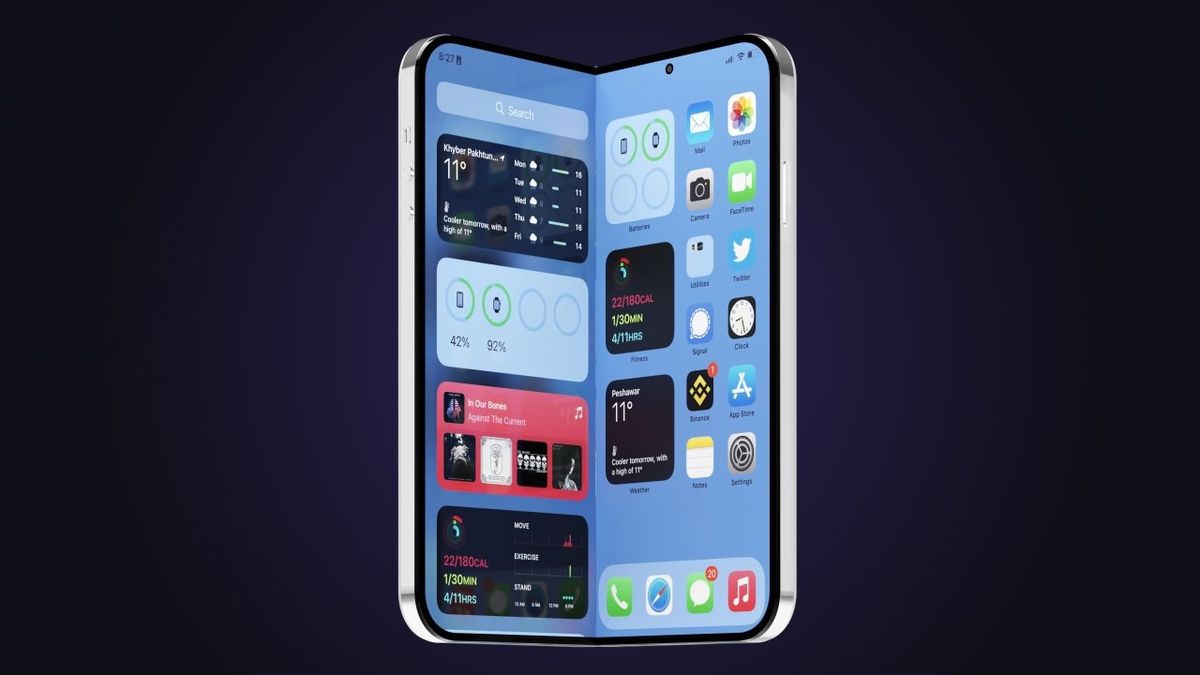
If these iPhone Fold specs are real, count me out

0

Apple’s Foldable iPhone: The Rumors Are True?

Rumors of a foldable iPhone have been circulating for years, but now a reliable analyst has suggested that Apple may finally release a foldable iPhone as early as next year.

Ming-Chi Kuo, an analyst at KGI Securities, has a strong track record of Apple leaks and has provided more details about the device, which he claims will be called iPhone Ultra. The device is expected to have a book-style design with a creaseless 7.8-inch inner display and a 5.5-inch outer display.

Design and Specifications

The iPhone Fold will have a stainless steel and titanium alloy hinge and titanium casing, making it durable and premium-looking. It will be just 9 to 9.5mm thick when folded and 4.5 to 4.8mm unfolded, making it thinner than the current Galaxy Z Fold 6.

Camera and AI Capabilities

The device will have a dual-camera setup with a front-facing camera on both folded and unfolded forms. It will also have Touch ID but may not have Face ID due to internal space constraints. Additionally, the phone will be a "true AI-driven iPhone" with multimodal functionality and cross-app integration of Apple Intelligence.

Price and Availability

The biggest hurdle for adoption of the iPhone Fold could be the price, which is expected to range from $2,000 to $2,500. This is more expensive than the Samsung Galaxy Z Fold 6, which starts at $1,899 and is often discounted.

Timeline and Production

Ming-Chi Kuo claims that Apple will finalize specs in the third quarter of this year and begin mass production in the last quarter of 2026. This would mean the folding iPhone could become a reality by the end of next year or early 2027.

Conclusion

While the iPhone Fold may not be a mass product, it could be an expensive novelty for serious Apple fans. It remains to be seen how many people will be willing to shell out for a larger screen size on a larger phone.

Frequently Asked Questions

Q: When can I expect the iPhone Fold to be released?
A: The iPhone Fold could be released as early as next year or early 2027.

Q: How much will the iPhone Fold cost?
A: The iPhone Fold is expected to retail between $2,000 and $2,500.

Q: What are the specifications of the iPhone Fold?
A: The iPhone Fold will have a 7.8-inch inner display, 5.5-inch outer display, stainless steel and titanium alloy hinge, and titanium casing.

Q: Will the iPhone Fold have a camera?
A: Yes, the iPhone Fold will have a dual-camera setup with a front-facing camera on both folded and unfolded forms.

Q: Will the iPhone Fold have Face ID?
A: No, the iPhone Fold may not have Face ID due to internal space constraints.

Apple has 90 days to allow app sideloading in Brazil

0

Brazil’s Antitrust Regulator Orders Apple to Allow Alternative In-App Payment Options and Sideloading

The judge who issued today’s ruling said that “Apple has already complied with similar obligations in other countries without demonstrating significant impact or irreparable harm to its economic model,” Valor reports.

Background on the Investigation

Brazil’s investigation into Apple began with a complaint filed by Mercado Livre in 2022. In November, Brazil gave Apple 20 days to let developers offer alternative in-app payment options and allow sideloading, but in early December, the injunction was overturned.

Reaction from Apple

The company plans to appeal the ruling, according to a statement shared with The Verge.

“Apple believes in vibrant and competitive markets where innovation can flourish,” spokesperson Fred Sainz says. “We face competition in every segment and jurisdiction where we operate, and our focus is always the trust of our users. We are concerned that the interim measures proposed by CADE would undermine the privacy and security of our users and intend to appeal today’s decision.”

Conclusion

In conclusion, the Brazilian antitrust regulator has ordered Apple to allow alternative in-app payment options and sideloading, but the company plans to appeal the decision. This move is seen as a significant development in the ongoing debate over the dominance of Apple in the digital payments market.

FAQs
Q: What is the background on the investigation?

A: The investigation into Apple began with a complaint filed by Mercado Livre in 2022.

Q: What is the ruling and what does it require of Apple?

A: The ruling requires Apple to allow alternative in-app payment options and sideloading.

Q: How has Apple responded to the ruling?

A: Apple plans to appeal the ruling, citing concerns over the impact on user privacy and security.

Q: What is the next step for this case?

A: The case is likely to proceed to an appeal, with the final decision yet to be made.

Who’s Bright Idea Was This?

0

Some design innovations have no practical use at first

In 1903, I’m sure most people mistook the Wright Brother’s heap of canvas, rubber, and whirring metal blades for an elaborate practical joke. It beckoned a new age of air travel, globalisation, and free booze on long flights.

A history of innovative failures

More recently, there was the Apple Newton – an over-priced, feature-light proto-tab. In 1993, it launched and swiftly failed amidst a chorus of sneers and derisory laughter – a decade before the world realised that they did in fact need a tablet with stylus to free them from the confines of the desktop. The succeeding iPad has done pretty well for itself.

The Lenovo Yoga Solar PC: A Solar-Powered Laptop

Now, we have Lenovo announcing a brand new concept – the Yoga Solar PC – that it hopes will revolutionise the workflow of the modern creative professional, and become one of the best laptops for graphic designers and video editors alike. A sun-powered laptop… I have my doubts.

The Apple Newton: A Predecessor to the iPad

The Apple Newton was not a hit on its 1993 release, but laid the ground for the world conquering iPad. (Image credit: Apple)

**The Lenovo Yoga Solar PC: A Sun-Powered Laptop**

The Lenovo Yoga model has a solar panel on it, and if you leave it in the sun, it promises to charge an hour’s worth of use in 20 minutes.

Pros and Cons

**Conclusion**

But ultimately, you’re strapping a panel of glass on to your laptop, and whoever in the history of remote working thought: ‘wouldn’t it be nice if my laptop got even hotter!’

**FAQs**

Q: Will the Lenovo Yoga Solar PC revolutionise the way I work?
A: Perhaps, if you work outside in the sun, but for most people, it’s just not practical.

Q: Is it eco-friendly?
A: Yes, it’s a solar-powered laptop, which is a plus.

Q: How will it perform in terms of battery life?
A: It can charge an hour’s worth of use in 20 minutes, but that’s not the same as having a reliable battery.

Q: Will it be worth the investment?
A: Only if you’re willing to sacrifice portability and practicality for a novelty feature.

Q: Will it be available in other colors?
A: Unlikely, as it’s a niche product.

Robotic helper making mistakes? Just nudge it in the right direction | MIT News

0

Imagine that a robot is helping you clean the dishes. You ask it to grab a soapy bowl out of the sink, but its gripper slightly misses the mark.

Using a new framework developed by MIT and NVIDIA researchers, you could correct that robot’s behavior with simple interactions. The method would allow you to point to the bowl or trace a trajectory to it on a screen, or simply give the robot’s arm a nudge in the right direction.

Unlike other methods for correcting robot behavior, this technique does not require users to collect new data and retrain the machine-learning model that powers the robot’s brain. It enables a robot to use intuitive, real-time human feedback to choose a feasible action sequence that gets as close as possible to satisfying the user’s intent.

When the researchers tested their framework, its success rate was 21 percent higher than an alternative method that did not leverage human interventions.

In the long run, this framework could enable a user to more easily guide a factory-trained robot to perform a wide variety of household tasks even though the robot has never seen their home or the objects in it.

“We can’t expect laypeople to perform data collection and fine-tune a neural network model. The consumer will expect the robot to work right out of the box, and if it doesn’t, they would want an intuitive mechanism to customize it. That is the challenge we tackled in this work,” says Felix Yanwei Wang, an electrical engineering and computer science (EECS) graduate student and lead author of a paper on this method.

His co-authors include Lirui Wang PhD ’24 and Yilun Du PhD ’24; senior author Julie Shah, an MIT professor of aeronautics and astronautics and the director of the Interactive Robotics Group in the Computer Science and Artificial Intelligence Laboratory (CSAIL); as well as Balakumar Sundaralingam, Xuning Yang, Yu-Wei Chao, Claudia Perez-D’Arpino PhD ’19, and Dieter Fox of NVIDIA. The research will be presented at the International Conference on Robots and Automation.

Mitigating misalignment

Recently, researchers have begun using pre-trained generative AI models to learn a “policy,” or a set of rules, that a robot follows to complete an action. Generative models can solve multiple complex tasks.

During training, the model only sees feasible robot motions, so it learns to generate valid trajectories for the robot to follow.

While these trajectories are valid, that doesn’t mean they always align with a user’s intent in the real world. The robot might have been trained to grab boxes off a shelf without knocking them over, but it could fail to reach the box on top of someone’s bookshelf if the shelf is oriented differently than those it saw in training.

To overcome these failures, engineers typically collect data demonstrating the new task and re-train the generative model, a costly and time-consuming process that requires machine-learning expertise.

Instead, the MIT researchers wanted to allow users to steer the robot’s behavior during deployment when it makes a mistake.

But if a human interacts with the robot to correct its behavior, that could inadvertently cause the generative model to choose an invalid action. It might reach the box the user wants, but knock books off the shelf in the process.

“We want to allow the user to interact with the robot without introducing those kinds of mistakes, so we get a behavior that is much more aligned with user intent during deployment, but that is also valid and feasible,” Wang says.

Their framework accomplishes this by providing the user with three intuitive ways to correct the robot’s behavior, each of which offers certain advantages.

First, the user can point to the object they want the robot to manipulate in an interface that shows its camera view. Second, they can trace a trajectory in that interface, allowing them to specify how they want the robot to reach the object. Third, they can physically move the robot’s arm in the direction they want it to follow.

“When you are mapping a 2D image of the environment to actions in a 3D space, some information is lost. Physically nudging the robot is the most direct way to specifying user intent without losing any of the information,” says Wang.

Sampling for success

To ensure these interactions don’t cause the robot to choose an invalid action, such as colliding with other objects, the researchers use a specific sampling procedure. This technique lets the model choose an action from the set of valid actions that most closely aligns with the user’s goal.

“Rather than just imposing the user’s will, we give the robot an idea of what the user intends but let the sampling procedure oscillate around its own set of learned behaviors,” Wang explains.

This sampling method enabled the researchers’ framework to outperform the other methods they compared it to during simulations and experiments with a real robot arm in a toy kitchen.

While their method might not always complete the task right away, it offers users the advantage of being able to immediately correct the robot if they see it doing something wrong, rather than waiting for it to finish and then giving it new instructions.

Moreover, after a user nudges the robot a few times until it picks up the correct bowl, it could log that corrective action and incorporate it into its behavior through future training. Then, the next day, the robot could pick up the correct bowl without needing a nudge.

“But the key to that continuous improvement is having a way for the user to interact with the robot, which is what we have shown here,” Wang says.

In the future, the researchers want to boost the speed of the sampling procedure while maintaining or improving its performance. They also want to experiment with robot policy generation in novel environments.

Affordable Outdoor Security Camera with No Monthly Fees

ZDNET’s Key Takeaways

  • The Aqara Camera Hub G5 Pro is available for $180 for the Wi-Fi version and $200 for the PoE version.
  • The indoor/outdoor security camera doubles as a smart home hub, features 1520p resolution for crystal-clear images, RTSP support, and has a built-in NPU to process video with AI for visual recognition.
  • The camera is wired, so placement is limited, and there is no expandable storage, so you need a subscription to access video history or bypass it through video server software.

Security Cameras Need to Offer Something Unique

Security cameras need to offer something unique to impress me. I’ve tested many brands and have come to prefer some over others, but I’m pleased to say the new Aqara Camera Hub G5 Pro is one I can genuinely get behind. This security camera is unique because it can double as a smart home hub and is Aqara’s first outdoor security camera.

The G5 Pro: A 2-in-1 Solution

The G5 Pro is a Thread border router and a Matter controller and has Zigbee support for Aqara devices that require a hub. You can buy this Aqara Camera Hub G5 Pro to surveil your home and add other Aqara devices without buying a separate hub.

Key Features

  • Weatherproof and outdoor capable
  • 1520p resolution for crystal-clear images
  • RTSP support for local video storage
  • Built-in NPU for AI-powered visual recognition
  • Can double as a smart home hub
  • Compatible with Apple Home, Google Home, and SmartThings

Smart Home Hub Benefits

Smart home hubs are typically single-function tabletop devices that only work to connect low-energy smart home devices that can’t directly connect to your Wi-Fi. The G5 Pro’s multifunctional design makes it a game-changer for smart home enthusiasts.

AI-Powered Visual Recognition

The camera can detect vehicles, people, animals, and packages and learn to recognize faces and even specific vehicles. Using the camera’s AI recognition, you can automate functions such as opening the garage when a specific vehicle approaches the house.

Conclusion

I’ve tested the camera indoors and outdoors, and I love it so far. The Aqara Camera G5 Pro can be a smart home enthusiast’s dream device, especially with PoE and RTSP support. While I got the Wi-Fi version to test it in different places in and around my house, I can appreciate how convenient a PoE model would be.

Frequently Asked Questions

Q: What is the price of the Aqara Camera Hub G5 Pro?
A: The Aqara Camera Hub G5 Pro is available for $180 for the Wi-Fi version and $200 for the PoE version.

Q: What are the key features of the Aqara Camera Hub G5 Pro?
A: The Aqara Camera Hub G5 Pro features 1520p resolution for crystal-clear images, RTSP support, built-in NPU for AI-powered visual recognition, and can double as a smart home hub.

Q: Is the Aqara Camera Hub G5 Pro compatible with popular smart home platforms?
A: Yes, the Aqara Camera Hub G5 Pro is compatible with Apple Home, Google Home, and SmartThings.

StubHub Eyes Potential I.P.O. as Soon as This Year

0

StubHub Considers Going Public with $1 Billion IPO

Talks with Bankers Intensify Ahead of Potential Listing

StubHub, a ticketing software company, has held discussions with bankers in recent weeks about holding an initial public offering (IPO) before the end of the year, according to two sources with knowledge of the matter. The talks are preliminary, and the company has not yet made a formal decision to go public.

Growing Appetite for Tech IPOs

The tech public offering market has gotten off to a slow start this year, but a growing number of companies appear ready to contemplate public listings, despite market volatility stemming from President Trump’s constant changes to economic policies. CoreWeave, a provider of cloud computing services for AI companies, has unveiled its investor prospectus, while Discord, the social chat app popular with the video game community, has met with investment bankers to discuss preparations for an IPO.

StubHub’s History and Growth

StubHub was founded in 2000 by Eric Baker and Jeff Fluhr and quickly grew in its early days. The company allowed users to buy secondary-market tickets for various events, including concerts and sports. In 2006, Baker founded ViaGogo, a similar ticketing company focused on European ticket reselling and events. In 2019, ViaGogo announced it was buying StubHub for $4 billion. The company faced significant challenges during the COVID-19 pandemic, with lockdowns causing a 95% decline in its business. However, the company saw a surge in business as lockdowns lifted and fans returned to venues.

IPO Plans Shelved Last Year

The company eyed an IPO last year at a $16.5 billion valuation, but shelved its plans amid a dearth of public listings of similar companies. However, executives at StubHub have said that the company’s business is still growing, with gross ticket sales increasing by nearly 50% in the last three months of 2024.

Recent Developments and Concerns

Recently, there have been concerns on Wall Street that ticketing companies are seeing slower sales growth as fans cool on concerts after an initial surge of post-pandemic interest. However, StubHub’s executives have attributed this decline to the company’s ability to adapt to changing market conditions and focus on new revenue streams.

Conclusion

StubHub’s potential IPO is a significant development in the tech industry, which has seen a slow start to the year. The company’s growth and adaptability have allowed it to weather the challenges posed by the pandemic, and its plans for an IPO could be a major boost for the ticketing industry.

Frequently Asked Questions

Q: What is StubHub’s current valuation?
A: StubHub’s current valuation is not publicly disclosed, but the company is aiming to raise over $1 billion in its potential IPO.

Q: Who are the founders of StubHub?
A: StubHub was founded by Eric Baker and Jeff Fluhr in 2000.

Q: What are the current challenges facing StubHub?
A: The company is facing slower sales growth in the ticketing industry, but its executives attribute this to their ability to adapt to changing market conditions and focus on new revenue streams.

Q: What is the current state of the tech IPO market?
A: The tech public offering market has gotten off to a slow start this year, but a growing number of companies appear ready to contemplate public listings, despite market volatility.

Boosting Developer Productivity

About Pratham Naik

About Me
Project Manager | Passionate about Agile, collaboration, and building efficient workflows | Helping teams streamline project management with the right tools & strategies | Explore more with Teamcamp

Contact Information
Location: India
Education:

  • Bachelor’s Degree in Project Management
    Work:
  • Project Manager at Teamcamp
    Joined:

What I Do
I help teams streamline project management with the right tools and strategies. With a strong background in Agile and a passion for collaboration, I work with teams to identify and implement efficient workflows that drive results.

Get in Touch
<button name="button" type="button" data-info="{"className":"User","style":"","id":2667579,"name":"Pratham naik"}" class="crayons-btn follow-action-button whitespace-nowrap w-100 follow-user" aria-label="Follow user: Pratham naik" aria-pressed="false">Follow

Frequently Asked Questions

Q: What is your experience in project management?
A: I have [X] years of experience in project management, with a focus on Agile methodologies and team collaboration.

Q: What is your approach to project management?
A: I believe in a collaborative approach, working closely with teams to identify and implement efficient workflows that drive results.

Q: What tools do you recommend for project management?
A: I recommend using a combination of tools, including [list specific tools], to help teams streamline their workflow and stay organized.

Q: How can I get in touch with you?
A: You can follow me on [social media links] or reach out to me through [contact email or phone number].

AI Agents: Statistics and Market Insights

The IT Industry Falls Under the Influence of AI Agents

The IT industry is no longer a stranger to the concept of AI agents. These smart technologies can learn, reason, and decide independently. Businesses turn to them to speed up operations, reduce costs, and improve efficiency. And they’re only going to get smarter.

Let’s Talk Numbers

The global AI market will reach $1.8 trillion by 2030 (Statista). Almost 90% of leaders think that AI will assist companies in growing revenue. Why? Because they are built to deal with your issues. AI agents increase 55% of the efficiency and reduce 35% of the costs for companies utilizing (Salesforce).

Real-world examples? ChatGPT is transforming content creation and customer service. AI-powered assistants Amazon’s Alexa and Apple’s Siri handle multiple tasks, like setting reminders or controlling smart home devices.

Now, let’s get real—data privacy, bias, and ethics are still major worries. But one thing is certain: AI agents are not going away. By 2032, this market will exceed $100 billion and will be fueled by machine learning, automation, and smarter algorithms.

AI Agents in 2025: No Longer Optional

<p.AI agents are everywhere. They are no longer an option but a necessity for businesses that wish to remain competitive. Now, with the arrival of 2025, AI agents are revolutionizing industries, automating tasks, and changing customer interactions like never before.

The Numbers Don’t Lie

85% of enterprises will use artificial intelligence agents in 2025. This is because they are essential to business efficiency, cost savings, and improved customer interactions.

The market for AI agents is booming. In 2023, it was valued at $3.7 billion and will reach $150 billion in 2025. The combination of cloud-based AI, IoT devices, and automation is contributing to this growth, making AI agents more accessible and powerful than ever.

What This Means for You

If you’re in business, you can no longer choose whether or not to use AI. AI agents in the customer service field ask questions, sift through data, and make complex decisions faster and smarter than humans. Whether you are a startup or a global enterprise, adopting AI has become imperative for doing business.

Key Industries Leveraging AI Agents

Across sectors, from healthcare to retail, companies are leveraging AI to work smarter, faster, and more efficiently. Here’s how several of the largest sectors are deploying AI agents.

Healthcare: Smarter Diagnostics, Better Patient Care

Virtual nurses such as Sensely are adept at monitoring patients remotely, developing personalized care plans, and sending medication reminders. This results in reduced hospital visits and improved patient outcomes. According to Accenture, AI is projected to save the healthcare industry up to $150 billion annually by 2026 through error reduction and enhanced efficiency.

Financial Services: Combating Fraud, Improving Customer Experience

Banks and financial institutions use AI agents like Kasisto’s KAI to provide round-the-clock customer support, analyze financial data, and identify fraud. 70% of financial institutions use AI to detect fraudulent transactions, which, in turn, helps improve fraudulent transactions by 40%.

Retail & E-commerce: Tailored Content & Increase in Revenue

AI-powered content creation and personalization are revolutionizing the retail and e-commerce industries. AI agents are used to analyze customer behavior, preferences, and interests, enabling businesses to deliver tailored content and increase revenue.

Key Players in the AI Agent Market

These companies include some of the biggest and most established names in technology and newer startups looking to take advantage of the opportunity in AI agents. Here are the key players helping define the industry in 2025:

Google

  • Google’s own AI agents—such as Google Assistant and Gemini (formerly Bard)—are heavily leveraged throughout consumer and enterprise software.
  • In 2025, the company expects to invest $75 billion on AI research and development.

Microsoft

  • Microsoft Azure AI platform and Copilot AI agent assist businesses with automating workflows and productivity.
  • The company teamed up with OpenAI to add more advanced AI to its suite of tools.

IBM

  • IBM’s Watson is still a leading player in enterprise AI—the whole dial to hyperscale of solutions for healthcare, finance, and customer service.
  • As of 2023, the company has generated 38% more revenue from AI than revenue without AI.

Amazon

  • Growth in the consumer and cloud computing markets is being powered by Amazon’s Alexa and AWS AI services.
  • The company has launched Amazon Q, an AI agent for business applications.

Startups

The future outlook for the AI agent market is bright. The market is expected to reach $47.1 billion by 2030, with advancements in natural language processing, machine learning, and IoT integration also helping growth. New trends like autonomous decision-making, creative AI, and industry-specific solutions will keep redefining the limits of what AI agents can do.

Final Thoughts

The explosion of AI agents from 2023 to 2025 has been transformative. From revolutionizing customer service and healthcare to improving creative works, AI agents have become indispensable to all consumers’ business and computational toolkits. The data points mentioned, in addition to the insights from this article, highlight their increasing adoption, market opportunity, and transformational impact across different industries.

AI agents have already made their mark in sectors such as healthcare, finance, retail, and manufacturing, helping with efficiency, cost reduction, and tailored experiences. With the likes of ChatGPT, Google Assistant, and IBM Watson becoming household names, our myriad experiences with AI agents have highlighted the versatility and impact of this technology.

The future of AI agents looks extremely bright. By 2030, the market is expected to reach $47.1 billion, with advancements in natural language processing, machine learning, and IoT integration also helping growth. New trends like autonomous decision-making, creative AI, and industry-specific solutions will keep redefining the limits of what AI agents can do.

Companies implementing this technology today will be able to prosper in tomorrow’s competitive market. For consumers, AI agents promise to help make life more convenient, efficient, and personalized.

If your business has not yet considered the potential it can gain from AI agents—it’s time to start. AI agents provide many opportunities to drive growth and innovation, from automating routine tasks to enhancing customer experiences and gaining data-driven insights.

So don’t lag behind—embrace AI agents today and unleash new possibilities for you and your customers. Reach out to us!

FAQs

Q: What is an AI agent?
A: An AI agent is a computer program designed to perform tasks that typically require human intelligence, such as learning, reasoning, and decision-making.

Q: What are the benefits of AI agents?
A: AI agents can help businesses speed up operations, reduce costs, and improve efficiency, as well as provide personalized customer experiences and drive growth and innovation.

Q: What industries are leveraging AI agents?
A: Across sectors, from healthcare to retail, companies are leveraging AI agents to revolutionize industries, automate tasks, and change customer interactions.

Q: What are the key players in the AI agent market?
A: Google, Microsoft, IBM, and Amazon are some of the key players in the AI agent market, providing various AI-powered solutions for businesses and consumers.

Q: What is the future outlook for the AI agent market?
A: The future outlook for the AI agent market is bright, with advancements in natural language processing, machine learning, and IoT integration also helping growth.