Home Blog Page 22

Featured video: Coding for underwater robotics | MIT News

0

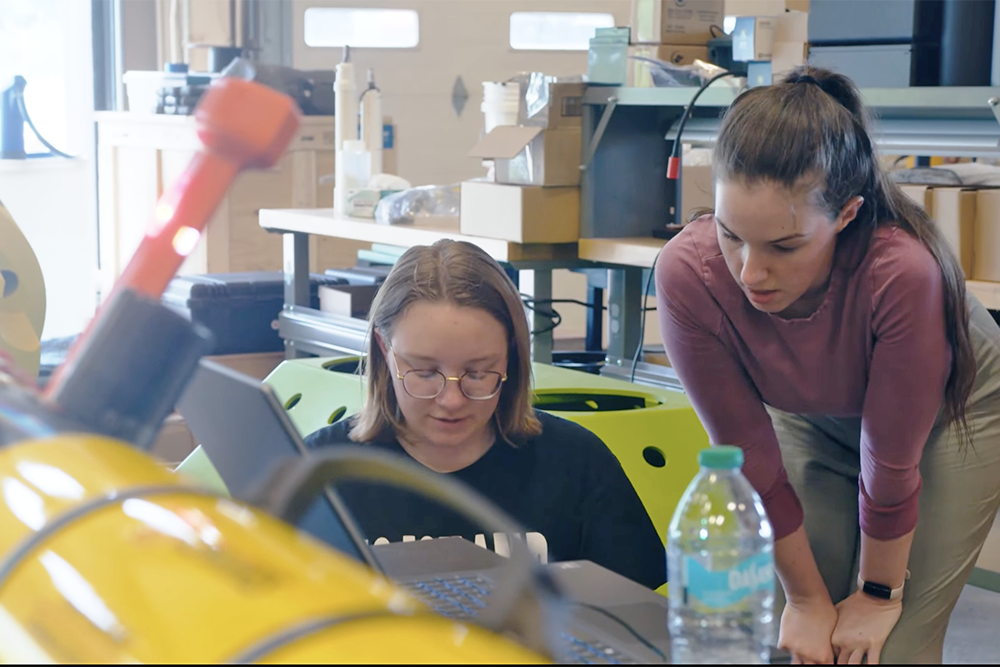
During a summer internship at MIT Lincoln Laboratory, Ivy Mahncke, an undergraduate student of robotics engineering at Olin College of Engineering, took a hands-on approach to testing algorithms for underwater navigation. She first discovered her love for working with underwater robotics as an intern at the Woods Hole Oceanographic Institution in 2024. Drawn by the chance to tackle new problems and cutting-edge algorithm development, Mahncke began an internship with Lincoln Laboratory’s Advanced Undersea Systems and Technology Group in 2025. 

Mahncke spent the summer developing and troubleshooting an algorithm that would help a human diver and robotic vehicle collaboratively navigate underwater. The lack of traditional localization aids — such as the Global Positioning System, or GPS — in an underwater environment posed challenges for navigation that Mahncke and her mentors sought to overcome. Her work in the laboratory culminated in field tests of the algorithm on an operational underwater vehicle. Accompanying group staff to field test sites in the Atlantic Ocean, Charles River, and Lake Superior, Mahncke had the opportunity see her software in action in the real world.

“One of the lead engineers on the project had split off to go do other work. And she said, ‘Here’s my laptop. Here are the things that you need to do. I trust you to go do them.’ And so I got to be out on the water as not just an extra pair of hands, but as one of the lead field testers,” Mahncke says. “I really felt that my supervisors saw me as the future generation of engineers, either at Lincoln Lab or just in the broader industry.”

Says Madeline Miller, Mahncke’s internship supervisor: “Ivy’s internship coincided with a rigorous series of field tests at the end of an ambitious program. We figuratively threw her right in the water, and she not only floated, but played an integral part in our program’s ability to hit several reach goals.”

Lincoln Laboratory’s summer research program runs from mid-May to August. Applications are now open. 

Video by Tim Briggs/MIT Lincoln Laboratory | 2 minutes, 59 seconds

Generate single title from this title Upgrading agentic AI for finance workflows in 100 -150 characters. And it must return only title i dont want any extra information or introductory text with title e.g: ” Here is a single title:”

Write an article about

Improving trust in agentic AI for finance workflows remains a major priority for technology leaders today.

Over the past two years, enterprises have rushed to put automated agents into real workflows, spanning customer support and back-office operations. These tools excel at retrieving information, yet they often struggle to provide consistent and explainable reasoning during multi-step scenarios.

Solving the automation opacity problem

Financial institutions especially rely on massive volumes of unstructured data to inform investment memos, conduct root-cause investigations, and run compliance checks. When agents handle these tasks, any failure to trace exact logic can lead to severe regulatory fines or poor asset allocation. Technology executives often find that adding more agents creates more complexity than value without better orchestration.

Open-source AI laboratory Sentient launched Arena today, which is designed as a live and production-grade stress-testing environment that allows developers to evaluate competing computational approaches against demanding cognitive problems.

Sentient’s system replicates the reality of corporate workflows, deliberately feeding agents incomplete information, ambiguous instructions, and conflicting sources. Instead of scoring whether a tool generated a correct output, the platform records the full reasoning trace to help engineering teams debug failures over time.

Building reliable agentic AI systems for finance

Evaluating these capabilities before production deployment has attracted no shortage of institutional interest. Sentient has partnered with a cohort including Founders Fund, Pantera, and asset management giant Franklin Templeton, which oversees more than $1.5 trillion. Other participants in the initial phase include alphaXiv, Fireworks, Openhands, and OpenRouter.

Julian Love, Managing Principal at Franklin Templeton Digital Assets, said: “As companies look to apply AI agents across research, operations, and client-facing workflows, the question is no longer whether these systems are powerful or if they can generate an answer, but whether they’re reliable in real workflows.

“A sandbox environment like Arena – where agents are tested on real, complex workflows, and their reasoning can be inspected – will help the ecosystem separate promising ideas from production-ready capabilities and boost confidence in how this technology is integrated and scaled.”

Himanshu Tyagi, Co-Founder of Sentient, added: “AI agents are no longer an experiment inside the enterprise; they’re being put into workflows that touch customers, money, and operational outcomes.

“That shift changes what matters. It’s not enough for a system to be impressive in a demo. Enterprises need to know whether agents can reason reliably in production, where failures are expensive, and trust is fragile.”

Organisations in sensitive industries like finance require repeatability, comparability, and a method to track reliability improvements regardless of the underlying models they use for agentic AI. Incorporating platforms like Arena allows engineering directors to build resilient data pipelines while adapting open-source agent capabilities to their private internal data.

Overcoming integration bottlenecks

Survey data highlights a gap between ambition and reality. While 85 percent of businesses want to operate as agentic enterprises – and nearly three-quarters plan to deploy autonomous agents – fewer than a quarter possess mature governance frameworks.

Advancing from a pilot phase to full scale proves difficult for many. This happens because current corporate environments run an average of twelve separate agents, frequently in silos.

Open-source development models offer a path forward by providing infrastructure that enables faster experimentation. Sentient itself acts as the architect behind frameworks like ROMA and the Dobby open-source model to assist with these coordination efforts.

Focusing on computational transparency ensures that when an automated process makes a recommendation on a portfolio, human auditors can track exactly how that conclusion was reached. 

By prioritising environments that record full logic traces rather than isolated right answers, technology leaders integrating agentic AI for operations like finance can secure better ROI and maintain regulatory compliance across their business.

See also: Goldman Sachs and Deutsche Bank test agentic AI for trade surveillance

Want to learn more about AI and big data from industry leaders? Check out AI & Big Data Expo taking place in Amsterdam, California, and London. The comprehensive event is part of TechEx and is co-located with other leading technology events including the Cyber Security & Cloud Expo. Click here for more information.

AI News is powered by TechForge Media. Explore other upcoming enterprise technology events and webinars here.

.Organize the content with appropriate headings and subheadings ( h2, h3, h4, h5, h6). Include conclusion section and FAQs section with Proper questions and answers at the end. do not include the title. it must return only article i dont want any extra information or introductory text with article e.g: ” Here is rewritten article:” or “Here is the rewritten content:”

Generate single title from this title Making Softmax More Efficient with NVIDIA Blackwell Ultra in 100 -150 characters. And it must return only title i dont want any extra information or introductory text with title e.g: ” Here is a single title:”

0

Write an article about

LLM context lengths are exploding, and architectures are moving toward complex attention schemes like Multi-Head Latent Attention (MLA) and Grouped Query Attention (GQA). As a result, AI ”speed of thought” is increasingly governed not by the massive throughput of matrix multiplications, but by the transcendental math of the softmax function.

Transcendentals refer to functions that cannot be expressed as the root of a polynomial equation with rational coefficients. Subsequently, they “transcend” basic algebraic operations like addition and multiplication—the exact operations Tensor Cores excel at. In the specific context of softmax, the most computationally expensive of these transcendentals is the natural exponential function that  is executed on Special Function Units (SFUs). In NVIDIA assembly instructions (SASS), this function is invoked via the MUFU.EX2 instruction. This architectural split creates a softmax bottleneck within the attention block, when powerful matrix engines are forced to idle while waiting for the SFU datapaths to normalize attention scores.

NVIDIA Blackwell Ultra alleviates this bottleneck by doubling SFU throughput over the standard NVIDIA Blackwell architecture.

This blog dives into the mechanics of softmax within the attention loop, explores how Blackwell Ultra’s hardware optimizations eliminate pipeline stalls, and provides a benchmark for you to measure the raw MUFU.EX2 speedup for yourself.

How attention works

A foundational component of modern large language models is the attention mechanism, which allows a model to dynamically transform static token vectors into dynamic, context-aware representations. At its core, it is a process of re-weighting information by allowing tokens to adjust their importance to one another. To facilitate this interaction, every token in a sequence is projected into three functional roles:

  • Query: Represents what the current token is seeking to understand its own context. 
  • Key: Represents a token’s profile that others use for matching. Tokens previous in the sequence have keys that signal their specific relevance to the query. 
  • Value: This holds the actual informational content. Once a match is confirmed between a query and a key, the Value is the specific data that is transferred to the original token.

Figure 1 below shows attention in action. We have two sentences that utilize the word “dog” in two different definitions. Initially, we can see that the embeddings (the numerical vectors that capture meaning and nuance in a multidimensional space) of both “dog” mentions are identical.

Figure 1. Context building through attention

Attention operates with the model calculating a dot product between the dog query and the keys of every other token in the sequence. 

if the query for “dog” aligns well with the key for “lazy,” it indicates a high degree of relevance. This interaction is what allows the word “dog” to pull in the specific value of its neighbor. By the end of this cycle, the original vector for “dog” has been physically updated with the content of its neighbors, evolving from a generic dictionary definition into a contextualized embedding that “understands” whether it refers to a lethargic animal or the sweltering peak of a season.

How softmax relates to attention

Softmax serves as the critical decision-making phase that converts raw compatibility scores into actionable weights. Once the initial dot products are calculated between queries and keys, the resulting scores are passed through the softmax function to be normalized into probabilities that sum to exactly one. This step is what determines the “attention span” of the model, effectively deciding which tokens to prioritize and which to ignore. Without softmax, the model would have no way to objectively weigh the information it gathers, leading to an unmanageable and noisy blend of data.

However, the softmax operation is the primary source of the “performance cliff” seen in long-context AI. Because every token in a sequence must be compared against every other token, a sequence of 8,192 tokens creates a massive [8,192 x 8,192] attention matrix. Normalizing this matrix requires billions of transcendental calculations and grows quadratically with the sequence length. This creates a bottleneck, where the sheer volume of transcendental math can stall the entire inference pipeline. 

Blackwell Ultra puts focus on accelerating these exponential calculations specifically to alleviate this mathematical bottleneck and ensure that the system can handle the massive normalization required for large context windows without sacrificing throughput.

Alleviating the softmax bottleneck in Blackwell Ultra

By doubling the throughput of the SFU for exponentials in the Blackwell Ultra architecture, NVIDIA is alleviating this bottleneck and is allowing for a more balanced and efficient processing pipeline. This results in faster overall performance, especially for tasks that are heavy on attention mechanisms.

Figure 2 below illustrates the sequential dependency inherent in the standard attention mechanism, often referred to as the attention loop, as run on the previous generation NVIDIA Blackwell (GB200). Note that the Streaming Multiprocessor (SM) loads two thread blocks running attention loops concurrently. These separate attention loops are denoted in the two different shades of green.

This pipeline consists of three distinct phases that must execute in order:

  • BMM1 (score calculation): The Tensor Cores perform a matrix multiplication to calculate the raw attention scores, or logits.
  • Softmax (normalization): The pipeline shifts to the SFUs to normalize these scores into probabilities using exponential functions.
  • BMM2 (context aggregation): The pipeline returns to the Tensor Cores to multiply the probabilities by the value vectors.

A GIF diagram showing how the extended duration of the softmax phase creates a timing mismatch in the pipeline. That forces the high-speed Tensor Cores responsible for BMM1 and BMM2 to sit idle while waiting for the normalization step to complete.Figure 2. The Blackwell attention loop

The timeline illustrates the latency constraints inherent in the Blackwell GPU during the execution of the attention kernel. Because the second matrix multiplication (BMM2) acts on the output of the softmax, it cannot begin until the normalization is complete. 

The lower throughput of the Blackwell GPU’s SFUs forces the Tensor Cores to idle between the score calculation (BMM1) and the context aggregation (BMM2). This dependency prevents the pipeline from fully saturating the compute resources and extends the duration of the softmax operation

The next timeline, as shown in Figure 3, demonstrates the direct impact of the Blackwell Ultra GPUs in NVIDIA GB300 NVL72 and NVIDIA HGX B300 systems doubled SFU throughput on the same instruction sequence.

Doubling the SFU throughput significantly shrinks the softmax execution time, closing the idle gaps between matrix operations and allowing the Tensor Cores to maintain near-peak utilization.Figure 3. The Blackwell Ultra attention loop

Visually, the width of the softmax blocks is reduced by almost 50%, reflecting the hardware’s ability to process MUFU instructions at twice the rate.

This reduction in softmax latency tightens the entire pipeline. The gap between BMM1 and BMM2 is drastically minimized, allowing the Tensor Cores to switch between the query-key multiplication and the probability-value multiplication with minimal stalling. The result is a denser main loop where the high-performance matrix engines spend a larger percentage of the total execution time active, directly translating to higher overall inference throughput.

Benchmarking MUFU.EX2 performance

To empirically verify the theoretical throughput of the MUFU pipeline, we can construct a synthetic micro-benchmark. The following kernel code isolates the exponential instructions to measure the raw cycle count without interference from global memory latency or other arithmetic operations.

This test harness launches a grid of threads where each thread performs a dense loop of MUFU.EX2 instructions. By timing the execution and comparing it against the clock frequency, you can directly calculate the effective instruction throughput and validate the bandwidth saturation point mentioned earlier.

Step 1: Clone the following repository to pull the exp2-bg300.cu benchmark.

git clone https://github.com/jamieliNVIDIA/mufu_ex2_bench.git
cd mufu_ex2_bench

Step 2: Compile with (Using sm100f for GB300 or sm103a for GB200).

nvcc -O3 -gencode=arch=compute_103a,code=sm_103a –extended-lambda -o /tmp/exp2-gb300.out exp2-gb300.cu

Sample results

We see that GB300 performs about 2x higher in FLOPs performance over GB200 for all tested data types, in line with the doubled SFU throughput.

Blackwell (GB200)

exp2 BF16x2 2454 Gop/s (4908 GFLOPS)
exp2 BF16 4938 Gop/s
exp2 FP32 4943 Gop/s

Blackwell Ultra (GB300)

exp2 BF16x2 4996 Gop/s (9992 GFLOPS)
exp2 BF16 9738 Gop/s
exp2 FP32 Time: 10024 Gop/s

Attention forward propagation performance in Blackwell vs Blackwell Ultra

The transition from Blackwell to Blackwell Ultra delivers a targeted increase in compute throughput driven by a 2x increase in SFU performance. This hardware upgrade directly accelerates the forward propagation (FPROP) pipeline for models like DeepSeek-V3.

FPROP is the process where input data travels “forward” through the neural network—from the input layer, through the hidden layers, to the output layer—to generate a prediction. Every time the model produces a single new word, it must run one complete FPROP pass.

Figure 4 below shows that by doubling the throughput of the SFUs, the GB300 drastically reduces the execution time of the softmax layers within the attention blocks. This faster normalization means the GPU spends less time processing the attention scores and more time utilizing the high-speed matrix engines for the next layer’s computation, directly increasing the overall speed of the forward pass.

A bar chart showing how GB300 demonstrates 1.35x end-to-end FPROP performance over GB200 in FP8.Figure 4. GB300 vs GB200 FLOPS in forward propagation in a grouped query attention (GQA) model.

The benchmark results highlight a ~35% increase in FPROP throughput for FP8 operations. ​​This gain is particularly pronounced in FP8 because the matrix math is already extremely fast. In this low-precision regime, the time spent on softmax becomes a larger percentage of the total step.

Getting started

The performance dynamics of DeepSeek-V3 on the Blackwell Ultra highlight a critical, but often overlooked bottleneck in inference: the computational cost of non-linear operations.

By optimizing and compressing the attention mechanism, state-of-the-art models effectively increase the density of softmax operations relative to standard linear computations, exposing the SFUs as a governor of total throughput.

Blackwell Ultra directly addresses this bottleneck. By doubling the throughput of these specialized units, Blackwell Ultra unblocks the transcendental traffic jam that previously forced the powerful Tensor Cores to idle. The benchmark results confirm the impact, demonstrating a 35% gain in FP8 forward propagation. 

For modern, highly optimized architectures, the path to faster inference isn’t just about faster Tensor Cores, it’s also about ensuring the non-linear math units are fast enough to keep up.

Visit NVIDIA’s trtllm-gen repository for more benchmarks and information on utilizing this SFU speedup in workloads. Doubling the throughput of the SFUs for MUFU.EX2 is just one of many features that enable Blackwell Ultra’s fast attention speed. NVIDIA’s extreme hardware-software codesign accelerates the full attention loop through technologies such as: 

  • Offloading critical “find-max” reductions to the Tensor Memory controller via LDTM.STAT.
  • Optimizing performance using CUDNN.
  • Optimizing KVCache data movements using NVFP4.

Stay tuned to the NVIDIA technical blog for future posts.

Acknowledgements

Special thanks to the cuDNN engineering team for creating the benchmarks and building the software optimizations making this cutting edge performance possible.

.Organize the content with appropriate headings and subheadings ( h2, h3, h4, h5, h6). Include conclusion section and FAQs section with Proper questions and answers at the end. do not include the title. it must return only article i dont want any extra information or introductory text with article e.g: ” Here is rewritten article:” or “Here is the rewritten content:”

Generate single title from this title Nvidia shares fall as blockbuster results fail to dazzle in 100 -150 characters. And it must return only title i dont want any extra information or introductory text with title e.g: ” Here is a single title:”

Write an article about Chief executive Jensen Huang dismisses concerns over how chipmaker’s customers will fund their spending .Organize the content with appropriate headings and subheadings ( h2, h3, h4, h5, h6). Include conclusion section and FAQs section with Proper questions and answers at the end. do not include the title. it must return only article i dont want any extra information or introductory text with article e.g: ” Here is rewritten article:” or “Here is the rewritten content:”

Generate single title from this title It exposed what was already broken in 100 -150 characters. And it must return only title i dont want any extra information or introductory text with title e.g: ” Here is a single title:”

Write an article about

Key points:

Who among us has never copied a homework answer in a hurry? Borrowed a friend’s paragraph? Accepted a parent’s “small correction” that eventually became a full rewrite?

Long before generative AI entered the classroom, homework relied on a quiet, fragile assumption that what was submitted reflected independent understanding. In reality, homework has always been open to outside influence. While some students had parents who edited essays or tutors who guided every response, others worked entirely alone. This unevenness was tolerated for decades because it was manageable and largely invisible.

Generative AI has made that invisibility impossible.

Tools such as OpenAI’s ChatGPT and Google’s Gemini can now draft essays, summarize readings, and solve complex problems in seconds. What once required a knowledgeable adult now requires only a prompt. AI did not invent the outsourcing of schoolwork; it simply scaled it to a level we can no longer ignore. In doing so, it has forced educators to confront a deeper, more uncomfortable question: What has homework actually been measuring–understanding or compliance?

The design problem we avoided

Homework has traditionally served as a catch-all for practice, accountability, and reinforcement. However, in many classrooms, completion gradually became a proxy for learning. Neatness signaled effort, and submission signaled responsibility. Whether the work reflected authentic reasoning was often assumed rather than examined.

AI exposes the fragility of that assumption. If a task can be successfully completed through reproduction rather than reasoning, it was always vulnerable, whether to a search engine, a sibling, or a chatbot. This is not primarily a cheating problem; it is a design problem.

From Product to Process: The Research Pivot Educational research suggests that the solution isn’t more surveillance, but a shift in what we value. Durable learning depends on metacognition, a student’s ability to plan, monitor, and evaluate their own thinking.

The Education Endowment Foundation (EEF) identifies metacognitive and self-regulated learning strategies as among the most impactful approaches for improving student outcomes. Their research suggests these strategies are most effective when embedded directly within subject instruction rather than taught as a separate “study skills” unit. Similarly, John Hattie’s Visible Learning synthesis highlights that feedback and self-regulation have effect sizes that far exceed the gains associated with surface-level task completion.

In other words, what drives long-term achievement is not the polished output, but the visible thinking that produced it. Yet, many traditional assignments remain stubbornly product-driven:

 Write a summary.

 Complete the worksheet.

 Submit a finished essay.

In an AI-enabled world, polished products are cheap. Reasoning is the new currency.

Levelling the field for ELL and SPED learners

This shift toward “process over product” is a matter of equity, particularly for English language learners (ELLs) and students receiving special education services.

Traditional homework often privileges surface-level fluency. An ELL student may grasp a complex scientific concept deeply but struggle to express it in perfect academic English. When grading centers on the final product, their linguistic struggle can overshadow their cognitive mastery. Similarly, many SPED students, particularly those with executive functioning or processing differences, benefit from structured reflection and chunked reasoning. A single, polished submission rarely captures the massive cognitive effort they put into the “middle” steps of a project.

By redesigning homework to focus on the “how” rather than the “what,” we begin to ask more meaningful questions:

How did the student navigate a point of confusion?

 What misconceptions did they revise during the process?

 How did they use available tools, including AI, to clarify their own understanding?

Draft comparisons, reflection notes, and verbal explanations reveal a landscape of learning that a perfected final draft hides. For linguistically and cognitively diverse students, this shift values growth and strategy over the “veneer” of a perfect assignment.

Redesigning for the AI era

The answer is not to ban the technology, as students will inevitably encounter it beyond the school gates. Instead, we can redesign homework to cultivate discernment. This might include:

Critique and edit: Asking students to generate an AI response and then use a rubric to identify its factual errors or lack of nuance.

Artifact collection: Requiring the submission of “thinking artifacts” such as brainstorming maps, voice notes, or early drafts that show how an idea evolved.

The “exit interview” model: Following a take-home assignment with a brief, two-minute in-class dialogue or peer-review session to verify the reasoning behind the work.

A necessary reckoning

AI did not destroy homework, but rather removed the illusion that homework was ever a pure measure of independent work. We are now in a period of necessary reckoning. We must decide if we are willing to design assignments that prioritize cognition over compliance.

In an era where text can be generated instantly, the most valuable evidence of learning is no longer the finished product sitting on a desk or in a digital inbox. It is the human reasoning behind it. For our most diverse learners, this shift away from “the polish” and toward “the process” isn’t just a reaction to technology, it’s a long-overdue move toward true equity.

Nesreen El-Baz, Bloomsbury Education Author & School GovernorNesreen El-Baz is an ESL educator with over 20 years of experience, and is a certified bilingual teacher with a Master’s in Curriculum and Instruction. El-Baz is currently based in the UK, holds a Masters degree in Curriculum and Instruction from Houston Christian University, and specializes in developing in innovative strategies for English Learners and Bilingual education. Latest posts by eSchool Media Contributors (see all)

.Organize the content with appropriate headings and subheadings ( h2, h3, h4, h5, h6). Include conclusion section and FAQs section with Proper questions and answers at the end. do not include the title. it must return only article i dont want any extra information or introductory text with article e.g: ” Here is rewritten article:” or “Here is the rewritten content:”

What is a Performance Review + Definition?

0

Updated January 28, 2026

The annual performance review is one of the key pillars of a performance management program. However, as performance strategies have evolved, so has the need and purpose of the performance review.

So what is a performance review today? A performance review is more than just a formal check-in. It’s a foundational, ongoing conversation that shapes how employees grow and succeed.

Beyond evaluating past work, it helps clarify expectations, strengthen alignment between individual goals and organizational priorities, and surface opportunities for development and advancement. When done consistently, reviews foster trust, boost engagement, and give employees the clarity and support they need to perform at their best.

The performance review definition we like to work by is that it’s a collaborative process that turns feedback into forward momentum. Let’s dig deeper into defining what is a performance review:


Key Takeaways

  • A performance review (definition) is a structured, two-way, individualized conversation between a manager and an employee focused on performance, progress, and growth.

  • There are multiple types of performance reviews, including multi-rater feedback (like 360 reviews), self-assessments, peer reviews, and upward feedback, as well as reviews based on cadence (annual, quarterly, monthly).

  • Modern performance reviews favor continuous conversations (monthly or quarterly) rather than just annual check-ins – enabling real-time coaching, reducing agency bias, and helping employees take action to course correct faster.


What is a performance review?

The purpose of a performance review is to create a clear, ongoing conversation that helps employees understand how they are performing, where they are growing, and what support they need to succeed. Likewise, feedback loops empower organizations to collect employee insights and take action to build thriving teams.

Modern organizations use continuous review cycles – not just annual check-ins – to access real-time insights that strengthen alignment, productivity, and trust organization-wide. This approach turns performance reviews into a partnership between employees and managers.

How continuous feedback supports the core purpose of a performance review:

  • Feedback: offers timely, specific insights so employees always know what’s working and what needs adjustment as they move toward individual and company goals.

  • Goals: Keeps individual and team goals aligned with business priorities, allowing goals to be updated and clarified as work changes.

    Engagement: Strengthens connection and motivation by showing employees their contributions matter and giving them a voice in regular conversations.

  • Development: Helps employees build skills and grow faster through ongoing coaching, support, and opportunities identified throughout the year instead of once a year.

In short, the purpose of a performance review is to improve performance and growth through consistent, meaningful conversations that guide employees toward a deeper connection with the organization.


4 types of performance reviews

While there are many types of performance reviews, evaluations can typically be grouped into two approaches: multi-rater and single-input reviews. The most effective performance review process should reflect your organizational culture and provide meaningful insights to employees and managers. When reviews are engaging, relevant, and actionable, they support growth, alignment, and stronger team performance.

Performance reviews can be organized by these four types:

  • Continuous performance reviews
  • Structured or formal performance reviews
  • Role/project-specific reviews
  • New hire reviews


1. Continuous performance reviews

Multi-rater performance reviews bring multiple perspectives into the performance evaluation process. This approach creates a more balanced and complete view of how employees show up and contribute. Feedback from these reviews can be collected on a continuous cycle or aligned with Single-rater reviews (between employees and managers) to reinforce formal evaluations on an annual, mid-year, or quarterly basis.

Likewise,  helps organizations cultivate a thriving culture by capturing a fuller picture of performance through meaningful development conversations. There are many different ways you can build this layered approach to feedback into your performance review strategy. 


360 Performance Feedback

360 feedback brings multiple voices into the conversation—an essential approach in today’s matrixed, collaborative workplaces. While centered on evaluative feedback, 360s work best when built on trust and focused on clear, actionable next steps.

360 feedback helps your team:

  • Diversify performance data

  • Gain broader perspectives on strengths and gaps

  • Give leaders clearer insight into how they can improve


Peer Feedback

Managers can’t—and shouldn’t—see everything. Strong teams rely on peer feedback to surface insights only coworkers can provide.

Peer feedback matters because:

  • Peers see day-to-day behaviors that managers might miss
  • Recognition often carries more weight when it comes from peers
  • Peers can act as trusted mentors
  • Feedback between peers can be delivered in a more relatable way


Team Performance Feedback

Team performance reviews help managers evaluate collective progress, coach in context, and identify development opportunities that strengthen both individual and group success.

Team reviews help:

  • Clarify what matters most to the team
  • Set aligned goals that support both people and business needs
  • Build shared ownership and accountability
  • Strengthen overall team performance and dynamics

Upward Feedback

Upward feedback empowers employees to share what’s working and what’s not. When both sides approach this with openness, it builds trust and fuels continuous improvement.

It creates a healthier feedback loop— where employees feel heard and leaders get actionable insight to grow, too.


2. Structured or formal performance reviews

Structured or formal performance reviews are scheduled evaluations that follow a defined process, consistent criteria, and documented expectations across the organization. They typically occur on a set cadence–such as annually, semi-annually, or quarterly–and provide employees and managers with an objective framework for assessing progress, achievements, and development needs.

These reviews are important to people management strategies because they create transparency, ensure fairness, and help leaders make informed decisions about promotions, compensation, and succession planning. They also strengthen alignment between individual performance and organizational goals, giving employees clarity on what success looks like and who to grow within the company. 


Annual Performance Review

An annual performance review is a formal, once-a-year evaluation of an employee’s overall contributions, strengths, and development needs.

Annual performance reviews reinforce people management by:

  • Providing a comprehensive view of performance over a full year
  • Supports decisions about compensation, advancement, and goal-setting
  • Creates a documented record for HR and organizational planning


Mid-Year or Quarterly Review

A mid-year or quarterly review is a scheduled check-in that evaluates progress against goals and performance expectations and provides an opportunity to realign goals, coach employees for better performance, and keep a pulse on the effectiveness of strategies and resources.

Mid-year and quarterly reviews help:

  • Teams adapt to changing priorities faster
  • Keep goals relevant and on track
  • Reduce surprises in annual reviews by maintaining consistent alignment


Continuous Performance Review

A continuous performance review involves regular, real-time feedback and coaching through ongoing conversations between managers and employees.

Continuous performance reviews support strong teams because they:

  • Encourage faster improvement and skill development
  • Reinforce communication and trust
  • Streamline agile performance management to meet evolving workplace needs


Self-Assessment

A self-assessment is a review that strengthens shared accountability and alignment between employee and manager by giving managers insight into how to better coach while helping employees reflect on their contributions, challenges, and future goals.

Self-assessments facilitate performance and connection by:

  • Encouraging personal accountability and reflection
  • Helping employees communicate achievements that may not be visible to managers
  • Laying groundwork for more balanced and collaborative performance discussions


3. Role/project-based performance reviews

Role- or project-based performance reviews evaluate an employee’s contributions within the context of their specific responsibilities, deliverables, or goals. These reviews can be single-rater (often manager-led) or multi-rater (including peers, project leads, cross-functional partners, or even customers), depending on the organization’s culture and needs.

They help maintain alignment with organizational goals, reveal execution gaps or resource needs, and strengthen cross-functional collaboration by showing how individual and team work impacts the broader outcomes. Some examples of role- and project-based performance reviews include:


Task-based or KPI-focused Review

A task-based or KPI-focused review collects feedback on how well an employee meets defined performance metrics, project milestones, or task-level expectations that contribute to broader team- or company-wide goals.

Task-based and KPI-focused reviews help:

  • Keep performance grounded in measurable, objective outcomes
  • Identify workload challenges and productivity barriers
  • Support data-driven coaching and accountability

Sales Performance Review

A sales performance review assesses an employee’s performance based on sales targets, pipeline activity, client engagement, and revenue-driving behaviors.

Sales performance reviews support revenue growth because they:

  • Directly tie employee success to organizational growth
  • Highlight coaching needs around selling skills, process, or product knowledge
  • Make performance conversations clear and quantitative, ensuring positive sales results are repeatable

Customer Service Review

A customer service review measures performance based on service, quality, customer interactions, response time, and satisfaction metrics.

Customer service reviews help:

  • Strengthen the customer experience through targeted feedback
  • Identify skills gaps in communication, support process, or product knowledge
  • Reinforce service standards and consistency across the organization to build a positive brand reputation


Product Development Review

A product development review evaluates how effectively an employee drives product initiatives–from roadmap planning to collaboration, execution, and post-launch performance.

Product development reviews contribute to organizational success by:

  • Encouraging alignment between product decisions and business goals
  • Revealing opportunities for cross-functional support or process improvement
  • Ensuring accountability for both delivery and customer/user experience


4. Probationary/new hire reviews

Probationary or new-hire performance reviews are structured feedback that assess how well a new employee is integrating into their role, team, and the company during the early stages of employment. These reviews give HR and managers insight into whether onboarding processes are working, where additional support or clarification is needed, and how effectively the new hire is adapting to expectations.

When done well, these reviews help new employees feel welcomed, confident, and culturally aligned so they are equipped to perform productively in a reasonable time. There are many reasons HR may want to collect feedback to improve new hire processes, but here are a few common reviews:


Interview Process Feedback

An interview process feedback evaluates how well the interview accurately represented the role, expectations, team dynamics, and overall work culture once the employee is on the job.

Interview process feedback helps HR and managers improve hiring by:

  • Identifying gaps in job descriptions or candidate messaging
  • Ensuring interview questions and practices reflect reality
  • Improving long-term quality of hire and the candidate experience


30-60-90 Day Feedback

A 30-60-90-day review provides structured checkpoints over the first three months to assess progress, learning, milestones, cultural integration, and overall performance.

30-60-90-day feedback supports the new hire experience by:

  • Keeping onboarding on track with clear goals and timelines
  • Identifying performance wins and support needs early
  • Streamlining time to productivity by reducing onboarding obstacles


Manager Onboarding Feedback

Manager onboarding feedback allows new hires to evaluate how well their manager is supporting them with guidance, clarity, communication, and training.

Manager onboarding feedback improves onboarding outcomes by:

  • Helping managers improve onboarding experiences for future hires
  • Revealing blind spots in leadership or support
  • Encouraging a two-way feedback culture from day one


Cultural Alignment Review

A culture alignment review examines whether a new hire is integrating into team values, communication norms, and organizational behaviors.

Cultural alignment reviews support employees in onboarding because they:

  • Reinforce what the company stands for beyond job duties
  • Ensure early cultural mismatches are addressed constructively
  • Strengthen belonging, engagement, and productivity early in the employee lifecycle

Who is involved in the performance review process?

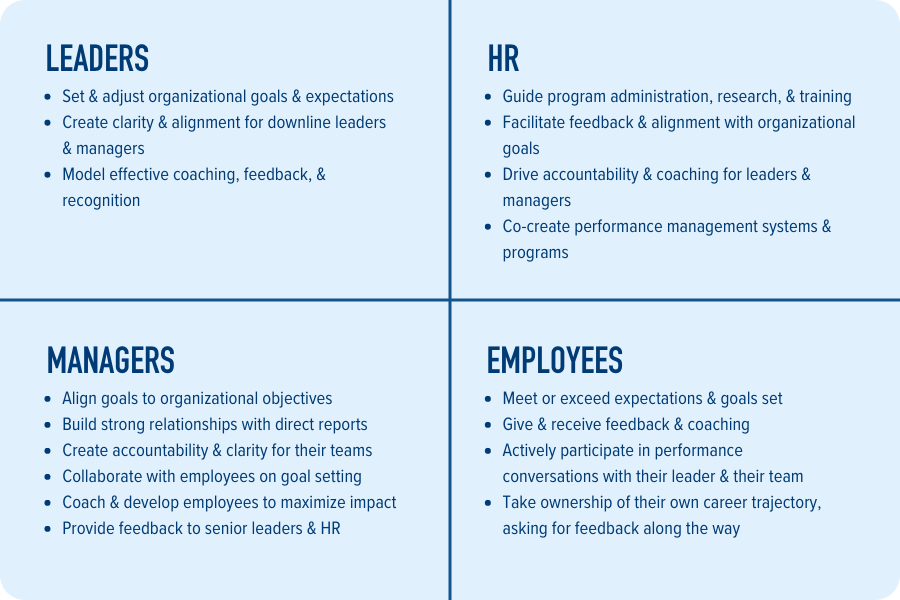
The performance review process typically involves several participants: HR, managers, and employees. Each has a distinctive role in ensuring reviews are fair, consistent, and meaningful.

  • HR often designs and manages the overall process by building review templates, setting timelines, training managers, and ensuring evaluations align with organizational policies and goals. They also track completion rates, monitor calibration, and provide tools or systems that support practical, data-driven assessment and feedback loops.

  • Managers are responsible for assessing employee performance, providing clear feedback, and guiding development. They review goals, document achievements, and facilitate a constructive conversation about strengths, growth areas, and next steps.

  • Employees actively participate by reflecting on their own performance, completing self-assessments, providing peer and upward feedback, and collaborating on goals.

When all team members engage in their roles, the performance review becomes a structured, transparent process that supports connection, growth, and stronger performance.


How can Quantum Workplace help you streamline performance reviews?

Performance conversations don’t need to be hard. Keep your managers and employees on the same page with engaging performance reviews. Our performance review software gives your teams reliable context to help them have more objective and engaging conversations.

1. Customize reviews to fit your needs. 

Easily measure what you want, when you want with flexible review modules that you can tailor to fit the needs of your culture and the various groups within it. 


2. Help your managers build positive performance habits.

Make it easy for manager to coach to performance by integrating your process into their existing workflows. Set up formal conversation cycles to create the right frequency and consistency of touch points.

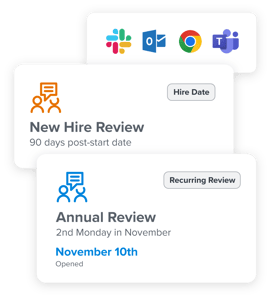
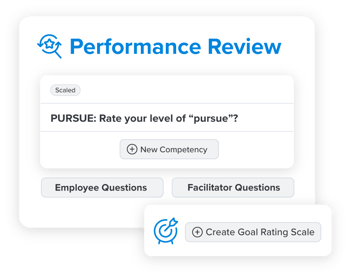
1_performance-reviews_product-imagery


2_performance-reviews_product-imagery


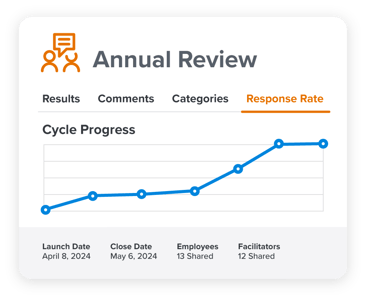
3. Easily track review response rates. 

See the status of each review cycle to help your teams stay accountable and monitor performance ratings in real-time. 


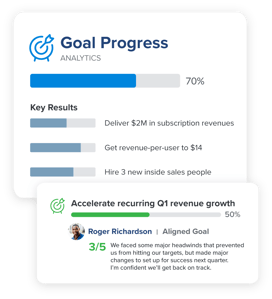
4. Embed performance goals directly into reviews.

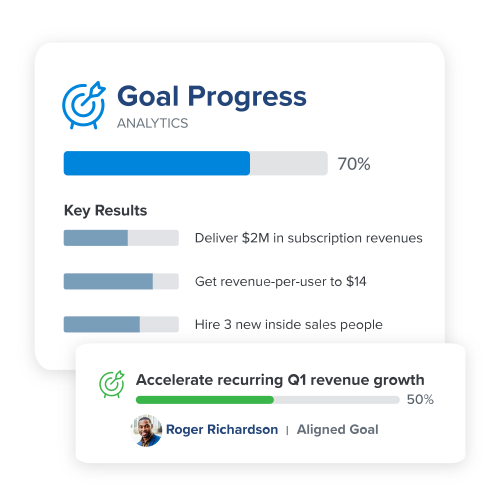
Our platform makes it easy to include goals as part of performance evaluations—and helps coach managers have objective, effective, and growth-oriented conversations.

3_performance-reviews_product-imagery


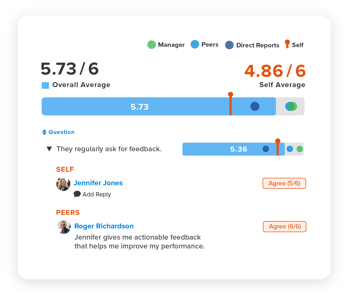
360Feedback_EmployeeMagnetism_7.1


5. Orient reviews around multi-rater feedback.

Incorporate feedback into your review cycles to gain valuable insight from the individuals your people work with most, and better orient  performance conversations around development.


6. Visualize and align on performance data across teams.

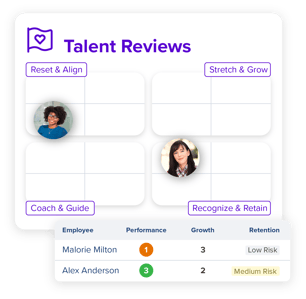
Get a comprehensive view of your organization’s talent with our talent dashboard. Zoom out and see the big picture, to help you make more informed decisions on how to keep and develop your best talent.

TalentReviews_EmployeeImpact_6.3


Make your performance review process more effective, efficient, and engaging. Quantum Workplace’s performance review software helps your managers and teams prepare for, facilitate, and follow up for better reviews and better performance.

QW-logo-color

28 Strategic Performance Management Best Practices for HR

0

Updated January 30, 2026

Modern organizations rely on evidence-based performance management strategies to drive engagement, alignment, and growth. In fact, companies with effective performance management systems are 2.5 times more likely to outperform their peers in financial performance and employee retention.

Whether you’re refining an existing approach or designing a new system, understanding the best practices for performance management helps HR leaders, managers, and employees thrive together.

Without a strategic direction—and the right tools—your performance management strategy can lead to low adoption and ultimately underperformance.


Key Takeaways

  • Create continuous performance conversations: Replace once-a-year performance reviews with ongoing, data-driven discussions that help employees set goals, receive feedback, and stay aligned with organizational objectives.

  • Empower managers as coaches: Equip leaders with proper training, tools, and guidance to deliver timely, constructive feedback and foster employee development through regular 1-on-1s and recognition.

  • Leverage technology and data to drive strategy: Implement modern performance management software that tracks progress, captures real-time feedback, and provides analytics to refine goals and improve decision-making. 

Employees crave fairness, transparency, and ongoing coaching and feedback. When leaders prioritize these things, employees feel connected to the rest of the organization and can do their best work. 

Our research informs the development of effective best practices for performance management. Through clear methodologies and actionable insights, we aim to provide organizations with structured guidance to enhance their performance management strategies. 


Why are performance management strategies important? 

Performance management strategies are essential because they connect individual efforts to organizational success. They provide structure for setting expectations, measuring progress, and optimizing performance outcomes across every role.

The importance of performance management

Strong performance management practices are essential for fostering employee growth, developing future leaders, and strengthening organizational culture. By using a consistent and structured approach, your organization can expect to:

  • Ensure fairness and transparency in evaluations
  • Promote accountability across teams and individuals
  • Align talent management with key business objectives

Key benefits of structured performance management

A well-designed performance management system helps HR leaders:

  • Engage employees by setting clear expectations and providing constructive feedback
  • Build leadership pipelines through targeted development strategies
  • Advance organizational priorities by aligning individual goals with broader business strategies

By adopting clear, consistent practices, HR professionals can build systems that support their teams and drive the organization’s long-term success.

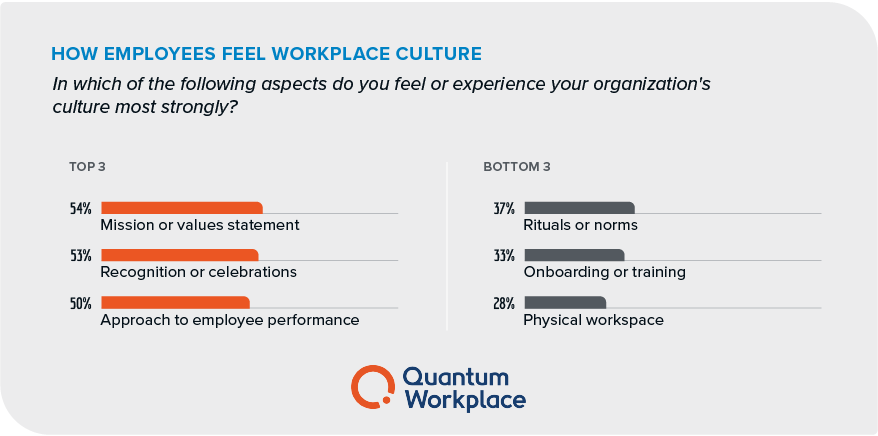
According to our research on organizational culture, how an organization approaches performance management is a critical part of how employees feel about the culture within their organization. In fact, 50% of employees experience culture most strongly through their employer’s approach to performance. 


performance-management-best-practices-01


28 performance management best practices 

Goal Setting

  • Prioritize collaborative goal setting

  • Frequent review and revision of goals

  • Align goals to organizational purpose

  • Set stretch but realistic goals

  • Use OKRs or SMART goal frameworks


Feedback & Communication

  • Regular 1-on-1s and continuous conversations

  • Timely, actionable feedback

  • Two-way feedback

  • Clear communication of expectations

  • Use technology for feedback and communication

  • Incorporate AI-driven performance insights

  • Promote psychological safety feedback


Managerial Approach

  • Fair and transparent evaluation

  • Bias awareness and mitigation

  • Invest in manager enablement coaching


Development & Recognition

  • Unique individual growth and development strategy

  • Real-time and ongoing recognition

  • Linking development to performance conversations

  • Provide learning and stretch opportunities

  • Regular review of recognition practices

  • Integrate career pathing into performance management


System & Culture

  • Continuous performance management conversations

  • Bring employees into the process

  • Make the system usable and reduce friction

  • Culture of trust, fairness, transparency

  • Leadership buy-in and role modeling

  • Embed DEI (Diversity, Equity, and Inclusion) in Performance Management


Goal setting

1. Prioritize collaborative goal setting

Involve employees in defining objectives to foster ownership, clarity, and engagement.

🔥 HR tip: Encourage managers to co-create goals that align with both individual aspirations and organizational outcomes.


2. Frequent review & revision of goals

Revisit goals quarterly or even monthly. Dynamic goal management ensures agility and keeps performance management strategies relevant in shifting business conditions. 

🔥 HR tip: Implement regular touchpoints for adjustments.


3. Align goals to organizational purpose/big picture

Ensure each goal connects directly to company objectives. This alignment helps employees understand how their work drives strategic outcomes. 

🔥 HR tip: Use cascading goals in your HR platforms.


4. Set stretch but realistic goals

Ambitious yet attainable goals push employees to improve without creating burnout. 

🔥 HR tip: Provide training for managers in goal calibration.


5. Use OKRs or SMART goal frameworks

Integrating structured goal-setting methods like OKRs (Objectives and Key Results) or SMART goals boosts clarity and measurability.

🔥 HR tip: Standardize OKR or SMART method training for consistent goal alignment across teams.


Feedback & communication

6. Regular 1-on-1s and continuous conversations

Ongoing discussions replace the outdated annual review model. Frequent conversations strengthen trust and agility.

🔥 HR tip: Standardize 1-on-1 cadence organization-wide.


7. Timely, actionable feedback

Provide feedback close to performance events. Actionable insights help employees improve in real-time.

🔥 HR tip: Create manager toolkits for structured feedback delivery.


8. Two-way feedback

Encourage employees to share feedback with managers. This builds psychological safety and mutual trust.

🔥 HR tip: Establish anonymous channels for upward feedback.


9. Clear communication of expectations

Define what success looks like from day one.

🔥 HR tip: Tie performance expectations to specific competencies and outcomes.


10. Use technology for feedback and communication

AI-driven feedback tools streamline data collection and analysis while improving accuracy.

🔥 HR tip: Invest in platforms that integrate with your HRIS for real-time insights.


11. Incorporate AI-driven performance insights

Use analytics and AI tools to generate real-time insights and reduce subjectivity in evaluations.

🔥 HR tip: Leverage technology to support data-informed performance discussions.


12. Promote psychological safety feedback

Encourage open communication without fear of retribution to foster trust and innovation.

🔥 HR tip: Train managers to respond constructively and build a culture of safety during reviews.

Managerial approach

13. Fair and transparent evaluation

Ensure evaluations use objective metrics. Bias-free reviews strengthen equity and trust. 

🔥HR tip: Use calibrated review processes across departments.


14. Bias awareness and mitigation

Train managers to recognize and counter cognitive bias in assessments. 

🔥 HR tip: Include bias awareness modules in leadership development programs.


15. Invest in manager enablement coaching

Equip managers with the tools and frameworks to lead continuous performance conversations effectively.

🔥 HR tip: Offer leadership programs focused on feedback, motivation, and empathy.


Development & recognition

16. Unique individual growth and development strategy

Personalized development fosters engagement and retention. 

🔥 HR tip: Use employee data to craft individualized career pathways.


17. Real-time and ongoing recognition

Instant recognition reinforces desired behaviors and performance. 

🔥 HR tip: Adopt peer-to-peer recognition software for consistent reinforcement.


18. Linking development to performance conversations

Integrate skill-building discussions into performance meetings. 

🔥 HR tip: Align learning goals with review outcomes.


19. Provide learning and stretch opportunities

Give employees challenging assignments that drive growth. 

🔥 HR tip: Formalize stretch assignments in performance discussions.


20. Regular review of recognition practices

Continuously assess recognition programs to ensure inclusivity and relevance. 

🔥 HR tip: Gather feedback to evolve recognition initiatives.


21. Integrate career pathing into performance management

Link evolving performance goals with transparent career growth plans.

🔥 HR tip: Create structured career ladders or mobility paths within your HR system.


22. Personalize recognition through data and feedback analytics

Use data to tailor recognition programs that fit different team cultures and employee motivations.

🔥 HR tip: Use recognition data dashboards to track engagement and inclusivity metrics.


System & culture

23. Continuous performance management conversations

Embed performance discussions into daily workflows for scalability and consistency. 

🔥 HR tip: Promote performance as a shared responsibility.


24. Bring employees into the process

Collaborative performance management improves accountability. 

🔥 HR tip: Involve employees in process design and feedback loops.


25. Make the system usable and reduce friction

Adopt user-friendly performance management tools.

🔥 HR tip: Prioritize intuitive platforms and streamline administrative tasks.


26. Culture of trust, fairness, transparency

Performance only thrives in environments rooted in trust. 

🔥 HR tip: Model transparency from leadership to reinforce authenticity.


27. Leadership buy-in and role modeling

Leaders should exemplify coaching, feedback, and recognition behaviors. 

🔥 HR tip: Incorporate these expectations into leadership performance reviews.


28. Embed DEI (Diversity, Equity, and Inclusion) in Performance Management

Ensure performance systems account for equity and diversity, reducing systemic bias and promoting fairness.

🔥 HR tip: Regularly audit performance outcomes for bias and ensure representation in metrics and recognition.


5 Steps to build an effective performance management strategy

Effective performance management strategies are built on three core pillars: structured design, consistent feedback, and measurable outcomes. To improve alignment between employees and organizational goals, follow these steps:

1. Assess needs and set goals

Start by identifying current performance gaps and defining measurable success criteria. HR should analyze engagement data, turnover metrics, and productivity benchmarks to guide goal setting. 


2. Engage stakeholders and secure buy-in

Involve leaders, managers, and employees early in the process. Buy-in from the start ensures your performance management strategy is a company-wide solution, not another HR-only process.


3. Design a tailored performance management framework

Develop processes that fit your company’s size, culture, and teams. This may include adjusting feedback cycles, evaluation criteria, and goal alignment models to ensure that the data you populate reveals the most valuable insights.


4. Select processes and tools that fit teams and roles

Choose performance management tools with advanced customization, intuitive communication, and seamless integration with other HR systems. With AI’s rapid advancements in predictive insights and reporting, consider employee engagement platforms that use AI analytics to make management data clear and accessible for your team.


5. Adjust strategies based on data and feedback

Review your strategy regularly, using performance metrics and employee feedback. Continuous improvement ensures sustainability and relevance in a changing workforce.


How technology supports your performance management strategy

Less than one-fifth of HR leaders believe their approach to performance management is effective right now, and 81% of leaders are changing their performance management system. A major shift is underway, and the best leaders leverage technology to follow performance management best practices. Here’s how performance management tools can help you: 


Goal-2

Goals

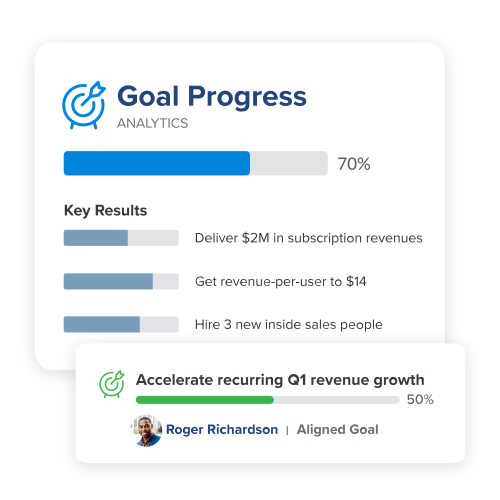
A robust goal management software helps teams set, track, and elevate goals to the entire organization. That way, every employee can see—and contribute to—the big picture behind business objectives. 

4_performance-reviews_product-imagery


Performance Reviews

Performance review software helps the organization streamline performance evaluations with simple and effective reviews. Managers build frequent and consistent performance habits that are critical to drive employee success. 

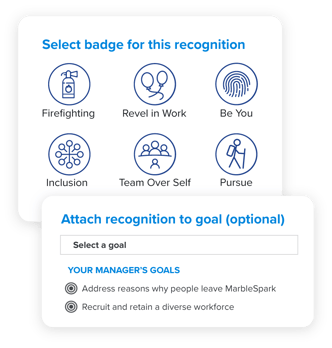
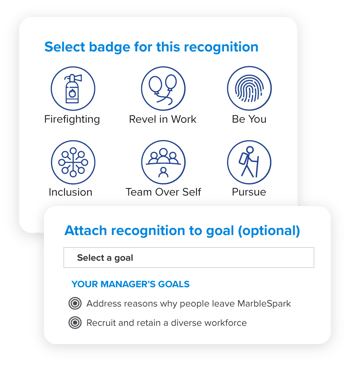
Recognition_ToolPage_Badges_Goals


Recognition

An effective employee recognition tool will help people across the organization celebrate each other. The right software will connect recognition to key goals and values, motivating employees to continue important behaviors.

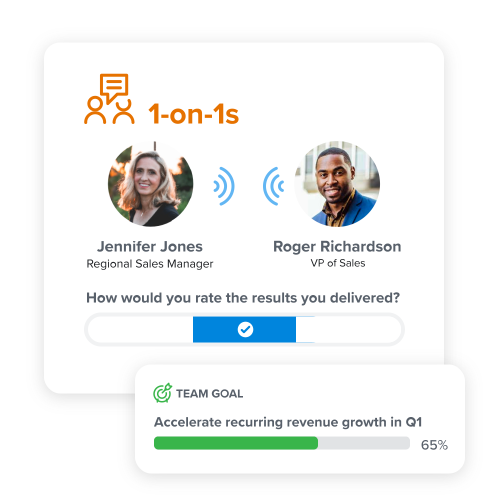
1on1s-1

1-on-1s 

One-on-one meeting software facilitates employee manager conversations, increasing clarity and communication. Leaders can launch a 1-on-1 anytime, from anywhere, and integrate goals and feedback for better conversations. 

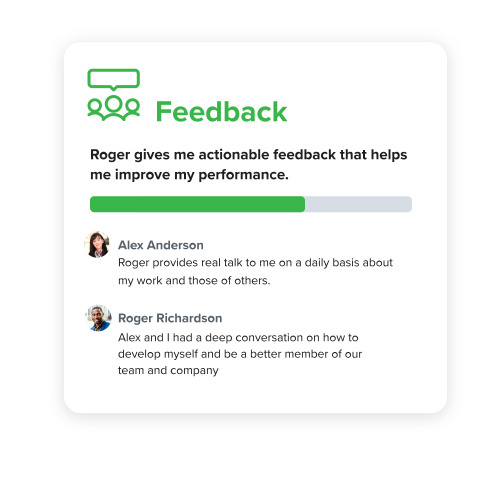
Feedback-1 (1)

Feedback

A two-way feedback solution will help your employees become better team members, and managers become better coaches. With flexible frameworks, employees and managers can ask for or provide feedback to grow in their role.

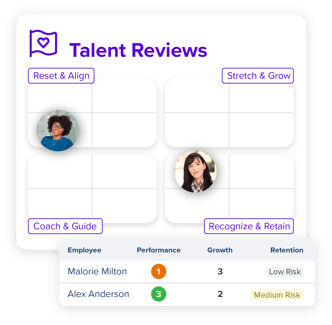
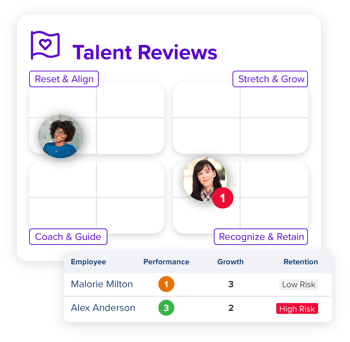
TalentReviews_EmployeeImpact_6.3


Talent reviews

To make strategic people decisions, leaders need to understand the overall state of their talent. With an intuitive talent review tool, leaders can elevate top performers and talent risk to take the right action and grow. 

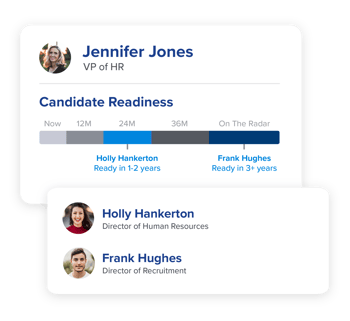
SuccessionPlanning_ToolPage_TrackCandidatePerformance@2x


Succession planning

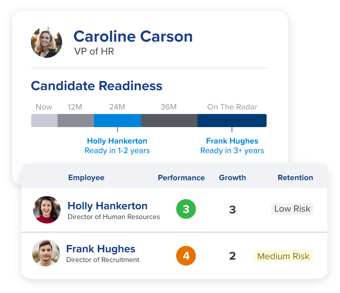
Leaders need effective tools to help them plan for the future, ensuring they have the right people in the right jobs at the right time. Succession planning software helps leaders capture successor interest and readiness to plan for critical roles—while helping potential successors grow and develop to be ready when called upon. 


Consider these performance management best practices and trends when shaping your approach. By coaching performance with employee engagement in mind, you’ll help employees reach their full potential and drive consistent business outcomes 

Is performance management a priority for your organization this year? Learn more about how Quantum Workplace can help you make performance management easier. Get a demo today! 


Make performance management easier with quantum workplace. Get a demo.


Beyond Employee Engagement Trends: Unlocking Potential

0

Updated February 11, 2026

Engagement is steady. Turnover is at a record low. On paper, employee engagement trends in 2026 suggest everything is just fine.

Across industries, U.S. quit rates fell to roughly 2.0% in 2025, the lowest level in years. Engagement scores have remained largely stable as well— reinforcing the perception that organizations are in a healthy place.

But today’s workplace context tells a more complicated story.

Talent movement is low. Pressure and expectations inside organizations are high. And constant change—from restructuring to new ways of working and emerging technologies—has become the norm. In this environment, stable engagement scores and low quit rates can create an illusion of stability.


“Steady employee engagement may reflect resilience, not progress,” says Aaron Brown, Senior Manager of People Insights at Quantum Workplace. “Many organizations mistake stability for strength and miss opportunities to move forward.”

Low quit rates don’t always signal stronger connection, either.

Quantum Workplace data shows that intent to stay is rising faster than other engagement measures — suggesting many employees are staying because it doesn’t feel like the right time to leave, not because they feel energized, aligned, or set up to grow.


Anne Maltese, VP of People Insights, refers to this as latent risk: a workforce that appears engaged on the surface, but isn’t fully prepared to move forward.

That’s why high-level engagement and turnover metrics aren’t enough on their own.

Below, we break down four employee engagement trends in 2026 that reveal what headline metrics can miss — and the deeper signals HR leaders need to understand whether their teams are truly thriving or quietly being held back.

Watch our People Insights experts
unpack these trends in our AMA session.


Key takeaways

  • Stable engagement and turnover can hide opportunity: Organizations may look healthy while underlying energy, focus, and growth stall.
  • Intent to stay is outpacing engagement: Employees are remaining in place, but not necessarily feeling inspired, aligned, or enabled to grow.
  • Manager capability is an early signal: Pressure on managers can quickly erode clarity, confidence, and connection across teams.
  • Top performers are paying attention: When accountability and advancement lag, high achievers are often the first to disengage.
  • Deeper signals matter more than surface metrics: Understanding why people stay — and how they’re growing — is essential to sustaining performance.


4 employee engagement trends to watch in 2026

Employee engagement in 2026 is shifting from measurement to meaning.

While retention and engagement metrics appear strong, Quantum Workplace data shows that deeper signals—like manager capacity, alignment, and connection—reveal where teams are truly positioned to thrive.

These four employee engagement trends highlight what HR leaders need to watch to move beyond stability and build sustained performance in the year ahead.


Trend 1: Managers are one of the first places where pressure shows up

Key trend

Managers are under mounting pressure to deliver results, coach teams, and execute constant change — often with limited time, clarity, or support.

Why it matters

When expectations outpace clarity and support, managers are often the first group to show declining engagement, recognition, and confidence — creating early risk that spreads quickly to their teams.

What the data shows

Across organizations, managers frequently score lower than both executives and frontline employees on engagement, recognition, and clarity around expectations.

Implication for 2026

Manager experience is becoming a leading indicator of organizational alignment. When clarity breaks down at this level, misalignment scales faster than engagement or turnover metrics reveal.

Action insight

Look beyond whether managers hold 1:1s—evaluate how effective those conversations are at creating clarity, alignment, and focus.


A deeper look at the data

When we’ve examined manager experience data from our customers more closely, we’ve seen these patterns:

  1. Risk shows up first at the manager level.
    Middle managers and some senior leaders often score lower than both executives and frontline employees on engagement, recognition, and clarity—making manager experience an early warning signal.
  2. The greatest risk isn’t always at the front line.
    Directors, senior directors, and VPs frequently surface the strongest risk signals, revealing gaps in alignment and support just below the executive layer.
  3. Clarity breaks down before results do.
    Managers are less likely to strongly agree that they understand how their performance is measured or what’s expected of them. When clarity erodes here, misalignment cascades quickly to the teams they lead.

Together, these signals show that manager experience is one of the most critical places to intervene before engagement and turnover metrics shift.


Case Study: Bridging the feedback gap: a modern leadership lesson

When one large enterprise dug into its leadership coaching data, it uncovered a hidden opportunity: the higher the position, the better the feedback. Managers deeper in the organization weren’t receiving the same developmental input, revealing a feedback gap that quietly limited performance growth.

The company’s response was simple but powerful—coach the coaches. By training leaders to give constructive, growth‑oriented feedback, they shifted focus from how often 1:1s occurred to how valuable those conversations were.

The takeaway: frequency doesn’t equal effectiveness. Examining how feedback really happens exposes missed opportunities to strengthen connection, performance, and change readiness at every level.


8 questions to determine:
Are managers equipped to lead?

  • What is the experience like for our managers?
    • Are they more or less engaged than the people they lead?
    • Are they equipped to align and coach – not just care about people?
  • What levels of management need support?
  • How frequent and effective are 1-on-1s?
    • What is the impact on employees feeling aligned, empowered, valued, and experiencing growth?
  • What skills do managers need to develop?


Trend 2: Top talent is paying attention — and signaling what they need to stay

Key trend

Top performers are actively signaling their experience through feedback, survey data, and talent reviews — even when engagement and turnover metrics appear stable.

Why it matters

When leaders overlook feedback from top performers, they miss early warning signs from the employees most critical to performance, continuity, and future leadership.

What the data shows

Development and coaching scores remain strong for top performers, while advancement, fairness, and accountability indicators consistently lag.

Implication for 2026

Retention risk among top talent is becoming quieter — and harder to detect. Frustration can build even when employees aren’t actively looking to leave.

Action insight

Segment engagement and feedback data by performance level or talent status to understand how high performers are really experiencing work — not just whether they’re staying.


A deeper look at the data

When we segment customer engagement data by performance and talent status, we see patterns like:

  1. Top performers feel supported — but not always treated fairly.
    High performers score well on development and coaching items, yet advancement and fairness indicators lag behind. Trust in fairness has been among the lowest-scoring items in recent data.
  2. Frustration comes from accountability gaps, not disengagement.
    Open-ended comments reveal that top performers are most frustrated when low performance is tolerated. Negative or critical feedback often comes from employees who care deeply and want the organization to improve — not from disengaged talent.
  3. Retention risk hides behind stable metrics.
    Talent reviews reinforce this pattern: “stretch and grow” employees often lack clear advancement paths despite strong performance. While they may not be actively looking to leave, many are quietly questioning their future.

💡 Together, these signals show that stable engagement and turnover metrics can mask growing frustration among the employees organizations most want to retain.


When engagement and turnover look stable, how can HR leaders avoid assuming talent is fine?

Anne Maltese“The first thing I want to know is: how do my top performers feel? You can use surveys, one-on-ones, focus groups — it’s not necessarily more data. It’s being intentional about how you look at the data you already have.”

Anne Maltese, VP of People Insights

9 questions to determine:
Do we really understand our talent?

  • Are our employees strongly connected to their work, team, and our organization?
    • How do employees feel about working here?
  • What is the experience like for top performers?
    • Do growth expectations match their expectations?
    • Are they at risk to leave?
    • Do they feel recognized and rewarded for their impact?
    • What frustrates them, or where do they have constructive feedback?
  • Who is most at risk for leaving?
  • How long do we allow lower performers who don’t improve stay?


Trend 3: Urgency without focus is making productivity harder than it needs to be

Key trend

Teams are working hard, but unclear priorities and competing goals make it harder for effort to translate into meaningful impact.

Why it matters

Unchecked urgency leads to fatigue and confusion. When priorities shift faster than clarity and communication, collaboration breaks down and employees lose sight of what actually drives results.

What the data shows

Misalignment is widespread — even among top performers. Roughly 25% don’t clearly understand organizational priorities, and written goals are significantly more common among high performers.

Implication for 2026

Without sharper focus and alignment, organizations risk sustained effort with diminishing returns — more activity, less impact.

Action insight

Strengthen goal clarity by ensuring priorities are written, connected to strategy, and reinforced through one-on-ones, feedback, and recognition.

A deeper look at the data

When we examine customer alignment and goal data more closely, we see patterns like:

  1. Employees trust the organization — but lack line-of-sight to success.
    Many employees believe the organization will succeed, yet don’t understand how their work contributes to strategic priorities — a hidden source of inefficiency and disengagement.
  2. Too many goals dilute focus, even for high performers.
    Teams often juggle competing priorities, and even among top performers, roughly one-quarter don’t clearly understand organizational priorities — leaving meaningful productivity on the table.
  3. Clarity, not effort, separates performance levels.
    Written goals strongly correlate with performance: 89% of top performers have goals documented, compared to 78% of employees needing improvement. Once goals are written, one-on-ones and feedback become more focused, enabling better insight and action.

💡 Together, these signals show that productivity challenges are rarely about effort — they stem from misalignment, unclear priorities, and lack of focus.


What does misalignment actually look like inside teams, and how does it show up before results start to slip?

“It starts with good intentions, but that’s usually where misalignment starts to show up. The clearest example is how organizations have approached AI. It’s wonderful. It’s an amazing tool. But we’re hearing from customers and employee feedback that they’re being told, “Just try it out, see what you can do.” Now add: “Learn a new technology.”

Aaron BrownCombine that with “do more with less,” and it shows up as good intention but no clear, defined goal—what are we trying to accomplish, and how are we going to support people to accomplish it? If we can solve that, people will feel more excited to try new ventures.”

Aaron Brown, Senior Manager, Insights


5 questions to determine:
Are teams aligned—or just busy?

  • Do employees clearly understand strategy, goals, and their performance expectations?
  • Is effort aligned to business priorities?
    • Are there too many goals – competing priorities or diluted focus?
  • Are we reinforcing the right work through recognition (including rewards!) and feedback?
    • What gets praised? What gets rewarded?


Trend 4: Future-ready in intent, uneven in execution 

Key trend

Many organizations can identify successors and critical roles, but preparation, readiness, and retention aren’t keeping pace — creating a gap between who’s named and who’s truly ready.

Why it matters

When future leaders and high-tenured employees feel stalled, burned out, or undervalued, organizations become fragile — even when engagement and retention metrics appear strong.

What the data shows

Succession candidates, senior leaders, and long-tenured employees often surface early risk signals, including burnout, uneven development, and readiness gaps that aren’t visible in headline metrics.

Implication for 2026

Future readiness depends not just on identifying successors, but on intentionally developing them, supporting their well-being, and reducing over-reliance on a small number of leaders.

Action insight

Connect succession, development, engagement, and tenure data to identify readiness gaps early, address burnout risk, and ensure future leaders are both prepared — and willing — to step forward.


A deeper look at the data

When we examine future-readiness signals in customer data more closely, we see trends like:

  1. Successors are identified, but not fully prepared.
    Many organizations can name future leaders, yet lack clear, intentional development plans that prepare those individuals for what’s next — creating a gap between potential and readiness.
  2. Retention risk among future leaders stays hidden until conditions change.
    Succession candidates and high-potential employees may appear stable, but retention risk rises quickly when growth stalls or the labor market shifts.
  3. Burnout and over-reliance at the top create hidden vulnerability.
    Senior leaders and executives can show elevated burnout risk even in otherwise healthy organizations. When too much momentum rests on a few individuals, losing one critical leader can derail progress.

💡 Together, these signals show that future readiness isn’t about stability alone — it requires intentional preparation, development, and protection of leadership capacity at every level.


Case Study: When “high engagement” hides leadership burnout

A compelling example of a client whose engagement scores painted a picture of success—yet behind the numbers, the executive team was running on empty:

At first glance, survey results suggested a thriving culture: employees felt connected, motivated, and loyal. But a deeper pulse check revealed another story—leaders were stretched thin, morale was slipping, and innovation had stalled. “High engagement at the surface can mask burnout underneath,” Aaron Brown explains.

This case underscores a key 2026 workplace insight: strong engagement metrics don’t always mean a healthy organization. When performance expectations rise faster than capacity or connection, energy eventually erodes. HR and leadership teams need to look beyond top‑line engagement scores to uncover early signals of fatigue, turnover risk, and unrealized potential.

6 questions to determine:
Are we ready for what’s next?

  • Do we have succession candidates for key or hard-to-hire roles?
    • What development do they need to be ready?
    • What is their retention risk?
  • What skills and development do people need tobe ready for the future?
    • Are we developing them at the pace needed?
  • Who is most at risk for leaving now?
    • Who is most at risk when the labor market shifts and talent mobility increases?


Turning employee engagement data into informed decisions

The four trends above point to a common reality: employee engagement data only creates value when it leads to clearer decisions and earlier action. In 2026, steady metrics aren’t the goal — informed insight is.

To move from stability to sustained thriving, HR leaders need to connect engagement data to performance, development, growth, recognition, and retention signals — and use those connections to guide action at every level.

Practical ways to act on these insights:

  • Equip managers to translate data into action.
    Give managers the tools and context to interpret engagement signals and use them in meaningful, team-level conversations.
  • Connect engagement with performance data.
    Look beyond sentiment to understand how areas like motivation, workload, and goal alignment affect business outcomes.
  • Review signals regularly, not reactively.
    Establish monthly or quarterly “signal reviews” to detect early shifts in connection and performance — before they show up as disengagement or turnover.

Organizations already applying this approach are seeing the difference. Quantum Workplace customers who connect engagement insights with performance and talent data are better positioned to retain top talent, strengthen manager effectiveness, and sustain momentum through change.


Take the step from steady engagement to thriving teams

Building thriving teams requires looking beyond engagement scores alone. Thriving doesn’t happen by chance — it happens when connection and performance are treated as inseparable, and leaders have the insight they need to act early and with confidence.


When connection exists without performance, teams drift.
When performance exists without connection, teams strain and burn out.
When both are weak, teams struggle.

But when both are strong, teams enter a powerful cycle: results improve retention, retention strengthens capability, and stronger capability fuels even better results.

To build that cycle, organizations must strengthen both connection and performance across four key conditions: alignment, empowerment, growth, and feeling valued. HR plays a critical role in reading the signals across these areas — and equipping managers to turn insight into action.


Final thoughts: employee engagement trends are the starting line

Healthy engagement metrics aren’t the finish line. They’re the starting point for strategic growth.

The goal isn’t to overhaul your talent strategy overnight — it’s to act on the opportunities hidden in plain sight. In this era, organizations need to:

  • Understand their talent more deeply
  • Identify risk and opportunity earlier
  • Develop and grow existing employees
  • Create clarity and alignment at every level
  • Use better signals to understand whether teams are truly thriving

As Anne Maltese puts it:

“Focus on your knowns. You can’t control everything, but you can develop your top performers, nurture your successors, and prepare people now for what’s next.”


Plan for what’s next. 


How to Build a High Performing Team + Tips

0

Updated February 20, 2026

Why do some teams perform better than others? What sets these teams apart from the rest? 

Building a high-performing team requires more than just pulling together a group of talented people with the right skills. It requires careful development and nurturing of key characteristics, behaviors, and best practices. 

In this article, we’ll cover: 

  • What a high-performing team is 
  • What their characteristics are 
  • How to build a high performing team 
  • How to improve and scale performance coaching with performance management technology.   

Let’s dive in! 

What is a high performing team?

A high performing team is a group of individuals who leverage their collective skills, diverse perspectives, specialized expertise, and complementary strengths to accomplish challenging goals. High performing teams are hyper-focused on achieving clear, outstanding results. They thrive on a foundation of trust, collaboration, and a shared sense of purpose.  

But high performing teams aren’t made by magic. You need the right approach to performance management, to empower teams to collaborate, innovate, and do their best work together. 

Performance management isn’t one-size-fits-all. Leverage our Performance Pathways to design a performance management program that works for you!


Why are high performing teams essential?  

The success of your organization starts with the success of your employees. High-performance teams help drive new ideas, get work done, and achieve goals. When teams are aligned, get feedback and coaching, and have what they need to do their best work, they can break down barriers and get results. 


Characteristics of a high-performing team

While every team is different, there are common characteristics that high-performing teams share. 


1. They understand how their work fits into the organizational mission. 

When employees understand how their job fits with the goals and mission of your organization, they’re more engaged and productive. High-performing teams know their “why” and work together to support a shared vision. Our research shows that highly engaged employees: 

  • Know how their job helps the organization achieve success 
  • See how their performance goals are aligned to organizational goals

2. They have clear goals tied closely to team and organizational priorities.

High-performing teams are aligned in their focus, purpose, and priorities. They set team and individual goals that support this shared vision. Goals are not only aligned, but clearly defined—so everyone knows exactly what they need to do and how to get there. 

Quantum Workplace research shows employees are 3.2X more likely to be engaged when their individual performance goals are aligned with organizational goals. 


3. They have defined roles and responsibilities.

Conflict can quickly derail an otherwise talented and productive team. High-performing teams minimize unnecessary conflict by clearly defining each person’s role and responsibilities. This: 

  • Prevents confusion over project ownership 
  • Keeps workflows and deadlines organized 
  • Ensures accountability across the board 


4. They communicate clearly and respectfully.

When communication breaks down, performance suffers. High-performing teams set clear expectations and create effective channels for communication. This way, everyone knows when and where to communicate and who they need to connect with. Conflict is normal, but high-performing teams know how to navigate it in a healthy way that minimizes obstacles. 


5. They thrive on two-way feedback.

High performing teams foster a culture of continuous improvement through open and constructive two-way feedback. Team members feel empowered to share their ideas, concerns, and suggestions without fear of retribution. Managers actively seek feedback from employees, valuing their perspectives and leveraging insights to drive team growth.  

This feedback-driven approach not only enhances individual performance but also strengthens team dynamics. It leads to increased collaboration and adaptability. Not to mention, collected feedback can be translated into further development opportunities for employees.

Salute, a leading name in the Professional Services industry, surveys its employees to understand how they might build higher performing teams. Salute’s Executive Vice President of HR says:  

“I’m thrilled to share just how much Quantum Workplace has revolutionized the way we do things around here. It’s been a game-changer, really. We’ve gained greater insights into what our team members feel and think. This has been a goldmine of information, helping us fine-tune our performance management and create a culture where continuous improvement and accountability are at the forefront.”   


6. They manage work and deadlines based on priorities.

High-performing teams focus on what matters most and spend their time accordingly. They understand that not all work has equal importance or urgency. They manage projects based on what tasks have the highest priority and highest impact. This keeps work aligned with organizational goals and ensures everyone is focused on work that drives growth. 


7. Managers and employees feel aligned and connected.

One-on-one meetings serve as a cornerstone of high performing teams, promoting clarity and connection between managers and employees. These meetings go beyond mere status updates, providing a dedicated space for individualized discussions on goals, progress, and challenges.  

Managers should use 1-on-1s to understand employees’ aspirations, offer guidance, and provide the necessary support to overcome obstacles. By nurturing a strong manager-employee relationship, high performing teams create a sense of belonging and commitment that fuels team success. 


8. They trust and respect each other.

The level of collaboration and teamwork required for high achievement depends on trust and mutual respect. Employees on high-performing teams value each other and trust each person to do their job. They respect diversity of thought and experience and recognize those differences make them stronger. This culture of trust helps everyone: 

  • Bring their full selves to the job
  • Take risks
  • Share ideas
  • Innovate together

9. They celebrate success together and recognize contributions.

High-performing teams understand that success results from team effort. They celebrate wins together and take opportunities to recognize and show appreciation for each employee’s contributions. This builds a strong culture of collaboration and helps everyone feel valued and connected. 

Our research consistently shows that ratings, rankings, and pay-for-performance do not drive employee engagement. But recognition does. 

Highly engaged employees are 70% favorable on the item “If I contribute to the organization’s success, I know I will be recognized” 


10. They practice continuous learning.

Even the best teams have room to grow. High-performing teams value feedback and learn from their mistakes. They look for opportunities to grow by nurturing a feedback culture and investing in employee development. Continuous learning propels growth and keeps teams striving for higher achievement. 


11. They balance short-term priorities with long-term growth

High performing teams strike a delicate balance between short-term results and long-term growth. While focused on achieving immediate objectives, they also invest in learning, growth, and career development to stay ahead of the curve.  

Talent reviews and succession planning are integral components of this approach, ensuring that the team’s future leadership remains robust and ready for upcoming challenges. So is accessible career pathing that helps employees see a future at your organization.

By prioritizing both short-term wins and sustainable growth, high performing teams are well-positioned to adapt, innovate, and excel in a dynamic business landscape. 


What do high performing teams do differently? 

What sets high performing teams apart from the rest? In their pursuit of excellence, these teams go beyond the ordinary. They consistently achieve remarkable results.  

Let’s uncover the five key things that high performing teams do differently that enable them to outshine their peers and drive success.  


1. High performing teams embrace innovation and adaptability

The only thing that’s certain at every organization is change. But that won’t scare a high performing team. These teams are not afraid to challenge the status quo.  

Instead, they actively seek out new ideas, encourage innovation, and adapt swiftly to changing circumstances. By embracing flexibility and being open to change, they stay agile, resilient, and capable of seizing emerging opportunities. 

To innovate and adapt, high performing teams need the space, buy-in, tools, and technology to learn big and make mistakes. That’s why high performing teams aren’t always judged by arbitrary KPIs—but on their organizational impact.  


2. High performing teams collaborate cross-functionally with other teams and departments

Organizational silos are no match for high performing teams. In fact, these teams are notorious for breaking down silos to encourage collaboration across departments, disciplines, and teams. 

They achieve this by fostering an environment where individuals can freely and willingly share knowledge, leverage each other’s strengths, and work toward shared goals. This spirit of collaboration is amplified by the team’s collective impact and strengthens their relationships. 


3. High performing teams focus on recognition and achievements 

High performing teams know that meaningful recognition may look different to each individual employee. They use data to celebrate milestones—both big and small—to proactively and reactively recognize contributions to the larger team.  

By doing so, they create a contagious culture of recognition and appreciation which motivates everyone to work smarter and strive for excellence.  


4. High performing teams leverage engaging, easy-to-use performance processes & technology. 

High performing teams know that their success is only as strong as the processes and tools that enable them. These teams can’t be bogged down by disparate systems and siloed departmental data. To optimize their performance, these teams used tools that enable seamless collaboration, data-driven reporting, and automation of repetitive tasks.  


5. High performing teams have mutual accountability

These teams are never going to throw a team member under the bus. High performing teams embrace collective accountability by holding each other—and themselves—accountable for the team’s performance.  


Practical tips for building a high-performing team 

Building a high-performing team doesn’t happen overnight. It takes commitment and investment in continuous growth and development. Use the following tips to get started: 


Create a shared sense of purpose.

For employees to feel connected to a team, they need a unified purpose. This is where clear goals and team alignment come into play. 

Managers of high-performing teams are always evaluating priorities and team goals to ensure they are effective and aligned. Keep organizational goals top-of-mind by regularly communicating and connecting those goals to the team’s work. 

Take advantage of one-on-ones to check in with team members on their progress, identify key priorities, and ensure their work aligns with the overall team goals. This helps create a shared sense of purpose and ensures the team is rowing in the same direction to drive performance. 


Streamline communication.

High-performing teams must be nimble and focused—so clear, streamlined communication is essential. Keep everyone on the same page by establishing clear processes and expectations for communication. 

For example, teams might use Slack channels for water cooler chats and team updates but rely on project management tools like Asana to house project data, define responsibilities, and track progress and assignments. 

Having set communication processes helps prevent conflict and ensures key information is shared with the right people, assignments and responsibilities are clear, and nothing falls through the cracks. 

You might also consider creating opportunities for team members to share their expertise and learn from one another. Encourage cross-functional collaboration by organizing workshops, team-building exercises, or knowledge-sharing sessions where employees from different departments can collaborate on projects or discuss industry trends. This cross-pollination of ideas and skills enhances creativity, problem-solving, and builds a sense of camaraderie. 


Empower decision making at all levels.

High performing teams empower their team members to make decisions and take ownership of their work. These teams don’t feel nervous to present a new idea, solution, or option to their management team. Instead, managers recognize that the best way to achieve maximum performance is by encouraging employees to take initiatives. 

Encourage team members to contribute their ideas, provide input, and make autonomous decisions within their areas of responsibility. This fosters a sense of ownership, accountability, and fosters a culture of trust and empowerment. 

Remember that regular recognition for this kind of contribution to the larger team can help employees connect to how their work benefits the larger organization. Which brings us to… 


Recognize and reward achievements.

Acknowledging and celebrating individual and group achievements is crucial for building and sustaining a high performing team. Recognition and rewards not only boost morale, but they can reinforce desired behaviors and motivate team members to excel.  

Regularly express your appreciation by taking the time to acknowledge the efforts your team members make. Weekly one-on-ones provide an opportunity for you and your team to stay closely connected on the team’s goals, tasks, and achievements. But don’t just recognize big wins. Recognition can happen during key milestones, steady performance, or instances where teams have gone above and beyond their job description.  

Remember that the kind of recognition your employees like may differ from employee to employee. Be sure to center the kind of recognition your employees like best by evaluating their preferences over time.  

Managers aren’t the only team members who can participate in recognition. Encourage team members to recognize and appreciate each other’s contributions with a “team shoutout” Slack channel or weekly email. This helps to foster a positive and engaging work environment at every level.  


Invest in employee development.

If you want consistent outstanding results, build a culture of continual learning and improvement. High-performing teams are curious. They ask questions, explore possibilities, and adapt based on what they learn. When teams are continually building on their knowledge and learning from past mistakes, they are more effective, efficient, and innovative. 

Drive team performance by investing in your employees’ growth and development. Identify relevant development opportunities that focus on team needs and priorities, as well as individual goals. Employee development opportunities help employees feel motivated, empowered, and better equipped to do their job. 


Who’s responsible for building high performing teams? 

Inspiring employee impact requires a human-centered, engaging approach to performance that helps employees and teams understand the role they play in helping the company succeed. 

Employees want to be successful—and they want to contribute to the organization’s success! But they also don’t want to jump through ineffective performance management hoops. They expect more from their organizations and managers.

Everyone in the organization—leaders, HR, managers, and employees—plays a part in building an engaging approach to performance management.   


performance-management-roles_table


The role of senior leaders 

Senior leaders are responsible for setting direction and creating clarity around the organization’s most important goals—adapting as organizational needs change. They should set an example for what performance, accountability, and effective coaching look like—staying focused on outcomes and impact, rather than output and productivity.  


The role of HR 

HR plays a crucial role in driving performance management, ensuring the effectiveness of performance management initiatives. HR should help facilitate performance feedback, align performance metrics with organizational goals, and hold leaders accountable as coaches.  

By co-creating performance programs with stakeholders—and regularly evaluating and adapting them—HR builds dynamic performance management systems that boost employee impact, employee development, and business success.  


The role of managers 

Managers translate organizational goals into team objectives and foster employee growth and development. They build relationships with direct reports, provide feedback, and ensure expectations are clear.  

Managers also collaborate with employees to set goals, provide coaching, and allocate resources for success. Their feedback to senior leaders and HR improves the performance management process, while their continuous development enhances coaching skills. 

See how Hudl empowered its managers with Quantum Workplace’s employee success platform


The role of employees 

Leadership and HR can build a robust performance management system—but if employees aren’t active participants in their own performance, you won’t see impact. Employees should be doing their best to accomplish goals, give and receive feedback and coaching, and take ownership of their development and career trajectory, asking for help along the way. 


How performance management software helps you build high performing teams

Building a high-performing team is a marathon, not a sprint. But when you bring together the right mix of skills and experience and nurture these fundamental characteristics of a high-performing team, the payoff will be worth it. 

Quantum Workplace has developed a suite of performance management tools that are designed to help you grow, manage, and scale your high performing teams.  


Move your teams forward with clear and aligned goals. 

Goal-2

Setting clear and aligned goals is paramount to the success of high performing teams. Quantum Workplace’s empowers your teams to set, monitor, and accomplish important goals with:  

  • Cascading goals: align organizational, team, and employee goals 
  • AI-powered goal assistant: help employees write better goals 
  • Collaborative tools: share goal progress and ownership across teams 
  • Interactive newsfeed: celebrate success and stay aligned on progress 
  • Flexible formatting: choose from OKRs, SMART goals, or something else 

Learn more about Quantum Workplace Goals


Boost trust and employee performance with employee feedback. 

Feedback-1

Quantum Workplace’s 360, peer, and upward feedback help boost employee performance, growth, and development. Support a culture of continuous feedback within your teams with:  

  • Flexible frameworks: collect any type of feedback with configure it the way you need 
  • Easy access: empower anyone to request or give feedback in minutes 
  • AI-powered writing assistant: help managers and employees write better feedback 
  • Automated cycles: initiate feedback based on calendar dates or employee milestones 
  • Actionable analytics: identify and act on development opportunities 
  • Curated templates: get best practice guidance and collect consistent analytics across the organization  

Learn more about Quantum Workplace feedback


Keep managers and employees on the same page with performance reviews.  

4_performance-reviews_product-imagery


Performance reviews are still a staple of most performance management programs—but you need them to be more effective, efficient, and engaging to improve performance. Make performance conversations simple and effective with:  

  • Customizable templates: tailor reviews to fit your culture and empower managers 
  • Automated cycles: build healthy habits with HR-prompted workflows and alerts 
  • Performance integrations: easily embed goals or feedback for meaningful context 
  • Real-time analytics: drive accountability with real-time response rates and notifications 
  • Talent dashboard: see all your talent data in a simple 9-box or 4-quadrant visual 

Learn more about Quantum Workplace performance reviews


Celebrate success and help team members feel valued with real-time recognition. 

Recognition_ToolPage_Badges_Goals


Motivate employees and celebrate success with real-time recognition. Easily share stories of success and help employees across your organization feel valued with: 

  • Peer-to-peer recognition: allow any employee to easily celebrate another 
  • Automated milestones: always remember work anniversaries 
  • Customized badges: tie recognition to cultural values that matter 
  • Social newsfeed: create a public and fun celebration space 
  • Integrated notifications: amplify success stories to Slack and Teams 

Learn more about Quantum Workplace recognition

Increase clarity and connection with performance reviews and 1-on-1 meetings. 

1on1s-1

Empower meaningful conversations at every level, across any department. Increase communication, clarity, and engagement with:  

  • Digital conversation tools: collaborate on and track any 1-on-1 
  • Performance integrations: easily see progress by pulling in goals or feedback 
  • Curated templates: help managers have effective conversations 
  • Automated cycles: build healthy habits with HR-prompted workflows and alerts 
  • Mobile access: take meeting agendas and notes with you wherever you go 

Learn more about Quantum Workplace 1-on-1s


Identify and develop top talent with talent reviews. 

TalentReviews_ToolPage_UnderstandYourTalentPool@2x


Objectively assess performance to identify rising stars and talent risk. Make strategic talent decisions with:  

  • Reliable performance feedback: collect actionable, objective ratings from managers 
  • 9-box or 4-quadrant: quickly see talent risk and opportunities to promote or develop 
  • Calibration settings: allow multiple raters and easily filter data for calibration sessions 
  • Collaboration tools: comment and add talent insights over time 
  • Integrated succession planning: seek successor nominations and pull ratings into plans 

Learn more about Quantum Workplace talent reviews


Sustain high performance with succession planning. 

Succession-Planning_Succession-Planning-8


Proactively identify gaps and create development plans to prepare for the future. Ensure the right successors are identified and developed with: 

  • Collaborative nomination process: request nominations and performance details from any leader or manager 
  • Readiness tracking: track candidate readiness by 12-month increments so you can easily see progress over time 
  • Integrated performance: see candidate performance ratings and development goals 
  • Diversity visibility: align success plans with diversity goals 
  • Personalized, board-ready insights: share real-time insights with stakeholders 

Learn more about Quantum Workplace succession planning


Want to see how our tools can help support your high-performing teams? Check out our performance management solution here. Or, request a demo today. 

Make performance management easier with quantum workplace. Get a demo.


High Performing Teams FAQS

What is a high performing team? 

A high-performing team is a group of skilled individuals who collaborate effectively to achieve shared goals. They are characterized by clear objectives, defined roles, open communication, and mutual trust and accountability.

How to build a high performing team? 

Creating a high-performing team requires intentional strategies that align skills, communication, and accountability to achieve exceptional results.

  • Set a shared vision and clear goals: Align the team on objectives to drive results.
  • Define roles and responsibilities: Ensure clarity on who does what for maximum efficiency.
  • Promote open communication: Encourage constructive feedback and collaboration.
  • Foster trust and psychological safety: Create a safe space for sharing ideas and taking risks.
  • Establish accountability measures: Track progress and hold team members responsible.
  • Support continuous learning: Provide opportunities for skill development and professional growth.
  • Offer strong leadership: Empower, motivate, and guide the team to achieve peak performance.

What are characteristics of high performing teams?

High-performing teams share key traits that enable them to work efficiently, innovate, and achieve outstanding results.

  • Aligned Vision and Objectives: Team members clearly understand the purpose and what they aim to achieve.
  • Clearly Defined Responsibilities: Each person knows their role and how their efforts contribute to overall success.
  • Transparent and Respectful Dialogue: The team communicates openly, actively listens, and provides constructive feedback.
  • Mutual Trust and Safety: Members feel secure taking risks, admitting mistakes, and being honest with one another.
  • Ownership and Responsibility: Individuals are accountable for their tasks and outcomes.
  • Flexibility and Creativity: The team adapts to change, explores new ideas, and challenges existing methods.
  • Strategic Problem-Solving: Members tackle challenges efficiently, resolve conflicts constructively, and find practical solutions.
  • Continuous Improvement Culture: The team promotes ongoing learning and growth for both individuals and the group.

Performance Management Cycle Defined + Tips

0

Updated January 27, 2026

An effective performance management cycle is more than a series of scheduled reviews. It should be a structured rhythm of conversations and activities designed to enhance performance, foster growth, and support employee development.

The primary function of a performance management program is to improve employee effectiveness, align individual contributions with company objectives, and increase motivation and engagement.

A well-designed performance management plan emphasizes goal-setting and alignment, integrating performance activities into daily operations, rather than isolating them as an HR function. Each component should have a clear purpose that employees understand and find valuable, encouraging active participation.


The traditional performance management cycle consists of four main stages:

Planning: Setting clear goals and expectations.

Monitoring: Tracking progress and performance throughout the cycle.

Reviewing: Providing feedback and formally evaluating performance.

Rewarding: Acknowledging and recognizing contributions.


The implementation of these stages varies between organizations.

Traditional Approach: This model is often centered on an annual performance review, supplemented by formal activities such as annual goal-setting or 360-degree feedback.

Continuous Approach: This model focuses on creating a culture of ongoing feedback and development. It integrates a series of less formal activities into the regular workflow, with evaluations and assessments conducted as part of a continuous process.


Keeping everyone, from leaders, HR, and managers to employees, aligned in the performance management cycle ensures performance is measured fairly, achievements are recognized, and potential is continuously developed. Because it’s more than a continuous
performance review process, it’s a performance pathway to success.

Use this guide to master the performance management cycle and elevate your team’s performance.

Key Takeaways

  • The performance management cycle is a structured process that helps organizations plan, monitor, and evaluate employee performance throughout the year.

  • Modern HR teams use it to increase alignment, trust, and transparency across teams.

  • When managed continuously, it turns traditional performance reviews into a strategic driver of productivity and engagement.

What is a performance management cycle? 

The performance management cycle is a continuous process that helps organizations align employee goals, behaviors, and results with company objectives. It includes setting expectations, monitoring progress, providing feedback, and reviewing outcomes.

HR professionals and executives should care about the cycle, because it drives fair and consistent evaluations, improves communication, and strengthens accountability. When effectively managed, it ensures that the right people focus on the right priorities—fueling engagement, retention, and long-term organizational growth.


4 stages of the performance management cycle 

Most performance management cycles follow four core stages:

  1. Planning: Establish clear, SMART goals that align with business priorities.

  2. Monitoring: Track progress and provide ongoing feedback throughout the performance period.

  3. Reviewing: Assess productivity, work quality, and progress toward goals.

  4. Rewarding and Developing: Recognize achievements, identify areas for improvement, and plan next steps for growth.

These stages create a continuous loop of communication and development, supporting both immediate performance and future career success.

Performance review cycle roles and responsibilities 

The success of a performance management cycle depends on the collaboration of HR, managers, and employees.

  • HR Professionals: Design and manage the performance framework, ensure consistency, compliance, and fairness, and provide tools and training for managers.

  • Managers: Lead regular check-ins, coach employees, give actionable feedback, and tie individual performance to team and company goals.

  • Employees: Take ownership of their goals, seek feedback, and proactively engage in development conversations.

Together, these roles ensure the cycle functions as a partnership, not a top-down process.

How does a performance management cycle help organizations? 

An effective performance management cycle helps organizations:

  • Increase Engagement and Retention: Continuous feedback and goal alignment keep employees motivated and connected.

  • Drive Accountability and Productivity: Transparent goals help teams focus on measurable outcomes.

  • Improve Leadership Decisions: Real-time data supports more informed talent and compensation decisions.

  • Strengthen Culture: Regular recognition and growth conversations reinforce trust and belonging.

When executed well, the performance management cycle becomes more than a process—it becomes a strategic advantage.


Defining performance management

Performance management is at the heart of employee and business success. It’s the systematic approach to defining goals, appraising progress, and offering coaching and feedback. The right strategy can inspire and engage employees to drive meaningful impact. 

But the research is clear: there’s a right and a wrong way to do it. Here’s what some of the latest research says about performance management: 

Employees are looking for a system that not only evaluates their performance—but helps them grow and contribute meaningfully. Managers are looking for a program that is easy to maneuver and a good use of their time. And leaders want visibility into employee performance in a way that helps them make informed talent decisions.


Why has performance management shifted to a continuous approach? 

As businesses have evolved over time, so has performance management. Today, organizations are leveraging their talent as a competitive advantage and prioritizing innovation and critical thinking over execution. 

This evolution has inspired a shift from annual appraisals and goal management to continuous performance conversations and feedback. Our research shows that 36% of employees prefer to have weekly one-on-ones and just 3% want to only have these conversations annually. 

A continuous performance management approach allows leaders to capture real-time data and coach toward ongoing progress. 
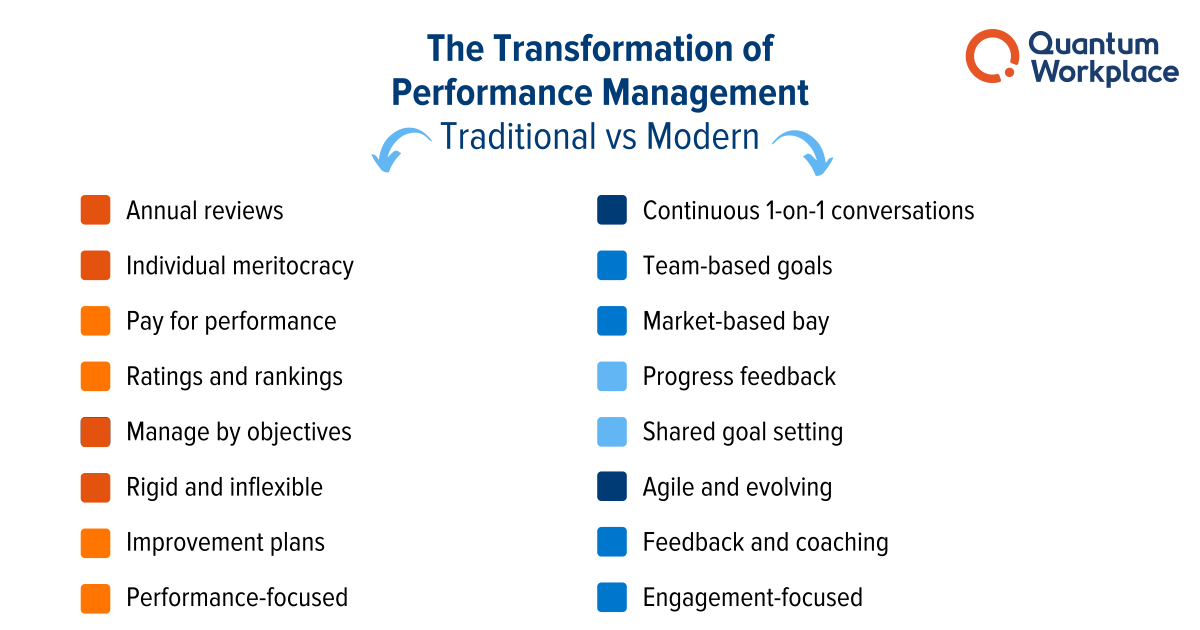
 

transformation of performance management


What are the key components of a performance management plan?

An effective performance management cycle should be rooted in continuous performance management. This is pivotal in harnessing the full potential of your workforce. When finely tuned, a performance management cycle can lead to: 

  • Heightened employee engagement 
  • Robust organizational growth 
  • Notably improved business outcomes 

By keeping a steady flow of check-ins and support, you can keep everyone aligned. Managers can help adjust course easily and celebrate employee achievements in real-time. 
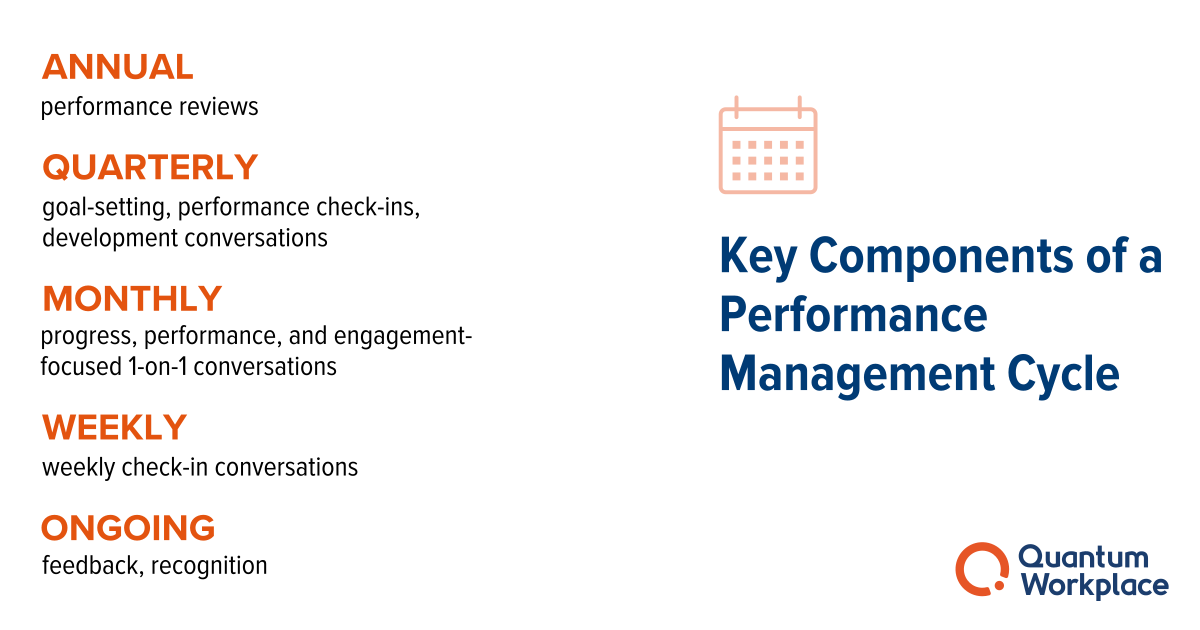
key components performance management cycle

A well-crafted performance management program also boosts employee engagement. When employees know where they stand, they have the power to change and grow. They clearly see how their work adds up to something bigger, and they’re more committed to tackling big goals.

A continuous approach creates a conduit for ongoing communication between managers and employees, further boosting engagement and employee motivation. It creates space for real talk and provides opportunities to hash out goals, tackle roadblocks, and discuss next steps. 

A streamlined performance management cycle is also essential for organizational growth. It ensures that employees are not only cognizant of their role in the larger picture but are also equipped and inspired to excel. A continuous approach is key for culture that value high performance and accountability. It can propel everyone toward success, including individual employees and the organization. 

An optimized performance management cycle helps cultivate a culture of excellence, stimulates growth, and lays the groundwork for sustained success. It can help you create a workplace where every individual is empowered to do their best work. 

Organizations often view a performance management cycle in separate stages. But the most impactful programs incorporate a web of integrated performance activities that work together to boost employee and business success. Quantum Workplace likes to think of the performance management cycle in five phases. 


Phase 1: Planning and goal setting 

This phase sets the organization up for success by identifying priorities and aligning individuals, teams, and the entire organization. 

Goal-setting is at the heart of your performance management cycle. Your managers and employees should come together each quarter to define and align key objectives. Employee goals should not be set in stone. They should be living targets—revisited and refined as new challenges and opportunities arise within the business. 


Phase 2: Monitoring and coaching 

Weekly check-ins are the connective tissue of your performance management cycle. Research shows that employees prefer weekly 1-on-1s—and they’re most engaged when they have them. Weekly check-ins ensure each employee has the attention and direction they need to excel.

The frequent touch points ensure weekly priorities are clear and progress is on track. And they help managers and team members troubleshoot obstacles and capitalize on opportunities.

Monthly 1-on-1s position managers as coaches, not critics. Saving performance conversations for the end of quarter isn’t ideal. You want your teams to be able to adapt and adjust as business needs change. Each month, managers and employees should come together for dedicated 1-on-1 conversations.

These sessions should focus on immediate priorities, personal accomplishments, and coaching and support. They serve as regular pulse checks to help maintain steady progress and engagement.


Phase 3: Reviewing performance 

As each quarter wraps up, managers and employees should gather and review. Quarterly performance check-ins are not just for looking back—but also strategically forward. These conversations are pivotal in setting direction for the coming months. Data from quarterly performance check-ins can inform promotions, succession plans, and development priorities. 

A few times a year, managers should also set aside time for career development conversations. These are deeper conversations that delve into each employee’s career trajectory and long-term goals, including personal goals. Development conversations serve as strategic deep breaths in your performance management cycle. They allow for big picture reflection and recalibration of development goals and paths. 

The annual performance review has gotten a bad reputation in recent years. But it’s still a valuable piece of the puzzle when it’s used with more continuous activities. It’s helpful to take a step back once or twice a year to review employee performance over a longer period. This should be a comprehensive reflection on the year’s achievements; an assessment of areas for growth in the coming year; and an opportunity to gather data for strategic talent decisions. 
 
Follow our 10 performance review best practices to level up your teams.


Phase 4: Rewarding and recognizing achievements 

Frequent feedback and recognition keep your performance management flywheel spinning smoothly. 

Feedback keeps your teams and initiatives vibrant and informed. It should come in many different forms like project feedback, peer feedback, or customer feedback. A continual stream of thoughtful, regular feedback helps employees keep a 360-view of their performance. Real-time recognition helps nurture a culture of appreciation and motivation. It helps employees feel valued and motivates them to do their best work. 

By integrating all of these activities into your performance management cycle, you can create a consistent, supportive environment that promotes high performance, fosters employee development, and drives organizational success. 

Learn how Benesch used 1-on-1s and continuous feedback to improve engagement and retention


Overcoming common challenges in performance management 
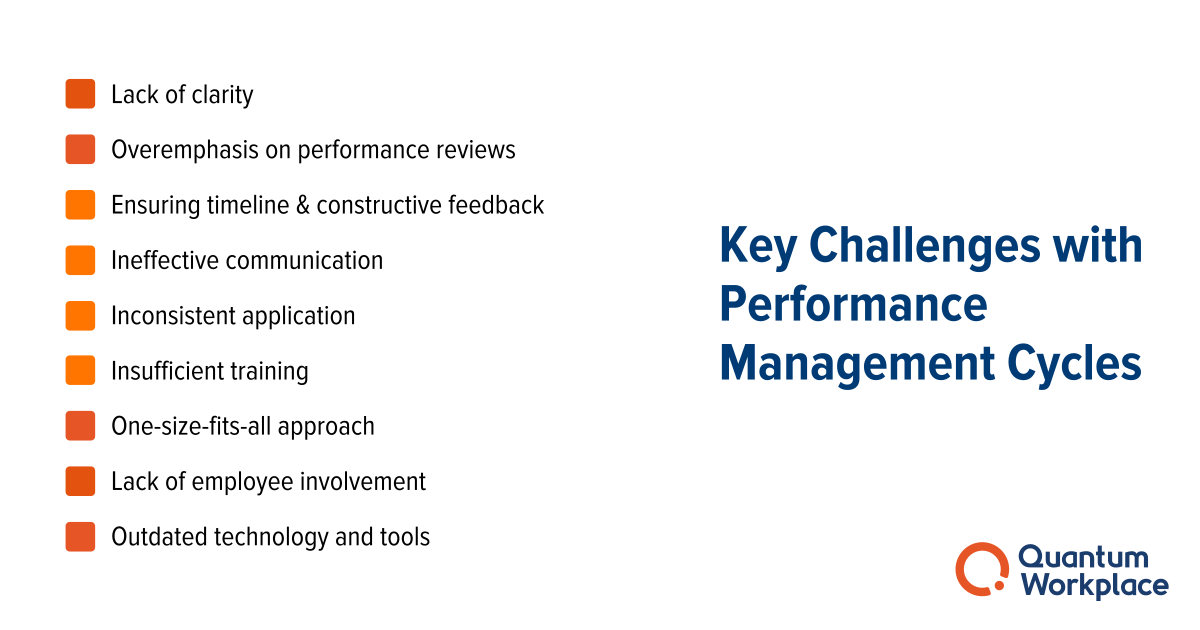
key challenges performance managmenet cycle

Performance management programs can present a variety of challenges that organizations need to address to ensure efficiency, effectiveness, and engagement. 

Lack of clarity

When employees are unsure of expectations or don’t see how their work contributes to the larger picture, it can hinder performance and engagement. Work to: 

  • Ensure goals are clear, specific, and aligned with organizational objectives 
  • Provide regular communication and guidance on performance expectations 
  • Help employees feel comfortable seeking clarification or feedback 
  • Encourage managers to provide clear, actionable feedback on strengths and growth areas 
  • Offer training and development to enhance employees’ skills and competencies 

By sharpening the focus on clarity and objectives, you can pave a clear path for employees to succeed. 


Overemphasis on reviews

Traditional performance management systems place too much stake in the annual performance review. This approach can be problematic for several reasons. Instead: 

  • Shift towards a more continuous performance management approach 
  • Implement regular check-ins so managers can provide timely guidance and support 
  • Encourage ongoing feedback throughout the year from diverse opportunities and sources 
  • Use formal and informal activities to gather a more holistic view of employee performance 
  • Incorporate development-focused conversations to help understand and align aspirations 
  • Provide training and resources for managers to improve feedback and coaching skills 

Transitioning to continuous performance conversations keeps everyone nimble and growing all year long.


Ensuring timely and constructive feedback

Timely and constructive feedback is essential for effective performance management. But for many organizations and managers, this is a skill that needs practice. Focus on: 

  • Encouraging managers to provide ongoing feedback to employees, both positive and constructive, throughout the performance cycle 
  • Offering training and resources to help managers develop effective feedback and coaching skills 
  • Fostering a culture of continuous improvement and open communication, where employees feel comfortable giving and receiving feedback 
  • Providing tools and platforms for employees to request feedback and track their progress 
  • Establishing a feedback mechanism that allows employees to provide upward feedback to managers as well 

When feedback is a steady stream, employees can quickly adapt and excel. 


Ineffective communication

When there is a lack of clear communication between managers and employees, it can lead to misunderstandings, confusion, and a lack of alignment. To address this challenge, organizations can: 

  • Promote open and transparent communication between managers and employees 
  • Encourage regular check-ins and ongoing communication to address any performance issues or concerns 
  • Provide training and resources to managers to improve their communication skills 
  • Foster a culture of feedback and collaboration, where employees feel comfortable expressing their opinions and ideas 
  • Use technology and digital tools to facilitate communication and collaboration between managers and employees 

 With clear and effective communication, organizations will see alignment and performance soar. 


Inconsistent application

Inconsistent application of the performance management system can undermine its effectiveness. When performance standards and expectations are applied inconsistently across different teams or departments, it can create a sense of unfairness and demotivate employees. To address this challenge, organizations can:

  • Establish clear performance standards and expectations that apply consistently across the organization
  • Provide training and resources to HR professionals and managers to ensure consistent application of the performance management system
  • Ensure all employees understand the criteria used for performance evaluation
  • Regularly review and assess the system to identify and address inconsistencies or biases

When consistency rules, employees feel more secure, more committed, and more likely to do their best work.

Insufficient training 

Without the right training, even the best performance management plans can stumble. When managers and employees are not adequately trained on the performance management process, they may struggle implement it. To address this challenge, organizations can: 

  • Provide training and resources to managers and employees on the performance management process and best practices 
  • Provide ongoing support and coaching to managers to help them effectively manage and develop their teams 
  • Regularly evaluate the effectiveness of training programs and make necessary adjustments to improve their impact  

Armed with knowledge and resources, everyone can engage in the process more effectively.


One-size-fits-all approach

A rigid performance management system can stifle a diverse workforce. To address this challenge, organizations can: 

  • Adopt a customized and flexible approach to performance management that accounts for different teams, roles, and individuals 
  • Offer options and flexibility in the process, such as different feedback formats or goal-setting methods 
  • Encourage ongoing communication and dialogue between managers and employees to understand individual needs and preferences 
  • Provide resources and support for managers to effectively manage and support diverse teams 
  • Regularly assess and evaluate the effectiveness of the performance management process to identify areas for improvement and customization 

When the system adapts to the individual, engagement and performance naturally rise.


Lack of employee involvement

An “outside-looking-in” approach to performance management can leave employees disengaged. To address this challenge, organizations can: 

  • Involve employees in the goal-setting process, allowing them to contribute their ideas and insights 
  • Encourage employees to take ownership of their performance goals and development by creating personal development plans 
  • Provide opportunities for employees to provide feedback and suggestions for improvement in the performance management process 
  • Foster a culture of empowerment and autonomy, where employees feel comfortable taking initiative and driving their own growth 
  • Recognize and reward employee contributions and achievements to reinforce a sense of involvement and ownership 

When employees are drivers, not just passengers, their motivation and performance rev up.


Outdated technology and tools

Out-of-date tech can drag down the whole performance management cycle. To address this challenge, organizations can: 

  • Invest in modern HR software and performance management tools that streamline and automate the performance management process 
  • Ensure that the technology used is user-friendly, accessible, and integrates well with other HR systems 
  • Explore customization and flexibility options in performance management solutions to meet the specific needs of the organization 
  • Prioritize real-time feedback and collaboration features in performance management tools to enhance communication and engagement 
  • Regularly assess and update technology and tools to stay current with industry advancements and best practices 

With cutting-edge tools in hand, organizations can streamline processes, making the performance management cycle a breeze for all.  


The future of performance management 

The future of performance management is a more continuous approach. That doesn’t mean you have to change your strategy immediately. Many organizations fall within what is the middle ground of performance management  

Quantum Workplace coaches to evolution over time. If you follow a more traditional approach to performance management, you can use our performance pathways to identify strategies you use and make small changes to transition to continuous performance management. 


Trends shaping performance management 

Employees say that their organization’s approach to performance management could improve. The question is, what do employees want and what strategies will help the organization meet its goals? The 2024 Employee Engagement Trends Report has some insights. 

  1. Employees don’t feel the current approach to performance management is a good use of their time. They want the process to be simple, efficient, and motivate them to do good work. 
  2. Managers are the key to improving employee performance through feedback and 1-on-1s. 40% of employees receive weekly feedback from their managers. And almost half of employees have a weekly 1-on-1 with their manager. 
  3. Half of managers say that technology and tools empower them in performance management initiatives. But only 1 in 10 employees are using performance management technology weekly.  

What do these insights tell us? More organizations need to empower their managers and employees with technology. Robust tools help them connect their work back to organizational success. And have frequent, meaningful coaching conversations between employees and managers.  


Leveraging technology for a more efficient performance management cycle 

Performance management is a critical function in your organization, and it deserves the right technology to support it. But with a sea of solutions to choose from, navigating the tech landscape can be overwhelming. Here, we’ll guide you on selecting the right technology to enhance your performance management system. Here are a few key guidelines to get you started: 
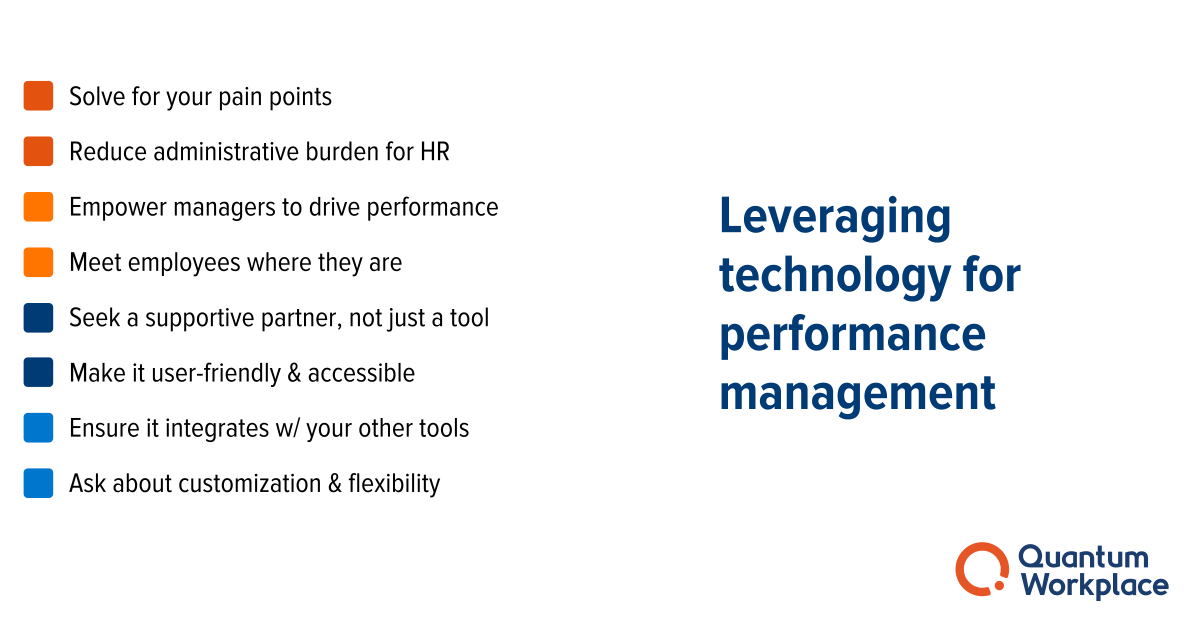
Performance Review images

1. Solve for your pain points.

Performance management should inspire, engage, and connect your teams. If your teams feel bogged down by administrative tasks, you’re not doing it right. To understand what your biggest pain points are, assess your current solutions—and make sure to involve your key stakeholders in the process.

Identify what’s working and what’s not with your current tools. Look at adoption rates, the quality and accuracy of information, and how well leaders use the data for decision-making.

2. Reduce administrative burden for HR.

HR should not be the primary driver of your performance management cycle. They should be focused on the strategy, the frameworks, and coaching your people leaders to implement the system well. Don’t make your HR team suffer and struggle with bare minimum tools. Let technology ease the administrative load, so HR can spend more time on strategic initiatives. Your investment will only compound over time.


3. Empower managers to drive performance. 

Your managers do not have time to navigate clunky processes and tools. If your tools are not easy to use, they will cut corners or avoid the process altogether. You need to equip your managers with a system that makes coaching to performance easy and impactful.


4. Meet employees where they are.

Managers and employees should be able to easily access and use your performance management system. Look for tools that integrate with the systems you already use, so performance activities become part of their flow of work—not a series of additional tasks and steps.

Take the time to understand the unique needs of your teams. Conduct focus groups, surveys, and interviews to gather insights from those who will be using the system. Their input is invaluable in shaping your decision.

5. Seek a supportive partner, not just a tool.

Don’t just settle for a tool, even if that tool gets the job done. Seek a partner that understands your goals and is committed to supporting your journey towards a more effective performance management system. Consider your organization’s future needs. How will your requirements change over time? Select technology that can adapt and grow with you.


6. Make it user-friendly and accessible.

To optimize the performance management cycle, it is important to make it user-friendly and accessible. This includes using HR software and performance management systems that are intuitive and easy to navigate, ensuring that employees and managers can easily access and utilize the tools. 

  • Look for a simple user interface that eliminates unnecessary complexities 
  • Choose solutions that offer clear instructions and guidance within the software 
  • Ensure the software is compatible with different devices and operating systems 
  • Offer user support and training resources for employees and managers 
  • Regularly gather feedback from users to identify areas for improvement and make necessary updates

7. Ensure it integrates with your other systems.

Integration is essential for optimizing the performance management cycle. This includes ensuring that the performance management software seamlessly integrates with other HR systems, such as HRIS, learning management, and talent management systems. Look for: 

  • Seamless data flow and synchronization between systems to eliminate manual data entry and duplication 
  • Integration with HR systems to ensure accurate and up-to-date employee information 
  • Compatibility with existing technology infrastructure and software platforms 
  • Ability to generate comprehensive reports and analytics by aggregating data from various systems 
  • Regularly assessing and updating integration capabilities to accommodate changing organizational needs and technology advancements

8. Ask about customization and flexibility.  

Customization and flexibility are key considerations when selecting performance management solutions. Every organization has unique goals, needs, and workflows, and it is important to choose a solution that can be customized and adapted to meet these specific requirements. Consider: 

  • Tailoring the performance management solution to align with the organization’s performance management process and workflows 
  • Customizing performance evaluation criteria and forms to reflect the organization’s specific requirements and objectives 
  • Offering flexibility in goal-setting methods and feedback formats to accommodate different employee preferences and work styles 
  • Providing options for customization based on different teams or departments within the organization 
  • Regularly reviewing and updating the customization options to meet changing organizational needs

Final thoughts on performance management cycles

Optimizing your performance management cycle is important to employee engagement and performance. By leveraging a continuous approach, you can overcome common challenges and ensure a more efficient process. Choosing technology that integrates with your current systems can enhance your success. And training your leaders to implement your performance management program and tools is key to strong outcomes.


Ready to coach your employees toward success? Learn how Quantum Workplace can help you optimize your approach to employee performance.

 

performance review ad performance management quantum workplace