Home Blog Page 308

AI Investments Surged 62% to $110B in 2024.

0

Venture Capitalists Flock to AI Startups, But Tech Funding Remains Picky

Venture capitalists are gobbling up term sheets for startups peddling artificial intelligence, but they’re remaining picky when it comes to funding the wider spectrum of technology. According to new figures from analytics firm Dealroom, AI startups raised $110 billion last year, a 62% increase from the year before. At the same time, privately-backed companies (startups and scale-ups) across the technology spectrum raised $227 billion in 2024, a 12% decrease from 2023.

AI Funding Soars

Yoram Wijngaarde, the founder of Dealroom, has been analyzing and advising in the tech industry for decades. "This is the biggest wave ever by absolute amounts invested," he said. "There’s never been anything like it." Part of the reason for that is the fact that there is a wider ecosystem being touched by AI, covering hardware and infrastructure, applications, foundational models, and more.

AI Funding Breakdown

A list of some of the biggest AI funding rounds in 2024 speaks to the different areas that are attracting attention. Anthropic (large language models, generative AI), Waymo (self-driving), Anduril (defense), xAI (applications), Databricks (processing and managing data, especially AI data), and Vantage (data centers and infrastructure) were among the top-ten biggest fundraisers of 2024. OpenAI, which feels like the poster child for AI right now, did not raise the most money last year. That spot was taken by Databricks, which raised $10 billion, compared to OpenAI’s $6.6 billion.

OpenAI: A Bellwether in the Industry

Yet, with the most funding in aggregate – more than $20 billion to date, with another $40 billion reportedly in the works – and a viral app in the form of ChatGPT, OpenAI has come to represent a bellwether in the industry. Its two biggest business interests, foundational models and generative AI, appear to be the engines driving all VC activity, with generative AI companies raising $47.4 billion in 2024, and foundational AI technology overtaking AI applications with the most growth (and a giant slice of funding) over the last two years.

Global Funding Trends

The Dealroom report was commissioned to coincide with a week of AI events in Paris around the French government’s AI Action Summit. Part of the event’s agenda is focused on the question of how to champion more equitable AI development across more markets, beyond the U.S.

Regional Funding Disparities

For those who believe AI companies are under-supported outside of the U.S. market, Dealroom’s figures lay bare how that works. A full 42% ($80.7 billion) of venture capital raised in the U.S. went to AI startups last year, compared to just 25% ($12.8 billion) in Europe, and 18% across the rest of the world. China was the standout last year with $7.6 billion invested.

The Future of AI Funding

One of the reasons AI startups have raised so much money is that the costs of building and operating these services: large language models cost a lot in computing infrastructure to build and run. The emergence of DeepSeek and other projects – one built a rival to an OpenAI model for just $50 – present an alternative approach built on open source. Is that something we will see develop further in the year ahead?

Open-Source AI

So far, the prospects for open-source companies have been fairly modest, even counting the outsized presence of Mistral (which bills itself as open source) in Europe and Meta’s efforts in the space. Dealroom says some 12% of AI VC funding last year went to startups building open-source AI. "However, there is considerable grey area for what is considered open source or not," Orla Browne, its head of insights, told me. "For example, xAI is not included in these figures, as while Grok-1 was open source, Grok-2 is currently not. With the inclusion of xAI alone, the percentage would rise to 22%."

VC Firms’ Investments

As for VC firms, Dealroom found that Antler made the most investments in the field last year, with a16z, General Catalyst, Sequoia, and Khosla Ventures rounding out the top five.

Conclusion

In conclusion, the report highlights the significant funding trends in the AI industry, with AI startups raising over $110 billion in 2024, while privately-backed companies across the technology spectrum raised $227 billion. The report also highlights the regional disparities in funding, with the US receiving the majority of funding, while Europe and the rest of the world receive significantly less. The report also touches on the emergence of open-source AI and the potential for further development in the year ahead.

FAQs

Q: What were the top AI funding rounds in 2024?
A: Anthropic, Waymo, Anduril, xAI, Databricks, and Vantage were among the top-ten biggest fundraisers of 2024.

Q: Which company raised the most money in 2024?
A: Databricks raised $10 billion, compared to OpenAI’s $6.6 billion.

Q: What are the two biggest business interests of OpenAI?
A: Foundational models and generative AI.

Q: How much funding did AI startups receive in 2024?
A: AI startups raised $110 billion in 2024.

Q: What is the regional funding disparity in AI?
A: The US received 42% ($80.7 billion) of venture capital funding, while Europe received 25% ($12.8 billion) and the rest of the world received 18%.

ComfyUI Custom Node – Game Boy Camera Style

0

Using an Old Game Boy to Take Pictures with a Twist

I had seen some intriguing images online that caught my attention. A few individuals have used an old Game Boy device with a camera attachment to take pictures, and GameBoyCameraMan on Instagram has a decent following and some fascinating images.

I wanted to see if this could be replicated in ComfyUI and, with the help of Claude AI and some elbow grease, I was able to create a node that achieves the same effect.

The Original Game Boy Camera and Its Limitations

The original resolution of the Game Boy Camera is 128×112 pixels, which is quite small. To accommodate this, the node offers a few options to work with double or quadruple the size, managed through resolution settings. The image is still a bit small, so the node also features an upscale factor ranging from 1 to 10 to produce a larger image.

Adding a Green Tint: Game Boy Green

The node also includes the option for Game Boy Green, which adds a green tint to the generated image.

How the Node Works

The node maintains the aspect ratio of the original image and resizes it down before applying the 8×8 Bayer Dither matrix. Finally, the image is upscaled based on the upscale factor.

Installing the Node

This node can be installed with WeirdWonderful AI Art (WWAA) Custom Nodes pack v1.6.0 and above. The complete source code is available on GitHub and can be installed using ComfyUI Manager.

Sample Images

Below are some sample images generated using this node. I hope you have fun and don’t forget to tag me or the site if you share any images.

Conclusion

The Game Boy Camera node is a fun and creative way to generate unique and retro-style images. With its various settings and options, you can experiment and produce a wide range of results.

Frequently Asked Questions

Q: What is the original resolution of the Game Boy Camera?
A: 128×112 pixels.

Q: Can I customize the resolution of the generated image?
A: Yes, the node offers options to work with double or quadruple the original size, and an upscale factor ranging from 1 to 10.

Q: How do I install the Game Boy Camera node?
A: The node can be installed with WeirdWonderful AI Art (WWAA) Custom Nodes pack v1.6.0 and above, and can be installed using ComfyUI Manager. The complete source code is available on GitHub.

Q: Can I use the Game Boy Camera node to create images with a green tint?
A: Yes, the node includes the option for Game Boy Green, which adds a green tint to the generated image.

Q: Where can I find more information about ComfyUI and the Game Boy Camera node?
A: You can find more information about ComfyUI and the Game Boy Camera node on the WeirdWonderful AI Art website.

Day of the Dead: AI-ARTS

0

Dia de Muertos: A Series of AI-Generated Images

Introduction

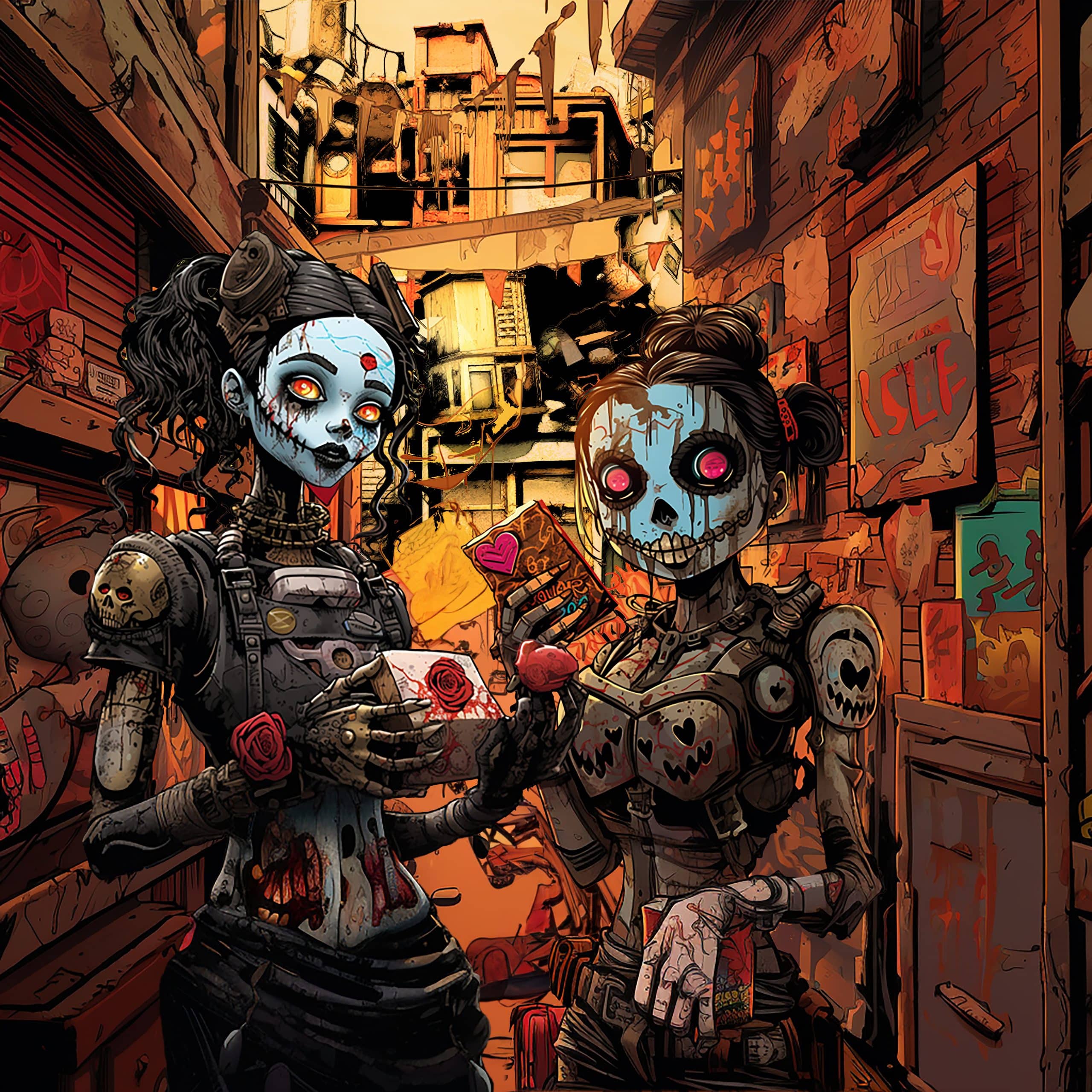
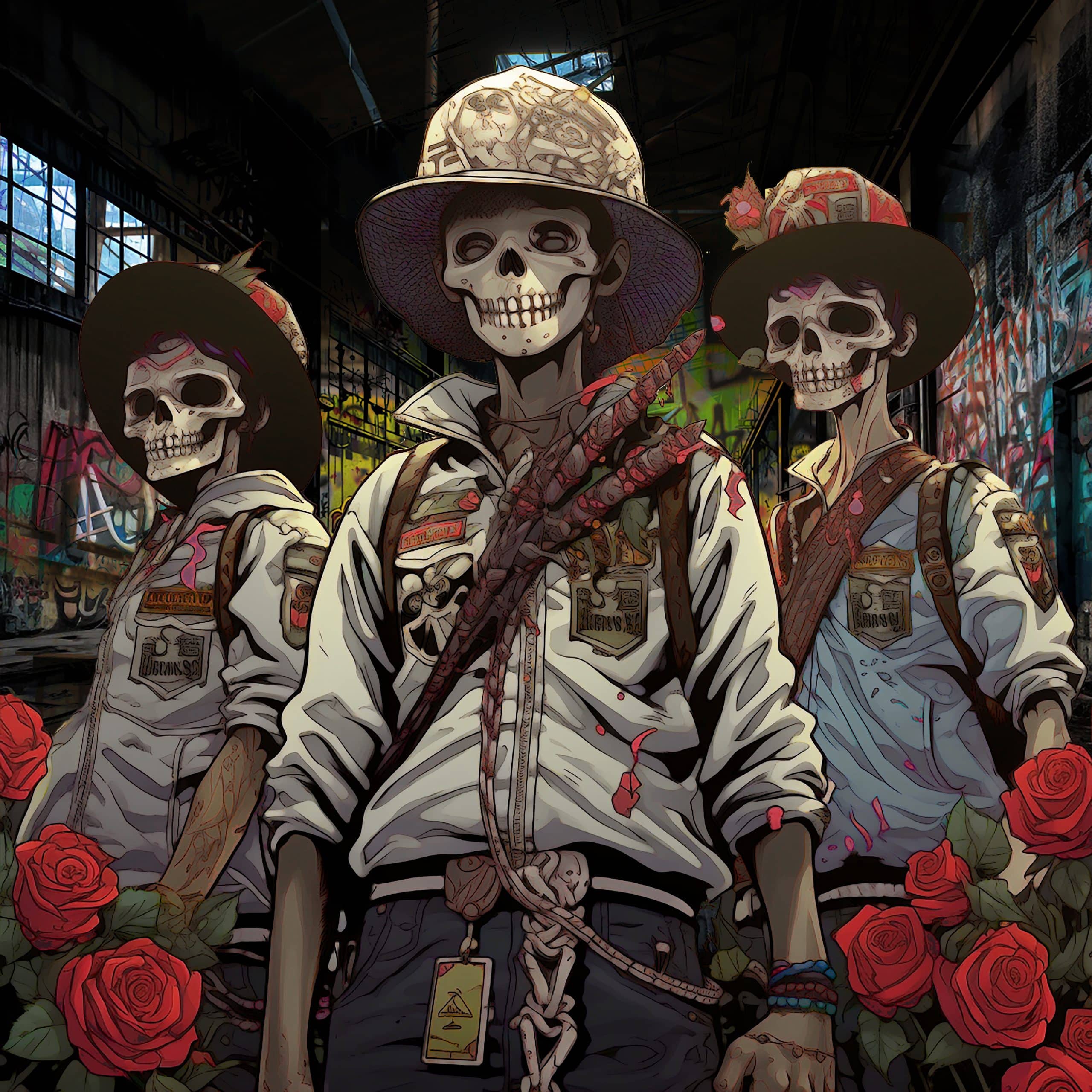
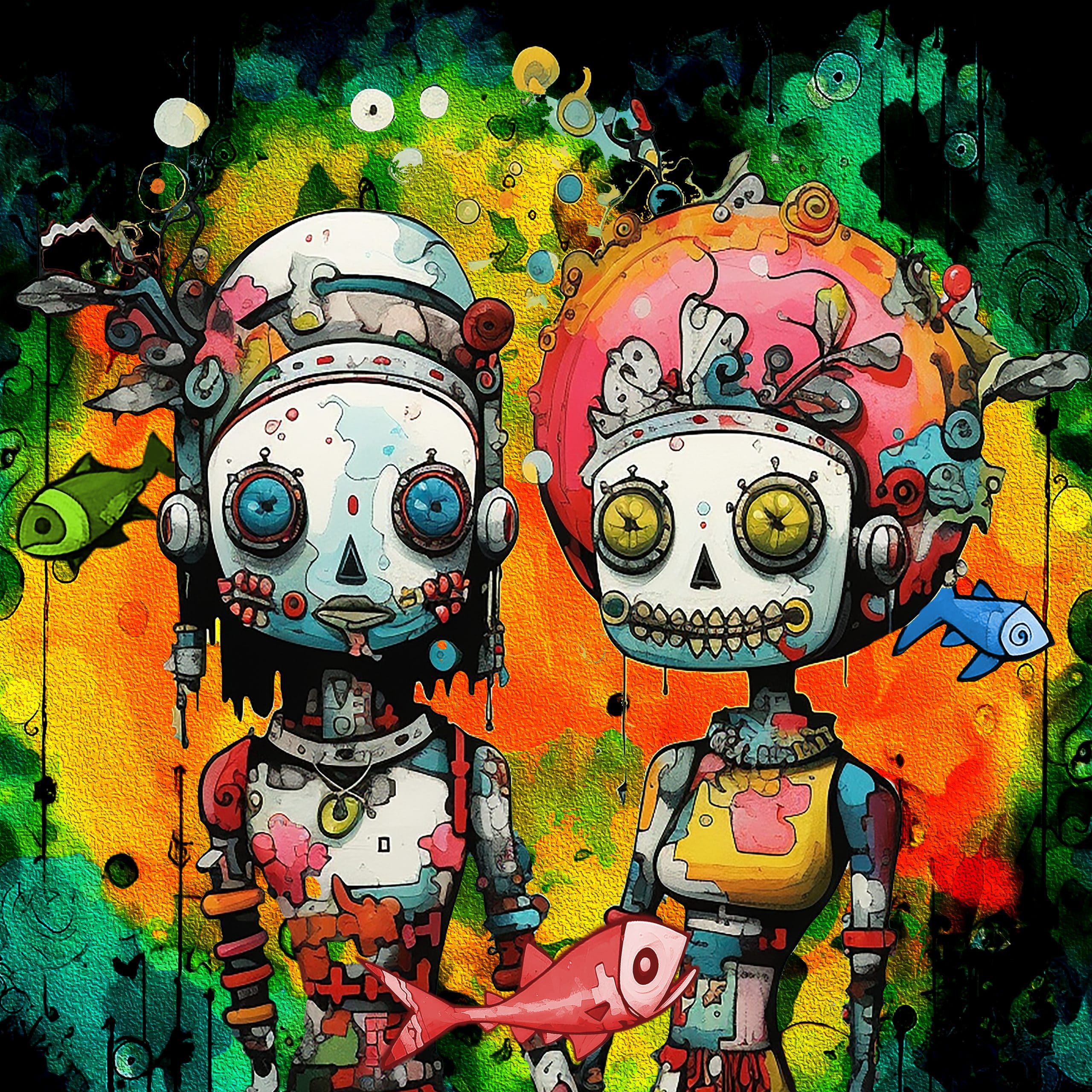
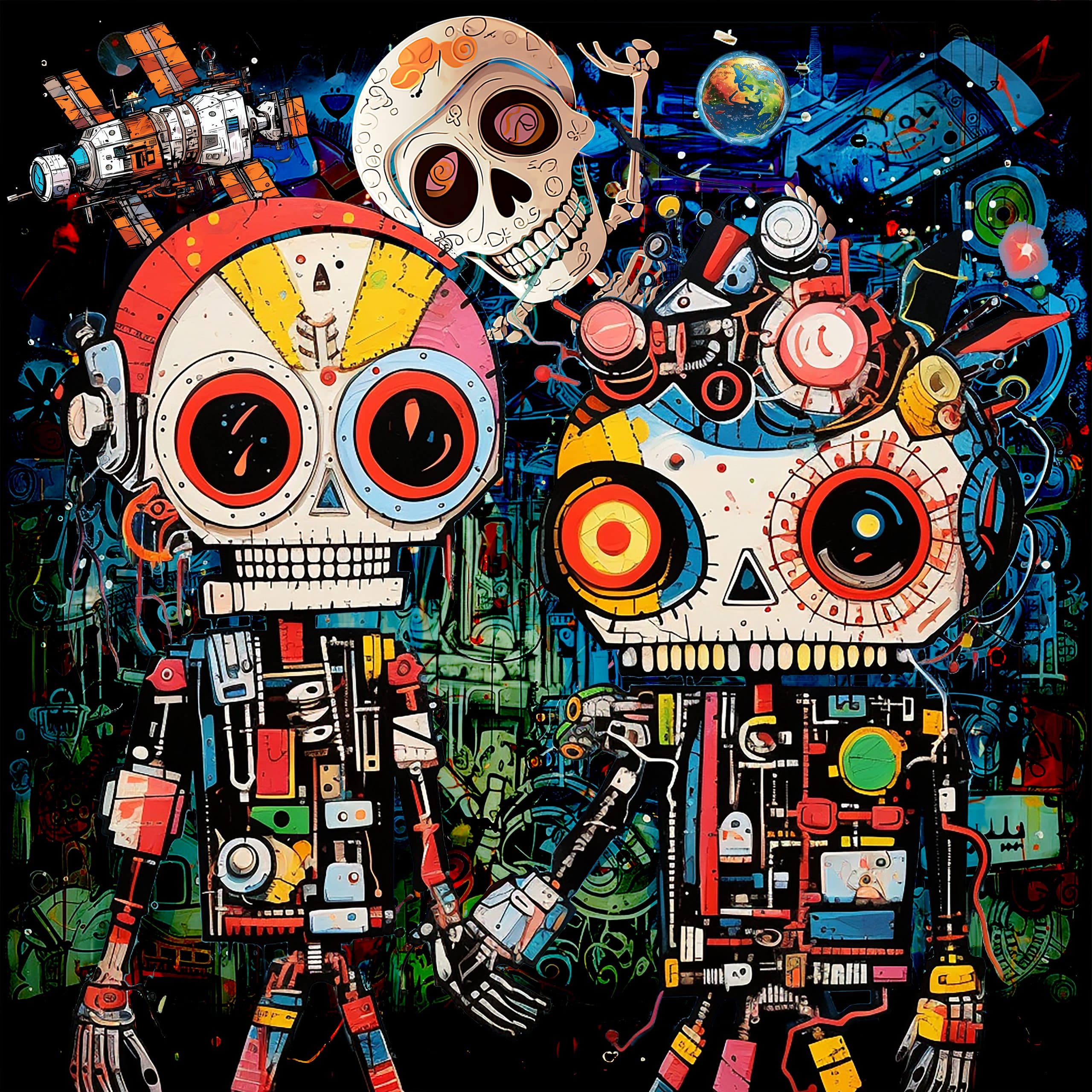
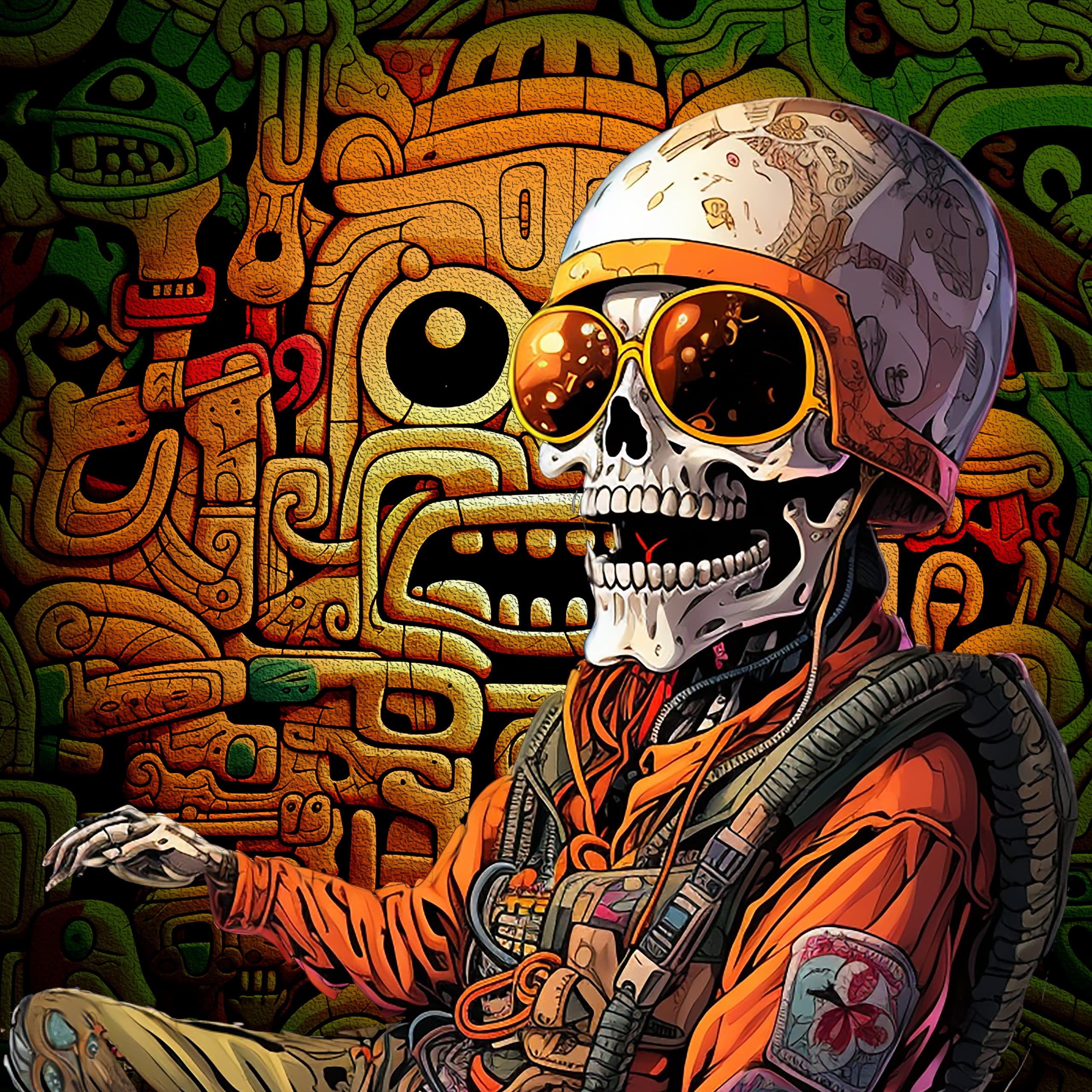
These images are part of the "Dia de Muertos" series, created by using AI-generated and composited images. The goal was to produce an alternative range of images for "the day of the dead" celebrations, featuring skeletal and non-human characters. Each image is built from multiple AI-generated resources, with the prompt tweaked and developed to produce a range of resources to select and build from. Each resource has been composited and edited to create the final image.

The Series

The series includes the following images:

Beste Igandero


"Beste Igandero"

American Muertos


"American Muertos"

You Say Flamenco, I Say Flamingo… Flamenco! Flamingo!


"You Say Flamenco, I Say Flamingo… Flamenco! Flamingo!"

Pimpanzee


"Pimpanzee"

Kex and Rjómi


"Kex and Rjómi"

Robert, Baden and Powell


"Robert, Baden and Powell"

Nonna Rosa


"Nonna Rosa"

Mtoto


"Mtoto"

Feliz Familia


"Feliz Familia"

Máumáy (Close Up)


"Máumáy (Close Up)"

Dia de las Monas


"Dia de las Monas"

The Many Faces of Mortie Sopa


"The Many Faces of Mortie Sopa"

Tritón and Sereia (Late Teens)


"Tritón and Sereia (Late Teens)"

ISS Photobomb


"ISS Photobomb"

Kosmo Adams


"Kosmo Adams"

Conclusion

The "Dia de Muertos" series is a unique and imaginative take on the traditional Day of the Dead celebrations. By using AI-generated and composited images, the series offers a fresh perspective on the holiday, featuring skeletal and non-human characters in various scenarios. Each image is a testament to the creativity and possibilities of AI-generated art.

Frequently Asked Questions

Q: What is the purpose of the "Dia de Muertos" series?
A: The series aims to create an alternative range of images for "the day of the dead" celebrations, featuring skeletal and non-human characters.

Q: How were the images created?
A: Each image is built from multiple AI-generated resources, with the prompt tweaked and developed to produce a range of resources to select and build from. Each resource has been composited and edited to create the final image.

Q: What is the significance of the "Day of the Dead" holiday?
A: The "Day of the Dead" is a traditional Mexican holiday honoring the deceased, typically celebrated with parades, altars, and feasting.

Pebble Founder’s Small Android Phone

0

Galaxy Z Flip Owner Considers Trading in for Galaxy S25

The Struggle is Real

I’m now one of a contingent of Samsung Galaxy Z Flip owners who is seriously considering trading in my Flip for a Galaxy S25. It’s not small, but it’s the closest thing we’ve got and my Flip’s battery doesn’t remotely last until bedtime anymore. I ask Migicovsky whether I can safely upgrade without feeling I might miss out on a possible Small Android Phone by, say, mid-2026. He says I can, without commenting on my proposed timeline.

A Brief History of the Small Android Phone Project

At one point the phone project was targeting a 2024 release date and had gotten as far as creating an entire brand, Beep, to market it with, according to the portfolio of Small Android Phone Project industrial designer Alex De Stasio. He’d even dreamt up a billboard:

Pebble: The Original Low-Power Smartwatch

For the uninitiated, the original Pebbles were low-power devices whose best features were dead simplicity and battery life — no touchscreen, no digital crown, just a few buttons to help you read notifications and run a catalog of charming basic apps. That’s fine with me as long as the buttons are good!

What We Know So Far

A few other things he’s confirmed about the new Pebble so far:

  • He told Android Faithful there are two software features he’d like to add.
  • His “big thing” is to someday have a chat client, one that could address a limitation of early Pebbles by letting you see a whole conversation history on your wrist.
  • The other is a basic AI handoff: “Pebble has a microphone, it has a screen… why can’t you talk to ChatGPT?”

Conclusion

The new Pebble smartwatch is shaping up to be an exciting device, with its focus on simplicity and battery life. While it may not have all the bells and whistles of more advanced smartwatches, it’s clear that the team behind it is committed to delivering a high-quality product.

Frequently Asked Questions

Q: When can I expect to see the new Pebble smartwatch on the market?
A: The project is targeting a release date, but no specific timeline has been announced.

Q: What features can I expect from the new Pebble?
A: The new Pebble will have a focus on simplicity and battery life, with two software features planned: a chat client and a basic AI handoff.

Q: Is the new Pebble compatible with my existing smartwatch ecosystem?
A: It’s unclear what level of compatibility the new Pebble will have with existing smartwatch ecosystems.

What to Expect at Amazon’s February Event

0

Amazon’s February 2025 Event: What to Expect from Alexa 2.0 and Beyond

Amazon has been focused on bringing generative AI to Alexa for the past few years, hitting multiple delays in launching new features that the company first announced in September 2023. The deferred Alexa 2.0 seems poised for a 2025 release, as evidenced by the surprise Devices and Services event Amazon is hosting at the end of the month.

Generative AI in Alexa

This is expected to be the main event during the Devices and Services announcements at the end of February. During the last Devices and Services event, Amazon executive Dave Limp announced a gen AI-powered Alexa coming to an Echo device near you.

This Alexa 2.0 featured a more natural cadence in its replies, could handle multiple prompts in a session, and would generate content instead of providing a canned answer to questions. It would also feature greater customization power to remember user preferences (perhaps like ChatGPT’s Memory) for more productive user interactions.

Subscription Tiers

Amazon’s Alexa 2.0 is expected to work behind a subscription service that would range from $5 to $10 monthly. While this has been rumored for about a year, word is that Amazon is planning to introduce the upgraded Alexa for free to a limited number of users.

The ‘Classic Alexa’ will still be available for users who prefer not to pay the monthly fee, though it’s unsure how long Amazon plans to maintain the current version.

New Echo Devices

While Amazon skipped its large-scale Devices and Services event last year, it still released several new devices from October through December of 2024, including the largest Echo Show ever — the 21-inch model. Amazon also released a new Echo Show 15, its first-ever color Kindle, the Kindle Colorsoft, a new Kindle Scribe, a Fire TV Stick HD, and a new Fire HD 8 tablet.

New Fire TV Upgrades

While most of the focus for the Amazon Devices and Services events is on Alexa, we could see some Fire TV upgrades coming to Amazon’s lineup of smart TV devices.

Amazon announced the Fire TV Omni Mini-LED series of smart TVs last November, as well as a new Soundbar Plus Series and upgraded 4-Series. While I’m not expecting a new lineup of Fire TV panels, I could see Amazon releasing new generative AI capabilities for existing Fire TVs or revamping its older Fire TV Sticks.

Conclusion

Amazon’s February 2025 event is expected to bring significant updates to its Alexa voice assistant, including the highly anticipated Alexa 2.0. The event may also see the launch of new Echo devices, Fire TV upgrades, and other surprises. With the company’s focus on generative AI, it’s likely that we’ll see a major shift in the way Alexa interacts with users and provides information.

FAQs

Q: What is Alexa 2.0?
A: Alexa 2.0 is a new version of Amazon’s voice assistant that features generative AI capabilities, allowing it to provide more natural and personalized responses to user queries.

Q: When will Alexa 2.0 be released?
A: Alexa 2.0 is expected to be released in 2025, although an exact date has not been announced.

Q: Will Alexa 2.0 require a subscription?
A: Yes, Alexa 2.0 is expected to work behind a subscription service that would range from $5 to $10 monthly.

Q: Will the ‘Classic Alexa’ still be available?
A: Yes, the ‘Classic Alexa’ will still be available for users who prefer not to pay the monthly fee, although it’s unsure how long Amazon plans to maintain the current version.

Q: What other devices might be launched during the February 2025 event?
A: Amazon may launch new Echo devices, Fire TV upgrades, and other surprises during the event.

Five Notes from the Big Paris AI Summit

0

World Leaders and Tech Moguls Gather in Paris to Discuss Artificial Intelligence

Europe is Having Regulation Regrets

The backdrop for the A.I. summit is that Europe, which passed tough laws on data privacy and social media over the last decade, and had a head start on regulating A.I. with the European Union’s A.I. Act, appears to be having second thoughts. French President Emmanuel Macron, who this week announced $112.5 billion in private investments into the French A.I. ecosystem, has been especially wary of falling behind. He has become a cheerleader for Mistral, a French A.I. start-up, and has argued against "punitive" regulation that could make the country’s tech sector less competitive.

A.I. Doomsayers are Losing Ground

The Paris A.I. summit is actually the third in a series of global A.I. summits. The first two – held in Britain in 2023 and in South Korea last year – were much more focused on the potential risks and harms of advanced A.I. systems, up to and including human extinction. But in Paris, the doomsayers have been sidelined in favor of a sunnier, more optimistic vision of the technology’s potential. Panelists and speakers were invited to talk up A.I.’s ability to accelerate progress in areas like medicine and climate science, and gloomier talks about A.I. takeover risks were mostly relegated to unofficial side events.

DeepSeek Has Energized the Also-Rans

Like all A.I. events over the past month, the Paris summit has been buzzing with conversation about DeepSeek, the Chinese A.I. start-up that stunned the world with its powerful reasoning model, reportedly built for a fraction of the cost of leading American models. In addition to lighting a fire under America’s A.I. giants, DeepSeek has given new hope to smaller A.I. outfits in Europe and elsewhere that had counted themselves out of the race. By using more efficient training techniques and clever engineering hacks to build their models, DeepSeek proved that you might need only tens of millions of dollars – rather than hundreds of billions of dollars – to keep pace on the A.I. frontier.

Trump’s A.I. Policy is a Question Mark

The most popular guessing game of the week has been what the Trump administration’s posture on A.I. will be. The new administration has made a few moves on A.I. so far, such as repealing the Biden White House’s executive order that laid out a testing program for powerful A.I. models. But it hasn’t yet laid out a full agenda for the technology. Some people here are hopeful that Elon Musk – one of the president’s top advisers and a man who both runs an A.I. company and has expressed fears about powerful A.I. run amok – will persuade Mr. Trump to take a more cautious approach. Others believe that the venture capitalists and so-called A.I. accelerationists in Mr. Trump’s orbit, such as the investor Marc Andreessen, will persuade him to leave the A.I. industry alone and tear up any regulations that could slow it down.

No One is Really Grappling with Short A.I. Timelines

The biggest surprise of the Paris summit, for me, has been that policymakers can’t seem to grasp how soon powerful A.I. systems could arrive, or how disruptive they could be. Mr. Hassabis, of Google DeepMind, said during an event at the company’s Paris office on Sunday that A.G.I. – artificial general intelligence, an A.I. system that matches or exceeds human abilities across many domains – could arrive within five years. (Mr. Amodei, of Anthropic, and Mr. Altman, of OpenAI, have predicted its arrival even sooner, possibly within the next year or two.) Even if you apply a discount to the predictions made by tech C.E.O.s, the discussions I’ve heard in Paris have lacked the urgency you’d expect them to have, if powerful A.I. really is around the corner.

Conclusion

The Paris A.I. summit has given us a glimpse into the future of A.I. and its potential to shape the world. As the technology advances, it is crucial for policymakers, industry leaders, and the public to come together to discuss the potential risks and benefits of A.I. and to develop a comprehensive strategy to harness its power. The future of A.I. is exciting, but it also requires careful planning and consideration to ensure that its benefits are shared by all.

FAQs

Q: What is the purpose of the A.I. summit?

A: The A.I. summit is a conference that brings together world leaders, tech moguls, and industry experts to discuss the future of artificial intelligence and its potential impact on society.

Q: What are the main issues being discussed at the summit?

A: The summit is discussing the potential risks and benefits of A.I., as well as the need for regulation and oversight to ensure that the technology is used responsibly.

Q: What is the current state of A.I. development?

A: A.I. is rapidly advancing, with significant breakthroughs in areas such as natural language processing, computer vision, and machine learning. However, there are still many challenges to be overcome before A.I. can be widely adopted.

Q: What is the potential impact of A.I. on the job market?

A: The impact of A.I. on the job market is still unclear, but it is likely to be significant. Some experts predict that A.I. could displace certain jobs, while others see it as an opportunity for new industries and job creation.

Q: What is the role of regulation in the development of A.I.?

A: Regulation is crucial in ensuring that A.I. is developed and used responsibly. Policymakers need to work with industry leaders and experts to develop a framework that balances the potential benefits of A.I. with the need to protect society.

Mapping Mario’s Entire Planet

0

The Mario Franchise: A 100-Day Mapping Project

A Delightful Mashup of Fan Theory

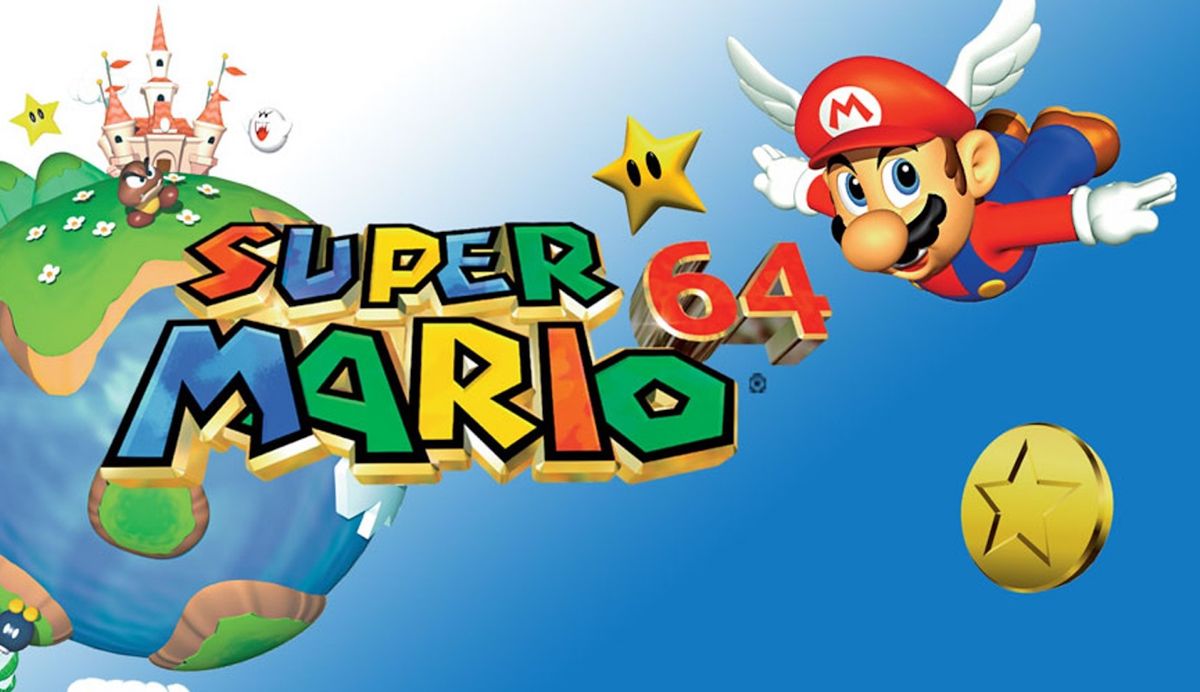
The Mario franchise has come a long way since its release on the Nintendo Entertainment System, splintering off into cross-platform games, movies, TV shows, and more. And it’s become so ingrained in our cultural consciousness that endless lore and fan theory have developed alongside its different iterations.

A 100-Day Mapping Project

One fan, Charlie from YouTube channel CharlieandLuke, has given one of the best responses to the Super Mario universe and its confusing array of levels and lands. Charlie spent 100 days mapping out the whole of Super Mario’s planet, and made an epic video explaining their process, theories, assumptions, and more.

The Video

The video, created by Charlie, is a delightful mashup of fan theory worked out of hours spent playing the game and information taken from various sources, including other series in the Mario universe, Mario movies, concept art, and more. Charlie starts out by laying down some ground rules and then jumps into the process, one land at a time.

The Process

Charlie cross-references the different creatures found in each land, looks at game details like where the pipes start and end up, considers weather patterns, and references made to geography/location throughout the Mario franchise. But he does so much more than this during his action-packed video full of clips from different games.

Combining Facts and Interpretations

I love how Charlie combines hard "facts" about the lands with his own interpretations, such as when he’s discussing the geographical features of Dinosaur Land. It is assumed that the land mass of Yoshi’s Island used to be attached as one, but slowly broke apart from "natural erosion, several attacks from Bowser over the years and the heavy, earth-shattering movements you’d expect from the kind of creatures you’d expect to find somewhere called ‘Dinosaurland’."

The Final Result

The final result is a 2D map, which shows the whole of Mario’s planet laid out in an easy-to-digest way. Brilliant.

Conclusion

This project is the perfect companion to the Super Mario Bros 3D remake, which saw the platform game remade in Unreal Engine 5. Both bring new joy out from the Mario universe – I’ve loved seeing fans get so creative with beloved video game characters.

FAQs

Q: How long did Charlie spend mapping out the Mario universe?
A: Charlie spent 100 days mapping out the Mario universe.

Q: What sources did Charlie use to create his map?
A: Charlie used various sources, including other series in the Mario universe, Mario movies, concept art, and more.

Q: What is the final result of Charlie’s project?
A: The final result is a 2D map, which shows the whole of Mario’s planet laid out in an easy-to-digest way.

Google Changed Gulf of Mexico to Gulf of America on Maps

0

Google Updates Name of Gulf of Mexico to "Gulf of America"

Background

On Monday, Google Maps officially updated the name of the Gulf of Mexico to the Gulf of America, following a presidential executive order. This change is part of a larger effort by President Donald Trump to "restore American pride in the history of American greatness."

The Executive Order

In January, President Trump issued an executive order reversing an Obama-era decision to rename Mount McKinley to Denali, a name used by Indigenous people for centuries. The order also decreed that the Gulf of Mexico would be renamed the Gulf of America. The change is intended to rebrand the region as part of a broader effort to reassert American dominance.

Google’s Compliance

Google, in compliance with the executive order, has updated its maps to reflect the new name, Gulf of America. The change is already visible to users in the United States, while international users will see both names, and Mexican users will only see the original name, Gulf of Mexico. Google’s decision is consistent with its existing policies on how to navigate naming differences between countries.

Reactions

Mexican President Claudia Sheinbaum has expressed discontent with the decision, stating that she will send a letter to Google questioning the change. However, Google’s move is consistent with its existing practices around naming conventions.

Apple’s Response

Apple, on the other hand, has not updated its Maps app to reflect the new name. When searching for "Gulf of America" on Apple Maps, the app does not yield any results.

Background on Google and Apple’s Ties to Trump

Google CEO Sundar Pichai and Apple CEO Tim Cook both attended Trump’s inauguration, with Cook personally donating $1 million to Trump’s inaugural fund. Google also made a $1 million contribution.

Conclusion

The renaming of the Gulf of Mexico to the Gulf of America is a significant change that has sparked debate and controversy. While some see it as a move to reassert American dominance, others view it as a misguided attempt to rewrite history. As technology companies like Google and Apple navigate these changes, it remains to be seen how this will impact the global community.

FAQs

Q: What is the new name of the Gulf of Mexico?
A: It is now officially known as the Gulf of America.

Q: Why was the name changed?
A: The name was changed as part of a presidential executive order to "restore American pride in the history of American greatness."

Q: Will other countries be affected by this change?
A: Yes, international users will see both names, while Mexican users will only see the original name, Gulf of Mexico.

Q: Has Apple updated its Maps app to reflect the new name?
A: No, Apple has not updated its Maps app to reflect the new name.

Mastering React App Architecture

0

Here is the rewritten article:

1. assets/ 🖼️
This folder is for all your static files like images, icons, fonts, and other media. Keeping them in one place makes it easy to manage and reference them throughout your app.

What to store here:

  • Images (logo.png, background.jpg)
  • Icons (SVGs or icon fonts)
  • Fonts (custom or third-party)

2. components/ 🧩
This is where your reusable UI components live. Think of buttons, cards, modals, and anything else that can be reused across your app.

What to store here:

  • Reusable components (Button.jsx, Card.jsx)
  • Component-specific styles (if not using CSS-in-JS)
  • Subfolders for complex components (e.g., components/Header/)

3. contexts/ 🌐
React Context is perfect for managing global state without prop drilling. This folder stores all your context providers and related logic.

What to store here:

  • Context providers (AuthContext.js, ThemeContext.js)
    *Reducers or custom hooks for context logic

4. helpers/ 🛠️
This folder is for utility functions that don’t belong to a specific component or feature. These are the little helpers that make your life easier.

What to store here:

  • Utility functions (formatDate.js, validateEmail.js)
  • Constants (appConstants.js)
  • Custom error handlers

5. hooks/ 🎣
Custom hooks are a game-changer in React. This folder is for all your reusable hooks, keeping them organized and easy to import.

What to store here:

  • Custom hooks (useFetch.js, useLocalStorage.js)
  • Hooks for specific logic (e.g., useAuth.js, useTheme.js)

6. layouts/ 🖼️
Layouts are the skeleton of your app. They define the structure of your pages (e.g., header, footer, sidebar) and help maintain consistency across your app.

What to store here:

  • Layout components (MainLayout.js, AuthLayout.js)
  • Layout-specific styles

7. pages/ 📄
This folder contains the top-level components that represent each page of your app. Each file here corresponds to a route in your app.

What to store here:

  • Page components (Home.jsx, About.jsx, Contact.jsx)
  • Page-specific logic and styles

8. services/ 🌍
This folder is for all your API calls and external service integrations. Keeping them separate makes it easy to manage and mock during testing.

What to store here:

  • API service files (authService.js, userService.js)
  • Configuration files for APIs (e.g., apiConfig.js)

9. styles/ 🎨
This folder is for global styles, themes, and CSS utilities. If you’re using a CSS-in-JS library, you might not need this folder, but it’s still useful for global styles.

What to store here:

  • Global styles (global.css)
  • Theme files (theme.js for styled-components or Material-UI)
  • CSS utility classes

10. App.js 🎯
This is the entry point of your app. It’s where you define your routes, wrap your app with providers, and set up any global configurations.

What to include here:

  • Routing logic (using react-router-dom)
  • Context providers (AuthProvider, ThemeProvider)
  • Global error boundaries or wrappers

The Full Folder Structure
Here is the complete folder structure, including the files inside each folder:

Why This Structure Works
This structure works because:

  • Scalability: As your app grows, you can easily add new folders or subfolders without breaking the existing structure.
  • Readability: Everything has its place, making it easy for you (or your team) to find what you need.
  • Reusability: By separating concerns, you can reuse components, hooks, and utilities across your app.

Pro Tips for Structuring Your React App

  • Keep it simple: Don’t overcomplicate the structure. Start with what you need and expand as your app grows.
  • Use meaningful names: Name your files and folders in a way that makes their purpose clear.
  • Document your structure: Add a README.md file to explain your folder structure to your team (or your future self).

Ready to Build?
Now that you have a solid structure in place, it’s time to start building! Remember, the best structure is the one that works for you and your team.

Retro Icon Design Makes a Comeback

0

Design Trends: Skeuomorphism’s Resurgence

Design trends tend to move in cycles, and if a style seems garish and dated right now, there’s a good chance it’ll be cool again in a few years’ time. Just look at the resurgence of the Y2K aesthetic, with compact cameras and iPods having another moment in the sun. And it isn’t just hardware – if recent UI/UX developments are anything to go by, software is just as susceptible to cycles too.

The Return of Decorative Heritage Designs

The world of logos and wordmarks has already begun moving away from the flat design trope, with countless decorative heritage designs making a comeback in the last couple of years. And now there are hints that software design is becoming more tactile again too. Could it be that, whisper it, skeuomorphism is coming back?

Apple’s Shift

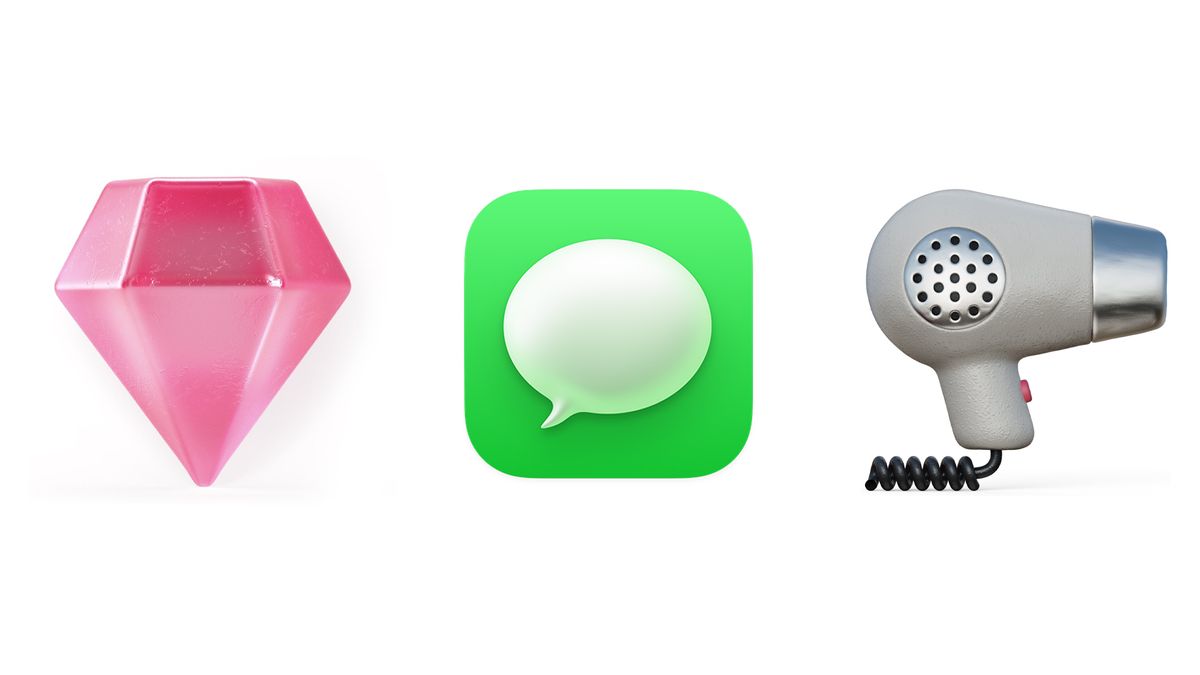
When Apple dropped iOS 7 in 2013, it marked a sudden shift in direction from the detailed design language that had defined the iPhone for the last six years. Gone were realistic and tactile textures, replaced with smooth, cold, and minimal iconography. But the tide might finally be turning – partly thanks to Apple. We’ve seen examples of the company getting a little more ‘extra’ with its menu screens and animations over the last year. Even the macOS icons are slowly but surely gaining extra dimensions, and shadows.

Airbnb’s Tactile Icons

And it isn’t just Apple. Last year, Airbnb launched a new icon set featuring unbelievably tactile detail. As one X user commented on the tiny but textured images of hairdryers and fireplaces, "I want to lick and touch them all".

Retro Web Design

And then there’s web design. Nostalgia is everywhere right now, with Wix even declaring it a bonafide design trend last year. From MySpace-inspired social app Noplace to the Web Design Museum, it seems everybody’s yearning for a time when the web was less uniform and a little more chaotic. No wonder Gen Z is apparently going wild for the Frutiger Aero aesthetic.

The Rationale

Indeed, while UI design might be a little behind logo design when it comes to this backward shift, it seems the rationale is similar – rejection of sameness. The argument that the minimal logo trend is killing brands has gathered pace over the last few years, leading to the sharp left turn we’ve seen in logo design. And it looks like UI design is finally following suit.

Conclusion

As for why we’re all so nostalgic for a messier, more physical design language, it might have something to do with the fact that smartphone use has increased to such dizzying (or is that worrying?) levels. If we’re all spending so much time in sterile and minimal digital environments, it’s no surprise that we’re starting to turn towards designs that remind us not just of the past, but also of the real world.

FAQs

Q: What is skeuomorphism?
A: Skeuomorphism is a design trend that involves incorporating physical textures and elements into digital designs, often to create a more tactile and realistic experience.

Q: Why is skeuomorphism making a comeback?
A: Skeuomorphism is making a comeback because people are starting to crave more tactile and realistic designs, possibly due to the increasing use of smartphones and the desire for a more immersive experience.

Q: What are some examples of skeuomorphism in design?
A: Examples of skeuomorphism in design include the use of textured icons, faux leather or wood textures, and other physical elements to create a more realistic and tactile experience.

Q: Is skeuomorphism a good design trend?
A: Whether skeuomorphism is a good design trend or not depends on personal opinion. Some people may find it appealing and nostalgic, while others may find it tacky or over-the-top.