Home Blog Page 32

Generate single title from this title 3 threats putting student safety at risk in 100 -150 characters. And it must return only title i dont want any extra information or introductory text with title e.g: ” Here is a single title:”

Write an article about

Key points:

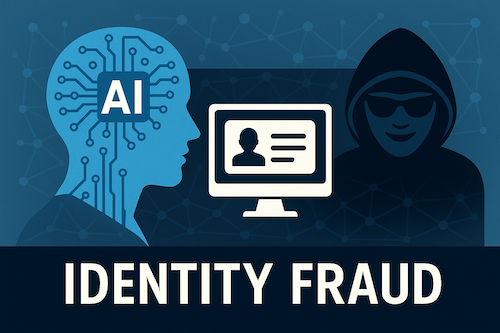
In today’s schools, whether K-12 or higher education, AI is powering smarter classrooms. There’s more personalized learning and faster administrative tasks. And students themselves are engaging with AI more than ever before, as 70 percent say they’ve used an AI tool to alter or create completely new images. But while educators and students are embracing the promise of AI, cybercriminals are exploiting it.

In 2025, the U.S. Department of Education reported that nearly 150,000 suspect identities were flagged in recent federal student-aid forms, contributing to $90 million in financial aid losses tied to ineligible applicants. From deepfakes in admissions to synthetic students infiltrating online portals and threatening high-value research information, AI-powered identity fraud is rising fast, and our educational institutions are alarmingly underprepared.

As identity fraud tactics become more scalable and convincing, districts are now racing to deploy modern tools to catch fake students before they slip through the cracks. Three fraud trends keep IT and security leaders in education up at night–and AI is supercharging their impact.

1. Fraud rings targeting education

Here’s the hard truth: Fraudsters operate in networks, but most schools fight fraud alone.

Coordinated rings can deploy hundreds of synthetic identities across schools or districts. These groups recycle biometric data, reuse fake documents, and share attack methods on dark web forums.

To stand a fair chance in the fight, educational institutions must work with identity verification experts that enable a holistic view of the threat landscape through cross-transactional risk assessments. These assessments spot risk patterns across devices, IP addresses, and user behavior, helping institutions uncover fraud clusters that would be invisible in isolation.

2. Deepfakes and injected selfies in remote enrollment

Facial recognition was once a trusted line of defense for remote learning and test proctoring. But fraudsters can now use emulators and virtual cameras to bypass those checks, inserting AI-generated faces into the stream to impersonate students. In education, where student data is a goldmine and systems are increasingly remote, the risk is even more pronounced.

In virtual work environments, for example, enterprises are already seeing an uptick in the use of deepfakes during job interviews. By 2028, Gartner predicts 1 in 4 job candidates worldwide will be fake. The same applies to the education sector. We’re now seeing fake students, complete with forged government IDs and a convincing selfie, slide past systems and into financial aid pipelines.

So, what’s the fix? Biometric identity intelligence, trusted by a growing number of students, can verify micro-movements, lighting, and facial depth, and confirm whether a real human is behind the screen. Multimodal checks (combining visual, motion, and even audio data) are critical for stopping AI-powered identity fraud.

3. Synthetic students in your systems

Unlike stolen identities, synthetic identities are crafted from real–and fake–fragments, such as a legit SSN combined with a fake name. These “students” can pass enrollment checks, get campus credentials, and even apply for financial aid.

Traditional document checks aren’t enough to catch them. Today’s identity verification tools must use AI to detect missing elements, like holograms or watermarks, and flag patterns including identical document backgrounds, which is a key sign of industrial-scale fraud.

 AI-powered identity intelligence for education

As digital learning becomes the norm and AI accelerates, identity fraud will only get more sophisticated. However, AI also offers educators a solution.

By layering biometrics, behavioral analytics, and cross-platform data, schools can verify student identities at scale and in real time, keeping pace with advancing threats, and even staying one step ahead.

Ashwin Sugavanam, Jumio Corporation

Ashwin Sugavanam is currently the VP, AI & Identity Analytics at Jumio Corporation. Ashwin is a visionary Data and Analytics leader with two decades of overall experience out of which he has spent the last decade in helping organizations incubate and scale Data & AI practices. Over the last couple of years Ashwin has helped organizations drive measurable business outcomes by responsibly scaling Data and AI initiatives, implementing modern concepts like Data Mesh and MLOps, and leveraging tools such as the Data Scientist Co-Pilot to accelerate impact. He can be reached on LinkedIn and at the company website https://www.jumio.com/ .

Latest posts by eSchool Media Contributors (see all)

.Organize the content with appropriate headings and subheadings ( h2, h3, h4, h5, h6). Include conclusion section and FAQs section with Proper questions and answers at the end. do not include the title. it must return only article i dont want any extra information or introductory text with article e.g: ” Here is rewritten article:” or “Here is the rewritten content:”

Krishna and Rukmini: A Letter, a Temple, and a Destiny Fulfilled

0

In the sacred imagination of India, some love stories are not merely romances—they are revelations. The story of Krishna and Rukmini is remembered as a union where devotion becomes courage, and courage becomes a turning point of destiny. In many Hindu tellings, Rukmini is revered as an expansion/incarnation of Lakshmi, the goddess of fortune, and Krishna as the Supreme Lord—so their meeting is portrayed as both deeply human and unmistakably divine. 

Prologue: The Princess Who Fell in Love with a Name

Rukmini was a princess of Vidarbha, raised in royal comfort but drawn toward something more enduring than luxury: meaning. Stories of Krishna reached her not as gossip but as living scripture—tales of his intelligence, his fearlessness against tyranny, and the strange tenderness he showed to the vulnerable. Some retellings emphasize a striking detail: she fell for his qualities before ever imagining his face. 

As those stories settled into her heart, admiration ripened into certainty: if she ever married, it would be Krishna—not because he was merely powerful, but because his character felt like truth.

The Pressure of an Unwanted Match

But palaces are built not only of stone; they are built of expectations.

Rukmini’s brother Rukmi opposed the idea of Krishna as her husband and pushed for a political alliance instead—an arranged marriage to Shishupala, the crown prince of Chedi. In the Bhagavata Purana retelling, Rukmi is described as aligned with Krishna’s rival Jarasandha, and the match with Shishupala would strengthen that camp. Rukmini’s consent was not the priority; strategy was. 

The wedding preparations began. Invitations moved across kingdoms. Warriors and kings arrived—some as guests, some as claimants, and some with pride sharpened into entitlement.

Rukmini, however, did not surrender.

The Prelude: A Letter of Love (and a Plan)

If she could not speak freely in court, she would speak in secret.

In one of the most famous elements of the story, Rukmini calls for a trusted Brahmin and entrusts him with her message to Krishna. The letter is not only a confession of love—it is a strategic plan, a plea, and an act of spiritual daring.

She writes that she will go to worship Goddess Ambika (Parvati) at a temple outside the city before the wedding. There—at the moment she is briefly beyond the palace walls—Krishna must come and take her away. 

In devotional tradition, this is the moment people remember most clearly: the princess refuses to be treated as a bargaining chip. She chooses.

Krishna Receives the Message

When the Brahmin reaches Krishna, the message lands not as a romantic thrill but as a moral call. In the Bhagavata Purana framing, Krishna recognizes Rukmini’s virtues and resolves to marry her. 

He does not delay.

Krishna sets out toward Vidarbha—swift, purposeful, accompanied by his strength and his allies. Some versions emphasize Balarama’s role in protecting the escape from the pursuing forces. 

The Temple of Ambika: Where Destiny Steps Outside

The wedding day approaches. Rukmini’s world is full of ceremony, but her mind is full of a single question: Will Krishna come?

When the time arrives, she goes to the Ambika temple, outwardly fulfilling tradition, inwardly holding her breath. The air is thick with incense and prayer, and yet this is also the most dangerous moment of her life—because if Krishna does not appear, she returns to the wedding as a captive of custom.

Then—she sees him.

The story often describes the moment with suddenness: Krishna is there, as if he has been waiting for the precise second the universe promised. Before anyone can surround her, before her escorts can react, he takes her—swiftly—into his chariot.

And they are gone. 

The Chase: Kings, Pride, and the Limits of Power

The elopement explodes across the wedding camp like lightning.

Shishupala and allied kings pursue, affronted not only by loss but by humiliation. Rukmini’s brother Rukmi joins the chase, driven by rage and wounded authority. But the pursuit meets Krishna’s power—and in traditional accounts, the kings are repelled. 

One well-known episode centers on Rukmi confronting Krishna directly. Krishna overpowers him. Yet Rukmini—torn between what was done to her and her bond to her family—begs Krishna to spare her brother’s life. Krishna relents, but not without a symbolic punishment: Rukmi is humiliated (in some tellings, by shaving his hair and moustache) and sent away alive. 

It is a sharp moment in the narrative: Krishna’s strength is unquestioned, but Rukmini’s compassion also shapes the outcome. She is not a passive prize; her voice matters in the aftermath, too.

Dwarka: The Wedding That Becomes a Symbol

When they reach Dvārakā, the city of Krishna’s kingship, the tone shifts—from escape to celebration. Rukmini is welcomed, and the marriage takes place with joy and splendor. 

In several devotional sources, their union is described as a convergence of divine purpose and personal desire: Krishna marries her by her desire, and the marriage is framed as rightful destiny rather than scandal. One translation famously compares Krishna’s act of taking Rukmini to a cosmic feat—“just as Garuda” boldly seizes nectar—emphasizing both daring and inevitability. 

Rukmini is remembered as Krishna’s chief queen (Patrani) and foremost among the Ashtabharya—the eight principal queen-consorts described in multiple traditions. 

Epilogue: What the Story Teaches (Beyond the Romance)

Across centuries, poets and devotees return to this episode not simply to celebrate romance, but to highlight themes they consider timeless:
• Choice and agency: Rukmini chooses Krishna in a world that expects obedience. 
• Love grounded in virtue: Many retellings emphasize that her devotion is rooted in Krishna’s qualities, and that he responds to her inner strength rather than mere appearances. 
• Divine symbolism: Rukmini is widely revered as an avatar/expansion of Lakshmi, making the marriage resonate as a cosmic pairing of Vishnu–Lakshmi principles within Krishna’s earthly narrative. 

In that sense, Krishna and Rukmini’s story becomes a devotional statement: true union is not conquest—it is recognition. The beloved sees the beloved, and destiny looks, for once, like a choice.

Generate single title from this title Best research papers on AI at NeurIPS 2025 in 100 -150 characters. And it must return only title i dont want any extra information or introductory text with title e.g: ” Here is a single title:”

Write an article about As a member of the Litslink team, attending the Conference on Neural Information Processing Systems (NeurIPS) in San Diego is one of the most critical parts of my year. If you’re involved in the industry, you know NeurIPS is the premier stage for AI research papers and scholarly articles on artificial intelligence. It is the gold standard—the global gathering where leading academics and innovators present peer-reviewed articles on artificial intelligence that define the future of technology. This year, the sheer volume of submissions was staggering. Thousands of scientific articles about AI were reviewed, making the final selection incredibly competitive.
I spent my time diving deep into the latest research papers on artificial intelligence to separate hype from reality. For me, filtering through these artificial intelligence research articles is essential to understanding not just where the technology is today, but where it will be in three years. In this article, I want to share my personal breakdown of the best research papers on artificial intelligence presented at NeurIPS 2025. I will explore the deep technical mechanics of these winners and analyze the research paper topics in AI most relevant for future startups and specific business sectors.
1. Does Reinforcement Learning Really Incentivize Reasoning Capacity in LLMs Beyond the Base Model?

Category
Details

Award
Outstanding Paper Award Runner-Up

Authors
Yang Yue · Zhiqi Chen · Rui Lu · Andrew Zhao · Zhaokai Wang · Yang Yue · Shiji Song · Gao Huang

Affiliation
LeapLab, Tsinghua University

Country
China

Resources
Read Paper • Project Page

This is one of the most discussed research paper topics on artificial intelligence this year. It addresses a practical question: Does Reinforcement Learning from Human Feedback (RLHF) make models smarter?
My takeaway from this new research paper on artificial intelligence is sobering. For months, we’ve relied on RLHF to improve model behavior. However, among the scholarly articles about AI presented, this one argues that the reasoning improvement in RLHF-tuned models often doesn’t come from the RL process itself. Instead, the gains are largely attributable to the data used for Supervised Fine-Tuning (SFT) before the RL step.

The table below summarizes the critical findings of the paper regarding where “intelligence” actually comes from:

Feature
Base Model + SFT
Model + RLHF
Improvement Source

Logic & Math Ability
High
High (No significant change)
Data Quality (SFT)

Formatting & Style
Basic
Professional / Polished
Reinforcement Learning

Safety & Alignment
Low
High
Reinforcement Learning

Reasoning “Depth”
Base Level
Base Level
Pre-training

Why This Matters for EdTech and Legal Startups:
For startups in the Educational Technology (EdTech) or Legal Tech sectors, this distinction is vital. If you are building an AI tutor meant to teach calculus, or a legal bot meant to derive case law logic, you cannot rely on RLHF to magically fix a model’s inability to reason. This research suggests that EdTech startups should invest their capital in curating high-quality, step-by-step reasoning datasets for Supervised Fine-Tuning rather than burning cash on expensive RL feedback loops.

2. Gated Attention for Large Language Models: Non-linearity, Sparsity, and Attention-Sink-Free

Category
Details

Recognition
Spotlight Research Selection

Authors
Zihan Qiu · Zekun Wang · Bo Zheng · Zeyu Huang · Kaiyue Wen · Songlin Yang · Rui Men · Le Yu · Fei Huang · Suozhi Huang · Dayiheng Liu · Jingren Zhou · Junyang Lin

Affiliation
Qwen Team, Alibaba Group

Country
China

Resources
Read Paper

The “Attention” mechanism is the engine of the Transformer architecture, but it has a notorious flaw: it is computationally heavy. In standard transformers, the attention mechanism scales quadratically with the sequence length. I was excited to see this paper selected as a Spotlight because it introduces Gated Attention (GA), a technical breakthrough that directly addresses efficiency problems.
The authors propose a mechanism that acts like a cognitive filter. In a standard model, every token (word) pays attention to every previous token. Gated Attention introduces a non-linear “gate” that allows the model to selectively ignore information that is deemed irrelevant for the current context.

Why This Matters for Mobile App Developers and SaaS:
This is a game-changer for Mobile App Startups focused on “Edge AI”—running AI directly on a user’s phone rather than in the cloud. The reduction in memory usage provided by Gated Attention could allow powerful LLMs to run smoothly on an iPhone or Android device, ensuring user privacy and zero latency.

3. Superposition Yields Robust Neural Scaling

Category
Details

Award
Outstanding Paper Award Runner-Up

Authors
Yizhou Liu · Ziming Liu · Jeff Gore

Affiliation
MIT / Harvard University

Country
USA

Resources
Read Paper • Project Page

This paper was recognized as a Runner-Up for its exceptional contribution to fundamental research among scholarly articles about artificial intelligence. It tackles a concept known as “superposition,” which is essentially the AI version of data compression inside a brain.
The groundbreaking finding here is the link between this superposition and robustness. The authors demonstrate that as you scale a model up (make it larger), it utilizes superposition to become incredibly resistant to noise and damage. If you delete a percentage of the neurons in a large, superposition-heavy model, the performance doesn’t crash; it degrades gracefully.

Why This Matters for Healthcare and Autonomous Vehicle Companies:
This research is critical for Healthcare MedTech and Autonomous Vehicle startups. In these fields, system failure is not an option. A self-driving car cannot crash just because one sensor sends “noisy” data. Understanding that superposition yields robustness allows engineers to design architectures that intentionally maximize this property.

4. 1000 Layer Networks for Self-Supervised RL: Scaling Depth Can Enable New Goal-Reaching Capabilities

Category
Details

Award
Outstanding Paper Award Runner-Up

Authors
Kevin Wang, Ishaan Javali, Michał Bortkiewicz, Tomasz Trzciński, Benjamin Eysenbach

Affiliation
Princeton University / University of Warsaw

Country
USA / Poland

Resources
Read Paper • Project Page

Securing a Runner-Up position in the list of the latest research papers in AI, this work challenges the conventional wisdom of neural network architecture. The researchers successfully trained networks with an astounding 1000 layers.
The technical breakthrough here lies in how depth affects “temporal abstraction.” Shallow networks struggle to plan far into the future because the signal gets lost. A 1000-layer network, however, develops a hierarchical understanding of time and tasks.

Here is a breakdown of capabilities based on network depth:

Network Depth
Planning Horizon
Suitable Tasks

Shallow (10-50 Layers)
Short-term (Reactive)
Avoiding obstacles, simple grasping

Medium (100-300 Layers)
Medium-term
Navigation, simple assembly

Ultra-Deep (1000+ Layers)
Long-term (Strategic)
Multi-stage cooking, complex logistics, and tool use

Why This Matters for Robotics and Logistics Automation:
This is the roadmap for the next generation of Robotics startups and Logistics Automation firms. Currently, most warehouse robots are “reactive”—they see an obstacle and stop. This research opens the door for “planning” robots that can understand complex, long-horizon missions, like cleaning a kitchen, which involves hundreds of small, dependent sub-tasks.

5. Optimal Mistake Bounds for Transductive Online Learning

Category
Details

Award
Outstanding Paper Award (Main Winner)

Authors
Zachary Chase, Steve Hanneke, Shay Moran, Jonathan Shafer

Affiliation
Technion / Purdue University / UC Berkeley

Country
Israel / USA

Resources
Read Paper

This paper took home the top prize—the Outstanding Paper Award. It is a theoretical masterpiece that addresses reliability in learning systems. The paper focuses on Transductive Online Learning, where the AI sees questions but not answers beforehand, and must learn from its errors instantly.
The authors derive a mathematical proof establishing the absolute limit of mistakes an algorithm must make. This moves AI from “empirical alchemy” to a rigorous science. By establishing the “Optimal Mistake Bound,” the paper provides a yardstick for performance.
Why This Matters for FinTech and Cybersecurity:
For FinTech startups dealing with high-frequency trading or Cybersecurity firms fighting zero-day exploits, this is crucial. These industries rely on systems that update in milliseconds. This paper provides the mathematical foundation to build fraud detection systems with guaranteed performance limits. A cybersecurity startup can use these findings to market its threat detection AI as “mathematically optimal” in minimizing false negatives.

6. Artificial Hivemind: The Open-Ended Homogeneity of Language Models (and Beyond)

Category
Details

Award
Outstanding Paper Award Runner-Up

Authors
Liwei Jiang · Yuanjun Chai · Margaret Li · Mickel Liu · Raymond Fok · Nouha Dziri · Yulia Tsvetkov · Maarten Sap · Yejin Choi

Affiliation
Allen Institute for AI (AI2) / University of Washington

Country
USA

Resources
Read Paper

This paper dives into a fascinating sociological and technical topic: homogeneity. It explores how models trained on similar public internet data and fine-tuned with similar human feedback tend to converge into an “Artificial Hivemind.”
The researchers analyzed the outputs of various leading LLMs and found a startling degree of similarity in their opinions, writing styles, and problem-solving approaches.
Why This Matters for Creative Agencies and Specialized Consultants:
This is a warning bell for Creative AI startups. If you are building a tool for scriptwriting or niche scientific innovation, relying on general-purpose foundation models will result in generic outputs. Future startups will succeed not by wrapping a wrapper around GPT-5, but by curating highly specific, proprietary datasets that sit outside the public Hivemind.

7. Why Diffusion Models Don’t Memorize: The Role of Implicit Dynamical Regularization in Training

Category
Details

Award
Outstanding Paper Award Runner-Up

Authors
Tony Bonnaire, Raphaël Urfin, Giulio Biroli, Marc Mézard

Affiliation
Bocconi University / École Normale Supérieure (Paris)

Country
Italy / France

Resources
Read Paper

If you are looking for a generative AI research paper, this Runner-Up winner is the one to read. It tackles the massive legal and ethical fear that image generators simply “memorize” and regurgitate training data.
The key finding is “Implicit Dynamical Regularization.” The training process of a diffusion model involves adding noise and then learning to reverse it. This chaotic process acts as a natural filter, forcing the model to learn generalizable rules rather than specific pixels.

Why This Matters for Enterprise Marketing and Stock Content Platforms:
This research is the legal shield that Enterprise Marketing Platforms have been waiting for. Corporations are terrified of using GenAI due to copyright fears. This paper provides the scientific evidence to argue that diffusion models are legally safe tools. Startups building “Safe GenAI” can cite this research to assure General Counsels that their generative tools are mathematically predisposed against plagiarism.
Key Conclusions from NeurIPS 2025 Winners
My time at NeurIPS 2025 and my review of these latest research papers in AI reinforced several key trends that are shaping the industry:

Reasoning requires a new approach
As seen in the research paper on artificial intelligence topics regarding (RLHF), we cannot simply “train” reasoning into a model via feedback; we need better data foundations.

Efficiency is the new performance
Architectural changes like Gated Attention are essential for the economic viability of AI companies.

Reliability through Math
Theoretical work, like the Main Winner on Mistake Bounds, provides the rules that make artificial intelligence research paper topics a reality, moving us from experimental to engineering phases.

Litslink: Translating Advanced Research into Business Value
The insights I’ve gathered from these groundbreaking AI research papers at NeurIPS 2025 are what define our approach at Litslink. We don’t just read the abstracts; we dive into the code and the proofs found in scholarly articles about AI to understand how to apply them directly to our clients’ toughest business challenges.
The AI landscape is moving too fast for businesses to rely on generic solutions. We specialize in taking the insights from the best research papers on artificial intelligence—like optimizing models based on new insights into Superposition or building deep RL agents—and turning them into scalable, high-impact Artificial Intelligence Services.
If you’re looking to integrate AI that goes beyond basic chatbots, Litslink offers the deep technical expertise needed to utilize these NeurIPS-level breakthroughs. We help you design, build, and deploy custom AI solutions that incorporate the latest efficiency, reasoning, and safety mechanisms to deliver measurable ROI and a genuine competitive edge in your industry.
Get a customized AI roadmap for your business!Contact us now!
The post Best research papers on AI at NeurIPS 2025 appeared first on Litslink. .Organize the content with appropriate headings and subheadings ( h2, h3, h4, h5, h6). Include conclusion section and FAQs section with Proper questions and answers at the end. do not include the title. it must return only article i dont want any extra information or introductory text with article e.g: ” Here is rewritten article:” or “Here is the rewritten content:”
Generate single title from this title How an AI-generated song transformed my ELL classroom in 100 -150 characters. And it must return only title i dont want any extra information or introductory text with title e.g: ” Here is a single title:”

Write an article about

Key points:

A trending AI song went viral, but in my classroom, it did something even more powerful: it unlocked student voice.

When teachers discuss AI in education, the conversation often focuses on risk: plagiarism, misinformation, or over-reliance on tools. But in my English Language Learners (ELL) classroom, a simple AI-generated song unexpectedly became the catalyst for one of the most joyful, culturally rich, and academically productive lessons of the year.

It began with a trending headline about an AI-created song that topped a music chart metric. The story was interesting, but what truly captured my attention was its potential as a learning moment: music, identity, language, culture, creativity, and critical thinking–all wrapped in one accessible trend.

What followed was a powerful reminder that when we honor students’ voices and languages, motivation flourishes, confidence grows, and even the shyest learners can find their space to shine.

Why music works for ELLs

Music has always been a powerful tool for language development. Research consistently shows that rhythm, repetition, and melody support vocabulary acquisition, pronunciation, and memory (Schön et al., 2008). For multilingual learners, songs are more than entertainment–they are cultural artifacts and linguistic resources.

But AI-generated songs add a new dimension. According to UNESCO’s Guidance for Generative AI in Education and Research (2023), AI trends can serve as “entry points for student-centered learning” when used as prompts for analysis, creativity, and discussion rather than passive consumption.

In this lesson, AI wasn’t the final product; it was the spark. It was neutral, playful, and contemporary–a topic students were naturally curious about. This lowered the affective filter (Krashen, 1982), making students more willing to take risks with language and participate actively.

From AI trend to multilingual dialogue

Phase 1: Listening and critical analysis

We listened to the AI-generated song as a group. Students were immediately intrigued, posing questions such as:

“How does the computer make a song?”

“Does it copy another singer?”

“Why does it sound real?”

These sparked critical thinking naturally aligned with Bloom’s Taxonomy:

  • Understanding: What is the song about?
  • Analyzing: How does it compare to a human-written song?
  • Evaluating: Is AI music truly ‘creative’?

Students analyzed the lyrics, identifying figurative language, tone, and structure. Even lower-proficiency learners contributed by highlighting repeated phrases or simple vocabulary.

Phase 2: The power of translanguaging

The turning point came when I invited students to choose a song from their home language and bring a short excerpt to share. The classroom transformed instantly.

Students became cultural guides and storytellers. They explained why a song mattered, translated its meaning into English, discussed metaphors from their cultures, or described musical traditions from home.

This is translanguaging–using the full linguistic repertoire to make meaning, an approach strongly supported by García & Li (2014) and widely encouraged in TESOL practice.

Phase 3: Shy learners found their voices

What surprised me most was the participation of my shyest learners.

A student who had not spoken aloud all week read translated lyrics from a Kurdish lullaby. Two Yemeni students, usually quiet, collaborated to explain a line of poetry.

This aligns with research showing that culturally familiar content reduces performance anxiety and increases willingness to communicate (MacIntyre, 2007). When students feel emotionally connected to the material, participation becomes safer and joyful.

One student said, “This feels like home.”

By the end of the lesson, every student participated, whether by sharing a song, translating a line, or contributing to analysis.

Embedding digital and ethical literacy

Beyond cultural sharing, students engaged in deeper reflection essential for digital literacy (OECD, 2021):

  • Who owns creativity if AI can produce songs?
  • Should AI songs compete with human artists?
  • Does language lose meaning when generated artificially?

Students debated respectfully, used sentence starters, and justified their opinions, developing both critical reasoning and AI literacy.

Exit tickets: Evidence of deeper learning

Students completed exit tickets:

  • One thing I learned about AI-generated music
  • One thing I learned from someone else’s culture
  • One question I still have

Their responses showed genuine depth:

  • “AI makes us think about what creativity means.”
  • “My friend’s song made me understand his country better.”
  • “I didn’t know Kurdish has words that don’t translate, you need feeling to explain it.”

The research behind the impact

This lesson’s success is grounded in research:

  • Translanguaging Enhances Cognition (García & Li, 2014): allowing all languages improves comprehension and expression.
  • Self-Determination Theory (Deci & Ryan, 2000): the lesson fostered autonomy, competence, and relatedness.
  • Lowering the Affective Filter (Krashen, 1982): familiar music reduced anxiety.
  • Digital Literacy Matters (UNESCO, 2023; OECD, 2021): students must analyze AI, not just use it.

Conclusion: A small trend with big impact

An AI-generated song might seem trivial, but when transformed thoughtfully, it became a bridge, between languages, cultures, abilities, and levels of confidence.

In a time when schools are still asking how to use AI meaningfully, this lesson showed that the true power of AI lies not in replacing learning, but in opening doors for every learner to express who they are.

I encourage educators to try this activity–not to teach AI, but rather to teach humanity.

Nesreen El-Baz, Bloomsbury Education Author & School Governor

Nesreen El-Baz is an ESL educator with over 20 years of experience, and is a certified bilingual teacher with a Master’s in Curriculum and Instruction. El-Baz is currently based in the UK, holds a Masters degree in Curriculum and Instruction from Houston Christian University, and specializes in developing in innovative strategies for English Learners and Bilingual education.

Latest posts by eSchool Media Contributors (see all)

.Organize the content with appropriate headings and subheadings ( h2, h3, h4, h5, h6). Include conclusion section and FAQs section with Proper questions and answers at the end. do not include the title. it must return only article i dont want any extra information or introductory text with article e.g: ” Here is rewritten article:” or “Here is the rewritten content:”

Generate single title from this title Implementing Retrieval-Augmented Generation (RAG) with Real-World Constraints in 100 -150 characters. And it must return only title i dont want any extra information or introductory text with title e.g: ” Here is a single title:”

0

Write an article about

RAG looks deceptively simple on a whiteboard. Index your documents, retrieve the “right” chunks, feed them to an LLM, and generate answers. In practice, teams discover very quickly that production RAG is less about model prompts and more about dealing with messy data, latency budgets, access control, and failure modes that don’t show up in demos.

This post focuses on what implementing Retrieval-Augmented Generation in the real world actually involves and how teams can avoid common traps when moving beyond prototypes.


The First Reality Check: Your Data Is Not RAG-Ready

Most enterprise data is fragmented, outdated, and inconsistently structured.

*Common issues:
*

  • PDFs with broken text extraction
  • Wikis that contradict each other
  • Versioned documents with no clear source of truth
  • Data that changes daily but embeddings don’t

Before retrieval logic even matters, teams need a content governance layer:

  • Clear ownership of documents
  • Versioning and freshness rules
  • Automatic re-indexing triggers

At Dextra Labs, we treat RAG as a data engineering problem first and an LLM problem second. Teams that skip this step usually end up debugging hallucinations that are really data quality issues.


Chunking Is a Design Decision, Not a Configuration

Most RAG tutorials suggest a chunk size and move on. In production, chunking directly impacts:

  • Retrieval accuracy
  • Context window efficiency
  • Response coherence

There is no universal chunk size. Legal documents, support tickets, and product specs all behave differently. The right approach is domain-aware chunking, where structure, semantics, and user intent drive how content is split.

This is one of the biggest differences between experimental RAG and systems that users actually trust.


Retrieval Quality Degrades Faster Than You Expect

Teams often focus on model choice while underestimating retrieval drift.

*What causes drift:
*

  • New documents entering the system
  • Changes in user query patterns
  • Embedding models evolving
  • Indexes growing without rebalancing

*Good RAG systems monitor:
*

  • Retrieval hit rates
  • Answer confidence vs source relevance
  • “No-answer” frequency

At scale, retrieval needs the same observability mindset as any other production system.


Latency Is the Silent Deal-Breaker

Enterprise users will not wait 10 seconds for an answer, no matter how accurate it is.

*RAG pipelines introduce latency at multiple points:
*

  • Vector search
  • Re-ranking
  • Prompt assembly
  • Model inference

*Optimizing for latency often means making trade-offs:
*

  • Fewer but better chunks
  • Hybrid retrieval (keyword + vector)
  • Cached responses for repeated queries

This is where many promising pilots stall. Performance constraints are not an afterthought; they define the architecture.


Access Control Is Non-Negotiable

One of the fastest ways to lose trust is answering a question with content the user should never see.

*Real-world RAG must respect:
*

  • Role-based access control
  • Document-level permissions
  • Region and compliance boundaries

This requires aligning retrieval logic with identity systems, not just embedding everything into a single index. Security and relevance must be solved together.


When RAG Needs More Than Retrieval?

Some workflows break the classic RAG pattern:

  • Multi-step reasoning
  • Data validation across sources
  • Action execution based on retrieved content

This is where agent-driven RAG becomes useful. Instead of a single retrieve-then-generate step, the system plans, retrieves, verifies, and responds. It’s more complex, but often the only way to handle real business processes.


How Dextra Labs Approaches Production RAG?

At Dextra Labs, we help teams design and deploy RAG systems that survive real usage, not just demos.

*Our approach focuses on:
*

  • Enterprise-grade RAG architecture
  • Domain-specific retrieval strategies
  • Secure, permission-aware indexing
  • Observability and continuous evaluation
  • Agentic RAG for complex workflows

We work closely with product, data, and engineering teams to turn RAG from an experiment into a dependable system that actually improves productivity and decision-making.

**


Final Thoughts

**
Retrieval-Augmented Generation is powerful, but it is not plug-and-play. The real challenges live in data quality, retrieval design, latency, security, and operational discipline.

Teams that acknowledge these constraints early build systems users trust. Teams that ignore them end up rebuilding everything six months later.

If you’re planning to move RAG into production or struggling with an existing implementation, focusing on these realities will save time, cost, and credibility.

That’s the difference between a clever prototype and a system people rely on every day.

.Organize the content with appropriate headings and subheadings ( h2, h3, h4, h5, h6). Include conclusion section and FAQs section with Proper questions and answers at the end. do not include the title. it must return only article i dont want any extra information or introductory text with article e.g: ” Here is rewritten article:” or “Here is the rewritten content:”

Generate single title from this title How Condé Nast accelerated contract processing and rights analysis with Amazon Bedrock in 100 -150 characters. And it must return only title i dont want any extra information or introductory text with title e.g: ” Here is a single title:”

0

Write an article about

This post is co-written with Bob Boiko, Christopher Donnellan, and Sarat Tatavarthi from Condé Nast.

For over a century, Condé Nast has stood at the forefront of global media, shaping culture and conversation through its prestigious portfolio of brands. Founded in 1909, the company has evolved from a traditional publisher into a modern media powerhouse. Today, Condé Nast’s influential brands, including Vogue, The New Yorker, GQ, and Vanity Fair, reach an audience of 72 million readers in print, 394 million digital consumers, and 454 million followers across social networks, making it one of the world’s most influential content creators and distributors.

The company’s extensive portfolio, spanning multiple brands and geographies, required managing an increasingly complex web of contracts, rights, and licensing agreements. The existing process relied heavily on manual review of newly ingested contracts, particularly during strategic initiatives such as brand acquisitions or expansions. Rights management experts spent countless hours identifying and matching incoming contracts to existing templates, extracting granted rights and metadata, and managing licensing agreements for various creative assets, including images, videos, and text content from contributors worldwide. This manual, rule-based approach created significant operational bottlenecks. The process was time-consuming and prone to human error. As a result, the company took a conservative approach to utilizing rights, leading to missed revenue opportunities. Condé Nast needed a modern, efficient solution that could automate contract processing while maintaining the highest standards of accuracy and alignment with regulations.

In this post, we explore how Condé Nast used Amazon Bedrock and Anthropic’s Claude to accelerate their contract processing and rights analysis workstreams.

Solution overview

Collaborating with Condé Nast’s legal and technical teams, AWS developed an automated contract processing solution powered by AWS AI services focused on parsing, comparison, and data visualization—not providing legal advice of its own. The solution uses the following key services:

  • Amazon Simple Storage Service (Amazon S3) – A scalable object storage service used to store incoming contracts, reference templates, and solution outputs.
  • Amazon OpenSearch Serverless – An on-demand serverless configuration for Amazon OpenSearch Service used as a vector store.
  • Amazon Bedrock – A fully managed service that offers a choice of high-performing foundation models (FMs) from leading AI companies through a single API, along with a broad set of capabilities to build generative AI applications with security, privacy, and responsible AI. With Amazon Bedrock, you can experiment with and evaluate top FMs for your use case, privately customize them with your data using techniques such as fine-tuning and Retrieval Augmented Generation (RAG), and build agents that execute tasks using your enterprise systems and data sources.
  • AWS Step Functions – A visual workflow service that helps developers use AWS services to build distributed applications, automate processes, orchestrate microservices, and create data and machine learning (ML) pipelines.
  • Amazon SageMaker AI – A fully managed ML service. With SageMaker AI, data scientists and developers can quickly build, train, and deploy ML models into a production-ready hosted environment. It provides a UI experience for running ML workflows that makes SageMaker AI ML tools available across multiple integrated development environments (IDEs).

The key components are shown in the following architecture diagram.

The workflow consists of the following steps:

  1. A user uploads new contracts to an input S3 bucket. The addition of new contracts triggers Amazon EventBridge, which starts the main Step Functions workflow.
  2. An Amazon SageMaker Processing job processes the contracts, converting them from PDFs to digital text files. This step uses the visual reasoning capabilities of Anthropic’s Claude 3.7 Sonnet in Amazon Bedrock to perform the transcription from a PDF (converted to an image) into a raw text file. This operation takes into account handwritten notes, strikethroughs, and specialized document formatting (such as single vs. multiple columns) when evaluating the terms of the individual contracts. The preprocessing is also able to handle large, hundred-page documents by dividing it into smaller chunks and repeatedly executing the preceding step. The resulting text file is saved in an S3 bucket to be used as a basis for a suite of existing and future generative AI use cases. Intermediate processed data outputs are governed by the same access restrictions as the raw source data.
  3. Using this text file output, a second SageMaker Processing job runs, using Anthropic’s Claude 3.7 Sonnet in Amazon Bedrock to extract a set of pre-specified metadata fields. The large language model (LLM) is provided a schema through a prompt template, consisting of every potential metadata field of interest accompanied by a short description of that field to aid the model in extraction.
  4. A third SageMaker Processing job discovers similar existing templates by comparing the text of the incoming contract to the text of possible templates, stored in an Amazon Bedrock knowledge base. Additionally, Anthropic’s Claude 3.7 Sonnet determines key semantic differences from the most similar templates. The results are collated in a spreadsheet, including extracted metadata fields and most similar templates and boilerplates. These results are saved to an S3 bucket. A notification message is sent to the corresponding business and legal staff to review the results. Incoming contracts with low similarity across the templates are sent to a separate S3 bucket to be used in a separate downstream process (further analysis and generation of new templates).
  5. A human reviewer validates the results of the system. Using an AWS Lambda function, valid results are then loaded into Condé Nast’s rights and royalties management system. A notification message is sent, indicating the success or failure of the preceding load. The outputs from the solution are used in a suite of downstream processes, integrating with other internal Condé Nast software solutions.
  6. The contracts with no close template matches from Step 5 are routed to undergo further analysis.
  7. These low similarity contracts are passed into a clustering algorithm and grouped based on the similarity of their text and the rights granted by each contract.
  8. A spreadsheet containing assigned cluster labels, similarity scores, contract text, and more is saved to Amazon S3 as well as accompanying interactive visualizations. A human reviewer uses these results to draft new templates to be used in future deals and runs of the solution. The solution can then be rerun for the contracts that might have new corresponding templates uploaded to the knowledge base in Step 4.

Benefits and results

By using AWS AI services, Condé Nast has significantly improved its rights management operations:

  • Multiple model access – Amazon Bedrock can provide access to various FMs through a single API.
  • Seamless integration – The Amazon Bedrock SDK works effortlessly with SageMaker Processing.
  • Dramatic efficiency gains – Processing time for contract analysis has been reduced from weeks to hours, enabling faster content deployment and more agile industry responses. This helps rights management experts focus on complex cases and strategic initiatives.
  • Enhanced knowledge accessibility and user empowerment – The solution has systematized the contract analysis process, dramatically improving access to rights management expertise across the organization. Legal assistants and rights experts can now use their knowledge more efficiently by encoding their expertise into prompts that address routine queries, helping them focus on complex strategic matters while maintaining high accuracy standards.
  • Scalability and flexibility – The system effortlessly handles increased workloads during high-volume periods, such as major brand acquisitions or expansions, without requiring additional human resources. This facilitates more consistent processing times even during peak demands.
  • Improved accuracy – The generative AI-powered system’s thorough analysis of contracts and identification of subtle variations has significantly reduced the risk of rights violations and potential legal challenges. This provides Condé Nast with greater confidence in content deployment decisions and better protection of intellectual property assets.
  • Collateral improvements – The system’s implementation has generated valuable byproducts and learnings that extend beyond its primary function. These insights have supported the development of additional solutions, including a system that translates complex rights availability information into plain language for non-technical users, expanding the utility of rights management across the organization.

Lessons learned

The implementation of this solution at Condé Nast yielded several key insights, offering valuable lessons for similar digital transformation initiatives in the media industry and beyond:

  • Data preprocessing is foundational – The team discovered that the quality of metadata extraction and subsequent processes heavily depended on the initial contract processing pipeline. This resulted in the development of an advanced OCR system capable of handling diverse document types, including those with handwritten notes, scanned copies, and multi-column PDFs. Additionally, the system needed to efficiently process large files, both in terms of file size and page count. Without this sophisticated preprocessing capability, the performance of subsequent steps in the workflow would have been severely compromised.
  • Human oversight remains key – The project reinforced the value of human expertise, particularly for complex data processing tasks. The team found that human evaluation was essential for handling nuanced cases and providing a vital feedback loop for prompt engineering. This human-in-the-loop approach allowed for continuous refinement of the AI models, improving their accuracy and relevance over time. It highlighted the importance of viewing AI as a tool to augment human intelligence rather than replace it entirely.
  • Business-centric approach to technology integration – A key factor in the project’s success was its focus on solving specific business problems. The team concentrated on how various generative AI/ML solutions could be effectively combined to address Condé Nast’s unique challenges in rights management. This approach made sure the technological solution remained tightly aligned with business objectives, resulting in a more practical and immediately valuable implementation.
  • Early stakeholder alignment – Involving all relevant parties (legal teams, rights management experts, and technical staff) from the project’s inception proved important. This collaborative approach made sure the solution met compliance requirements while delivering operational efficiency, facilitating smoother adoption across the organization.
  • Incremental implementation – The decision to roll out the solution incrementally, starting with a subset of contracts for specific brands, allowed for rapid iteration and refinement. This phased approach helped the team gather real-world feedback and make necessary adjustments before full-scale deployment, leading to a more robust and effective solution.
  • Quality of reference data – The project underscored the importance of diverse, high-quality example documents. The system’s accuracy improved significantly when provided with a comprehensive set of representative historical contracts spanning multiple brands and geographies, highlighting the value of maintaining well-documented contract archives for context and pattern matching.

Conclusion

Through this collaboration with AWS, Condé Nast has successfully modernized its rights management workflow, creating a more efficient, accurate, and scalable system. The solution addresses immediate operational challenges and positions Condé Nast for future growth by establishing a foundation for AI-driven content management. This implementation serves as a blueprint for how traditional media companies can embrace AI technologies to streamline operations while maintaining the highest standards of rights management and alignment with regulations. The successful deployment of this solution demonstrates the potential of AWS AI/ML services in modernizing traditional contract analysis business processes, setting new standards for efficiency and accuracy in media rights management.

The development of this project is also transforming Condé Nast’s approach to software development, particularly for generative AI applications. By helping subject matter experts drive development through prompt engineering, the organization discovered a more direct and business-aligned path to creating technical solutions. This new model helps experts express requirements in plain English directly to language models, significantly reducing traditional development complexity while improving the accuracy and relevance of outcomes. The shift has redefined how Condé Nast approaches technical innovation, moving from conventional software development cycles to a more dynamic, expertise-driven process.

About the authors

Bob Boiko is a Senior Principal Architect at Condé Nast, where he helps chart the future of their content systems. Prior to Condé Nast, Bob founded three content systems companies and served as a Teaching Professor at the University of Washington Information School. Recognized world-wide as a leader in the field of content management, he has well over 20 years of experience designing and building state-of-the-art information systems for top technology corporations (including Microsoft, Motorola, and Boeing). Bob has sat on many advisory boards and is the recipient of many awards including the 2005 EContent 100 Award for leadership in the content management industry. He is author of “Content Management Bible,” “Laughing at the CIO: A parable and Prescription for IT Leadership” and the science fiction novel “The Last Chameleon.” He is internationally known for his lectures and workshops and is a very skilled analyst, facilitator, teacher, designer, and architect with extensive expertise in content and information management systems, software development, User experience and metadata systems.

Christopher Donnellan brings over 30 years of experience in publishing and media, specializing in intellectual property, contract negotiation, licensing, and global rights management. Upon joining Condé Nast in 2002, he was tasked with developing scalable systems for rights clearance and contributor agreements in order to facilitate content sharing across international editions. Currently, he leads a global team from Asia to the Americas, focusing on content licensing, global syndication, rights management, and AI-driven contract workflows, aligning with Condé Nast’s evolution into a 21st-century media company. Outside of work, Christopher enjoys checking off bucket list travel destinations, playing tennis, reading, and spending time with his husband, Richard, and their Miniature Schnauzer, Zelda, who makes it clear that she runs the household.

Sarat Tatavarthi serves as the Director of Engineering at Condé Nast, where he leads high-performing teams in the design and delivery of distributed web and mobile applications. Beyond his professional role, Sarat is a passionate traveler who enjoys discovering new countries and cultures together with his family.

Alok Singh is a Senior Machine Learning Engineer at AWS with more than 11 years of experience in artificial intelligence and machine learning. He specializes in helping AWS customers design and deploy AI/ML workloads and solutions on AWS. For the past 3 years, he has been focused on enabling customers to deploy generative AI solutions at scale. He holds a Master of Science in Data Science and a Bachelor of Science in Electronics and Telecommunications.

Andrei Ivanovic is a Data Scientist with AWS Professional Services, with experience delivering internal and external solutions across generative AI, computer vision, ML, time series forecasting, and geospatial data science. Andrei has a Master’s in CS from the University of Toronto, where he was a researcher at the intersection of deep learning, robotics, and autonomous driving. Outside of work, he enjoys literature, film, strength training, and spending time with loved ones.

Enjeh Anyangwe is a Technical Engagement Manager at AWS Professional Services, leading strategic customer transformations and developing enterprise delivery frameworks. She specializes in managing complex AWS programs, directing cross-functional teams, and establishing technical delivery strategies in regulated industries. Her work spans project management leadership in AI/ML implementations, migration, data modernization, and M&A technology integration for Fortune 500 companies. She collaborates with AWS field sales, pre- sales, and support teams to drive customer adoption of AWS services. Enjeh holds an MBA from the University of Connecticut Business School with focus in Operations & IT Management. Outside of work, Enjeh enjoys traveling, exploring new cultures, and spending quality time with loved ones.

.Organize the content with appropriate headings and subheadings ( h2, h3, h4, h5, h6). Include conclusion section and FAQs section with Proper questions and answers at the end. do not include the title. it must return only article i dont want any extra information or introductory text with article e.g: ” Here is rewritten article:” or “Here is the rewritten content:”

Vine-inspired robotic gripper gently lifts heavy and fragile objects | MIT News

0

In the horticultural world, some vines are especially grabby. As they grow, the woody tendrils can wrap around obstacles with enough force to pull down entire fences and trees.

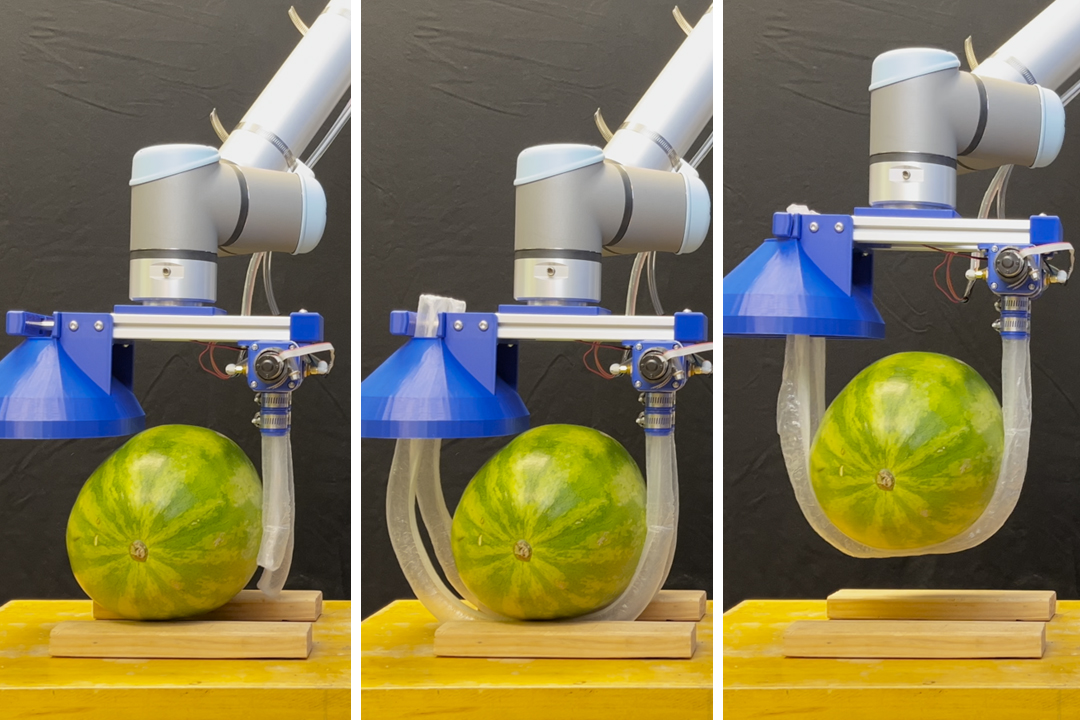
Inspired by vines’ twisty tenacity, engineers at MIT and Stanford University have developed a robotic gripper that can snake around and lift a variety of objects, including a glass vase and a watermelon, offering a gentler approach compared to conventional gripper designs. A larger version of the robo-tendrils can also safely lift a human out of bed.

The new bot consists of a pressurized box, positioned near the target object, from which long, vine-like tubes inflate and grow, like socks being turned inside out. As they extend, the vines twist and coil around the object before continuing back toward the box, where they are automatically clamped in place and mechanically wound back up to gently lift the object in a soft, sling-like grasp.

The researchers demonstrated that the vine robot can safely and stably lift a variety of heavy and fragile objects. The robot can also squeeze through tight quarters and push through clutter to reach and grasp a desired object.

The team envisions that this type of robot gripper could be used in a wide range of scenarios, from agricultural harvesting to loading and unloading heavy cargo. In the near term, the group is exploring applications in eldercare settings, where soft inflatable robotic vines could help to gently lift a person out of bed.

“Transferring a person out of bed is one of the most physically strenuous tasks that a caregiver carries out,” says Kentaro Barhydt, a PhD candidate in MIT’s Department of Mechanical Engineering. “This kind of robot can help relieve the caretaker, and can be gentler and more comfortable for the patient.”

Barhydt, along with his co-first author from Stanford, O. Godson Osele, and their colleagues, present the new robotic design today in the journal Science Advances. The study’s co-authors are Harry Asada, the Ford Professor of Engineering at MIT, and Allison Okamura, the Richard W. Weiland Professor of Engineering at Stanford University, along with Sreela Kodali and Cosmia du Pasquier at Stanford University, and former MIT graduate student Chase Hartquist, now at the University of Florida, Gainesville.

Open and closed


As they extend, the vines twist and coil around the object before continuing back toward the box, where they are automatically clamped in place and mechanically wound back up to gently lift the object in a soft, sling-like grasp.

Credit: Courtesy of the researchers

The team’s Stanford collaborators, led by Okamura, pioneered the development of soft, vine-inspired robots that grow outward from their tips. These designs are largely built from thin yet sturdy pneumatic tubes that grow and inflate with controlled air pressure. As they grow, the tubes can twist, bend, and snake their way through the environment, and squeeze through tight and cluttered spaces.

Researchers have mostly explored vine robots for use in safety inspections and search and rescue operations. But at MIT, Barhydt and Asada, whose group has developed robotic aides for the elderly, wondered whether such vine-inspired robots could address certain challenges in eldercare — specifically, the challenge of safely lifting a person out of bed. Often in nursing and rehabilitation settings, this transfer process is done with a patient lift, operated by a caretaker who must first physically move a patient onto their side, then back onto a hammock-like sheet. The caretaker straps the sheet around the patient and hooks it onto the mechanical lift, which then can gently hoist the patient out of bed, similar to suspending a hammock or sling.

The MIT and Stanford team imagined that as an alternative, a vine-like robot could gently snake under and around a patient to create its own sort of sling, without a caretaker having to physically maneuver the patient. But in order to lift the sling, the researchers realized they would have to add an element that was missing in existing vine robot designs: Essentially, they would have to close the loop.

Most vine-inspired robots are designed as “open-loop” systems, meaning they act as open-ended strings that can extend and bend in different configurations, but they are not designed to secure themselves to anything to form a closed loop. If a vine robot could be made to transform from an open loop to a closed loop, Barhydt surmised that it could make itself into a sling around the object and pull itself up, along with whatever, or whomever, it might hold.

For their new study, Barhydt, Osele, and their colleagues outline the design for a new vine-inspired robotic gripper that combines both open- and closed-loop actions. In an open-loop configuration, a robotic vine can grow and twist around an object to create a firm grasp. It can even burrow under a human lying on a bed. Once a grasp is made, the vine can continue to grow back toward and attach to its source, creating a closed loop that can then be retracted to retrieve the object.

“People might assume that in order to grab something, you just reach out and grab it,” Barhydt says. “But there are different stages, such as positioning and holding. By transforming between open and closed loops, we can achieve new levels of performance by leveraging the advantages of both forms for their respective stages.”

Gentle suspension

As a demonstration of their new open- and closed-loop concept, the team built a large-scale robotic system designed to safely lift a person up from a bed. The system comprises a set of pressurized boxes attached on either end of an overhead bar. An air pump inside the boxes slowly inflates and unfurls thin vine-like tubes that extend down toward the head and foot of a bed. The air pressure can be controlled to gently work the tubes under and around a person, before stretching back up to their respective boxes. The vines then thread through a clamping mechanism that secures the vines to each box. A winch winds the vines back up toward the boxes, gently lifting the person up in the process.

“Heavy but fragile objects, such as a human body, are difficult to grasp with the robotic hands that are available today,” Asada says. “We have developed a vine-like, growing robot gripper that can wrap around an object and suspend it gently and securely.”

“There’s an entire design space we hope this work inspires our colleagues to continue to explore,” says co-lead author Osele. “I especially look forward to the implications for patient transfer applications in health care.”

“I am very excited about future work to use robots like these for physically assisting people with mobility challenges,” adds co-author Okamura. “Soft robots can be relatively safe, low-cost, and optimally designed for specific human needs, in contrast to other approaches like humanoid robots.”

While the team’s design was motivated by challenges in eldercare, the researchers realized the new design could also be adapted to perform other grasping tasks. In addition to their large-scale system, they have built a smaller version that can attach to a commercial robotic arm. With this version, the team has shown that the vine robot can grasp and lift a variety of heavy and fragile objects, including a watermelon, a glass vase, a kettle bell, a stack of metal rods, and a playground ball. The vines can also snake through a cluttered bin to pull out a desired object.

“We think this kind of robot design can be adapted to many applications,” Barhydt says. “We are also thinking about applying this to heavy industry, and things like automating the operation of cranes at ports and warehouses.”

This work was supported, in part, by the National Science Foundation and the Ford Foundation.

Generate single title from this title How AI can fix PD for teachers in 100 -150 characters. And it must return only title i dont want any extra information or introductory text with title e.g: ” Here is a single title:”

Write an article about

Key points:

The PD problem we know too well: A flustered woman bursts into the room, late and disoriented. She’s carrying a shawl and a laptop she doesn’t know how to use. She refers to herself as a literacy expert named Linda, but within minutes she’s asking teachers to “dance for literacy,” assigning “elbow partners,” and insisting the district already has workbooks no one’s ever seen (awalmartparkinglott, 2025). It’s chaotic. It’s exaggerated. And it’s painfully familiar.

This viral satire, originally posted on Instagram and TikTok, resonates with educators not because it’s absurd but because it mirrors the worst of professional development. Many teachers have experienced PD sessions that are disorganized, disconnected from practice, or delivered by outsiders who misunderstand the local context.

The implementation gap

Despite decades of research on what makes professional development effective–including a focus on content, active learning, and sustained support (Darling-Hammond et al., 2017; Joseph, 2024)–too many sessions remain generic, compliance-driven, or disconnected from day-to-day teaching realities. Instructional coaching is powerful but costly (Kraft et al., 2018), and while collaborative learning communities show promise, they are difficult to maintain over time.

Often, the challenge is not the quality of the ideas but the systems needed to carry them forward. Leaders struggle to design relevant experiences that sustain momentum, and teachers return to classrooms without clear supports for application or follow-through. For all the time and money invested in PD, the implementation gap remains wide.

The AI opportunity

Artificial intelligence is not a replacement for thoughtful design or skilled facilitation, but it can strengthen how we plan, deliver, and sustain professional learning. From customizing agendas and differentiating materials to scaling coaching and mapping long-term growth, AI offers concrete ways to make PD more responsive and effective (Sahota, 2024; Adams & Middleton, 2024; Tan et al., 2025).

The most promising applications do not attempt one-size-fits-all fixes, but instead address persistent challenges piece by piece, enabling educators to lead smarter and more strategically.

Reducing clerical load of PD planning

Before any PD session begins, there is a quiet mountain of invisible work: drafting the description, objectives, and agenda; building slide decks; designing handouts; creating flyers; aligning materials to standards; and managing time, space, and roles. For many school leaders, this clerical load consumes hours, leaving little room for designing rich learning experiences.

AI-powered platforms can generate foundational materials in minutes. A simple prompt can produce a standards-aligned agenda, transform text into a slide deck, or create a branded flyer. Tools like Gamma and Canva streamline visual design, while bots such as the PD Workshop Planner or CK-12’s PD Session Designer tailor agendas to grade levels or instructional goals.

By shifting these repetitive tasks to automation, leaders free more time for content design, strategic alignment, and participant engagement. AI does not just save time–it restores it, enabling leaders to focus on thoughtful, human-centered professional learning.

Scaling coaching and sustained practice

Instructional coaching is impactful but expensive and time-intensive, limiting access for many teachers. Too often, PD is delivered without meaningful follow-up, and sustained impact is rarely evident.

AI can help extend the reach of coaching by aligning supports with district improvement plans, teacher and student data, or staff self-assessments. Subscription-based tools like Edthena’s AI Coach provide asynchronous, video-based feedback, allowing teachers to upload lesson recordings and receive targeted suggestions over time (Edthena, 2025). Project Café (Adams & Middleton, 2024) uses generative AI to analyze classroom videos and offer timely, data-driven feedback on instructional practices.

AI-driven simulations, virtual classrooms, and annotated student work samples (Annenberg Institute, 2024) offer scalable opportunities for teachers to practice classroom management, refine feedback strategies, and calibrate rubrics. Custom AI-powered chatbots can facilitate virtual PLCs, connecting educators to co-plan and share ideas.

A recent study introduced Novobo, an AI “mentee” that teachers train together using gestures and voice; by teaching the AI, teachers externalized and reflected on tacit skills, strengthening peer collaboration (Jiang et al., 2025). These innovations do not replace coaches but ensure continuous growth where traditional systems fall short.

Supporting long-term professional growth

Most professional development is episodic, lacking continuity, and failing to align with teachers’ evolving goals. Sahota (2024) likens AI to a GPS for professional growth, guiding educators to set long-term goals, identify skill gaps, and access learning opportunities aligned with aspirations.

AI-powered PD systems can generate individualized learning maps and recommend courses tailored to specific roles or licensure pathways (O’Connell & Baule, 2025). Machine learning algorithms can analyze a teacher’s interests, prior coursework, and broader labor market trends to develop adaptive professional learning plans (Annenberg Institute, 2024).

Yet goal setting is not enough; as Tan et al. (2025) note, many initiatives fail due to weak implementation. AI can close this gap by offering ongoing insights, personalized recommendations, and formative data that sustain growth well beyond the initial workshop.

Making virtual PD more flexible and inclusive

Virtual PD often mirrors traditional formats, forcing all participants into the same live sessions regardless of schedule, learning style, or language access.

Generative AI tools allow leaders to convert live sessions into asynchronous modules that teachers can revisit anytime. Platforms like Otter.ai can transcribe meetings, generate summaries, and tag key takeaways, enabling absent participants to catch up and multilingual staff to access translated transcripts.

AI can adapt materials for different reading levels, offer language translations, and customize pacing to fit individual schedules, ensuring PD is rigorous yet accessible.

Improving feedback and evaluation

Professional development is too often evaluated based on attendance or satisfaction surveys, with little attention to implementation or student outcomes. Many well-intentioned initiatives fail due to insufficient follow-through and weak support (Carney & Pizzuto, 2024).

Guskey’s (2000) five levels of evaluation, from initial reaction to student impact, remain a powerful framework. AI enhances this approach by automating assessments, generating surveys, and analyzing responses to surface themes and gaps. In PLCs, AI can support educators with item analysis and student work review, offering insights that guide instructional adjustments and build evidence-informed PD systems.

Getting started: Practical moves for school leaders

School leaders can integrate AI by starting small: use PD Workshop Planner, Gamma, or Canva to streamline agenda design; make sessions more inclusive with Otter.ai; pilot AI coaching tools to extend feedback between sessions; and apply Guskey’s framework with AI analysis to strengthen implementation.

These actions shift focus from clerical work to instructional impact.

Ethical use, equity, and privacy considerations

While AI offers promise, risks must be addressed. Financial and infrastructure disparities can widen the digital divide, leaving under-resourced schools unable to access these tools (Center on Reinventing Public Education, 2024).

Issues of data privacy and ethical use are critical: who owns performance data, how it is stored, and how it is used for decision-making must be clear. Language translation and AI-generated feedback require caution, as cultural nuance and professional judgment cannot be replicated by algorithms.

Over-reliance on automation risks diminishing teacher agency and relational aspects of growth. Responsible AI integration demands transparency, equitable access, and safeguards that protect educators and communities.

Conclusion: Smarter PD is within reach

Teachers deserve professional learning that respects their time, builds on their expertise, and leads to lasting instructional improvement. By addressing design and implementation challenges that have plagued PD for decades, AI provides a pathway to better, not just different, professional learning.

Leaders need not overhaul systems overnight; piloting small, strategic AI applications can signal a shift toward valuing time, relevance, and real implementation. Smarter, more human-centered PD is within reach if we build it intentionally and ethically.

References

Adams, D., & Middleton, A. (2024, May 7). AI tool shows teachers what they do in the classroom—and how to do it better. The 74. https://www.the74million.org/article/opinion-ai-tool-shows-teachers-what-they-do-in-the-classroom-and-how-to-do-it-better

Annenberg Institute. (2024). AI in professional learning: Navigating opportunities and challenges for educators. Brown University. https://annenberg.brown.edu/sites/default/files/AI%20in%20Professional%20Learning.pdf

awalmartparkinglott. (2025, August 5). The PD presenter that makes 4x your salary [Video]. Instagram. https://www.instagram.com/reel/DMGrbUsPbnO/

Carney, S., & Pizzuto, D. (2024). Implement with IMPACT: A framework for making your PD stick. Learning Forward Publishing.

Center on Reinventing Public Education. (2024, June 12). AI is coming to U.S. classrooms, but who will benefit? https://crpe.org/ai-is-coming-to-u-s-classrooms-but-who-will-benefit/

Darling-Hammond, L., Hyler, M. E., & Gardner, M. (2017). Effective teacher professional development. Learning Policy Institute. https://learningpolicyinstitute.org/sites/default/files/product-files/Effective_Teacher_Professional_Development_REPORT.pdf

Edthena. (2025). AI Coach for teachers. https://www.edthena.com/ai-coach-for-teachers/

Guskey, T. R. (2000). Evaluating professional development. Corwin Press.

Jiang, J., Huang, K., Martinez-Maldonado, R., Zeng, H., Gong, D., & An, P. (2025, May 29). Novobo: Supporting teachers’ peer learning of instructional gestures by teaching a mentee AI-agent together [Preprint]. arXiv. https://arxiv.org/abs/2505.17557

Joseph, B. (2024, October). It takes a village to design the best professional development. Education Week. https://www.edweek.org/leadership/opinion-it-takes-a-village-to-design-the-best-professional-development/2024/10

Kraft, M. A., Blazar, D., & Hogan, D. (2018). The effect of teacher coaching on instruction and achievement: A meta-analysis of the causal evidence. Review of Educational Research, 88(4), 547–588. https://doi.org/10.3102/0034654318759268

O’Connell, J., & Baule, S. (2025, January 17). Harnessing generative AI to revolutionize educator growth. eSchool News. https://www.eschoolnews.com/digital-learning/2025/01/17/generative-ai-teacher-professional-development/

Sahota, N. (2024, July 25). AI energizes your career path & charts your professional growth plan. Forbes. https://www.forbes.com/sites/neilsahota/2024/07/25/ai-energizes-your-career-path–charts-your-professional-growth-plan/

Tan, X., Cheng, G., & Ling, M. H. (2025). Artificial intelligence in teaching and teacher professional development: A systematic review. Computers and Education: Artificial Intelligence, 8, 100355. https://doi.org/10.1016/j.caeai.2024.100355

Andy Szeto, Ed.D, Professor and District Administrator

Andy Szeto, Ed.D., is a district administrator and professor of educational leadership and teacher education. He has taught over fifty graduate-level courses in leadership and instructional practice, published on AI in education, social studies instruction, and leadership development, and advised aspiring administrators throughout his career.

Latest posts by eSchool Media Contributors (see all)

.Organize the content with appropriate headings and subheadings ( h2, h3, h4, h5, h6). Include conclusion section and FAQs section with Proper questions and answers at the end. do not include the title. it must return only article i dont want any extra information or introductory text with article e.g: ” Here is rewritten article:” or “Here is the rewritten content:”

Jennifer Lewis ScD ’91: “Can we make tissues that are made from you, for you?” | MIT News

0

“Can we make tissues that are made from you, for you?” asked Jennifer Lewis ScD ’91 at the 2025 Mildred S. Dresselhaus Lecture, organized by MIT.nano, on Nov. 3. “The grand challenge goal is to create these tissues for therapeutic use and, ultimately, at the whole organ scale.”

Lewis, the Hansjörg Wyss Professor of Biologically Inspired Engineering at Harvard University, is pursuing that challenge through advances in 3D printing. In her talk presented to a combined in-person and virtual audience of over 500 attendees, Lewis shared work from her lab that focuses on enhanced function in 3D printed components for use in soft electronics, robotics, and life sciences.

“How you make a material affects its structure, and it affects its properties,” said Lewis. “This perspective was a light bulb moment for me, to think about 3D printing beyond just prototyping and making shapes, but really being able to control local composition, structure, and properties across multiple scales.”

A trained materials scientist, Lewis reflected on learning to speak the language of biologists when she joined Harvard to start her own lab focused on bioprinting and biological engineering. How does one compare particles and polymers to stem cells and extracellular matrices? A key commonality, she explained, is the need for a material that can be embedded and then erased, leaving behind open channels. To meet this need, Lewis’ lab developed new 3D printing methods, sophisticated printhead designs, and viscoelastic inks — meaning the ink can go back and forth between liquid and solid form.

Displaying a video of a moving robot octopus named Octobot, Lewis showed how her group engineered two sacrificial inks that change from fluid to solid upon either warming or cooling. The concept draws inspiration from nature — plants that dynamically change in response to touch, light, heat, and hydration. For Octobot, Lewis’ team used sacrificial ink and an embedded printing process that enables free-form printing in three dimensions, rather than layer-by-layer, to create a fully soft autonomous robot. An oscillating circuit in the center guides the fuel (hydrogen peroxide), making the arms move up and down as they inflate and deflate.

From robots to whole organ engineering

“How can we leverage shape morphing in tissue engineering?” asked Lewis. “Just like our blood continuously flows through our body, we could have continuous supply of healing.”

Lewis’ lab is now working on building human tissues, primarily cardiac, kidney, and cerebral tissue, using patient-specific cells. The motivation, Lewis explained, is not only the need for human organs for people with diseases, but the fact that receiving a donated organ means taking immunosuppressants the rest of your life. If, instead, the tissue could be made from your own cells, it would be a stronger match to your own body.

“Just like we did to engineer viscoelastic matrices for embedded printing of functional and structural materials,” said Lewis, “we can take stem cells and then use our sacrificial writing method to write in perfusable vasculature.” The process uses a technique Lewis calls SWIFT — sacrificial writing into functional tissue. Sharing lab results, Lewis showed how the stem cells, differentiated into cardiac building blocks, are initially beating individually, but after being packed into a tighter space that will support SWIFT, these building blocks fuse together and become one tissue that beats synchronously. Then, her team uses a gelatin ink that solidifies or liquefies with temperature changes to print the complex design of human vessels, flushing away the ink to leave behind open lumens. The channel remains open, mimicking a blood vessel network that could have fluid actively, continuously flowing through it. “Where we’re going is to expand this not only to different tissue types, but also building in mechanisms by which we can build multi-scale vasculature,” said Lewis.

Honoring Mildred S. Dresselhaus

In closing, Lewis reflected on Dresselhaus’ positive impact on her own career. “I want to dedicate this [talk] to Millie Dresselhaus,” said Lewis. She pointed to a quote by Millie: “The best thing about having a lady professor on campus is that it tells women students that they can do it, too.” Lewis, who arrived at MIT as a materials science and engineering graduate student in the late 1980s, a time when there were very few women with engineering doctorates, noted that “just seeing someone of her stature was really an inspiration for me. I thank her very much for all that she’s done, for her amazing inspiration both as a student, as a faculty member, and even now, today.”

After the lecture, Lewis was joined by Ritu Raman, the Eugene Bell Career Development Assistant Professor of Tissue Engineering in the MIT Department of Mechanical Engineering, for a question-and-answer session. Their discussion included ideas on 3D printing hardware and software, tissue repair and regeneration, and bioprinting in space. 

“Both Mildred Dresselhaus and Jennifer Lewis have made incredible contributions to science and served as inspiring role models to many in the MIT community and beyond, including myself,” said Raman. “In my own career as a tissue engineer, the tools and techniques developed by Professor Lewis and her team have critically informed and enabled the research my lab is pursuing.”

This was the seventh Dresselhaus Lecture, named in honor of the late MIT Institute Professor Mildred Dresselhaus, known to many as the “Queen of Carbon Science.” The annual event honors a significant figure in science and engineering from anywhere in the world whose leadership and impact echo Dresselhaus’ life, accomplishments, and values. 

“Professor Lewis exemplifies, in so many ways, the spirit of Millie Dresselhaus,” said MIT.nano Director Vladimir Bulović. “Millie’s groundbreaking work, indeed, is well known; and the groundbreaking work of Professor Lewis in 3D printing and bio-inspired materials continues that legacy.”

Generate single title from this title Accenture and Anthropic partner to boost enterprise AI integration in 100 -150 characters. And it must return only title i dont want any extra information or introductory text with title e.g: ” Here is a single title:”

Write an article about

Accenture and Anthropic are setting out to boost enterprise AI integration with a newly-expanded partnership.

While 2024 was defined by corporate curiosity regarding Large Language Models (LLMs), the current mandate for business leaders is operationalising these tools to achieve a return on investment.

The new Accenture Anthropic Business Group combines Anthropic’s model capabilities with Accenture’s implementation machinery to industrialise the deployment of generative AI across regulated sectors.

Industrialising the developer workflow

A primary component of this collaboration focuses on software engineering. Coding assistance is often seen as the path of least resistance for AI adoption, yet integrating these tools into existing CI/CD pipelines remains complex.

Accenture is positioning itself as a primary partner for Claude Code, Anthropic’s coding tool, which the company claims now holds over half of the AI coding market. The consultancy plans to train approximately 30,000 of its own professionals on Claude, creating one of the largest global ecosystems of practitioners familiar with the tool.

The promise of deeper enterprise integration of AI coding tools is a complete restructuring of the development hierarchy. The joint offering suggests that junior developers can utilise these tools to produce senior-level code and complete integration tasks more quickly to reduce onboarding times from months to weeks. Senior developers can then concentrate on high-value architecture, validation, and oversight.

Dario Amodei, CEO and Co-Founder of Anthropic, said: “AI is changing how almost everyone works, and enterprises need both cutting-edge AI and trusted expertise to deploy it at scale. Accenture brings deep enterprise transformation experience, and Anthropic brings the most capable models.

“Our new partnership means that tens of thousands of Accenture developers will be using Claude Code, making this our largest ever deployment—and the new Accenture Anthropic Business Group will help enterprise clients use our smartest AI models to make major productivity gains.”

Justifying AI inference costs and removing deployment barriers

A persistent friction point for enterprise leaders seeking deeper AI integration is justifying the ongoing cost of inference against actual business value. To counter this, the partnership is launching a specific product designed to help CIOs measure value and drive adoption across engineering organisations.

This offering attempts to provide a structured path for software design and maintenance, moving beyond the ad-hoc usage of coding assistants. It combines Claude Code with a framework for quantifying productivity gains and workflow redesigns tailored for AI-first development teams.

For the enterprise, the goal is to translate individual developer efficiency into broader company impact; such as shorter development cycles and faster time-to-market for new products.

However, the most substantial barrier to AI adoption in the Global 2000 remains compliance. Sectors such as financial services, healthcare, and the public sector face strict governance requirements that often stall AI initiatives.

Accenture and Anthropic are developing industry-specific enterprise AI solutions to address these deployment challenges. In financial services, for instance, the focus is on automating compliance workflows and processing complex documents with the precision required for high-stakes decisions.

Health and life sciences firms face a parallel demand. Here, the partnership aims to leverage Claude’s analytical capabilities to query proprietary datasets and streamline clinical trial processing. For the public sector, the utility lies in AI agents that assist citizens in navigating government services while adhering to statutory data privacy requirements.

Julie Sweet, Chair and CEO of Accenture, commented: “With the powerful combination of Anthropic’s Claude capabilities and Accenture’s AI expertise and industry and function domain knowledge, organisations can embed AI everywhere responsibly and at speed – from software development to customer experience – to drive innovation, unlock new sources of growth, and build their confidence to lead in the age of AI.”

How Accenture and Anthropic are mitigating risks to support enterprise AI integration

To mitigate the risks associated with deploying non-deterministic models, the partnership emphasises “responsible AI.” This involves combining Anthropic’s “constitutional AI” principles – which embed safety rules directly into the model – with Accenture’s governance expertise.

Practical implementation will occur through Accenture’s network of Innovation Hubs, which will serve as controlled environments or “sandboxes”. These hubs allow clients to prototype and validate solutions without exposing production systems or sensitive data to risk. The companies also plan to co-invest in a ‘Claude Center of Excellence’ to design bespoke AI offerings tailored to specific industry needs.

This expanded partnership with Accenture follows Anthropic reporting a growth in its enterprise AI market share from 24 percent to 40 percent. For Accenture, establishing a dedicated business group with specific go-to-market focus reflects a long-term commitment to the platform.

The era of standalone AI pilots is fading. The next phase for enterprise AI integration demands tight coupling between model capabilities, workforce training, and rigorous value measurement.

See also: OpenAI targets AI skills gap with new certification standards

Want to learn more about AI and big data from industry leaders? Check out AI & Big Data Expo taking place in Amsterdam, California, and London. The comprehensive event is part of TechEx and is co-located with other leading technology events including the Cyber Security Expo. Click here for more information.

AI News is powered by TechForge Media. Explore other upcoming enterprise technology events and webinars here.

.Organize the content with appropriate headings and subheadings ( h2, h3, h4, h5, h6). Include conclusion section and FAQs section with Proper questions and answers at the end. do not include the title. it must return only article i dont want any extra information or introductory text with article e.g: ” Here is rewritten article:” or “Here is the rewritten content:”