Home Blog Page 33

Generate single title from this title Swami’s AWS re:Invent Keynote Lays Out a Full-Stack Vision for Agentic AI in 100 -150 characters. And it must return only title i dont want any extra information or introductory text with title e.g: ” Here is a single title:”

Write an article about

At this year’s AWS re:Invent, Dr. Swami Sivasubramanian, VP of Data and AI at AWS, began his keynote by reflecting on the first program he ever built. In high school, he only had a basic calculator — you know, the kind that can only add, subtract, multiply, and divide — and on a shared school computer he ended up programming his own scientific calculator. Swami described the exhilarating feeling of having the freedom to imagine and create. That same feeling, he said, is now being unlocked by the shift toward agentic AI, which lets people open up a “whole new world of possibilities.”

He used that setup to introduce a broader argument that the industry is moving beyond chatbots into agentic systems that can reason, act, and learn as they operate in real enterprise environments. Swami framed this not as a speculative or conceptual future but as a real architectural move already underway — an era in which organizations build and operate software differently. This is defining the next era of development and will undoubtedly lean on AI agents that can interpret objectives and act independently.

Agentic AI is a game changer, Swami explained, because it shifts who can build and how quickly they’re able to do so. Rather than battling APIs or frameworks, developers can tell the system what they want in plain language and let the system figure out how to get there. The pace of that process has accelerated as well, with work that used to require development cycles is now being turned around in a matter of days. Agents effectively take intent as input and turn it into working actions.

Natural language, he said, breaks down barriers for developers, and the speed gains change who can build, how they build, and how quickly ideas move from concept to production.

To give a sense of how different agentic AI is from chatbots, he cited an example where traffic to a site falls off a cliff by 40%. A chatbot may recommend looking at analytics or checking recent updates. An agent would investigate further and analyze the data, look through logs, troubleshoot, and create a ticket with an actual solution. That’s the fundamental difference: chatbots offer a direction; agents take more responsibility for the outcome.

According to Swami, an agent is composed of three basic parts: the model responsible for reasoning, the code describing its purpose, and the tools used to interact with real systems. Previous approaches often relied on stiff orchestration that glued these parts together, rendering agents inflexible and difficult to apply in new situations.

This is where the Strands Agents SDK from AWS enters the picture. Instead of writing pages of orchestration code, with Strands, users can put that logic into the model itself. This means developers can avoid scaffolding and concentrate on their actual agent. After AWS open-sourced it, the community began to adopt it quickly. Swami said they’re currently working on adding TypeScript support and enabling agents to run on edge hardware.

This brought him to the problem he called the “production gap.” Many agent demos work fine on a stage, but running them at scale often results in failure. They are not designed to accommodate spikes in sessions. They don’t enforce identity or access rules. They definitely don’t provide the visibility engineers want when something breaks. Swami’s point was that these missing puzzle pieces are why promising prototypes never make it to real systems — and that is why AWS is now building a runtime for the work that actually happens in production.

The keynote’s tone shifted gears when Swami reached Bedrock AgentCore. Until that moment, the keynote had been about what agents could do, but now Swami turned to what it takes to make those agents dependable.

Many companies can make a demo, but very few can operate agents that survive real traffic, permissions, and bugs. AgentCore is basically AWS drawing a line and saying: this is the production layer.

AgentCore is compatible with any model or framework and tackles the unglamorous pieces of infrastructure that teams would usually have to bolt together themselves — identity, access, connectivity, and the visibility engineers need to understand agent behavior. 

                     (innni/Shutterstock)

Two major enhancements were also announced by Swami. The AgentCore Policy enables teams to write guardrails in natural language yet still have them enforced by formal verification. The reverse, AgentCore Evaluations, puts agents into large simulated environments and watches how they behave in order to learn what needs changing before they live. According to Swami, the stack is already being used by AWS clients for internal rollouts.

That builds the foundation for Episodic Memory. Short-term memory tracks a task. Long-term memory stores general information. But neither tells the agent why the present feels different. Episodic Memory can pick up patterns and adapt naturally.

Some preliminary results were also shared by Swami. Heroku just spent five weeks to build a fully agentic app-builder. PGA TOUR’s multi-agent pipeline delivered content at an unprecedented pace.  And Caylent cut thousands of lines of orchestration code while using AgentCore.

Swami also covered the model layer: Reinforcement Fine-Tuning for Bedrock (up to 66% accuracy gains), using SageMaker’s serverless fine-tuning via natural language, and Nova Forge for domain-specific frontier models. You add Checkpointless Training for seamless recovery and Nova Act for reliable UI agents, and you can see how AWS is positioning to deliver a full stack of enterprise-level agentic systems.

Swami ended his keynote by referring back to where he began. The freedom to think and create. Agentic AI, said Swami, is designed to give that same freedom to anyone creating the next generation of AI systems.

If you want to read more stories like this and stay ahead of the curve in data, AI, and infrastructure, subscribe to BigDataWire and follow us on LinkedIn. We deliver the insights, reporting, and breakthroughs that define the next era of technology.

The post Swami’s AWS re:Invent Keynote Lays Out a Full-Stack Vision for Agentic AI appeared first on BigDATAwire.

.Organize the content with appropriate headings and subheadings ( h2, h3, h4, h5, h6). Include conclusion section and FAQs section with Proper questions and answers at the end. do not include the title. it must return only article i dont want any extra information or introductory text with article e.g: ” Here is rewritten article:” or “Here is the rewritten content:”

MIT researchers “speak objects into existence” using AI and robotics | MIT News

0

Generative AI and robotics are moving us ever closer to the day when we can ask for an object and have it created within a few minutes. In fact, MIT researchers have developed a speech-to-reality system, an AI-driven workflow that allows them to provide input to a robotic arm and “speak objects into existence,” creating things like furniture in as little as five minutes.  

With the speech-to-reality system, a robotic arm mounted on a table is able to receive spoken input from a human, such as “I want a simple stool,” and then construct the objects out of modular components. To date, the researchers have used the system to create stools, shelves, chairs, a small table, and even decorative items such as a dog statue.

“We’re connecting natural language processing, 3D generative AI, and robotic assembly,” says Alexander Htet Kyaw, an MIT graduate student and Morningside Academy for Design (MAD) fellow. “These are rapidly advancing areas of research that haven’t been brought together before in a way that you can actually make physical objects just from a simple speech prompt.”  

Play video

Speech to Reality: On-Demand Production using 3D Generative AI, and Discrete Robotic Assembly

The idea started when Kyaw — a graduate student in the departments of Architecture and Electrical Engineering and Computer Science — took Professor Neil Gershenfeld’s course, “How to Make Almost Anything.” In that class, he built the speech-to-reality system. He continued working on the project at the MIT Center for Bits and Atoms (CBA), directed by Gershenfeld, collaborating with graduate students Se Hwan Jeon of the Department of Mechanical Engineering and Miana Smith of CBA.

The speech-to-reality system begins with speech recognition that processes the user’s request using a large language model, followed by 3D generative AI that creates a digital mesh representation of the object, and a voxelization algorithm that breaks down the 3D mesh into assembly components.

After that, geometric processing modifies the AI-generated assembly to account for fabrication and physical constraints associated with the real world, such as the number of components, overhangs, and connectivity of the geometry. This is followed by creation of a feasible assembly sequence and automated path planning for the robotic arm to assemble physical objects from user prompts.

By leveraging natural language, the system makes design and manufacturing more accessible to people without expertise in 3D modeling or robotic programming. And, unlike 3D printing, which can take hours or days, this system builds within minutes.

“This project is an interface between humans, AI, and robots to co-create the world around us,” Kyaw says. “Imagine a scenario where you say ‘I want a chair,’ and within five minutes a physical chair materializes in front of you.”

The team has immediate plans to improve the weight-bearing capability of the furniture by changing the means of connecting the cubes from magnets to more robust connections. 

“We’ve also developed pipelines for converting voxel structures into feasible assembly sequences for small, distributed mobile robots, which could help translate this work to structures at any size scale,” Smith says.

The purpose of using modular components is to eliminate the waste that goes into making physical objects by disassembling and then reassembling them into something different, for instance turning a sofa into a bed when you no longer need the sofa.

Because Kyaw also has experience using gesture recognition and augmented reality to interact with robots in the fabrication process, he is currently working on incorporating both speech and gestural control into the speech-to-reality system.

Leaning into his memories of the replicator in the “Star Trek” franchise and the robots in the animated film “Big Hero 6,” Kyaw explains his vision.

“I want to increase access for people to make physical objects in a fast, accessible, and sustainable manner,” he says. “I’m working toward a future where the very essence of matter is truly in your control. One where reality can be generated on demand.”

The team presented their paper “Speech to Reality: On-Demand Production using Natural Language, 3D Generative AI, and Discrete Robotic Assembly” at the Association for Computing Machinery (ACM) Symposium on Computational Fabrication (SCF ’25) to be held at MIT on Nov. 21. 

Generate single title from this title Optimize Data Center Efficiency for AI and HPC Workloads with Power Profiles in 100 -150 characters. And it must return only title i dont want any extra information or introductory text with title e.g: ” Here is a single title:”

0

Write an article about

Exponentially growing computational demand is driving power usage higher and pushing data centers to their limits. With facilities power constrained, extracting the most performance per provisioned watt of power is crucial to optimize throughput from a data center.  

To help users and system administrators extract the most performance out of power-limited data centers, NVIDIA has released data center energy optimized power profiles. This new software feature released with NVIDIA Blackwell B200 is aimed at improving energy efficiency and performance. It provides coarse-grain user control for HPC and AI workloads leveraging hardware and software innovations for intelligent power management. 

As explained in this post, the resulting workload-aware optimization recipes maximize computational throughput while operating within strict facility power constraints. The phase-1 Blackwell implementation achieves up to 15% energy savings while maintaining performance levels above 97% for critical applications, enabling an overall throughput increase of up to 13% in a power-constrained facility.

One-click GPU configuration tuning for optimal efficiency 

While experts can achieve energy efficiency savings similar to these, the work required is significant. Tuning for optimal efficiency requires adjusting many separate power and frequency controls. Settings that impact efficiency include, but are not limited to Total GPU Power, GPU compute and memory frequencies, NVLink power states, and L2 cache power. Tuning all of these parameters is a time consuming process, and some of them require root-level access not available to users.  

Power profiles encode NVIDIA expert knowledge into the tool, removing the complexity of manual tuning while enabling large energy efficiency gains with minimal user effort.

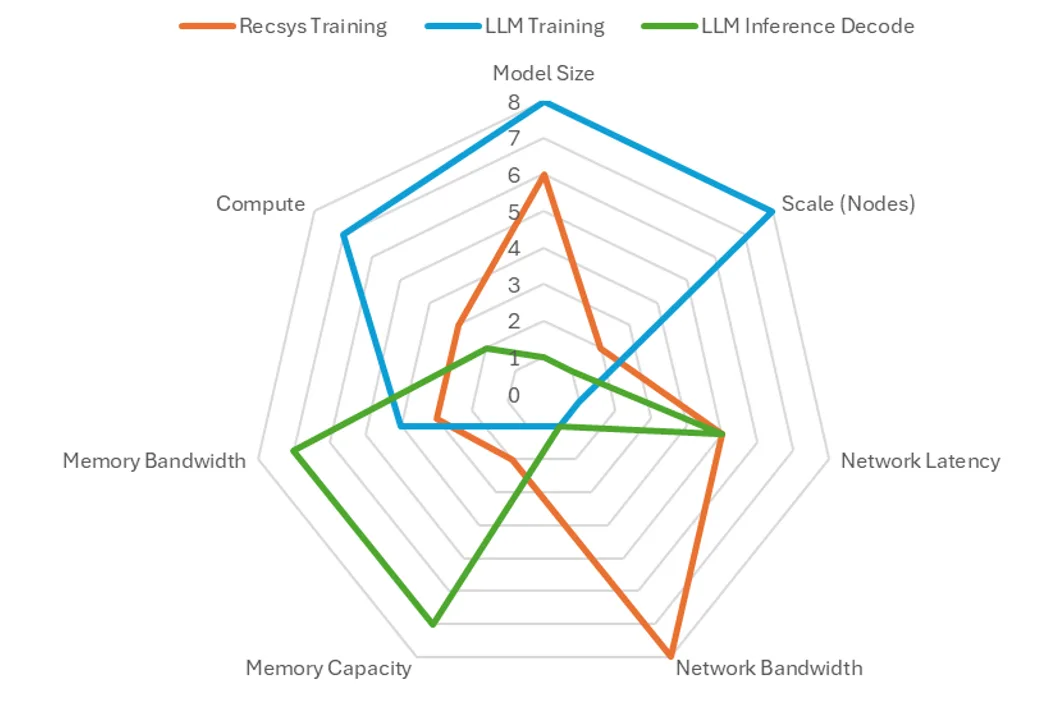
Diagram showing workload boundedness on compute, memory, network, scale and model size.
Figure 1. Resource footprint of AI workloads

The four architecture layers of power profiles

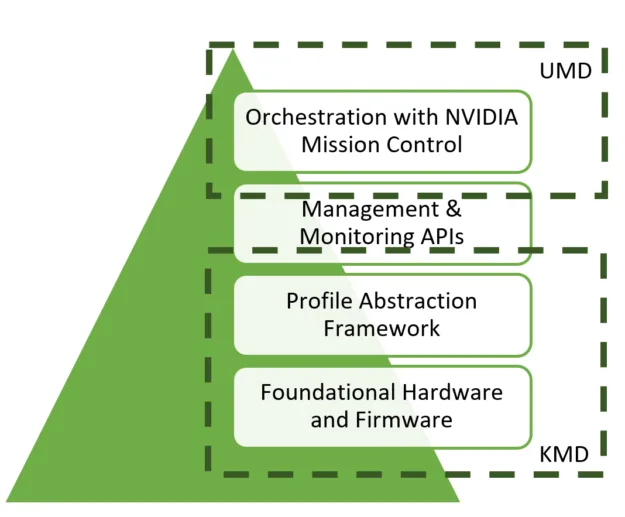
Power profiles include four architecture layers: Foundational Hardware and Firmware, Profile Abstraction Framework, Management and Monitoring APIs, and NVIDIA Mission Control.

Four-layered solution encompassing from hardware to user interface.
Figure 2. The four architecture layer of power profiles

Layer 1 – Foundational Hardware and Firmware: Contains the hardware and firmware controls that power profiles manipulate to optimize performance and power consumption. At this layer, controls to adjust GPU SM clock, memory clock, power limit, and other features are exposed. 

Layer 2 – Profile Abstraction Framework: The core of the innovation in power profiles, or “the brain.” It takes high-level user input from Layer 3 and transforms it into a recipe of optimal settings. Inputs include user goals:

  • Is the goal Maximum energy efficiency (Max-Q) or maximum performance (Max-P)
  • What is the job type: AI training, AI inference, or HPC
  • What are the job properties (memory- or compute-bound, for example) 

The NVIDIA engineering team incorporates workload and hardware/firmware expertise during post-silicon activities to define and fine-tune Layer 1 control configurations, generating optimized profiles. This ensures optimal performance by intelligently biasing power based on the workload. 

For example, in a memory-bound task, the power bias shifts toward memory performance, prioritizing memory and I/O speed over compute clock speed. To handle conflicts and ensure a stable configuration, an arbitrator resolves them and informs the user of the conflict and which settings were selected.

Layer 3 – Management and Monitoring APIs: Enables both users and administrators to set power profiles. At this level, administrators have access to Redfish APIs for “out of band” management across the entire data center. This enables setting cluster wide preferences and responding to external events, such as a utility provider asking for reduced power consumption. 

Users can access power profiles through NVIDIA tools and APIs, such as NVSMI, DCGM, and BCM. However, most are expected to use scheduler interfaces like the following SLURM example where a MAX-Q profile for a training job is turned on.

sbatch –partition-gpu partition –power-profile MAX-Q-Training
–nodes=4 –ntasks-per-node 8 training_job.slurm

Layer 4 – Orchestration with NVIDIA Mission Control: Enables a higher-level, simplified interface to access the entire power profiles software stack. This all-in-one management platform simplifies the usage of power profiles and enables coordination with other power control tools and monitoring capabilities such as building monitoring systems. In addition, Mission Control provides real-time dashboards to monitor the impact of power profiles.

Performance gains and energy savings

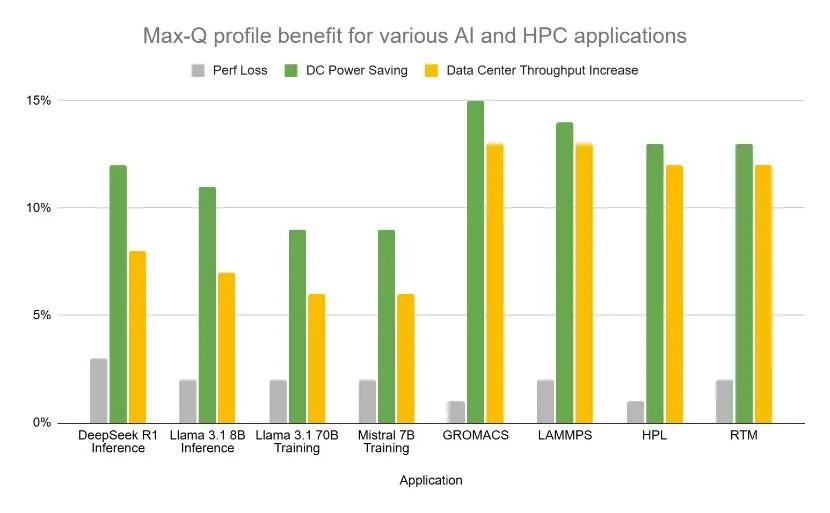
Figure 3 shows the increase in data center throughput enabled by the Max-Q model of power profiles for HPC and AI applications for 1,000 W NVIDIA B200 GPUs. Power savings of up to 15% are achieved with, at most, a 3% performance loss. 

These resulting power savings enable provisioning more GPUs, resulting in up to a 13% overall increase in data center throughput. All power consumption, GPU, CPU, and other components are considered in this calculation.

Bar chart showing data center throughput increase, power savings, and perf loss comparison for AI and HPC applications.
Figure 3. Max-Q profile benefit analysis

Table 1 compares frequency scaling to power profiles. Frequency scaling is changing the GPU compute clock frequency only, which is the most common way currently to save power. Power profiles save as much or more power as frequency scaling for inference and training with a 7-9% lower performance loss. Frequency scaling impacts performance of these compute sensitive workloads significantly. Power profiles by contrast saves power in other parts of the system that have a minor performance impact for compute sensitive workloads.

NVIDIA Blackwell B200 Performance decrease Data center power savings
Frequency scaling 10% 5%
Training profiles 1% 5%
Inference profiles 3% 8%

Table 1. Comparison of performance drops from frequency scaling to save power versus using power profiles

Figure 4 shows the impact of Max-P profiles using a 1,000 W NVIDIA B200 GPU. For applications that are power limited at TDP, power profiles enable increased performance by reducing power to parts of the GPU that do not limit performance and enabling performance limiting parts of the GPU to run at a higher frequency. This feature delivers a 2-3% increase in performance at the same power. The mode is useful when data centers are not power constrained (overnight, for example).

Bar chart showing performance gain analysis for AI training, AI inference, HPL, and GROMACS.
Figure 4. Max-P profile benefit analysis

Next-generation power profiles

While the first deployment covered AI training, inference and HPC profiles, power profiles will continue to evolve following the road map outlined in Figure 5. The next generation will incorporate additional system features, including the CPU, NVSwitch, and NICs. After full system profiles are available, dynamic capabilities will be added leveraging live telemetry and machine learning to recommend profiles based on workload identified. They will later enable per-application self-tuning within the power-bound allocated to an application. 

Finally, disaggregated inference will be incorporated, enabling power to be moved between different compute tasks based on evolving bottlenecks and live compute demands.

Diagram showing the five generations with Gen 1 at the top and Gen 5 at the bottom: Training and Inference Profiles - GPU; HPC Profiles - GPU; System Profiles - GPU/CPU; Dynamic per App Self-Tuning; Disaggregated Inference Profiles.
Figure 5. Power profiles road map

Get started with power profiles

Power profiles increase the amount of work a power-limited data center can accomplish by up to 13%. They also reduce the effort and simplify the process of tuning applications for power and energy. This frees experts to perform other tasks and enables non-experts to achieve significant energy efficiency savings. 

With data center power becoming more constrained each year and the ever growing importance of energy efficiency, NVIDIA is committed to meeting this challenge. We will continue to increase the capabilities of power profiles, reduce the skill needed to use them, and invest in other power and energy tools to enable extraction of the maximum computational capabilities per watt of power. 

To learn more, see Data Center Energy Optimized Power Profiles and reference the technical documentation.

Acknowledgments

Contributors to the research presented in this post include Apoorv Gupta, Ian Karlin, Sudhir Saripalli, Janey Guo, Tip Fei, Evelyn Liu, Harsha Sriramagiri, Harish Kumar,  Milica Despotovic, Chad Plummer, Douglas Wightman, and Sidharth Nair.

.Organize the content with appropriate headings and subheadings ( h2, h3, h4, h5, h6). Include conclusion section and FAQs section with Proper questions and answers at the end. do not include the title. it must return only article i dont want any extra information or introductory text with article e.g: ” Here is rewritten article:” or “Here is the rewritten content:”
Robots that spare warehouse workers the heavy lifting | MIT News

0

There are some jobs human bodies just weren’t meant to do. Unloading trucks and shipping containers is a repetitive, grueling task — and a big reason warehouse injury rates are more than twice the national average.

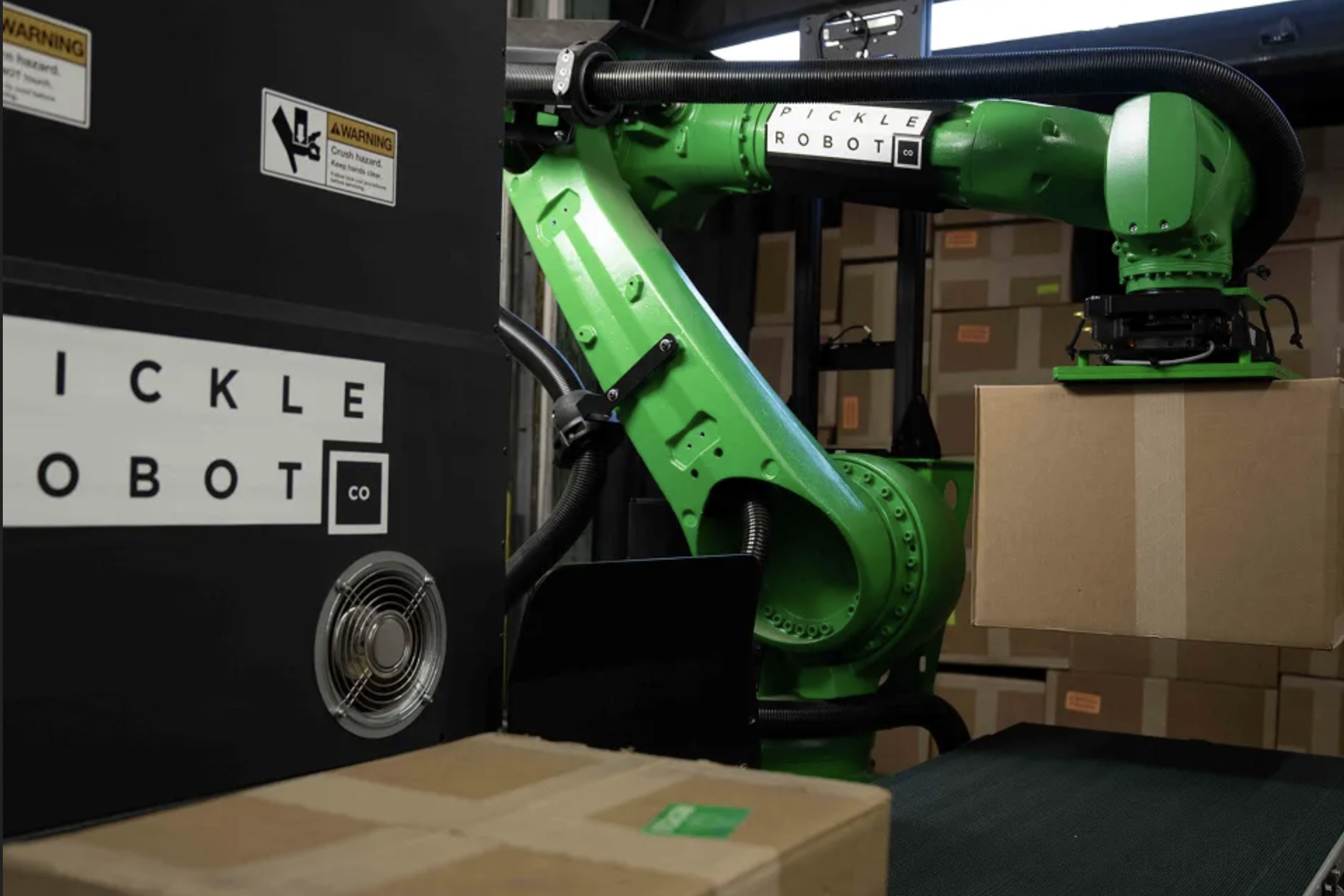
The Pickle Robot Company wants its machines to do the heavy lifting. The company’s one-armed robots autonomously unload trailers, picking up boxes weighing up to 50 pounds and placing them onto onboard conveyor belts for warehouses of all types.

The company name, an homage to The Apple Computer Company, hints at the ambitions of founders AJ Meyer ’09, Ariana Eisenstein ’15, SM ’16, and Dan Paluska ’97, SM ’00. The founders want to make the company the technology leader for supply chain automation.

The company’s unloading robots combine generative AI and machine-learning algorithms with sensors, cameras, and machine-vision software to navigate new environments on day one and improve performance over time. Much of the company’s hardware is adapted from industrial partners. You may recognize the arm, for instance, from car manufacturing lines — though you may not have seen it in bright pickle-green.

The company is already working with customers like UPS, Ryobi Tools, and Yusen Logistics to take a load off warehouse workers, freeing them to solve other supply chain bottlenecks in the process.

“Humans are really good edge-case problem solvers, and robots are not,” Paluska says. “How can the robot, which is really good at the brute force, repetitive tasks, interact with humans to solve more problems? Human bodies and minds are so adaptable, the way we sense and respond to the environment is so adaptable, and robots aren’t going to replace that anytime soon. But there’s so much drudgery we can get rid of.”

Finding problems for robots

Meyer and Eisenstein majored in computer science and electrical engineering at MIT, but they didn’t work together until after graduation, when Meyer started the technology consultancy Leaf Labs, which specializes in building embedded computer systems for things like robots, cars, and satellites.

“A bunch of friends from MIT ran that shop,” Meyer recalls, noting it’s still running today. “Ari worked there, Dan consulted there, and we worked on some big projects. We were the primary software and digital design team behind Project Ara, a smartphone for Google, and we worked on a bunch of interesting government projects. It was really a lifestyle company for MIT kids. But 10 years go by, and we thought, ‘We didn’t get into this to do consulting. We got into this to do robots.’”

When Meyer graduated in 2009, problems like robot dexterity seemed insurmountable. By 2018, the rise of algorithmic approaches like neural networks had brought huge advances to robotic manipulation and navigation.

To figure out what problem to solve with robots, the founders talked to people in industries as diverse as agriculture, food prep, and hospitality. At some point, they started visiting logistics warehouses, bringing a stopwatch to see how long it took workers to complete different tasks.

“In 2018, we went to a UPS warehouse and watched 15 guys unloading trucks during a winter night shift,” Meyer recalls. “We spoke to everyone, and not a single person had worked there for more than 90 days. We asked, ‘Why not?’ They laughed at us. They said, ‘Have you tried to do this job before?’”

It turns out warehouse turnover is one of the industry’s biggest problems, limiting productivity as managers constantly grapple with hiring, onboarding, and training.

The founders raised a seed funding round and built robots that could sort boxes because it was an easier problem that allowed them to work with technology like grippers and barcode scanners. Their robots eventually worked, but the company wasn’t growing fast enough to be profitable. Worse yet, the founders were having trouble raising money.

“We were desperately low on funds,” Meyer recalls. “So we thought, ‘Why spend our last dollar on a warm-up task?’”

With money dwindling, the founders built a proof-of-concept robot that could unload trucks reliably for about 20 seconds at a time and posted a video of it on YouTube. Hundreds of potential customers reached out. The interest was enough to get investors back on board to keep the company alive.

The company piloted its first unloading system for a year with a customer in the desert of California, sparing human workers from unloading shipping containers that can reach temperatures up to 130 degrees in the summer. It has since scaled deployments with multiple customers and gained traction among third-party logistics centers across the U.S.

The company’s robotic arm is made by the German industrial robotics giant KUKA. The robots are mounted on a custom mobile base with an onboard computing systems so they can navigate to docks and adjust their positions inside trailers autonomously while lifting. The end of each arm features a suction gripper that clings to packages and moves them to the onboard conveyor belt.

The company’s robots can pick up boxes ranging in size from 5-inch cubes to 24-by-30 inch boxes. The robots can unload anywhere from 400 to 1,500 cases per hour depending on size and weight. The company fine tunes pre-trained generative AI models and uses a number of smaller models to ensure the robot runs smoothly in every setting.

The company is also developing a software platform it can integrate with third-party hardware, from humanoid robots to autonomous forklifts.

“Our immediate product roadmap is load and unload,” Meyer says. “But we’re also hoping to connect these third-party platforms. Other companies are also trying to connect robots. What does it mean for the robot unloading a truck to talk to the robot palletizing, or for the forklift to talk to the inventory drone? Can they do the job faster? I think there’s a big network coming in which we need to orchestrate the robots and the automation across the entire supply chain, from the mines to the factories to your front door.”

“Why not us?”

The Pickle Robot Company employs about 130 people in its office in Charlestown, Massachusetts, where a standard — if green — office gives way to a warehouse where its robots can be seen loading boxes onto conveyor belts alongside human workers and manufacturing lines.

This summer, Pickle will be ramping up production of a new version of its system, with further plans to begin designing a two-armed robot sometime after that.

“My supervisor at Leaf Labs once told me ‘No one knows what they’re doing, so why not us?’” Eisenstein says. “I carry that with me all the time. I’ve been very lucky to be able to work with so many talented, experienced people in my career. They all bring their own skill sets and understanding. That’s a massive opportunity — and it’s the only way something as hard as what we’re doing is going to work.”

Moving forward, the company sees many other robot-shaped problems for its machines.

“We didn’t start out by saying, ‘Let’s load and unload a truck,’” Meyers says. “We said, ‘What does it take to make a great robot business?’ Unloading trucks is the first chapter. Now we’ve built a platform to make the next robot that helps with more jobs, starting in logistics but then ultimately in manufacturing, retail, and hopefully the entire supply chain.”

MIT engineers design an aerial microrobot that can fly as fast as a bumblebee | MIT News

0

In the future, tiny flying robots could be deployed to aid in the search for survivors trapped beneath the rubble after a devastating earthquake. Like real insects, these robots could flit through tight spaces larger robots can’t reach, while simultaneously dodging stationary obstacles and pieces of falling rubble.

So far, aerial microrobots have only been able to fly slowly along smooth trajectories, far from the swift, agile flight of real insects — until now.

MIT researchers have demonstrated aerial microrobots that can fly with speed and agility that is comparable to their biological counterparts. A collaborative team designed a new AI-based controller for the robotic bug that enabled it to follow gymnastic flight paths, such as executing continuous body flips.

With a two-part control scheme that combines high performance with computational efficiency, the robot’s speed and acceleration increased by about 450 percent and 250 percent, respectively, compared to the researchers’ best previous demonstrations.

The speedy robot was agile enough to complete 10 consecutive somersaults in 11 seconds, even when wind disturbances threatened to push it off course.


A microrobot flips 10 times in 11 seconds.

Credit: Courtesy of the Soft and Micro Robotics Laboratory

“We want to be able to use these robots in scenarios that more traditional quad copter robots would have trouble flying into, but that insects could navigate. Now, with our bioinspired control framework, the flight performance of our robot is comparable to insects in terms of speed, acceleration, and the pitching angle. This is quite an exciting step toward that future goal,” says Kevin Chen, an associate professor in the Department of Electrical Engineering and Computer Science (EECS), head of the Soft and Micro Robotics Laboratory within the Research Laboratory of Electronics (RLE), and co-senior author of a paper on the robot.

Chen is joined on the paper by co-lead authors Yi-Hsuan Hsiao, an EECS MIT graduate student; Andrea Tagliabue PhD ’24; and Owen Matteson, a graduate student in the Department of Aeronautics and Astronautics (AeroAstro); as well as EECS graduate student Suhan Kim; Tong Zhao MEng ’23; and co-senior author Jonathan P. How, the Ford Professor of Engineering in the Department of Aeronautics and Astronautics and a principal investigator in the Laboratory for Information and Decision Systems (LIDS). The research appears today in Science Advances.

An AI controller

Chen’s group has been building robotic insects for more than five years.

They recently developed a more durable version of their tiny robot, a microcassette-sized device that weighs less than a paperclip. The new version utilizes larger, flapping wings that enable more agile movements. They are powered by a set of squishy artificial muscles that flap the wings at an extremely fast rate.

But the controller — the “brain” of the robot that determines its position and tells it where to fly — was hand-tuned by a human, limiting the robot’s performance.

For the robot to fly quickly and aggressively like a real insect, it needed a more robust controller that could account for uncertainty and perform complex optimizations quickly.

Such a controller would be too computationally intensive to be deployed in real time, especially with the complicated aerodynamics of the lightweight robot.

To overcome this challenge, Chen’s group joined forces with How’s team and, together, they crafted a two-step, AI-driven control scheme that provides the robustness necessary for complex, rapid maneuvers, and the computational efficiency needed for real-time deployment.

“The hardware advances pushed the controller so there was more we could do on the software side, but at the same time, as the controller developed, there was more they could do with the hardware. As Kevin’s team demonstrates new capabilities, we demonstrate that we can utilize them,” How says.

For the first step, the team built what is known as a model-predictive controller. This type of powerful controller uses a dynamic, mathematical model to predict the behavior of the robot and plan the optimal series of actions to safely follow a trajectory.

While computationally intensive, it can plan challenging maneuvers like aerial somersaults, rapid turns, and aggressive body tilting. This high-performance planner is also designed to consider constraints on the force and torque the robot could apply, which is essential for avoiding collisions.

For instance, to perform multiple flips in a row, the robot would need to decelerate in such a way that its initial conditions are exactly right for doing the flip again.

“If small errors creep in, and you try to repeat that flip 10 times with those small errors, the robot will just crash. We need to have robust flight control,” How says.

They use this expert planner to train a “policy” based on a deep-learning model, to control the robot in real time, through a process called imitation learning. A policy is the robot’s decision-making engine, which tells the robot where and how to fly.

Essentially, the imitation-learning process compresses the powerful controller into a computationally efficient AI model that can run very fast.

The key was having a smart way to create just enough training data, which would teach the policy everything it needs to know for aggressive maneuvers.

“The robust training method is the secret sauce of this technique,” How explains.

The AI-driven policy takes robot positions as inputs and outputs control commands in real time, such as thrust force and torques.

Insect-like performance

In their experiments, this two-step approach enabled the insect-scale robot to fly 447 percent faster while exhibiting a 255 percent increase in acceleration. The robot was able to complete 10 somersaults in 11 seconds, and the tiny robot never strayed more than 4 or 5 centimeters off its planned trajectory.

“This work demonstrates that soft and microrobots, traditionally limited in speed, can now leverage advanced control algorithms to achieve agility approaching that of natural insects and larger robots, opening up new opportunities for multimodal locomotion,” says Hsiao.

The researchers were also able to demonstrate saccade movement, which occurs when insects pitch very aggressively, fly rapidly to a certain position, and then pitch the other way to stop. This rapid acceleration and deceleration help insects localize themselves and see clearly.

“This bio-mimicking flight behavior could help us in the future when we start putting cameras and sensors on board the robot,” Chen says.

Adding sensors and cameras so the microrobots can fly outdoors, without being attached to a complex motion capture system, will be a major area of future work.

The researchers also want to study how onboard sensors could help the robots avoid colliding with one another or coordinate navigation.

“For the micro-robotics community, I hope this paper signals a paradigm shift by showing that we can develop a new control architecture that is high-performing and efficient at the same time,” says Chen.

“This work is especially impressive because these robots still perform precise flips and fast turns despite the large uncertainties that come from relatively large fabrication tolerances in small-scale manufacturing, wind gusts of more than 1 meter per second, and even its power tether wrapping around the robot as it performs repeated flips,” says Sarah Bergbreiter, a professor of mechanical engineering at Carnegie Mellon University, who was not involved with this work.

“Although the controller currently runs on an external computer rather than onboard the robot, the authors demonstrate that similar, but less precise, control policies may be feasible even with the more limited computation available on an insect-scale robot. This is exciting because it points toward future insect-scale robots with agility approaching that of their biological counterparts,” she adds.

This research is funded, in part, by the National Science Foundation (NSF), the Office of Naval Research, Air Force Office of Scientific Research, MathWorks, and the Zakhartchenko Fellowship.

New control system teaches soft robots the art of staying safe | MIT News

0

Imagine having a continuum soft robotic arm bend around a bunch of grapes or broccoli, adjusting its grip in real time as it lifts the object. Unlike traditional rigid robots that generally aim to avoid contact with the environment as much as possible and stay far away from humans for safety reasons, this arm senses subtle forces, stretching and flexing in ways that mimic more of the compliance of a human hand. Its every motion is calculated to avoid excessive force while achieving the task efficiently. In MIT Computer Science and Artificial Intelligence Laboratory (CSAIL) and Laboratory for Information and Decisions Systems (LIDS) labs, these seemingly simple movements are the culmination of complex mathematics, careful engineering, and a vision for robots that can safely interact with humans and delicate objects.

Soft robots, with their deformable bodies, promise a future where machines move more seamlessly alongside people, assist in caregiving, or handle delicate items in industrial settings. Yet that very flexibility makes them difficult to control. Small bends or twists can produce unpredictable forces, raising the risk of damage or injury. This motivates the need for safe control strategies for soft robots. 

“Inspired by advances in safe control and formal methods for rigid robots, we aim to adapt these ideas to soft robotics — modeling their complex behavior and embracing, rather than avoiding, contact — to enable higher-performance designs (e.g., greater payload and precision) without sacrificing safety or embodied intelligence,” says lead senior author and MIT Assistant Professor Gioele Zardini, who is a principal investigator in LIDS and the Department of Civil and Environmental Engineering, and an affiliate faculty with the Institute for Data, Systems, and Society (IDSS). “This vision is shared by recent and parallel work from other groups.”

Safety first

The team developed a new framework that blends nonlinear control theory (controlling systems that involve highly complex dynamics) with advanced physical modeling techniques and efficient real-time optimization to produce what they call “contact-aware safety.” At the heart of the approach are high-order control barrier functions (HOCBFs) and high-order control Lyapunov functions (HOCLFs). HOCBFs define safe operating boundaries, ensuring the robot doesn’t exert unsafe forces. HOCLFs guide the robot efficiently toward its task objectives, balancing safety with performance.

“Essentially, we’re teaching the robot to know its own limits when interacting with the environment while still achieving its goals,” says MIT Department of Mechanical Engineering PhD student Kiwan Wong, the lead author of a new paper describing the framework. “The approach involves some complex derivation of soft robot dynamics, contact models, and control constraints, but the specification of control objectives and safety barriers is rather straightforward for the practitioner, and the outcomes are very tangible, as you see the robot moving smoothly, reacting to contact, and never causing unsafe situations.”

“Compared with traditional kinematic CBFs — where forward-invariant safe sets are hard to specify — the HOCBF framework simplifies barrier design, and its optimization formulation accounts for system dynamics (e.g., inertia), ensuring the soft robot stops early enough to avoid unsafe contact forces,” says Worcester Polytechnic Institute Assistant Professor and former CSAIL postdoc Wei Xiao.

“Since soft robots emerged, the field has highlighted their embodied intelligence and greater inherent safety relative to rigid robots, thanks to passive material and structural compliance. Yet their “cognitive” intelligence — especially safety systems — has lagged behind that of rigid serial-link manipulators,” says co-lead author Maximilian Stölzle, a research intern at Disney Research and formerly a Delft University of Technology PhD student and visiting researcher at MIT LIDS and CSAIL. “This work helps close that gap by adapting proven algorithms to soft robots and tailoring them for safe contact and soft-continuum dynamics.”

The LIDS and CSAIL team tested the system on a series of experiments designed to challenge the robot’s safety and adaptability. In one test, the arm pressed gently against a compliant surface, maintaining a precise force without overshooting. In another, it traced the contours of a curved object, adjusting its grip to avoid slippage. In yet another demonstration, the robot manipulated fragile items alongside a human operator, reacting in real time to unexpected nudges or shifts. “These experiments show that our framework is able to generalize to diverse tasks and objectives, and the robot can sense, adapt, and act in complex scenarios while always respecting clearly defined safety limits,” says Zardini.

Soft robots with contact-aware safety could be a real value-add in high-stakes places, of course. In health care, they could assist in surgeries, providing precise manipulation while reducing risk to patients. In industry, they might handle fragile goods without constant supervision. In domestic settings, robots could help with chores or caregiving tasks, interacting safely with children or the elderly — a key step toward making soft robots reliable partners in real-world environments. 

“Soft robots have incredible potential,” says co-lead senior author Daniela Rus, director of CSAIL and a professor in the Department of Electrical Engineering and Computer Science. “But ensuring safety and encoding motion tasks via relatively simple objectives has always been a central challenge. We wanted to create a system where the robot can remain flexible and responsive while mathematically guaranteeing it won’t exceed safe force limits.”

Combining soft robot models, differentiable simulation, and control theory

Underlying the control strategy is a differentiable implementation of something called the Piecewise Cosserat-Segment (PCS) dynamics model, which predicts how a soft robot deforms and where forces accumulate. This model allows the system to anticipate how the robot’s body will respond to actuation and complex interactions with the environment. “The aspect that I most like about this work is the blend of integration of new and old tools coming from different fields like advanced soft robot models, differentiable simulation, Lyapunov theory, convex optimization, and injury-severity–based safety constraints. All of this is nicely blended into a real-time controller fully grounded in first principles,” says co-author Cosimo Della Santina, who is an associate professor at Delft University of Technology. 

Complementing this is the Differentiable Conservative Separating Axis Theorem (DCSAT), which estimates distances between the soft robot and obstacles in the environment that can be approximated with a chain of convex polygons in a differentiable manner. “Earlier differentiable distance metrics for convex polygons either couldn’t compute penetration depth — essential for estimating contact forces — or yielded non-conservative estimates that could compromise safety,” says Wong. “Instead, the DCSAT metric returns strictly conservative, and therefore safe, estimates while simultaneously allowing for fast and differentiable computation.” Together, PCS and DCSAT give the robot a predictive sense of its environment for more proactive, safe interactions.

Looking ahead, the team plans to extend their methods to three-dimensional soft robots and explore integration with learning-based strategies. By combining contact-aware safety with adaptive learning, soft robots could handle even more complex, unpredictable environments. 

“This is what makes our work exciting,” says Rus. “You can see the robot behaving in a human-like, careful manner, but behind that grace is a rigorous control framework ensuring it never oversteps its bounds.”

“Soft robots are generally safer to interact with than rigid-bodied robots by design, due to the compliance and energy-absorbing properties of their bodies,” says University of Michigan Assistant Professor Daniel Bruder, who wasn’t involved in the research. “However, as soft robots become faster, stronger, and more capable, that may no longer be enough to ensure safety. This work takes a crucial step towards ensuring soft robots can operate safely by offering a method to limit contact forces across their entire bodies.”

The team’s work was supported, in part, by The Hong Kong Jockey Club Scholarships, the European Union’s Horizon Europe Program, Cultuurfonds Wetenschapsbeurzen, and the Rudge (1948) and Nancy Allen Chair. Their work was published earlier this month in the Institute of Electrical and Electronics Engineers’ Robotics and Automation Letters.

MIT Sea Grant students explore the intersection of technology and offshore aquaculture in Norway | MIT News

0

Norway is the world’s largest producer of farmed Atlantic salmon and a top exporter of seafood, while the United States remains the largest importer of these products, according to the Food and Agriculture Organization. Two MIT students recently traveled to Trondheim, Norway to explore the cutting-edge technologies being developed and deployed in offshore aquaculture. 

Beckett Devoe, a senior in artificial intelligence and decision-making, and Tony Tang, a junior in mechanical engineering, first worked with MIT Sea Grant through the Undergraduate Research Opportunities Program (UROP). They contributed to projects focusing on wave generator design and machine learning applications for analyzing oyster larvae health in hatcheries. While near-shore aquaculture is a well-established industry across Massachusetts and the United States, open-ocean farming is still a nascent field here, facing unique and complex challenges. 

To help better understand this emerging industry, MIT Sea Grant created a collaborative initiative, AquaCulture Shock, with funding from an Aquaculture Technologies and Education Travel Grant through the National Sea Grant College Program. Collaborating with the MIT-Scandinavia MISTI (MIT International Science and Technology Initiatives) program, MIT Sea Grant matched Devoe and Tang with aquaculture-related summer internships at SINTEF Ocean, one of the largest research institutes in Europe. 

“The opportunity to work on this hands-on aquaculture project, under a world-renowned research institution, in an area of the world known for its innovation in marine technology — this is what MISTI is all about,” says Madeline Smith, managing director for MIT-Scandinavia. “Not only are students gaining valuable experience in their fields of study, but they’re developing cultural understanding and skills that equip them to be future global leaders.” Both students worked within SINTEF Ocean’s Aquaculture Robotics and Autonomous Systems Laboratory (ACE-Robotic Lab), a facility designed to develop and test new aquaculture technologies. 

“Norway has this unique geography where it has all of these fjords,” says Sveinung Ohrem, research manager for the Aquaculture Robotics and Automation Group at SINTEF Ocean. “So you have a lot of sheltered waters, which makes it ideal to do sea-based aquaculture.” He estimates that there are about a thousand fish farms along Norway’s coast, and walks through some of the tools being used in the industry: decision-making systems to gather and visualize data for the farmers and operators; robots for inspection and cleaning; environmental sensors to measure oxygen, temperature, and currents; echosounders that send out acoustic signals to track where the fish are; and cameras to help estimate biomass and fine-tune feeding. “Feeding is a huge challenge,” he notes. “Feed is the largest cost, by far, so optimizing feeding leads to a very significant decrease in your cost.”

During the internship, Devoe focused on a project that uses AI for fish feeding optimization. “I try to look at the different features of the farm — so maybe how big the fish are, or how cold the water is … and use that to try to give the farmers an optimal feeding amount for the best outcomes, while also saving money on feed,” he explains. “It was good to learn some more machine learning techniques and just get better at that on a real-world project.” 

In the same lab, Tang worked on the simulation of an underwater vehicle-manipulator system to navigate farms and repair damage on cage nets with a robotic arm. Ohrem says there are thousands of aquaculture robots operating in Norway today. “The scale is huge,” he says. “You can’t have 8,000 people controlling 8,000 robots — that’s not economically or practically feasible. So the level of autonomy in all of these robots needs to be increased.”

The collaboration between MIT and SINTEF Ocean began in 2023 when MIT Sea Grant hosted Eleni Kelasidi, a visiting research scientist from the ACE-Robotic Lab. Kelasidi collaborated with MIT Sea Grant director Michael Triantafyllou and professor of mechanical engineering Themistoklis Sapsis developing controllers, models, and underwater vehicles for aquaculture, while also investigating fish-machine interactions. 

“We have had a long and fruitful collaboration with the Norwegian University of Science and Technology (NTNU) and SINTEF, which continues with important efforts such as the aquaculture project with Dr. Kelasidi,” Triantafyllou says. “Norway is at the forefront of offshore aquaculture and MIT Sea Grant is investing in this field, so we anticipate great results from the collaboration.”

Kelasidi, who is now a professor at NTNU, also leads the Field Robotics Lab, focusing on developing resilient robotic systems to operate in very complex and harsh environments. “Aquaculture is one of the most challenging field domains we can demonstrate any autonomous solutions, because everything is moving,” she says. Kelasidi describes aquaculture as a deeply interdisciplinary field, requiring more students with backgrounds both in biology and technology. “We cannot develop technologies that are applied for industries where we don’t have biological components,” she explains, “and then apply them somewhere where we have a live fish or other live organisms.” 

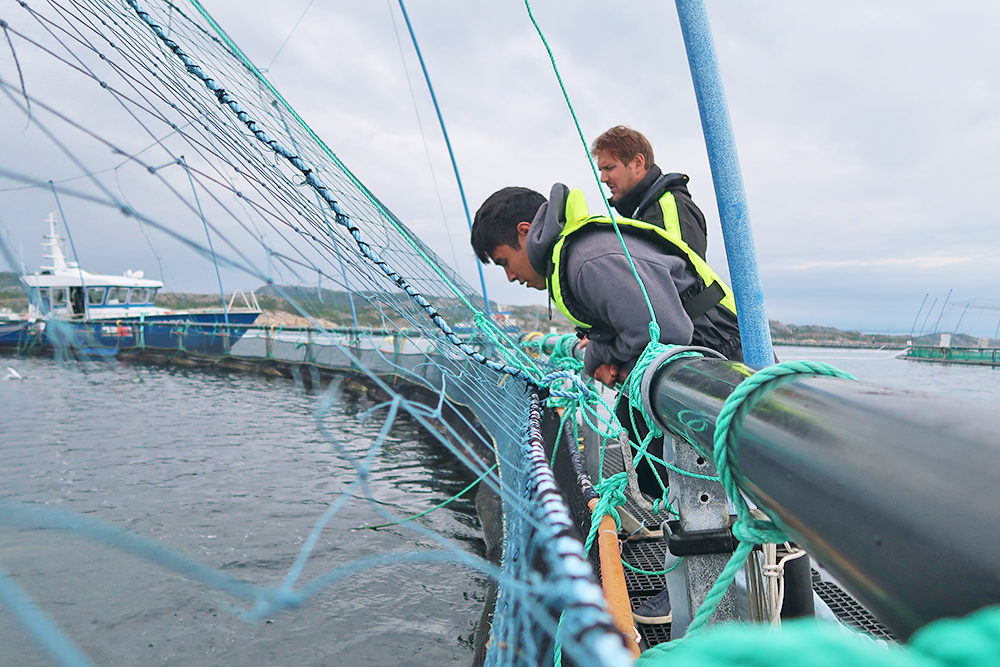
Ohrem affirms that maintaining fish welfare is the primary driver for researchers and companies operating in aquaculture, especially as the industry continues to grow. “So the big question is,” he says, “how can you ensure that?” SINTEF Ocean has four research licenses for farming fish, which they operate through a collaboration with SalMar, the second-largest salmon farmer in the world. The students had the opportunity to visit one of the industrial-scale farms, Singsholmen, on the island of Hitra. The farm has 10 large, round net pens about 50 meters across that extend deep below the surface, each holding up to 200,000 salmon. “I got to physically touch the nets and see how the [robotic] arm might be able to fix the net,” says Tang. 

Kelasidi emphasizes that the information gained in the field cannot be learned from the office or lab. “That opens up and makes you realize, what is the scale of the challenges, or the scale of the facilities,” she says. She also highlights the importance of international and institutional collaboration to advance this field of research and develop more resilient robotic systems. “We need to try to target that problem, and let’s solve it together.”

MIT Sea Grant and the MIT-Scandinavia MISTI program are currently recruiting a new cohort of four MIT students to intern in Norway this summer with institutes advancing offshore farming technologies, including NTNU’s Field Robotics Lab in Trondheim. Students interested in autonomy, deep learning, simulation modeling, underwater robotic systems, and other aquaculture-related areas are encouraged to reach out to Lily Keyes at MIT Sea Grant.

Artificial tendons give muscle-powered robots a boost | MIT News

0

Our muscles are nature’s actuators. The sinewy tissue is what generates the forces that make our bodies move. In recent years, engineers have used real muscle tissue to actuate “biohybrid robots” made from both living tissue and synthetic parts. By pairing lab-grown muscles with synthetic skeletons, researchers are engineering a menagerie of muscle-powered crawlers, walkers, swimmers, and grippers.

But for the most part, these designs are limited in the amount of motion and power they can produce. Now, MIT engineers are aiming to give bio-bots a power lift with artificial tendons.

In a study appearing today in the journal Advanced Science, the researchers developed artificial tendons made from tough and flexible hydrogel. They attached the rubber band-like tendons to either end of a small piece of lab-grown muscle, forming a “muscle-tendon unit.” Then they connected the ends of each artificial tendon to the fingers of a robotic gripper.

When they stimulated the central muscle to contract, the tendons pulled the gripper’s fingers together. The robot pinched its fingers together three times faster, and with 30 times greater force, compared with the same design without the connecting tendons.

The researchers envision the new muscle-tendon unit can be fit to a wide range of biohybrid robot designs, much like a universal engineering element.

“We are introducing artificial tendons as interchangeable connectors between muscle actuators and robotic skeletons,” says lead author Ritu Raman, an assistant professor of mechanical engineering (MechE) at MIT. “Such modularity could make it easier to design a wide range of robotic applications, from microscale surgical tools to adaptive, autonomous exploratory machines.”

The study’s MIT co-authors include graduate students Nicolas Castro, Maheera Bawa, Bastien Aymon, Sonika Kohli, and Angel Bu; undergraduate Annika Marschner; postdoc Ronald Heisser; alumni Sarah J. Wu ’19, SM ’21, PhD ’24 and Laura Rosado ’22, SM ’25; and MechE professors Martin Culpepper and Xuanhe Zhao.

Muscle’s gains

Raman and her colleagues at MIT are at the forefront of biohybrid robotics, a relatively new field that has emerged in the last decade. They focus on combining synthetic, structural robotic parts with living muscle tissue as natural actuators.

“Most actuators that engineers typically work with are really hard to make small,” Raman says. “Past a certain size, the basic physics doesn’t work. The nice thing about muscle is, each cell is an independent actuator that generates force and produces motion. So you could, in principle, make robots that are really small.”

Muscle actuators also come with other advantages, which Raman’s team has already demonstrated: The tissue can grow stronger as it works out, and can naturally heal when injured. For these reasons, Raman and others envision that muscly droids could one day be sent out to explore environments that are too remote or dangerous for humans. Such muscle-bound bots could build up their strength for unforeseen traverses or heal themselves when help is unavailable. Biohybrid bots could also serve as small, surgical assistants that perform delicate, microscale procedures inside the body.

All these future scenarios are motivating Raman and others to find ways to pair living muscles with synthetic skeletons. Designs to date have involved growing a band of muscle and attaching either end to a synthetic skeleton, similar to looping a rubber band around two posts. When the muscle is stimulated to contract, it can pull the parts of a skeleton together to generate a desired motion.

But Raman says this method produces a lot of wasted muscle that is used to attach the tissue to the skeleton rather than to make it move. And that connection isn’t always secure. Muscle is quite soft compared with skeletal structures, and the difference can cause muscle to tear or detach. What’s more, it is often only the contractions in the central part of the muscle that end up doing any work — an amount that’s relatively small and generates little force.

“We thought, how do we stop wasting muscle material, make it more modular so it can attach to anything, and make it work more efficiently?” Raman says. “The solution the body has come up with is to have tendons that are halfway in stiffness between muscle and bone, that allow you to bridge this mechanical mismatch between soft muscle and rigid skeleton. They’re like thin cables that wrap around joints efficiently.”

“Smartly connected”

In their new work, Raman and her colleagues designed artificial tendons to connect natural muscle tissue with a synthetic gripper skeleton. Their material of choice was hydrogel — a squishy yet sturdy polymer-based gel. Raman obtained hydrogel samples from her colleague and co-author Xuanhe Zhao, who has pioneered the development of hydrogels at MIT. Zhao’s group has derived recipes for hydrogels of varying toughness and stretch that can stick to many surfaces, including synthetic and biological materials.

To figure out how tough and stretchy artificial tendons should be in order to work in their gripper design, Raman’s team first modeled the design as a simple system of three types of springs, each representing the central muscle, the two connecting tendons, and the gripper skeleton. They assigned a certain stiffness to the muscle and skeleton, which were previously known, and used this to calculate the stiffness of the connecting tendons that would be required in order to move the gripper by a desired amount.

From this modeling, the team derived a recipe for hydrogel of a certain stiffness. Once the gel was made, the researchers carefully etched the gel into thin cables to form artificial tendons. They attached two tendons to either end of a small sample of muscle tissue, which they grew using lab-standard techniques. They then wrapped each tendon around a small post at the end of each finger of the robotic gripper — a skeleton design that was developed by MechE professor Martin Culpepper, an expert in designing and building precision machines.

When the team stimulated the muscle to contract, the tendons in turn pulled on the gripper to pinch its fingers together. Over multiple experiments, the researchers found that the muscle-tendon gripper worked three times faster and produced 30 times more force compared to when the gripper is actuated just with a band of muscle tissue (and without any artificial tendons). The new tendon-based design also was able to keep up this performance over 7,000 cycles, or muscle contractions.

Overall, Raman saw that the addition of artificial tendons increased the robot’s power-to-weight ratio by 11 times, meaning that the system required far less muscle to do just as much work.

“You just need a small piece of actuator that’s smartly connected to the skeleton,” Raman says. “Normally, if a muscle is really soft and attached to something with high resistance, it will just tear itself before moving anything. But if you attach it to something like a tendon that can resist tearing, it can really transmit its force through the tendon, and it can move a skeleton that it wouldn’t have been able to move otherwise.”

The team’s new muscle-tendon design successfully merges biology with robotics, says biomedical engineer Simone Schürle-Finke, associate professor of health sciences and technology at ETH Zürich.

“The tough-hydrogel tendons create a more physiological muscle–tendon–bone architecture, which greatly improves force transmission, durability, and modularity,” says Schürle-Finke, who was not involved with the study. “This moves the field toward biohybrid systems that can operate repeatably and eventually function outside the lab.”

With the new artificial tendons in place, Raman’s group is moving forward to develop other elements, such as skin-like protective casings, to enable muscle-powered robots in practical, real-world settings.

This research was supported, in part, by the U.S. Department of Defense Army Research Office, the MIT Research Support Committee, and the National Science Foundation.

Generate single title from this title How background AI builds operational resilience & visible ROI in 100 -150 characters. And it must return only title i dont want any extra information or introductory text with title e.g: ” Here is a single title:”

Write an article about

If you asked most enterprise leaders which AI tools are delivering ROI, many would point to front-end chatbots or customer support automation. That’s the wrong door. The most value-generating AI systems today aren’t loud, customer-facing marvels. They’re tucked away in backend operations. They work silently, flagging irregularities in real-time, automating risk reviews, mapping data lineage, or helping compliance teams detect anomalies before regulators do. The tools don’t ask for credit, but are saving millions.

Operational resilience no longer comes from having the loudest AI tool. It comes from having the smartest one, placed where it quietly does the work of five teams before lunch.

The machines that spot what humans don’t

Take the case of a global logistics company that integrated a background AI system for monitoring procurement contracts. The tool scanned thousands of PDFs, email chains, and invoice patterns per hour. No flashy dashboard. No alerts that interrupt workflow. Just continuous monitoring. In the first six months, it flagged multiple vendor inconsistencies that, if left unchecked, would have resulted in regulatory audits.

The system didn’t just detect anomalies. It interpreted patterns. It noticed a vendor whose delivery timelines were always one day off compared to logged timestamps. Humans had seen those reports for months. But the AI noticed that the error always occurred near quarter-end. The conclusion? Inventory padding. That insight led to a contract renegotiation that saved millions.

This isn’t hypothetical. One similar real-world use case reported a seven-figure operational loss prevented through a near-identical approach. That’s the kind of ROI that doesn’t need a flashy pitch deck.

Why advanced education still matters in the age of AI

It’s easy to fall into the trap of thinking AI tools are replacing human expertise. But smart organisations aren’t replacing but reinforcing. People with advanced academic backgrounds are helping enterprises integrate AI with strategic precision.

Specifically, those with a doctorate of business administration in business intelligence bring an irreplaceable level of systems thinking and contextual insight. The professionals understand the complexity behind data ecosystems, from governance models to algorithmic biases, and can assess which tools serve long-term resilience versus short-term automation hype.

When AI models are trained on historical data, it takes educated leadership to spot where historical bias may become a future liability. And when AI starts making high-stakes decisions, you need someone who can ask better questions about risk exposure, model explainability, and ethics in decision-making. This is where doctorates aren’t just nice to have – they’re essential.

Invisible doesn’t mean simple

Too often, companies install AI as if it were antivirus software. Set it, forget it, hope it works. That’s how you get black-box risk. Invisible tools must still be transparent internally. It’s not enough to say, “AI flagged it.” The teams relying on these tools – risk officers, auditors, operations leads – must understand the decision-making logic or at least the signals that drive the alert. The requires not just technical documentation, but collaboration between engineers and business units.

Enterprises that win with background AI systems build what could be called “decision-ready infrastructure.” The are workflows where data ingestion, validation, risk detection, and notification are all stitched together. Not in silos. Not in parallel systems. But in one loop that feeds actionable insight straight to the team responsible. That’s resilience.

Where operational AI works best

Here’s where invisible AI is already proving its worth in industries:

  • Compliance Monitoring: Automatically detecting early signs of non-compliance in internal logs, transactional data, and communication channels without triggering false positives.
  • Data Integrity: Identifying stale, duplicate, or inconsistent data in business units to prevent decision errors and reporting flaws.
  • Fraud Detection: Recognising pattern shifts in transactions before losses occur. Not reactive alerts after the fact.
  • Supply Chain Optimisation: Mapping supplier dependencies and predicting bottlenecks based on third-party risk signals or external disruptions.

In all these cases, the key isn’t automation for automation’s sake. It’s precision. AI models that are well-calibrated, integrated with domain knowledge, and fine-tuned by experts – not simply deployed off the shelf.

What makes the systems resilient?

Operational resilience isn’t built in a sprint. It’s the result of smart layering. One layer catches data inconsistencies. Another tracks compliance drift. Another layer analyses behavioural signals in departments. And yet another feeds all of that into a risk model trained on historical issues.

The resilience depends on:

  • Human supervision with domain expertise, especially from those trained in business intelligence.
  • Cross-functional transparency, so that audit, tech, and business teams are aligned.
  • The ability to adapt models over time as the business evolves, not just retrain when performance dips.

Systems that get this wrong often create alert fatigue or over-correct with rigid rule-based models. That’s not AI. That’s bureaucracy in disguise.

Real ROI doesn’t scream

Most ROI-focused teams chase visibility. Dashboards, reports, charts. But the most valuable AI tools don’t scream. They tap a shoulder. They point out a loose thread. They suggest a second look. That’s where the money is. Quiet detection. Small interventions. Avoided disasters.

The companies that treat AI as a quiet partner – not a front-row magician – are already ahead. They’re using it to build internal resilience, not just customer-facing shine. They’re integrating it with human intelligence, not replacing it. And most of all, they’re measuring ROI not by how cool the tech looks, but by how quietly it works.

That’s the future. Invisible AI agents and assistants. Visible outcomes. Real, measurable resilience.

.Organize the content with appropriate headings and subheadings ( h2, h3, h4, h5, h6). Include conclusion section and FAQs section with Proper questions and answers at the end. do not include the title. it must return only article i dont want any extra information or introductory text with article e.g: ” Here is rewritten article:” or “Here is the rewritten content:”

Generate single title from this title Nvidia shares fall on signs Google gaining upper hand in AI in 100 -150 characters. And it must return only title i dont want any extra information or introductory text with title e.g: ” Here is a single title:”

Write an article about $115bn sell-off for chip group weighs on those linked to company .Organize the content with appropriate headings and subheadings ( h2, h3, h4, h5, h6). Include conclusion section and FAQs section with Proper questions and answers at the end. do not include the title. it must return only article i dont want any extra information or introductory text with article e.g: ” Here is rewritten article:” or “Here is the rewritten content:”