Home Blog Page 355

You can now comment directly on Creative Bloq

0

At Creative Bloq, We’re Excited to Introduce Commenting on Our Site

At Creative Bloq, we know how important online communities are and we’re always looking for ways to encourage positive discussion around design and creativity. That’s why we’re excited to announce that commenting is now available directly on our site.

Our Goal for the Comment Section

The goal for our comment section is for it to become the best place for thoughtful discussion of our article topics. We’re aiming to develop a space where people with an interest in creativity can enjoy conversations built on a foundation of respect.

Community Guidelines

Our team is dedicated to providing quality content – please keep that in mind and keep disagreements respectful. Not every comment needs to be a debate – it’s fine to just talk! – but please approach all disagreements in a spirit of openness and tolerance. We want to build a community that you’re proud to recommend to others and we can only do that together.

How to Sign Up and Comment

Commenting on Creative Bloq is easy to do. First of all, please read our community guidelines before commenting. These set out the baseline rules and expectations for commenting on CB, then either click to sign in at the top right of the page or below the article. Once you’ve done this, you can add your thoughts and if your comment follows our guidelines, it will be posted to the site.

Additional Information

In order to leave comments on the Creative Bloq website, all users must be registered and logged in to comment on stories, in accordance with our Terms of Use. Please note that not all articles will have commenting available. If this is the case, do not try to discuss that article in other comment sections, they have been closed for a reason and this may be a legal requirement.

FAQs

Q: How do I sign up to comment on Creative Bloq?
A: Read our community guidelines, then click to sign in at the top right of the page or below the article.

Q: What are the community guidelines?
A: Please approach all disagreements in a spirit of openness and tolerance, and keep in mind that our team is dedicated to providing quality content.

Q: Why can’t I comment on all articles?
A: Some articles may have commenting closed, either by request or due to legal requirements. Do not try to discuss these articles in other comment sections.

Q: What can I do if I have a question or feedback about the commenting system?
A: Email us at commentmoderation@futurenet.com.

Conclusion

We’re looking forward to building our commenting community with you all. Thank you for your cooperation and we hope to see you engaging in our comment section soon!

Charting a New Energy Future with AI Innovation and Collective Action

Here is the organized and rewritten article:

Microsoft for Energy and Resources

Drive innovation to achieve a sustainable future

Protecting and Strengthening Critical Infrastructure and Energy Operations

Many energy systems today, especially power and utilities infrastructure, are prone to persistent cyberattacks. Left unresolved, security risks can quickly spiral and complicate already-existing issues like technical debt, tool fatigue, and employee burnout. It’s a prime example of how technology can enhance human capabilities to create a secure energy supply. Several of the industry leaders we work with are leveraging generative AI to streamline security processes and improve security posture, allowing their security personnel to focus on the highest-priority work. For example, international power company Uniper relies on Microsoft Security Copilot to help their IT security personnel work smarter and faster. Microsoft Security Copilot immediately flags potential incidents, allowing them to identify and address risks up to twice as fast. It also helps them manage access and quickly compile new emergency plans based on current drafts. It can even create a list of inactive devices that pose potential security risks.

Improving Frontline Worker Productivity and Safety with Real-time Insights

The world runs on the products and services provided by millions of energy and resources workers. As the industry grapples with changing customer demands and pressures to reduce emissions, the workforce is undergoing a transformative shift to better accommodate these needs. But they also face gaps in areas like skilling and productivity that require strategy and innovation to overcome.

Streamlining Permitting and Automating Complex Utility Rate Case Workflows

In the energy and resources industry, permitting and rate case processing are common and necessary to adhere to important legal, financial, and environmental compliance and regulatory requirements. They can also be extremely costly and time-consuming, especially for nuclear energy permitting, which requires unique expertise and can often take many years and tens of millions of dollars to complete, and for complex utility rate cases, which require detailed data sources and documentation.

Finding Information Faster with AI Agents

As AI becomes more prevalent across global industry operations, we’re increasingly seeing the benefits and vast potential for supercharging productivity. AI agents, for example, can help users find the right information faster, and they can execute a specific set of tasks, allowing workers to spend more time on innovative and creative work. This will be a game-changer.

Explore More AI Innovation in Energy

At Microsoft, we’re committed to working with the global energy industry to accelerate the energy transition and enable a more secure, reliable, equitable, and sustainable future. Through our cloud-based data and AI solutions, energy leaders can accelerate their digital transformation to maximize value across their entire enterprise—and we’re here to support along the way. You can check out our additional resources to learn more about working with the Microsoft energy and resources industry team.

Conclusion

In this article, we have discussed the importance of AI innovation in the energy sector, how it can help in protecting and strengthening critical infrastructure and energy operations, improving frontline worker productivity and safety, streamlining permitting and automating complex utility rate case workflows, and finding information faster with AI agents. We have also highlighted some of the AI innovations and solutions that Microsoft is offering to support the global energy industry in its transition to a more sustainable future.

FAQs

Q: What is the role of AI in the energy sector?
A: AI has the potential to revolutionize the energy sector by providing real-time insights, automating complex processes, and improving productivity and safety.

Q: How can AI help in protecting critical infrastructure and energy operations?
A: AI can help in protecting critical infrastructure and energy operations by identifying potential security risks, streamlining security processes, and improving security posture.

Q: What are some examples of AI innovations in the energy sector?
A: Some examples of AI innovations in the energy sector include the use of generative AI to streamline security processes, improve frontline worker productivity and safety, and automate complex utility rate case workflows.

Q: How can energy leaders accelerate their digital transformation?
A: Energy leaders can accelerate their digital transformation by leveraging cloud-based data and AI solutions, such as Microsoft’s Azure and Microsoft 365.

Australia’s Mineral Conundrum: DeepSeek’s Deep Impact

Article

Hello from Tokyo, this is Katey Creel, Nikkei Asia’s tech editor.

One of the most common mistakes in journalism is to expect downtime in the news cycle. While companies, analysts and even a few journalists were looking forward to some well-earned time off over the Lunar New Year holiday this week, DeepSeek had other ideas.

Sputnik Moment

The Chinese company’s sudden release of a chatbot that it says was radically cheaper to develop dropped a bomb on an industry that for the past two years has operated under the assumption that the only way forward in AI was to have more computing firepower. Its arrival is a reminder that tech hype can be both a boon and bane for the stock market. When OpenAI introduced the world to generative AI with its ChatGPT chatbot, it kicked off a years-long rally in tech shares and turned Nvidia, a chipmaker known mostly among gamers, into a multitrillion-dollar industry leader (and its CEO into something of a rock star).

The Future of AI

This time around, the innovation is threatening to puncture the bubble — if powerful AI models can be developed without Nvidia’s pricey hardware, the bullish case for AI spending suddenly looks a lot shakier. "If" being the operative word. DeepSeek puts its achievements down to innovation and clever use of less powerful chips. More sceptical observers say it may be piggybacking on western technologies or relying on more advanced US hardware than it claims.

Rare-Earths: A New Frontier

Beneath the fertile farmlands of Victoria in south-east Australia lie deposits of mineral sands that miners and politicians are keen to tap for rare-earth elements, ingredients in everything from EV batteries to wind turbines to advanced weapons. Two mineral sands projects recently passed the environmental assessment stage, and others are in the pipeline. Victoria’s state government sees a potential second gold rush if these projects succeed, while the federal government is keen to develop domestic resources to build a "China-free" supply chain of critical minerals, writes Nikkei Asia’s Shaun Turton.

SoftBank’s Ambitions

Masayoshi Son is stepping up his hunt for deals to match his vaunted ambitions for the artificial intelligence sector. SoftBank is in talks to lead a funding round for AI robotics start-up Skild AI that would more than double its valuation to close to $4bn, write the Financial Times’ Stephen Morris, David Keohane, and George Hammond. The fresh investment, which was confirmed by three people familiar with the matter, would eclipse the $300mn raised in the company’s first round in July and has been given the green light by the SoftBank founder. However, the people cautioned talks were still at an early stage and there was no guarantee they would be successful. SoftBank declined to comment. Skild did not respond to a request for comment.

Tencent’s Overseas Gaming Gambit

China’s top esports teams are still capable of filling stadiums, as the sold-out Honor of Kings championship event late last year showed. But with gaming revenues plateauing and regulatory uncertainty hanging over the sector, gaming giant Tencent and its compatriots are looking overseas for new growth, writes Nikkei Asia’s Wataru Suzuki. A major target is south-east Asia, where esports revenues were just one-sixth those of China’s in 2022, according to calculations by Niko Partners. Venturing overseas, however, means taking on new rivals as well as having to adapt to markedly different gaming habits and preferences.

Distillation or Innovation?

One of the biggest questions surrounding DeepSeek, the Chinese AI developer shaking up the tech world, is just how it achieved its claimed breakthrough in low-cost model training. One suggestion is distillation, or using a bigger, more robust model to develop a smaller, more nimble one, Nikkei Asia’s Ryohtaroh Satoh writes. Whether and how much the company relied on this approach is not clear — DeepSeek says it used "optimised co-design of algorithms, frameworks and hardware" — but distillation could have broader implications for the AI industry. As more companies look to deploy artificial intelligence in their operations, many are looking for more affordable models that are quicker to develop and more tailored to their needs, all things that distillation could deliver.

Conclusion

The tech world is abuzz with the latest developments in the field of artificial intelligence. From the rise of low-cost AI models to the growth of the gaming industry, there are many exciting opportunities and challenges on the horizon. As we continue to navigate this rapidly evolving landscape, it is essential to stay informed and up-to-date on the latest news and trends. At Nikkei Asia, we are committed to providing you with the latest insights and analysis on the tech industry, so you can stay ahead of the curve.

FAQs

Q: What is the significance of DeepSeek’s announcement?
A: DeepSeek’s announcement is significant because it challenges the prevailing assumption that more powerful computing hardware is necessary for developing advanced AI models.

Q: What is distillation in the context of AI?
A: Distillation refers to the process of using a bigger, more robust model to develop a smaller, more nimble one.

Q: What is the potential impact of DeepSeek’s technology on the AI industry?
A: DeepSeek’s technology has the potential to revolutionize the AI industry by making it more accessible and affordable for companies to develop and deploy AI models.

Q: What are the implications of SoftBank’s investment in Skild AI?
A: SoftBank’s investment in Skild AI has the potential to accelerate the development of AI technology and bring it closer to widespread adoption.

Q: What is the significance of Tencent’s overseas gaming gambit?
A: Tencent’s overseas gaming gambit is significant because it highlights the company’s ambitions to expand its gaming business beyond China and tap into the growing demand for gaming in other regions.

Goose: AI Agent for Mid-Air Directional Changes

The Rise of Open-Source AI Solutions

Whether for developer needs or mundane tasks, the artificial intelligence (AI) tide appears to be turning in favor of open-source solutions.

Codename Goose: A Game-Changer in Open-Source AI

On Tuesday, Block, the Jack Dorsey-founded company behind Square, Cash App, Tidal, and Afterpay, released a total rewrite of codename goose, its open-source AI developer agent previously available in beta. Released under the Apache License 2.0 (ASL2), codename goose offers "interoperability between user interfaces, language models, and systems," as the release explains, and connects to any system via Anthropic’s Model Context Protocol (MCP), which lets agents access data stores, developer spaces, and business applications. Users can specify any large language model (LLM) they want to use with goose.

Key Features of Codename Goose

  • Available for any individual or commercial purpose
  • Connects to any system via Anthropic’s Model Context Protocol (MCP)
  • Users can specify any large language model (LLM) they want to use with goose
  • Allows users to connect new tools midway during a session
  • Offers "interoperability between user interfaces, language models, and systems"

Real-World Applications of Codename Goose

  • Developers can use goose as an engineering agent that searches and writes code in real-time while "executing tasks autonomously — reading and writing files, running code and tests, refining outputs, installing dependencies, and handling additional actions as needed"
  • Goose can be used for creative pursuits like music generation
  • Users can integrate goose with daily apps like email, Google Calendar, and Drive
  • Goose can be used to simplify daily tasks, such as summarizing emails or documents

The Future of Codename Goose

  • Block hopes goose will eventually be used for other pursuits, including creative ones like music generation
  • The company is exploring the possibility of integrating goose with on-device models, allowing users to run the agent on their Android phones or other devices
  • Goose is designed to be embeddable, with the team switching the agent’s language from Python to Rust and building an accompanying native application

Conclusion

Codename goose is a significant development in the world of open-source AI solutions. Its ability to connect to any system and allow users to specify any large language model (LLM) they want to use with goose makes it a powerful tool for developers and non-developers alike. As the technology continues to evolve, it will be exciting to see the new and innovative ways that goose is used.

FAQs

Q: What is codename goose?
A: Codename goose is an open-source AI developer agent released by Block, the Jack Dorsey-founded company behind Square, Cash App, Tidal, and Afterpay.

Q: What are the key features of codename goose?
A: Codename goose offers "interoperability between user interfaces, language models, and systems," connects to any system via Anthropic’s Model Context Protocol (MCP), and allows users to specify any large language model (LLM) they want to use with goose.

Q: How can codename goose be used?
A: Codename goose can be used as an engineering agent that searches and writes code in real-time, for creative pursuits like music generation, and to simplify daily tasks.

Q: Is codename goose available for commercial use?
A: Yes, codename goose is available for any individual or commercial purpose.

Q: Can I contribute to codename goose?
A: Yes, anyone can contribute new capabilities to the agent itself.

From Flat to Fantastic: The Leap to 3D

0

More and More Artists Finding 3D Art and Modelling Less Daunting in 2025

From 2D to 3D: Maciek Łazowski’s Story

Maciek Łazowski, an illustrator, transferred his 2D digital art skills to 3D using Blender and has been in love with both approaches ever since. He began experimenting with 3D software a year ago and has found more clients and greater creative output.

Why and How Maciek Made the Leap

Maciek’s advice is to "Have some fun in Womp to see how your work translates into 3D and if that’s your jam. If it is, then after a while, give Blender a go." He recommends Patata School for character-related illustration in 3D and Polygon Runway for everything else. "Be prepared for some frustration and teeth grinding," he says. "Don’t let the setbacks get to you; be consistent and pat yourself on the back for even the smallest win. There’s some suffering to go through, but when you figure out how to solve a problem on your own – damn, that feels good!"

The Journey to 3D

Why 3D Art?

I was never really interested in realistic and semi-realistic-looking 3D, but I’ve started seeing more and more people create very stylised artworks. Some of them gave me that jolt of "oooh, I’d like to do that." But I thought to create 3D, you needed expensive software and very powerful computers. When I realised that’s not the case at all, I decided to give it a go.

Choosing the Right Software

I started to pay attention to artists mentioning the programs they used for the artworks I admired. I’ve seen that most people creating in the style I was going for used Cinema 4D. I’ve also heard that it was a bit easier to pick up. Then I learned it was a subscription-based service and how much it costs, and I decided to go with Blender, because it was free. I was pretty pleased with the mirror modifier, as it only requires me to make half the work. When I learned to use sculpting tools, I was pretty blown away with what can be done with them. And the rigify plugin – you mean I can adjust my character like it was an action figure? Honestly, lots of the tools feel like magic.

From 2D to 3D

My style is geometric, so it lends itself to 3D in that way, but it took me some time to switch to thinking in 3D, if that makes sense. I would work on a piece, viewing it at a certain angle, then turn it, and it looked like an abomination that just crawled out of the deepest circles of hell.

The Creative Process

Yes, I started to be less precious and more loose with initial sketches. In 2D illustrations, my finals matched my sketches pretty accurately, so it was worth taking some time in fleshing these sketches out. Here, since I’m playing more with camera, perspective, etc., there are always noticeable differences, so I just don’t bother and make a quick doodle that captures the idea. It’s allowed me more freedom and made the process more fun.

What I Enjoy Most

I think Womp is amazing. I’ve had tons of fun using it, and I recommend it to everyone that wants to try 3D as a perfect starting point. I don’t think its render engine can match Cycles yet, but I’ve seen amazing works made in Womp with some additional post-production. You can also feel the developers care about their program, as they keep improving it all the time.

Pitches to Clients

I was a bit nervous about doing it after learning for almost two years – what if the clients won’t care much for the way my stuff looks in 3D? Luckily, I’ve had lots of feedback along the way from friends and kind people online that this direction is worth pursuing, and the reaction from clients seems to confirm that. Phew.

Proudest Works

I think it’s the illustration I did for the BBC Science Focus about microbiome diet. It was for their digital issue cover, so that felt awesome, but also I was able to turn it into an animated loop for the article version. I was able to pull together a few techniques I was learning, and I’m quite happy with how it turned out.

Conclusion

Maciek’s story is an inspiration for many artists looking to make the leap to 3D. With the right tools and mindset, the possibilities are endless. Remember to be patient, persistent, and always keep learning.

FAQs

Q: What software did Maciek use to create 3D art?
A: Maciek used Blender, a free and open-source 3D creation software.

Q: What other software did Maciek mention?
A: Maciek mentioned Womp, Patata School, and Polygon Runway.

Q: What is Maciek’s advice for artists looking to start 3D art?
A: Maciek’s advice is to "Have some fun in Womp to see how your work translates into 3D and if that’s your jam. If it is, then after a while, give Blender a go."

Books Written by Humans Get Certification

0

The Human Authored Initiative: A New Standard for Human-Crafted Writing

Introduction

The Authors Guild, one of the largest associations of writers in the US, has launched a new project to certify books written by humans, rather than generated by artificial intelligence (AI). The initiative, called Human Authored, aims to create transparency and acknowledge the reader’s desire for human connection and storytelling.

Certification Criteria

To qualify for the Human Authored mark, books and other works must be almost entirely written by humans, with minor exceptions to accommodate AI-powered tools like grammar and spell-check applications. The certification is currently restricted to Authors Guild members and books penned by a single writer, but will expand to include non-Guild members and multiple authors in the future.

The Importance of Human Connection

"We’re not against technology, we’re about creating transparency, acknowledging the reader’s desire for human connection, and celebrating the uniquely human elements of storytelling," said Mary Rasenberger, CEO of the Authors Guild. "Authors can still qualify if they use AI as a tool for spell-checking or research, but the certification connotes that the literary expression itself, with the unique human voice that every author brings to their writing, emanates from the human intellect."

Conclusion

The Human Authored initiative is a significant step in ensuring the integrity and value of human creativity in writing. By providing a clear distinction between human-written and AI-generated content, the Authors Guild is promoting transparency and acknowledging the unique value of human storytelling.

Frequently Asked Questions

Q: What is the Human Authored initiative?
A: The Human Authored initiative is a certification program launched by the Authors Guild to verify that a book or work was written by a human, rather than generated by artificial intelligence.

Q: Who is eligible for the certification?
A: Currently, the certification is restricted to Authors Guild members and books penned by a single writer, but will expand to include non-Guild members and multiple authors in the future.

Q: What are the criteria for certification?
A: Books and other works must be almost entirely written by humans, with minor exceptions to accommodate AI-powered tools like grammar and spell-check applications.

Q: Why is the certification necessary?
A: The certification is necessary to ensure transparency and acknowledge the reader’s desire for human connection and storytelling, while also promoting the value of human creativity and intellectual property.

Paris Catacombs’ Surprisingly Cute Logo

0

The Paris Catacombs’ Dark Delight: A Labyrinth of Ossuaries

A Macabre Attraction with a Clever Logo Design

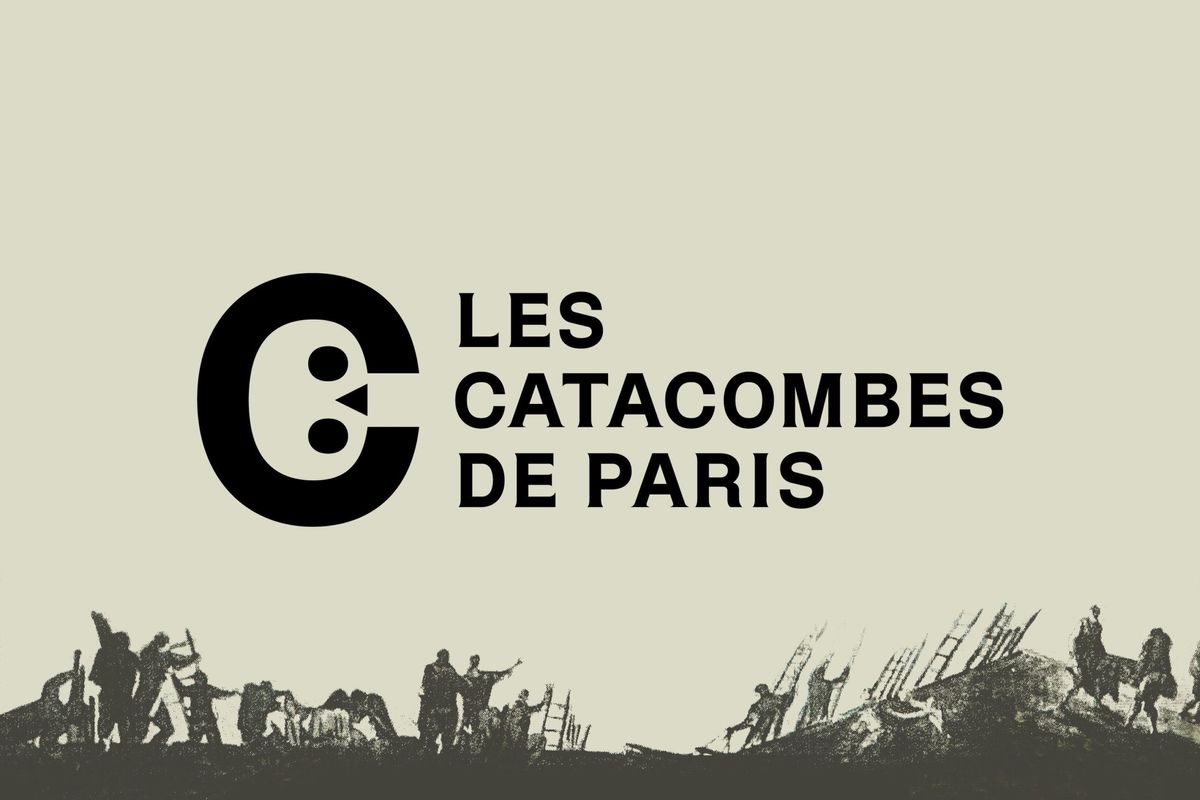
The Paris Catacombs are the City of Light’s darkest tourist attraction: labyrinthine tunnels that house the remains of six million people, which were carted from overflowing cemeteries in the late 18th century. With such a macabre history, you might not expect the enormous complex of ossuaries to have fun branding, but designers are still swooning over how cute the catacombs logo design is thanks to its brilliant example of negative space in design.

A Skull-tastic Logo Design

The logo, designed by Mo-To in 2019, is a big letter ‘C’, but peer into the negative space within and turn your head to the side, and the shape also resembles a human skull, the perfect emblem for a macabre attraction. Even more cleverly, the triangle nose positioned between the gap in the counter of the C appears to form an entrance indicator, inviting visitors to venture into the depths of the city if they dare.

A Symbol of Life and Death

The typography of the logo also acts as an analogy for the human body, symbolizing "a transition from life to death." Mo-To stated that the various categories of weights and styles found in the lettering pay homage to the ossuary. This unique design approach has sparked a mix of emotions, with some finding it too playful or disrespectful, while others appreciate its creative take on the macabre theme.

Conclusion

The Paris Catacombs’ logo design is a testament to the power of negative space and creative thinking. It’s a clever example of how a design can be both functional and thought-provoking, making it a great addition to the world of logo design.

FAQs

Q: What is the significance of the Paris Catacombs’ logo design?
A: The logo design is a big letter ‘C’ with a skull-like shape in the negative space, symbolizing the transition from life to death.

Q: Who designed the Paris Catacombs’ logo?
A: The logo was designed by Mo-To in 2019.

Q: What is the significance of the triangle nose in the logo?
A: The triangle nose appears to form an entrance indicator, inviting visitors to venture into the depths of the city if they dare.

Q: How does the logo design relate to the Paris Catacombs’ history?
A: The typography of the logo acts as an analogy for the human body, symbolizing "a transition from life to death," paying homage to the ossuary.

OpenAI dice que DeepSeek podría haber obtenido sus datos de manera indebida

0

OpenAI Investigates Allegations of Data Misuse by Chinese Company DeepSeek

Background

DeepSeek, a Chinese company, has been making headlines with its advanced artificial intelligence (AI) technologies. The company, valued at $157 billion, has been accused of using OpenAI’s generated data to train its own AI systems.

OpenAI’s Concerns

OpenAI, a leading AI company, has issued a statement expressing concerns over the allegations. According to Liz Bourgeois, OpenAI’s spokesperson, the company is aware of indications that DeepSeek may have improperly used OpenAI’s models for its own gain. "We know that groups in the RPC are actively working to replicate advanced AI models, including those from the United States," Bourgeois said. "We are taking aggressive and proactive measures to protect our technology and will continue to work closely with the US government to protect the most advanced models developed here."

DeepSeek’s Response

DeepSeek has not commented on the allegations, leaving many questions unanswered. However, the company’s sudden rise to fame has caused a stir in the tech industry, with many wondering how it achieved its impressive results.

Data Collection and Usage

AI companies like OpenAI and DeepSeek rely heavily on data collection and usage. They use vast amounts of data to train their AI systems, which can include text, images, and videos. This data is often sourced from the internet, and companies may use various methods to collect and process it.

The Role of Open-Sourcing

Open-sourcing, a practice in which companies share their code and reuse others’, is a common way for AI companies to accelerate development. However, this practice can also raise concerns about data ownership and usage.

Concerns Over Data Misuse

The latest allegations against DeepSeek highlight concerns over data misuse. If a company uses data generated by another company to train its own AI systems, it may be seen as a violation of the original company’s intellectual property rights. OpenAI’s conditions of service explicitly prohibit the use of generated data for competitive purposes.

Conclusion

The allegations against DeepSeek have sent shockwaves through the tech industry, with many wondering how the company achieved its impressive results. As the investigation unfolds, it remains to be seen whether DeepSeek will be found to have misused OpenAI’s data. In the meantime, the industry is left to ponder the ethical implications of data sharing and usage in the AI landscape.

FAQs

Q: What is OpenAI’s stance on data misuse?
A: OpenAI prohibits the use of generated data for competitive purposes and is taking aggressive measures to protect its technology.

Q: What is DeepSeek’s response to the allegations?
A: DeepSeek has not commented on the allegations, leaving many questions unanswered.

Q: What is open-sourcing in the context of AI?
A: Open-sourcing refers to the practice of sharing code and reusing others’, which can accelerate AI development but also raises concerns about data ownership and usage.

Q: What is the role of data collection in AI development?
A: AI companies rely heavily on data collection and usage to train their AI systems, which can include text, images, and videos sourced from the internet.

Microsoft Kills Off Smart Lookup Feature in Word

Microsoft Kills Off Smart Lookup Feature in Word as It Pushes Copilot

Microsoft Retires a Helpful Feature

In a support document spotted by Windows Latest, Microsoft reveals that the Smart Lookup feature has been retired as of January 1, 2025. In the past, right-clicking on certain words in Microsoft Word displayed a "Search" command in the menu. Selecting that command would run an online search to help you learn more about the word you selected.

The "Search" Option Still Exists, but It’s Broken

The "Search" option still exists, and selecting it still opens the Search pane on the right. However, instead of running an actual search, Word just tells you that something went wrong and advises you to please try again. Trying again just results in the same error. It seems Microsoft can’t even properly remove a feature like this without creating confusion.

Is Copilot to Blame?

Why would the company retire such a useful and helpful option? The answer lies in one word: Copilot. Microsoft has been aggressively pushing its AI tool to customers as the one-stop solution to all their questions and requests. So, why keep a feature like Smart Lookup around when Copilot is here to save the day?

The Rise of Copilot

Copilot has already been available as standalone Windows and Mac programs, as mobile apps for iOS and Android, and as a sidebar in Edge. But Microsoft recently went a step further by forcing Copilot into its Microsoft 365 suite. Those of you who subscribe to Microsoft 365 Family or Personal will now notice a Copilot icon in the left margin, accompanied by an annoying message to "Draft with Copilot."

The Cost of Copilot

With the new Copilot feature comes an unexpected price increase that will kick in at your next renewal date. US subscribers to Microsoft 365 Personal will end up paying $99.99 per year or $9.99 per month, up from $69.99 per year or $6.99 per month. Subscribers to Microsoft 365 Family will eventually have to shell out $129.99 per year or $12.99 per month, up from $99.99 per year or $9.99 per month.

What You Can Do

You can remove Copilot from Word and switch back to a classic non-Copilot plan, though Microsoft doesn’t make it easy. Otherwise, I’m sure the company is hoping that removing tools like Smart Lookup will cause more people to keep Copilot and turn to the AI when they need help in a document.

Frequently Asked Questions

Q: What happened to the Smart Lookup feature in Microsoft Word?
A: Microsoft retired the Smart Lookup feature as of January 1, 2025.

Q: Why did Microsoft retire the Smart Lookup feature?
A: Microsoft is promoting its AI tool, Copilot, as the primary solution for users’ questions and requests. It’s likely that the company wants to encourage users to adopt Copilot instead of keeping the Smart Lookup feature.

Q: Is there a replacement for the Smart Lookup feature?
A: No, there is no direct replacement for the Smart Lookup feature. However, you can use the "Search" option in Microsoft Word to access online search results.

Q: How do I remove Copilot from Microsoft Word?
A: You can remove Copilot from Microsoft Word, but Microsoft doesn’t make it easy. You may need to switch to a classic non-Copilot plan or use a third-party tool to remove Copilot.

Cloud and AI are Shaping the Future of Tax Administration

The Compelling AI Benefits for Tax and Revenue Agencies

The Compelling AI Benefits for Tax and Revenue Agencies

The value of AI is all about simplifying the taxpayer experience while enhancing revenue collection. When taxpayers have an easier time filing and accurately paying their taxes, employees can work more productively, compliance can be assured more readily, and fraud can be detected more rapidly.

The Journey Begins by Identifying Strategic Objectives and Then Innovating Solutions for Specific Challenges that Translate into Measurable Outcomes

In our work with tax and revenue agencies, we see how AI and cloud technologies can improve experiences for both taxpayers and employees by helping to support the following outcomes:

• Modernizing taxpayer services.
• Boosting tax employee productivity.
• Streamlining revenue collection processes.
• Accelerating error and fraud detection.
• Optimizing audit case management.

Five Areas of AI Impact in Tax Administration

Tax agencies worldwide are already realizing important benefits in the most essential aspects of their operations. Here is an overview of these focus areas, with specific outcomes for our customers.

1. Modernizing Taxpayer Services

Solutions built with modern cloud technology can help enhance trust with taxpayers by improving collection and reducing the cost of compliance. Advanced analytics give a 360-view of taxpayers to enhance experiences and make it easier to comply and pay taxes.

2. Boost Employee Productivity

Cloud and AI technologies can empower tax agency employees to work and collaborate more efficiently and in a secure manner. Automating processes frees professionals to focus on tasks that are the most impactful for the agency and the taxpayer. Detailed insights, analytics, and reports can help break down data silos so teams can make more informed decisions.

3. Streamline Revenue Collection Processes

AI streamlines the revenue collection process by automating the recording and reconciliation of tax data within the general ledger. Modern solutions provide agencies with real-time forecast data and AI-powered predictions for better services. This helps to ensure accurate and timely reporting, facilitating better financial management and forecasting.

4. Accelerate Error and Fraud Detection and Prevention

Using machine learning and predictive analytics, AI identifies potential error or fraud cases by analyzing tax data and detecting patterns and anomalies in the economic activity of the taxpayer. This helps tax administrations proactively address error and fraud, which helps reduce revenue loss.

5. Optimize Tax and Audit Case Management

AI-powered case management systems can automate the flow of data in key workloads, which helps ensure accurate and comprehensive views of taxpayer economic activities and interactions. This enhances the efficiency of processes such as tax collection, audits, and appeals.

Conclusion

In conclusion, AI has the potential to revolutionize the way tax and revenue agencies operate, providing a more efficient, effective, and transparent system for taxpayers and employees alike. By leveraging AI and cloud technologies, tax agencies can improve services, reduce costs, and increase revenue, ultimately contributing to a more sustainable and prosperous society.

Frequently Asked Questions

Q: What are the benefits of AI in tax and revenue agencies?
A: AI can improve taxpayer experiences, boost employee productivity, streamline revenue collection processes, accelerate error and fraud detection, and optimize tax and audit case management.

Q: How can AI improve taxpayer services?
A: AI can provide 360-views of taxpayers, enhance experiences, and make it easier to comply and pay taxes.

Q: What are the key principles for effective AI innovation in tax and revenue agencies?
A: The key principles include accountability and transparency, ease of use, an outcomes-driven approach, and a 360-degree view of taxpayer data.

Q: What are some examples of AI innovation in tax and revenue agencies?
A: Examples include the use of e-invoicing and e-receipt solutions, automation of processes, and the application of machine learning and predictive analytics to detect error and fraud.