Home Blog Page 449

Remarkable Tablet

0

Live Stream: Exploring the Latest Advancements in Artificial Intelligence

Introduction
The world of artificial intelligence (AI) is rapidly evolving, and it’s essential to stay updated on the latest developments. In this live stream, we’ll be exploring the most recent advancements in AI and its applications. Join us as we delve into the exciting world of AI and discover how it’s changing the way we live and work.

AI: The Future of Technology

Artificial intelligence is no longer just a buzzword; it’s a reality that’s transforming industries and revolutionizing the way we live. From virtual assistants to self-driving cars, AI is everywhere. In this live stream, we’ll be discussing the latest breakthroughs in AI and how they’re being used to improve our daily lives.

AI Tools and Applications

One of the most significant developments in AI is the creation of AI tools and applications. These tools are designed to make AI more accessible and user-friendly, allowing developers to build their own AI-powered solutions. In this live stream, we’ll be exploring some of the most exciting AI tools and applications, including:

  • Natural Language Processing (NLP): This technology enables computers to understand and process human language, allowing for more accurate and efficient communication.
  • Computer Vision: This technology enables computers to interpret and understand visual data, such as images and videos.
  • Machine Learning: This technology enables computers to learn from data and improve their performance over time.

Conclusion
In this live stream, we’ve explored the latest advancements in artificial intelligence and its applications. From AI tools and applications to the future of technology, we’ve covered it all. We hope you’ve enjoyed this journey into the world of AI and are excited about the potential it holds for the future.

Frequently Asked Questions

Q: What is artificial intelligence?
A: Artificial intelligence is a branch of computer science that deals with the creation of intelligent machines that can perform tasks that typically require human intelligence.

Q: What are some of the applications of AI?
A: AI has many applications, including virtual assistants, self-driving cars, medical diagnosis, and customer service.

Q: Is AI going to replace human jobs?
A: While AI is expected to automate many jobs, it’s also expected to create new ones. The key is to stay adaptable and continually update your skills to stay competitive in the job market.

Q: How can I get started with AI?
A: There are many resources available online, including tutorials, courses, and communities. You can also start by exploring AI-powered tools and applications to get a sense of what’s possible.

These Apple Black Friday deals are Creative Bloq approved

0

January Sale Apple Deals: Quick Links

US Apple Deals:

  • 20% off the M2 Macbook Air, now just $799 at Amazon for the 16GB configuration

UK Apple Deals:

  • [Insert links to UK deals]

January Sale MacBook Deals

  • M2 Macbook Air: 20% off, now just $799 at Amazon for the 16GB configuration
  • M1 Macbook Pro: Up to $500 off, now from $1,299 at Apple’s official store

January Sale iPad Deals

  • iPad (7th generation): Up to $100 off, now from $299 at Apple’s official store
  • iPad Air (4th generation): Up to $200 off, now from $499 at Apple’s official store

Apple Watch and AirPods Deals

  • Apple Watch Series 7: Up to $100 off, now from $299 at Apple’s official store
  • AirPods Pro: Up to $50 off, now from $189 at Apple’s official store
  • AirPods (2nd generation): Up to $30 off, now from $119 at Apple’s official store

Conclusion

If you’re in the market for a new Apple device, now is a great time to take advantage of these discounts. The M2 Macbook Air is a great option, and the M1 Macbook Pro is a powerful choice for those who need more processing power. The iPad lineup offers a range of options for different budgets and needs.

FAQs

Q: Are these deals available in-store or online only?
A: All deals are available online, but some may also be available in-store.

Q: Do these deals include any additional accessories or free gifts?
A: Some deals may include additional accessories or free gifts, but this is not guaranteed.

Q: Can I return or exchange these products if I’m not satisfied?
A: Yes, all Apple products come with a standard return and exchange policy.

Q: Are these deals available for international customers?
A: The availability of these deals may vary depending on your location. Check with the retailer for more information.

ShiftLeft Custom Framework

Accelerate Releases with Shift-Left Validation: A Custom CI/CD Configuration Framework

Bal Reddy Cherlapally ・ Jan 1

In today’s fast-paced software development landscape, the need for efficient and reliable Continuous Integration and Continuous Deployment (CI/CD) pipelines has become a necessity. As a result, developers and organizations are looking for ways to accelerate their releases and improve the overall quality of their software products.

Introducing Shift-Left Validation

One approach to accelerating releases is to implement shift-left validation, a technique that involves validating code quality and functionality earlier in the development process. This approach can help identify and fix issues earlier, reducing the risk of downstream problems and improving overall quality.

Custom CI/CD Configuration Framework

To achieve shift-left validation, a custom CI/CD configuration framework can be developed to automate the validation process. This framework can be tailored to an organization’s specific needs and can include a range of tools, such as Jenkins, Git, and Docker.

Key Components of the Framework

The custom CI/CD configuration framework should include the following key components:

*

Source Code Repository

: A central location for storing and managing source code.
*

Build and Deployment Automation

: Tools such as Jenkins can be used to automate the build and deployment process.
*

Validation and Testing

: Automated testing and validation can be performed to ensure code quality and functionality.
*

Deployment

: Automated deployment of the software to production.

Benefits of the Framework

The custom CI/CD configuration framework offers several benefits, including:

*

Improved Quality

: By automating the validation and testing process, quality is improved, and issues are identified earlier.
*

Reduced Risk

: With automated deployment, the risk of downstream problems is reduced.
*

Increased Efficiency

: The framework can streamline the development process, reducing the time and effort required to release software.

Conclusion

In conclusion, a custom CI/CD configuration framework can help accelerate releases and improve the quality of software products by implementing shift-left validation. By automating the validation and testing process, organizations can reduce the risk of downstream problems and improve overall efficiency.

FAQs

Q: What is shift-left validation?

A: Shift-left validation is a technique that involves validating code quality and functionality earlier in the development process.

Q: What are the key components of a custom CI/CD configuration framework?

A: The key components of a custom CI/CD configuration framework include a source code repository, build and deployment automation, validation and testing, and deployment.

Q: What are the benefits of a custom CI/CD configuration framework?

A: The benefits of a custom CI/CD configuration framework include improved quality, reduced risk, and increased efficiency.

Q: Can a custom CI/CD configuration framework be used with other development tools?

A: Yes, a custom CI/CD configuration framework can be used with other development tools, such as Jenkins, Git, and Docker.

The ULTIMATE Beginners Guide to Midjourney in 2025

0

Midjourney 6.1 Cheat Sheet PDF (Free) and Other Resources

Midjourney Overview

Join my NEW Community: https://www.skool.com/fta

Get 25% OFF Midjourney Course: https://ftpai.thinkific.com/courses/mjbeginner?coupon=ftp25

Mood Board Profile Packs: https://www.futuretechpilot.com/

Midjourney 6.1 Cheat Sheet PDF (Free)

Download Your Free SREF Catalogue: https://ftp.live/sref

Recommended Tech

I fully support these services, and I will also earn a commission if you make a purchase from one of these affiliate links:

Midjourney 6.1 Cheat Sheet PDF (Free)

Timestamps:

  • 0:00 Intro
  • 0:18 Signing Up
  • 0:44 Prompt Tip 1
  • 6:10 Prompt Tip 2
  • 8:09 Stylize
  • 11:06 Chaos
  • 14:12 Style Raw
  • 16:13 Seeds
  • 18:31 Variations
  • 20:58 Upscales
  • 22:08 Remix
  • 24:11 InPainting
  • 26:31 OutPainting
  • 28:41 Navigating the Website
  • 29:28 The Explore Page
  • 30:50 Advanced Editor
  • 32:03 Retexture
  • 33:14 Your Gallery
  • 35:33 Private vs Public Generations
  • 36:52 Folders
  • 38:18 Search
  • 39:22 Chat Rooms
  • 39:55 Tasks
  • 41:33 Image Prompting
  • 44:39 Style Reference
  • 47:35 Character Reference
  • 49:19 The Triple Triple
  • 50:03 Mood Boards
  • 53:48 Standard Profile
  • 55:00 Patchwork

Conclusion

I hope you find this article helpful in getting started with Midjourney 6.1. Remember to always follow the recommended settings and prompts to achieve the best results.

FAQs

Q: What is Midjourney 6.1?
A: Midjourney 6.1 is a text-to-image AI model that allows you to create high-quality images from text prompts.

Q: How do I use Midjourney 6.1?
A: You can use Midjourney 6.1 by signing up for an account, creating a text prompt, and generating an image.

Q: What are the recommended settings for Midjourney 6.1?
A: The recommended settings for Midjourney 6.1 include using a specific prompt, style, and seed value.

Q: What are the benefits of using Midjourney 6.1?
A: The benefits of using Midjourney 6.1 include creating high-quality images, saving time, and increasing creativity.

Q: How do I get started with Midjourney 6.1?
A: You can get started with Midjourney 6.1 by signing up for an account, reading the recommended settings, and creating a text prompt.

Apple may finally fix its most infuriating design crime

0

The Infuriating Flaw of the Magic Mouse

We’ve tested dozens of Apple products over the years and given positive reviews to most, but even Apple has its off days. The Magic Mouse remains one of its most infuriating product designs due to one big flaw.

The Charging Port Conundrum

The problem is the location of the charging port on the bottom of the device. Even after the Magic Mouse was updated from Lightning to USB-C, the port location continues to render it useless while charging.

Rumors of a New Magic Mouse

The latest rumors suggest that Apple plans to finally fix this issue with an all-new mouse design, but it sounds like we might get much more than we bargained for.

Prototype Details

As noted by Macrumours, a Korean Apple news aggregator known as yeux1222 has suggested that Apple has made a prototype of a revamped Magic Mouse that supports new hand gestures and voice controls. Yes, voice controls! It’s not clear what they would be for, but the idea would presumably be to communicate with Siri or to allow the user to give voice commands to Apple Intelligence, the Apple-branded AI.

Doubts and Questions

There are doubts about how accurate this rumor is – it’s been suggested that it could be the result of a mistranslation of a previous report from Bloomberg’s Mark Gurman, a regular provider of news on what Apple is working on. And there are obvious questions, like why put voice control on a mouse when we can already activate Siri by voice.

Could Voice Controls Make Sense?

But voice controls in a mouse could make some sense. The mouse is normally the closest to the user than a desktop computer or display. And it may be possible for voice controls via mouse to perform software-specific functions. It could be quite something to be able to tell your mouse to zoom in or out on a canvas or make a brush tool bigger or smaller while you move the cursor across the screen.

Futureproofing the Next-Gen Device

The Magic Mouse also has a relatively long product cycle compared to other Apple hardware. Giving it voice controls before they become widely supported could futureproof the next-gen device and perhaps eventually allow new functions to be used on older computers.

Conclusion

While the rumors about the new Magic Mouse are intriguing, it’s unclear how accurate they are or what features will ultimately make it to the final product. One thing is certain, however – the charging port location needs to be addressed, and Apple has a chance to make it right with the next-generation design.

FAQs

Q: Why is the charging port location a problem?

A: The charging port location on the bottom of the Magic Mouse makes it difficult to use while charging, as the cord can get in the way of the user’s hand or desk.

Q: What are the rumors about the new Magic Mouse?

A: The rumors suggest that Apple is working on a new Magic Mouse design that will support new hand gestures and voice controls.

Q: Why put voice control on a mouse?

A: Voice controls on a mouse could allow users to perform software-specific functions, such as zooming in or out on a canvas or making a brush tool bigger or smaller while moving the cursor across the screen.

Q: When can we expect the new Magic Mouse to be released?

A: Mark Gurman expects the new Magic Mouse to be released in 2026, alongside a rumored MacBook Pro with an OLED display.

The Challenge: A Cool Character Design

0

Delving into History

When I started working on this image, it was only because I needed to introduce more 3D tools in my workflow. I’ve been interested mainly in ZBrush and how I could incorporate more 3D models as a starting point or base for my 2D design work.

Personally, studying a new tool becomes more compelling if I can turn the object of my study into a final piece. It helps me to learn the functionalities of the software, ZBrush in this case, based on what I need at a specific moment for a specific design concept. Knowing what I expect during the learning process gives me a mental guideline of what it can turn into as a final piece.

Crafting a Centrepiece

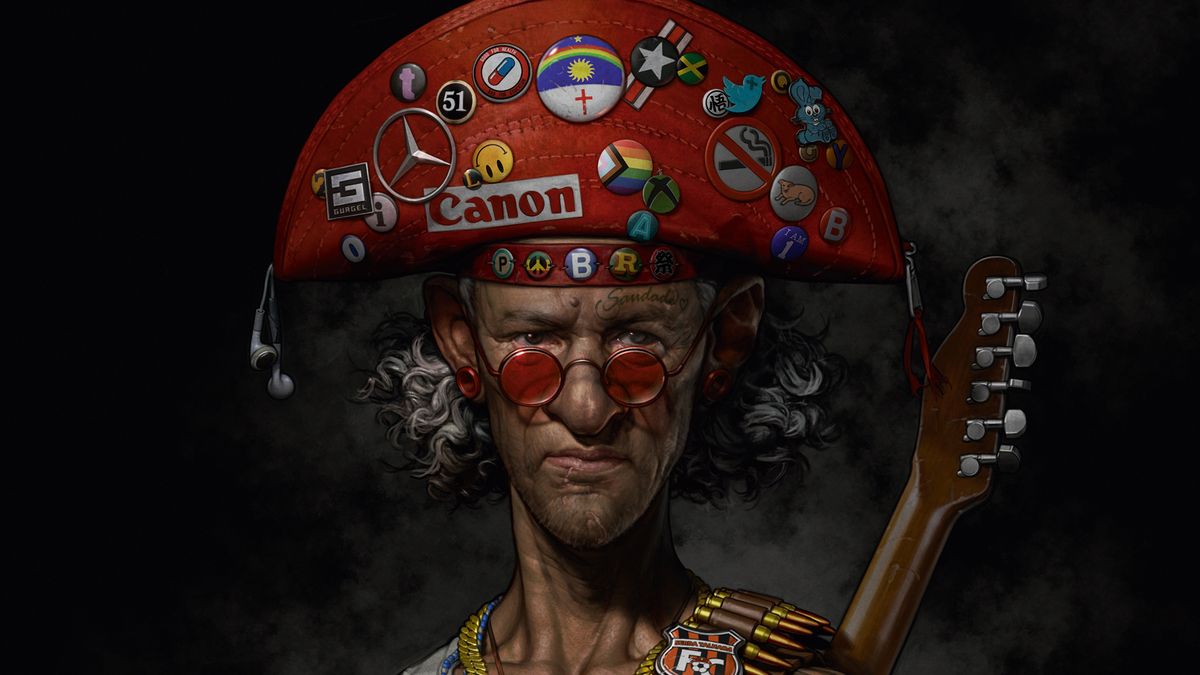
The cangaceiro’s hat is one of the most recognizable elements in their outfit, usually very well-ornamented. On my design, I tried to bring the same iconography to that element. My intention was to use a big pool of references, with the central homage to Brazilian figures and pop culture combined with a myriad of icons from many places outside the country. The hat was the central piece where I could use most of my own references.

Initial Colour Blockout

Here’s an early example of how I usually block out my colours over a greyscale image, building colour with layer filters like Overlay and Soft Light. It’s something straightforward at the initial colouring stage before I start the proper painting. Many of the details are added in the latter stages, but sometimes I just can’t resist painting some of these early in the process. It helps me to look a bit further forward to what I want for the final render, such as any skin imperfections, scars or weathered materials.

Developing Detail

One of my main concerns while I’m painting is not to overwhelm the image with details, which is difficult for someone like me that likes to give every element of the image the same importance. Part of my process is to find the right amount of details and blank spaces to bring reasonable balance to the full image.

Details in the Final Render

From the beginning, one of my main references for this piece was Kaneda’s bike and his cool jacket from Akira. The red should be the main colour for the central element of the character: his hat. I usually like to work with just a few colours, but because of the nature of this piece with so many objects and coloured elements, it became a challenge to find a balanced palette for the overall image. I decided that elements like the pin badges, logos and jewellery should be colourful, and the outfit, hair and so on should be red, white and neutral colours.

Conclusion

The process of creating this image was a challenging and rewarding experience. I learned to balance the use of 3D tools and 2D painting, incorporating references from different cultures and sources. The end result is a unique and fascinating character that represents the rich cultural heritage of Brazil.

Frequently Asked Questions

Q: What inspired the design of the character’s hat?
A: The hat was inspired by traditional Brazilian pop culture, including music, art, and history. I wanted to incorporate elements that would make it stand out as a symbol of Brazilian culture.

Q: What was the biggest challenge in creating this image?
A: The biggest challenge was balancing the amount of detail and colour in the image. I wanted to avoid overwhelming the viewer with too much information, while still conveying the complexity and richness of Brazilian culture.

Q: How did you approach the painting process?
A: I approached the painting process by starting with a greyscale image and building colour with layer filters. I then added details and refined the image, balancing the use of colour and contrast.

Microsoft Acquires Twice as Many Nvidia AI Chips as Tech Rivals

Microsoft’s Big Bet on AI Chips

Microsoft bought twice as many of Nvidia’s flagship chips as any of its largest rivals in the US and China this year, as OpenAI’s biggest investor accelerated its investment in artificial intelligence infrastructure.

Nvidia’s Dominance Unchallenged

Analysts at Omdia, a technology consultancy, estimate that Microsoft bought 485,000 of Nvidia’s "Hopper" chips this year, putting Microsoft far ahead of Nvidia’s next biggest US customer Meta, which bought 224,000 Hopper chips, as well as its cloud computing rivals Amazon and Google.

Global Demand Outstrips Supply

With demand outstripping supply of Nvidia’s most advanced graphics processing units for much of the past two years, Microsoft’s chip hoard has given it an edge in the race to build the next generation of AI systems. This year, Big Tech companies have spent tens of billions of dollars on data centers running Nvidia’s latest chips, which have become the hottest commodity in Silicon Valley since the debut of ChatGPT two years ago kicked off an unprecedented surge of investment in AI.

Big Tech’s AI Chips

Microsoft’s Azure cloud infrastructure was used to train OpenAI’s latest o1 model, as they race against a resurgent Google, start-ups such as Anthropic and Elon Musk’s xAI, and rivals in China for dominance of the next generation of computing.

Rivals’ Chip Orders

Omdia estimates ByteDance and Tencent each ordered about 230,000 of Nvidia’s chips this year, including the H20 model, a less powerful version of Hopper that was modified to meet US export controls for Chinese customers. Amazon and Google, which along with Meta are stepping up deployment of their own custom AI chips as an alternative to Nvidia’s, bought 196,000 and 169,000 Hopper chips, respectively.

Global Server Spending

Tech companies around the world will spend an estimated $229bn on servers in 2024, led by Microsoft’s $31bn in capital expenditure and Amazon’s $26bn. The top 10 buyers of data center infrastructure – which now include relative newcomers xAI and CoreWeave – make up 60% of global investment in computing power.

Nvidia’s Dominance

Vlad Galabov, director of cloud and data center research at Omdia, said some 43% of spending on servers went to Nvidia in 2024. "Nvidia GPUs claimed a tremendously high share of the server capex," he said. "We’re close to the peak."

Rivals’ Own AI Chips

While Nvidia still dominates the AI chip market, its Silicon Valley rival AMD has been making inroads. Meta bought 173,000 of AMD’s MI300 chips this year, while Microsoft bought 96,000, according to Omdia. Big Tech companies have also stepped up usage of their own AI chips this year, as they try to reduce their reliance on Nvidia.

Conclusion

In conclusion, Microsoft’s aggressive investment in Nvidia’s AI chips has given it a significant edge in the race to build the next generation of AI systems. While rivals such as Amazon and Google are stepping up their own investments in AI chips, Nvidia’s dominance of the market remains unchallenged.

FAQs

Q: How many Hopper chips did Microsoft buy this year?
A: Microsoft bought 485,000 Hopper chips this year, according to Omdia estimates.

Q: Who are the top buyers of data center infrastructure?
A: The top 10 buyers of data center infrastructure make up 60% of global investment in computing power, led by Microsoft and Amazon.

Q: What is the total spending on servers in 2024?
A: Tech companies around the world will spend an estimated $229bn on servers in 2024, led by Microsoft’s $31bn in capital expenditure and Amazon’s $26bn.

Q: What is the share of spending on servers that goes to Nvidia?
A: Some 43% of spending on servers went to Nvidia in 2024, according to Omdia estimates.

Edtech 2025: Revolutionizing Learning, Teaching, and the Future

Education in 2025: Challenges and Opportunities

As 2024 moves into 2025, educators face a new year with uncertainty. Pandemic-related learning loss and academic inequities remain a hurdle, particularly as COVID relief funding dries up. A second Trump presidency has many educators wondering how proposed policy changes will impact schools and districts. Education is at a crossroads, with pressing issues such as potentially major federal policy changes, evolving AI, global workforce demands, and equity issues weighing heavily on educators’ minds.

Predictions for EdTech in 2025

We asked educators, edtech executives, stakeholders, and experts to share their thoughts and predictions about where they think edtech is headed in 2025. Here’s what they had to say:

Mental Health and Well-being

Francie Alexander, Senior Vice President, Efficacy & Consulting Research, HMH:

"Mental health is a significant challenge for students. I believe 2025 will be marked by continued progress in educators’ efforts to address this issue. The ‘three Rs’ – Respect, Resiliency, and Responsibility – will be crucial in fostering a supportive environment for our children and youth."

Decentralization and AI

Scott Anderberg, CEO, Moodle:

"In 2025, education in the United States will reflect both the challenges and opportunities of a system in transition. Decentralization will lead to localized innovation, but also create uneven standards. Schools will require tools that reduce administrative complexity, enabling educators to focus on fostering personal connections with students. AI will play a transformative role in this landscape, offering solutions to these pressures."

Clean Energy Education

Michael Arquin, Founder, KidWind:

"Supporting educators and offering training opportunities will be crucial in helping students learn about clean energy. Virtual trainings and in-person workshops will be essential in equipping teachers to bring this content to their students, as the sector continues to grow in the US."

Foundational Literacy

Dr. Carolyn Brown, Chief Academic Officer & Co-Founder, Foundations in Learning, Creator of WordFlight:

"Persistent gaps in adolescents’ foundational literacy skills will continue to hinder their educational, career, and life success. 2025 will be marked by a renewed focus on rethinking how to reach these students and implementing principle-based and tech-enabled practices rooted in learning sciences."

EdTech Evidence and Effectiveness

Auditi Chakravarty, CEO, AERDF:

"In 2025, the education sector will demand more evidence-based solutions. Edtech companies will need to demonstrate greater impact for school-based partners, leading to more innovative and effective tools in our classrooms."

Data Management and Utilization

Winston Chang, Global Public Sector CTO, Snowflake:

"The education sector will shift towards integrated data ecosystems, enabling a comprehensive understanding of the student lifecycle. This will lead to enhanced student recruitment, improved educational outcomes, and stronger alumni connections."

School Security and Safety

Brian Shaw, CEO, Discovery Education:

"Schools must innovate and adapt to stay ahead of evolving threats. Electronic access control systems will continue to strengthen school security, offering tools that enhance safety and efficiency. Wearable and mobile credentials will transform how schools manage access."

Leadership Development

Joseph South, Chief Innovation Officer, ISTE+ASCD:

"2025 will see a growing need for evidence-based leadership development, as educators take on leadership roles earlier in their careers. Providing emerging leaders with research-backed guidance for creating impactful learning experiences will be crucial."

Addressing Chronic Absenteeism

Dr. Kara Stern, Director of Education and Engagement, SchoolStatus:

"2025 will be marked by a shift from abstract concepts to concrete actions in addressing chronic absenteeism. Teachers who build strong relationships with students and families will see better attendance and engagement, leading to a focus on meaningful connection-building and two-way school communications."

Special Education

Kate Eberle Walker, CEO, Presence:

"2025 will see technology continue to make strides in evaluating, identifying, and serving students with special needs. Digital tools will connect and cross-reference risks to help educators pinpoint which students need additional resources and attention."

Disciplinary Literacy

Paige Whitlock, Literacy Director, NoRedInk:

"2025 will be the year district leaders embrace a culture of disciplinary literacy, where every teacher, regardless of subject matter, takes ownership of literacy instruction in their discipline. Digital portfolios will become essential in showcasing student writing and facilitating student-led conferences."

Conclusion

The education sector faces numerous challenges in 2025, from pandemic-related learning loss to academic inequities and the need for effective leadership development. However, this uncertainty also presents opportunities for innovation, collaboration, and growth. As educators and stakeholders, we must prioritize evidence-based solutions, address chronic absenteeism, and foster a culture of disciplinary literacy to ensure a brighter future for students.

Frequently Asked Questions

Q: What are the key challenges facing education in 2025?
A: Pandemic-related learning loss, academic inequities, and the need for effective leadership development.

Q: How can educators address chronic absenteeism?
A: By building strong relationships with students and families, using data analytics and AI to identify attendance patterns, and prioritizing meaningful connection-building.

Q: What role will AI play in education in 2025?
A: AI will continue to transform the education landscape, offering solutions to real-world problems and enabling educators to focus on fostering personal connections with students.

Q: How can edtech companies demonstrate impact in 2025?
A: By providing evidence-based solutions, prioritizing student outcomes, and collaborating with educators to create effective tools and resources.

Tesla Cybertruck Design Flaws Exposed in Winter Conditions

0

The Cybertruck: Where Form Meets Function… or Not?

The Never-Ending List of Design Fails

The Tesla Cybertruck is proof that sometimes a futuristic look really isn’t practical. We’d like to be able to finally give it a break, but the list of Cybertruck design fails just keeps on growing.

Snow, Snow, and More Snow

The latest issue has been brought to light by the arrival of winter in the northern hemisphere. The Cybertruck was only released last November and the rollout was slow, so for many owners, this is the first time their vehicle has encountered snow.

A Guttered Headlight Conundrum

We’ve seen complaints about the Cybertruck’s unusual lights before, but the latest issue that’s been brought up on social media is the placement of the headlights. Inexplicably, they’re set back in a gutter instead of being flush with the car’s body, and that gutter can accumulate mud, sand, and, yes, snow.

A Snow-Covered Headlight Problem

While the daytime running light is relatively easy to keep snow-free, the headlights have a deep shelf in front of them that allows snow to build up and cover the lights. And it seems that’s not just an issue when the car is stationary. Some people have reported having to stop on the road to clean the lights.

The Verdict from the Reddit Community

Over on Reddit, some people are saying they now understand why the vehicle isn’t considered roadworthy in some countries. Others are less surprised. "You’re telling me this thing is poorly designed?! Well, colour me shocked. SHOCKED," one person wrote.

A Lesson in Design

Tesla’s whole schtick is that they pretend to innovate by ignoring a century of optimization of design and use by the automobile industry. And I’m starting to think that there’s a good point there. While there’s definitely a place for rule breaking in design, rules that enhance road safety probably aren’t the ones to break. Tesla needs to recognize that sometimes everyone else does things in a certain way for a good reason.

Conclusion

The Cybertruck remains the most divisive car design we’ve seen for a long time. Some people love poking fun at it, while others are so in love with it they’ll buy Tesla’s miniature flying Cybertruck. For now, it seems that the design flaws are piling up, and the Cybertruck is getting a reputation for being more form over function.

FAQs

Q: Is the Cybertruck really that poorly designed?
A: Yes, the latest issues with snow accumulation on the headlights suggest that the design may not be as practical as intended.

Q: Why does the Cybertruck have a guttered headlight design?
A: The reasons behind the design choice are unclear, but it seems that Tesla may have prioritized aesthetics over function in this case.

Q: Is the Cybertruck considered roadworthy in all countries?
A: No, the Cybertruck is not considered roadworthy in some countries due to its design flaws.

IP Stolen: A Personal Saga

0

What’s an IP?

The term IP can cover a wide range of items. What it generally doesn’t include are actual hold-in-your-hands items or products. Let’s start with the definition from the Oxford Dictionary:

“A work or invention that is the result of creativity, such as a manuscript or a design, to which one has rights and for which one may apply for a patent, copyright, trademark, etc.”

In the creative realms we rely on the “copyright” to protect our works. Patents are designed for “inventions”, and Trademarks are both names and visual iconography used to identify a company or brand. We will only be discussing the Copyright for creative works here.

It’s like that scene from Pulp Fiction

If you are still a bit confused, I don’t blame you. Remember that scene in Pulp Fiction discussing what’s legal in Amsterdam? Here’s an example of copyright that sounds a lot like that:

Let’s say someone starts selling a CD to the public. Of course the CD has some stuff on it, that’s what people are actually buying. But while it is legal to sell a CD, it is not legal to sell the content on that CD if the person selling that CD doesn’t own the IP on that material.

Further, even if they own the content, if they use images on the CD’s inserts that do not belong to them, that is also IP theft, and illegal.

A false sense of security

Here in the US, but the story is similar in many countries, we have had new and updated “Copyright Acts” going back to the 1700’s. Some of the more recent ones protect the original creator for a “period 95 years after publication, or the life of the author plus 70 years”.

Not only that, but as many of us learned back in art school, all of our creative work is, in essence, automatically protected from the moment it is created (especially that in our treasured design portfolios). Or, so our naïveté allows us to believe.

It is woefully impractical to copyright everything we create.

In reality, such protections are better viewed as theoretical, rather than actual. In real life we must first somehow “immortalize” the creation and ownership of our work. The two most significant ways that’s is done include:

The Poor Man’s Copyright: This is a technique that harkens back to the days when nobility would dribble wax on an envelope and press their seal into it. Thus the recipient knows it had not been tampered with. Similarly, creatives have been snail-mailing themselves sealed copies of their own work for decades. The postal stamp confirming the date of creation. In theory the same could be done today using any third-party email service, such as Gmail, with attached files. The value of this process is limited.

Filing with the Copyright Office: The only true way to protect one’s IP is to file your work upon creation with your country’s copyright office. Alas, this is not free. So while it might make sense to go through the effort and expense for property you have and may continue to make money from, it is woefully impractical to do this with everything we create. And the rub is that with online portfolios and promotions, it is far too easy for anyone to have access to most of our creations.

My own recent journey

I preface my own story with the above because I think it’s a good reminder as to how vulnerable we all are. I found that out myself in the last couple of years working, with of all things, an old friend who I had every reason to trust.

This friend, who is also a creative, and a reasonably successful one at that, had wanted to work with me for decades. He would pitch this project and that. Most, for whatever reason, I would politely decline. But then one day he approached me with a project that I fell in love with, so I agreed and began work.

After working on this project for close to a year, it was ready to bring to market and reach out to publishers and distributors. When out of nowhere, he decided that he didn’t want the project to be released. What? Huh? I was blindsided. And it gets worse.

With friends like these…

When pressed, he finally admitted to me that he didn’t actually own the project outright. He had told me he did. And that he had not gotten permission from the other owner, nor even contact them about our work.

It gets worse. It also turned out that this “old friend” had already released some poor quality demo version of this project onto many major selling platforms across the web (without notifying the other owner). So I had been not working on an original project, but instead essentially a remake.

In finding all of this out, I was searching the web for other infractions and sure enough found that some years before he had released a number of CDs of his, and other people’s works without permission, and used my artwork and designs as packaging! This was done without my permission, without any compensation, and of course without my knowledge.

It’s situations like this that make one recall the old expression, “With friends like these…”

Making a Federal case

Not having any interest in paying for anything he had either contracted me to produce, or even anything he had stolen, this went to court. And while I filed this in our state’s Supreme Court, due to the copyright elements of the case, it was actually moved to the Federal Court system, which oversees copyrights.

The case has languished in court going on two years.

Let me share that as mentioned, it is impractical to pay to copyright every item we create. Fortunately, we still retain some additional protections if we file a copyright with the US Copyright Office swiftly upon discovering any infringements. So I did that.

As I write this, the case is still languishing in the terribly backed up courts. As it has for what will soon be two years.

Clearly the best of stories have a beginning, middle and end. My apologies to the readers, this does not have an ending. Yet.

The Wild West

I share all this with you as a foreboding of what can happen. Even when you do things mostly right. Theft is theft. And as many home security experts will tell home owners, there is only so much we can do. “If someone truly wants to get into you home, there’s ultimately no way to stop them.”

The same is true with our intellectual property, and enforcement. This is especially with some of the Internet’s largest companies. For example, the cases against the Internet Archive, who freely shares content on their website. And while it is not directly for profit, tell that to the creatives whose work is being given away without their permission.

Clearly our content was safer from theft before the internet.

Taken further, Google has long infringed upon the rights of creatives. For years with their Google Books service that reproduces protected property. And their latest infractions: The AI search results that simply pull large swaths of content from websites and provide it in their search results. This not only steals content, but it also circumvents surfers from going to the actual sites that created that content, to attract viewers in the first place.

Welcome to the wild west. Content was so much safer when it lived in a portfolio binder, in our studios.

Adobe has set out its plan for AI and copyrights in 2025 – see it here.

Conclusion

In conclusion, protecting our intellectual property is a complex and often daunting task. While we may have some theoretical protections, in reality, it is impractical to copyright everything we create. We must take steps to “immortalize” our work and file for copyright protection when necessary. However, even with these measures in place, our work is still vulnerable to theft and infringement.

FAQs

Q: What is intellectual property?
A: Intellectual property refers to the creations of the mind, such as inventions, literary and artistic works, and symbols, names, and logos used in commerce.

Q: What is copyright?
A: Copyright is a form of intellectual property that gives the creator of an original work the exclusive right to reproduce, distribute, and display the work, or to create derivative works.

Q: How do I protect my intellectual property?
A: You can protect your intellectual property by filing for copyright protection with the US Copyright Office, using the Poor Man’s Copyright method, or using other legal measures to prevent infringement.

Q: What is the difference between a patent and a copyright?
A: A patent is a form of intellectual property that gives the inventor the exclusive right to make, use, and sell an invention. A copyright, on the other hand, gives the creator of an original work the exclusive right to reproduce, distribute, and display the work.

Q: How do I know if someone is infringing on my intellectual property?
A: You can check for infringement by monitoring your work online, using search engines, and checking for unauthorized uses of your work. You can also use legal measures to prevent infringement, such as sending cease and desist letters or filing a lawsuit.