Home Blog Page 468

Surprising Early Sketches Show Shrek Could Have Been More of an Ogre

0

Early Sketches of Shrek Characters Revealed

A Glimpse into the Past

The official Shrek account on Instagram has shared before and after character designs of Shrek, Fiona, and Donkey, giving fans a unique look at how the beloved characters evolved from concept to final product.

Character Design Evolution

The sketches show significant differences between the original designs and the final characters. Fiona’s design, for instance, appears to be focused on her gown, with no face depicted. Shrek’s design, on the other hand, bears a striking resemblance to Chris Farley, who recorded voice test footage for the character before his passing in 1997.

The Lost Animation Test

An animation test from 1995-95, showing Shrek singing "I Feel Good," has resurfaced, offering a glimpse into a darker vision for the film. This test is believed to be the only footage of a Chris Farley Shrek and was ultimately discarded by DreamWorks.

A Possible Cameo?

Fans are now calling for the early version of Shrek to make a cameo appearance in a future film, potentially as Shrek’s dad. While this is purely speculative, it’s an intriguing idea that could add a new layer of depth to the Shrek franchise.

Conclusion

The early sketches and lost animation test offer a fascinating look at the evolution of Shrek and its characters. While we may never know what a Chris Farley Shrek would have been like, these glimpses into the past are a reminder of the creative process and the many paths that could have been taken.

Frequently Asked Questions

Q: What is the significance of the Chris Farley Shrek animation test?
A: The animation test is believed to be the only footage of a Chris Farley Shrek and offers a glimpse into a darker vision for the film.

Q: Why was the Chris Farley Shrek animation test discarded?
A: The test was ultimately discarded by DreamWorks, but the exact reasons are unknown.

Q: Will the Chris Farley Shrek animation test be included in a future Shrek film?
A: There are no official plans to include the animation test in a future Shrek film, but fans are calling for a cameo appearance.

Streamlining Creative Tasks with AI

0

Starting the Day the AI Way

With a busy week ahead, we started by setting up the first and most well-known application of AI, a helpful chatbot – but with a twist. With NVIDIA’s ChatRTX AI model on our PCs, we had a localised chatbot assistant powered by our RTX 40-series cards. After going through a quick and easy guide on the NVIDIA site, we were all set to connect to our files in a way we’d never tried before – by speaking to them. ChatRTX can access local data in directories you provide to analyse and answer questions on document and image files, and using the Whisper AI natively built into the application, can even interpret your prompts through voice input.

Just a Few More Seconds…

Jumping into our first creative project, we encountered a common issue in a video we were working on: upon reviewing the recording back at the office, the audio just wasn’t at the quality we were hoping for. Traditionally, fixing this would require either extensively editing the audio we had, applying filters and noise gates that would add more time to the project, or scrapping the audio entirely and re-recording. After checking through Adobe Premiere Pro’s AI video editing features, we found the perfect tool in the form of Enhance Speech – this handy tool uses AI to analyse audio and remove unwanted background noise and improve audio quality. Accelerated by our RTX GPUs, this feature processes audio swiftly, meaning this extra task didn’t cut far into our allotted time to get this project out the door.

Computer, Enhance Image. Enhance. Enhance.

Returning to our video project, now came the task of producing a thumbnail for the video. While we had a wide array of photos provided, cropping the section we needed would have left us with a lower-resolution image. Usually, this would mean settling for an alternative shot, but we saw a great opportunity here to use Adobe Lightroom’s Super Resolution feature. This meant that we could retouch the photo and upscale it using AI, cleaning up the edges and maintaining clarity through machine learning trained on millions of images.

Clearing up the Office (Without the Graft)

To close out the week, we had a presentation to prepare for. With the slides ready, the only thing remaining was the less-than-ideal office setup behind us. With a few boxes yet to be put away and a noisy office, we decided to put the potential of NVIDIA Broadcast to the test. The topline sales pitch of Broadcast is to give users the power to transform any room into a studio with a bunch of nifty AI-enhanced features.

Conclusion

In just one week, we were able to streamline our work processes with AI, saving time and effort in the process. From chatbots to video editing, image enhancement, and even presentation preparation, AI is proving itself to be a valuable tool in the creative field. As NVIDIA continues to push the boundaries of what is possible with AI, it’s exciting to think about the potential applications that are yet to come.

FAQs

Q: What is ChatRTX and how does it work?
A: ChatRTX is a localised chatbot assistant powered by NVIDIA’s RTX 40-series cards. It can access local data in directories you provide to analyse and answer questions on document and image files, and uses Whisper AI to interpret your prompts through voice input.

Q: What is Enhance Speech and how does it work?
A: Enhance Speech is a tool in Adobe Premiere Pro that uses AI to analyse audio and remove unwanted background noise and improve audio quality. It is accelerated by NVIDIA’s RTX GPUs, allowing it to process audio swiftly.

Q: What is Super Resolution and how does it work?
A: Super Resolution is a feature in Adobe Lightroom that uses AI to upscale images, cleaning up the edges and maintaining clarity through machine learning trained on millions of images.

Q: What is NVIDIA Broadcast and how does it work?
A: NVIDIA Broadcast is a tool that gives users the power to transform any room into a studio with a bunch of nifty AI-enhanced features. It can be used to improve audio and video quality, as well as add virtual camera angles and more.

AI in 2024: A Year of Breakthroughs and Hindsight for 2025’s Future

0

Part I: 2024 Year in Review

### OpenAI in the Front

OpenAI maintained its position at the forefront of AI innovation in 2024. The release of GPT-4o in May marked a significant milestone as the first frontier multimodal model, capable of understanding and generating content across different forms of media. This was followed by o1 in September, along with its lighter counterpart o1-mini, and the announcement of o3 in December.

Perhaps most notably, OpenAI’s Sora project revolutionized video generation. Announced in February and enhanced with Sora Turbo in December, this technology demonstrated unprecedented capabilities in creating realistic video content from text descriptions.

### Agent AI and AI Assistants

Rather than replacing jobs, AI in 2024 focused on enhancing human productivity through innovative tools and assistants. Google introduced several groundbreaking projects: Astra, an AI assistant for phones and smart glasses, and Mariner, a Chrome extension that enables Gemini to interact with your browser. These tools represent a shift from simple chat interfaces to interactive agents that can understand and manipulate our digital environment.

Anthropic joined this trend by enabling Claude to use computers the way humans do—viewing screens, moving cursors, and interacting with interfaces. This development opened new possibilities for AI assistance in everyday computer tasks.

The developer community saw particularly exciting advances. Github’s Copilot and Cursor AI have been very well received by the developer community. On the other hand, autonomous coding agents like Devin and Github Workspace are still rough around the edges. These tools aren’t replacing developers; instead, they’re supercharging their productivity by handling routine tasks and suggesting improvements.

### AI Regulation

2024 saw significant progress in AI regulation, particularly with the EU AI Act. This groundbreaking legislation set the first comprehensive framework for AI regulation, establishing rules for AI system development and deployment while balancing innovation with safety and ethical concerns.

Part II: Looking Ahead to 2025

### Small, Specialized Models

While decoder-only models like GPT and Claude have dominated headlines, in 2025 encoder-only models are still an important piece in AI applications. Just one week before ending the year, ModernBERT was released, representing a significant advance in this space that was long overdue. These models are particularly crucial for Retrieval-Augmented Generation (RAG) setups, where they excel at information retrieval and classification at a significantly lower cost to run.

In a similar fashion, the current trend of agentic systems will favor small, specialized models. These models will be fine-tuned to be as good as frontier models in really specific tasks, but used in conjunction in an agentic workflow, will allow for really powerful and resource-efficient AI systems.

### Multimodal Models and Test-time Compute

We can expect significant advances in multimodal capabilities, with AI systems becoming more natural at processing and responding to various forms of input—text, voice, images, and video—simultaneously. These improvements will make AI interactions feel more natural and contextually aware.

The concept of “test-time compute”—giving models more time to think—emerged as a game-changer in 2024 and will likely become more prominent in 2025. Frontier models like OpenAI’s o3 are crushing reasoning, math, and coding benchmarks. They are consistently beating humans at really complex, deep reasoning tasks, making us wonder how far Artificial General Intelligence really is.

Test-time compute is not only showing remarkable results for frontier models. Used in small edge models, they are surpassing the performance of much larger models when given more processing time. For instance, Llama 3.2 3B outperformed Llama 3.1 70B in the Math-500 benchmark using a test-time compute strategy of 256 iterations.

### The Evolution of AI Regulation

Following the EU’s lead, we’re likely to see more regions implement AI regulations in 2025. Interestingly, major tech companies are actively calling for regulation, potentially as a strategy to shape the regulatory environment and raise barriers to entry for competitors.

Conclusion

2024 has been a year of remarkable progress in AI. We have seen many new ways to use AI in our day-to-day lives, as well as new methods to improve models that are making giant strides closer to AGI. As we move into 2025, the focus appears to be shifting toward more specialized and efficient AI systems, improved reasoning capabilities through techniques like test-time compute, and a focus on AI tools to improve productivity.

FAQs

Q: What are the key advancements in AI in 2024?
A: OpenAI’s GPT-4o, o1, and o3, as well as Google’s Astra and Mariner, are some of the key advancements in AI in 2024.

Q: What is the focus of AI in 2025?
A: The focus in 2025 is shifting toward more specialized and efficient AI systems, improved reasoning capabilities through techniques like test-time compute, and a focus on AI tools to improve productivity.

Q: What is the significance of test-time compute?
A: Test-time compute is a game-changer in 2024 and will likely become more prominent in 2025, allowing models to think more and perform complex tasks more efficiently.


The Appeal to AI

0

The Unbearable Appeal to AI

As a journalist, I’ve witnessed many things that have changed my perspective on humanity. However, the latest phenomenon has left me astonished: the appeal to AI. It’s a logical fallacy best summed up in three words: "I asked ChatGPT." I’ve seen people use this phrase online, and it’s starting to become a norm. But what’s behind this trend, and why is it so worrying?

The Sadness and Laziness Behind the Appeal

When I first saw people using AI to get answers, I felt a mix of sadness and frustration. In the case of someone’s mysterious illness, they’re desperate for answers and turn to a machine. The love advice seeker is looking for a quick fix, and the skin care enthusiast wants a customized routine without putting in the effort. And in the case of the hell argument, there’s a whiff of "the machine has deemed damnation logical," which is just embarrassing.

The Illusion of Authority

The problem with AI is that it’s not trustworthy. It’s a machine designed to generate plausible-sounding responses based on patterns in its training data. While it may be correct sometimes, it’s not always right, and its confidence is not a guarantee of accuracy. Yet, people keep relying on it, often as a shortcut or a way to avoid thinking critically.

The Role of Influencers and Media

Sam Altman and Elon Musk, among others, share responsibility for the appeal to AI. They’ve been touting the capabilities of AI for years, and people are starting to believe them. There’s a kind of bovine logic at play here: since these influencers are rich and smart, they must be right, and we should trust their judgment. Unfortunately, this has led to a cult-like following of AI enthusiasts who promote the technology without critically evaluating its limitations.

The Distraction from Reality

The appeal to AI is a perfect example of Arthur Clarke’s law: "Any sufficiently advanced technology is indistinguishable from magic." The technology behind large language models is advanced, but people using it don’t bother to understand how it works. The result is a new genre of news stories: person relies on generative AI, only to get made-up results.

Conclusion

The appeal to AI is a worrying trend that reflects our society’s growing reliance on technology and our lack of faith in human knowledge. It’s a sign of luxury nihilism, where people are willing to trade their critical thinking skills for the convenience of a machine. As we continue to rely on AI for answers, we risk losing our ability to think critically and make informed decisions. The future is indeed uncertain, but we must not abdicate our responsibility to think and act.

FAQs

Q: What is the appeal to AI?
A: The appeal to AI is a logical fallacy where people rely on AI for answers without critically evaluating its limitations.

Q: Why is this a problem?
A: AI is not always right, and its confidence is not a guarantee of accuracy. People are trading their critical thinking skills for the convenience of a machine.

Q: Who is responsible for the appeal to AI?
A: Sam Altman, Elon Musk, and other influencers who tout the capabilities of AI are partially responsible for the trend.

Q: What is the result of the appeal to AI?
A: The result is a lack of critical thinking, a growing reliance on technology, and potential harm to society.

Q: What can be done to address this issue?
A: We must encourage critical thinking, promote media literacy, and educate people about the limitations of AI.

Unreal Engine: 8 Innovative Applications in 2024

0

Unreal Engine 5 Highlights of 2024

01. Stalker 2: Heart of Chornobyl

If forced to choose one Unreal Engine game that stood out in 2024, I’d opt for Stalker 2: Heart of Chornobyl. In our review, we described it as a gloriously gloomy use of Unreal. Set in the Chornobyl Exclusion Zone, the game adopts a grim look with a color palette that could best be described as rust and concrete. The vegetation is impressively realistic, the weather is filthy, with violent storms, and the environment is a character in its own right – and it’s all strangely believable.

02. Still Wakes The Deep

Another title that stood out for its use of Unreal Engine in 2024 was the horror game Still Wakes The Deep. Developer The Chinese Room switched from UE 4 to Unreal Engine 5 during development, and the move paid off. The beauty of the game is in how it blends convincing 1970s period detail with realistic water and vapour physics to make the isolated North Sea oil rig setting believable. Unreal Engine 5’s virtualized geometry system, Nanite, was key to achieving that level of detail, while Lumen allowed real-time iteration for lighting. Everything looks wet, but there’s incredible detail in that wetness: with rust, paint, and cigarette butts in the water and variation in the level of moisture in the air. It makes the harsh, grainy weather feel real.

03. Slime!

Moving on to personal projects, we were intrigued by one tech artist’s mission to use Unreal Engine 5 to make the perfect slime – simply because he "always wanted Splatoon mechanics in dungeons". Asher Zhu quit working on Fortnite at Epic Games to direct Duck Shake Games and work with the green, gunky stuff, and the project is oozing along nicely. It’s a very specific goal, but then that kind of determination can pay off. I already like the look of the mechanics.

04. Fallout

Beyond game development, Unreal Engine is also transforming – and blending – film-making techniques. For Magnopus’s work on Amazon’s Fallout TV series, artists used in-camera VFX and the real-time flexibility of Unreal Engine to create a virtual production workflow to use with 35mm film on hybrid sets that mixed traditional set design with LED volume stages. Actors weren’t shown LED projections before filming to that their surprise would be genuine. And since everything in Unreal Engine is 3D and real-time, it was possible to make changes live on set if needed.

05. Max Beyond

One creator even made an entire film in Unreal Engine in 2024. For Max Beyond, director HaZ Dulull used motion capture suits and rendered the whole thing as final pixels out of Unreal Engine 4.26.2. He thinks Epic’s engine has "democratised film-making". "Scene references and blocking examples from Unreal were important to give detailed direction for the actors," told us. He previsualised the entire plot and visuals in Unreal Engine and he was able to work on almost every aspect of the animation process in one contained environment. "It was really freeing," HaZ said. "We could get each part of the film ready and bring it into Unreal Engine almost at any time. Nothing got wasted."

06. 3D Visualisation using Gaussian Splatting

Gaussian splatting has provided a new method for representing real-life scenes in 3D. One Japanese company got our attention by using technique combined with Unreal Engine 5 to create explorable visualisations. The environmental phototogrammertrist company Studio Duckbill says the footage was converted into 3D Gaussian splatting using the Postshot beta plugin and displayed in UE5. The results show great display quality.

07. Weather Visualisation

Meanwhile, technical artist Nils Bakker used Unreal Engine 5 as part of a clever system that combines multiple APIs to create real-time weather visualisation and time-of-day effects. Enter a city, and the system shows visuals based on the real weather conditions at any given time. Nils used OpenWeather API to get the real-time weather conditions, World Time API for time synchronisation and OpenAI 4o mini for processing the longitude and latitude of the requested city. OpenAI establishes the location, and then the photorealisitc 3D environment is created using Cesium’s photorealistic 3D tiles. Real-time weather data from OpenWeather is used to add clouds, rain, or snow and appropriate lighting for the time of day (via World Time API). Cloud transitions were built with the Ultra Dynamic Sky plug-in.

08. Project Titan

We’ll finish with the massive collaborative project that was Epic Games’ own Project Titan. The ten-week ‘art jam’ saw more than 4,000 artists and developers work to create a spectacular open-world landscape, comprising nine different biomes packed with characters and assets. It showcased Unreal’s potential for real-time collaboration on a massive scale as well as the underlying tech. The Project Titan free sample game can be downloaded from the Fab store.

Conclusion

Unreal Engine 5 has continued to push the boundaries of what’s possible in game development, film-making, and beyond. From the dark and gritty world of Stalker 2 to the photorealistic 3D visualisations of Studio Duckbill, and from the real-time weather system of Nils Bakker to the massive collaborative project of Project Titan, Unreal Engine 5 has shown its versatility and power.

FAQs

Q: What is Unreal Engine 5?
A: Unreal Engine 5 is a game engine developed by Epic Games that allows developers to create high-quality, interactive 3D content for a variety of platforms.

Q: What are some of the key features of Unreal Engine 5?
A: Some of the key features of Unreal Engine 5 include photorealistic rendering, global illumination, dynamic lighting, and advanced physics simulations.

Q: Can Unreal Engine 5 be used for film-making?
A: Yes, Unreal Engine 5 can be used for film-making, as demonstrated by the work on Amazon’s Fallout TV series.

Q: Can Unreal Engine 5 be used for 3D visualisation?
A: Yes, Unreal Engine 5 can be used for 3D visualisation, as demonstrated by the work of Studio Duckbill and Nils Bakker.

Q: Is Unreal Engine 5 free to use?
A: Unreal Engine 5 is free to use, with a 5% royalty on gross revenue after the first $3,000 per product, per quarter.

Healthcare Giant Ascension Says 5.6 Million Patients Affected in Cyberattack

0

Healthcare Company Ascension Suffers Massive Cyberattack

Health care company Ascension lost sensitive data for nearly 5.6 million individuals in a cyberattack that was attributed to a notorious ransomware gang, according to documents filed with the attorney general of Maine.

Background of the Attack

Ascension owns 140 hospitals and scores of assisted living facilities. In May, the organization was hit with an attack that caused mass disruptions as staff was forced to move to manual processes that caused errors, delayed or lost lab results, and diversions of ambulances to other hospitals. Ascension managed to restore most services by mid-June. At the time, the company said the attackers had stolen protected health information and personally identifiable information for an undisclosed number of people.

Investigation Concluded

A filing Ascension made earlier in December revealed that nearly 5.6 million people were affected by the breach. Data stolen depended on the particular person but included:

Types of Data Stolen

  • Individuals’ names and medical information (e.g., medical record numbers, dates of service, types of lab tests, or procedure codes)
  • Payment information (e.g., credit card information or bank account numbers)
  • Insurance information (e.g., Medicaid/Medicare ID, policy number, or insurance claim)
  • Government identification (e.g., Social Security numbers, tax identification numbers, driver’s license numbers, or passport numbers)
  • Other personal information (such as date of birth or address)

Conclusion

The cyberattack on Ascension highlights the importance of robust cybersecurity measures in the healthcare industry. The breach had significant consequences for the organization and its patients, emphasizing the need for vigilance and proactive measures to prevent such incidents in the future.

FAQs

Q: How many people were affected by the breach?
A: Nearly 5.6 million individuals were affected by the breach.

Q: What types of data were stolen?
A: The stolen data included individuals’ names and medical information, payment information, insurance information, government identification, and other personal information.

Q: When did the attack occur?
A: The attack occurred in May, and Ascension managed to restore most services by mid-June.

Q: Who is responsible for the attack?
A: The attack was attributed to a notorious ransomware gang.

Organizing Your Computer with AI Tools

0

Finding AI Tools To Organize Your Computer

As technology advances, our digital lives become increasingly cluttered. With countless files, emails, and apps at our fingertips, it’s easy to feel overwhelmed by the sheer amount of digital information. That’s where AI-powered tools come in – to help you take control of your digital space and streamline your workflow. In this article, we’ll explore the best AI tools to organize your computer and make your life easier.

Streamlining Your Files

One of the most significant challenges of organizing your computer is managing files. With AI-powered tools, you can automate tasks such as file categorization, renaming, and sorting. For instance, ABBYY FineReader allows you to scan and categorize documents, while Paperless helps you digitize and organize paper documents. These tools can save you hours of manual labor, freeing up time for more important tasks.

Efficient Email Management

Emails can quickly become unmanageable, especially for those with large inboxes. AI-powered email organizers like Sanebox and Boomerang help filter out spam, prioritize important messages, and even unsubscribe you from unwanted newsletters. These tools can also assist with email organization, suggesting folders and labels for better categorization.

Task Automation

Task automation is another area where AI excels. Tools like IFTTT (If This Then That) and Zapier allow you to automate repetitive tasks, such as file transfers, data imports, and social media posts. These tools can help you streamline your workflow, reducing the time spent on mundane tasks and increasing your productivity.

Virtual Assistants

Virtual assistants like Google Assistant, Amazon Alexa, and Microsoft Cortana are becoming increasingly popular for their ability to manage your digital life. These AI-powered assistants can perform tasks such as setting reminders, sending emails, and controlling smart home devices. With voice commands, you can access a wide range of features and functions, making it easier to stay organized.

Conclusion

AI-powered tools have revolutionized the way we organize our computers. From streamlining files to automating tasks, these tools can save you time, increase productivity, and reduce stress. By incorporating AI-powered organizers into your workflow, you can take control of your digital life and achieve greater efficiency.

Frequently Asked Questions

Q: Are AI-powered tools secure?

A: Yes, most AI-powered tools take security seriously, using advanced encryption and data protection methods to safeguard your information.

Q: Do I need technical expertise to use AI-powered tools?

A: No, many AI-powered tools are user-friendly and require minimal technical knowledge. However, some may require basic computer skills or setup.

Q: Can AI-powered tools replace human organizers?

A: While AI-powered tools are incredibly effective, they’re not a replacement for human organizers. AI tools excel at automating tasks, but human organizers can provide personalized support and guidance.

Managing AI Inference Pipelines on Kubernetes with NVIDIA NIM Operator

0

Core Capabilities and Benefits

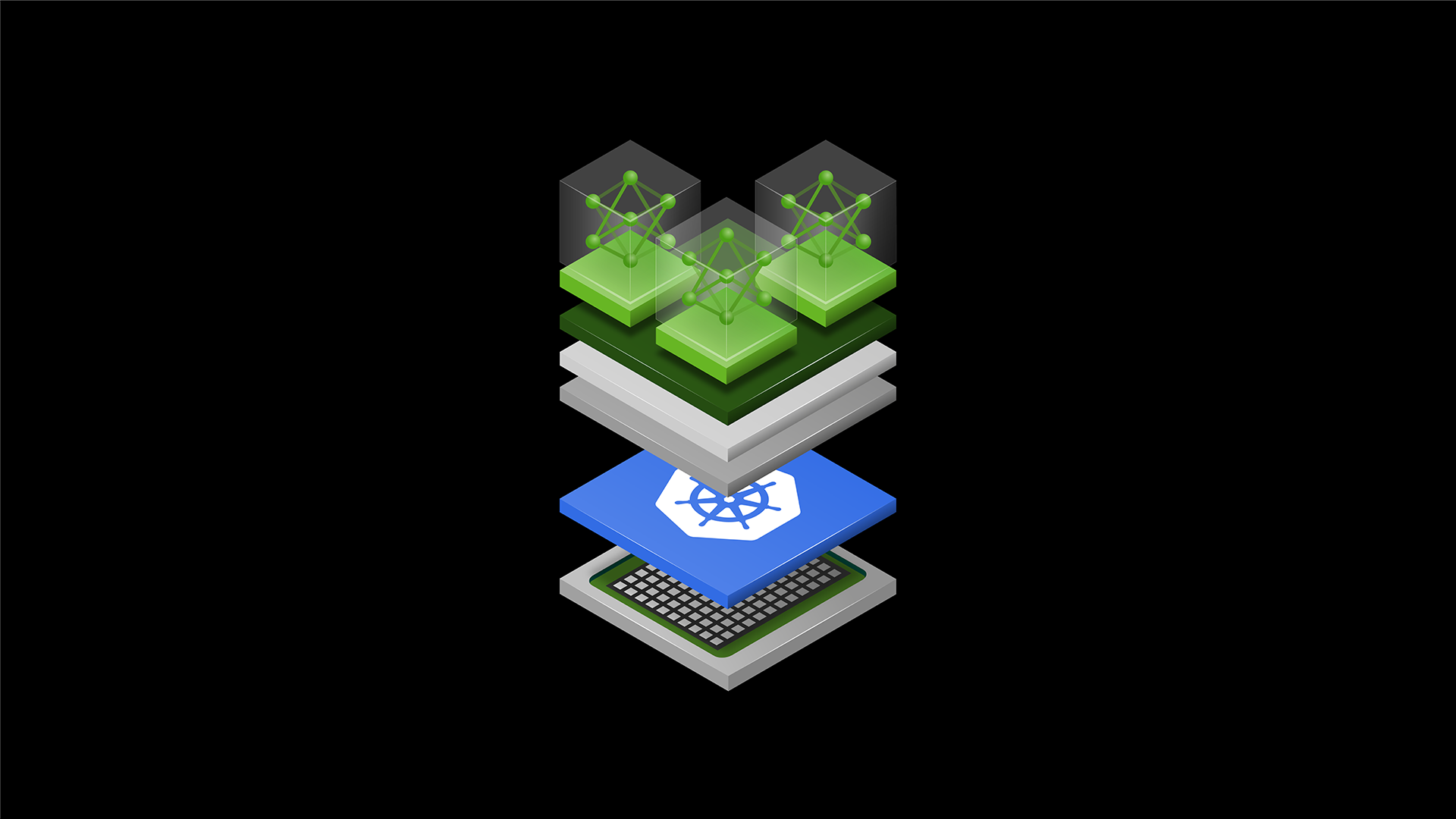
Developers have shown a lot of excitement for NVIDIA NIM microservices, a set of easy-to-use cloud-native microservices that shortens the time-to-market and simplifies the deployment of generative AI models anywhere, across cloud, data centers, cloud, and GPU-accelerated workstations.

To meet the demands of diverse use cases, NVIDIA is bringing to market a variety of different AI models packaged as NVIDIA NIM microservices, which enable key functionality in a generative AI inference workflow.

Intelligent Model Pre-Caching

NIM Operator offers pre-caching of models that reduces initial inference latency and enables faster autoscaling. It also enables model deployments in air-gapped environments.

Use NIM intelligent model pre-caching by specifying NIM profiles and tags, or let NIM Operator auto-detect the best model based on the GPUs available on the Kubernetes cluster. You can pre-cache models on any available node based on your requirements, either on CPU-only or on GPU-accelerated nodes.

Automated AI NIM Pipeline Deployments

NVIDIA is introducing two Kubernetes custom resource definitions (CRDs) to deploy NVIDIA NIM microservices: NIMService and NIMPipeline.

Figure 4 shows a RAG pipeline managed as a microservice pipeline. You can manage multiple pipelines as a collection instead of individual services.

Autoscaling

NIM Operator supports auto-scaling the NIMService deployment and its ReplicaSet using Kubernetes Horizontal Pod Autoscaler (HPA).

The NIMService and NIMPipeline CRDs support all the familiar HPA metrics and scaling behaviors, such as specifying minimum and maximum replica counts, scaling using per-pod resource metrics, and more.

Day 2 Operations

NIMService and NIMPipeline support easy rolling upgrades of NIM with a customizable rolling strategy. Change the version number of the NIM in the NIMService or NIMPipeline CRD and NIM Operator updates the NIM deployments in the cluster.

Support Matrix

At launch, NIM Operator supports the reasoning LLM and the retrieval—embedding NIM microservice.

We are continuously expanding the list of supported NVIDIA NIM microservices. For more information about the full list of supported NIM microservices, see Platform Support.

Conclusion

By automating the deployment, scaling, and lifecycle management of NVIDIA NIM microservices, NIM Operator makes it easier for enterprise teams to adopt NIM microservices and accelerate AI adoption.

This effort aligns with our commitment to make NIM microservices easy to adopt, production-ready, and secure. NIM Operator will be part of future releases of NVIDIA AI Enterprise to provide enterprise support, API stability, and proactive security patching.

Get started with NIM Operator through NGC today, or get it from the GitHub repo. For technical questions on installation, usage, or issues, please file an issue on the repo.

Frequently Asked Questions

Q: What is NIM Operator?
A: NIM Operator is a Kubernetes operator designed to facilitate the deployment, scaling, monitoring, and management of NVIDIA NIM microservices on Kubernetes clusters.

Q: What are the benefits of using NIM Operator?
A: NIM Operator simplifies the deployment and management of NIM microservices, reducing the effort of deploying AI inference pipelines at scale in local deployments.

Q: What are the supported NIM microservices at launch?
A: At launch, NIM Operator supports the reasoning LLM and the retrieval—embedding NIM microservice.

Q: How do I get started with NIM Operator?
A: You can get started with NIM Operator through NGC today, or get it from the GitHub repo.

The AI Smartphones

0

A Messy Year for AI

I’ve spent the past year covering every major phone launch in the US, and each one loudly declared the same thing: AI is here, and it’s the AI phone you’ve been waiting for. Each was followed by much applause and favorable stock price movement. But when I got those phones into my hands, the AI was underwhelming, to say the least.

The Theory

The theory is that smartphones as we know them are evolving into something new: AI smartphones. An AI smartphone will be a new kind of device that doesn’t force you to interact with a grid of apps all day long; you’ll be able to ask it to order pizza or send an email just by using an AI-imbued voice assistant. You’ll be able to point your camera at a flyer for a show, have the AI check whether you’re free, and add it to your calendar. You’ll ask it about something a friend said to you — maybe in an email or a text, you’re not sure which — and it will go find the information for you.

Google’s Gemini Assistant

Google’s Gemini assistant has steadily improved since launch but still falls short of a true AI assistant.

My Expectations

Personally, all of the above sounds great to me. I’d love some help with the chores I carry out a hundred times a day on my phone — and with the firehose of incoming information and notifications I deal with. But AI smartphones are not here yet, not by a long shot, despite what you may have heard. Instead, what we have feels like a collection of loosely associated tech demos.

The State of AI on Our Phones

Right now, AI on our phones can help you write and rewrite an email to sound more professional or react to a text with a disco pigeon emoji. There’s AI to translate phone calls, which kind of works and is actually pretty neat. And there’s AI that can turn a nice picture of food into something horrifying. AI on our phones has offered one weird trick after another: sometimes funny, sometimes interesting, but hardly the platform shift we’ve been promised.

The (Supposedly) AI Smartphones of 2024

All of the major phone makers are at fault. Samsung opened the year with its Galaxy S24 launch in January, declaring "Galaxy AI is here" at a hockey arena-appropriate volume. To be sure, the devices it announced are good smartphones, and they run a blend of Samsung and Google’s Gemini Nano models on-device, but I wouldn’t call them AI smartphones.

**Supposedly, they can help you take distractions out of your photos — but you might end up with something even more distracting instead. The live language interpreter feature for phone calls could come in handy for something like making a dinner reservation. But it also translated a statement from my colleague as "I am eating my chair." (She was not.) Most users will find that these AI features fade into the background once the novelty wears off.

Later in 2024, fall hardware season arrived early with AI-ified Pixels. Google has made much of AI on its phones for the past couple of years, but the company’s Gemini AI is absolutely everywhere on the Pixel 9 series. There’s an AI-generated summary at the top of the weather app, a new app that saves and tags your screenshots using AI, a new AI-powered default assistant, and lots of AI image generation tools — from silly to seriously worrying.

Some of it does feel useful, particularly the screenshots app, which is the kind of thing you might find handy if you tend to keep infinite Chrome tabs open on your phone as bookmarks. But these features, siloed into their respective apps, don’t feel like they have much to do with each other. Gemini sort of connects the dots with extensions, but support for different apps is being added slowly — and even with an extension, Gemini can only do so much for you.

Apple Intelligence

Apple Intelligence started shipping a month after the iPhone 16, but its blockbuster features won’t arrive until 2025.

A Messy Year for AI

It’s not just phones; this is a messy moment for AI in general. Depending on who you ask, AI is either a massive bubble that’s about to burst or a few months away from evolving into digital God. AI is being foisted on us in every direction: surfacing in Google search results, lurking in every Meta product, greeting you by name in the Spotify app. It’s hard to separate the signal from the noise when it comes to AI, because the noise is everywhere and it’s so goddamn loud!

The Real AI Smartphones Need to Stand Up

The trouble is, after a full year of supposedly game-changing AI on our mobile devices that amounted to nothing, it’s starting to sound like the phone makers are crying wolf. The real AI smartphones need to stand up pretty soon — before our collective patience starts to run out.

Photography by Allison Johnson / The Verge

FAQs:

Q: What is the current state of AI on our phones?
A: AI on our phones can help with tasks such as writing and rewriting emails, translating phone calls, and generating text, but it is still limited and not yet a full-fledged AI assistant.

Q: What are the major phone makers doing with AI?
A: Samsung, Google, and Apple are all working on AI-powered features, but they are still in the early stages and have yet to deliver on their promises.

Q: When can we expect to see real AI smartphones?
A: It’s hard to say, but it seems like the phone makers are still a few years away from delivering on their promises. In the meantime, we may see more incremental improvements to existing AI features.

Q: What are the limitations of current AI on our phones?
A: Current AI on our phones is limited and can be slow, unreliable, and often requires manual input. It’s also often tied to specific apps and can’t be used across different apps.

The Best (and Worst) Logos of 2024

0

The Best and Worst of Logos in 2024

The Best:

01. Mazda

While it hasn’t announced it officially, Mazda this year trademarked a new logo. Like most new car logos, it’s a flatter take on the existing design – but we think it was a necessary change for the brand.

The Japanese brand has been trying to move upmarket, but it’s been doing so with a logo that’s starting to look very dated. The new design follows the trend in recent car logo redesigns, but it’s a much better fit. It’s recognizable (unlike the Kia logo), and it would serve Mazda’s efforts to shift its brand appeal from a young audience to focus on a higher-end market.

02. The 2025 World Games logo

A new logo with an optical illusion? Yes, please. And it’s adorable one. Created by British designer John Fairley, the Chengdu 2025 World Games logo features geometric shapes symbolizing the interconnected fate of humanity and respect for cultural diversity, but it also has a little Easter egg. The top section (coloured black) looks like the face of a panda, which Chengdu is famous for.

03. National Football Museum

The National Football Museum logo is a goal. Literally. Proof that simplicity is often the way to go with logo design, the icon is inspired by a goal and a ball. But designing such a minimalist logo in a way that allows easy interpretation is a huge challenge. Poke Marketing achieved this by using the shape of a goal viewed at an angle rather than face on.

The Worst:

01. Jaguar

The entire Jaguar rebrand of 2024 has been mocked to oblivion, with the marketing images featuring diverse and colorfully dressed characters bearing most of the brunt. But the logo has proven unpopular too.

Jaguar calls the wordmark "a powerful celebration of modernism – geometric form, symmetry, and simplicity – demonstrating the unexpected by seamlessly blending upper and lowercase characters in visual harmony." But the design was quickly parodied by several other brands on social media, who jokingly presented versions of their own logos featuring a similar mix of upper and lowercase characters.

02. Visalia

The people of Visalia, California, were not impressed one bit when it was announced that the city’s elaborately illustrated logo would be replaced with a flat minimalist design that was described by one person as "so oversimplified it’s comedic." People complained that the design "sterilized" the city’s personality and rendered its landmarks unrecognizable. So fervent was the response that authorities have tossed out the redesign and reopened submissions to seek a new, new logo.

03. X TV

Elon Musk has a difficult relationship with logo design. The Tesla logo has an unfortunate likeness to something else, and SpaceX at one point appeared to be using the logo of a small Scottish football club. With Twitter’s rebranding to X, it seems he gave up altogether, using a simple unicode character that an imaginative Twitter user claimed he had ‘designed’. So the X TV logo was perhaps predictably anticlimactic.

Conclusion:

This year’s logos have shown a mix of creativity, controversy, and, well, just plain weirdness. While some have been well-received, others have been panned by the public. As designers and brands continue to push the boundaries of what a logo can be, it’s clear that there’s no one-size-fits-all approach. Whether you’re a fan of bold and bright or simple and subtle, there’s a logo out there for you.

FAQs:

  • Q: What makes a good logo?
    A: A good logo is one that is recognizable, memorable, and easy to interpret. It should also be simple, yet unique, and convey the brand’s values and personality.
  • Q: How often should a logo be redesigned?
    A: A logo should be redesigned when it’s no longer serving the brand effectively or when the brand’s values or personality shift.
  • Q: Can a logo be too simple?
    A: Yes, a logo can be too simple if it’s not memorable or recognizable. A good logo should strike a balance between simplicity and uniqueness.