Home Blog Page 514

Nvidia’s Profit Smorgasbord Invaded by Ants

Nvidia, the AI Chipmaker Dominating the Market, Faces Challenges from China and Rivals

A Dominant Player in the Market

Nvidia, the American company that dominates the market for artificial intelligence hardware, is facing challenges from Chinese antitrust regulators, other chipmakers, and even its own customers. Despite being the only game in town for high-performance AI chips, the company’s dominance has made it a target for criticism.

A Billion-Dollar Company

Nvidia’s sales for the current quarter are likely to be 60% larger than a year earlier, according to Morgan Stanley analysts. The company will account for $223 billion of a $300 billion market by 2027, according to Bank of America, making it a behemoth in the industry. Its financial success has given the US government a stick with which to beat its major trade rival, China.

Challenges from China and Rivals

Chinese antitrust regulators have launched an investigation into the company’s business practices, while its rivals, such as AMD, are trying to create their own alternatives to Nvidia’s products. Additionally, some of Nvidia’s customers, including Amazon, Google, Facebook, and Microsoft, are working on their own chips to reduce their dependence on the company.

China’s Impact on Nvidia

China makes up just 15% of Nvidia’s revenue, but that sum is growing at a 34% clip. While the antitrust probe may not change the balance of power, it could throw some grit in the wheels. Nvidia’s dominance has given the US government a stick with which to beat its major trade rival, China.

Conclusion

Nvidia’s dominance has made it a target for criticism, but the company’s financial success gives it the resources to invest in its products, acquire companies in adjacent markets, or even sacrifice some revenue if necessary. The company’s exceptionalism is a result of its ability to generate earnings equivalent to about 60% of its revenue, higher than Apple, Microsoft, Alphabet, and Intel have managed any time this century.

FAQs

  • What is Nvidia’s market share in the AI chip industry?
    Nvidia dominates the market for high-performance AI chips, with its sales for the current quarter likely to be 60% larger than a year earlier.
  • What is the Chinese government’s stance on Nvidia’s business practices?
    China’s antitrust regulators have launched an investigation into Nvidia’s business practices.
  • Are there any alternatives to Nvidia’s products?
    Yes, some of Nvidia’s customers, including Amazon, Google, Facebook, and Microsoft, are working on their own chips to reduce their dependence on Nvidia.
  • How much revenue does China make up for Nvidia?
    China makes up just 15% of Nvidia’s revenue, but that sum is growing at a 34% clip.

Note: The article has been organized into sections with headings and subheadings, and a conclusion and FAQs section has been added. The questions and answers in the FAQs section are based on the content of the article.

The WeCut Vista

0

Wecreat Vista: A Comprehensive Review

Wecreat is one of the companies at the forefront of the laser engraver and cutter movement, with each new machine boasting more in the way of features and value.

Wecreat Vista: What’s in the Box?

The Vista is very well packaged, with everything safely stowed for transport. The bottom tray and grids come in the foam lid, along with the user manual, with everything else coming neatly in well-labelled boxes, inside the main body of the machine. I like this method of packing as it means the overall volume and amount of waste are reduced, something I’ve not experienced with every laser I own.

Accessories will depend on which package you opt for, as there are different laser heads, rotary devices, and an autoloader for oversized materials.

Setup and Build Quality

I’ve used previous lasers from Wecreat and had some initial difficulties with them. Their customer service was excellent, however, and got me up and running quickly, but that experience still left me wondering if I’d have a similar time with the Vista. Luckily, everything was exactly as it should be and I think that is due to the way the Vista is shipped, with lugs and screws keeping everything in place. These were all very clearly labelled and easy to remove.

Adding the bottom tray and the two-piece grid was equally simple. All that’s left then is to connect the air assist and extraction tube and you are ready to go. This can be vented out of a window but for my use, I have an XTool air purifier, so I plugged the Vista directly into that.

Wecreat Vista: Performance

All of this ease of use is nothing if the results don’t match up, but luckily the Vista is capable of some remarkably crisp and detailed engraving. Whether you are working on projects with images to engrave, or designs to cut, the 10-watt laser is very good. The A3 working area means that decent-sized projects can be done in very little time too.

Thickness of materials will play a part in your success with the Vista. It can handle nearly two inches but that’s what the Vista can fit, not what it can cut. In reality, you’ll be looking at a few millimetres of plywood or acrylic, although you could run multiple passes to cut deeper. Realistically, my tests showed best results up to around 7mm of basswood or 6mm of birch ply. Engraving is a different matter, as that is only a surface engraving but you still need to consider the maximum material depth. Wecreat does sell a riser kit to lift the Vista up for thicker materials.

A note on the working area. If you need to produce things like signage, Wecreat does offer an autoloader, that will feed sheet materials through the Vista, making it really easy to complete this kind of task. Of course, the limit for this is the working width of the machine but that’s still impressive, although I couldn’t see a way to do batch processing using it, like XTool’s F1 ultra.

Now, the Vista does have a party piece and that is for rotary engraving. Connect up the rotary mount and simply flip the laser head ninety degrees and you are good to go. This is pretty impressive for such a shallow machine and it’s really good to have these extra opportunities for design projects, without needing a large machine to complete them one.

The camera mounted in the Vista is another nice addition. So many laser cutters rely on tricky pins to locate a design on the material but with a camera, things get a whole lot easier and faster. Even then there are some disadvantages, like lens distortion making for inaccuracies. However, the Wecreat makes this better yet, as the camera is on the lid and has a narrower field of view. When the lid is open the camera is higher up and covers the working area just right, with far less distortion. That means when you set the location of your design in Makeit! you can be confident in accurate placement, reducing waste.

Big props to Wecreat for these developments. They make the Vista an engaging laser cutter that can produce really accurate results. Check out the image below. I’ve measured the results with a caliper and they are very good. Cuts are also very clean, with minimal, if any, scorch marks. Air assist can be added to most laser cutters but one is included with the Vista which is good to see, as I think they really are a necessity for many materials, especially with wood, where you’d often need to sand the surface after cutting to get a pleasing result.

Wecreat Vista: Who is it for?

The Vista is a good choice for enthusiasts and hobbyists, as well as small businesses, who need a laser cutter for occasional use, gift making, or customised items. Its ease of use makes it ideal for beginners and, while it can’t cut the thickest materials, blue acrylics, or metals (without extra purchases) it is capable of clean, accurate cuts.

Wecreat Vista: Buy it if

  • You want an easy-to-set-up and use laser engraver
  • Accuracy is a high priority
  • Space is limited, especially vertically

Wecreat Vista: Don’t buy it if

  • You plan to do much metal engraving or cutting
  • You need to cut particularly thick materials

CUDA-Q Enables Quantum Computing Demo With Logical Qubits

0

Quantum Computing’s Logical Leap Forward

Quantum computing has the potential to transform industries ranging from drug discovery to logistics, but a huge barrier standing between today’s quantum devices and useful applications is noise. These disturbances, introduced by environmental interactions and imperfect hardware, mean that today’s qubits can only perform hundreds of operations before quantum computations irretrievably deteriorate.

Logical Qubits: The Holy Grail of Quantum Computing

Though seemingly inevitable, noise in quantum hardware can be tackled by so-called logical qubits – collections of tens, hundreds or even thousands of actual physical qubits that allow the correction of noise-induced errors. Quantum hardware builder Infleqtion today published groundbreaking work that used the NVIDIA CUDA-Q platform to both design and demonstrate an experiment with two of them.

A New Era of Materials Science

The logical qubits were used to perform a small-scale demonstration of the so-called single-impurity Anderson model, a high-accuracy approach necessary for many important materials science applications.

The First Demonstration of Its Kind

This constitutes the first time that a demonstration of a materials science quantum algorithm has been performed on logical qubits. The creation of just a single logical qubit is extremely challenging. Infleqtion was able to achieve such a feat thanks to accurate modeling of its quantum computer using CUDA-Q’s unique GPU-accelerated simulation capabilities.

From Simulators to Reality

Having developed and tested its entire experiment within CUDA-Q’s simulators, with only trivial changes, Infleqtion could then use CUDA-Q to orchestrate the experiment using the actual physical qubits within its Sqale neutral atom quantum processor.

The Future of Quantum Computing

This work sets the stage for quantum computing’s move toward large-scale, error-corrected systems.

Achieving Accelerated Quantum Supercomputing

Many scaling challenges still stand between today’s quantum devices and large systems of logical qubits, which will only be solved by integrating quantum hardware with AI supercomputers to form accelerated quantum supercomputers.

NVIDIA’s Role in the Advancement of Quantum Computing

NVIDIA continues to work with partners like Infleqtion to enable this breakthrough research needed to make accelerated quantum supercomputing a reality.

Learn more about NVIDIA’s quantum computing platforms.

Conclusion

The demonstration of logical qubits using the NVIDIA CUDA-Q platform marks a significant milestone in the development of quantum computing. This technology has the potential to transform industries and enable breakthrough research in materials science and other fields.

FAQs

Q: What are logical qubits?

A: Logical qubits are collections of tens, hundreds or even thousands of actual physical qubits that allow the correction of noise-induced errors in quantum computations.

Q: What is the importance of noise reduction in quantum computing?

A: Noise reduction is crucial in quantum computing, as it allows for accurate and reliable quantum computations to be performed. Without noise reduction, quantum computations irretrievably deteriorate, making it difficult to achieve meaningful results.

Q: What is the CUDA-Q platform?

A: The CUDA-Q platform is a simulation tool developed by NVIDIA to accelerate the development and testing of quantum algorithms and experiments. It allows researchers to accurately model and simulate quantum computing systems using GPU-accelerated simulations.

Q: What is accelerated quantum supercomputing?

A: Accelerated quantum supercomputing refers to the integration of quantum hardware with AI supercomputers to form a new class of quantum computers that can perform computations at unprecedented scales and speeds.

Solos Challenges Meta’s Ray-Bans with $299 ChatGPT Smart Glasses

0

Solos’ AirGo Vision Smart Glasses Arrive to Challenge Meta’s Ray-Bans

The AirGo Vision is available now starting at $299, the same price as the Ray-Ban Meta eyewear tech, and features integration with OpenAI’s GPT-4o AI model to identify and answer questions about the people, objects, and text seen by the camera.

What Can the AirGo Vision Do?

The AirGo Vision can translate text into different languages, provide directions to nearby locations or landmarks, and give the wearer more information about what they’re looking at. The glasses can also be integrated with other AI models like Google Gemini and Anthropic’s Claude.

Camera and Frame Options

The AirGo Vision camera can capture photos on demand. A swappable frame system means that you can wear the glasses with or without the camera. The battery and touch sensors used to control the device are housed in the frame’s USB-C chargeable hinges, providing an audio-only option when paired with the standard, no-camera-included AirGo frames.

Privacy Options

Solos co-founder Kenneth Fan said, “One thing we promised to deliver on was allowing consumers to have control of their experience with AI and smart technology, particularly with privacy options in mind. That’s why we developed frames that can easily be changed to decide when and where a camera may be appropriate without sacrificing any of the fun features.”

Pricing and Availability

The AirGo Vision is available in seven colors and two frame styles: Krypton 1, which sports a large square design with prominent nose pads, and the slimmer Krypton 2. You can purchase the frame only for $149 or bundle a camera frame with a regular frame for enhanced privacy, priced at $349.

Conclusion

The AirGo Vision smart glasses offer a unique combination of AI-powered features and customizable privacy options, making them a compelling alternative to Meta’s Ray-Bans. With a starting price of $299, the AirGo Vision is an affordable option for those looking to experience the benefits of smart glasses without breaking the bank.

FAQs

Q: What is the price of the AirGo Vision?

A: The AirGo Vision starts at $299, the same price as the Ray-Ban Meta eyewear tech.

Q: What features does the AirGo Vision have?

A: The AirGo Vision features integration with OpenAI’s GPT-4o AI model, allowing it to identify and answer questions about the people, objects, and text seen by the camera. It can also translate text into different languages, provide directions to nearby locations or landmarks, and give the wearer more information about what they’re looking at.

Q: Can I customize the frame of the AirGo Vision?

A: Yes, the AirGo Vision has a swappable frame system, allowing you to wear the glasses with or without the camera. You can also purchase additional frames to change up the look of your AirGo Vision.

Q: How do I control the AirGo Vision?

A: The AirGo Vision has touch sensors on the frame’s USB-C chargeable hinges, allowing you to control the device with simple gestures.

Q: Is the AirGo Vision available now?

A: Yes, the AirGo Vision is available now for purchase.

Rebranding Our Design Agency

0

01. Define who you are

To remain relevant in the post-Covid era, we embarked on an uncomfortable journey of repositioning, while battling to keep the business intact and spirits high. Repositioning oneself is a daunting task because you lack the benefit of unbiased objectivity. It was painful. We paused.

At one point, we even considered not having a positioning at all (some agencies make a thing of not having a thing). However, for us, it was critical to have a potent, inspirational sentiment we could rally behind – something easy to explain and understand, yet satisfyingly hard to live up to. Most importantly, it had to be true to who we are.

After reviewing two decades of our work, quizzing clients, and soul-searching, we identified the common denominator between our cultural and design philosophy. From the start, we’ve strived to create unforgettable work, relationships, moments, and memories. And so, it became: Create Unforgettable.

Easy to understand. Satisfyingly hard to live up to. Job done? Not quite.

02. Reengineer the business

Our transformation required more, leading to a reengineering of Taxi Studio to ensure we’d walk the talk like never before. We road-tested ‘Create Unforgettable’ extensively, consulting clients on their needs, neurologists, behavioural psychologists, research papers, and more – constantly fine-tuning our thinking, tearing it down and starting over, enhancing and strengthening our capabilities.

This culminated in a bottom-to-top redesign of our ways of working, underpinned by a provocative driving belief – brands that don’t make a mark on the memory are headed for obscurity – and the creation of a brutally simple tool designed to strike right at the heart of the key issue facing agencies and clients alike – the creative brief.

03. Examine your brand

And naturally, no self-respecting repositioning comes without a reappraisal at brand level. So, we adopted Elephant Bob, our cannonballing* spirit animal (and visual metaphor) of unforgettable-ness, illustrated by the brilliant Becky Sutherland. And we created a book to mark our 21st birthday, named Cannonball. The cherry on the cake of all this was being awarded B Corp certification and being recognised as one of the best places to work by The Sunday Times.

Conclusion

Taxi Studio’s reengineering marked our 21st birthday as a brand design agency. Twenty-one is a special number. Aside from being the supposed weight of the human soul (in grams), it’s the universal age of adulthood too. Except, we ain’t ever growing up. Because, as so brilliantly put by Dr. Seuss – one of the world’s greatest creative minds: “Fun is good.”

FAQs

Q: What is the rebranding strategy of Taxi Studio?
A: Our rebranding strategy is centered around the concept of "Create Unforgettable", which reflects our agency’s commitment to creating memorable work, relationships, moments, and memories.

Q: What is the significance of the number 21 in the context of Taxi Studio’s rebranding?
A: Twenty-one is a special number for Taxi Studio, marking the agency’s 21st birthday and representing the universal age of adulthood.

Q: What is the role of Elephant Bob in the rebranding process?
A: Elephant Bob is our cannonballing* spirit animal (and visual metaphor) of unforgettable-ness, illustrated by Becky Sutherland. He represents the agency’s commitment to creating unforgettable work and experiences.

Q: What awards has Taxi Studio received in the context of its rebranding?
A: Taxi Studio has received B Corp certification and has been recognized as one of the best places to work by The Sunday Times.

Stalker 2: A World of Incredible Variety

0

Article

GSC Game World’s Stalker 2: Heart of Chornobyl Game Art Revealed

Game Art from Stalker 2

In our Stalker 2: Heart of Chornobyl review, we described GSC Game World’s new title as a "gloriously gloomy use of Unreal Engine 5", praising the beautiful open world and the proper survival game design.

Artists Share Their Work

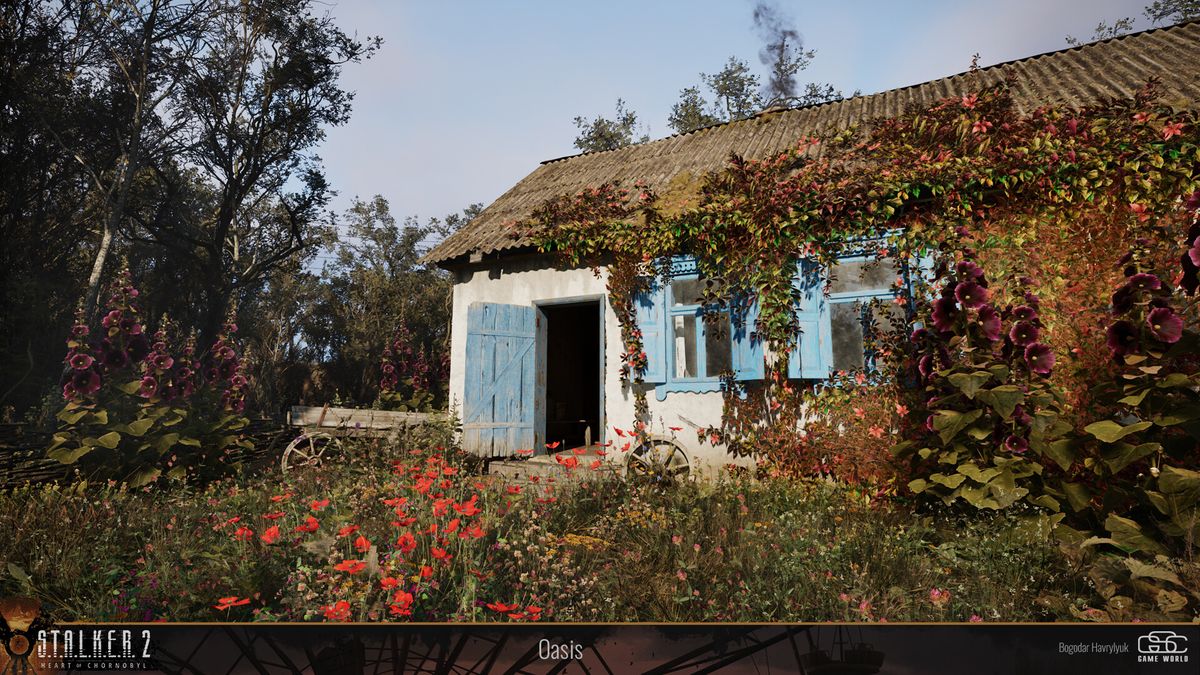
Now, the game’s artists have shared some of the art they created for the title, which is set in the Chornobyl Exclusion Zone in the developer’s home country of Ukraine. 3D engineer and artist Vladyslav Matvieiev, lead material artist Maksim Egorov, and principal foliage artist Bogodar Havrylyuk have shared some of their work on Art Station. Their posts illustrate the richness and variety of the game’s art and supports GSC’s suggestion that each of the game’s 20 regions could be a game in itself.

Just Check Out Havrylyuk’s Work on the Oasis

[Havrylyuk’s Oasis, a lush and vibrant environment in the game, is a great example of the game’s art style. The use of color and texture creates a sense of atmosphere and immersion, drawing the player in.]

More Art from the Game

[Havrylyuk’s work on the Oasis is not the only example of the game’s art quality. Maksim Egorov’s material design and Vladyslav Matvieiev’s interactive doors with color variations demonstrate the level of detail and attention to detail in the game’s art.]

Conclusion

The art shared by GSC Game World’s artists gives us a glimpse into the level of quality and attention to detail that has gone into creating Stalker 2: Heart of Chornobyl. The game’s use of Unreal Engine 5 and the talent of its artists has resulted in a visually stunning game that promises to be a must-play for fans of the survival genre.

FAQs

Q: What is Stalker 2: Heart of Chornobyl?
A: Stalker 2: Heart of Chornobyl is a survival game set in the Chornobyl Exclusion Zone in Ukraine.

Q: What is the game’s art style like?
A: The game’s art style is highly detailed and atmospheric, with a focus on immersion and realism.

Q: How many regions are in the game?
A: The game has 20 regions, each with its own unique environment and challenges.

Q: Is the game available for purchase?
A: The game is not yet available for purchase, but a release date has been announced.

NVIDIA Grace CPU Delivers World-Class Performance

0

Designed for Greater Energy Efficiency with No Performance Compromise

NVIDIA designed the NVIDIA Grace CPU to be a new kind of high-performance, data center CPU—one built to deliver breakthrough energy efficiency and optimized for performance at data center scale. Accelerated computing is enabling giant leaps in performance and energy efficiency compared to traditional CPU computing. To deliver these speedups, full-stack innovation at data center scale is required, spanning chips, systems, software, and algorithms.

The Right Architecture for the Right Workload with the Best Energy-Efficiency Performance

As workloads are increasingly accelerated, there remain use cases that today primarily run on traditional CPUs—particularly code that is sparse and "branchy" serialized tasks such as graph analytics. At the same time, data centers are increasingly power-constrained, limiting the growth of their capabilities. This means that all workloads that can be accelerated should be accelerated. Those that cannot be accelerated must be run on the most efficient compute possible, and the CPU must be optimized for those workloads.

The NVIDIA Grace CPU: Combining High-Performance and Energy-Efficiency

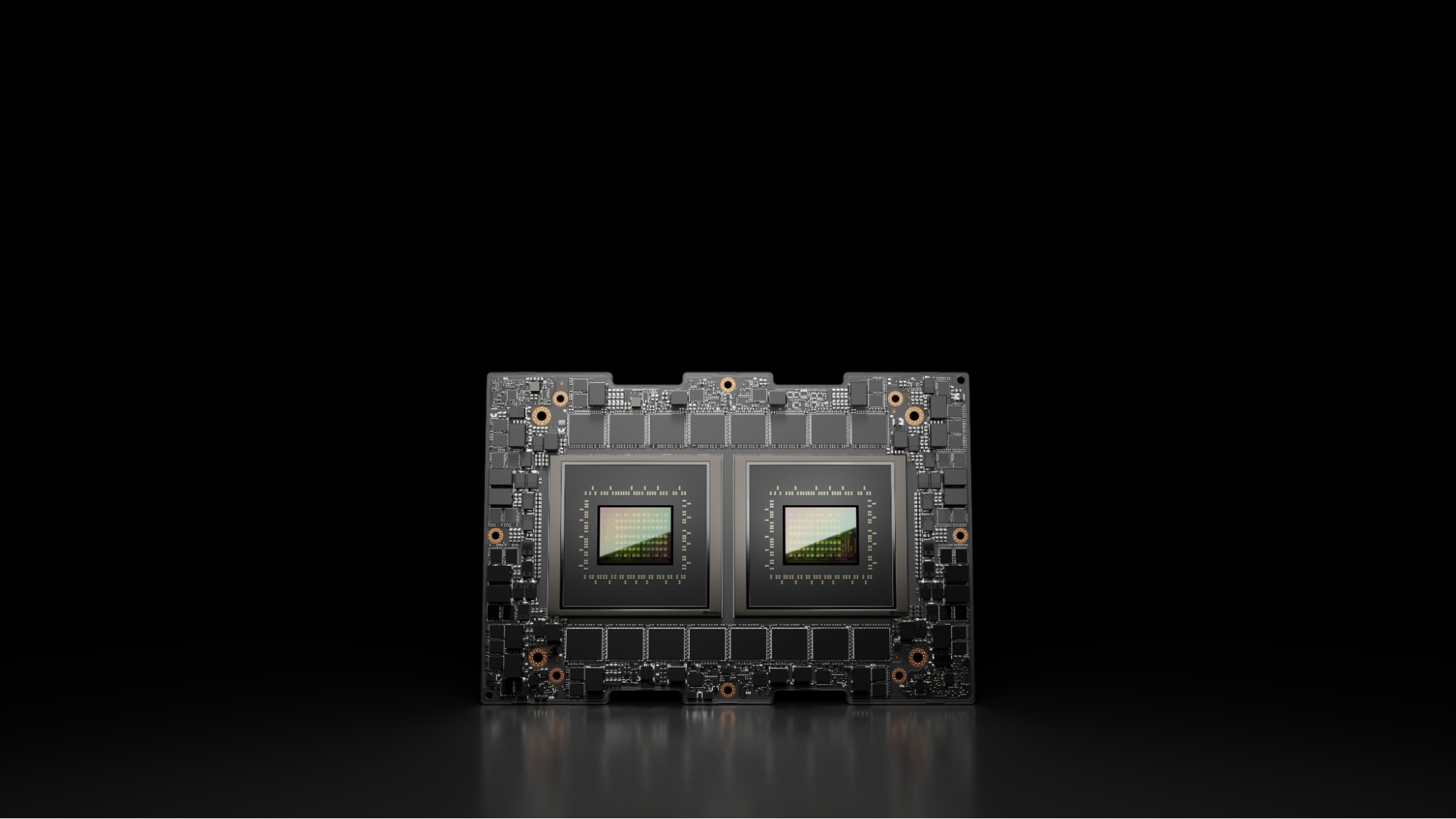
The NVIDIA Grace CPU combines 72 high-performance and energy-efficient Arm Neoverse V2 cores, connected with the NVIDIA Scalable Coherency Fabric (SCF). The NVIDIA SCF is a high-bandwidth, on-chip fabric that provides a total of 3.2 TB/s of bisection bandwidth—double that of traditional CPUs. A high-bandwidth on-chip fabric is needed to deliver maximum system-level performance by maintaining the data flow among CPU cores, cache, memory, and system input and output.

Unparalleled Performance and Energy Efficiency

The NVIDIA Grace CPU is designed to deliver outstanding performance, memory bandwidth, and data-movement capabilities with breakthrough performance per watt. At the data center level, this translates into a generational leap in performance and outstanding total cost of ownership (TCO). The Grace architecture delivers these benefits in a data center-grade, general-purpose CPU, which means it provides versatility and performance across a broad range of foundational data center workloads such as microservices, data analytics, graph analytics, and simulation.

Delivering Consistent Performance

Beyond its exceptional performance and energy efficiency, the Grace CPU is designed to sustain consistent performance levels with deterministic performance. The NVIDIA SCF removes data movement bottlenecks. By combining a high-bandwidth fabric and a wide LPDDR5X memory interface, the Grace CPU achieves over 90% STREAM efficiency (a measure of delivered memory bandwidth relative to peak-rated bandwidth) even when all cores are active. In contrast, competitive systems will reach just over 80% max efficiency, dropping to around 70% when all cores are active.

Conclusion

The NVIDIA Grace CPU is a game-changing innovation in data center computing, offering unparalleled performance and energy efficiency. With its unique architecture, the Grace CPU is poised to revolutionize the way data centers are designed and operated, enabling a new level of performance, efficiency, and sustainability.

Frequently Asked Questions

  • What is the NVIDIA Grace CPU?
    The NVIDIA Grace CPU is a new kind of high-performance, data center CPU designed to deliver breakthrough energy efficiency and optimized for performance at data center scale.
  • What are the key features of the NVIDIA Grace CPU?
    The key features of the NVIDIA Grace CPU include its high-performance and energy-efficient Arm Neoverse V2 cores, its high-bandwidth on-chip fabric, and its wide LPDDR5X memory interface.
  • What is the benefit of the NVIDIA Grace CPU?
    The benefit of the NVIDIA Grace CPU is that it delivers unparalleled performance and energy efficiency, enabling data centers to achieve a generational leap in performance and outstanding total cost of ownership (TCO).
  • What workloads is the NVIDIA Grace CPU suitable for?
    The NVIDIA Grace CPU is suitable for a broad range of foundational data center workloads, including microservices, data analytics, graph analytics, and simulation.

What You Want to Know

0

Introducing Yelp’s AI-Powered "Review Insights"

New Feature Provides Quick Overview of Customer Sentiment

Yelp, a leading review platform, has announced the introduction of AI-powered "Review Insights" as part of its end-of-year product release. This new feature aims to help users discover new establishments and narrow down customer reviews by providing a quick summary of how customers feel about certain aspects of a business.

How it Works

Review Insights is an aggregated sentiment score that provides a quick overview of topics using facial icons — positive, neutral, and critical — displayed above a business’s reviews. Users can click specific topics to read related reviews that focus on those aspects of the business, such as what customers are saying about the food or service.

Availability and Expansion

Review Insights is currently available on iOS for restaurant, food, and nightlife businesses. Yelp plans to expand this feature to services categories "next year." This new feature builds on the AI-powered review summaries feature that Yelp introduced in January.

Quote from Yelp’s Chief Product Officer

"When searching for a local restaurant, you might have a specific aspect in mind that matters most to you — be it the vibe of the space, how long it takes to get a table, or the quality of the food," said Yelp’s Chief Product Officer Craig Saldanha. "Even when a review doesn’t explicitly mention one of the topics, the LLM understands the context in the review to identify and surface the relevant topic and sentiment."

Other Updates

In addition to Review Insights, Yelp is also introducing other updates to its iOS app:

  • Trending Search Terms: The home feed search bar now features a trending drop-down that highlights the most popular terms other local users are looking for. This feature will be coming to Android "early next year."
  • Expanded Home Feed: The iOS app home page has been expanded to include new reviews, photos, and full-screen video spotlights uploaded by other users that surface recent experiences.
  • AI-Powered Update: Yelp is rolling out an AI-powered update that "better tailors the home feed to your preferences" in the coming weeks.

Conclusion

Yelp’s new AI-powered "Review Insights" feature aims to provide users with a quick and easy way to discover new establishments and narrow down customer reviews. With its aggregated sentiment scores and facial icons, Review Insights provides a clear overview of customer sentiment, allowing users to make informed decisions about where to eat or shop.

FAQs

Q: What is Yelp’s new AI-powered "Review Insights" feature?
A: Review Insights is an aggregated sentiment score that provides a quick overview of topics using facial icons — positive, neutral, and critical — displayed above a business’s reviews.

Q: What categories will Review Insights be available in?
A: Review Insights is currently available on iOS for restaurant, food, and nightlife businesses, with plans to expand to services categories "next year".

Q: How does Yelp’s AI-powered Review Insights feature work?
A: Review Insights uses natural language processing (NLP) to analyze customer reviews and identify sentiment around specific topics, such as food quality, service, ambiance, and wait times.

Google’s Winning Streak

0

Could This Be the AI Tool That Dethrones Google?

It feels like every time I read the news, someone has Google in their crosshairs.

The US Department of Justice is considering breaking up the company, potentially splitting its search engine from Android, Chrome, and Google Play services.

My mother didn’t raise a snitch, but if I were Google, my defense would be… "But look at Apple and Amazon!"

I Would Point Across the Room and Everything

It goes without saying this is not legal advice. But seriously, first it’s the antitrust drama, followed by the privacy lawsuit settlement for secretly tracking users in Incognito mode. And then Gemini’s Image Creation Tool made a gigantic boo-boo.

But All That Pales Compared to the New Kid on the Block Coming for Google

In this article, I will share why the biggest threat to Google might be a startup, not ChatGPT.

Perplexity: The AI Tool That Dethrones Google?

When people talk about "dethroning Google," everyone mentions ChatGPT. Now, don’t get me wrong, ChatGPT is incredible and a worthy adversary. But that is not who I have in mind. This new AI tool is what the kids call fire!

So here it is. I think Perplexity is one of the biggest threats to Google.

Perplexity vs. ChatGPT

Perplexity is often compared to ChatGPT. It’s true that both tools perform similar functions and appear to be direct competitors. But that’s only part of the picture. Let me explain.

Perplexity: The Research Assistant

Perplexity crushes it as a research assistant and has completely replaced Google in my workflow. It gives accurate, real-time answers with sources cited, making it an essential tool for research.

ChatGPT: The Creative Director

ChatGPT, on the other hand, excels at creative tasks. Sure, it has a habit of lying or, to use the professional term, "hallucinating." Because of that, I use it for brainstorming, drafting, and creative direction. Think of it like this… ChatGPT is like Word, perfect for drafting, brainstorming, and getting creative. It helps you shape ideas and generate content with flexibility.

Why This Matters for Google

This situation is precarious for Google because competing means going against the very thing that makes it money. All the tech and fancy stuff aside, Google is a media company, plain and simple. Its core business model is putting advertisements around content.

The Numbers Speak for Themselves

Perplexity is a well-built, well-thought-out tool, and early reactions are mixed. The real question is whether Perplexity can truly shift user behavior. Based on the numbers, it seems like it can.

What This Means for You and Me

What’s happening to Google right now is the equivalent of getting jumped. Poor Google was minding its business, and out of nowhere, a bunch of young whippersnappers came out of the shadows like, "Run me them pockets." I love seeing big tech beef as it results in better pricing for products and services.

My Two Cents

Google is an incredible company; what it’s built is nothing short of amazing. But now it’s under pressure from all sides and won’t take this on the chin without a fight. It’s going to be fascinating to see how it responds.

Conclusion

Perplexity is not just an alternative to Google; it offers a different way of finding answers. What’s happening to Google right now is the equivalent of getting jumped. Poor Google was minding its business, and out of nowhere, a bunch of young whippersnappers came out of the shadows like, "Run me them pockets."

FAQs

Q: What is Perplexity?
A: Perplexity is an AI-powered search engine designed to give accurate, real-time answers with cited sources.

Q: Why is Perplexity a threat to Google?
A: Perplexity’s ability to provide accurate, real-time answers with sources cited is a threat to Google’s dominance in the search engine market.

Q: Is Perplexity a replacement for Google?
A: Perplexity is a research assistant that can help users find answers quickly and accurately, making it a valuable tool for research.

Mastering Memory Management in Go

0

Optimizing Memory Usage in Golang Applications

As a Golang developer, I’ve learned that optimizing memory usage is crucial for creating efficient and scalable applications. Over the years, I’ve encountered numerous challenges related to memory management, and I’ve discovered various strategies to overcome them.

Memory Profiling

Memory profiling is an essential first step in optimizing memory usage. Go provides built-in tools for this purpose, such as the pprof package. To start profiling your application, you can use the following code:

import (
    "os"
    "runtime/pprof"
)

func main() {
    f, _ := os.Create("mem.pprof")
    defer f.Close()
    pprof.WriteHeapProfile(f)

    // Your application code here
}

This code creates a memory profile that you can analyze using the go tool pprof command. It’s a powerful way to identify which parts of your code are consuming the most memory.

Efficient Data Structures

Once you’ve identified memory-intensive areas, you can focus on optimizing them. One effective strategy is to use efficient data structures. For example, if you’re working with a large number of items and need fast lookups, consider using a map instead of a slice:

// Less efficient for lookups
items := make([]string, 1000000)

// More efficient for lookups
itemMap := make(map[string]int, 1000000)

Maps provide O(1) average-case lookup time, which can significantly improve performance for large datasets.

Managing Allocations

Another important aspect of memory optimization is managing allocations. In Go, every allocation puts pressure on the garbage collector. By reducing allocations, you can improve your application’s performance. One way to do this is by using sync.Pool for frequently allocated objects:

var bufferPool = sync.Pool{
    New: func() interface{} {
        return new(bytes.Buffer)
    },
}

func processData(data []byte) {
    buf := bufferPool.Get().(*bytes.Buffer)
    defer bufferPool.Put(buf)
    buf.Reset()

    // Use the buffer
}

This approach allows you to reuse objects instead of constantly allocating new ones, reducing the load on the garbage collector.

Conclusion

In conclusion, optimizing memory usage in Golang applications requires a multifaceted approach. It involves understanding your application’s memory profile, using efficient data structures, managing allocations carefully, leveraging the garbage collector effectively, and implementing custom solutions when necessary. By applying these techniques and continuously monitoring your application’s performance, you can create efficient, scalable, and robust Go programs that make the most of available memory resources.

FAQs

Q: What is memory profiling, and why is it important?
A: Memory profiling is the process of analyzing an application’s memory usage to identify areas that consume the most memory. It’s important because it helps you understand where to focus your optimization efforts.

Q: What are some common memory-intensive areas in Go applications?
A: Common memory-intensive areas include large data structures, frequent allocations, and inefficient data structures.

Q: How can I reduce memory allocations in my Go application?
A: You can reduce memory allocations by using sync.Pool for frequently allocated objects, reusing objects instead of constantly allocating new ones, and implementing custom solutions when necessary.

Q: How can I optimize my Go application’s garbage collection?
A: You can optimize your Go application’s garbage collection by reducing allocations, using efficient data structures, and implementing custom solutions when necessary.

Q: What are some best practices for optimizing memory usage in Go applications?
A: Some best practices for optimizing memory usage in Go applications include understanding your application’s memory profile, using efficient data structures, managing allocations carefully, leveraging the garbage collector effectively, and implementing custom solutions when necessary.