Home Blog Page 545

Last Chance: Apple Cyber Monday Deals

0

Refresh

iPads on Sale: Get the New iPad Pro M4 at a Record Low Price

If you’re in the market for a new iPad, now is the perfect time to make a purchase. Amazon has the new iPad Pro M4 on sale at a record low price. This powerful tablet is ideal for those with a heavy creative workflow, such as video editors or 3D artists. The screen is gorgeous, and we were shocked by the power when we tried it out.

Discount Alert

The discount is actually $200. That’s a great deal for a tablet this new and this powerful, even though it’s still $899 at Amazon now.

Image

[Image of iPad Pro M4]

MacBook Deals: BH Photo Wins the Game

If you’re in the market for a MacBook, you’re in luck. BH Photo has doorbusting prices on MacBooks, matching the lowest price ever for most models. This is great news, as many other retailers have sold out of their stock or raised their prices.

Why Shop at BH Photo?

What’s the best way to choose a MacBook? We’ve got the answers. Check out our latest article for a comprehensive guide to picking the perfect MacBook for your needs.

Cyber Monday Wrap-Up

As the day winds down, we take a look back at all the deals and discounts we’ve seen so far. From iPads to MacBooks, there’s been no shortage of great deals to be had. But don’t wait – many of these deals will expire soon, so act fast to snag the best prices.

Conclusion

With all the deals and discounts out there, it’s a great time to be in the market for a new iPad or MacBook. Whether you’re a creative professional or just looking for a new device to get work done on the go, there’s something for everyone. Don’t miss out on these amazing deals – shop now and start enjoying the benefits of a new device.

FAQs

Q: What is the best way to choose a MacBook?
A: Check out our latest article for a comprehensive guide to picking the perfect MacBook for your needs.

Q: Where can I find the best deals on iPads and MacBooks?
A: Look no further than Amazon and BH Photo, where you can find great deals on a range of Apple devices.

Q: How long will these deals last?
A: Many of these deals will expire soon, so act fast to snag the best prices.

VMware Ditches Proprietary Software for Open Source Rival Amid 1,000% Price Hike

Companies Ditch VMware for OpenNebula, Citing Cost and Support Concerns

Beeks Group’s Migration

Companies have been discussing the possibility of migrating away from VMware since Broadcom’s takeover a year ago, which led to increased costs and other changes. Now, we have an inside look at one of the larger customers that has recently made the move.

From VMware to OpenNebula

According to a report from The Register, Beeks Group, a cloud operator headquartered in the United Kingdom, has moved most of its 20,000-plus virtual machines (VMs) off VMware and to OpenNebula, an open-source cloud and edge computing platform. Beeks Group sells virtual private servers and bare metal servers to financial service providers. While it still has some VMware VMs, "the majority" of its machines are currently on OpenNebula, The Register reported.

Cost and Support Concerns

Beeks’ head of production management, Matthew Cretney, cited a VMware bill for "10 times the sum it previously paid for software licenses" as one of the reasons for the migration. OpenNebula has enabled the company to dedicate more of its 3,000 bare metal server fleet to client loads instead of to VM management, as it had to with VMware. With OpenNebula reportedly requiring less management overhead, Beeks is reporting a 200 percent increase in VM efficiency since it now has more VMs on each server.

Additional Drivers for Migration

Beeks also pointed to customers viewing VMware as non-essential and a decline in VMware support services and innovation as drivers for its migration from VMware.

Broadcom’s Response

Broadcom did not respond to Ars Technica’s request for comment.

Broadcom Loses VMware Customers

Broadcom will likely continue to see some of VMware’s older customers decrease or abandon reliance on VMware offerings. However, Broadcom has emphasized the financial success it has seen from its VMware acquisition, suggesting that it will continue with its strategy even at the risk of losing some business.

Conclusion

Companies may be rethinking their reliance on VMware due to cost and support concerns, and OpenNebula is gaining traction as an alternative. While Broadcom may see some customers abandon its offerings, it remains committed to its strategy.

Frequently Asked Questions

Q: Why did Beeks Group migrate from VMware to OpenNebula?
A: Beeks Group cited a VMware bill for "10 times the sum it previously paid for software licenses" and a decline in VMware support services and innovation as reasons for the migration.

Q: What are the benefits of using OpenNebula?
A: OpenNebula requires less management overhead, allowing Beeks to dedicate more resources to client loads and resulting in a 200 percent increase in VM efficiency.

Q: Will Broadcom see a decline in customers due to the migration?
A: While some customers may abandon VMware, Broadcom has emphasized the financial success it has seen from its VMware acquisition and is likely to continue with its strategy.

6 Tips for Securing Budget for HR Tech (from a CFO)

0

Securing budget for your people initiatives—like employee engagement and performance management—can feel daunting. Especially when you and your finance team aren’t on the same page. The problem isn’t that your key stakeholders don’t recognize the value of an engaged, high-performing workforce—they certainly do. But it’s crucial to present HR technology requests in a way that clearly connects with the company’s broader financial and operational goals.

When HR leaders present a compelling case that links their initiatives to business success, it’s much easier to secure the budget needed. Here’s how you make your case for a new solution.


1. Engage your finance team early. 

Lay the groundwork for success by involving your finance leader early—as soon as you identify the need for a new or enhanced solution. As a CFO, I prefer to avoid surprises, especially when it comes to unexpected budget requests. Hearing “We want to spend money we didn’t plan for,” can be difficult to manage.

Your finance leaders value being able to plan and have visibility into what’s coming down the line—whether that’s one month, six months, or even a year from now. With that in mind, here’s how to involve your finance team from the start: 

  • Let them know early that you’re considering new or upgraded HR tech.
  • Outline the pain points you’re addressing for the HR team and the organization at large.
  • Communicate the potential impact of the investment.
  • Share what you’re looking for when evaluating your options.

By keeping your finance team and other key stakeholders in the loop, you ensure they have the context they need and can tailor your pitch better later. Rather than being surprised by a final proposal, they’ll be part of the process from the beginning, making the final decision a collaborative effort. 

View our 2025 guide to choosing the best employee engagement software: 

  • Must-have tools & features
  • Questions to consider when evaluating vendors
  • Comparing employee engagement software solutions
  • Trends & best practices in employee engagement

Go to the guide >>


2. Align your request with key company objectives.

Your organization’s goals help the company focus on what is most important. That’s why leveraging them in your request is the key to budget approval. What is most important to your business right now? 

  • Are you trying to acquire more customers and grow market share?
  • Are you working to grow revenue as quickly as possible?
  • Are you trying to cut costs where you can?
  • Are you working to grow quarterly profits as a public company?
  • Are you trying to improve patient satisfaction scores?
  • Are you looking to lower safety incident reports?

No matter what your organization’s goals are, it’s essential to link your solution to a key business metric. Clearly communicate your vision and long-term benefits for the company. Show how the technology investment directly addresses the organization’s challenges and enhances overall operations. 


3. Frame up the investment.

When I hear words like initiative or project, I often associate them with costs—expenses that don’t directly contribute to business results and offer no clear return on investment. That’s not want you want to convey with your HR technology request. The word you’re looking for is “investment.”  

Share how this purchase will help the organization invest in your employees. That investment will create a more engaged and high-performing workforce. For most organizations, employees are the most valuable resource. By investing in their engagement and performance, the business will succeed.  

The language you use can significantly shape how your organizational leaders perceive your proposal. Reframe the conversations as an investment in your employees and the company’s growth, rather than focusing on terms that imply cost or expense. Present your proposal as a strategic initiative with measurable returns, emphasizing that this is an investment aligned with broader business strategies—not just a project for your team. 


4. Talk numbers.

Your finance team is deeply focused on financial statements and hard numbers, so when discussing return on investment (ROI) of HR technology, be sure to connect the investment directly to key business metrics.  

For example, you should confidently demonstrate how reducing incident rates could save the organization X dollars. By hypothesizing about the correlation and tracking future outcomes, you’ll be able to prove a return on investment. 

As a CFO, I’d prefer to see that an investment in new or improved technology might take six to 18 months to pay off. This shows that your case is grounded in realistic expectations. Avoid using inflated numbers just to make the calculation look appealing. A pragmatic approach helps demonstrate this is an achievable goal for the organization.  

When you talk about ROI and the payoff period with your finance team: 

  • Present a clear ROI analysis that quantifies the benefits of your proposed investment.
  • Keep your projections realistic and practical to build trust with finance leaders.
  • Frame your proposal in a broader context, such as improving safety scores or reducing turnover. 


5. Elevate value.

Show your stakeholders you’ve done your homework. You’ve thoroughly reviewed different solutions and weighed the costs and benefits of each option. They’ll appreciate seeing the entire, well-thought-out process. 

As mentioned earlier, your finance team doesn’t like surprises. They want to feel involved, even if they weren’t part of the demo or sales conversations. When you approach them, come prepared with more than just the vendor and the cost—be ready to walk them through the entire investment. 

If the solution you’ve chosen exceeds your original estimate, be prepared to explain why. Point out lower-cost options and the functionality they lack or highlight higher-priced solutions that offer more than what you need from an engagement and performance vendor. 

Demonstrate that you’ve carefully evaluated all options, considering both cost-benefit and trade-off decisions. Contrary to popular belief, finance teams aren’t focused solely on cutting costs—they’re value-conscious. They want to ensure the company’s resources are being used wisely. Be ready to explain why the solution you’ve selected, even if it’s more expensive, offers greater value and aligns best with the organization’s needs. 


6. Follow up on progress.
  

Identifying the ROI is just one piece of the puzzle. It’s equally important to have a clear plan for turning that idea into reality. When crafting your plan, schedule a check-in after launch and update your finance leader on progress. They’ll want to see that the organization is starting to see results or has a strategy to get back on track if needed. 

Why? It fosters trust and shows that you truly believe in your plan and ROI. You’re demonstrating accountability for its success. Even if you don’t hit every target exactly as planned, you build credibility, making it easier to justify renewing the subscription or continuing the investment. 

The work doesn’t stop once the budget is approved. Re-engage your key stakeholders incorporating regular check-ins to track the success of your investment. This not only shows good stewardship but also reinforces your commitment to achieving the end goal. 


Unsure where to start in quantifying the impact of these investments on your business? Use this employee engagement ROI calculator to easily start building your business case.


Enhanced Security and Streamlined Deployment of AI Agents with NVIDIA AI Enterprise

0

Simplified Management of AI Agent Pipelines

The newly launched NVIDIA NIM Operator simplifies the deployment and management of NIM microservices used to deploy AI pipelines on Kubernetes. NIM Operator automates the deployment of AI pipelines and enhances performance with capabilities such as intelligent model pre-caching for lower initial inference latency and faster autoscaling. You can choose to autoscale based on CPU, GPU, or NIM-specific metrics, such as NIM max requests, KVcache, and so on. It also simplifies the upgrade process by providing easy rolling upgrades. Change the version number of the NIM microservice and the NIM Operator updates the deployments in the cluster.

Security and API Stability for AI Models

NVIDIA AI Enterprise includes monthly feature branch releases for AI and data science software which contain top-of-tree software updates and are ideal for AI developers who want the latest features. This software is maintained by NVIDIA for one month until the next version is released, and available security fixes are applied before each release. Although this is great for customers who want to stay on the leading edge with the newest capabilities, there’s no guarantee that APIs will not change from month to month. This can make it challenging to build enterprise solutions that need to be both secure and reliable over time, as developers may need to adjust applications after an update.

To address this need, NVIDIA AI Enterprise also includes production branches of AI software. Production branches ensure API stability and regular security updates and are meant for deploying AI in production when stability is required. Production branches are released every 6 months and have a 9-month lifecycle. Throughout the 9-month lifecycle of each production branch, NVIDIA continuously monitors critical and high common vulnerabilities and exposures (CVEs) and releases monthly security patches. By doing so, the AI frameworks, libraries, models, and tools included in NVIDIA AI Enterprise can be updated for security fixes while eliminating the risk of breaking an API.

AI for Healthcare

Customers in highly regulated industries often require software to be supported for even longer periods. For these customers, NVIDIA AI Enterprise also includes long-term support branches (LTSB), which are supported with stable APIs for 3 years.

LTSB 1 coincided with the first release of NVIDIA AI Enterprise in 2021 and includes foundational AI components. LTSB 2, as part of this latest release of NVIDIA AI Enterprise, adds Holoscan, which includes Holoscan SDK and Holoscan Deployment Stack. Holoscan is the NVIDIA AI sensor processing platform that combines hardware systems for low-latency sensor and network connectivity, optimized libraries for data processing and AI, and core capabilities to run real-time streaming, imaging, and other applications.

More Ways to Deploy NIM Microservices

NVIDIA AI Enterprise is supported on both on-premises and public cloud services. You can deploy NIM microservices and other software containers into self-managed Kubernetes running on cloud instances, but many prefer to use Kubernetes managed by the cloud provider. Google Cloud has now integrated NVIDIA NIM into Google Kubernetes Engine to provide enterprise customers with a simplified path for deploying optimized models directly from the Google Cloud Marketplace.

Availability

The next version of NVIDIA AI Enterprise is available now. License holders can download production branch versions of most AI software containers right away, but the NIM microservices are expected to be added to the production branch at the end of November. As always, you also get the benefit of enterprise support, which includes guaranteed response times and access to NVIDIA experts for timely issue resolution.

Conclusion

NVIDIA AI Enterprise offers a range of features that make it easier to manage and deploy AI agent pipelines, ensuring security and API stability for AI models. With the addition of LTSB, customers in highly regulated industries can have software supported for even longer periods. The platform is supported on both on-premises and public cloud services, providing flexibility and ease of deployment.

Frequently Asked Questions

Q: What is the main benefit of NVIDIA AI Enterprise?
A: The main benefit of NVIDIA AI Enterprise is its ability to simplify the management and deployment of AI agent pipelines, ensuring security and API stability for AI models.

Q: What is the difference between feature branch and production branch in NVIDIA AI Enterprise?
A: Feature branch releases contain top-of-tree software updates and are ideal for AI developers who want the latest features, while production branches ensure API stability and regular security updates and are meant for deploying AI in production when stability is required.

Q: How long is the lifecycle of each production branch in NVIDIA AI Enterprise?
A: Each production branch in NVIDIA AI Enterprise has a 9-month lifecycle.

Q: What is LTSB in NVIDIA AI Enterprise?
A: LTSB stands for Long-Term Support Branch, which is a type of branch that includes foundational AI components and is supported with stable APIs for 3 years.

Q: What is Holoscan in NVIDIA AI Enterprise?
A: Holoscan is the NVIDIA AI sensor processing platform that combines hardware systems for low-latency sensor and network connectivity, optimized libraries for data processing and AI, and core capabilities to run real-time streaming, imaging, and other applications.

Get Disney+ and Hulu on Cyber Monday for $2.99

0

Disney+ and Hulu: A Match Made in Heaven

A 72% Discount on the Disney Plus/Hulu Bundle

Disney+ and Hulu are my go-to streaming services. Not just because I can watch Futurama and then Monsters Inc. and then Shogun and then Jingle All The Way and then Alien, but also because unlike some other streaming services, it’s still affordable. And even more so now that you can get a Disney Plus/Hulu duo bundle for only $2.99 per month for a whole year. That constitutes a massive 72% off the sticker price, and let me tell you, you can fit so many series and films in there.

A Deal for Everyone

Also, if you already have Disney Plus but would like to add Hulu (or you don’t care about Disney Plus but want Hulu on its lonesome), then you can get that one for the low, low price of $0.99 per month. That’s $0.99, for a year. That’s 365 days. It’s not just for new subscribers either, but everyone who cancelled more than a month ago is also eligible to take up this offer.

Benefits for Small Families

As a small family, we probably use Disney Plus more in my household than any other streaming service, so if I wasn’t already locked in, I’d be jumping all over this Cyber Monday deal. The normal US price is $10.99 for the basic bundle, so this is going to save you a flippin’ $96 for the whole year. That’s a lot. That’s at least three big coffees at a coffee shop.

Don’t Miss Out

Like I said, this will be your monthly price for a full year, but you only have until the end of Cyber Monday (December 3 at 3:00 AM ET) to take advantage of it. So get that thing right in your basket or so help me.

The Best Disney Plus/Hulu Cyber Monday Deals

If you want other streaming services (or you’re not in the US and want to see how much a Disney Plus investment will eat into your capital), please take a gander at our magical geo-matching widget below for all the best streaming services.

Frequently Asked Questions

Q: What is the Disney Plus/Hulu duo bundle price for a year?
A: $2.99 per month for a whole year, which is 72% off the sticker price.

Q: What is the price of Hulu alone?
A: $0.99 per month for a year, which is 365 days.

Q: Is this offer available for new subscribers only?
A: No, everyone who cancelled more than a month ago is also eligible to take up this offer.

Q: How long do I have to take advantage of this offer?
A: Until the end of Cyber Monday (December 3 at 3:00 AM ET).

Our Top-Rated Drawing Tablets with Unmissable Cyber Monday Deals

0

Cyber Monday Drawing Tablet Deals

Top-Rated Drawing Tablets Now Reduced

Our highest-rated drawing tablets are now on sale for Cyber Monday, and this includes the excellent Wacom Intuos Pro Medium for $379.95, now reduced to $279.95. The Wacom Intuos Pro has been a leading choice among digital artists and graphics designers for many years, with its latest pen technology and ergonomic design.

More Options Alike

While the Wacom Intuos Pro is a top pick, we’ve also reviewed and rated many other excellent drawing tablets, including those from XPPen, Huion, and Xencelabs. For Cyber Monday, many of these tablets are now reduced, offering even greater value for artists and designers.

Cyber Monday Drawing Tablet Deals

  • Wacom Intuos Pro Medium: $379.95, now $279.95 (save $100)
  • XPPen Deco 01: $249.99, now $199.99 (save $50)
  • Huion GT-191: $299.99, now $249.99 (save $50)
  • Xencelabs Manga Pro: $299.99, now $249.99 (save $50)

Best Drawing Tablets for Digital Artists

For more information on these top-rated drawing tablets, check out our comprehensive guide to the best drawing tablets for digital artists.

Frequently Asked Questions

Q: What is the best drawing tablet for beginners?
A: Our top pick for beginners is the Wacom Intuos Pro, which offers a user-friendly interface and excellent performance.

Q: Can I use a drawing tablet with my laptop or desktop?
A: Yes, most drawing tablets are compatible with both laptops and desktops, as long as they have a USB port.

Q: Do I need to install software to use a drawing tablet?
A: Yes, most drawing tablets require software installation to function properly. We recommend checking the manufacturer’s website for compatibility and installation instructions.

Q: Can I use a drawing tablet for both work and personal projects?
A: Absolutely! Drawing tablets are versatile tools that can be used for both professional and personal projects, allowing you to express your creativity and bring your ideas to life.

Best Performance Management Systems in 2025

0

Digital performance management systems have revolutionized how companies see, measure, and manage employee performance. Effective software makes the entire performance management process easier. Easier for administrators, managers, and employees alike.

But how do you identify which performance management software is best? Finding the right provider isn’t a process you should take lightly. The performance management technology space is crowded and noisy. It can be difficult to know what to look for and what to ask.

In this guide, we discuss important evaluation considerations for your performance management system. And how to identify the best performance management tools for you.

What is a performance management system?

A performance management system includes processes and tools that help employees and businesses grow and improve. A solid system increases both employee engagement and employee impact. It empowers managers to understand and coach to employee performance with continuous conversations and feedback.

The primary goals of employee performance management software include:

  • Elevating employee and team performance
  • Aligning your employees with organizational goals
  • Creating a high-impact workforce that achieves its goals


Why do you need a performance management system?

Achieving and sustaining employee success is top of mind for most organizations. It’s not just about getting the job done. It’s about building a program that drives high performing teams.

If you’re still relying on an annual performance review, you’re likely missing the mark. You must evolve beyond a check-the-box process into a streamlined, engaging, and actionable process. A more continuous performance management approach fosters:

  • Real-time data collection
  • Ongoing performance conversations and coaching
  • Strategic alignment with business goals
  • Confident and empowered managers
  • An engaging employee experience

A cutting-edge employee performance management system is more than just an evaluation tool. It is the base that helps human resources managers and their organizations adapt and improve. This foundation drives performance at every level.

Here are the top reasons why leaders need a performance management system.

1. Measure performance accurately.

Accurate performance measurement is table stakes. But only 36% of employees say they fully understand their job responsibilities and performance expectations, according to Lighthouse Research & Advisory.

A performance management system provides clarity, aligning employee efforts with organizational objectives. This clarity is vital to effective organizational performance.

2. Close employee skill gaps.

Many employees crave more feedback and coaching, with 50% desiring additional feedback. A performance management platform empowers leaders to bridge skill gaps and build thoughtful development plans. It equips employees with the tools they need to grow and succeed.


3. Discuss and align employee performance goals.

Clearly articulated performance goals are a powerful engagement driver. Our research shows employees with individual goals are twice as likely to be engaged. Performance management help align personal aspirations with organizational objectives.


4. Increase moral and reduce employee turnover.

Recognition and appreciation matter deeply to employees. Only 20% of employees feel recognized and appreciated for their work—and half of all employees (at all levels) desire more recognition. A performance management system empowers employee recognition that boosts employee morale and reduces costly, unwanted turnover.


5. Create trust between managers and employees.

Trust is vital in any successful workplace. Effective performance management creates transparency and fairness. It builds a strong foundation of trust that’s essential for strong working relationships. Organizations should actively work to provide employees with feedback, manager connection, and clear visibility into performance.


6. Create a path to growth for all employees.

Every employee should have a clear path to growth within the organization. Performance management systems incorporate details that bring your talent development plans to life. The right system helps you shift talent development from an aspiration to a structured process.


7. Increase company-wide alignment.

Quantum Workplace research shows that performance management significantly impacts culture. Effective performance management systems align team members with your mission, purpose, and goals.


8. Drive important business outcomes.

Ultimately, a performance management system is a strategic tool. Brandon Hall Group reveals that 62% of organizations believe their current performance management processes don’t enhance performance. Modern systems drive the outcomes and key results that matter most to your business.

What are key elements of the best performance management tools?
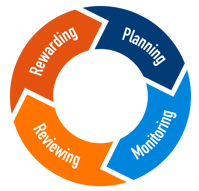

PerformanceManagementFlywheel-2

Your performance management system should help you plan, monitor, review, and recognize performance. It should encompass the entire performance management cycle. Let’s review each of these capabilities in more detail.

1. Planning

Effective performance management begins with thoughtful planning. Your performance management platform should help define and align employee goals with organizational objectives. Transparent and clear goals help:

  • Define expectations and action plans
  • Improve collaboration
  • Keep employees focused on what matters 
  • Connect the dots between employee & business success

2. Monitoring

To effectively monitor performance, you need accurate, real-time data and actionable insights. The right system will enable you to track key performance metrics and check in on progress toward goals. Taking a more continuous approach to monitoring can help your teams:

  • Identify potential roadblocks early
  • Keep employee and team goals on track
  • Provide a foundation for data-driven decision making

The goal is to identify and address performance challenges promptly and motivate sustained productivity. 

3. Reviewing

The reviewing phase is where the magic happens with employee development. An effective performance management system should facilitate efficient and meaningful employee performance reviews.

These reviews go beyond simple performance appraisals. They provide a platform for managers to engage in constructive conversations with employees. This includes:

  • Offering feedback and recognition
  • Reviewing performance data together
  • Understanding and removing obstacles to success
  • Collaboratively creating strategies and action items 

But reviews aren’t limited to top-down management. The right system will effectively enable 360-degree feedback when and where you need it. This helps you get a more comprehensive view of employee performance.

Your system should simplify the feedback and review process. It should help managers and employees talk openly and productively. Your system should also help you document conversations in a meaningful way so you can easily call up feedback from any time frame.


4. Recognizing

Employee recognition is an important element in driving employee motivation and performance. Your system should equip leaders to acknowledge and recognize employees for their efforts. Effective employee recognition:

  • Fosters a positive work environment
  • Reinforces desired behaviors
  • Inspires employees to deliver their best work

When leaders express public appreciation and recognize outstanding contributions, it creates a culture of excellence and continuous improvement.

Incorporating these four elements into your performance management system ensures it supports the entire performance management cycle. This holistic approach streamlines your process and maximizes the potential for employee and business success.


What features should your performance management system have?


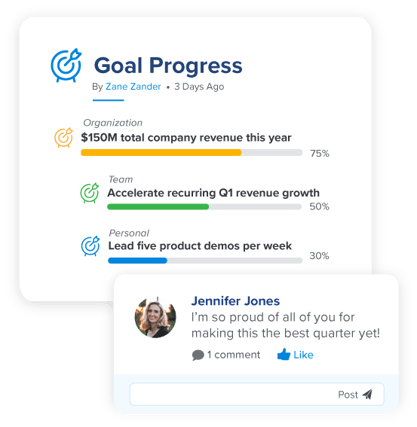
1. Set, track, and collaborate on goals.

Performance goals help organizations achieve more, faster, with less. Clear, aligned, and shared goals guide employees. They ensure work stays in sync with the organizational strategy, fostering accountability, motivation, and strategic alignment.
 quantum workplace goal management software

Look for goal management features like:

  • Cascading goals: align organizational, team, and employee goals
  • Goal assistance: use AI to simplify goal writing and craft high-quality goals in less time
  • Collaborative tools: share goal progress and ownership across teams
  • Interactive features: celebrate and stay aligned with activity feeds, real-time interaction, and social recognition
  • Goal visibility: import or update goals in bulk for one source of truth
  • Flexible formatting: choose from OKRs, SMART goals, or something else

2. Conduct ongoing 1-on-1s and performance reviews.

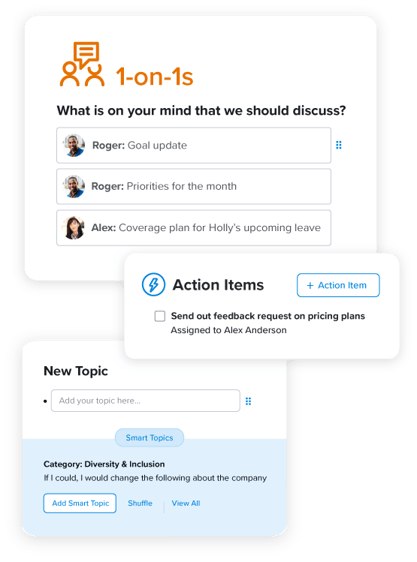
Ongoing, documented performance conversations provide a comprehensive view of employee performance. And when employees regularly receive feedback from managers their engagement levels rise. Engagement and performance fuel each other. They’re inextricably linked.

One-on-One Meetings

But managers need support to drive performance in ways that actively engage their teams. Employee-manager 1-on-1s are the perfect opportunity to discuss performance. From check-ins to performance reviews, 1-on-1s are important to your performance management platform.

PerformanceMain_1on1s_NoCircles 

Look for one-on-one meeting software that empowers future-focused, transparent, two-way conversations with:

  • Digital conversation tools: build and track a 1-on-1 from anywhere, anytime
  • Performance integrations: pull in employee goals or feedback, or view a performance snapshot
  • Curated, best-practice templates: help managers have effective conversations
  • Automated cycles: build healthy communication habits with HR-prompted workflows and alerts
  • Mobile access: take meeting agendas and notes with you and create action items on the go

Performance Reviews

Performance evaluations should provide your teams with valuable context. They should help teams focus on engagement and growth. One in three employees say that actionable advice is the best part of an employee review.

Look for performance review software that powers accurate, easy, and actionable reviews, with:

  • Custom templates: flexible review modules you can tailor to fit your needs
  • Historical data: help teams reduce recency bias with easy access to performance and conversation data
  • AI-assisted workflows: write clear, constructive feedback and elevate actionable feedback with the power of AI
  • Integrated goals: embed performance goals directly into review conversations
  • Feedback: leverage 360s and multi-rater feedback to gain valuable insight
  • Talent Reviews: get a comprehensive view of your organization’s talent
  • Analytics: monitor review cycles to keep teams accountable and track performance in real time

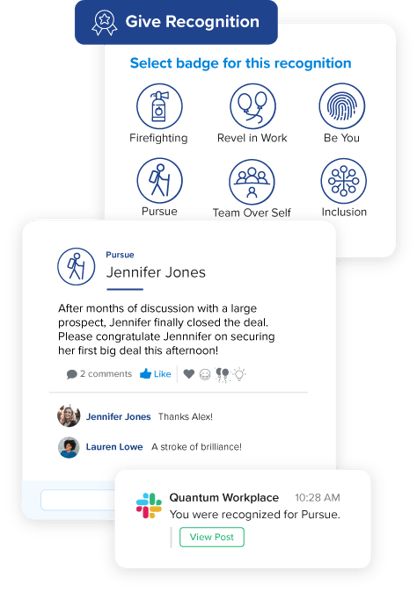
3. Facilitate peer-to-peer, real-time employee recognition.

69% of employees say they’d work harder if recognized more effectively. Publicly acknowledging and praising employees offers many benefits:

  • Increased productivity
  • Increased engagement
  • Decreased turnover
  • Improved company culture

But only 37% of employees nationwide are satisfied with recognition and appreciation at work. Recognition software can help you celebrate success and engage teams across your organization.
PerformanceMain_Recognition_NoCircles

Look for employee recognition software that has:

  • Peer-to-peer recognition: allow any employee to easily celebrate another
  • Automated milestones: always remember work anniversaries
  • Customized badges: tie recognition to cultural values that matter
  • Social newsfeed: create a public and fun celebration space
  • Integrated notifications: amplify success stories to Slack and Teams

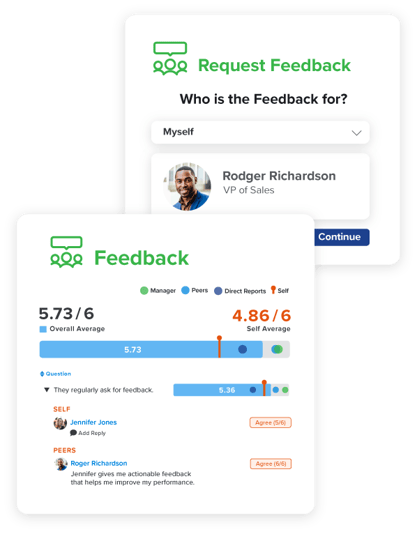
4. Collect and share feedback. 

Great companies are built on trust, and trusting cultures are built on feedback. A strong feedback culture correlates with a highly engaged workplace.

The right software can make sure your teams are getting the feedback they need to succeed. Continuous feedback should be individualized, constructive, and unbiased.
PerformanceMain_Feedback_NoCircles

Choose a feedback tool that helps you create a feedback culture across the organization. Look for:

  • Flexible frameworks: collect any type of feedback with multiple configuration options for requesting and giving feedback
  • AI-powered tools: Give thoughtful, real-time feedback within minutes
  • Easy access: empower anyone to request or give feedback in minutes
  • Automated cycles: initiate feedback based on calendar or employee milestones
  • Actionable analytics: identify and act on development opportunities
  • Curated templates: provide best-practice guidance and collect consistent analytics across the organization

5. Track vital talent metrics.

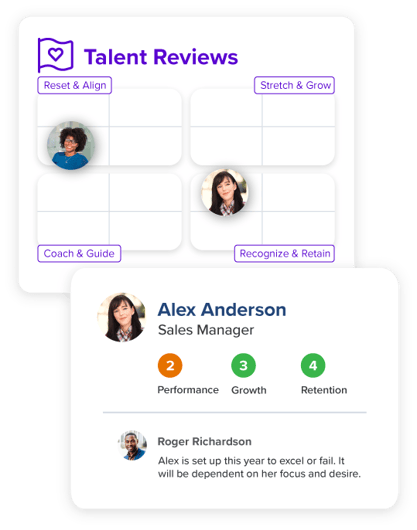
Talent reviews enable informed, data-driven talent decisions. They should be frequent, unbiased, and rooted in data. Leaders need to know who is doing the best work, who is ready for promotion, and who is at risk of leaving.

Talent reviews help:

  • Track and evaluate performance
  • Identify and coach performers who need more support
  • Develop and retain top talent
  • Intervene before employees burn out or quit
 PerformanceMain_TalentReviews_NoCircles

Talent review tools can help you track talent metrics and streamline your process. Look for features that simplify and streamline your talent review process, such as:

  • Reliable performance feedback: collect actionable and objective ratings with our simple framework
  • 9-box or 4-quadrant visualization: quickly identify talent risks, and those ready for promotion or development
  • Calibration settings: allow multiple raters and easily filter data for effective calibration sessions
  • Collaboration tools: comment and add talent insights over time
  • Integrated succession planning: seek successor nominations and automatically pull ratings into succession plans

6. Identify top talent and develop successors.

Proactively identifying talent gaps minimizes business disruption and fosters a culture of growth. Visibility into critical roles and talent is the first step to creating a board-worthy succession planning strategy.

Start by outlining the roles that are most important to your business function. The C-suite is a no-brainer. But don’t neglect other critical or specialized roles.

Once you have visibility, you can create targeted development pathways for talent.

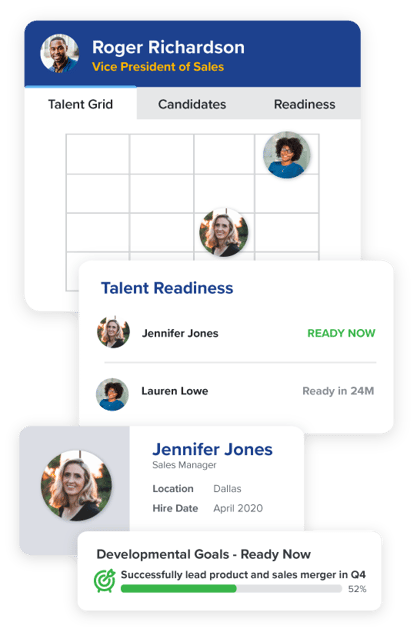
Succession planning tools provide actionable reports on talent pipeline, readiness, and risk with a few clicks. If your performance management system is fully integrated, you can quickly understand:

  • Who your emerging leaders are
  • When they’ll be ready to take on key roles and explore potential career paths
  • Where your talent gaps are

 PerformanceMain_SuccessionPlanning_NoCircles

Look for succession planning software that has:

  • Collaborative nomination process: request nominations and performance details from any leader or manager
  • Readiness tracking: track candidate readiness by 12-month increments to see progress over time
  • Integrated performance: see candidate performance ratings and development goals
  • Diversity visibility: align succession plans with diversity goals
  • Personalized, board-ready insights: share real-time insights with stakeholders


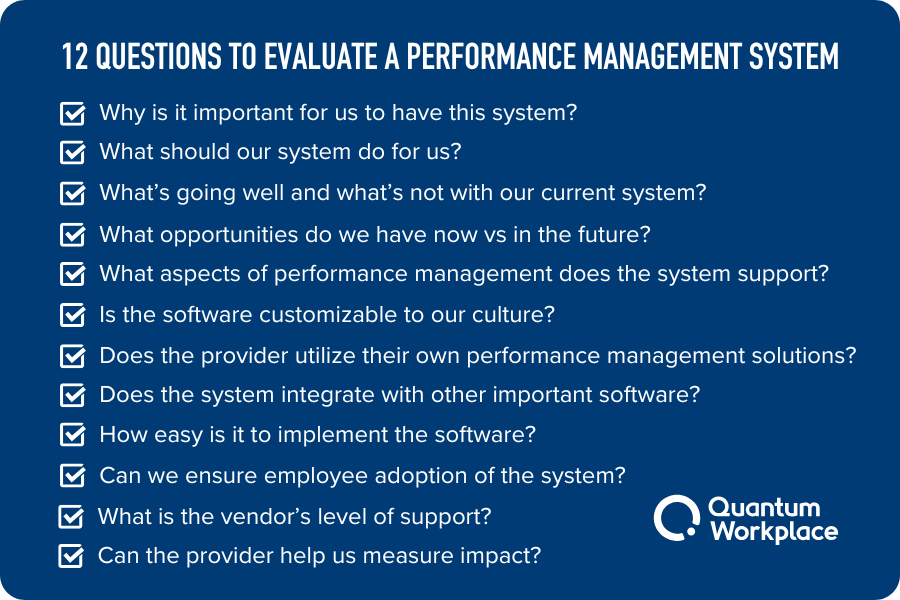
12 performance management system questions to ask when evaluating a solution 

When choosing the right solution for you, there are many things to consider. We’ve compiled a list of 12 questions you should ask to get the most out of your performance management system.
Essential-elements-of-employee-engagement-software_blog-image

Big-picture evaluation questions

When building or adapting your performance management system, it’s important to understand the why behind your performance initiatives. You must uncover the opportunities and obstacles you want your system to help you navigate. This will help you gain insight into whether your system is the right fit or not.

1. Why is it important for us to have a performance management system?

Effective performance management is essential to driving business success. But juggling several performance activities at once is time-consuming for managers and employees. Overwhelm results in miscommunication, dropped balls, and frustration all-around.

A performance management system helps leaders organize and prioritize activities. The solution you choose should depend on why you’re investing in a performance management system. This will help guide decision-making and position the business case to other stakeholders.

2. What should our performance management system do for us?

It’s also important to consider specific features and capabilities you’re looking for. Choosing a system with lots of bells and whistles isn’t always the right move. If it doesn’t align with the core functions you need to improve performance and streamline process, it’s just noise.

Consider what your performance management goals and needs are. What do you hope to gain from the software?

This might include:

  • Communicating expectations and accountabilities
  • Aligning goals with the organization
  • Engaging and retaining top talent
  • Developing and coaching employees
  • Promoting critical thinking, agility, and innovation
  • Motivating employees toward success
     

3. What’s going well with our current system, and what’s not?

Assess what processes are working well and what needs improvement. Pick a performance management solution that addresses gaps and enhances bright spots. If you’re not sure what’s going well and what’s not, your employee engagement survey is a great place to uncover insights!


4. What opportunities do we have now vs. in the future?

As you evaluate software options, look for both short- and long-term opportunities.

A performance management system can help you fill obvious gaps in the short-term. For example, it can help you transition from annual reviews to quarterly 1-on-1s. It can help you make employee recognition public. Or it can help you create team-based goals to further align employee efforts with the organization.

But performance management systems can also help you with long-term opportunities like:

  • Implementing continuous performance conversations
  • Opening feedback to all employees and instances
  • Building agile and aligned goals across the company

Software Evaluation Questions

Use these questions to understand specific capabilities and features you need.

5. What aspects of performance management does the system support?

You need to make sure the system you choose has the tools your managers need to better serve their teams. Ask your managers what they think might help them become better people leaders. Their feedback can help uncover pain points and opportunities you might not have considered.

  • Could they benefit from a peer-to-peer recognition board to make sure their employees feel valued?
  • Do they need a transparent goal setting and tracking system to ensure team alignment?
  • Would 1-on-1 meeting technology foster better manager-employee communication?
  • Would 360 feedback help both them and their employees grow and develop in their roles?
  • Could AI-powered performance review tools help teams focus more on engagement and growth?

The performance management software you choose should be a benefit (not a burden) for managers.

6. Is the performance management software customizable to our culture?

Ideally, your performance management software will provide you with some structure and process. For example, a system could include one-on-one meeting templates and a suggested cadence for meeting.

That’s great, but make sure the provider you choose allows for some flexibility. Your company’s culture is unique and constantly evolving. Choose a performance management software that can fit your needs now and in the future.

Take personalization one step further and find software that lets you:

  • Customize employee profiles
  • Include images, videos, or gifs in posts and updates
  • Incorporate your company branding
  • Put your core values front and center
     

7. Does the developer use their own performance management software?

You’d be surprised how common this actually is. If a provider doesn’t use their own tools, your company shouldn’t be either. Enough said.

8. Does the performance management software integrate with other systems? 

The last thing your managers need are more systems, more passwords, and more hassle. Ask your potential software provider if their tools integrate with other systems your managers use in their everyday workflow.

At the very least, your performance management software should integrate with your HRIS so all employee data stays up to date. If your potential provider doesn’t have the integration you need, see if they’ll make it happen for you.

Service Evaluation Questions

Finally, it’s important to evaluate the supporting service behind the software.

9. How easy is it to set up a performance management system?

The easier it is to implement a program, the easier it will be to get buy-in from managers and employees. Look for a performance management system that is easy-to-use and has strong customer support. You’ll want help:

  • Training and onboarding new users
  • Answering technical questions
  • Troubleshooting issues
  • Spurring adoption

10. Can we ensure manager and employee adoption of the system?

The last thing you want to do is invest in performance management software that your teams don’t use. Ask potential software providers how they encourage organizational adoption. The best systems will:

  • Provide admins with log-in and usage stats
  • Nudge users who haven’t been active in a while
  • Display recent activity for all employees to see.

But, if we’re being honest, none of the above should be needed to drive adoption.

The best performance management software will be a no-brainer for managers and employees. It will earn adoption all on its own by the value it creates.

Ask software providers if they have a free trial of their performance management system. This will help you see if it meets your workforce’s needs.

11. What is the vendor’s level of support?

When implementing a new system, you want to know your vendor has your back.

Some vendors are only involved with the initial software installment and setup. Then they leave it to you to figure out how to use it, communicate about it, and get the most from its features. This means you’re less likely to enjoy the full value and potential of your new system.

Look for a vendor that offers reliable service every step of the way. From sales conversations and new customer calls to implementation plans and coaching support.

When evaluating vendors look for things like:

  • Software and user reviews
  • Support team ratings or “time to respond”
  • Availability of support (chat, phone, email)
  • NPS score of customers
  • Resources like webinars and help libraries
     

12. Can the software provider help us measure impact?

Any top performance management software worth its salt can prove its impact. Make sure your system can measure what’s important to you and your leadership team.


Comparing performance management solutions

Effective performance management is crucial. But how do you choose the right tool for the job? It’s important to explore and compare various performance management solutions to make a well-informed decision. 

Essential-elements-of-employee-engagement-software_blog-image (2)

HRIS Solutions

HRIS solutions offer broad HR functionalities, including employee records, payroll, and benefits administration. However, they often have limited features. They may be convenient and cost effective. But they don’t offer the depth required for effective and comprehensive performance management strategies.

Point Solutions

Point solutions are designed specifically for performance management. They offer advanced features such as goal setting, continuous feedback, and detailed analytics. They enable organizations to thoroughly and effectively monitor and enhance employee performance. 

Basic Office / Google Tools

Basic tools like Google Forms and Word docs are free and easy-to-use. However, they lack the comprehensive features, automation, and analytics of more robust performance management platforms. While they can be quick and cheap for simple feedback needs, they can’t support long-term performance management strategies. 

Manual Spreadsheets

Manual spreadsheets that are used for performance tracking are low-cost but time-consuming. They are not scalable for tracking employee performance over time and are prone to human error. Additionally, spreadsheets make it difficult to uncover actionable insights, hindering effective performance management. 


Best performance management systems for 2025

Quantum Workplace

 

quantum-workplace-logo

Quantum Workplace is an employee success platform designed to make work better every day. It empowers organizations to enhance employee experience, inspire employee impact, and create a magnetic culture that attracts and retains top talent. Its integrated platform drives employee engagement and performance through continuous insight and action. 


Quantum Workplace’s performance management tools help managers grow, develop, and align their teams. They empower managers to coach and drive business impact, with tools like:

The company’s employee engagement suite helps organizations develop a holistic employee listening strategy. Engagement, pulse, and lifecycle surveys help leaders uncover insights and improve the employee experience.

Quantum Workplace has been in the employee success space for more than 20 years. It is the survey engine behind Best Places to Work.

The company has some of the happiest customers in the HR tech space. It has an impressive, above average NPS score and boasts an average support response time of less than one hour. Quantum Workplace provides support for all users, not just admins. 

Reviewers appreciate its: 

  • User-friendly interface
  • Deep insights
  • Customization capabilities
  • AI-assisted features that save time 

However, some users have encountered challenges with navigation and a need for more administrative control than is currently available.

Lattice

lattice-logo_200x50Lattice is an AI-powered people platform that helps HR teams enhance manager effectiveness, streamline operations, and use workforce insights to drive business success.

Users appreciate Lattice’s user-friendly interface. They like the ability to track personal and professional goals and the platform’s seamless integration with other systems. Users also highlight the company’s responsive and knowledgeable customer support.

However, some have encountered challenges with a lack of customization and confusing features like OKRs in goal setting. Users have also expressed concerns about privacy and confidentiality due to bugs.

Culture Amp

culture-amp-logo_200x50Culture Amp is a platform that helps collect and analyze employee feedback; develop high-performing teams; recognize success; drive employee development; and retain talent.

Users appreciate its user friendly-interface and ability to gather and analyze employee feedback. They also highlight a seamless integration with HRIS. 

However, some users note limitations with the platform’s navigation and limited customization. They’ve faced issues with translation, and a steep learning curve for new users due to the platform’s many features. Some have expressed disappointment with a slow response from support.

15Five

15five-logo_200x5015Five’s performance management platform helps businesses and employees thrive. They combine generative AI, custom analytics, and human-centered principles.

15Five enables HR leaders to boost engagement, performance, and retention. It provides tools such as 360 reviews, engagement surveys, goal tracking, and manager development. You can also get regular feedback through guided one-on-ones and check-ins.

However, some users felt customer support could be more responsive. Others thought the platform can be overwhelming to set up due to its many features.  

PerformYard
download-3PerformYard is a performance management tool designed to support professional development and social empowerment. It’s geared toward small businesses. It serves as a centralized hub for managing annual review documents and process.

Reviewers appreciate PerformYard for its intuitive interface, customizable options, and simple performance reviews. This makes it easier for managers and employees to establish goals, give feedback, and monitor progress.

However, some users have noted challenges with navigating the platform. Additionally, there are concerns that the platform may be too generic.

Leapsome

leapsome-logo_200x50Leapsome is a people enablement platform used to connect performance management, employee engagement, and learning. It offers tools for goals and OKRs management, performance reviews, employee development, engagement surveys, feedback, compensation, and more.

Users appreciate its user-friendly interface and the ability to provide public and private praise and feedback. They praise the platform’s ability to set goals, and the emphasis on anonymity and confidentiality of feedback.

However, some have noted a steep learning curve and hefty navigation challenges. Others have expressed limited customization in reporting, slow load times, and a need for a more visually appealing interface.


Moving toward continuous performance management

Performance management typically falls into two categories: traditional and continuous. Each organization is unique. A one-size-fits-all solution doesn’t exist. The reality is that many companies need to strike a balance between the two.

Traditional performance management usually involves annual or semi-annual reviews. They focus on past performance within a structured framework. In contrast, continuous performance management emphasizes regular feedback and positions managers as coaches.

Shifting from one approach to another doesn’t have to be an all-or-nothing transition. It’s better to start where you are and gradually improve. To adopt a more continuous performance management strategy, organizations should:

  • Take small steps: Start by increasing the frequency of feedback or establishing regular 1-on-1s.
  • Involve employees: Seek employee input to foster buy-in for the changes.
  • Support managers: Provide training for managers to help them shift from evaluators to coaches.
  • Leverage technology: Research indicates that robust technology is essential for integrating performance management into daily operations for your teams.
  • Communicate effectively: Ensure the entire organization understands the new approach and its advantages.
  • Analyze feedback and adapt: Use feedback on the new process to refine and improve it.

For many organizations, performance management is an ongoing journey. This evolution is perfectly acceptable. Continue to iterate and build upon the successful practices and habits you’re developing.

Quantum Workplace’s Performance Pathways

In performance management, a universal approach isn’t effective. Conventional methods often fail to engage employees and don’t facilitate their best work.

Quantum Workplace can help you develop a process that suits your organization’s specific needs. It will take into account your unique characteristics and performance management maturity. 

Our People Insights Team developed Performance Pathways to help you get started. These customizable frameworks enable you to quickly launch an effective program, without having to design it from scratch.
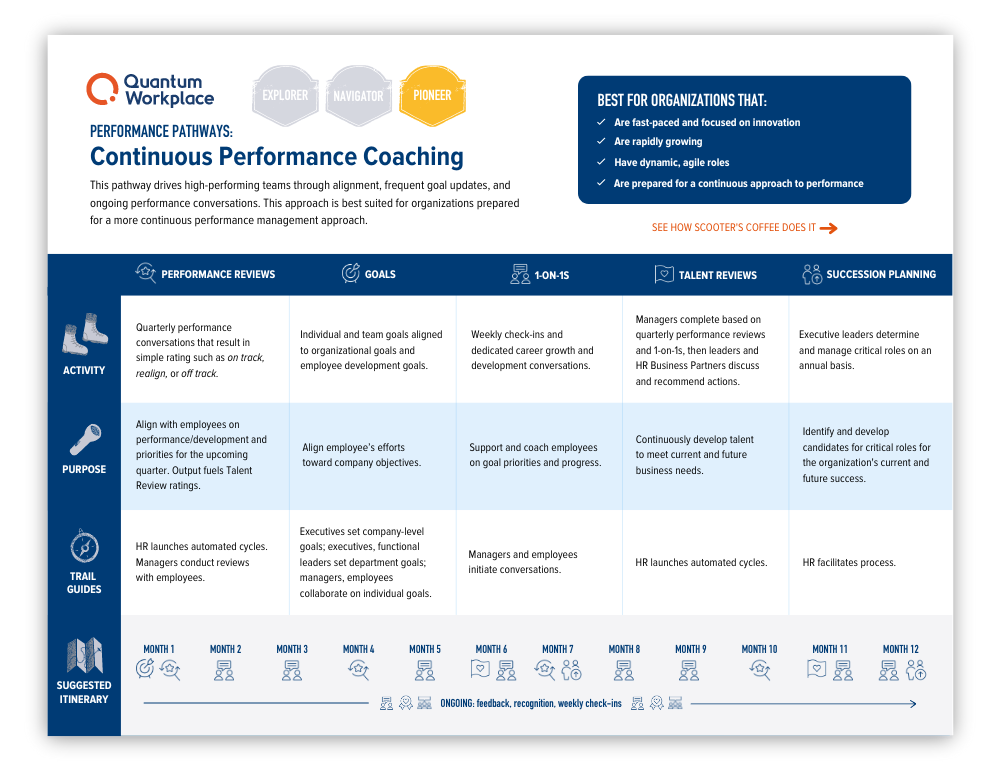
link to landing page about quantum workplace performance management pathways


Ready to make your performance management process a pillar of employee success? Download our eBook to learn how to create a strong performance management strategy for your organization.

If you’d like to see if Quantum Workplace would be a great fit for your organization, book a custom demo today!


Evolving your approach to employee performance

Understanding APIs in Python

Understanding What an API is in Python

What is an API?

An API (Application Programming Interface) is a set of outlined rules that allow different applications to communicate with each other. It acts as an intermediary between two systems, allowing data to be exchanged and processed. Think of an API as a messenger between your application and a third-party service. If you build an API, you’re basically creating a blueprint for how data must be sent, received, and processed.

Kinds of APIs

There are several types of APIs, including:

  • RESTful APIs: Representational State of Resource (REST) APIs use HTTP requests to exchange information between client and server. They are widely used and popular in web development.
  • Soap-based APIs: Simple Object Access Protocol (Soap) APIs use XML to exchange data between systems. They are often used in enterprise environments.
  • GraphQL APIs: GraphQL APIs use a query language to fetch specific data from the server. They are gaining popularity because of their flexibility and efficiency.

How APIs Work

Here’s a high-level overview of how APIs work:

  1. Request: A client (your application) sends a request to the server (the API provider).
  2. Authentication: The server authenticates the request to ensure it’s legitimate.
  3. Data Processing: The server receives the request, processes the data, and returns the response.
  4. Response: The response is sent back to the client, which then uses the data as needed.

Python and APIs

Python is an excellent language for building APIs, due to its simplicity, flexibility, and extensive libraries. Python’s popular frameworks, such as Flask and Django, make it easy to build RESTful APIs. Additionally, libraries like Requests and BeautifulSoup help simplify the process of interacting with APIs.

Building Your First API

To get started with building an API in Python, you’ll need:

  • Python: Install the latest version of Python on your computer.
  • Flask or Django: Choose a Python web framework to build your API. Flask is a lightweight framework best for small-scale projects, while Django is a more complete framework suitable for larger projects.
  • Requests: Install the Requests library to interact with the API.
  • API Documentation: Study the API documentation to know the API’s structure, authentication methods, and data formats.

Conclusion

In this article, we have explored what an API is, its types, and how it works. We have also highlighted the significance of Python in API development and provided a quick overview of how to get started with building your first API. By understanding the fundamentals of APIs and Python, you can be well on your way to building strong and scalable applications.

FAQs

Q: What is an API?
A: An API is a set of outlined rules that allow different applications to communicate with each other.

Q: What are the different types of APIs?
A: There are RESTful APIs, Soap-based APIs, and GraphQL APIs.

Q: How do APIs work?
A: APIs work by receiving requests, authenticating the request, processing data, and returning a response.

Q: What is Python’s role in API development?
A: Python is an excellent language for building APIs, due to its simplicity, flexibility, and extensive libraries.

HelloYou Unveils Skanna, a Barcode Scanner with a Twist

For many consumers, deciphering the truth about products feels like solving a riddle. Complex ingredient lists, vague claims, and limited transparency make it nearly impossible to know what you’re really buying—or how it aligns with your health, safety, and values.

This growing demand for clarity has inspired HelloYou, a developer known for creating apps that help simplify daily life, to create Skanna—an AI-powered barcode scanner app. Designed to cut through the noise, Skanna reveals the truth behind product labels, offering detailed insights into ingredients, safety, and environmental impact in seconds.

What is Skanna?

Skanna isn’t just another barcode scanner—it’s a game-changer for anyone seeking clarity in a confusing marketplace. Whether it’s deciphering a long list of ingredients, understanding allergens, or evaluating sustainability, Skanna delivers the truth behind every product you use.

Key Features

I downloaded Skanna to put its features to the test, and while it’s clear the app has incredible potential, it’s not without its quirks. Here’s what I discovered:

  • Ingredient Analysis: This feature is a standout, providing detailed breakdowns of product ingredients. It’s perfect for identifying allergens or unwanted additives. However, I noticed that not all products were in the database, particularly from smaller or niche brands. For a first version, this is understandable, but it’s something that could be improved over time.
  • Sustainability Insights: Skanna’s efforts to offer eco-conscious data are commendable. The app provides information about sourcing and ethical practices, but the depth of this data varies. It’s a great starting point, though users looking for detailed environmental impact analyses might find it a bit surface-level.
  • Scan History: The personal history feature is useful for keeping track of what you’ve scanned. While functional, it could benefit from more advanced organization tools, like categories or tags, to make it easier to revisit specific products.
  • Personalized Recommendations: Skanna really excels here. The app tailors suggestions based on dietary or lifestyle needs, such as gluten-free or vegan alternatives. However, the recommendations are only as strong as the database, so expanding it will make this feature even better.
  • Database and Variety: Out of 25 food items, 5 cosmetic products, 2 books, a hairdryer, and a vape that I scanned, Skanna managed to get everything right—impressively so. Admittedly, one of the books didn’t work at first because an Amazon barcode was covering it, but once I peeled that off, it scanned perfectly. Points for accuracy, even with a little extra effort!

How Skanna Works

Using Skanna is intuitive and straightforward:

  1. Open the app: The barcode scanner is accessible with one tap—no digging through menus.
  2. Scan a product: The scanner works quickly, delivering insights in just seconds for most barcodes. Occasionally, non-standard codes required manual input, but these instances were rare.
  3. Explore insights: The app’s best feature is how it presents information. No fluff, just clear, concise details about whatever you want to know.

Who Can Benefit?

Despite its imperfections, Skanna has something to offer for a wide range of users:

  • Parents: Use Skanna to identify allergen-free, family-safe products with ease.
  • Health Enthusiasts: Avoid hidden additives and toxic ingredients effortlessly.
  • Sustainability Advocates: Gain insights into brands’ ethical and eco-friendly practices.
  • Busy Professionals: Access reliable product data on the go, saving time while shopping smarter.
  • Globe Trotters: Scan globally to decode labels, translate ingredients, and understand what you’re eating.

Final Thoughts: A Gamechanger in the Making

Skanna may not be a finished masterpiece, but it’s a bold step toward giving consumers real-time, actionable feedback about the products they buy. For anyone frustrated by unclear labels or limited product transparency, this app is a much-needed solution.

It’s refreshing to see an app that doesn’t just promise to help—but actively works to simplify complex decisions. With some refinements to its database and interface, Skanna could genuinely transform the way we shop for the better.

FAQs

Q: Is Skanna available on both iOS and Android?
A: Yes, Skanna is available on iOS and Android devices.

Q: How does Skanna work?
A: Skanna uses AI-powered technology to scan barcodes and provide detailed information about products, including ingredients, safety, and sustainability.

Q: Is Skanna free to use?
A: Skanna offers a free trial period, after which users can subscribe to a premium plan for additional features and benefits.

Q: Can I use Skanna globally?
A: Yes, Skanna is designed to work globally, allowing users to scan products from anywhere in the world.

The Best Magazine Fonts

0

Free Fonts for Magazines

Picking the best magazine fonts for your publication is a vital early step to take, whether you’re making your own DIY zine or launching a brand new title with global aspirations. Your typeface as a magazine is the conduit between your writers and their audience, and the choices you make will have a huge impact on how your publication is perceived.

Free Fonts for Magazines

01. Montserrat

Montserrat is very popular, but it’s a good starting point. Originally designed by Julieta Ulanovsky, who took inspiration from the signage in the Montserrat neighbourhood of Buenos Aires, it’s an elegant sans serif that’s available in nine different weights, giving you real versatility, and it’ll work equally well for headings and body copy.

02. Lora

This well-balanced serif font would suit long-form essays and reviews. Taking some inspiration from calligraphy, Lora blends nicely brushed curves with strong distinctive serifs, and is definitely one to consider if you’ve got no budget to speak of, but want something that feels elevated. It only offers a couple of weight options, however.

03. Gentium Plus

If you’re looking for a straightforward, nuts-and-bolts font for your magazine’s body copy, Gentium Plus is a good one. It’s a clean and legible serif, nothing too showy – if you want something a little weightier, there’s also Gentium Book Plus. It’s made and distributed, like many fonts, by SIL International, an evangelical Christian nonprofit that promotes linguistics and literacy around the world.

04. Tourney

The Source Serif family is free for personal and commercial use if you’re already an Adobe subscriber, but since it does require swearing that particular blood oath, we’re keeping it in the paid-for category. Designed by Frank Grießhammer, it’s available in six weights, giving you plenty of flexible options for your body copy. It’s a good alternative to nice but overused fonts like Garamond.

11. London

As the name implies, London is a good typeface for fashion mags. Its thick-to-thin contrast produces lettering that is striking and impactful without being too overbearing, and would fit the bill nicely for headings and logos. It’s designed by Jen Wagner and is available at Creative Market.

12. New York

Continuing our metropolitan theme, Artem Nevsky’s New York font is free to download for personal use – so if you’re distributing a zine for free, go nuts, but for commercial use you’ll need to buy a licence. Hearkening back to the mid-century looks of iconic magazines like the New Yorker (naturally), it’s impactful enough to work for headlines while being smooth and legible enough for body copy.

13. SIGNIA Pro

This impactful, modern-feeling sans serif is inspired by European street signage. If you like the clean lines and easy legibility of Montserrat, but simply can’t bear the idea of using such a popular font, SIGNIA Pro is a nicely elevated alternative – though be aware that it doesn’t give you as many weight options.

14. Bebas Neue Pro

Bebas Neue Pro has been refreshed for 2024. A popular, professional font, Bebas Neue Pro by Ryoichi Tsunekawa is another option that requires kissing the Adobe ring in perpetuity. It received a refresh and update in 2024, adding a long-awaited lowercase script that makes it a viable option for magazine work. There’s an enormous selection of weights available for this elegant, efficient typeface.

Conclusion

Choosing the right font for your magazine can be a daunting task, but with these options, you can find the perfect fit for your publication. Whether you’re looking for a classic serif or a modern sans serif, there’s something on this list for everyone.

Frequently Asked Questions

Q: Can I use these fonts for commercial purposes?
A: Some of the fonts listed, such as Bebas Neue Pro, require a licence, while others, like Gentium Plus, are free for personal and commercial use.

Q: Can I use these fonts for my zine?
A: Yes, many of the fonts listed are free for personal use, including Gentium Plus, Lora, and London.

Q: Are these fonts suitable for online use?
A: Yes, all of the fonts listed are suitable for online use, but be sure to check the font’s licensing terms before using it.