
Home Blog Page 568

AI-Enhanced CRISPR Technology

0

The Future of Genomics: How AI and CRISPR are Revolutionizing Medicine, Agriculture, and Climate Change

The Power of AI and CRISPR

In 2025, we will see AI and machine learning begin to amplify the impact of CRISPR genome editing in medicine, agriculture, climate change, and the basic research that underpins these fields. It’s worth saying upfront that the field of AI is awash with big promises, but with any major new technological advance, there is always a hype cycle. With AI and CRISPR, the benefits lie some years in the future, but in genomics and life science research, we are seeing real impacts right now.

Removing Limitations with AI

In my field, CRISPR gene editing and genomics more broadly, we often deal with enormous datasets—or, in many cases, we can’t deal with them properly because we simply don’t have the tools or the time. Supercomputers can take weeks to months to analyze subsets of data for a given question, so we have to be highly selective about which questions we choose to ask. AI and machine learning are already removing these limitations, and we are using AI tools to quickly search and make discoveries in our large genomic datasets.

Discovery and Innovation

In my lab, we recently used AI tools to help us find small gene-editing proteins that had been sitting undiscovered in public genome databases because we simply didn’t have the ability to crunch all of the data that we’ve collected. A group at the Innovative Genomics Institute, the research institute that I founded 10 years ago at UC Berkeley, recently joined forces with members of the Department of Electrical Engineering and Computer Sciences (EECS) and Center for Computational Biology, and developed a way to use a large language model, akin to what many of the popular chatbots use, to predict new functional RNA molecules that have greater heat tolerance compared to natural sequences. Imagine what else is waiting to be discovered in the massive genome and structural databases scientists have collectively built over the recent decades.

Real-World Applications

These types of discoveries have real-world applications. For the two examples above, smaller genome editors can help with more efficient delivery of therapies into cells, and predicting heat-stable RNA molecules will help improve biomanufacturing processes that generate medicines and other valuable products. In health and drug development, we have recently seen the approval of the first CRISPR-based therapy for sickle cell disease, and there are around 7,000 other genetic diseases that are waiting for a similar therapy. AI can help accelerate the process of development by predicting the best editing targets, maximizing CRISPR’s precision and efficiency, and reducing off-target effects. In agriculture, AI-informed CRISPR advancements promise to create more resilient, productive, and nutritious crops, ensuring greater food security and reducing the time to market by helping researchers focus on the most fruitful approaches. In climate, AI and CRISPR could open up new solutions for improving natural carbon capture and environmental sustainability.

Conclusion

It’s still early days, but the potential to appropriately harness the joint power of AI and CRISPR, arguably the two most profound technologies of our time, is clear and exciting—and it’s already started.

FAQs

Q: What is the potential impact of AI and CRISPR on medicine?
A: The potential to accelerate the development of new therapies and treatments, including for genetic diseases, is significant.

Q: How will AI and CRISPR impact agriculture?
A: AI-informed CRISPR advancements promise to create more resilient, productive, and nutritious crops, ensuring greater food security and reducing the time to market.

Q: What are the potential applications of AI and CRISPR in climate change?
A: AI and CRISPR could open up new solutions for improving natural carbon capture and environmental sustainability.

Q: What are the biggest challenges facing the adoption of AI and CRISPR in these fields?
A: One of the biggest challenges is the need for further investment in training data scientists and engineers to work together to develop the necessary tools and infrastructure.
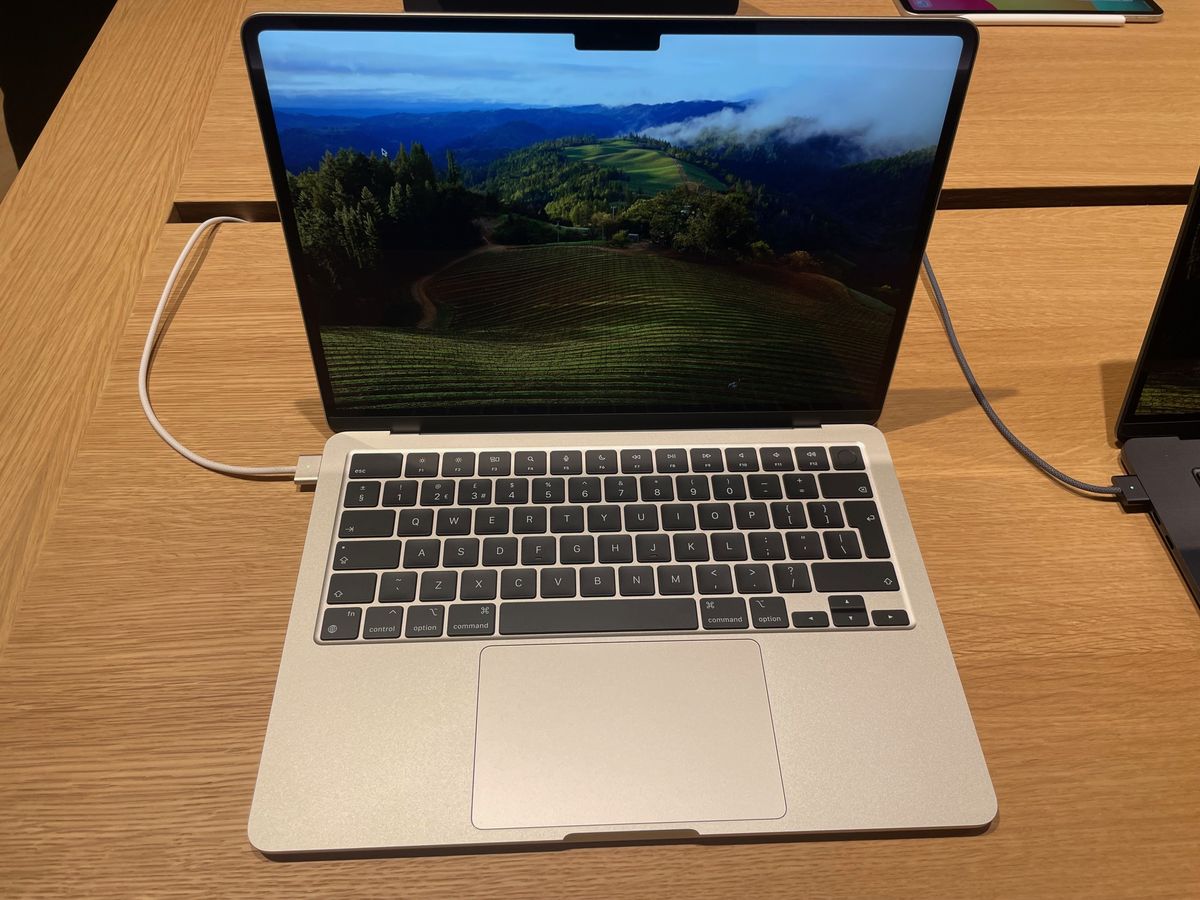
How Much RAM Do I Need?

0

RAM is not the only measure

So how much RAM do you need for creative tasks? We’ll answer that question in a moment. But before we get started, here are two quick disclaimers.

Firstly, RAM is just one ingredient in a fast-working computer, and needs to be matched by others, such as a powerful CPU (central processing unit) and GPU (graphics processing unit), long term storage (ideally an SSD drive) and an effective cooling system. Generally, the most powerful laptops will have all these things as well as a lot of RAM. But sometimes a device gets released that’s lacking in one or more. So it’s worth checking the in-depth reviews on this site, because our experts will be sure to flag that up.

Secondly, when buying a computer you should also check whether you can add more RAM later. Software requirements typically increase over time, and project complexity tends to grow as your skills advance.

With those things in mind, read on as we break down the amount of RAM we recommend for different creative disciplines, to help you make an informed decision that balances performance with budget.

How much RAM do I need for 3D work?

In general, 3D artists need more RAM than anyone else in the creative industry. We’d say the minimum starting point for a professional 3D artist is 32GB, with 64GB being the recommended standard for serious work. Complex projects often utilise 128GB or more.

This is a huge amount compared with what you’ll find in most laptops aimed at the general public. But it makes sense, because you’re asking your computer to hold entire scenes in its short-term memory, including textures, models and simulation data.

How much RAM do I need for video editing?

The amount of RAM you need for editing videos will vary dramatically depending on the resolution of your footage and the complexity of your project.

For 1080p projects, 16GB should be seen as the absolute minimum, but 32GB will provide a more comfortable experience. When working with 4K footage, 32GB becomes the minimum threshold, while we’d recommend 64GB for smoother performance.

How much RAM do I need for graphic design?

Graphic designers typically require less RAM compared to 3D artists and video editors, but modern design software such as Photoshop and InDesign still demands considerable resources.

Light design work is possible with 8GB, and a professional graphic design workflow is doable with 16GB. However, a computer with 32GB will provide a more comfortable working experience when dealing with multiple large files or complex illustrations.

How much RAM do I need for photo editing?

The amount of RAM you need for photo editing will depend on what sort of workflow you have. Relevant factors will include image resolution and bit depth, number of layers, size of catalogs in applications like Lightroom, batch processing requirements, plugin usage, and RAW file handling.

Basic photo editing is possible with 16GB, but for photographers working with high-resolution RAW files or creating complex compositions with many layers, 32GB has become the new standard minimum. Furthermore, if you’re doing a lot of batch processing, you might want to consider stepping up to 64GB.

Conclusion

In conclusion, when choosing a new laptop or desktop computer, it’s essential to consider the amount of RAM you need for your specific creative discipline. Whether you’re a 3D artist, video editor, graphic designer, or photographer, having sufficient RAM will significantly impact your workflow and overall performance.

RAM is not the only measure, but it’s a crucial one. Make sure to balance your RAM needs with your budget and consider your future needs. Remember that having too much RAM is never a bad thing, but having too little can significantly impact performance.

FAQs

Q: What is the minimum amount of RAM I need for 3D work?
A: The minimum starting point for a professional 3D artist is 32GB, with 64GB being the recommended standard for serious work.

Q: How much RAM do I need for video editing?
A: The amount of RAM you need for editing videos will vary dramatically depending on the resolution of your footage and the complexity of your project. For 1080p projects, 16GB should be seen as the absolute minimum, but 32GB will provide a more comfortable experience.

Q: What is the minimum amount of RAM I need for graphic design?
A: Light design work is possible with 8GB, and a professional graphic design workflow is doable with 16GB. However, a computer with 32GB will provide a more comfortable working experience when dealing with multiple large files or complex illustrations.

Q: How much RAM do I need for photo editing?
A: The amount of RAM you need for photo editing will depend on what sort of workflow you have. Relevant factors will include image resolution and bit depth, number of layers, size of catalogs in applications like Lightroom, batch processing requirements, plugin usage, and RAW file handling.

IT Spending to Rise in 2025, But With a Twist

0

The State of IT Jobs in 2025: A Boom Time for IT Projects

Increased IT Investments and Strategic Cost-Cutting Measures

The coming year will be a boom time for IT projects, but the impact depends on where you sit. Companies plan to increase tech investments to respond to business challenges or to fund new initiatives. However, these same organizations will be sizing budgets and balancing spending through strategic tech cost-cutting measures.

Key Findings

  • 43% of executives said their businesses intend to increase IT staff size compared to 32% two years ago.
  • 57% of employers said they have trouble finding employees with the required expertise and potential candidates aren’t very confident in some in-demand IT skills.
  • IT talent gaps were most pronounced in cybersecurity, data analysis, scripting/coding, and conflict resolution.
  • Confidence in artificial intelligence (AI) skills was also low at 57%.
  • Overall tech budget growth is expected to accelerate in 2025, with nearly two-thirds (64%) of companies planning to increase their IT budgets.

Top Drivers Behind Technology Budget Growth

  • Increased security concerns (53%)
  • Priority on IT projects (47%)
  • Need to update infrastructure (45%)
  • Employee growth (45%)
  • Inflation (45%)

IT Automation and Strategic Cost-Cutting Measures

  • 76% of respondents said IT automation is the best investment for money.
  • 72% said gigabit Wi-Fi is well worth the investment.
  • 68% said they see value in AI and edge computing.
  • 64% said they see value in Blockchain.

Disconnect Between IT Staff and Senior Leaders

  • IT staff are two times more likely to be concerned about wages not keeping up with the cost of living and teams being asked to do more with less than senior management.
  • 54% of IT staff believe their company is not spending enough to support its technology needs, while most hiring managers believe they’re spending either enough or more than enough.

Conclusion

The report suggests a mixed bag for IT professionals in 2025. While there are opportunities for growth and investment, there are also challenges related to talent gaps, cost-cutting measures, and skepticism about the value of AI. IT leaders should prioritize listening to their staff and addressing their concerns to ensure the success of their organizations.

FAQs

Q: What is the projected growth rate for IT budgets in 2025?
A: 9% year over year.

Q: What are the top drivers behind technology budget growth?
A: Increased security concerns, priority on IT projects, need to update infrastructure, employee growth, and inflation.

Q: What are the most in-demand IT skills?
A: Cybersecurity, data analysis, scripting/coding, conflict resolution, and AI.

Q: How do IT staff and senior leaders view the value of AI?
A: Senior leaders are more likely to say AI is worth it, while IT staff are less inclined to see the value.

Q: What are the most important IT career skills?
A: Core technical knowledge, problem-solving, cybersecurity, written and verbal communication, and team collaboration.

AI Overview Insights Revealed

0

AI Overviews: The Most Significant SEO Change Agent Since Mobile – Maybe Ever

Until now, we’ve lacked a representative data set to thoroughly analyze how AIOs (AI Overviews) work. Thanks to exclusive data from Surfer, I conducted the largest analysis of AI Overviews so far with over 546,000 rows and +44 GB of data.

The Data

The data set spans 546,513 rows, 44.4 GB, and over 12 million domains. There is no known exploration of a comparable dataset.

  • 85% of queries and results are in English.
  • 253,710 results are live (not part of SGE, Google’s beta environment), 285,000 of results are part of SGE.
  • 8,297 queries show AIOs for both SGE and non-SGE.
  • The data contains queries, organic results, cited domains, and AIO answers.
  • The dataset was pulled in June.

Limitations:

  • It’s possible that new features are not included since AIOs change all the time.
  • The dataset does not yet contain languages like Portuguese or Spanish that were recently added.

Answers

I sought to answer five questions in this first exploration.

  1. Which domains are most visible in AIOs?
  2. Does every AIO have citations?
  3. Does organic position determine AIO visibility?
  4. How many AIOs contain the search query?
  5. How different are AIOs in vs. outside of SGE?

Which Domains Are Most Visible In AIOs?

We can assume that the most cited domains also get the most traffic from AIOs.

In my previous analyses, Wikipedia and Reddit were the most cited sources. This time, we see a different picture.

Image Credit: Lyna ™

  • coursera.org.
  • microsoft.com.
  • fb.com.

Meaning

All of this means three things:

1. Optimizing for AI Overviews is similar to Featured Snippets with the difference of being more user-intent focused.

2. SGE is useful for monitoring potential AIO design changes but not to predict how AIO answers might change. One threat to keep an eye on is citation-less AIOs.

3. Social could make a comeback! Many years ago, social signals were hyped as SEO ranking factors. Today, the strong prominence of social networks like YouTube and LinkedIn in citations offers an opportunity to impact AIOs with social and video content.

Thinking Ahead

AIOs do the opposite of leveling the playing field. They create an imbalance where a few sites that get cited get more visibility than everyone else.

However, they also shrink the playing field by answering user questions better and more often than Featured Snippets.

The risk of getting fewer clicks grows with better AIO answers – but there is also the risk of fewer ad clicks. Organic and paid results always existed in balance. The quality of one impacts the other. Unless Google embeds new ad modules – which is likely – better organic answers will come at the cost of ad revenue.

At the same time, Google is pulled forward from competitors like OpenAI and Perplexity, which constantly ship better models and increase the chance of searchers not using Google for answers. It will be hard for Google not to iterate and innovate on AI in the search results.

Conclusion

In conclusion, AI Overviews are the most significant SEO change agent since mobile. They require a different approach to SEO, focusing on user-intent and the quality of answers. Google is likely to continue innovating and iterating on AIOs, which could lead to changes in search results and ad revenue. It is essential to monitor AIO design changes and adapt SEO strategies accordingly.

Frequently Asked Questions

Q: What are AI Overviews?

A: AI Overviews, also known as Answer Engines, are a type of search result that provides direct answers to user queries in a list format.

Q: How do AIOs impact SEO?

A: AIOs require a different approach to SEO, focusing on user-intent and the quality of answers. Optimizing for AIOs means creating high-quality content that answers user questions better than others.

Q: What are the limitations of AIOs?

A: The limitations of AIOs include the lack of exact match-driven content, the need for adjusting content frequently, and the risk of getting fewer clicks with better AIO answers.

Q: Will AIOs change the way we search?

A: Yes, AIOs have the potential to change the way we search by providing direct answers to user queries, making the search results more efficient and user-friendly.

Q: Can AIOs be used for advertising?

A: Yes, AIOs can be used for advertising by providing targeted answers to user queries, increasing the chances of click-through rates and conversion.

Q: Will Google continue to innovate on AIOs?

A: Yes, Google is likely to continue innovating and iterating on AIOs, which could lead to changes in search results and ad revenue.

Q: What are the risks of AIOs for SEOs?

A: The risks of AIOs for SEOs include the potential loss of click-through rates, the need for adjusting content frequently, and the risk of being outranked by better answers.

Pareidolias: AI-Generated Art

0

Otra naturaleza es posible

El Proyecto

Las imágenes que presento, están realizadas para un proyecto que denomino como "Otra naturaleza es posible. Son imágenes creadas en torno a los campos de labranza de la zona norte de España, están capturadas satelitalmente, pasadas con retoque al modo artístico y despues terminadas en Inteligencia Artificial con Midjourney.

Las Imágenes

Conclusión

Este proyecto "Otra naturaleza es posible" busca explorar la intersección entre la tecnología y el arte, creando imágenes que desafían la percepción y la realidad. A través de la utilización de imágenes satelitales, retoque artístico y inteligencia artificial, se han creado piezas que son a la vez naturales y artificiales, habituales y extrañas.

Preguntas y Respuestas

¿Qué es el proyecto "Otra naturaleza es posible"?
El proyecto "Otra naturaleza es posible" es una iniciativa que combina la tecnología y el arte para crear imágenes que cuestionan la percepción y la realidad.

¿Cómo se crean las imágenes?
Las imágenes se crean a partir de imágenes satelitales, se pasan a través de un retoque artístico y se terminan con la inteligencia artificial utilizando Midjourney.

¿Qué tipo de tecnología se utiliza en el proyecto?
Se utiliza tecnología satelital, software de retoque artístico y inteligencia artificial con Midjourney.

¿Qué es el objetivo del proyecto?
El objetivo del proyecto es explorar la intersección entre la tecnología y el arte, creando imágenes que desafían la percepción y la realidad.

Receptive Field Analysis in Convolutional Neural Networks

0

Deep Learning and Convolutional Neural Networks

While deep neural networks have overwhelmingly established state-of-the-art results in many artificial intelligence problems, they can still be difficult to develop and debug.
Recent research on deep learning understanding has focused on feature visualization, theoretical guarantees, model interpretability, and generalization.

Computation of Receptive Fields

In this work, we analyze deep neural networks from a complementary perspective, focusing on convolutional models.
We are interested in understanding the extent to which input signals may affect output features, and mapping features at any part of the network to the region in the input that produces them.
The key parameter to associate an output feature to an input region is the receptive field of the convolutional network, which is defined as the size of the region in the input that produces the feature.

As our first contribution, we present a mathematical derivation and an efficient algorithm to compute receptive fields of modern convolutional neural networks.
Previous work discussed receptive field computation for simple convolutional networks where there is a single path from the input to the output, providing recurrence equations that apply to this case.
In this work, we revisit these derivations to obtain a closed-form expression for receptive field computation in the single-path case.
Furthermore, we extend receptive field computation to modern convolutional networks where there may be multiple paths from the input to the output.
To the best of our knowledge, this is the first exposition of receptive field computation for such recent convolutional architectures.

Importance of Receptive Field Computation

Today, receptive field computations are needed in a variety of applications.
For example, for the computer vision task of object detection, it is important to represent objects at multiple scales in order to recognize small and large instances; understanding a convolutional feature’s span is often required for that goal (e.g., if the receptive field of the network is small, it may not be able to recognize large objects).
However, these computations are often done by hand, which is both tedious and error-prone.
This is because there are no libraries to compute these parameters automatically.
As our second contribution, we fill the void by introducing an open-source library which handily performs the computations described here.
The library is integrated into the TensorFlow codebase and can be easily employed to analyze a variety of models, as presented in this article.

Conclusion

We expect these derivations and open-source code to improve the understanding of complex deep learning models, leading to more productive machine learning research.

Frequently Asked Questions

Q1: What is the receptive field of a convolutional neural network?

The receptive field of a convolutional neural network is the size of the region in the input that produces a given feature.

Q2: How do I compute the receptive field of a convolutional neural network?

You can compute the receptive field of a convolutional neural network using our open-source library, which is integrated into the TensorFlow codebase.

Q3: Why is receptive field computation important?

Receptive field computation is important because it allows us to understand how input signals affect output features, and how features are produced at different parts of the network.

Q4: What are the advantages of using your open-source library?

Our open-source library provides an efficient and automated way to compute receptive fields, which can save time and reduce errors compared to manual computation.

Q5: Can I use your library for my specific use case?

Yes, our library is designed to be flexible and can be used with a variety of models and applications.

Algorithms Are Coming for Democracy—but It’s Not All Bad

0

Beyond the Deepfakes and Disinformation, the Potential for AI to Make Politics More Accessible and Equitable Cannot Be Ignored

The Dark Side of AI in Politics

Artificial intelligence (AI) has been hailed as a revolutionary technology that can transform the way we live, work, and interact with each other. However, its impact on politics has been largely overshadowed by concerns about disinformation and deepfakes. While these concerns are valid, it’s essential to consider the potential benefits of AI in making politics more accessible and equitable.

The Digital Divide in Politics

The world’s population is increasingly divided between those who have access to the digital sphere and those who do not. This digital divide has significant implications for politics, as those who are online are more likely to be informed, engaged, and empowered. AI can help bridge this gap by providing equal access to information, resources, and opportunities for participation.

AI-Powered Inclusive Politics

AI can be used to:

Enhance Accessibility

  • Provide real-time language translation to accommodate diverse languages and dialects
  • Offer audio descriptions and closed captions for the visually impaired
  • Use AI-powered chatbots to assist with voting and civic engagement

Amplify Marginalized Voices

  • Use machine learning algorithms to identify and amplify underrepresented voices
  • Create personalized recommendations for political content based on individual preferences and interests
  • Facilitate online communities for marginalized groups to connect and organize

Increase Transparency and Accountability

  • Use blockchain technology to ensure transparent and secure data storage and voting systems
  • Implement AI-powered fact-checking and verification to combat disinformation
  • Develop AI-driven tools for monitoring and addressing political bias

Conclusion

While AI is not a silver bullet for the challenges facing politics, it has the potential to make a significant positive impact. By harnessing its power, we can create a more inclusive, accessible, and equitable political landscape. It’s time to move beyond the hype and skepticism surrounding AI in politics and explore its true potential for good.

FAQs

Q: How can AI be used to enhance accessibility in politics?
A: AI can be used to provide real-time language translation, audio descriptions, and closed captions, as well as assist with voting and civic engagement through chatbots.

Q: Can AI help amplify marginalized voices?
A: Yes, AI can be used to identify and amplify underrepresented voices, create personalized political content recommendations, and facilitate online communities for marginalized groups.

Q: How can AI increase transparency and accountability in politics?
A: AI can be used to implement transparent and secure data storage and voting systems, fact-check and verify information, and monitor and address political bias.

Q: Are there any potential risks associated with AI in politics?
A: Yes, there are risks, such as the potential for bias in AI systems and the misuse of AI for disinformation. However, these risks can be mitigated through careful design, testing, and regulation.

The Best Subtitle Fonts for Accessibility

0

Top Subtitle Fonts for Accessibility

Whether you’re making a video for social media, a short film, a cinematic blockbuster or a TV show, you need to factor in subtitles for accessibility. Designers, videographers, and digital marketers are more aware than ever of the need for subtitling – giving a written transcript of any dialogue in the frame of your video – especially in this video-centric media world.

Top Subtitle Fonts

After consulting with a range of experts, from professional subtitlers to media companies and accessibility consultants, we have narrowed down the most accessible fonts for subtitling.

01. Tiresias

Tiresias, from the renowned Bitstream type foundry, comes recommended by Ofcom and is used by the BBC, Sky, and Channel 4, as well as broadcasters in Denmark, New Zealand, and beyond. This sans-serif font family was designed in 1998 by the RNIB’s scientific research unit, working with optometrists, and it’s named after a mythological Greek prophet who was blind. Tiresias is deliberately suitable for subtitling and for low-resolution displays; variations in the font family include Screenfont and Infofont.

02. Arial

Arial is a simple sans-serif font that is widely recognized and used. Once you’ve chosen your font, there are some other factors to work out, like the size and color of the text. A shaded box around your subtitles can help them make an impact.

Additional Tips

  • On many streaming services, the user can choose the size of text they want to see. “Our members helped us develop the well-spaced fonts which are highly readable and can be configured by color, style, and size,” says Mark Harrison at Netflix.
  • When it comes to color, Max Deryagin advises: “Usually people opt for a white, slightly grey, or golden yellow color. What matters is that there is enough contrast against the video and that the color doesn’t clash with the shot.”
  • You can then add a drop shadow outline or a shaded box (working much like a highlighter) to your subtitles to make them even more readable. On Netflix, you have a drop shadow option, then three flat color options of dark, contrast, and light.
  • Two or three lines should be the absolute maximum amount of text on screen; both Netflix and Channel 4 ask their media partners to fit a maximum 42 characters per line, and maximum two lines on screen.
  • Bear in mind reading speeds. “Leaving text on screen for as long as the edit allows means that a broad range of viewers can easily understand what’s happening,” says Mark.
  • A person’s TV can affect how subtitles appear, according to Amie Tsang, Head of Executive Communications at Channel 4: “The exact font used is determined by a viewer’s set-top box or television device, and might differ depending on whether they are viewing over a broadcast or digital service, or one of our streaming services.”

Conclusion

It’s about setting a good example and bringing your skills and empathy to an often-overlooked design element. Media law is also catching up to its importance, especially for streaming TV viewers.

FAQs

Q: What is the most accessible font for subtitling?
A: Tiresias is a recommended font for subtitling, used by the BBC, Sky, and Channel 4, as well as broadcasters in Denmark, New Zealand, and beyond.

Q: What are the key factors to consider when choosing a font for subtitling?
A: The key factors to consider are the size and color of the text, as well as the design of the font itself.

Q: Can I use a font that I like, even if it’s not recommended for subtitling?
A: While it’s possible to use a font you like, it’s generally recommended to use a font that is specifically designed for subtitling, such as Tiresias.

Q: How do I ensure that my subtitles are readable for a broad range of viewers?
A: To ensure that your subtitles are readable for a broad range of viewers, consider the following: leave text on screen for as long as the edit allows, use a font that is highly readable, and consider adding a drop shadow or shaded box to make the text stand out.

Apple Hits Hurdles in China with AI Rollout

Unlock the Editor’s Digest for free

Roula Khalaf, Editor of the FT, selects her favourite stories in this weekly newsletter.

Apple Faces Uphill Battle to Release AI Models in China

Apple is facing a challenging and lengthy process to release its own artificial intelligence models for iPhones and other products in China, with a top Beijing official warning that foreign companies will need to partner with local groups to gain approval.

Apple Chief Tim Cook’s Visit to China

Apple chief Tim Cook arrived in China on Monday for his third visit of the year, as the company tries to navigate the country’s complex regulatory regime and bring its Apple Intelligence to devices sold in the country. The US group has been holding talks with Chinese tech companies to help power Apple Intelligence in the country, and last month it began rolling out the suite of AI features in the US on iPhones and other devices.

Partnership with Chinese Tech Companies

Apple has considered running its own large language models in China, according to two people familiar with the matter. However, a top Chinese tech regulator told the Financial Times that foreign groups like Apple would face a lengthy and complex approval process to run their own models and indicated partnering with locals was their best option.

Regulatory Process

The Chinese official at the Cyberspace Administration of China said it would be a relatively "simple and straightforward approval process" for foreign device makers to use already vetted LLMs from Chinese groups. All companies seeking to offer generative AI services to the public must go through an approval process that typically involves official testing of their LLMs.

Conclusion

Apple’s sales in China have faltered amid a top-down campaign to cut iPhone usage among Chinese state employees and a nationalist backlash over thorny US-China relations. The return of national champion Huawei, which has already integrated its generative AI offerings into its latest devices, poses another threat to Apple’s prospects in the country.

Frequently Asked Questions

Q: What is Apple’s plan to release AI models in China?
A: Apple is facing a challenging and lengthy process to release its own AI models in China, with a top Beijing official warning that foreign companies will need to partner with local groups to gain approval.

Q: What is the regulatory process for offering generative AI services in China?
A: All companies seeking to offer generative AI services to the public must go through an approval process that typically involves official testing of their LLMs.

Q: What is the outlook for Apple’s sales in China?
A: Apple’s sales in China have faltered amid a top-down campaign to cut iPhone usage among Chinese state employees and a nationalist backlash over thorny US-China relations. The return of national champion Huawei poses another threat to Apple’s prospects in the country.

88% of Workers Would Use AI to Overcome Task Paralysis

0

AI Adoption on the Rise among Young Professionals

Google Workspace Survey Reveals Rising Leaders Embracing AI to Boost Productivity and Leadership

Would you use artificial intelligence (AI) to help you with a difficult or overwhelming task? If so, you’re in good company, at least, according to the results of a new survey.

AI Use in the Workplace

Released on Monday, research commissioned by Google Workspace found that 82% of participants have already been using AI tools at work. The survey, conducted by Harris Poll, focused on US workers ages 22-39 who currently have or want to have a leadership position at their employer.

Task Automation and Productivity

Among the respondents, 88% said they would use AI to start a task that feels overwhelming. Some 70% have already used AI for email writing, such as composing challenging emails from scratch and overcoming language barriers. More specifically, 88% said they’d turn to AI to help them strike the right tone in their writing.

Gen Z and Millennials Embracing AI

87% of those polled believe that AI would make them feel more comfortable writing long emails on their phones. While 90% said they’d feel more confident joining on-the-go meetings if they knew AI would be taking meeting notes for them. Some 93% of those who identify as Gen Z and 79% who identify as Millennials already use two or more AI tools each week.

AI Impact on Industry and Workplace

Almost all (98%) of respondents expect AI to impact their industry or workplace within the next five years. More than half of those already using AI share their experience and feedback with colleagues, while 75% of them suggest generative AI (gen AI) tools to their peers.

AI Benefits

Those surveyed also favor AI to improve productivity, communication, and leadership.

Conclusion

The survey findings suggest that young professionals are increasingly embracing AI to boost their careers and improve their work experience. With AI expected to have a significant impact on their industry or workplace within the next five years, it’s likely that we’ll see even more widespread adoption of AI tools in the future.

FAQs

Q: What percentage of participants have already been using AI tools at work?
A: 82%

Q: What percentage of respondents would use AI to start a task that feels overwhelming?
A: 88%

Q: What percentage of respondents have already used AI for email writing?
A: 70%

Q: What percentage of respondents identify as Gen Z and Millennials who use two or more AI tools each week?
A: 93% and 79%, respectively

Q: What percentage of respondents expect AI to impact their industry or workplace within the next five years?
A: 98%