Home Blog Page 569

Compact RedMagic Nova: Portable Gaming at Its Best

0

RedMagic Nova Gaming Tablet Review: Key Specifications

Chipset: Snapdragon 8 Gen 3
RAM: 16GB
Storage: 512GB
Display: 2800 x 1800p, up to 144 Hz refresh rate
Weight: 530g
Dimensions: 7.3mm thin and 10.9-inch display
Camera: 50MP back and 10MP front
Battery: 5000mAh

Review:

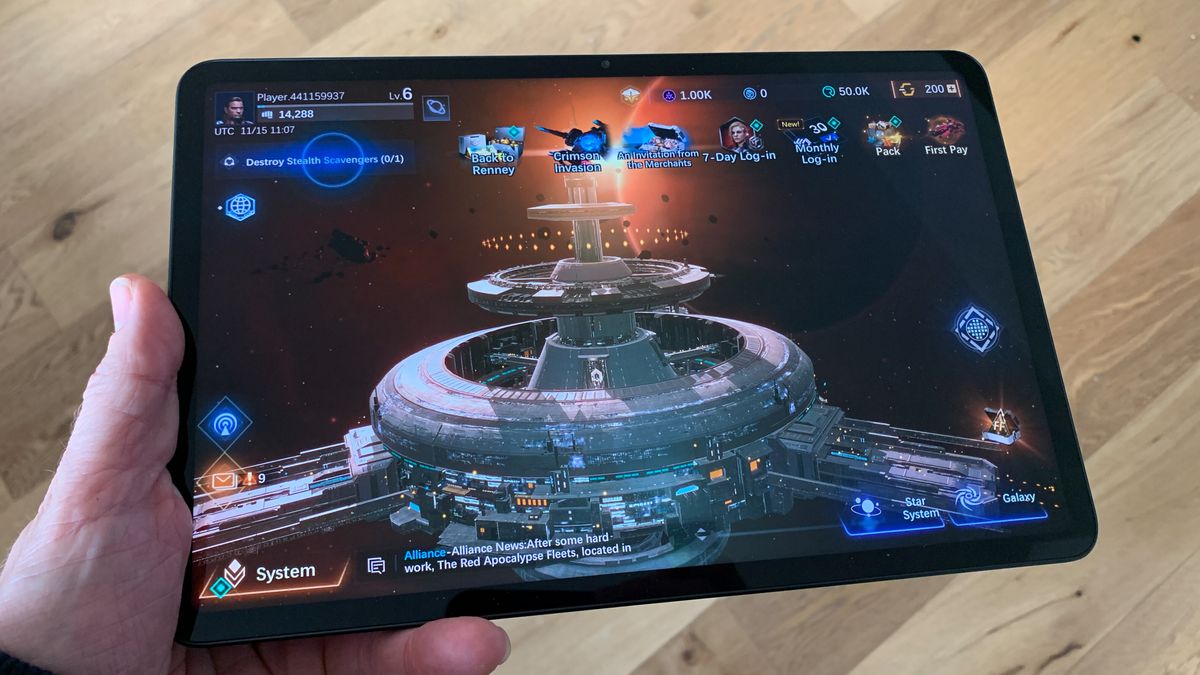
The RedMagic Nova Gaming Tablet is a high-performing gaming tablet that has everything required to also cut it as a device for creatives and those seeking a productivity powerhouse. With an overclocked Snapdragon 8 Gen 3 processor, dedicated cooling system, and 50MP AI camera, I was more than excited to get my hands on the tablet. But do the impressive specs translate into enjoyable gameplay? Are the speakers good enough to immerse you in the battle? And does the battery performance make it as portable as its size allows? Read on to find out.

Display:
The 2.8K resolution display is incredibly bright, even when used in well-lit rooms or outside. This is perfect for portability. Unfortunately, it is a little bit let down by its limited dynamic range. Blacks were represented okay but a lot of detail was lost in the highlights. It results in some areas being blown out. It’s not a game changer, though, and was only noticeable on more demanding visual output.

Price:
The RedMagic Nova Gaming Tablet ships with two models. The first costs £439 and has 12GB of memory with 256GB of storage. This second attracts a price of £559 but comes with 16GB of memory and 512GB of storage. Both are available in midnight colour only. A screen protector can be purchased separately for £19.90 as well as a stylus for £69.90. By selling these as add-ons, RedMagic are able to keep the initial cost of the tablet as low as possible.

Who is it for?
If you want to know who the RedMagic Nova Gaming Tablet is for, then you just need to take notice of the name. Everything from the processor to the display and everything in between is designed with gamers in mind. That being said, any gaming tablet is going to suit most other users well. It has enough power for creatives to fulfil light tasks and the 16:10 screen ratio is ideal for productivity and browsing the web.

Buy it if:

  • You want a portable gaming device
  • You need a high-performing tablet
  • You want a flagship Android tablet

Don’t buy it if:

  • You want a cheap and cheerful tablet
  • You’re in love with Apple iPads
  • You need a dedicated drawing display

Also consider:

  • Other high-performance gaming tablets
  • Flagship Android tablets
  • Budget-friendly tablets for casual use

FAQs:

Q: Is the RedMagic Nova Gaming Tablet only for gamers?
A: No, while the tablet is designed with gamers in mind, it also has enough power for creatives and those seeking a productivity powerhouse.

Q: Is the display good for outdoor use?
A: Yes, the display is incredibly bright, making it perfect for outdoor use.

Q: Can I customize the tablet?
A: Yes, the tablet allows for customization, including changing the launchers and icon packs.

Q: Is the battery life good?
A: Yes, the battery life is good, with the tablet lasting a full day on a single charge.

Tech winners and losers of 2024: For every triumph, a turkey

0

Here is the rewritten article:

Losers

1. X (formerly Twitter): A masterclass in self-destruction
Elon Musk spent 2024 doubling down on the chaos that turned X into a punchline. Advertisers fled after baffling policy shifts, verified checkmarks became meaningless, and users abandoned ship for Bluesky and Mastodon in droves. Engagement plummeted, and what was once a cultural institution became a meme of its former self. Musk might still call it “the town square,” but in 2024, X was more like the local landfill.

2. Amazon: Innovation takes a coffee break
Amazon’s five-day return-to-office mandate alienated employees, sparked accusations of “quiet firing,” and triggered a mass exodus of talent. Workers who couldn’t — or wouldn’t — move closer to offices were forced out, and with them went years of expertise and innovation. This was the HR equivalent of smashing a robot with a sledgehammer for a company obsessed with efficiency. Quiet quitting? More like loud mismanagement.

3. Cybertruck: Trapezoids of doom
Tesla’s Cybertruck finally hit the road in 2024 — and immediately rolled into a ditch. Recalls for defective inverters, cameras that didn’t work, and windshield wipers that couldn’t handle drizzle made the truck a laughingstock. Its resale value tanked, and its polarizing design still looked like a failed geometry assignment. Sure, it turns heads, but only because people can’t believe it exists.

4. Apple Vision Pro: $3,500 worth of ‘why?’
Apple’s Vision Pro wowed in demos and dazzled on paper, but in practice, it was a solution in search of a problem. At $3,500, it was more curiosity than game-changer, with no killer app to justify the cost. Apple fans drooled, but most consumers shrugged. A technological marvel? Yes. A must-have device? Not even close.

5. Intel: Relic of a bygone era
In 2024, Intel continued to drift further into irrelevance. Its “AI PCs” barely moved the needle, and the 13th and 14th Gen Core processors — repackaged versions of last year’s chips — left consumers unimpressed. Meanwhile, Arm-based chips like Apple’s M4 and Qualcomm’s Snapdragon X Elite set new benchmarks for performance and efficiency. Intel used to lead the charge; now it’s trailing behind, yelling at the clouds.

6. CrowdStrike: Trust misplaced
CrowdStrike had one job: keep systems secure. Instead, it botched a software update that caused a global IT outage, affecting millions of Windows devices and denting its reputation. For a company built on trust, this colossal failure had customers second-guessing their investments. Cybersecurity giant? More like cybersecurity headache.

7. AI wearables: The dumbest ‘smart’ gadgets
The Rabbit R1 and Humane AI Pin proved that just because you can make something “smart” doesn’t mean you should. The Rabbit R1 was clunky, impractical, and destined for the junk drawer, while the Humane AI Pin overheated, lacked features, and came with a ridiculous price tag. AI wearables promised innovation but delivered irrelevance.

8. Sonos: The sound of failure
Sonos hit a new low with a buggy app update that frustrated customers and delayed hardware launches. Employee warnings about the rollout were ignored, leading to a $30 million fiasco, a 25% stock drop, and layoffs. For a company synonymous with high-quality sound, 2024 was a tone-deaf performance.

Winners

1. AI tools and platforms: Finally living up to the hype
2024 was the year AI started earning its buzz. Google’s rebranding of Bard to Gemini came with the release of Gemma 2 models, which gave developers powerful tools and helped Google claw its way back into the AI race. OpenAI’s GPT series remained the gold standard, tackling everything from legal briefs to code fixes, while Adobe’s Firefly turned non-designers into creative pros. For once, the AI hype didn’t feel overblown.

2. NVIDIA: Ruler of the AI kingdom
NVIDIA dominated 2024, selling out its Blackwell chips for 2025 before the year even ended. The company raked in $35.1 billion in quarterly revenue, a 94% jump, and pocketed $19.3 billion in profit. It also launched Fugatto, an AI tool for generating and remixing audio, and kicked Intel out of the Dow Jones Industrial Average. NVIDIA didn’t just win 2024; it owned it.

3. Open source software: Proving collaboration wins
Open source thrived in 2024, with AI models like LLaMA 3, Falcon, and Gemma 2 empowering developers to build without barriers. Meanwhile, proprietary overreach backfired — HashiCorp’s restrictive Terraform license spawned the popular OpenTofu fork. And while the Open Source AI Definition (OSAID) sparked debate, it underscored open source’s growing influence. When companies closed doors, open source opened new ones.

4. Arm-based chips: The future of computing
Arm processors continued their meteoric rise, led by Apple’s M4 and Qualcomm’s Snapdragon X Elite. The Mac Mini M4 made desktops portable, the M4 MacBook Pros redefined laptop performance, and the M4 iPad Pro rendered traditional laptops obsolete. Snapdragon turned Windows devices into serious contenders, leaving Intel in the dust. Arm wasn’t just the future—it was the present.

5. Bluesky: The cool kid on the block
While X imploded, Bluesky soared. Its decentralized model, sleek interface, and user-first policies made it the social media platform of choice for anyone fleeing Musk’s circus. Every time X rolled out a new policy, Bluesky gained users. By year’s end, it wasn’t just an alternative—it was the new standard.

6. Matter Protocol: Smart homes that actually work
Matter Protocol finally made smart homes functional by forcing Apple, Google, and Amazon to collaborate. Devices that couldn’t communicate before were now seamlessly integrated, making smart home setups less of a headache. It’s about time.

7. Meta’s Ray-Ban smart glasses: AR without the cringe
Meta surprised everyone with Ray-Ban Smart Glasses that were lightweight, stylish, and useful. Hands-free calls and subtle AR overlays made the glasses practical, not gimmicky. For once, AR tech didn’t feel embarrassing—it felt innovative.

8. iPhone 16: Stellar hardware, meh intelligence
Apple’s iPhone 16 proved you can still dominate with brute hardware force, even if your AI game is… underwhelming. The base model packed the new A18 chip, boasting a 6-core CPU, 5-core GPU, and 8GB of RAM — a serious performance boost that left Android rivals scrambling. The cameras? A 48MP main shooter and improved 12MP ultra-wide lens delivered stunning photos, even if the selfies still look like you.

Conclusion:

As we enter 2025, the tech industry remains a volatile and unpredictable landscape. The winners will continue to push boundaries, while the losers will struggle to adapt to the rapidly changing technological landscape. One thing is certain: The future of tech is full of promise and peril, and the next year promises to be another thrilling ride.

FAQs:

Q: What was the most disappointing tech product of 2024?
A: The Cybertruck, without a doubt.

Q: Which company had the worst year in 2024?
A: X, formerly Twitter, with its chaotic leadership and user exodus.

Q: Which tech giant dominated 2024?
A: NVIDIA, with its AI processors and record-breaking revenue.

Q: What was the most innovative tech product of 2024?
A: The iPhone 16, with its impressive hardware and camera capabilities.

Q: Which social media platform gained the most traction in 2024?
A: Bluesky, with its decentralized model and user-first policies.

A Flying Car Without a Pilot’s License

0

The Evolution of AI Tools: How They’re Revolutionizing Industries

The Rise of AI Tools

In recent years, Artificial Intelligence (AI) has become an integral part of various industries, transforming the way businesses operate and interact with their customers. AI tools have been designed to automate repetitive tasks, improve decision-making, and enhance overall efficiency. In this article, we’ll explore the impact of AI tools on different sectors and what the future holds for these innovative technologies.

Industry-Specific Applications

Connecting SharePoint Online to Amazon Q Business with OAuth 2.0 ROPC Flow

0

Here is the rewritten article:

Enterprises Face Challenges in Accessing and Utilizing Information

Enterprises face significant challenges accessing and utilizing the vast amounts of information scattered across organization’s various systems. What if you could simply ask a question and get instant, accurate answers from your company’s entire knowledge base, while accounting for an individual user’s data access levels?

Amazon Q Business: Revolutionizing Data Interaction

Amazon Q Business is a game-changing AI assistant that’s revolutionizing how enterprises interact with their data. With Amazon Q Business, you can access relevant information through natural language conversations, drawing insights from diverse data sources within your organization, adhering to the permissions granted to your user account.

How Amazon Q Business Works

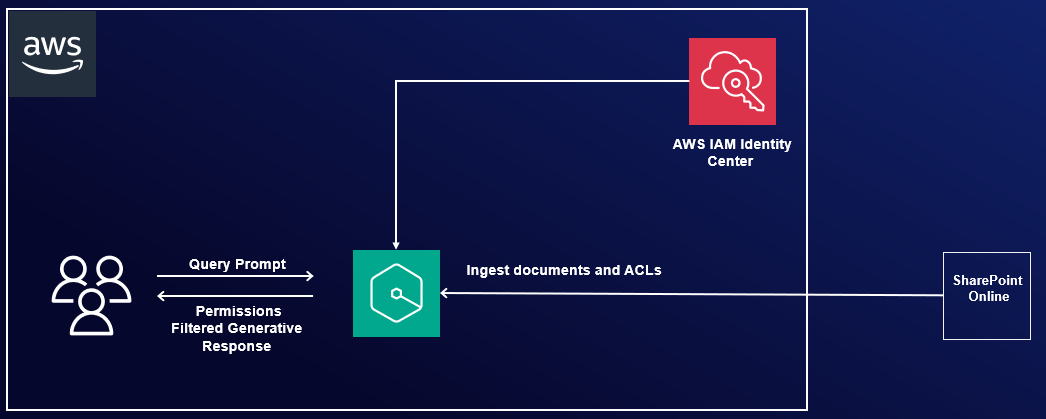
At its core, Amazon Q Business works by first indexing the content from a variety of data sources using built-in data source connectors. These connectors function as an integration layer, unifying content from diverse systems such as Salesforce, Microsoft Exchange, and SharePoint into a centralized index. This consolidated index powers the natural language processing and response generation capabilities of Amazon Q. When a user asks a question using the built-in web experience, Amazon Q Business retrieves relevant content from the index, taking into account user profiles and permissions. It then uses large language models (LLMs) to provide accurate, personalized, and well-written responses based on the consolidated data.

Solution Overview

SharePoint is a web-based solution developed by Microsoft that enables organizations to collaborate, manage documents, and share information efficiently. It offers a wide range of features, including using document libraries, viewing lists, publishing pages, sharing events and links, and allowing users to make comments, making it a great tool for team collaboration and content management.

Integrating SharePoint with Amazon Q Business

After integrating SharePoint Online with Amazon Q Business, you can ask questions using natural language about the content stored in the SharePoint sites. For example, if your organization’s human resources team manages an internal SharePoint site and maintains a list of holidays for geographical regions, you can ask, "What are the company holidays for this year?" Amazon Q Business will then list region-specific holidays based on your location (country).

Solution Architecture

The following diagram illustrates the solution architecture. In the upcoming sections, we show you how to implement this architecture. After you integrate Amazon Q Business using the SharePoint connector, Amazon Q Business will crawl through the SharePoint content and update the index whenever content changes. Each published event, page, link, file, comment, OneNote, and attachment on the SharePoint site is treated as a document. In addition to the documents, it also crawls through access control lists (ACLs) for each document (user and group information) and stores them in the index. This allows end-users to see chat responses generated only from the documents they have access to.

Steps to Clean Up Your Resources

  1. Open the Office 365 Admin Center using the account of a user member of the Tenant Global Admins group.
  2. Navigate to the Microsoft Azure Portal.
  3. Search for and choose App registrations.
  4. Select the app you created earlier, then choose Delete.
  5. On the Amazon Q Business console, choose Applications in the navigation pane.
  6. Select the application you created, and on the Actions menu, choose Delete.

Additional Capabilities of Amazon Q Business

Amazon Q Business offers much more than just a powerful AI assistant. Explore its other capabilities that allow you to customize the user experience, empower your workforce, and increase productivity:

  • Admin controls and guardrails – Customize your application environment to your organizational needs.
  • Amazon Q Apps – Empower your teams to build lightweight, purpose-built applications that streamline tasks and workflows without coding experience.
  • Plugins for Amazon Q Business – Seamlessly integrate with supported third-party services that allow you to perform specific tasks like creating an incident ticket in ServiceNow or raising an issue in Jira—all without leaving the Amazon Q interface.

Conclusion

In this post, we explored how to integrate Amazon Q Business with SharePoint Online using the OAuth 2.0 ROPC flow authentication method. We provided both manual and automated approaches using PowerShell scripts for configuring the required Azure AD settings. Additionally, we demonstrated how to enter those details along with your SharePoint authentication credentials into the Amazon Q console to finalize the secure connection.

About the Author

Ramesh Eega is a Global Accounts Solutions Architect based out of Atlanta, GA. He is passionate about helping customers throughout their cloud journey.

FAQs

  • Q: What is Amazon Q Business?
    A: Amazon Q Business is a game-changing AI assistant that’s revolutionizing how enterprises interact with their data.
  • Q: How does Amazon Q Business work?
    A: Amazon Q Business works by indexing content from various data sources using built-in data source connectors, unifying content from diverse systems, and providing accurate, personalized, and well-written responses based on the consolidated data.
  • Q: What are the additional capabilities of Amazon Q Business?
    A: Amazon Q Business offers admin controls and guardrails, Amazon Q Apps, and plugins for Amazon Q Business, which allow you to customize the user experience, empower your workforce, and increase productivity.

Unlocking AI Transformation for Business Success

0

Embracing AI Transformation: 5 Ways to Succeed

The experts have declared that we are leaving the age of digital transformation and entering a new era of AI transformation. The good news is that the groundwork from earlier digital change programs, from cloud computing implementations to forays into machine learning, will provide a strong bedrock to build new AI transformations.

However, the shift to an age of AI will involve overcoming significant technological and cultural challenges.

1. Don’t Work in a Silo

Helene Kollnig, Freshworks global applications lead at recruitment specialist Hays, advises professionals to seek advice from as many experts as possible.

"Look at what other people are doing," she said. "Never work in a silo and prepare to be wrong in terms of how you’ve set the technology up." Kollnig and her colleagues have implemented the Freshworks Customer Service Suite, an omnichannel support software with AI-powered chatbots and ticketing.

2. Build the Confidence of Others

Nick Woods, CIO at airport group MAG, said leading an AI transformation isn’t straightforward, and executives must ensure their organization makes a successful cultural shift.

"There’s a big hearts-and-minds piece to this work," he said. Woods explained to ZDNET how he’s working with startups and combining insight with sensor data to develop the AI-enabled future of air travel.

3. Get the Business to Generate Ideas

Anastasiia Stefanska, data analyst for analytics and AI at travel giant TUI, recognizes anyone can suggest great ways to exploit emerging technology.

"Everybody at TUI, not just everybody in IT, is enabled to work with AI at the level their role expects," she said. "We’ve been working on that approach for the past year. We want to bridge the gap between the business professionals and our technological knowledge in the data team."

4. Be Sensible

Dave Moyes, partner for information and digital systems at architecture firm SimpsonHaugh, said every business and digital leader must prepare for AI transformation.

"It’s coming," he told ZDNET. "You can’t bury your head in the sand and ignore AI."

5. Work Within Your Constraints

Roger Joys, vice president of enterprise cloud platform at Alaskan telecom company GCI, said his organization is eager to explore AI in the right circumstances.

"It’s everything from simple use cases, such as using chatbots to help reduce our call center costs by helping people self-serve, to more sophisticated data analysis in customer demographics, merging many different pieces of data, and being able to answer questions about, ‘Who are the best candidates to throw a marketing campaign at?’"

Conclusion

Embracing AI transformation requires a collaborative effort from business and digital leaders. By seeking advice from experts, building confidence in others, generating ideas from the business, being sensible, and working within constraints, organizations can overcome the challenges of this new era and unlock the potential of AI.

Frequently Asked Questions

Q: What are the key challenges in embracing AI transformation?
A: The shift to an age of AI will involve overcoming significant technological and cultural challenges.

Q: How can I overcome these challenges?
A: By seeking advice from experts, building confidence in others, generating ideas from the business, being sensible, and working within constraints.

Q: What is the role of AI in the future of air travel?
A: AI is being used to develop the AI-enabled future of air travel, combining insight with sensor data to improve passenger experience and reduce delays.

Q: How can I ensure the success of AI transformation in my organization?
A: By working collaboratively with experts, building confidence in others, generating ideas from the business, being sensible, and working within constraints.

Zoom Drops “Video”

0

Zoom Changes Name to Zoom Communications Inc.

Zoom is changing its name from Zoom Video Communications Inc. to just Zoom Communications Inc. In a post on the company blog, Zoom Communications CEO Eric Yuan writes that Zoom is now an “AI-first work platform for human connection” that delivers “modern, hybrid work solutions.” It’s a muddy, if vague, change compared to its 2020 rise when the classic Zoom Meetings product became synonymous with video conferencing and thrived as companies were forced to transition employees to work from home.

From Video Conferencing to AI-First Work Platform

Now, it no longer wants to be known for video as workers have returned to offices, and bigger, better-resourced competition from Google, Microsoft, and Slack offers video as a feature of the office suites companies already pay for.

A Shift in Focus

By the end of 2020, Zoom’s year-over-year revenue had quadrupled, but by early 2022, the projections had changed, as Wedbush analyst Dan Ives predicted that “the work from home beneficiaries… Netflix, Facebook, Zoom, Peloton, they’ll see growth fall off a cliff.” For both Peloton and Zoom, the next few months and years have borne that out.

Comprehensive Communications Tools

Zoom has fought back by launching more comprehensive communications tools, starting with Zoom Team Chat. Now, Zoom offers its own full-suite Zoom Workplace solution with Google- and Microsoft-style Office productivity apps, a business email client, and more.

AI-Powered Automation

…today we all spend a lot of time either making phone calls, joining meetings, sending emails, deleting some spam emails and replying to some text messages, still very busy. How [do we] leverage AI, how do we leverage Zoom Workplace, to fully automate that kind of work? That’s something that is very important for us.

AI Companion 2.0

Zoom’s AI companion 2.0 launched in October with improved summarizing and assistance tools, which he says “will translate into a fully customizable digital twin equipped with your institutional knowledge, freeing up a whole day’s worth of work and allowing you to work just four days per week.”

Conclusion

Zoom is shifting its focus from video conferencing to a comprehensive AI-first work platform, aiming to automate repetitive tasks and provide a modern, hybrid work solution. With the launch of Zoom Workplace and AI Companion 2.0, the company is positioning itself to remain competitive in the ever-changing landscape of remote work.

FAQs

Q: Why is Zoom changing its name?
A: Zoom is changing its name to Zoom Communications Inc. to reflect its expanded focus beyond video conferencing.

Q: What is Zoom’s new focus?
A: Zoom is now an “AI-first work platform for human connection” that delivers “modern, hybrid work solutions”.

Q: What is Zoom Workplace?
A: Zoom Workplace is a full-suite solution with Google- and Microsoft-style Office productivity apps, a business email client, and more.

Q: What is AI Companion 2.0?
A: AI Companion 2.0 is an improved version of Zoom’s AI-powered tool that provides summarizing and assistance features, aiming to automate repetitive tasks and free up more time for employees.

New Beginnings

0

New Beginnings in the World of Coding

I am thrilled to be embarking on this exciting journey into the world of coding and web development. As a beginner, I am eager to learn the ins and outs of this rapidly evolving field, and I am confident that the right resources and support will be available to help me achieve my goals.

Preparing for the Bootcamp

I have recently enrolled in a coding bootcamp, which I am looking forward to as an intensive learning experience. Before diving in, I have been doing some pre-work to get a head start. I have to say, I am impressed by the wealth of resources available online, and I have already learned a significant amount.

The Power of Community

One of the most surprising things I have discovered so far is the huge community of coders and developers out there. It seems that there are countless online forums, social media groups, and blogs dedicated to sharing knowledge, asking questions, and solving problems. I am excited to tap into this wealth of experience and expertise, and I am already starting to feel part of a larger community.

Giving Back to the Community

As I progress in my learning journey, I am also thinking about how I can give back to this community that has been so generous with its knowledge. Whether it’s through contributing to open-source projects, sharing my own experiences and insights, or simply offering help and advice to others, I am eager to pay it forward and support the next generation of coders and developers.

Conclusion

As I embark on this new journey, I am filled with excitement and anticipation. I am confident that the resources and support available will help me achieve my goals, and I am looking forward to the opportunities that lie ahead. Whether it’s through the bootcamp, online communities, or personal projects, I am ready to dive in and make the most of this incredible learning experience.

FAQs
Q: What motivated you to pursue coding and web development?

A: I have always been fascinated by technology and the way it can transform our lives. I am excited to contribute to this field and make a positive impact.

Q: How do you plan to stay motivated and engaged throughout the bootcamp?

A: I plan to set specific goals for each day and week, and to reward myself when I reach milestones. I also plan to stay connected with my fellow bootcampers and attend online meetups to stay motivated and inspired.

Q: What are your plans for giving back to the community once you have completed the bootcamp?

A: I plan to continue contributing to open-source projects, sharing my experiences and insights on social media, and offering help and advice to others who are just starting out. I believe that giving back to the community is an important part of the learning process, and I am excited to do my part.

Machine Learning in Marketing: Top Examples

According to a Salesforce survey, 51% of marketers already use artificial intelligence, and 27% more marketers plan to integrate it in the upcoming two years. This adds up to 78% of marketers using AI by 2026.

The question arises—why do a large majority of marketers from across the globe want to incorporate AI into their marketing plans? More importantly, what exactly has AI done to encourage its adoption by digital marketing agencies?

Let’s break it down. Instead of focusing on the entire world of artificial intelligence, how about understanding a crucial part of it—machine learning in the marketplace?

Even if you are not familiar with the term, you would have already encountered it in real life. Whether you have shopped for a pair of shoes online or communicated with a chatbot on a company’s website, you have experienced ML.

In fact, we all encounter ML in our daily lives — from personalized promotional offers to the spam filters on email to chatbots.

If you are planning to use ML in your company for marketing purposes, this blog is going to be particularly advantageous for you since it covers stories of ML being used by giants like Amazon and Netflix. Keep reading to find out how you can benefit from machine learning for ads, just like multinational tech companies.

Use Cases of Machine Learning in Marketing

Customer Segmentation

Customer segmentation refers to the process of segregating customers into categories based on shared behavior, preferences, and actions. It can be done through data collection from numerous sources, such as website analytics and social media interactions. This allows businesses to market to them more effectively.

Using machine learning, companies can automate the process, making it more efficient and accurate. Distillery interprets company data to comprehend potential customers and develop customer-specific profiles. They provide prebuilt models and custom training on customized datasets.

Content Personalization

Personalization is crucial not only to make sure that the right content reaches the right target audience but also to ensure that customers get a great experience. Using machine learning in online advertising, ventures can customize ads, websites, and much more based on unique customer preferences. This aids in improving retention, engagement, and conversions.

One of the best examples of content personalization is Spotify. The music platform’s Discover Weekly playlist utilizes machine learning to craft tailored music recommendations for each user.

X (formerly Twitter)

Our last real-world success story is that of X (formerly Twitter). If you have known it just as a social media platform, allow us to change your perspective. X is a lot more than that—it is a user insights engine. Using machine learning in advertising, X can crop images intelligently, suggest relevant content and timelines to make users continue scrolling, and even filter out content categorized as hate speech.

These are just some of the ways in which artificial intelligence aids X in improving its service for consumers, which contributes significantly to its fight to stay in power and social relevance. With more than 500 million monthly active users in 2024, X’s use of ML plays a major role in user retention and satisfaction.

Key Takeaways

  • Increasing Adoption of Machine Learning: 51% of marketers are already using artificial intelligence, and an additional 27% are planning its integration for marketing purposes. Since this adoption is due to ML’s ability to automate tasks, improve personalization, and optimize marketing campaigns, it is crystal clear that AI is rapidly revolutionizing the marketing landscape. LITSLINK offers cutting-edge artificial intelligence services to such companies seeking growth through AI.
  • Optimization, Personalization, and Data-Driven Decision-Making: Machine learning in online advertising has proven its efficiency in companies by optimizing workflows and personalizing customer experiences. ML models streamline workflows by interpreting large datasets, further leading to data-driven decisions and improved ROI.
  • Use Cases and Success Stories: ML has several uses, including customer segmentation, content personalization, predictive analytics, dynamic pricing, and ad campaign optimization. Leading businesses like DoorDash, Spotify, and Airbnb have leveraged machine learning for personalized recommendations, customer retention, and dynamic pricing. These instances portray how the technology helps organizations stay competitive, increase customer lifetime value, and reduce ad spending.

For ventures seeking to refine their marketing strategies and ad campaigns more effectively and efficiently, integrating machine learning services into the existing processes can prove to be highly beneficial. While there are some challenges to consider, getting expert help can optimize business processes while significantly reducing costs and increasing ROI. LITSLINK can provide the expert help you need to implement advanced machine learning solutions to your existing platform hassle-free.

Today, ML is no longer a luxury. Instead, it has become a necessity for marketers to stay competitive in an increasingly transforming world where the needs of customers and the market change continuously. Machine learning not only makes the process more efficient for companies but also empowers them to make smarter, data-driven decisions.

So, now that you know what kind of positive impact will machine learning have on the advertising industry, what are you waiting for? Try LITSLINK’s services today!

Conclusion

In conclusion, machine learning is revolutionizing the marketing landscape by providing companies with the ability to automate tasks, improve personalization, and optimize marketing campaigns. With its increasing adoption and numerous use cases, it is clear that ML is here to stay. By integrating machine learning services into their existing processes, companies can refine their marketing strategies and ad campaigns more effectively and efficiently.

FAQs

Q: What is machine learning?
A: Machine learning is a subset of artificial intelligence that enables machines to learn from data and make predictions or decisions without being explicitly programmed.

Q: What are the benefits of using machine learning in marketing?
A: The benefits of using machine learning in marketing include improved personalization, automation of tasks, and optimization of marketing campaigns, leading to increased customer lifetime value and reduced ad spending.

Q: What are some examples of machine learning in marketing?
A: Some examples of machine learning in marketing include customer segmentation, content personalization, predictive analytics, dynamic pricing, and ad campaign optimization.

Q: How can I get started with machine learning in marketing?
A: To get started with machine learning in marketing, you can start by identifying your marketing goals and objectives, gathering data, and selecting a machine learning platform or service provider.

Unlocking AI Potential: Why Workforce Development Matters

0

Workforce Development in the Age of AI

AI is fueling a lot of change in all ecosystems right now, disrupting how we think about traditional economic development — how states and countries plan, how they stay competitive globally, and how they develop their workforces. Providing AI education, embracing the technology, and addressing workforce challenges are all critical for future workplace development.

AI Education Crucial at All Levels

Educating people on what AI can do, and how the current generation of AI-powered tools work, is the starting point. AI education must come at all levels, according to Louis Stewart, head of strategic initiatives for NVIDIA’s global developer ecosystem. Higher education systems, in particular, need to be thinking about what’s coming next, so graduating students can optimize their employability.

Nobody Gets Left Out

Beyond the classroom, a comprehensive view of AI education would expose people in the broader community to AI learning opportunities, Stewart said. His experience in the public sector informs his decidedly inclusive view on the matter. Before joining NVIDIA four years ago, Stewart spent more than a decade working for the state of California, and then its capital city of Sacramento.

Diverse Approaches to AI Implementation

Public-private partnerships are critical to implementing AI across the U.S. and beyond. NVIDIA is partnering with states and higher education systems across the country for AI workforce development. And the programs being put in place are just as diverse as the states themselves.

Embrace Technology, Embrace the Future

Stewart said it’s important to encourage individuals, businesses, and other organizations to actively engage with AI tools and develop an understanding of how they’re benefiting the workforce landscape. "Now is not the time to stay on the sidelines," he said. "This is the time to jump in and start understanding."

Conclusion

In conclusion, workforce development is crucial in the age of AI. Education, embracing technology, and addressing workforce challenges are all critical for future workplace development. AI education must come at all levels, from kindergarten to higher education, and beyond. Public-private partnerships are essential for implementing AI across the U.S. and beyond. By embracing the future and actively engaging with AI tools, we can shape our collective future and ensure that the benefits of AI are accessible to all.

FAQs

Q: What is the importance of AI education in the age of AI?
A: AI education is crucial for understanding what AI can do and how it works, ensuring that graduating students can optimize their employability and be part of the broader evolution.

Q: How can businesses and organizations benefit from AI?
A: By actively engaging with AI tools and developing an understanding of how they benefit the workforce landscape, businesses can transform operations and play a crucial part in developing the workforce.

Q: What is the role of public-private partnerships in implementing AI?
A: Public-private partnerships are critical to implementing AI across the U.S. and beyond, with NVIDIA partnering with states and higher education systems to develop AI workforce development programs.

Q: What is the importance of inclusivity in AI education?
A: Inclusivity is essential, as AI education must expose people in the broader community to AI learning opportunities, and everyone must be included in the progress.

Anthropic Launches Tool to Connect AI Systems Directly to Datasets

0

Anthropic Releases Open-Source Tool to Connect AI Assistants to Data Sources

Anthropic has released a new open-source tool to connect AI assistants directly to the information they need to inform their responses or carry out tasks. The new Model Context Protocol (MCP) provides a universal connection to all sorts of data sources, which Anthropic says will improve performance.

Improving Performance

Earlier this month, OpenAI started testing a new “Work with Apps” feature that lets the Mac version of ChatGPT directly connect to certain coding apps. Anthropic’s tool, on the other hand, aims to work across all AI systems and data sources.

Simplifying Integration

As noted by Alex Albert, Anthropic’s head of Claude relations, developers currently have to create custom code for each dataset they want their AI model to draw from. With Anthropic’s MCP, Albert says developers can integrate it with their AI tool once and then “connect to data sources anywhere” thanks to a “standard protocol for sharing resources, tools, and prompts.”

Industry Adoption

Anthropic says coding software like Replit, Codeium, and Souregraph have already started using MCP to build out their AI agents, which can complete tasks on behalf of users. This tool will likely make it easier for other companies and developers to connect an AI system with multiple data sources — something that could become especially helpful as the industry leans into agentic AI.

Benefits of the Model Context Protocol

“Instead of maintaining separate connectors for each data source, developers can now build against a standard protocol,” Anthropic’s announcement says. “As the ecosystem matures, AI systems will maintain context as they move between different tools and datasets, replacing today’s fragmented integrations with a more sustainable architecture.”

Conclusion

Anthropic’s Model Context Protocol (MCP) is a significant step forward in the development of AI systems, enabling them to connect to various data sources seamlessly. With this protocol, developers can now build AI models that can access a wide range of data sources, making it easier to create more accurate and informative AI systems.

Frequently Asked Questions

Q: What is the Model Context Protocol (MCP)?
A: The Model Context Protocol (MCP) is an open-source tool that enables AI assistants to connect directly to various data sources.

Q: What are the benefits of the Model Context Protocol?
A: The Model Context Protocol simplifies the integration process, allowing developers to connect their AI models to multiple data sources using a standard protocol, which improves performance and maintains context.

Q: Which companies are already using the Model Context Protocol?
A: Replit, Codeium, and Souregraph are some of the companies that have already started using the Model Context Protocol to build out their AI agents.