Home Blog Page 610

Reasoning and reliability in AI | MIT News

0

In order for natural language to be an effective form of communication, the parties involved need to be able to understand words and their context, assume that the content is largely shared in good faith and is trustworthy, reason about the information being shared, and then apply it to real-world scenarios. MIT PhD students interning with the MIT-IBM Watson AI Lab — Athul Paul Jacob SM ’22, Maohao Shen SM ’23, Victor Butoi, and Andi Peng SM ’23 — are working to attack each step of this process that’s baked into natural language models, so that the AI systems can be more dependable and accurate for users.

To achieve this, Jacob’s research strikes at the heart of existing natural language models to improve the output, using game theory. His interests, he says, are two-fold: “One is understanding how humans behave, using the lens of multi-agent systems and language understanding, and the second thing is, ‘How do you use that as an insight to build better AI systems?’” His work stems from the board game “Diplomacy,” where his research team developed a system that could learn and predict human behaviors and negotiate strategically to achieve a desired, optimal outcome.

“This was a game where you need to build trust; you need to communicate using language. You need to also play against six other players at the same time, which were very different from all the kinds of task domains people were tackling in the past,” says Jacob, referring to other games like poker and GO that researchers put to neural networks. “In doing so, there were a lot of research challenges. One was, ‘How do you model humans? How do you know whether when humans tend to act irrationally?’” Jacob and his research mentors — including Associate Professor Jacob Andreas and Assistant Professor Gabriele Farina of the MIT Department of Electrical Engineering and Computer Science (EECS), and the MIT-IBM Watson AI Lab’s Yikang Shen — recast the problem of language generation as a two-player game.

Using “generator” and “discriminator” models, Jacob’s team developed a natural language system to produce answers to questions and then observe the answers and determine if they are correct. If they are, the AI system receives a point; if not, no point is rewarded. Language models notoriously tend to hallucinate, making them less trustworthy; this no-regret learning algorithm collaboratively takes a natural language model and encourages the system’s answers to be more truthful and reliable, while keeping the solutions close to the pre-trained language model’s priors. Jacob says that using this technique in conjunction with a smaller language model could, likely, make it competitive with the same performance of a model many times bigger.  

Once a language model generates a result, researchers ideally want its confidence in its generation to align with its accuracy, but this frequently isn’t the case. Hallucinations can occur with the model reporting high confidence when it should be low. Maohao Shen and his group, with mentors Gregory Wornell, Sumitomo Professor of Engineering in EECS, and lab researchers with IBM Research Subhro Das, Prasanna Sattigeri, and Soumya Ghosh — are looking to fix this through uncertainty quantification (UQ). “Our project aims to calibrate language models when they are poorly calibrated,” says Shen. Specifically, they’re looking at the classification problem. For this, Shen allows a language model to generate free text, which is then converted into a multiple-choice classification task. For instance, they might ask the model to solve a math problem and then ask it if the answer it generated is correct as “yes, no, or maybe.” This helps to determine if the model is over- or under-confident.

Automating this, the team developed a technique that helps tune the confidence output by a pre-trained language model. The researchers trained an auxiliary model using the ground-truth information in order for their system to be able to correct the language model. “If your model is over-confident in its prediction, we are able to detect it and make it less confident, and vice versa,” explains Shen. The team evaluated their technique on multiple popular benchmark datasets to show how well it generalizes to unseen tasks to realign the accuracy and confidence of language model predictions. “After training, you can just plug in and apply this technique to new tasks without any other supervision,” says Shen. “The only thing you need is the data for that new task.”

Victor Butoi also enhances model capability, but instead, his lab team — which includes John Guttag, the Dugald C. Jackson Professor of Computer Science and Electrical Engineering in EECS; lab researchers Leonid Karlinsky and Rogerio Feris of IBM Research; and lab affiliates Hilde Kühne of the University of Bonn and Wei Lin of Graz University of Technology — is creating techniques to allow vision-language models to reason about what they’re seeing, and is designing prompts to unlock new learning abilities and understand key phrases.

Compositional reasoning is just another aspect of the decision-making process that we ask machine-learning models to perform in order for them to be helpful in real-world situations, explains Butoi. “You need to be able to think about problems compositionally and solve subtasks,” says Butoi, “like, if you’re saying the chair is to the left of the person, you need to recognize both the chair and the person. You need to understand directions.” And then once the model understands “left,” the research team wants the model to be able to answer other questions involving “left.”

Surprisingly, vision-language models do not reason well about composition, Butoi explains, but they can be helped to, using a model that can “lead the witness”, if you will. The team developed a model that was tweaked using a technique called low-rank adaptation of large language models (LoRA) and trained on an annotated dataset called Visual Genome, which has objects in an image and arrows denoting relationships, like directions. In this case, the trained LoRA model would be guided to say something about “left” relationships, and this caption output would then be used to provide context and prompt the vision-language model, making it a “significantly easier task,” says Butoi.

In the world of robotics, AI systems also engage with their surroundings using computer vision and language. The settings may range from warehouses to the home. Andi Peng and mentors MIT’s H.N. Slater Professor in Aeronautics and Astronautics Julie Shah and Chuang Gan, of the lab and the University of Massachusetts at Amherst, are focusing on assisting people with physical constraints, using virtual worlds. For this, Peng’s group is developing two embodied AI models — a “human” that needs support and a helper agent — in a simulated environment called ThreeDWorld. Focusing on human/robot interactions, the team leverages semantic priors captured by large language models to aid the helper AI to infer what abilities the “human” agent might not be able to do and the motivation behind actions of the “human,” using natural language. The team’s looking to strengthen the helper’s sequential decision-making, bidirectional communication, ability to understand the physical scene, and how best to contribute.

“A lot of people think that AI programs should be autonomous, but I think that an important part of the process is that we build robots and systems for humans, and we want to convey human knowledge,” says Peng. “We don’t want a system to do something in a weird way; we want them to do it in a human way that we can understand.”


Super Protocol: Self-Sovereign AI on NVIDIA Confidential Computing

0

Confidential and Self-Sovereign AI: A New Approach to AI Development

The problem being solved is most clearly shown through the use of personal AI agents. These services help users with many tasks, from writing emails to preparing taxes and looking at medical records. Needless to say, the data being processed is of a sensitive and personal nature.

In a centralized system, this data is processed in clouds by providers of AI services, which are generally not transparent. When a user’s data leaves their device, they lose control of their own data, which could be used for training, leaked, sold, or otherwise misused. There’s no way to track personal data at that point.

This problem of trust has impeded specific aspects of the evolution of the AI industry, especially for startups and AI developers who do not yet have the reputation or proof to back up their honest intent. A confidential and self-sovereign AI cloud provides a solution for customers who must secure their data and ensure data sovereignty.

Solving the Self-Sovereign AI Cloud Need

Super Protocol has built an eponymous AI cloud and marketplace based on the principles of confidentiality, decentralization, and self-sovereignty. In the Super Protocol cloud, confidential computing technology protects data during execution, while blockchain-based decentralized networks provide orchestration, transparency, and verifiability of all processes.

NVIDIA Confidential Computing uses CPUs and NVIDIA GPUs to protect the data in use, rendering it invisible and inaccessible by malicious actors and even the owners of the host machines.

Use Case: Fine-Tuning and Deploying an AI Agent-as-a-Service in Super Protocol

Here’s a practical use case: An AI developer wants to launch a commercial AI agent service by leasing a pretrained base model from the Super Protocol AI Marketplace and fine-tuning a new layer for a specific purpose that involves processing the end users’ private and sensitive data.

The pretrained model is proprietary and may not be downloaded, only leased on certain conditions set by its owner. Fine-tuning may include various methods such as knowledge distillation, low-rank adaption (LoRA), retrieval-augmented generation (RAG), and other approaches that don’t change the structure and weights of the base model.

Uploading and Publishing

As a prerequisite, the owner of the base model uploaded their pretrained model to their account in a decentralized file storage (DFS) system and published an offer (an open listing for the model) on the Super Protocol AI Marketplace (steps 1-3 in Figure 2). This enables the model to be leased on preset conditions, which in this use case are payments for each hour of usage.

Now, you, as the AI developer, securely upload datasets to your account in a DFS system (steps 4-5 in Figure 2). These are private datasets to be used to fine-tune the base model.

Results for the AI Agent-as-a-Service Use Case

The fine-tuning and deploying an AI agent-as-a-service in Super Protocol scenario produces the following results:

* The developer adds new capabilities to the base model by training a new layer and launches a confidential AI agent as a commercial service.
* The base model owner gets paid for each hour of usage of their pretrained model.
* Providers of the CC resources are compensated for the use of their machines on an hourly basis.
* End users receive web access to a useful AI agent with convenient payment options and confidence that their sensitive data will not be leaked or used for model training.
* The Super Protocol cloud ensures fault tolerance and decentralization of the deployed AI services.

Security, Transparency, and Verifiability

Super Protocol achieves security and transparency through process integrity and the authenticity of components, which may be verified by independent security researchers:

* Blockchain and smart-contract transparency
* Content verification by the trusted loader
* TCB verification
* Open-source verification
* AI engine open-source verification
* E2E encryption
* TEE attestation
* Distributed secrets

Conclusion

Historically, most AI models have been open-source and available for anyone to take and reuse freely. However, the emerging trend is that models and datasets are becoming increasingly proprietary.

CC and self-sovereign AI provides an opportunity for you to protect and commercialize your work, and further incentivizes you to provide AI services that are secure, transparent, and verifiable. This is especially important in the face of increasing government scrutiny over the AI industry.

FAQs

Q: What is confidential computing?
A: Confidential computing is a technology that protects data during execution, making it invisible and inaccessible by malicious actors and even the owners of the host machines.

Q: What is self-sovereign AI?
A: Self-sovereign AI is an approach to AI development, training, and inference where the user’s data is decentralized, private, and controlled by the users themselves.

Q: How does Super Protocol ensure security and transparency?
A: Super Protocol achieves security and transparency through process integrity and the authenticity of components, which may be verified by independent security researchers.

Q: What is the benefit of using Super Protocol?
A: Super Protocol provides a solution for customers who must secure their data and ensure data sovereignty, allowing them to protect and commercialize their work, and further incentivizes them to provide AI services that are secure, transparent, and verifiable.

Huawei MatePad 12X Papermatte Edition: Mixed Bag

0

Huawei MatePad 12X Papermatte Edition

Key Specifications

  • Chipset: Kirin T90A
  • RAM: 8 or 12GB
  • Storage: 256GB
  • Operating System: HarmonyOS 4.2 (Android 12)
  • Screen: 12in LCD, 2800 x 1840, 144Hz
  • Rear Cameras: 12MP wide, 8MP ultrawide
  • Connectivity: Nearlink, Wi-Fi 6, Bluetooth 5.2, USB 3.1 Type-C
  • Battery: 10,100mAh
  • Dimensions: 270x183x6mm
  • Weight: 555g

Design & Build

We found ourselves trying to use the iPadOS close app gesture on the MatePad 12X, possibly just out of a moment of overtired muscle memory but also because there’s a big dose of Apple-like design here. The sides are more rounded and the aspect ratio thinner than an iPad, but the speakers, buttons, even the keyboard connector are in the same place, and there’s definitely something familiar about the feel of the MatePad.

Features & Performance

Huawei still has a software problem, due to the fact it doesn’t/can’t ship the Google Play Store on its devices despite using Android. There are ways around this, and while Huawei’s AppGallery has a selection of apps, big names like Chrome (Opera Mini and Edge are available, along with Office 365, Teams and Outlook), Netflix and Kindle aren’t there, requiring you to download an APK file instead, or find a way to circumvent the restriction.

The app situation may be suboptimal, but Huawei has equipped the MatePad 12X with a painting app, GoPaint, that superficially resembles ProCreate and which can export drawings as PSD files as well as JPG and PNG. Combine this with the third-generation M-Pencil stylus (the first pressure-sensitive tablet stylus to support over 10,000 pressure sensing levels, apparently), which you can get as a bundle with the tablet, and you have a nice drawing tablet, the feel of the screen beneath the tip very natural and less slippery than others thanks to its matte coating.

Price

The Huawei MatePad 12X Papermatter Edition retails at £550 on Huawei’s online store, with a keyboard included. This is a mid-price tablet, with things like the Amazon Kindle Fire coming in much cheaper, the entry-level iPad a bit cheaper, and the Samsung Galaxy Tabs and iPad Pros of this world more expensive. Getting the bundle with the magnetic keyboard and M-Pencil is a great way to pick up a complete system, and it doesn’t feel overpriced for what you get, as long as you can live within its software limitations.

Who is it for?

With its matte screen and reasonable performance it’s likely to be something you can bend to multiple tasks, perfect if your phone screen is just too small sometimes. This means it’s a versatile machine that’s just good to have around, whether it’s for taking notes, streaming, reading, painting or playing games. It’s likely to have broad appeal, but the great big caveat that comes with buying a Huawei device – no Google Play Store unless you’re tricky – means it may lose attractiveness in some eyes.

Buy it if…

  • You want a less-expensive tablet with a good screen
  • You’re not wedded to Google apps
  • A 12in screen is big enough

Don’t buy it if…

  • Google Play is a dealbreaker
  • You want something more powerful
  • You’re really into AI

Also consider

  • Samsung Galaxy Tabs
  • Amazon Kindle Fire
  • iPad
  • iPad Pro

Conclusion

The Huawei MatePad 12X Papermatte Edition offers a good experience as a tablet, but anyone wedded to specific iOS or Android apps may want to check if their preferred software is available before they dive in. It’s a mid-price tablet with a matte screen, reasonable performance, and a good battery life. While it’s not perfect, it’s a great option for those who want a versatile tablet for multiple tasks.

FAQs

Q: Does the MatePad 12X support Google Play Store?
A: No, it doesn’t ship with the Google Play Store due to Huawei’s restrictions.

Q: What’s the battery life like?
A: The battery life is generally excellent, capable of keeping going all day long with a mix of reading, browsing, painting, and gaming.

Q: Is the MatePad 12X suitable for gaming?
A: It’s a moderately priced Android tablet, and while it’s not a gaming powerhouse, it can handle some games, but you might need to compromise on graphics settings.

Q: Does the MatePad 12X support AI features?
A: No, it doesn’t have much AI presence due to its software limitations.

Red Hat OpenShift Adds AI, Edge, Security Enhancements

0

Red Hat Announces Major Updates to OpenShift Kubernetes Platform

At KubeCon + CloudNativeCon North America 2024, Red Hat announced more updates to its OpenShift Kubernetes platform than you can shake a stick at. Most focused on AI integration, edge computing, and enhanced security features. Here, without further ado, are OpenShift’s crème de la crème.

OpenShift 4.17

Red Hat introduced OpenShift 4.17, the latest version of Red Hat’s Kubernetes distribution, designed to accelerate innovation across hybrid cloud environments without compromising security and compliance requirements. Key enhancements include:

  • Improved virtualization management with OpenShift Virtualization, featuring safe memory oversubscription and dynamic workload rebalancing
  • Enhanced security features, including native network isolation for namespaces and a Confidential Compute Attestation Operator
  • Advanced Kubernetes management capabilities for managing virtual machines across multiple clusters

AI Integration

Red Hat is doubling down on AI integration with several announcements:

  • OpenShift Lightspeed: This new AI-powered virtual assistant for OpenShift, currently in technology preview, is designed to assist with tasks like troubleshooting applications and investigating cluster resources. My early look at Lightspeed revealed it to be the rarest of things: A truly useful AI assistant.
  • OpenShift AI 2.15: Set to release later this month, it introduces a new model registry for managing AI models, data drift detection for maintaining model reliability, and integration with Nvidia’s NIM microservices for easier deployment of large language models.
  • AI-enabled application development templates: Red Hat Developer Hub now offers five new templates for common AI use cases, including audio transcription, chatbots, and object detection.

Edge Computing

To improve its AI backroom development, Red Hat announced an agreement to acquire Neural Magic, a company specializing in generative AI inference workloads.

Red Hat also announced expanded support for Nvidia hardware, including the tech preview of Red Hat Device Edge on the Nvidia Jetson Orin and Nvidia IGX Orin platforms.

Red Hat Device Edge 4.17 was unveiled, focused on enhancing low-latency and AI-edge workloads, this update aims to modernize time-critical workloads in remote and distributed locations, supporting use cases with latency requirements below one millisecond.

Conclusion

As Joe Fernandes, VP and GM of Red Hat’s AI business unit, said, "We’re offering significant improvements in scalability, performance, and operational efficiency… making it possible for IT organizations to gain the benefits of a powerful AI platform while maintaining the ability to build, deploy and run on whatever environment their unique business needs dictate."

FAQs

Q: What is OpenShift 4.17?
A: OpenShift 4.17 is the latest version of Red Hat’s Kubernetes distribution, designed to accelerate innovation across hybrid cloud environments without compromising security and compliance requirements.

Q: What are the key enhancements in OpenShift 4.17?
A: Improved virtualization management, enhanced security features, and advanced Kubernetes management capabilities are the key enhancements in OpenShift 4.17.

Q: What is OpenShift Lightspeed?
A: OpenShift Lightspeed is a new AI-powered virtual assistant for OpenShift, currently in technology preview, designed to assist with tasks like troubleshooting applications and investigating cluster resources.

Q: What is OpenShift AI 2.15?
A: OpenShift AI 2.15 introduces a new model registry for managing AI models, data drift detection for maintaining model reliability, and integration with Nvidia’s NIM microservices for easier deployment of large language models.

Q: What is Red Hat Device Edge 4.17?
A: Red Hat Device Edge 4.17 is focused on enhancing low-latency and AI-edge workloads, aiming to modernize time-critical workloads in remote and distributed locations, supporting use cases with latency requirements below one millisecond.

Baran Mensah: Savoring college life in a new country | MIT News

0

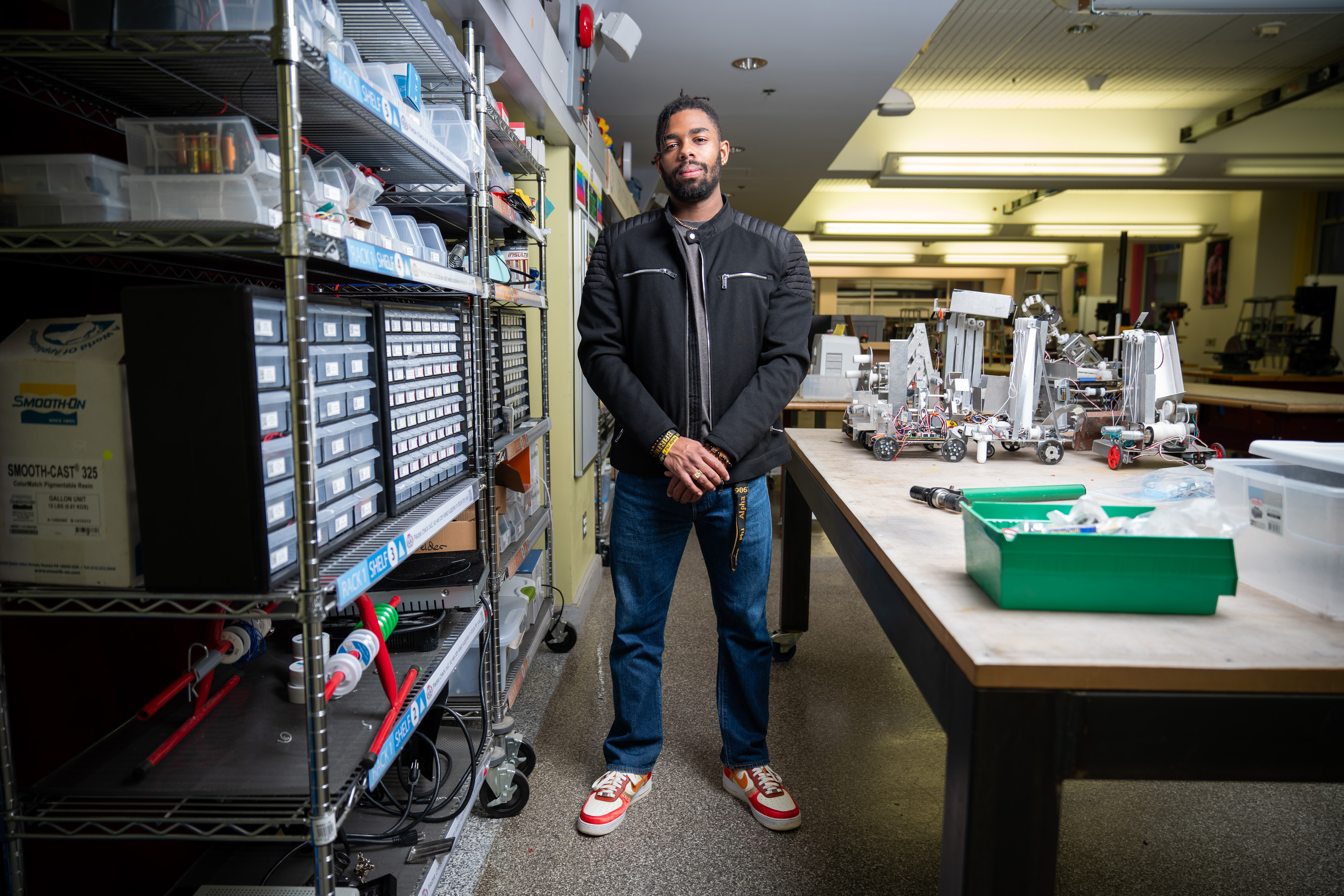
MIT senior Baran Mensah recalls taking apart his toys as a child, curious to see how every piece worked. When his mother explained to him what an engineer was, he knew that’s what he wanted to be.

Mensah wasn’t particularly familiar with the culture of MIT while growing up in Ghana. But for the last four years, he has dug deeply into many aspects of college life, choosing a major in mechanical engineering and a minor in music, and exploring a wide array of extracurricular activities. In addition to holding significant leadership roles in the Chocolate City living group, he has performed with Sakata Afrique, MIT’s Afro-Caribbean dance group, and belongs to the Rho Nu chapter of Alpha Phi Alpha Fraternity.

His approach to research internships has been equally expansive. During his first year, he worked as a residential facilitator for the Office of Minority Education’s Interphase EDGE program, which invites admitted MIT students to campus before the academic year begins. Having benefited from the program himself, Mensah says he wanted to give back as a facilitator. He also helped develop a software toolkit to expose K-12 students to the field of soft robotics, in the Conor Walsh Lab at Harvard University. Most recently, he was a missions operations intern at NASA’s Jet Propulsion Laboratory, where he worked on automating command generation for the Surface Water and Ocean Topography (SWOT) satellite.

After graduation, Mensah intends to attend graduate school and continue his studies in mechanical engineering. He hopes to then work on robotics hardware, perhaps for legged or biomimetic robots, and to stay in the Boston area for a while. While he’s remaining open to new opportunities as they arise, he ultimately hopes use his engineering skills to help improve socioeconomic conditions in his home country of Ghana.

MIT News interviewed Mensah to learn more about his life as a student.

Q: What is your favorite area of mechanical engineering?

A: My specific focus is robotics. As long as I can work on a piece of hardware controlled by some software that does cool and interesting things, I will be happy. Soft robotics would be an interesting route to pursue but I’m not married to any specific branch as of yet. One particularly interesting project I worked on involved a swimming robot that used electromagnetic actuation coupled with soft robotics to mimic the swimming of a fish.

I think while the soft robotics part was extremely novel and fascinating, I was more excited about the mimicry of nature using robotics. Robots such as the MIT cheetah or robots at Boston Dynamics are what excite me the most at this moment. It’s an intersection of not only mechanical engineering, electrical engineering, and computer science, but biology as well. I often find that the more subject areas a project intersects with, the more exciting it is. 

Q: Tell us about your communities on campus.

A: My primary one is Chocolate City at MIT. We’re able to foster a community that allows a lot of people to feel comfortable at MIT. It’s about 30 people, so you’re able to get close friends and bonds, which sometimes can be really hard. And we really push people as well to be involved in the community and active.

The next big one is my dance group, Sakata Afrique. Dancing is something that I didn’t really think I would get into, but I got here and really enjoyed it. And it’s now a big part of my life. It’s really important for that reason, but also because an Afro-Caribbean dance group allows me to display and show my culture, in a sense.

I’m a member of the Rho Nu chapter of Alpha Phi Alpha Fraternity Incorporated. It’s the first intercollegiate Greek-letter fraternity established for African American men, and this chapter serves the campuses of several universities, so from that, I’ve been able to interface with a lot of different people from outside of MIT, which is great. And it’s allowed me to develop myself as a man and learn a lot of different things.

Q: What are some of your favorite memories from your time with these groups?

A: For Chocolate City, one of my fondest memories is the first party that we threw in February of 2021. When we came back to campus a lot of people didn’t really know who we are, and we needed to revive the group. The day of the party, we knew we’d sold 500 tickets, but actually seeing all these people coming in, I was like, “Wow, we really did this.” It was a big thing for me, because this was the first time I’d ever been responsible for marketing an event this large.

For Sakata, a highlight was last year when we had our show, Afro Shake. Right before we went on stage to dance it was a rush of emotions, because this was something that me and my co-choreographer had been working on for basically a whole year. And this was the accumulation of all of our work.

In my fraternity, we had a poetry event in February of last year. Seeing how everybody enjoyed the event and learned something new really felt good because it was me and my line brother’s first program, so it was a big thing that we put a lot of work into and seeing that pay off was really amazing.

Q: How did you balance everything with your studies?

A: Time management is extremely important. The busier I got, the crazier my calendar would look. I’d have times when I scheduled when I had lunch. If I only had one hour to do an assignment I had to make the hour count. It was definitely very hard, but I think it’s a big teaching tool. You have a lot more time than you think you do. A lot of it just goes to waste. There’s a lot of ways you can very strategically [optimize] your time.

Q: What do you do in your down time?

A: Dancing is a big one. Working out, if I have time. I’m into music. I’m a music minor, actually. I play guitar often, as it’s a really good outlet, [and] especially good for expanding my musical diversity because I feel like the type of music that I listen to on a daily basis is not the same type of music that I play on the guitar. So, it really forces me to listen to other types of music, which I enjoy.

Q: Have you had a music minor the whole time you’ve been in undergraduate?

A: No. Coming to MIT, I wanted to concentrate in Spanish for my [humanities, arts, and social sciences requirement] because I’d done Spanish for nine or 10 years. But then seeing the wealth of music classes, I realized this was something that I really wanted to take advantage of. I think music was something that I always wanted to do, but I never really had the resources available until now. With music and with other areas of life, what I’ve learned is that sometimes it might serve you well to just not know what your plan is, and be very open, and see what happens.

Q: Even without a specific plan, do you think you might return to Ghana in the future?

A: I do hope to return at some point, and that I will be able to contribute to uplifting my country in a socioeconomic sense. I envision setting up a foundation that not only offers access to novel technology to solve complex issues, but also helps provide high-quality, affordable educational opportunities. Although I have had this goal for a while, my friend Wilhem Hector has inspired me to look at driving change in this way. I am still unsure about how, exactly, I will go about doing this, but with every passing day, the road forward is slightly clearer.

Professor Emeritus Igor Paul Dies at 87

Igor Paul: A Distinguished Professor and Mechanical Engineering Expert

Early Life and Education

Professor Emeritus Igor Paul ’60, SM ’61, PhD ’64, passed away on December 17, 2023, at his home in St. Petersburg, Florida. He was 87 years old. Born on October 28, 1936, in Kharkov, Ukraine, Igor migrated across Europe during World War II, arriving in the United States on Christmas Day 1951. He later earned all three of his degrees in the Department of Mechanical Engineering at MIT.

Academic Career

Paul was a member of the MIT Department of Mechanical Engineering faculty from 1964 until his retirement in 2003. He helped develop the department’s design and manufacturing curriculum, which continues to thrive today. His research interests included product and machine design, safety, and risk analysis; robotics; biomechanics; and dynamic systems modeling.

Research and Contributions

Igor was a leading expert in product design and safety, with a particular focus on sports devices like helmets. He served as an expert witness in many landmark product liability cases. His contributions also extended to the development of artificial joints, inertial guidance systems for NASA, and consulting services to area hospitals and medical centers.

Teaching and Advising

Known for his good nature, quick wit, and pleasant disposition, Igor was deeply passionate about teaching. Among the courses he instructed through the years were 2.72 (Elements of Mechanical Design), 2.70 (now 2.007, Design and Manufacturing I), and 2.009 (Product Engineering Processes). He also served for many years as the faculty advisor to the student chapter of the American Society of Mechanical Engineers.

Awards and Recognition

Paul co-authored more than 80 publications and won numerous awards in the areas of design, bio-engineering, and education, including the DeFlorez Award for Creativity in Design, the Ralph R. Teetor Distinguished Educator Award, the Outstanding Orthopedic Research Award, and the Carl Soderberg Distinguished Service Award.

Personal Life

Outside of his professional achievements, Igor enjoyed tennis, golf, and traveling the globe. After his retirement, he and his wife, Natasha, moved from Andover, Massachusetts, to New London, New Hampshire, and most recently to St. Petersburg, Florida.

Conclusion

Igor Paul left behind a legacy of scientific contributions, dedication to education, and love for his family. His impact will be felt through the lives of his students, colleagues, and loved ones, and his memory will live on through his work.

Frequently Asked Questions

Q: What were Igor Paul’s main research interests?
A: His research interests included product and machine design, safety, and risk analysis; robotics; biomechanics; and dynamic systems modeling.

Q: What were some of Igor’s notable achievements?
A: Igor was a leading expert in product design and safety, served as an expert witness in many landmark product liability cases, developed artificial joints, and designed inertial guidance systems for NASA.

Q: What was Igor’s involvement with MIT?
A: Igor was a professor in the Department of Mechanical Engineering at MIT from 1964 to 2003 and helped develop the department’s design and manufacturing curriculum.

Farming Simulator 25

0

A Cloud Gaming Bounty

Get ready to plow the fields and tend to crops anywhere with GeForce NOW.

Farming Simulator 25 from Giants Software launched in the cloud for members to stream, bringing a host of new features and improvements — including the introduction of rice as a crop type, complete with specialized machinery and techniques for planting, flooding fields and harvesting.

Mischief Managed

Whether new to the game or a seasoned adventurer, GeForce NOW members can claim a special PC-exclusive reward to use in Amazon Games’ hit title Throne and Liberty. The reward includes 200 Ornate Coins and a PC-exclusive mischievous youngster named Gneiss Amitoi that will enhance the Throne and Liberty journey as members forge alliances, wage epic battles and uncover hidden treasures.

Throne and Liberty on GeForce NOW

Ornate Coins allow players to acquire morphs for animal shapeshifting, autonomous pets named Amitois, exclusive cosmetic items, experience boosters and inventory expansions. Gneiss Youngster Amitoi is a toddler-aged prankster that randomly targets players and non-playable characters with its tricks. While some of its mischief can be mean-spirited, it just wants attention, and will pout and roll back to its adventurer’s side if ignored, adding an entertaining dynamic to the journey through the world of Throne and Liberty.

Rewriting History

Explore, build, lead and conquer a nation in Ara: History Untold, where every choice will shape the world and define a player’s legacy. It’s now available for GeForce NOW members to stream.

Ara History Untold on GeForce NOW

Ara: History Untold offers a fresh take on 4X historical grand strategy games. Players will prove their worth by guiding their citizens through history to the pinnacles of human achievement. Explore new lands, develop arts and culture, and engage in diplomacy — or combat — with other nations, before ultimately claiming the mantle of the greatest nation of all time.

New Games Are Knocking

GeForce NOW brings the new Wuthering Waves update “When the Night Knocks” for members this week. Version 1.4 brings a wealth of new content, including two new Resonators, Camellya and Lumi, along with powerful new weapons, including the five-star Red Spring and the four-star event weapon Somnoire Anchor. Dive into the Somnoire Adventure Event, Somnium Labyrinth, and enjoy a variety of log-in rewards, combat challenges and exploration activities. The update also includes Camellya’s companion story, a new Phantom Echo and introduces the exciting Weapon Projection feature.

Conclusion

GeForce NOW is offering a bounty of new games and rewards for its members this week. From the agricultural adventures of Farming Simulator 25 to the strategic conquests of Ara: History Untold, there’s something for every type of gamer. And with the new NVIDIA app available for download, members can access GeForce NOW and play their games with RTX performance on the go.

FAQs

Q: What new games are available on GeForce NOW this week?
A: Farming Simulator 25, Sea Power: Naval Combat in the Missile Age, Industry Giant 4.0, Ara: History Untold, Call of Duty: Black Ops Cold War, Call of Duty: Vanguard, Magicraft, Crash Bandicoot N. Sane Trilogy, and Spyro Reignited Trilogy.

Q: What is the reward for Throne and Liberty members?
A: 200 Ornate Coins and a PC-exclusive mischievous youngster named Gneiss Amitoi.

Q: How do I redeem the Throne and Liberty reward?
A: Members who’ve opted in to GeForce NOW’s Rewards program can check their email for instructions on how to redeem the reward. Ultimate and Performance members can start redeeming the reward today, while free members will be able to claim it starting tomorrow, Nov. 15. It’s available through Tuesday, Dec. 10, first come, first served.

Circuit Mastery

0

Author Contributions

As we mentioned in Curve Detectors, our first investigation into curve neurons, it’s hard to separate author contributions between different papers in the Circuits project. Much of the original research on curve neurons came before we decided to separate the publications into the behavior of curve neurons and how they are built. In this section we’ve tried to isolate contributions specific to the mechanics of the curve neurons.

Interface Design & Prototyping.

Many weight diagrams were first prototyped by Chris during his first investigations of different families of neurons in early early vision, and some of these were turned into presentations. Nick extended them for use in this paper. Chris designed and implemented the decomposed feature visualization figure in the first section. Many of the other interfaces were designed by Nick with the help of Shan and Chris. In particular, Shan helped to design the figure showing how the different families of early vision connect leading up to the curve family.

Conceptual Contributions.

The earliest understandings of how curve neurons are built from lines and edges came from Chris, and the details came from further investigation by Nick. Nick investigated the line families in detail, including finding cliff line neurons and studying they are used. Nick studied through neuron families in the early layers, studying how shape neurons incrementally incorporate increasingly sophisticated texture and cosmetic neurons, working towards the neuron families diagram in the first section. The artificial artificial neural network was done by Chris and Nick expanded on it for use in the article. Gabe was instrumental in helping discover many of the techniques used for closely studying Circuits, and provided input and suggestions at many steps throughout our investigation of the curve circuit.

Writing.

Nick and Chris wrote the text of the article with significant help editing from Chelsea.

Infrastructure.

Nick built the infrastructure for extracting figures from the paper for reproduction in Colab. Ludwig is responsible for the distributed infrastructure that was used for many experiments.

Acknowledgements

Our article was greatly improved thanks to the detailed feedback by Patricia Robinson, Jennifer Lin, Adam Shimi, Sam Havens, Stefan Sietzen, Dave Vladman, Maxim Liu, Fred Hohman, Vincent Tjeng, and Humza Iqbal.

We also really appreciate the conversations in the #circuits channel of the open Distill Slack, which at the time of publishing contains more than 600 people.

Updates and Corrections

If you see mistakes or want to suggest changes, please create an issue on GitHub.

Reuse

Diagrams and text are licensed under Creative Commons Attribution CC-BY 4.0 with the source available on GitHub, unless noted otherwise. The figures that have been reused from other sources don’t fall under this license and can be recognized by a note in their caption: “Figure from …”.

Citation

For attribution in academic contexts, please cite this work as

Cammarata, et al., "Curve Circuits", Distill, 2021.

BibTeX citation

@article{cammarata2021curve,
  author = {Cammarata, Nick and Goh, Gabriel and Carter, Shan and Voss, Chelsea and Schubert, Ludwig and Olah, Chris},
  title = {Curve Circuits},
  journal = {Distill},
  year = {2021},
  note = {https://distill.pub/2020/circuits/curve-circuits},
  doi = {10.23915/distill.00024.006}
}

Conclusion

The authors would like to emphasize the importance of collaboration in the development of this paper. The contributions of all authors, including those not explicitly mentioned in this section, are crucial to the success of the project. We hope that this article will serve as a useful resource for the research community and inspire further investigation into the topic of curve circuits.

Frequently Asked Questions

Q: What is the main contribution of this paper?

A: The main contribution of this paper is the description of the curve circuit architecture and its implementation in early vision.

Q: Who contributed to the interface design and prototyping?

A: Chris, Nick, and Shan contributed to the interface design and prototyping.

Q: Who provided detailed feedback on the paper?

A: Patricia Robinson, Jennifer Lin, Adam Shimi, Sam Havens, Stefan Sietzen, Dave Vladman, Maxim Liu, Fred Hohman, Vincent Tjeng, and Humza Iqbal provided detailed feedback on the paper.

Q: What is the license for the diagrams and text?

A: The diagrams and text are licensed under Creative Commons Attribution CC-BY 4.0, unless noted otherwise.

Six MIT students selected as spring 2024 MIT-Pillar AI Collective Fellows | MIT News

0

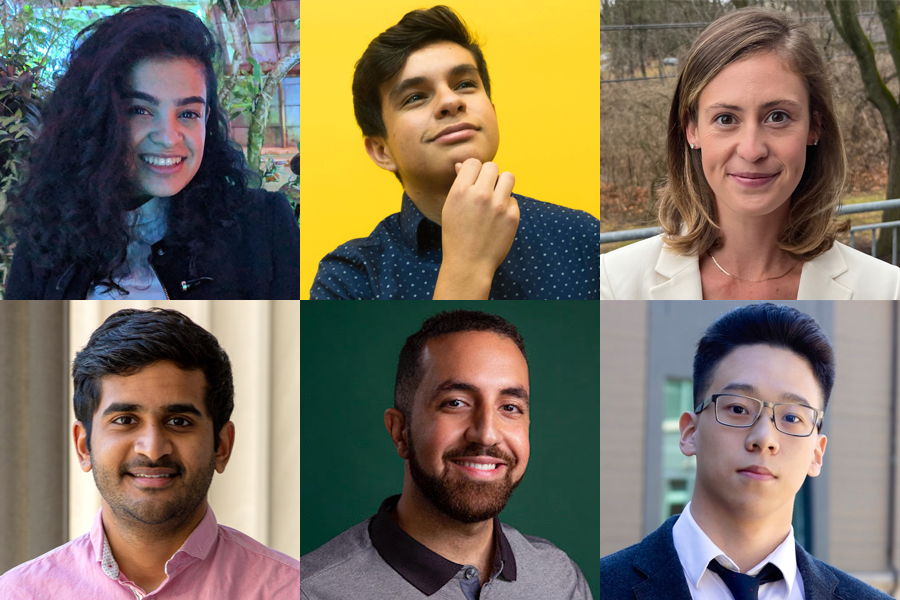
The MIT-Pillar AI Collective has announced six fellows for the spring 2024 semester. With support from the program, the graduate students, who are in their final year of a master’s or PhD program, will conduct research in the areas of AI, machine learning, and data science with the aim of commercializing their innovations.

Launched by MIT’s School of Engineering and Pillar VC in 2022, the MIT-Pillar AI Collective supports faculty, postdocs, and students conducting research on AI, machine learning, and data science. Supported by a gift from Pillar VC and administered by the MIT Deshpande Center for Technological Innovation, the mission of the program is to advance research toward commercialization.

The spring 2024 MIT-Pillar AI Collective Fellows are:

Yasmeen AlFaraj

Yasmeen AlFaraj is a PhD candidate in chemistry whose interest is in the application of data science and machine learning to soft materials design to enable next-generation, sustainable plastics, rubber, and composite materials. More specifically, she is applying machine learning to the design of novel molecular additives to enable the low-cost manufacturing of chemically deconstructable thermosets and composites. AlFaraj’s work has led to the discovery of scalable, translatable new materials that could address thermoset plastic waste. As a Pillar Fellow, she will pursue bringing this technology to market, initially focusing on wind turbine blade manufacturing and conformal coatings. Through the Deshpande Center for Technological Innovation, AlFaraj serves as a lead for a team developing a spinout focused on recyclable versions of existing high-performance thermosets by incorporating small quantities of a degradable co-monomer. In addition, she participated in the National Science Foundation Innovation Corps program and recently graduated from the Clean Tech Open, where she focused on enhancing her business plan, analyzing potential markets, ensuring a complete IP portfolio, and connecting with potential funders. AlFaraj earned a BS in chemistry from University of California at Berkeley.

Ruben Castro Ornelas ’22

Ruben Castro Ornelas is a PhD student in mechanical engineering who is passionate about the future of multipurpose robots and designing the hardware to use them with AI control solutions. Combining his expertise in programming, embedded systems, machine design, reinforcement learning, and AI, he designed a dexterous robotic hand capable of carrying out useful everyday tasks without sacrificing size, durability, complexity, or simulatability. Ornelas’s innovative design holds significant commercial potential in domestic, industrial, and health-care applications because it could be adapted to hold everything from kitchenware to delicate objects. As a Pillar Fellow, he will focus on identifying potential commercial markets, determining the optimal approach for business-to-business sales, and identifying critical advisors. Ornelas served as co-director of StartLabs, an undergraduate entrepreneurship club at MIT, where he earned an BS in mechanical engineering.

Keeley Erhardt ’17, MNG ’17

Keeley Erhardt is a PhD candidate in media arts and sciences whose research interests lie in the transformative potential of AI in network analysis, particularly for entity correlation and hidden link detection within and across domains. She has designed machine learning algorithms to identify and track temporal correlations and hidden signals in large-scale networks, uncovering online influence campaigns originating from multiple countries. She has similarly demonstrated the use of graph neural networks to identify coordinated cryptocurrency accounts by analyzing financial time series data and transaction dynamics. As a Pillar Fellow, Erhardt will pursue the potential commercial applications of her work, such as detecting fraud, propaganda, money laundering, and other covert activity in the finance, energy, and national security sectors. She has had internships at Google, Facebook, and Apple and held software engineering roles at multiple tech unicorns. Erhardt earned an MEng in electrical engineering and computer science and a BS in computer science, both from MIT.

Vineet Jagadeesan Nair SM ’21

Vineet Jagadeesan Nair is a PhD candidate in mechanical engineering whose research focuses on modeling power grids and designing electricity markets to integrate renewables, batteries, and electric vehicles. He is broadly interested in developing computational tools to tackle climate change. As a Pillar Fellow, Nair will explore the application of machine learning and data science to power systems. Specifically, he will experiment with approaches to improve the accuracy of forecasting electricity demand and supply with high spatial-temporal resolution. In collaboration with Project Tapestry @ Google X, he is also working on fusing physics-informed machine learning with conventional numerical methods to increase the speed and accuracy of high-fidelity simulations. Nair’s work could help realize future grids with high penetrations of renewables and other clean, distributed energy resources. Outside academics, Nair is active in entrepreneurship, most recently helping to organize the 2023 MIT Global Startup Workshop in Greece. He earned an MS in computational science and engineering from MIT, an MPhil in energy technologies from Cambridge University as a Gates Scholar, and a BS in mechanical engineering and a BA in economics from University of California at Berkeley.

Mahdi Ramadan

Mahdi Ramadan is a PhD candidate in brain and cognitive sciences whose research interests lie at the intersection of cognitive science, computational modeling, and neural technologies. His work uses novel unsupervised methods for learning and generating interpretable representations of neural dynamics, capitalizing on recent advances in AI, specifically contrastive and geometric deep learning techniques capable of uncovering the latent dynamics underlying neural processes with high fidelity. As a Pillar Fellow, he will leverage these methods to gain a better understanding of dynamical models of muscle signals for generative motor control. By supplementing current spinal prosthetics with generative AI motor models that can streamline, speed up, and correct limb muscle activations in real time, as well as potentially using multimodal vision-language models to infer the patients’ high-level intentions, Ramadan aspires to build truly scalable, accessible, and capable commercial neuroprosthetics. Ramadan’s entrepreneurial experience includes being the co-founder of UltraNeuro, a neurotechnology startup, and co-founder of Presizely, a computer vision startup. He earned a BS in neurobiology from University of Washington.

Rui (Raymond) Zhou

Rui (Raymond) Zhou is a PhD candidate in mechanical engineering whose research focuses on multimodal AI for engineering design. As a Pillar Fellow, he will advance models that could enable designers to translate information in any modality or combination of modalities into comprehensive 2D and 3D designs, including parametric data, component visuals, assembly graphs, and sketches. These models could also optimize existing human designs to accomplish goals such as improving ergonomics or reducing drag coefficient. Ultimately, Zhou aims to translate his work into a software-as-a-service platform that redefines product design across various sectors, from automotive to consumer electronics. His efforts have the potential to not only accelerate the design process but also reduce costs, opening the door to unprecedented levels of customization, idea generation, and rapid prototyping. Beyond his academic pursuits, Zhou founded UrsaTech, a startup that integrates AI into education and engineering design. He earned a BS in electrical engineering and computer sciences from University of California at Berkeley.

Unlocking the Secrets of FLUX Shuttle 3

0

FLUX Shuttle 3 Diffusion: Create Stunning Images in Only 4-Steps

Introduction

The FLUX Shuttle 3 Diffusion is a powerful model that allows you to create stunning images in just a few steps. With its advanced algorithms and user-friendly interface, you can achieve professional-grade results without extensive training or experience.

Step 1: Preparation

Before you start, make sure you have all the necessary files and folders organized. This includes your input images, desired output resolution, and any additional assets you want to incorporate into your design. It’s also a good idea to familiarize yourself with the FLUX Shuttle 3 Diffusion interface and its various tools and features.

Step 2: Diffusion

In this step, you’ll use the FLUX Shuttle 3 Diffusion to create a high-quality diffusion map. This map will serve as the foundation for your final image. The diffusion process involves applying a series of algorithms to the input images, which helps to create a more detailed and realistic representation of the scene.

Step 3: Refine

Once you have your diffusion map, it’s time to refine it. This involves adjusting the various settings and parameters to achieve the desired level of detail and realism. You can also use this step to add additional features and effects, such as textures, colors, and lighting.

Step 4: Render

In the final step, you’ll render your image using the FLUX Shuttle 3 Diffusion. This will take a few minutes, depending on the complexity of your design and the power of your computer. Once the rendering is complete, you can export your image in a variety of formats, including JPEG, PNG, and TIFF.

Workflow

Here’s a more detailed overview of the workflow involved in using the FLUX Shuttle 3 Diffusion:

  1. Prepare your input images and assets
  2. Create a new project in the FLUX Shuttle 3 Diffusion interface
  3. Import your input images and assets into the project
  4. Apply the diffusion algorithm to create a high-quality diffusion map
  5. Refine the diffusion map by adjusting settings and adding features
  6. Render the final image using the FLUX Shuttle 3 Diffusion
  7. Export the final image in your desired format

Conclusion

The FLUX Shuttle 3 Diffusion is a powerful tool that can help you create stunning images in just a few steps. With its advanced algorithms and user-friendly interface, it’s easy to achieve professional-grade results without extensive training or experience. Whether you’re a professional artist or just starting out, the FLUX Shuttle 3 Diffusion is a great choice for anyone looking to create high-quality images.

FAQs

Q: What is the FLUX Shuttle 3 Diffusion?

A: The FLUX Shuttle 3 Diffusion is a powerful model that allows you to create stunning images in just a few steps.

Q: What are the benefits of using the FLUX Shuttle 3 Diffusion?

A: The FLUX Shuttle 3 Diffusion offers a range of benefits, including the ability to create high-quality images quickly and easily, without extensive training or experience.

Q: How do I get started with the FLUX Shuttle 3 Diffusion?

A: To get started with the FLUX Shuttle 3 Diffusion, simply prepare your input images and assets, create a new project in the interface, and follow the workflow outlined above.

Q: Can I customize the FLUX Shuttle 3 Diffusion to suit my needs?

A: Yes, the FLUX Shuttle 3 Diffusion offers a range of customization options, including the ability to adjust settings and add features to your design.