Home Blog Page 611

Smart glove teaches new physical skills | MIT News

0

You’ve likely met someone who identifies as a visual or auditory learner, but others absorb knowledge through a different modality: touch. Being able to understand tactile interactions is especially important for tasks such as learning delicate surgeries and playing musical instruments, but unlike video and audio, touch is difficult to record and transfer.

To tap into this challenge, researchers from MIT’s Computer Science and Artificial Intelligence Laboratory (CSAIL) and elsewhere developed an embroidered smart glove that can capture, reproduce, and relay touch-based instructions. To complement the wearable device, the team also developed a simple machine-learning agent that adapts to how different users react to tactile feedback, optimizing their experience. The new system could potentially help teach people physical skills, improve responsive robot teleoperation, and assist with training in virtual reality.

An open-access paper describing the work was published in Nature Communications on Jan. 29.

Will I be able to play the piano?

To create their smart glove, the researchers used a digital embroidery machine to seamlessly embed tactile sensors and haptic actuators (a device that provides touch-based feedback) into textiles. This technology is present in smartphones, where haptic responses are triggered by tapping on the touch screen. For example, if you press down on an iPhone app, you’ll feel a slight vibration coming from that specific part of your screen. In the same way, the new adaptive wearable sends feedback to different parts of your hand to indicate optimal motions to execute different skills.

The smart glove could teach users how to play the piano, for instance. In a demonstration, an expert was tasked with recording a simple tune over a section of keys, using the smart glove to capture the sequence by which they pressed their fingers to the keyboard. Then, a machine-learning agent converted that sequence into haptic feedback, which was then fed into the students’ gloves to follow as instructions. With their hands hovering over that same section, actuators vibrated on the fingers corresponding to the keys below. The pipeline optimizes these directions for each user, accounting for the subjective nature of touch interactions.

“Humans engage in a wide variety of tasks by constantly interacting with the world around them,” says Yiyue Luo MS ’20, lead author of the paper, PhD student in MIT’s Department of Electrical Engineering and Computer Science (EECS), and CSAIL affiliate. “We don’t usually share these physical interactions with others. Instead, we often learn by observing their movements, like with piano-playing and dance routines.

“The main challenge in relaying tactile interactions is that everyone perceives haptic feedback differently,” adds Luo. “This roadblock inspired us to develop a machine-learning agent that learns to generate adaptive haptics for individuals’ gloves, introducing them to a more hands-on approach to learning optimal motion.”

The wearable system is customized to fit the specifications of a user’s hand via a digital fabrication method. A computer produces a cutout based on individuals’ hand measurements, then an embroidery machine stitches the sensors and haptics in. Within 10 minutes, the soft, fabric-based wearable is ready to wear. Initially trained on 12 users’ haptic responses, its adaptive machine-learning model only needs 15 seconds of new user data to personalize feedback.

In two other experiments, tactile directions with time-sensitive feedback were transferred to users sporting the gloves while playing laptop games. In a rhythm game, the players learned to follow a narrow, winding path to bump into a goal area, and in a racing game, drivers collected coins and maintained the balance of their vehicle on their way to the finish line. Luo’s team found that participants earned the highest game scores through optimized haptics, as opposed to without haptics and with unoptimized haptics.

“This work is the first step to building personalized AI agents that continuously capture data about the user and the environment,” says senior author Wojciech Matusik, MIT professor of electrical engineering and computer science and head of the Computational Design and Fabrication Group within CSAIL. “These agents then assist them in performing complex tasks, learning new skills, and promoting better behaviors.”

Bringing a lifelike experience to electronic settings

In robotic teleoperation, the researchers found that their gloves could transfer force sensations to robotic arms, helping them complete more delicate grasping tasks. “It’s kind of like trying to teach a robot to behave like a human,” says Luo. In one instance, the MIT team used human teleoperators to teach a robot how to secure different types of bread without deforming them. By teaching optimal grasping, humans could precisely control the robotic systems in environments like manufacturing, where these machines could collaborate more safely and effectively with their operators.

“The technology powering the embroidered smart glove is an important innovation for robots,” says Daniela Rus, the Andrew (1956) and Erna Viterbi Professor of Electrical Engineering and Computer Science at MIT, CSAIL director, and author on the paper. “With its ability to capture tactile interactions at high resolution, akin to human skin, this sensor enables robots to perceive the world through touch. The seamless integration of tactile sensors into textiles bridges the divide between physical actions and digital feedback, offering vast potential in responsive robot teleoperation and immersive virtual reality training.”

Likewise, the interface could create more immersive experiences in virtual reality. Wearing smart gloves would add tactile sensations to digital environments in video games, where gamers could feel around their surroundings to avoid obstacles. Additionally, the interface would provide a more personalized and touch-based experience in virtual training courses used by surgeons, firefighters, and pilots, where precision is paramount.

While these wearables could provide a more hands-on experience for users, Luo and her group believe they could extend their wearable technology beyond fingers. With stronger haptic feedback, the interfaces could guide feet, hips, and other body parts less sensitive than hands.

Luo also noted that with a more complex artificial intelligence agent, her team’s technology could assist with more involved tasks, like manipulating clay or driving an airplane. Currently, the interface can only assist with simple motions like pressing a key or gripping an object. In the future, the MIT system could incorporate more user data and fabricate more conformal and tight wearables to better account for how hand movements impact haptic perceptions.

Luo, Matusik, and Rus authored the paper with EECS Microsystems Technology Laboratories Director and Professor Tomás Palacios; CSAIL members Chao Liu, Young Joong Lee, Joseph DelPreto, Michael Foshey, and professor and principal investigator Antonio Torralba; Kiu Wu of LightSpeed Studios; and Yunzhu Li of the University of Illinois at Urbana-Champaign.

The work was supported, in part, by an MIT Schwarzman College of Computing Fellowship via Google and a GIST-MIT Research Collaboration grant, with additional help from Wistron, Toyota Research Institute, and Ericsson.

Teaching Emotional Intelligence: A Path to Student Wellbeing

The Promise of Social-Emotional Learning

Social-emotional learning (SEL) is more than just an educational initiative—it’s a fundamental process through which students develop the skills to manage emotions, build healthy relationships, and make responsible decisions.

The research supporting SEL’s effectiveness is compelling. When schools implement strong SEL programs, they see improvements in academic performance and significant decreases in anxiety and stress. These benefits extend beyond the classroom, setting students up for success in their future careers, relationships, and civic engagement.

Overcoming Barriers to Implement SEL Successfully

Despite overwhelming support and clear evidence of its benefits, many schools struggle to turn their social-emotional learning vision into a reality. The challenges are significant and multifaceted:

Limited Time & Resources

Schools are severely understaffed, and educators are already overworked. While they recognize SEL’s importance, many districts find themselves unable to implement programs effectively when meeting basic instructional needs is already challenging. The time required to evaluate SEL initiatives creates an additional burden for teachers who are already stretched thin.

Proving Effectiveness

Schools may lack clarity about how to analyze and measure the impact of SEL initiatives. How do you measure improvements in student well-being? How can you make data collection and analysis easier? Without clear metrics and an easy way to track progress, it becomes difficult to justify continued investment in SEL programs.

Community Objections: Differentiating Facts from Fiction

Resistance to social-emotional learning instruction is often rooted in misperceptions about what SEL entails and reinforced by political divides. However, when the objectives of SEL initiatives are communicated accurately and transparently, the vast majority of parents recognize the value of teaching life and social skills alongside academics.

Training Gaps

Nearly all teachers (94%) believe SEL improves academic achievement. However, few have the training needed to understand how to collect and use SEL data effectively in the classroom. Teachers are already time and resource pressures, so it’s not realistic to expect them to figure out on their own how to implement data-driven instruction.

Community Resistance

While research shows overwhelming support for SEL—with 93% of parents saying it’s important for schools to teach these skills—districts may face or fear resistance from their communities. Without clear communication about the objectives of SEL initiatives and the data to demonstrate positive impact, even well-designed programs can become the target of pushback.

Equity Concerns

Using traditional methods to measure SEL effectiveness can introduce equity concerns. Student survey results may be skewed because of reference bias, language barriers, or accessibility issues. Furthermore, data analysis may also be influenced by bias, which introduces concerns about the equity of data insights and action plans.

Putting SEL’s Promise into Practice

Fortunately, new technologies are emerging to help schools overcome these seemingly insurmountable challenges. Using the power of artificial intelligence (AI), Securly Discern is helping schools simplify SEL implementation and realize its benefits. With Securly Discern, schools can:

  • Automate data collection and analysis, taking the burden off teachers
  • Eliminate manual surveys to simplify progress tracking
  • Share outcomes with families to strengthen community support
  • Increase equity by reducing bias through AI analysis

This technology-enabled approach helps schools move beyond the traditional barriers that have historically made SEL implementation challenging, allowing them to focus on what matters most: supporting student well-being and academic success.

Conclusion

Social-emotional learning is a crucial component of a well-rounded education, and its benefits extend far beyond the classroom. By understanding the challenges that schools face in implementing SEL and leveraging technology to overcome these barriers, we can finally begin to turn the tide on poor student mental health.

FAQs

Q: What is social-emotional learning (SEL)?
A: SEL is a fundamental process through which students develop the skills to manage emotions, build healthy relationships, and make responsible decisions.

Q: What are the benefits of SEL?
A: SEL has been shown to improve academic performance, reduce anxiety and stress, and set students up for success in their future careers, relationships, and civic engagement.

Q: What are the challenges to implementing SEL?
A: Schools face a range of challenges, including limited time and resources, proving effectiveness, community objections, training gaps, community resistance, and equity concerns.

Q: How can schools overcome these challenges?
A: Schools can leverage technology, such as artificial intelligence (AI), to simplify SEL implementation and realize its benefits.

NASA’s AI Earth Copilot

0

NASA and Microsoft Collaborate on AI Chatbot for Earth Data

NASA is teaming up with Microsoft to create an AI chatbot designed to make it easier to access and understand scientific data about the Earth. The tool, called Earth Copilot, will be able to answer questions about our planet by condensing NASA’s wide swath of geospatial information into easy-to-digest responses.

How Earth Copilot Works

To create the tool, NASA is integrating AI into its data repository, allowing Earth Copilot to refer to this information when answering questions, such as “What was the impact of Hurricane Ian in Sanibel Island?” or “How did the COVID-19 pandemic affect air quality in the US?”

Goals of the Project

NASA aims to “democratize” access to scientific data with the launch of Earth Copilot, as obtaining and understanding the information within NASA’s database is currently more difficult for people who aren’t researchers or scientists.

Challenges and Opportunities

“For many, finding and extracting insights requires navigating technical interfaces, understanding data formats and mastering the intricacies of geospatial analysis — specialized skills that very few non-technical users possess,” Tyler Bryson, Microsoft’s corporate vice president of health and public sector industries, said in the announcement. “AI could streamline this process, reducing time to gain insights from Earth’s data to a matter of seconds.”

Current Status and Future Plans

Right now, Earth Copilot is only available to NASA scientists and researchers, who will assess the tool’s capabilities. They’ll then explore its integration into NASA’s Visualization, Exploration, and Data Analysis (VEDA) platform, which already offers access to some of the agency’s data.

Conclusion

The collaboration between NASA and Microsoft aims to make Earth’s scientific data more accessible and understandable for a broader audience. By leveraging AI technology, Earth Copilot has the potential to revolutionize the way we access and analyze data about our planet.

FAQs

Q: What is Earth Copilot?

A: Earth Copilot is an AI chatbot designed to make it easier to access and understand scientific data about the Earth.

Q: What kind of data can Earth Copilot access?

A: Earth Copilot can access NASA’s wide swath of geospatial information, including data on hurricanes, air quality, and other environmental factors.

Q: Who can use Earth Copilot?

A: Currently, Earth Copilot is only available to NASA scientists and researchers. However, the goal is to make it accessible to a broader audience in the future.

Q: What is the potential impact of Earth Copilot?

A: Earth Copilot has the potential to democratize access to scientific data, making it easier for non-technical users to access and understand information about the Earth.

Apple Unleashes AI Assault on Smart Homes

Apple’s AI Ambitions

Apple, which began rolling out Apple Intelligence last month, looks as well-placed for the AI era as anyone. In this field context is all. The data that Apple has about its users puts it in a powerful position.

The Road to AI

Artificial intelligence may represent the biggest opportunity in tech since the arrival of the internet, but it also poses fundamental questions over how some of the industry’s most powerful companies make money. Reports this week that Apple is preparing to use AI for a new assault on the smart home is the latest sign that the technology could supercharge some existing tech markets.

Apple’s AI Plans

The new smart home push is likely to come in two parts. Next year, according to a report in Bloomberg, will see the launch of a six-inch, wall-mounted Apple screen that acts as a “hub” to control gadgets around the home. The following year, according to a well-regarded supply chain analyst, will bring Apple-branded home security cameras.

Achieving Success

The acid test will be whether Apple can apply AI in ways that people find truly useful. For the first incarnation of Apple Intelligence, much is riding on a feature known as App Intents. This will enable developers to “open up” their apps to Apple’s Siri assistant, essentially letting the AI automatically carry out functions inside the apps on behalf of a user.

The Future of AI

Whether it can make features like this increasingly useful, and eventually peel them off to become standalone premium services, will be the ultimate test of Apple’s success in AI. Apple also needs to show how it can use AI to supercharge its services revenue, which has become the main driver of its diminished growth.

Conclusion

Apple’s foray into AI is a crucial one, as the company seeks to remain competitive in a rapidly evolving tech landscape. While the road to success is uncertain, Apple’s reputation for seamless integration and commitment to user experience give it a strong foundation to build upon. As the company continues to experiment with AI, one thing is clear: the stakes are high, and the potential rewards are enormous.

FAQs

Q: What is Apple Intelligence?

A: Apple Intelligence is a technology that enables Apple devices to understand and respond to natural language voice commands.

Q: What are the implications of Apple’s AI ambitions?

A: Apple’s AI ambitions have the potential to revolutionize the tech industry, enabling companies to create more personalized and responsive experiences for their users.

Q: Can Apple’s AI ambitions really supercharge its business?

A: While the potential for growth is significant, the success of Apple’s AI ambitions will depend on its ability to create practical and useful applications of AI technology.

Q: What is the timeline for Apple’s AI ambitions?

A: Apple has announced plans to launch a range of AI-powered devices, including a six-inch wall-mounted screen and Apple-branded home security cameras, over the next two years.

Try Gemini Live for Free Now

0

One of the most practical applications of generative AI is enhancing voice assistants, which have remained relatively unchanged for years — and have notoriously not been the best at communicating. With Gemini Live, you can finally have human-like conversations with AI.

Getting Started

In May, Google unveiled Gemini Live, a conversational AI-powered assistant that can be interrupted, have multi-turn conversations, and revisit conversations later. Initially, Gemini Live was only available to Gemini Advanced users, requiring a $20 monthly membership to access. Then, it was made available for free, but only to Android users. Now, free iOS users have been looped in, too.

How to Access Gemini Live on Android

Downloading the Gemini app from the Google Play Store is free and easy. Once downloaded, to access Gemini Live, make sure your Gemini app is updated and then open it like you regularly would. If you see the waveform icon at the bottom left of your app screen, pictured below, you have Gemini Live access. Once you click on it, you will see a walkthrough of how to use the feature. If you don’t see it, try updating your Gemini app.

Gemini waveform

Sabrina Ortiz/ZDNET

How to Access Gemini Live on iOS

As of November 14, iPhone users can also access Gemini Live via a new Gemini app for iOS users. The app is also free and can be accessed in the App Store. Hours after launching, the app already ranked #17 in the Productivity category in the App Store. Once you download the app, you will be prompted to sign into your Google account, and once you do, you are set to start chatting.

What to Use Gemini Live For

So what can you even use Gemini Live for? Gemini Live is useful in any scenario where you typically use a standard voice assistant but with the added bonus of better understanding your question, providing human-like answers, and better supporting your curiosity by answering follow-ups without losing the context of the conversation.

Alternatives

In addition to ChatGPT’s Advanced Voice Mode, which costs $20 a month through the ChatGPT Plus subscription, both Android and iOS users can also use Copilot Voice, Microsoft’s take on an AI-powered voice assistant available to all users for free. The conversational capabilities are just as impressive and accessible within the Copilot app on iOS and Android now.

Conclusion

Gemini Live is a game-changer in the world of voice assistants. With its ability to have human-like conversations, it’s a must-try for anyone looking to upgrade their AI experience. Whether you’re an Android or iOS user, you can now access Gemini Live for free and start chatting with this revolutionary AI assistant.

FAQs

Q: Is Gemini Live available for free?
A: Yes, Gemini Live is available for free on both Android and iOS devices.

Q: What are the benefits of using Gemini Live?
A: Gemini Live offers human-like conversations, multi-turn conversations, and the ability to revisit conversations later.

Q: Is Gemini Live available on all devices?
A: Gemini Live is available on Android and iOS devices, but not on other platforms.

Q: Can I use Gemini Live with other voice assistants?
A: No, Gemini Live is a standalone AI assistant and cannot be used with other voice assistants.

Q: Is Gemini Live secure?
A: Yes, Gemini Live uses advanced security measures to protect your conversations and personal data.

Boosting Telecom Operations with AI-Driven Strategy

0

Generative AI in Telecom Network Operations

Generative AI (gen AI) has transformed industries with applications such as document-based Q&A with reasoning, customer service chatbots, and summarization tasks. However, in the realm of telecom network operations, the data is different. The observability data comes from proprietary sources and encompasses a wide variety of formats, including alarms, performance metrics, probes, and ticketing systems capturing incidents, defects, and changes.

How Generative AI Addresses Network Operations Challenges

The complexity and diversity of network data, along with rapidly changing technologies, presents several challenges for network operations. Gen AI offers efficient solutions where traditional methods are costly or impractical.

  • Time-consuming processes: Switching between multiple systems (such as alarms, performance, or traces) delays problem resolution. Generative AI centralizes data into one interface providing natural language experience, speeding up issue resolution by reducing system toggling.
  • Data fragmentation: Scattered data across platforms prevents a cohesive view of issues. Generative AI consolidates data from various sources based on the training. It can correlate and present data in a unified view, enhancing issue comprehension.
  • Complex interfaces: Engineers spend extra time adapting to various system interfaces (such as UIs, scripts, and reports). Generative AI provides a natural language interface, simplifying navigation across complex systems.
  • Human error: Manual data consolidation leads to misdiagnoses due to data fragmentation challenges. AI-driven data analysis reduces errors, helping ensure accurate diagnosis and resolution.
  • Inconsistent data formats: Varying data formats make analysis difficult. Gen AI model training can provide standardized data output, improving correlation and troubleshooting.

Challenges in Applying Generative AI in Network Operations

While gen AI offers transformative potential in network operations, several challenges must be addressed to help ensure effective implementation:

  • Relevance and contextual precision: General-purpose language models perform well in nontechnical contexts, but in network-specific use cases, models need to be fine-tuned with domain-specific terminology to deliver relevant and precise results.
  • AI guardrails and hallucinations: In network operations, outputs must be grounded in technical accuracy, not just linguistic sense. Strong AI guardrails are essential to prevent incorrect or misleading results.
  • Chain-of-thought (CoT) loops: Network use cases often involve multistep reasoning across multiple data sources. Without proper control, AI agents can enter endless loops, leading to inefficiencies due to incomplete or misunderstood data.
  • Explainability and transparency: In critical network operations, engineers must understand how AI-derived decisions are made. AI systems must provide clear and transparent reasoning to build trust and help ensure effective troubleshooting, avoiding “black box” situations.
  • Continuous model enhancements: Constant feedback from technical experts is crucial for model improvement. This feedback loop should be integrated into model training to keep pace with the evolving network environment.

Implementing a Workable Strategy to Maximize Business Benefits

Key design principles can help ensure the successful implementation of gen AI in network operations. These include:

  • Multilayer agent architecture: A supervisor/worker model offers modularity, making it easier to integrate legacy network interfaces while supporting scalability.
  • Intelligent data retrieval: Using Reflective Retrieval-Augmented Generation (RAG) with hallucination safeguards helps ensure reliable, relevant data processing.
  • Directed chain of thought: This pattern helps guide AI reasoning to deliver predictable outcomes and avoid deadlocks in decision-making.
  • Transactional-level traceability: Every AI decision should be auditable, ensuring accountability and transparency at a granular level.
  • Standardized tooling: Seamless integration with various enterprise data sources is crucial for broad network compatibility.
  • Exit prompt tuning: Continuous model improvement is enabled through prompt tuning, ensuring that it adapts and evolves based on operational feedback.

Conclusion

Implementing a gen AI strategy in network operations can lead to significant performance improvements, including faster mean time to repair (MTTR), reduced average handle time (AHT), and lower escalation rates. Beyond these KPIs, gen AI can enhance the overall quality and efficiency of network operations, benefiting both staff and processes.

FAQs

Q: What are the benefits of using gen AI in network operations?
A: Gen AI can improve MTTR, reduce AHT, and lower escalation rates, as well as enhance the overall quality and efficiency of network operations.

Q: What are the challenges in applying gen AI in network operations?
A: Challenges include relevance and contextual precision, AI guardrails and hallucinations, chain-of-thought loops, explainability and transparency, and continuous model enhancements.

Q: How can gen AI be successfully implemented in network operations?
A: Key design principles include multilayer agent architecture, intelligent data retrieval, directed chain of thought, transactional-level traceability, standardized tooling, and exit prompt tuning.

“We offer another place for knowledge” | MIT News

0

In the Dzaleka Refugee Camp in Malawi, Jospin Hassan didn’t have access to the education opportunities he sought. So, he decided to create his own. 

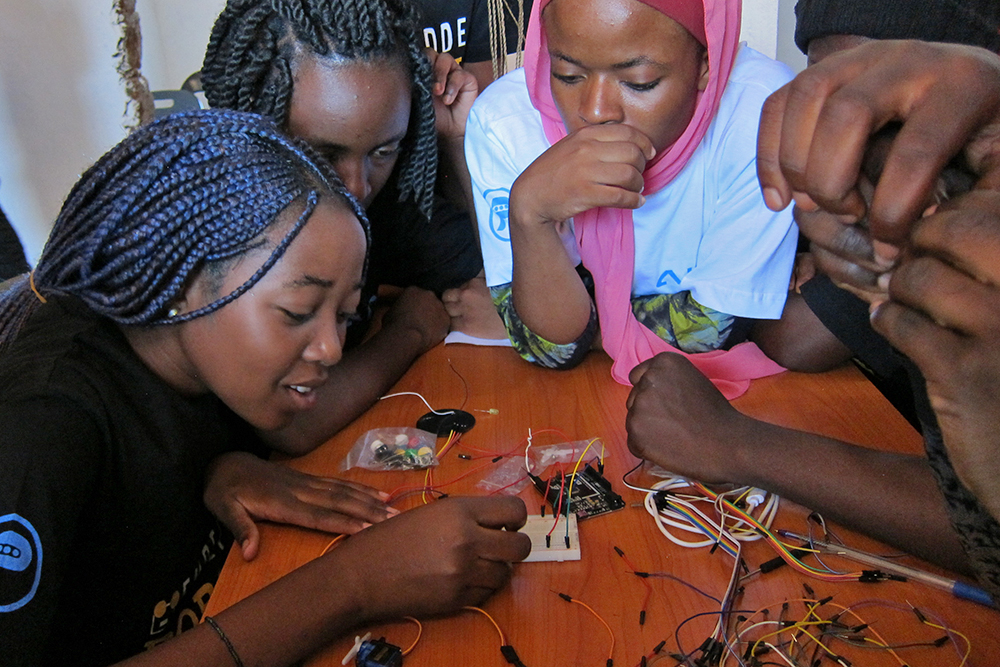
Hassan knew the booming fields of data science and artificial intelligence could bring job opportunities to his community and help solve local challenges. After earning a spot in the 2020-21 cohort of the Certificate Program in Computer and Data Science from MIT Refugee Action Hub (ReACT), Hassan started sharing MIT knowledge and skills with other motivated learners in Dzaleka.

MIT ReACT is now Emerging Talent, part of the Jameel World Education Lab (J-WEL) at MIT Open Learning. Currently serving its fifth cohort of global learners, Emerging Talent’s year-long certificate program incorporates high-quality computer science and data analysis coursework from MITx, professional skill building, experiential learning, apprenticeship work, and opportunities for networking with MIT’s global community of innovators. Hassan’s cohort honed their leadership skills through interactive online workshops with J-WEL and the 10-week online MIT Innovation Leadership Bootcamp. 

“My biggest takeaway was networking, collaboration, and learning from each other,” Hassan says.

Today, Hassan’s organization ADAI Circle offers mentorship and education programs for youth and other job seekers in the Dzaleka Refugee Camp. The curriculum encourages hands-on learning and collaboration.

Launched in 2020, ADAI Circle aims to foster job creation and reduce poverty in Malawi through technology and innovation. In addition to their classes in data science, AI, software development, and hardware design, their Innovation Hub offers internet access to anyone in need. 

Doing something different in the community

Hassan first had the idea for his organization in 2018 when he reached a barrier in his own education journey. There were several programs in the Dzaleka Refugee Camp teaching learners how to code websites and mobile apps, but Hassan felt that they were limited in scope. 

“We had good devices and internet access,” he says, “but I wanted to learn something new.” 

Teaming up with co-founder Patrick Byamasu, Hassan and Byamasu set their sights on the longevity of AI and how that might create more jobs for people in their community. “The world is changing every day, and data scientists are in a higher demand today in various companies,” Hassan says. “For this reason, I decided to expand and share the knowledge that I acquired with my fellow refugees and the surrounding villages.”

ADAI Circle draws inspiration from Hassan’s own experience with MIT Emerging Talent coursework, community, and training opportunities. For example, the MIT Bootcamps model is now standard practice for ADAI Circle’s annual hackathon. Hassan first introduced the hackathon to ADAI Circle students as part of his final experiential learning project of the Emerging Talent certificate program. 

ADAI Circle’s annual hackathon is now an interactive — and effective — way to select students who will most benefit from its programs. The local schools’ curricula, Hassan says, might not provide enough of an academic challenge. “We can’t teach everyone and accommodate everyone because there are a lot of schools,” Hassan says, “but we offer another place for knowledge.” 

The hackathon helps students develop data science and robotics skills. Before they start coding, students have to convince ADAI Circle teachers that their designs are viable, answering questions like, “What problem are you solving?” and “How will this help the community?” A community-oriented mindset is just as important to the curriculum.

In addition to the practical skills Hassan gained from Emerging Talent, he leveraged the program’s network to help his community. Thanks to a social media connection Hassan made with the nongovernmental organization Give Internet after one of Emerging Talent’s virtual events, Give Internet brought internet access to ADAI Circle.

Bridging the AI gap to unmet communities

In 2023, ADAI Circle connected with another MIT Open Learning program, Responsible AI for Social Empowerment and Education (RAISE), which led to a pilot test of a project-based AI curriculum for middle school students. The Responsible AI for Computational Action (RAICA) curriculum equipped ADAI Circle students with AI skills for chatbots and natural language processing. 

“I liked that program because it was based on what we’re teaching at the center,” Hassan says, speaking of his organization’s mission of bridging the AI gap to reach unmet communities.

The RAICA curriculum was designed by education experts at MIT Scheller Teacher Education Program (STEP Lab) and AI experts from the Personal Robots group within the MIT Media Lab and the MIT App Inventor. ADAI Circle teachers gave detailed feedback about the pilot to the RAICA team. During weekly meetings with Glenda Stump, education research scientist for RAICA and J-WEL, and Angela Daniel, teacher development specialist for RAICA, the teachers discussed their experiences, prepared for upcoming lessons, and translated the learning materials in real time. 

“We are trying to create a curriculum that’s accessible worldwide and to students who typically have little or no access to technology,” says Mary Cate Gustafson-Quiett, curriculum design manager at STEP Lab and project manager for RAICA. “Working with ADAI and students in a refugee camp challenged us to design in more culturally and technologically inclusive ways.”

Gustafson-Quiett says the curriculum feedback from ADAI Circle helped inform how RAICA delivers teacher development resources to accommodate learning environments with limited internet access. “They also exposed places where our team’s western ideals, specifically around individualism, crept into activities in the lesson and contrasted with their more communal cultural beliefs,” she says.

Eager to introduce more MIT-developed AI resources, Hassan also shared MIT RAISE’s Day of AI curricula with ADAI Circle teachers. The new ChatGPT module gave students the chance to level up their chatbot programming skills that they gained from the RAICA module. Some of the advanced students are taking initiative to use ChatGPT API to create their own projects in education.

“We don’t want to tell them what to do, we want them to come up with their own ideas,” Hassan says.

Although ADAI Circle faces many challenges, Hassan says his team is addressing them one by one. Last year, they didn’t have electricity in their Innovation Hub, but they solved that. This year, they achieved a stable internet connection that’s one of the fastest in Malawi. Next up, they are hoping to secure more devices for their students, create more jobs, and add additional hubs throughout the community. The work is never done, but Hassan is starting to see the impact that ADAI Circle is making. 

“For those who want to learn data science, let’s let them learn,” Hassan says.

Responsible Tech Adoption: Share Your Use Cases

Building and using AI systems fairly can be challenging, but is hugely important if the potential benefits from better use of AI are to be achieved.

Recognising this, the government’s recent white paper "A pro-innovation approach to AI regulation" proposes fairness as one of five cross-cutting principles for AI regulation. Fairness encompasses a wide range of issues, one of which is avoiding bias, which can lead to discrimination.

This issue has been a core focus of CDEI since we were established in 2019. Our 2020 Review into bias in algorithmic decision making set out recommendations for government, regulators, and industry to tackle the risks of algorithmic bias. In 2021, we published the Roadmap to an Effective AI Assurance Ecosystem, which explores how assurance techniques such as bias audit can help to measure, evaluate and communicate the fairness of AI systems.

Over this period, this issue has received an increasingly strong focus across industry, academia and government, with significant numbers of academic papers and developer toolkits emerging. However, organisations seeking to address these challenges in real world examples continue to face a range of challenges, including:

  • Lacking access to the demographic data they need to identify and mitigate unfair bias and discrimination in their systems.
  • Understanding how to usefully apply a complex range of statistical notions of bias to understand the fairness of real world outcomes in their particular context.
  • Ensuring that any bias mitigation techniques used are themselves ethical and legal in the UK context.

CDEI’s Fairness Innovation Challenge

To help address some of these challenges, CDEI plans to run a Fairness Innovation Challenge to support the development of novel solutions to address bias and discrimination across the AI lifecycle. The challenge also aims to provide greater clarity about which assurance tools and techniques can be applied to address and improve fairness in AI systems, and encourage the development of holistic approaches to bias detection and mitigation, that move beyond purely technical notions of fairness.

This challenge will build on our experience running the recent Privacy Enhancing Technologies Prize Challenges (in collaboration with the US government), which brought together industry, academia, government and regulators to help drive technical innovation in a real world context.

The Challenges

The challenges described above are much broader than technical ones, and we are keen to ensure that participants in the challenge are developing holistic solutions to address fairness challenges. Regulators play a key role in this area, and we’re delighted that The Equality & Human Rights Commission (EHRC) and The Information Commissioner’s Office (ICO) have agreed to support the challenges. They will help guide participants through some of the legal and regulatory issues, as well as using learnings from the challenge to shape their own broader regulatory guidance on these issues.

Call for Use Cases

As we finalise the design and scope of this challenge, we are eager to hear from you on how we can shape it to be most effective. In particular, we are keen to identify real world use cases which could form the basis of specific challenge projects. We are today launching a call for use cases, and would welcome submissions of specific fairness-related problems faced by organisations designing, developing, and/or deploying AI systems.

Conclusion

The Fairness Innovation Challenge is an opportunity for organisations to develop innovative solutions to address fairness challenges in AI systems. We believe that by working together, we can drive progress towards a future where AI is used in a way that is fair and beneficial to all.

FAQs

Q: What is the Fairness Innovation Challenge?
A: The Fairness Innovation Challenge is a competition aimed at developing novel solutions to address bias and discrimination in AI systems.

Q: Who is eligible to participate?
A: The challenge is open to organisations of all sizes and types, including industry, academia, and government.

Q: What are the challenges facing organisations in addressing fairness in AI systems?
A: Organisations face a range of challenges, including lacking access to demographic data, understanding how to apply statistical notions of bias, and ensuring that bias mitigation techniques are ethical and legal.

Q: What is the role of regulators in the challenge?
A: Regulators, including the EHRC and ICO, will provide guidance on legal and regulatory issues, and use learnings from the challenge to shape their own broader regulatory guidance on fairness in AI systems.

Q: How can I submit a use case for the challenge?
A: You can submit a use case by using the Google form linked here.

TikTok Plugs Getty Images into Its AI-Generated Ads and Avatars

0

TikTok Advertisers to Gain Access to Getty Images’ Licensed Content with AI Ad Creation Tool

TikTok will allow advertisers to pull in content from Getty Images when using the platform’s AI ad creation tool. With the integration, advertisers can use Getty’s licensed images and videos to make ads containing AI-generated content, including AI avatars that look like real people.

What Does the Integration Entail?

The integration will be available through TikTok’s Symphony Creative Studio, an AI-powered video generation tool that rolled out today for all advertisers. This tool can generate a video based on a product description, add an AI avatar to “speak” about it, and even incorporate AI-powered dubbing in different languages. Advertisers can also use the tool to generate multiple versions of an ad, as well as “remix” an existing one.

How Does the AI Tool Work?

This is how someone might go about making an ad using TikTok’s AI tool.

Quote from Getty Images

“This collaboration offers seamless integration into TikTok’s Symphony Creative Studio, giving brands and businesses direct access to our vast library of millions of premium images and videos, ensuring they can create powerful, engaging TikTok-first content with ease,” Peter Orlowsky, Getty Images’ senior vice president of global strategic partnerships said in the announcement.

Conclusion

The integration of Getty Images’ licensed content with TikTok’s AI ad creation tool offers a new level of flexibility and creativity for advertisers. With the ability to use AI-generated content, including AI avatars, advertisers can create engaging and dynamic ads that stand out in the TikTok feed. This partnership is expected to revolutionize the way advertisers approach video content creation, making it easier and more efficient than ever before.

FAQs

Q: What is the Symphony Creative Studio?
A: The Symphony Creative Studio is an AI-powered video generation tool that allows advertisers to create high-quality videos quickly and easily.

Q: What kind of content can I create with the AI tool?
A: The AI tool can generate a video based on a product description, add an AI avatar to “speak” about it, and even incorporate AI-powered dubbing in different languages.

Q: Can I use the tool to generate multiple versions of an ad?
A: Yes, the tool allows you to generate multiple versions of an ad, as well as “remix” an existing one.

Q: What is the benefit of using Getty Images’ licensed content?
A: Using Getty Images’ licensed content offers a vast library of millions of premium images and videos, giving brands and businesses direct access to high-quality content for their ads.

Trump’s AI Ambition: A New Era for American Innovation

0

The Power of AI in Modern Business

The Rise of Artificial Intelligence

Artificial Intelligence (AI) has been a buzzword in the business world for several years now. With the rapid advancement of technology, AI has become an essential tool for companies to stay competitive and efficient. In this article, we will explore the power of AI in modern business and how it can benefit your organization.

What is AI?

AI refers to the development of computer systems that can perform tasks that would typically require human intelligence, such as learning, problem-solving, and decision-making. AI systems can be trained to perform specific tasks, such as data analysis, customer service, and predictive modeling.

How is AI Used in Business?

AI is used in various ways in business, including:

  • Customer Service: AI-powered chatbots can provide 24/7 customer support, answering frequently asked questions and helping customers with simple issues.
  • Data Analysis: AI can quickly analyze large amounts of data, identifying trends and patterns that can inform business decisions.
  • Predictive Modeling: AI can be used to predict customer behavior, helping businesses to identify potential customers and tailor their marketing efforts accordingly.
  • Automation: AI can automate routine tasks, freeing up human employees to focus on more complex and creative work.

Benefits of AI in Business

The benefits of AI in business are numerous, including:

  • Increased Efficiency: AI can automate routine tasks, freeing up human employees to focus on more complex and creative work.
  • Improved Accuracy: AI can perform tasks with high accuracy, reducing the risk of human error.
  • Enhanced Customer Experience: AI-powered chatbots can provide personalized customer service, improving customer satisfaction.
  • Cost Savings: AI can help businesses reduce costs by automating routine tasks and improving operational efficiency.

Conclusion

In conclusion, AI has the potential to revolutionize the way businesses operate. By automating routine tasks, improving accuracy, and enhancing customer experience, AI can help businesses stay competitive and efficient. Whether you’re a small startup or a large corporation, AI can help you achieve your business goals.

FAQs

Q: Is AI difficult to implement in business?
A: No, AI is becoming increasingly accessible and easy to implement, with many AI-powered tools and platforms available.

Q: How can I get started with AI in my business?
A: Start by identifying areas where AI can add value to your business, such as customer service or data analysis. Then, research and implement AI-powered tools and platforms.

Q: Will AI replace human employees?
A: No, AI is designed to augment human capabilities, not replace them. AI can automate routine tasks, freeing up human employees to focus on more complex and creative work.

Q: How can I ensure the security and privacy of my data when using AI?
A: When using AI, ensure that you are working with reputable providers who prioritize data security and privacy. Also, implement robust data security measures, such as encryption and access controls.