Home Blog Page 62

DaVinci Resolve for Beginners

0

Congratulations: You’ve Chosen to Learn About the Most Powerful, Free, Desktop Video Editing Software

DaVinci Resolve: A Free Video Editing Software

Congratulations on choosing to learn about the most powerful, free, desktop video editing software. DaVinci Resolve is a full-featured application that offers extensive tools to edit video, manipulate sound, apply effects, add titles, perform color correction, and so much more. In this article, we will guide you through the basics of using DaVinci Resolve.

Getting Started with DaVinci Resolve

  1. Start a New Project

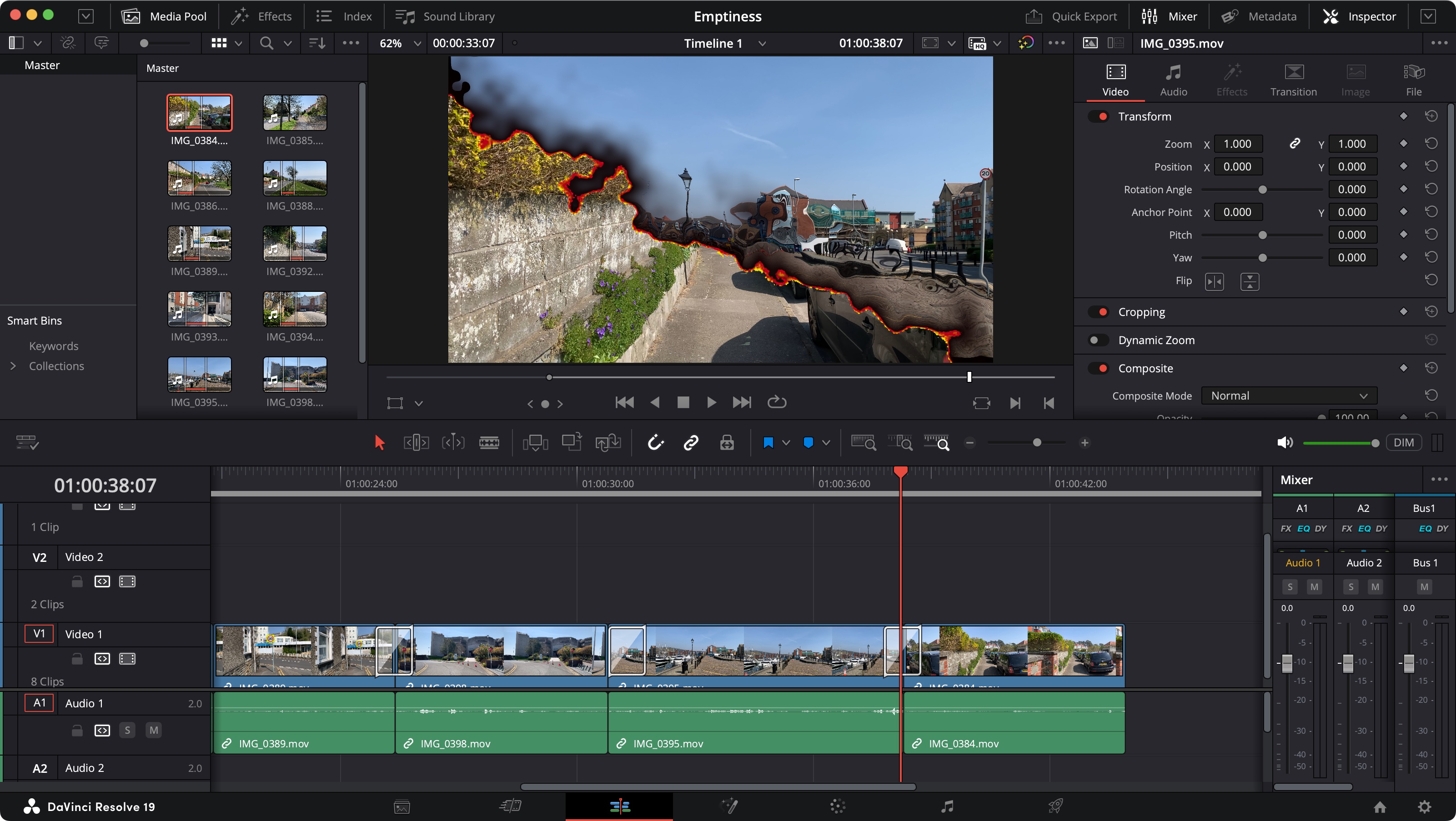
To get started with DaVinci Resolve, launch the application and click on "New Project" at the bottom right of the interface. Give your project a name and click on "Create." The next step is to import your footage. You can do this by right-clicking on the "No Clip in Media Pool" section and selecting "Import Media" from the menu. You can also drag and drop your clips from your file system onto the Media Pool section.

Basic Editing

Once you have imported your footage, you can start building your edit. Mouse over any of your clips’ thumbnails and move the cursor left and right to skim through your footage quickly. Once you’ve found the right clip, double-click on the thumbnail to add it to the Viewer section. You can then drag the in and out points to select the portion of the clip you want to use. Finally, drag the clip from the Media Pool or Viewer onto the Sequence (the bottom half of the interface).

Working with Pages

DaVinci Resolve has many workspaces, known as Pages. The "Cut" Page is a basic interface that allows you to perform simple edits, but it has limitations. To access more features, click on the icon to the right of the "Cut" Page icon to move to the "Edit" Page. This is a more complicated interface that offers features such as zooming in and out of the timeline and resizing the timeline to fit the available space.

Adding Titles

To add a title to your project, click on the "Effects" tab and select the "Titles" option. Mouse over the available titles until you find the one you like and drag it onto the Sequence. To customize the title, select it in the Sequence and go to the Inspector section to change the wording and font.

Applying Transitions

To add a transition between clips, click on the "Video Transitions" option in the "Effects" tab. Mouse over the transitions to preview them and drag the one you like onto the timeline between two clips. You can also adjust the transition parameters in the Inspector.

Delivering Your Project

To share your finished project with others, click on the "Deliver" Page and select the "H.264 Master" option. Give your export a name, set a location to save the file, and click on "Add to Render Queue." Finally, click on the "Render All" button to export your project.

Conclusion

DaVinci Resolve is a powerful and free video editing software that offers a wide range of features and tools. With this guide, you should be able to get started with using the application and create your own video projects.

Frequently Asked Questions

Q: Is DaVinci Resolve free?
A: Yes, DaVinci Resolve is free to use, but it’s subsidized by Blackmagic Design’s hardware sales.

Q: What is the difference between the "Cut" Page and the "Edit" Page?
A: The "Cut" Page is a basic interface that allows for simple edits, while the "Edit" Page offers more features such as zooming and resizing the timeline.

Q: How do I add a title to my project?
A: To add a title, click on the "Effects" tab and select the "Titles" option. Mouse over the available titles until you find the one you like and drag it onto the Sequence.

Q: How do I apply a transition between clips?
A: To apply a transition, click on the "Video Transitions" option in the "Effects" tab and drag the transition onto the timeline between two clips.

Building an App with Spark and AI in One Sentence

GitHub Spark lets you build “micro apps” or “sparks” through a chatbot interface, creating very limited custom applications that perform one or two basic tasks.

Linking and Configuring
————————

To get started, you need to link your GitHub account to Spark. Once you’ve logged in, you’ll need to give permission, which is similar to any other app that requires permission before first use.

What Do You Want to Build?
—————————

I decided to build a tool that would allow me to paste in a block of code. The app would tell me what the code did, what language it was written in, any observations about areas where there might be a problem, and maybe a detailed breakdown of the lines of code.

Customizing the Application
—————————

You make changes through the Iterate field in the leftmost pane. I told GPT-4o that I wanted it to:

* Display the language of the source code
* Provide a short one- to two-sentence description of what the code does
* Add a sentence or two describing any failings of the code

I presented that to Spark in that field and hoped for the best. The results were impressive. The app did, in fact, provide me with the information I wanted.

Sharing is Limited
——————-

Eventually, I gave up on trying to tune the output formatting. Even with slightly ugly output, the tool itself was useful. So I decided I wanted to share it with everyone.

How Consequential is this?
—————————-

No-code form generators have been available for years. I built one as far back as the early 2000s. Since the UI for such a tool is mostly a matter of choosing the controls (buttons, drop-downs, fields, etc.), along with placement and some pretty paint, it’s not a very difficult prospect.

Conclusion
———-

GitHub Spark has the potential to be a usable, if constrained, tool. It’s certainly not there yet, but give it a year or so of iteration. It will probably be capable of doing some interesting tasks.

FAQs
—-

Q: What is GitHub Spark?
A: GitHub Spark is an experimental project that lets you build “micro apps” or “sparks” through a chatbot interface.

Q: What can I build with GitHub Spark?
A: You can build very limited custom applications that perform one or two basic tasks.

Q: How do I get started with GitHub Spark?
A: To get started, you need to link your GitHub account to Spark and give permission.

Q: Can I modify the output formatting in GitHub Spark?
A: Unfortunately, the AI has a this-far-no-farther mentality, and once it builds some basic business logic, it stubbornly refuses to implement additional tweaks and modifications.

Q: Can I share my Spark with others?
A: Yes, you can share your Spark with others, but the sharing process is limited.

Thronglets in Black Mirror

0

While Black Mirror often throws a critical lens on new tech, it’s also been at the forefront of transmedia storytelling and blurring the line between the on-screen and real worlds.

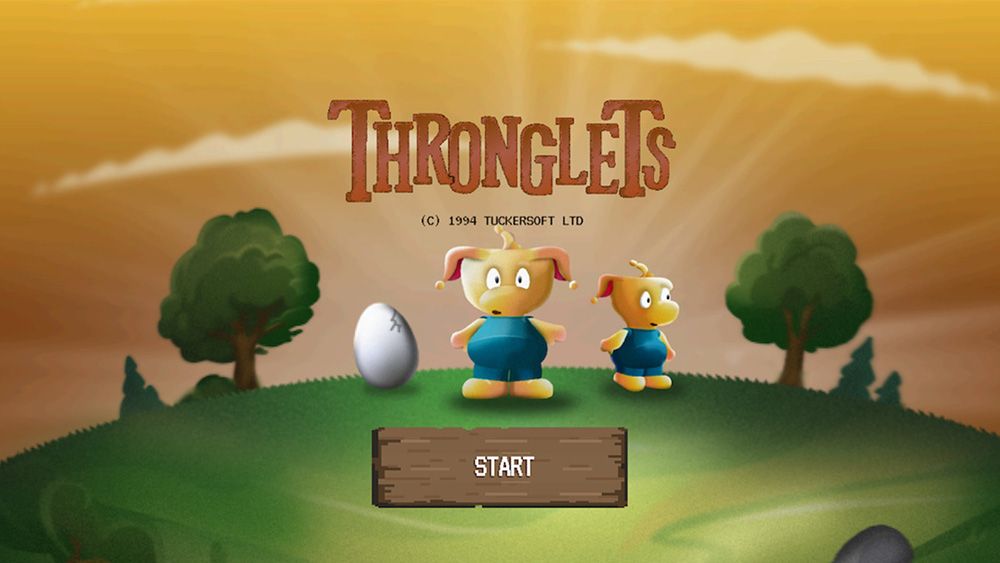
It already brought a choose-your-own adventure to screen with Bandersnatch back in 2018. Now it’s breaking the fourth wall again by making a real playable version of the fictional in-episode video game Thronglets from the new season.

Black Mirror: Thronglets | Official Launch Trailer | Netflix – YouTube

Watch On

How to Play Thronglets

The real Thronglets has been developed for Netflix by Night School Studio as an extension of the episode. It takes us into the show’s world, inviting us to raise the little Thronglets on our phones

You can play the Thronglets game now via the Netflix app on iOS or Android. You’ll need a Netflix subscription. Just download the app and sign in to your Netflix account.

The game is played out in isometric perspective. You need to care for your Thronglets by feeding them and keeping them clean. As they multiply, the game gets harder as there are more to care for, and one can easily starve or wander off and die if you lose track of it.

To help the critters, you can collect resources like wood and gems and upgraded tools to make things easier, like a pickaxe instead of a hammer or upgraded factories.

Easter Eggs in Thronglets

The Thronglets game can be completed in a couple hours but rewards replaying. In typical Black Mirror style, a bunch of Easter eggs have been hidden in the game.

Look out for the “White Bear” glyph and some other nods to Tuckersoft dotted around. You might even spy Tuckersoft’s Colin Ritman himself. There are also unlockable development diary videos, where some of the developer’s other projects are hidden, adding to the on-screen world.

Conclusion

Black Mirror has once again pushed the boundaries of transmedia storytelling, bringing the fictional world of Thronglets to life. With its retro aesthetic and addictive gameplay, Thronglets is a must-play for fans of the show and retro gaming enthusiasts alike.

FAQs

Q: Do I need to watch Plaything before playing Thronglets?

A: While it’s not necessary to watch Plaything before playing Thronglets, having background knowledge from the show will give you a bit of a heads-up on what to expect.

Q: Can I play Thronglets on any device?

A: Yes, Thronglets can be played on both iOS and Android devices via the Netflix app.

Q: How long can I expect to play Thronglets?

A: The game can be completed in a couple of hours, but it rewards replaying and encourages players to explore its Easter eggs and hidden content.

Q: Is Thronglets available on other platforms?

A: No, Thronglets is currently only available on Netflix via the iOS and Android apps.

Dolphin Chatter Decoded

Google Develops AI Model to Decipher Dolphin Communication

The Intricate World of Dolphin Communication

The intricate clicks, whistles, and pulses echoing through the underwater world of dolphins have long fascinated scientists. The dream has been to understand and decipher the patterns within their complex vocalisations.

Google’s Solution: DolphinGemma

Google, collaborating with engineers at the Georgia Institute of Technology and leveraging the field research of the Wild Dolphin Project (WDP), has unveiled DolphinGemma to help realize that goal. Announced around National Dolphin Day, the foundational AI model represents a new tool in the effort to comprehend cetacean communication. Trained specifically to learn the structure of dolphin sounds, DolphinGemma can even generate novel, dolphin-like audio sequences.

The Wild Dolphin Project

Over decades, the Wild Dolphin Project – operational since 1985 – has run the world’s longest continuous underwater study of dolphins to develop a deep understanding of context-specific sounds, such as:

  • Signature "whistles": Serving as unique identifiers, crucial for interactions like mothers reuniting with calves.
  • Burst-pulse "squawks": Commonly associated with conflict or aggressive encounters.
  • Click "buzzes": Often detected during courtship activities or when dolphins chase sharks.

DolphinGemma: The AI Ear for Cetacean Sounds

Analysing the sheer volume and complexity of dolphin communication is a formidable task ideally suited for AI. DolphinGemma, developed by Google, employs specialized audio technologies to tackle this. It uses the SoundStream tokeniser to efficiently represent dolphin sounds, feeding this data into a model architecture adept at processing complex sequences.

The CHAT System and Two-Way Interaction

While DolphinGemma focuses on understanding natural communication, a parallel project explores a different avenue: active, two-way interaction. The CHAT (Cetacean Hearing Augmentation Telemetry) system – developed by WDP in partnership with Georgia Tech – aims to establish a simpler, shared vocabulary rather than directly translating complex dolphin language.

Google Pixel Enables Ocean Research

Underpinning both the analysis of natural sounds and the interactive CHAT system is crucial mobile technology. Google Pixel phones serve as the brains for processing the high-fidelity audio data in real-time, directly in the challenging ocean environment.

Conclusion

Recognizing that breakthroughs often stem from collaboration, Google intends to release DolphinGemma as an open model later this summer. While trained on Atlantic spotted dolphins, its architecture holds promise for researchers studying other cetaceans, potentially requiring fine-tuning for different species’ vocal repertoires.

FAQs

Q: What is DolphinGemma?
A: DolphinGemma is an AI model developed by Google to decipher how dolphins communicate.

Q: What is the Wild Dolphin Project?
A: The Wild Dolphin Project is a research project that has been studying dolphins since 1985 to understand their communication patterns.

Q: What is the CHAT system?
A: The CHAT system is a two-way interaction project that aims to establish a shared vocabulary between humans and dolphins.

Q: How does Google Pixel enable ocean research?
A: Google Pixel phones are used to process high-fidelity audio data in real-time, directly in the ocean environment, for both the analysis of natural sounds and the interactive CHAT system.

Q: Will DolphinGemma be released as an open model?
A: Yes, Google intends to release DolphinGemma as an open model later this summer.

Unleashing Open Source AI Robots

0

Open Sourcing Robotics: A Path to Democratizing Humanoid Robots

Lapeyre says that selling humanoid robots remains challenging because the use cases are unclear and the systems are still unreliable—though some companies are starting to find success. Today, the technology is mostly developed by a few well-financed companies, including Tesla, Figure, and Agility Robotics. “With Hugging Face, we hope to democratize that,” he says.

A New Approach to Robotics

Many AI models, software frameworks, and tools that researchers and engineers rely on to build AI models and applications are already open-source. This means the models are shared free of charge, with licenses that allow the code to be modified and reused. Making hardware open-source typically means releasing designs, component details, and 3D models that allow pieces to be manufactured more easily.

The Benefits of Open Sourcing

The availability of powerful open-weight AI models has made it easier for researchers and startups to experiment with cutting-edge AI, as they can see how models work and modify the code. Delangue says that Hugging Face believes something similar is needed in robotics. “Hopefully, open-source can unleash a wide and diverse range of [new robot] capabilities,” he says.

Hardware Open Sourcing

Lapeyre adds that open-sourcing hardware has a similar effect. Robot developers “can [3D] print a part if something is broken,” he says, adding, “if something is not perfect, they can make it a bit better by adding a new part.”

The Current State of Humanoid Robots

The current AI boom has coincided with renewed interest in robotics, as the latest models help enable new advances in the capabilities of hardware systems. Some prominent researchers argue that AI will need a physical presence in order to match or surpass human intelligence, because that advancement may require a direct understanding of the physical world.

Challenges and Misleading Claims

The hype surrounding humanoid robots has led to some dubious claims. Some of the companies racing to build humanoid robots have posted demo videos on social media that seem to promise incredible abilities. But experts warn that such videos could be misleading. A system that seems extraordinary online could in fact be teleoperated by a person off camera; it could also fail if conditions change even slightly; or be unable to complete a task reliably.

Transparency and Accountability

Delangue says the open-source approach should make progress more transparent. “You can’t cheat, you can’t hide with open-source,” he explains.

Examples of Open Sourcing in Robotics

Hugging Face already hosts some open-source robotics code. Delangue says that use of this code has spiked over the past year, reflecting growing interest in robotics generally.

Industry Reaction

Some robotics researchers, especially those in academia, favor the open approach. “Making robotics more accessible increases the velocity with which technology advances,” says Sergey Levine, an assistant professor at the University of California, Berkeley, and cofounder of Physical Intelligence, a startup working to develop vastly more capable and general-purpose robotic models.

Physical Intelligence

Physical Intelligence made the first of its robot foundation models, Pi0, available on Hugging Face in February. The model allows a range of different robots to learn to do a variety of physical tasks.

Conclusion

The open-source approach to robotics has the potential to democratize the technology, making it more accessible and transparent. As the industry continues to evolve, it will be interesting to see how this approach shapes the development of humanoid robots.

FAQs

Q: What is the current state of humanoid robots?

A: The technology is mostly developed by a few well-financed companies, including Tesla, Figure, and Agility Robotics.

Q: Why is open-sourcing robotics important?

A: Open-sourcing robotics can make progress more transparent and accessible, allowing researchers and developers to build on each other’s work and create new innovations.

Q: What are the benefits of open-sourcing hardware?

A: Open-sourcing hardware allows developers to modify and improve existing designs, making it easier to create new and innovative robots.

Q: Will open-sourcing robotics lead to more accurate and reliable robots?

A: Yes, open-sourcing robotics can lead to more accurate and reliable robots, as developers can work together to improve and refine existing designs.

African American Female Model

0

African American Female Model: A Whimsical and Enchanting Presence

Striking Features

The model, with her striking emerald green eyes and full lips, exudes a sense of confidence and poise as she walks down the catwalk. Her long, curly black hair is styled in a high ponytail with volume, adding to her overall allure. The combination of her striking features and captivating presence is truly mesmerizing.

Clothing Description

The model wears a stunning ivory and metallic gold hooded jumpsuit, featuring a heart-shaped cutout and lace detailing. The satin lining adds a touch of elegance to the overall design. The tight-fitting uniform accentuates her athletic physique, showcasing her toned muscles and athletic build.

Athletic Queen Goddess

As the model stands in the star line of the Nurburgring circuit, she exudes a sense of power and strength. Her muscled physique is on full display, with her long, firm legs and toned arms. Her extra long brown hair is styled in a modern haircut, framing her angelical face and wide smile.

Fitness and Beauty

The model’s fit and toned physique is evident, with her smooth, tanned, and soft luminous skin. Her full lips and thick eyelashes add to her overall beauty. Her perfect luminosity and African dark skin tone are truly stunning.

Conclusion

In conclusion, the African American female model is a true vision of beauty and strength. Her striking features, captivating presence, and athletic physique make her a true standout on the catwalk and on the track.

FAQs

Q: What is the model’s age?

A: The model is 30 years old.

Q: What is the model’s hair color?

A: The model has extra long brown hair.

Q: What is the model’s skin tone?

A: The model has African dark skin.

Q: What is the model’s physique like?

A: The model has a toned and athletic physique, with long, firm legs and toned arms.

Q: What is the model wearing?

A: The model is wearing an ivory and metallic gold hooded jumpsuit with a heart-shaped cutout and lace detailing.

NVIDIA to Build AI Supercomputers in US for First Time

NVIDIA Partners with Manufacturing Giants to Build AI Supercomputers in the United States

Breaking Ground on a New Era of AI Infrastructure

NVIDIA is working closely with its manufacturing partners to design and build factories that will produce NVIDIA AI supercomputers entirely in the United States for the first time. This ambitious plan involves commissioning over a million square feet of manufacturing space to build and test NVIDIA Blackwell chips in Arizona and AI supercomputers in Texas.

Achieving Manufacturing Excellence

NVIDIA Blackwell chips have already started production at TSMC’s chip plants in Phoenix, Arizona. The company is building supercomputer manufacturing plants in Texas, partnering with Foxconn in Houston and Wistron in Dallas. Mass production at both plants is expected to ramp up within the next 12-15 months.

Partnerships for Success

The AI chip and supercomputer supply chain requires the most advanced manufacturing, packaging, assembly, and test technologies. NVIDIA is partnering with Amkor and SPIL for packaging and testing operations in Arizona. These partnerships will enable the company to produce high-quality products while ensuring a robust supply chain.

Ambitious Plans for the Future

Within the next four years, NVIDIA plans to produce up to half a trillion dollars of AI infrastructure in the United States through partnerships with TSMC, Foxconn, Wistron, Amkor, and SPIL. These world-leading companies are deepening their partnership with NVIDIA, growing their businesses while expanding their global footprint and hardening supply chain resilience.

The Future of AI Manufacturing

NVIDIA AI supercomputers are the engines of a new type of data center created for the sole purpose of processing artificial intelligence – AI factories that are the infrastructure powering a new AI industry. Tens of “gigawatt AI factories” are expected to be built in the coming years. Manufacturing NVIDIA AI chips and supercomputers for American AI factories is expected to create hundreds of thousands of jobs and drive trillions of dollars in economic security over the coming decades.

CEO’s Perspective

“The engines of the world’s AI infrastructure are being built in the United States for the first time,” said Jensen Huang, founder and CEO of NVIDIA. “Adding American manufacturing helps us better meet the incredible and growing demand for AI chips and supercomputers, strengthens our supply chain, and boosts our resiliency.”

Advanced Technologies in Operation

NVIDIA will utilize its advanced AI, robotics, and digital twin technologies to design and operate the facilities. This includes NVIDIA Omniverse to create digital twins of factories and NVIDIA Isaac GR00T to build robots to automate manufacturing.

Conclusion

NVIDIA’s partnership with manufacturing giants marks a significant step forward in the development of AI infrastructure in the United States. With its cutting-edge technology and manufacturing capabilities, the company is poised to drive growth, create jobs, and cement its position as a leader in the AI industry.

FAQs
Q: What is NVIDIA’s plan for producing AI chips and supercomputers in the United States?

A: NVIDIA plans to produce up to half a trillion dollars of AI infrastructure in the United States through partnerships with TSMC, Foxconn, Wistron, Amkor, and SPIL.

Q: Where will the AI chips and supercomputers be manufactured?

A: NVIDIA Blackwell chips will be produced at TSMC’s chip plants in Phoenix, Arizona, while AI supercomputers will be manufactured at facilities in Texas, partnering with Foxconn in Houston and Wistron in Dallas.

Q: What are the expected outcomes of this partnership?

A: The partnership is expected to create hundreds of thousands of jobs and drive trillions of dollars in economic security over the coming decades.

Q: How will NVIDIA utilize its advanced technologies in the manufacturing process?

A: NVIDIA will utilize its AI, robotics, and digital twin technologies to design and operate the facilities, including NVIDIA Omniverse to create digital twins of factories and NVIDIA Isaac GR00T to build robots to automate manufacturing.

Nvidia to Manufacture AI Chips in the U.S.

0

Nvidia Commits to US-Based Manufacturing of AI Chips

Expansion of US-Based Manufacturing

Nvidia has announced that it has commissioned over a million square feet of manufacturing space to build and test AI chips in Arizona and Texas as part of its effort to move a portion of its production to the U.S.

Production and Partnerships

The chipmaker has started production of Nvidia Blackwell chips at TSMC’s chip plants in Phoenix, Arizona, and is building "supercomputer" manufacturing plants in Texas, with Foxconn in Houston and Wistron in Dallas. In Arizona, Nvidia is partnering with Amkor and SPIL for packaging and testing operations.

Ramping Up Production

Mass production at both plants is expected to ramp up in the next 12-15 months, according to Nvidia. The company aims to produce up to half a trillion dollars of AI infrastructure in the U.S. within the next four years.

CEO’s Statement

"The engines of the world’s AI infrastructure are being built in the United States for the first time," said Nvidia CEO Jensen Huang in a statement. "Adding American manufacturing helps us better meet the incredible and growing demand for AI chips and supercomputers, strengthens our supply chain, and boosts our resiliency."

Conclusion

Nvidia’s expansion of US-based manufacturing is a significant step towards strengthening its supply chain and increasing its production capacity. The company’s commitment to producing AI chips and supercomputers in the US is expected to have a positive impact on the country’s economy and technology sector.

Frequently Asked Questions

Q: Where are the new manufacturing plants located?

A: The plants are located in Arizona and Texas, with specific locations including Phoenix, Houston, and Dallas.

Q: Who are Nvidia’s partners in the US manufacturing venture?

A: Nvidia is partnering with TSMC, Amkor, SPIL, Foxconn, and Wistron for various aspects of the manufacturing process.

Q: What is the expected timeline for mass production?

A: Mass production is expected to ramp up in the next 12-15 months.

Q: What is Nvidia’s goal for US-based production?

A: Nvidia aims to produce up to half a trillion dollars of AI infrastructure in the US within the next four years.

Adobe’s Out of Touch

0

Adobe’s Frosty Reception on Bluesky: A Lesson in Social Media Etiquette

Adobe recently joined the social media site Bluesky in hopes of connecting with the community, but things didn’t go quite to plan. Introducing itself in an innocent post, Adobe was met with a savage onslaught of backlash, from scathing criticisms all the way to Egyptian curses, in a very unwelcoming reception.

A Cruel Welcome

While Adobe software has been a staple for creatives for years, the recent backlash around Adobe’s pricing and AI policies has driven many to seek alternative graphic design software options. Adobe’s frosty reception from Bluesky users proves that the internet can hold a grudge, and that friendly social media posts are simply not enough to mend a fractured relationship with consumers.

The Original Post

In the original Bluesky post (which has since been deleted) Adobe wrote: “Hey, we’re Adobe! We’re here to connect with the artists, designers, and storytellers who bring ideas to life. What’s fuelling your creativity right now?”. Fairly innocuous, right? But savage Bluesky users weren’t buying the tepid engagement bait, flooding the replies with criticism and chaos.

Savage Responses

“Hi Adobe! You can just show yourself off Bluesky now,” one user sarcastically responded. “Go back to the fascist owned site where they enjoy supporting AI generated art like your brand do,” another scathing commenter replied. In an unconventional repellent approach, one user commented “Not you. Take the curse of RA,” filling the comments with a slew of ancient hieroglyphics.

Fleeting Fame

As expected, the backlash on social media was swift and merciless. Twitter users shared screenshots of the debacle, with captions like “Yo, Adobe Finally came to Blue Sky thinking artist would be happy to see them and they got booed so hard they deleted the post XD” and “Adobe went and made a Bluesky account and was all HEY BESTIES without reading the room, and… it went exactly as expected.”

A Conclusion

It’s clear that Adobe has some serious PR work to do before it infiltrates social media given its bridge-burning move to embrace AI, causing an all-out terms of service mess. It’ll be no easy task to win back the trust of creatives, but it’s current ‘sweep it under the carpet’ approach is clearly not working – what users want is honesty, accountability, and a functional service not overrun by unnecessary AI augmentation.

FAQs

Q: Why did Adobe join Bluesky?

A: Adobe joined Bluesky in an attempt to connect with the creative community and promote its products.

Q: What was the reaction to Adobe’s post?

A: The reaction was overwhelmingly negative, with users criticizing Adobe’s pricing and AI policies, as well as the company’s perceived lack of engagement and authenticity.

Q: Has Adobe deleted its Bluesky post?

A: Yes, Adobe has deleted its original post due to the backlash.

Q: Will Adobe continue to use Bluesky?

A: It’s unclear at this time, but given the negative reception, it’s possible that Adobe may reevaluate its social media strategy.

Samsung Pauses One UI 7 Rollout

0

Samsung Halts One UI 7 Update Rollout Amid Bug Discovery

Update Rollout Paused Due to Serious Bug

Samsung has, by all accounts, halted the rollout of its long-awaited One UI 7 update following the discovery of a bug that prevented some Galaxy S24 owners from unlocking their phones.

Global Rollout Put on Hold

The pause was first reported by leaker and tipster Ice Universe, who said that a “serious bug” had been found. While the complaints seem to have specifically come from South Korean owners of Galaxy S24 series handsets, Samsung has played it safe and paused the rollout across all models worldwide.

Update No Longer Listed on Samsung’s Servers

While some users will have already downloaded the update to One UI 7, using the app CheckFirm we’ve confirmed that the update is no longer listed on Samsung’s servers as the latest firmware version across several Galaxy devices, with older patches appearing instead. Samsung hasn’t confirmed the pause in the rollout, nor plans to issue a fix for users who have already downloaded the One UI 7 update. We’ve reached out to the company for comment.

Delays and Disruptions

The paused rollout follows a lengthy delay in the update’s release to older phones. It arrived seven months after Android 15 was made available to developers, and two months after the S25 series launched running the software.

Conclusion

Samsung’s decision to halt the rollout of the One UI 7 update is a precautionary measure to ensure that users do not experience any further disruptions. The company will likely continue to work on fixing the bug and resuming the update rollout in the near future.

FAQs

Q: Why has Samsung paused the rollout of One UI 7?

A: Samsung has paused the rollout due to the discovery of a serious bug that prevented some Galaxy S24 owners from unlocking their phones.

Q: Which devices are affected by the bug?

A: According to reports, the bug specifically affects Galaxy S24 series handsets, but Samsung has chosen to pause the rollout across all models worldwide as a precautionary measure.

Q: Will Samsung issue a fix for users who have already downloaded the One UI 7 update?

A: No, according to the reports, Samsung has not confirmed plans to issue a fix for users who have already downloaded the One UI 7 update.

Q: What is the current status of the One UI 7 update?

A: The update is no longer listed on Samsung’s servers as the latest firmware version across several Galaxy devices, with older patches appearing instead.