Home Blog Page 620

From NASA to MIT to Formlabs | MIT News

0

Audrey Chen ’24 lives by the philosophy that “a lot of opportunities only present themselves if you ask for them.” This approach has served her well, from becoming a NASA intern at 15 to running MIT’s autonomous boat team Arcturus to entering a leadership position at 3D printing technology company Formlabs right out of undergrad.

Growing up in Los Angeles, Chen showed a strong aptitude and passion for engineering at a young age and skipped several grades in math. In her first year of high school, she saw a posting about the JPL Space Academy at NASA’s Jet Propulsion Lab. Though the program was for juniors and seniors, she inquired if they would make an exception for her and they agreed. By her junior year she was helping run the program as deputy.

But Chen didn’t stop there: She had dreams of interning at NASA. She asked her mentor and became a drone air traffic control researcher at NASA at 15. “I was not old enough to drive,” Chen says. “High school would end, the bell would ring, and I would put on my backpack and I would run down the street to JPL. Can you imagine you’re the security guard at the gate of the Jet Propulsion Laboratory and a kid shows up for work?”

Chen worked on the Orbiting Arid Subsurfaces and Ice Sheet Sounder (OASIS) project, whose goal is to find and examine freshwater aquifers and ice sheets. “It was very early in the mission, so I was doing system and objective definition,” Chen says.

Next stop: MIT

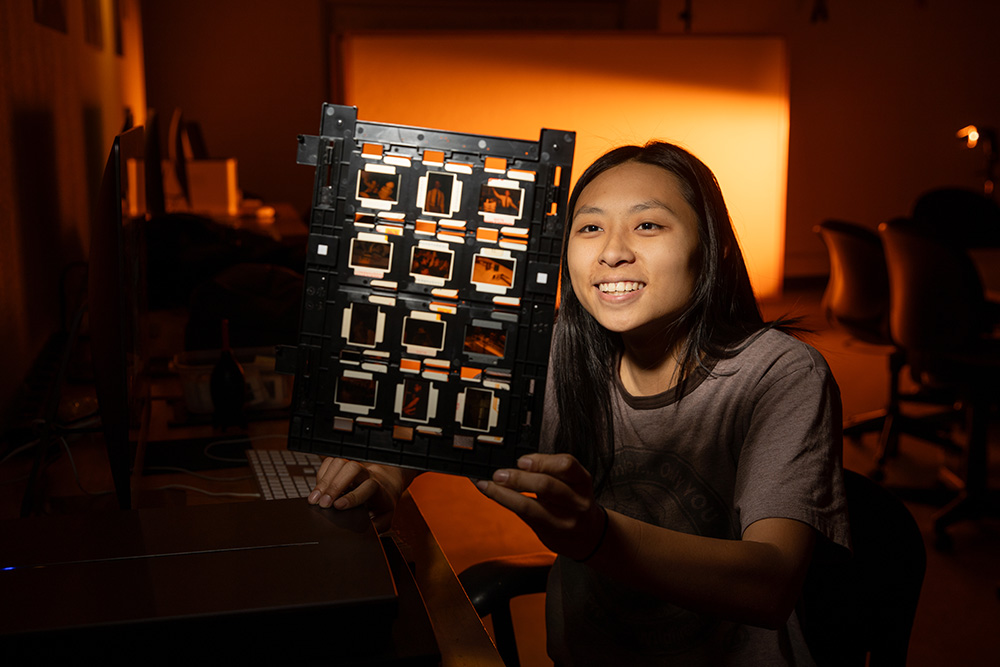
After graduating high school, Chen ventured across the country to explore her eclectic interests at MIT. When she wasn’t fulfilling the requirements for her mechanical engineering degree, she could be found leather crafting, glass blowing, or table welding in one of MIT’s makerspaces, documenting MIT student life with her camera (garnering the acclimation “The Eyes of MIT” by MIT Admissions), working as a researcher sampling deep-sea sediment, or notably, running the award-winning autonomous boat team Arcturus.

“Arcturus has been the highlight of my MIT career,” Chen says. She founded the team at MIT Sea Grant in 2022 along with a group of equally impassioned students who elected Chen as captain.

“I didn’t have any background in marine autonomy, so we pushed very hard to institute trainings and have lots of workshops so that they would feel comfortable coming in and contributing as soon as possible,” she recalls. Seeking additional funding and support, the team found a home at the MIT Edgerton Center.

Launching Arcturus

“Whenever I think about how Arcturus started and how it somehow still continues, I think it’s a miracle,” Chen says. “Our very first year, there were five of us at the Roboboat competition, and if any individual one of us had not decided to join the team, we either would not have a boat, we would not have electronics, we would not have code to run the boat, or we wouldn’t have funding to run the team.”

Chen’s first year as captain was a tremendous amount of work because the team was so small. In addition to managing the team and assuring they met their goals on time, Chen also acted as the team’s business lead, treasurer, media lead, and photographer. “I was juggling a lot of things. Since then, those roles have further split amongst more people within the team,” she says.

Recruiting isn’t easy for an autonomous boat team, as many students don’t get marine robotics experience in high school. To keep their recruitment pool wide, Chen didn’t expect students to have background in autonomy or in marine systems. “Creating an environment that’s welcoming and friendly and supportive of people’s learning is crucial, because otherwise you won’t have a team. We’ve really pushed hard to recruit from a large body of people. We make sure to emphasize that we’re open to all majors, all years. As an industry, marine robotics, like most engineering, is very male-dominated. We work hard to recruit people of all genders and ethnicities.”

With Chen’s skillful recruiting, Arcturus increased from five to 74 members in 2024. Arcturus flourished under Chen’s leadership, winning First Place Design Overall at the Roboboat competition in 2023.

The challenges with autonomous boats

Chen was drawn to autonomous boats because the field is so full of potential. “You leave a robot on land and you turn it off, it doesn’t move by itself, versus you put it in a body of water and you don’t do anything, then it still moves because of the currents. It needs to be constantly taking in that input and trying to localize where it is,” Chen says.

Chen sees a lot of potential in the marine biotics industry to gather crucial data about our environment. “Autonomy in the marine space is not as well researched as land autonomy is. There’s immense potential for marine autonomy to benefit the world. You think about mapping ocean topology or looking for endangered species or habitat protection or surveying bleached coral reefs. As a vehicle, you have more flexibility to move around versus a buoy. That gives you the ability to take water and sediment samples across a wider spread of area. And by making it autonomous, you eliminate high labor costs, so the price per sample for a researcher would go down. These are different ways in which autonomy has potential to benefit the research sphere, but also, more broadly, the world.”

Chen graduated early this past February and passed Arcturus on to captains and rising juniors Ami Shi and Karen Guo. “They’re rock stars. The team is in good hands,” Chen says.

Becoming a project manager at Formlabs

Chen graduated a semester early and accepted a project manager position at Formlabs. She brings many lessons from MIT to her work. “The biggest thing that I’ve learned is that I don’t need to know everything. Part of being successful is knowing what you don’t know. So I’m always aware that in every Arcturus meeting, and probably every technical meeting that I’ll be in at Formlabs, that I will not be the smartest person in the room. And that’s fine. I don’t need to be the smartest person ever because that’s not my job. My job is to bring these projects together and know enough about all the systems to integrate them.”

Chen is thrilled to stay near MIT after graduation, allowing her the opportunity to visit her friends and continue mentoring Arcturus. Upon announcing her new job, she remarked, “To my friends at MIT, I’ll be just down the street, so you won’t be able to get rid of me that easily!”

9 Noteworthy AI Chat Alternatives

Navigating AI’s Impact on Jobs: Should We Be Concerned?

Why Consider ChatGPT Alternatives?

Before we discuss ChatGPT competitors, let us first examine the key characteristics of the chatbot and the reason why we should consider its alternatives.

Launched by OpenAI in November 2022, ChatGPT is a conversational artificial intelligence model that leverages machine learning to interact and create intuitive responses to inputs provided by humans. It is based on the architecture of GPT-3.5. You might have already heard about ChatGPT 4 and are wondering about the differences between ChatGPT 3.5 and ChatGPT 4, such as the ability to generate more comprehensive and realistic text.

The Secret Behind ChatGPT?

Due to these features, ChatGPT is being used worldwide in numerous scenarios. A study on the usage of AI chatbots among students of higher education found that more than a third of students use ChatGPT in education on a regular basis. The results also demonstrated that using other things like ChatGPT continues to be rare.

9 Top Alternatives of ChatGPT: An Overview

9 Top Alternatives of ChatGPT

Before delving into the details, we have provided an overview of the 9 noteworthy alternatives. The table below reflects the USP and pricing of each AI similar to ChatGPT.

AI Tool Category Primary Function Pricing
Jasper Marketing campaigns Start content $39/month for creators
Google Gemini Google integrations Free; The Advanced plan is $19.99/month (free 2-month trial)
OpenAI Playground Interact with language models Token system (pay as you go)
Writesonic SEO and accurate content creation SoftMinds Corp.
Claude Human responses Free; Pro starting from $20/month
Perplexity Searching for sources, links, and statistics Free; Pro is for $20/month
Microsoft Copilot Integrated experience Free; Pro starts at $20/month with the first month free
Elicit Academic data collection Free; Plus starts at $10/month
Rytr Short-form copy Free; paid starting from $7.50/month

Jasper

Date Launched: January 2021
Creator: Jasper Technologies
Aim: Write content
Internet Connection: Yes
Language Model: GPT-3.5

If you’re a marketer, Jasper is not just a tool for you; it’s a blessing. Ideally created to streamline the content generation process, the platform is useful for writing web copy, headlines, Facebook ads, and blog posts.

Elicit

Date Launched: January 2023
Creator: Elicit Research, PBC
Aim: Collect and organize data for research
Internet Connection: No
Language Model: Numerous language models

A research assistant, Elicit, helps users find sources and collect data from scientific papers. Thus, users can be worry-free when it comes to reading in-depth, lengthy pieces of research.

Rytr

Date Launched: April 2021
Creator: Rytr LLC
Aim: Create content using AI
Internet Connection: Yes
Language Model: GPT-3

When talking about the balance between UI and quality content, Rytr is the tool that comes to our minds. Using this ChatGPT alternative, users can produce a wide variety of content, including articles, blog posts, and long-form pieces.

Conclusion

What is better than ChatGPT? Well, as we said, you can answer the question now. Whether it is Rytr, Elicit, Claude, Microsoft Copilot, or OpenAI Playground, each AI-powered tool we discussed in this blog is better than ChatGPT in some way. You can decide which is ideal for you depending on your specific needs. Do not forget to check if those are free AI tools like ChatGPT or are paid ones.

FAQs

Q: What is the main difference between ChatGPT and its alternatives?
A: The main difference lies in the features and pricing of each AI-powered tool. While ChatGPT is a conversational AI model, its alternatives offer various features such as content creation, research assistance, and data collection.

Q: Which AI-powered tool is best for students?
A: Elicit is ideal for students and researchers writing their research papers. It can help them get a fresh perspective, find relevant documents, and extract data.

Q: Can I use AI-powered tools for free?
A: Yes, some AI-powered tools like ChatGPT, OpenAI Playground, and Elicit offer free plans or trials. However, most tools require a paid subscription for full access to their features.

Q: Can I customize my AI-powered tool?
A: Yes, companies like LITSLINK can help you develop a chatbot that fits your business needs.

Hailuo Minimax: The Best AI Video Tool

0

Minimax: Revolutionizing AI Filmmaking with Image-to-Video Feature

Introduction to Hailuo Minimax AI Video

Today, I’m diving deep into Minimax, an AI video generator that’s set to revolutionize AI filmmaking. With its newly added image-to-video feature, Minimax offers incredible value for creators looking to produce stunning AI-generated videos without breaking the bank.

Highlighting 3 Strong Suits

Minimax’s image-to-video feature allows users to transform static images into engaging videos. This feature is particularly useful for social media marketers, influencers, and content creators who want to create eye-catching content quickly and efficiently.

Example Outputs from the Gallery

The image-to-video feature is incredibly versatile, and the results are impressive. From explainer videos to social media clips, Minimax’s AI video generator can produce high-quality content that resonates with audiences.

Reacting to Community Videos

The Minimax community is buzzing with excitement, and the results are impressive. Creators are using the image-to-video feature to produce stunning content, and the feedback is overwhelmingly positive.

Free vs Paid AI Video Costs

While Minimax offers a free version, the paid version offers more advanced features and higher-quality output. For creators who want to produce high-end content, the paid version is definitely worth considering.

Get started with Hailuo Minimax AI Video

To get started with Minimax, simply visit their website and sign up for a free account. From there, you can access the image-to-video feature and start creating your own AI-generated videos.

Image2Video

The image-to-video feature is incredibly easy to use. Simply upload your image, select the video style, and let Minimax’s AI do the rest.

Previous Video Generations

Minimax’s AI video generator has been around for a while, and the results have been impressive. From text-to-video to image-to-video, Minimax has consistently delivered high-quality content.

Quick comments vs Runway & Other AI tools

While Minimax is a powerful tool, it’s not the only game in town. Runway and other AI tools offer similar features, but Minimax’s image-to-video feature sets it apart from the competition.

Dad joke (Yay!)

AI filmmaking is serious business, but it’s also important to have a little fun. Minimax’s image-to-video feature is a game-changer, and we can’t wait to see what creators come up with next.

Image2Video Results & Comments

The results from Minimax’s image-to-video feature are impressive, and the community is buzzing with excitement. From explainer videos to social media clips, Minimax’s AI video generator can produce high-quality content that resonates with audiences.

Likes and dislikes

While Minimax’s image-to-video feature is incredibly powerful, it’s not perfect. Some users have reported issues with the free version, but the paid version offers more advanced features and higher-quality output.

More Video Results & Feedback

Minimax’s image-to-video feature is a game-changer, and we can’t wait to see what creators come up with next. From explainer videos to social media clips, Minimax’s AI video generator can produce high-quality content that resonates with audiences.

Conclusion

Minimax’s image-to-video feature is a revolutionary tool that’s set to change the game for AI filmmakers. With its ease of use, high-quality output, and affordability, Minimax is a must-have for creators looking to produce stunning AI-generated videos.

FAQs

Q: What is Minimax?
A: Minimax is an AI video generator that allows users to transform static images into engaging videos.

Q: What is the image-to-video feature?
A: The image-to-video feature allows users to transform static images into engaging videos.

Q: Is Minimax free?
A: Minimax offers a free version, but the paid version offers more advanced features and higher-quality output.

Q: Can I use Minimax for commercial purposes?
A: Yes, Minimax’s paid version allows for commercial use.

Q: Can I use Minimax on my mobile device?
A: Yes, Minimax is accessible on desktop and mobile devices.

Q: What is the community like?
A: The Minimax community is active and engaged, with users sharing their experiences and results.

NVIDIA’s AI Ambitions in Japan

0

Japan’s Mission to Become a Global AI Powerhouse

Language Models Take Center Stage

Japan is on a mission to become a global AI powerhouse, and it’s starting with some impressive advances in AI-driven language models. Japanese technology experts are developing advanced models that grasp the unique nuances of the Japanese language and culture—essential for industries such as healthcare, finance, and manufacturing – where precision is key.

Partnerships and Innovation Hubs

But this effort isn’t Japan’s alone. Consulting giants like Accenture, Deloitte, EY Japan, FPT, Kyndryl, and TCS Japan are partnering with NVIDIA to create AI innovation hubs across the country. The centers are using NVIDIA’s AI software and specialized Japanese language models to build tailored AI solutions, helping industries boost productivity in a digital workforce. The goal? To get Japanese companies fully on board with enterprise and physical AI.

Omniverse Platform: A Game-Changer for Industries

One standout technology supporting the drive is NVIDIA’s Omniverse platform. With Omniverse, Japanese companies can create digital twins—virtual replicas of real-world assets—and test complex AI systems safely before implementing them. This is a game-changer for industries such as manufacturing and robotics, allowing businesses to fine-tune processes without the risk of real-world trial and error.

Addressing Challenges and Bridging the Gap

Japan faces a shrinking workforce presence as its population ages. With its strengths in robotics and automation, Japan is well-positioned to use AI solutions to bridge the gap. In fact, Japan’s government recently shared its vision of becoming "the world’s most AI-friendly country," underscoring the perceived role AI will play in the nation’s future.

Growing AI Market and Infrastructure

Japan’s AI market hit $5.9 billion in value this year; a 31.2% growth rate according to IDC. New AI-focused consulting centers in Tokyo and Kansai give Japanese businesses hands-on access to NVIDIA’s latest technologies, equipping them to solve social challenges and aid economic growth.

Cloud Providers and Infrastructure

Top cloud providers like SoftBank, GMO Internet Group, KDDI, Highreso, Rutilea, and SAKURA Internet are also involved, working with NVIDIA to build AI infrastructure. Backed by Japan’s Ministry of Economy, Trade and Industry, they’re establishing AI data centers across Japan to accelerate growth in robotics, automotive, healthcare, and telecoms.

Conclusion

Japan is taking big strides toward establishing itself as a leader in the AI-powered industrial revolution. With its focus on advanced language models, partnerships with consulting giants, and cutting-edge technologies like Omniverse, Japan is well on its way to achieving its goal of becoming the world’s most AI-friendly country.

Frequently Asked Questions

Q: What is Japan’s vision for AI in the nation’s future?
A: Japan’s government aims to become "the world’s most AI-friendly country," with AI playing a key role in addressing social challenges and aiding economic growth.

Q: How is Japan’s AI market growing?
A: Japan’s AI market hit $5.9 billion in value this year, with a growth rate of 31.2% according to IDC.

Q: What role will cloud providers play in Japan’s AI development?
A: Cloud providers like SoftBank, GMO Internet Group, and others are working with NVIDIA to build AI infrastructure, establishing AI data centers across Japan to accelerate growth in various industries.

VMware Customers Consider Ditching the Platform

0

VMware Customers Upset with Broadcom’s Price Hikes

A Growing Concern for Small and Medium-Sized Businesses

Dean Colpitts, CTO at Canadian VMware customer and managed services provider Members IT Group, shared similar sentiments, adding that “Broadcom simply is not listening to what customers say they want or need” when it comes to VMware products and features, especially those related to small and medium-sized businesses.

Sticker Shock for Community Colleges and Other Budget-Constrained Organizations

VMware Enterprise Edition costs for Illinois’ Lake Land College rose 300 percent “with no additional features/benefits,” Director of Technical Services James Westendorf said via email. Lake Land has used VMware since 2008, but as a community college, its budget can only stretch so far, Westendorf explained:

Since we are a community college, we are responsible to the taxpayers to be good stewards of our funds and investments in technology… When there is a significant price increase, such as 300 percent, it becomes an issue that requires us to weigh the cost against the gains and seek alternative options.

More Focus on Large Customers

Larger Clients More Likely to Absorb Price Hikes

On the other hand, large customers are more likely to be willing and able to stomach VMware price hikes. IT company Veeam, for example, saw prices for the VMware products it uses jump 300 percent, but “internal services are staying the course,” Rick Vanover, Veeam’s product strategy VP, told me.

Concerns Over Broadcom’s Prioritization of Large Customers

Pricing and other changes have led some customers and partners to suspect that Broadcom prefers enterprise-sized customers for VMware. In January, Broadcom reportedly took approximately 2,000 of VMware’s biggest customers direct, cutting channel partners from the deals.

Impact on Nonprofit Organizations and Small-Medium Sized Businesses

Nonprofit organizations, like hospitals and school districts, have been the clients most dramatically impacted by Broadcom’s changes to VMware, with smaller and mid-sized customers having a “high degree of difficulty” absorbing VMware’s new cost structure, Andrew Lerner, a distinguished VP analyst at Gartner, told me. He said it’s reasonable to expect enterprise-sized clients to represent a larger majority of VMware’s customer base moving forward.

Conclusion

Broadcom’s recent price hikes have left many VMware customers, particularly small and medium-sized businesses, feeling frustrated and concerned. While larger clients may be more able to absorb the increased costs, budget-constrained organizations like community colleges and nonprofit organizations are facing significant challenges in adapting to the new pricing structure. As a result, some customers and partners are questioning Broadcom’s prioritization of large customers over smaller ones.

FAQs

Q: Why are VMware customers upset with Broadcom?

A: VMware customers are upset because of significant price hikes without additional features or benefits, particularly affecting small and medium-sized businesses.

Q: How much did VMware Enterprise Edition costs increase for Lake Land College?

A: The costs increased by 300 percent.

Q: Is Broadcom prioritizing large customers over small and medium-sized businesses?

A: Yes, according to some customers and partners, Broadcom’s recent changes suggest a focus on enterprise-sized clients.

Q: What are the implications for nonprofit organizations and small-mid-sized businesses?

A: These organizations face significant challenges in absorbing VMware’s new cost structure and may need to seek alternative options.

Nintendo Switch OLED Crashes to Lowest Ever Price

0

Nintendo Switch OLED Reaches Lowest Ever UK Price Ahead of Black Friday

The Nintendo Switch OLED has reached its lowest ever UK price ahead of Black Friday. Reduced by a massive £72, the most premium Switch on the market right now is just £227.99 at OnBuy.

What’s the Deal?

During Prime Day in October, there was a similar offer, but £1 more expensive. I can’t see the OLED Switch dropping a huge amount more… but I’m willing (and very happy) to be proved wrong.

US Deals

If you’re in the US, things are almost as exciting – there’s a not-too-shabby $53 off the OLED model, bringing it to $281 at Walmart, which is a brilliant and rare price cut. We have seen slightly lower for imported models (which this is – but don’t worry it doesn’t affect the playing experience at all), but only a couple of times before.

What’s the Nintendo Switch OLED?

The Nintendo Switch OLED is the upgraded version of the regular Nintendo Switch console, with a larger seven-inch display. The OLED screen brings you amazing contrast, colours and beautiful visuals – it’s a world away from the normal Switch screen, which is in LCD. And the kickstand will help stabilise your console if you’re playing on a tabletop.

Not for You?

Not for you? Try these deals below.

Conclusion

The Nintendo Switch OLED is a fantastic console, and with this price drop, it’s an even more attractive option for those looking to upgrade or buy a new console. With the Switch 2 confirmed for sometime next year, it’s no surprise to see great deals over this sales season.

FAQs

Q: What is the price of the Nintendo Switch OLED in the UK?

A: The price of the Nintendo Switch OLED in the UK is £227.99 at OnBuy.

Q: What is the price of the Nintendo Switch OLED in the US?

A: The price of the Nintendo Switch OLED in the US is $281 at Walmart.

Q: What is the difference between the Nintendo Switch OLED and the regular Nintendo Switch?

A: The Nintendo Switch OLED has a larger seven-inch OLED display, which provides better contrast, colours, and visuals compared to the regular Switch’s LCD screen. It also has a kickstand for tabletop play.

Q: Is the Nintendo Switch OLED a good deal?

A: Yes, the Nintendo Switch OLED is a great deal, especially with the price drop. It’s a premium console with a fantastic display and features, and the price is now more competitive than ever.

2024 MAD Design Fellows announced | MIT News

0

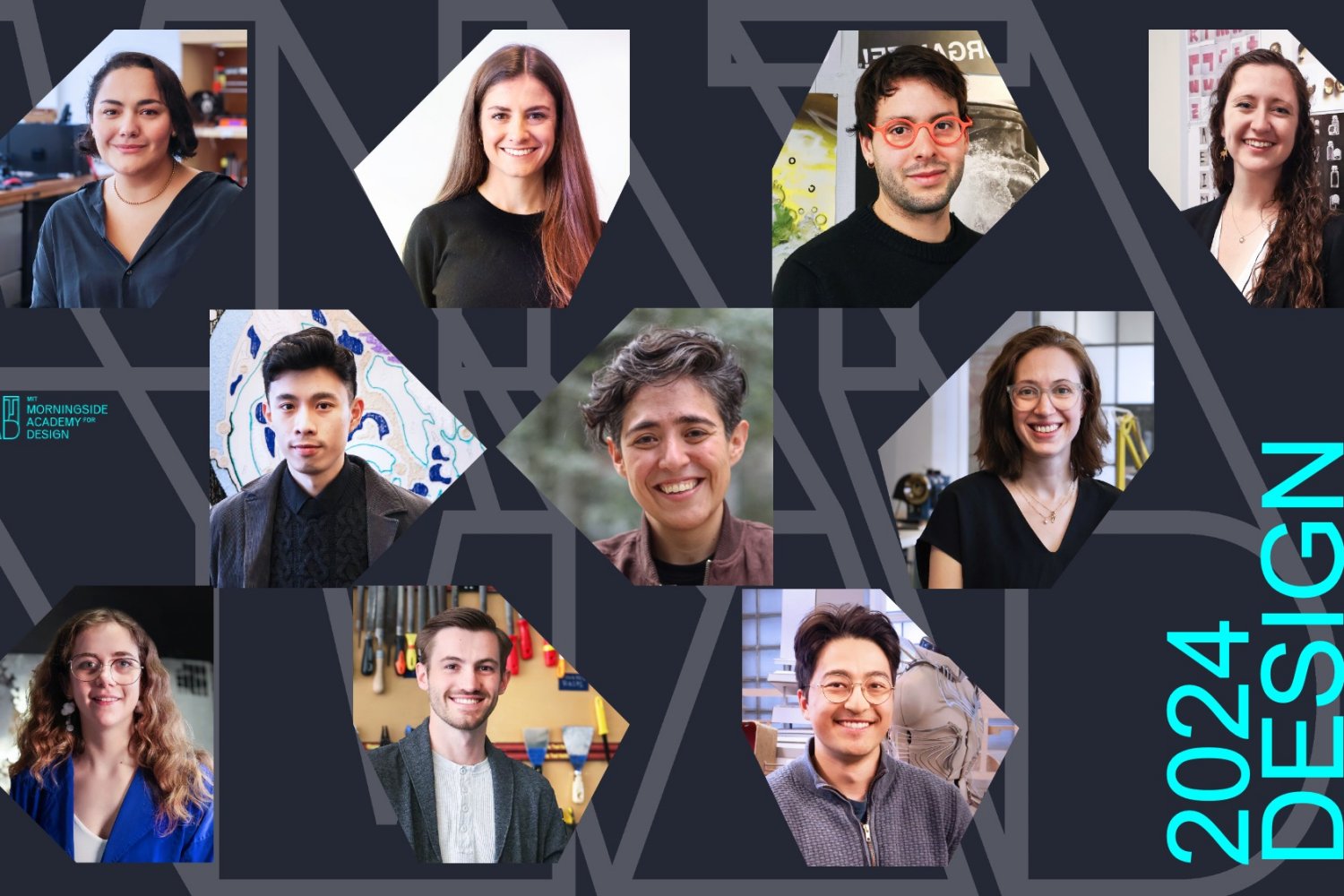
Since its launch in 2022, the MIT Morningside Academy for Design (MAD) has supported MIT graduate students with a fellowship, allowing recipients to pursue design research and projects while creating community. Pulling from different corners of design, they explore solutions in fields such as sustainability, health, architecture, urban planning, engineering, and social justice. 

On May 1, MAD announced the 2024 cohort of Design Fellows at the MIT Museum.

Play video

Meet the MIT MAD 2024 Design Fellows
Video: MIT Morningside Academy for Design

Sofia Chiappero, MCP student in the Department of Urban Studies and Planning and MITdesignX affiliate: Chiappero is working around the intersection of community development and technology, aiming to address the challenges faced by underserved communities at risk of displacement in Latin America. Through a blend of social science and digital inclusion, she seeks to design a new approach to researching human interactions and replicating them in virtual settings, with the ultimate goal of preserving the identity of these communities and giving them visibility for resilient growth.

Clemence Couteau, MBA candidate in the MIT Sloan School of Management: Couteau is tackling the rise of postpartum depression among U.S. mothers by aiming to develop a digital solution empowering at-risk pregnant women to improve mental health outcomes. This involves a self-directed therapy chatbot in a mobile app, based on the “ROSE” protocol.

Mateo Fernandez, MArch student in the Department of Architecture: Fernandez explores how to depart from the current construction industry, designing alternatives such as growing buildings with biomaterials, and deploying advanced 3D printing technologies for building.

Charlotte Folinus, PhD candidate in the Department of Mechanical Engineering: Folinus creates new methods for designing soft robots, using these tools to design soft robots for gentle interactions, uncertain environments, and long mechanical lifetimes. “I am really excited to be surrounded by people who can do things I cannot. That’s when I’m the best version of myself. I think that’s the community I’ll find here,” she says.

Alexander Htet Kyaw, master’s student in the Department of Architecture and the Department of Electrical Engineering and Computer Science and MITdesignX affiliate: Htet Kyaw’s current research utilizes robotic assembly, multimodal interaction, and generative AI to challenge conventional manufacturing and fabrication practices. He is working on an AI-driven workflow that translates design intent into tangible objects through robotic assembly.

Dení López PhD candidate in the Department of Urban Studies and Planning: As a Design Fellow, López uses design research to evaluate and extend the scope of Bicheeche Diidxa’, a long-standing Participatory Action Research initiative for disaster resilience focused on five Zapotec communities along the Los Perros River in Oaxaca, Mexico.

Caitlin Morris, PhD candidate in media arts and sciences: Morris’s research explores the role of multisensory influences on cognition and learning, and seeks to find and build the bridges between digital and computational interfaces and hands-on, community-centered learning and teaching practices.

Maxine Perroni-Scharf, PhD candidate in the Department of Electrical Engineering and Computer Science: Perroni-Scharf is currently working on developing techniques that enable the discovery and design of extremal metamaterials — 3D printed materials that exhibit extreme properties arising not from their chemical composition, but rather from their structure. These can be applied to a variety of tasks, from battery design to accessibility.

Lyle Regenwetter, PhD candidate in the Department of Mechanical Engineering: Regenwetter develops methods to incorporate design requirements, such as safety constraints and performance objectives, into the training process of generative AI models.

Zane Schemmer, PhD candidate in the Department of Civil and Environmental Engineering: Schemmer’s research aims to minimize the carbon footprint of the built environment by designing efficient structures that consider the availability of local materials.

Easier Animating on iPad with New AI App

0

AI-Powered Animation Tools for Creatives: Cascadeur Mobile Released

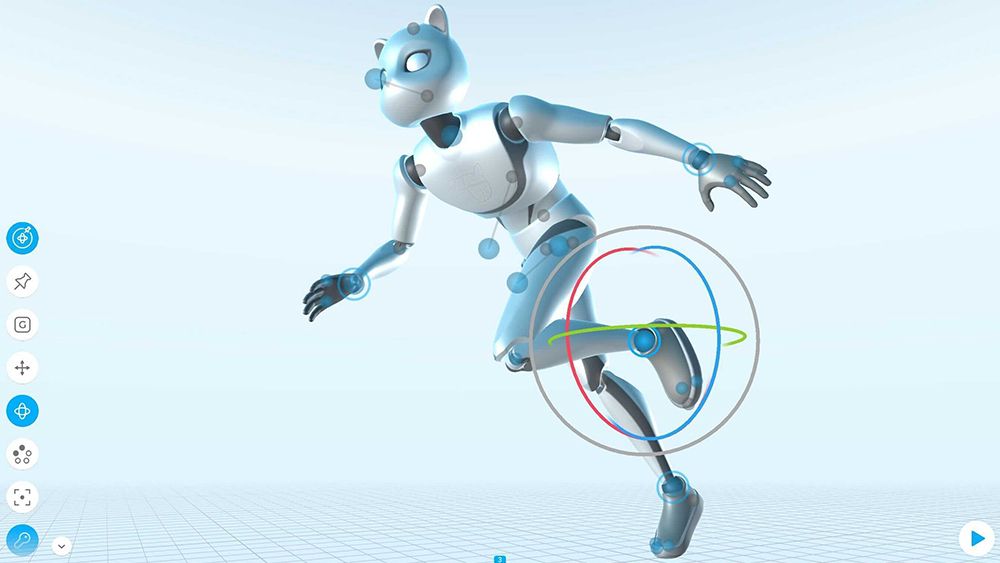
Nekki, the developer behind the Cascadeur desktop software, has today released Cascadeur Mobile for iPhone and iPad, bringing AI-enhanced animation tools to animators on-the-go.

Key Features

Cascadeur Mobile includes several key features that aim to make animation easier and more efficient:

  • AutoPosing AI

    : AI-powered posing system that allows for the creation of poses while maintaining full control over the details.

  • Video Reference Import

    : Ability to import any video as a reference for animation.

  • AR Mode

    : Preview and edit animations in augmented reality.

  • Trajectory Displays

    : Visual representation of animation trajectories.

  • Ghosts

    : Ability to view previous keyframes as a ghosted image.

  • AutoPhysics

    : AI-powered physics simulation with various filters to enhance realism.

Compatibility with Desktop Version

Cascadeur Mobile is fully compatible with the desktop version, allowing for seamless collaboration and project sharing between devices.

Recent Advances in AI-Powered Animation Tools

The release of Cascadeur Mobile is the latest in a series of recent advances in AI-powered animation tools. Other notable examples include the new Wonder Animation feature in Autodesk’s Wonder Studio.

Conclusion

Cascadeur Mobile offers a powerful set of AI-enhanced animation tools that can help animators work more efficiently and effectively on-the-go. With its compatibility with the desktop version and range of features, it’s an exciting development in the world of animation software.

Frequently Asked Questions

Q: What devices is Cascadeur Mobile available on?

A: Cascadeur Mobile is available on iPhone and iPad.

Q: What is AutoPosing AI?

A: AutoPosing AI is an AI-powered posing system that allows for the creation of poses while maintaining full control over the details.

Q: Can I import any video as a reference?

A: Yes, Cascadeur Mobile allows you to import any video as a reference for animation.

Q: Is Cascadeur Mobile compatible with the desktop version?

A: Yes, Cascadeur Mobile is fully compatible with the desktop version, allowing for seamless collaboration and project sharing between devices.

NVIDIA CEO Calls for Global Industrial Revolution

0

The next technology revolution is here, and Japan is poised to be a major part of it. At NVIDIA’s AI Summit Japan on Wednesday, NVIDIA founder and CEO Jensen Huang and SoftBank Chairman and CEO Masayoshi Son shared a sweeping vision for Japan’s role in the AI revolution.

AI Infrastructure Essential for Global Transformation

Speaking in Tokyo, Huang underscored that AI infrastructure is essential to drive global transformation. He emphasized two types of AI: digital and physical. Digital is represented by AI agents, while physical AI is represented by robotics. He said Japan is poised to create both types, leveraging its unique language, culture, and data.

Japan’s Unique Position to Lead in AI-Driven Economy

Huang emphasized Japan’s unique position to lead in this AI-driven economy, praising the country’s history of innovation and engineering excellence as well as its technological and cultural panache. "I can’t imagine a better country to lead the robotics AI revolution than Japan," Huang said. "You have created some of the world’s best robots. These are the robots we grew up with, the robots we’ve loved our whole lives."

Agentic AI: Transforming Productivity Across Industries

Huang highlighted the potential of agentic AI—advanced digital agents capable of understanding, reasoning, planning, and taking action—to transform productivity across industries. He noted that these agents can tackle complex, multi-step tasks, effectively doing "50% of the work for 100% of the people," turbocharging human productivity. By turning data into actionable insights, agentic AI offers companies powerful tools to enhance operations without replacing human roles.

SoftBank and NVIDIA to Build Japan’s Largest AI Supercomputer

Among the summit’s major announcements was NVIDIA’s collaboration with SoftBank to build Japan’s most powerful AI supercomputer. Using the NVIDIA Blackwell platform, SoftBank’s DGX SuperPOD will deliver extensive computing power to drive sovereign AI initiatives, including large language models (LLMs) specifically designed for Japan.

Accelerated Computing and Japan’s AI Infrastructure

Huang emphasized the profound synergy between AI and robotics, highlighting how advancements in artificial intelligence have created new possibilities for robotics across industries. He noted that as AI enables machines to learn, adapt, and perform complex tasks autonomously, robotics is evolving beyond traditional programming.

Conclusion

The AI revolution is here, and Japan is poised to play a major role. With its unique language, culture, and data, Japan is well-positioned to create both digital and physical AI, leveraging its expertise in mechatronics. The collaboration between NVIDIA and SoftBank to build Japan’s largest AI supercomputer is just the beginning of a new era in AI infrastructure development.

FAQs

Q: What is the significance of Japan’s role in the AI revolution?
A: Japan’s unique language, culture, and data make it an ideal location for AI development, particularly in the areas of robotics and digital AI.

Q: What is the purpose of the NVIDIA-SoftBank collaboration?
A: The collaboration aims to build Japan’s most powerful AI supercomputer, providing extensive computing power to drive sovereign AI initiatives, including large language models specifically designed for Japan.

Q: How will agentic AI transform productivity across industries?
A: Agentic AI will enable companies to tackle complex, multi-step tasks, effectively doing "50% of the work for 100% of the people," turbocharging human productivity.

MIT scientists learn how to control muscles with light | MIT News

0

For people with paralysis or amputation, neuroprosthetic systems that artificially stimulate muscle contraction with electrical current can help them regain limb function. However, despite many years of research, this type of prosthesis is not widely used because it leads to rapid muscle fatigue and poor control.

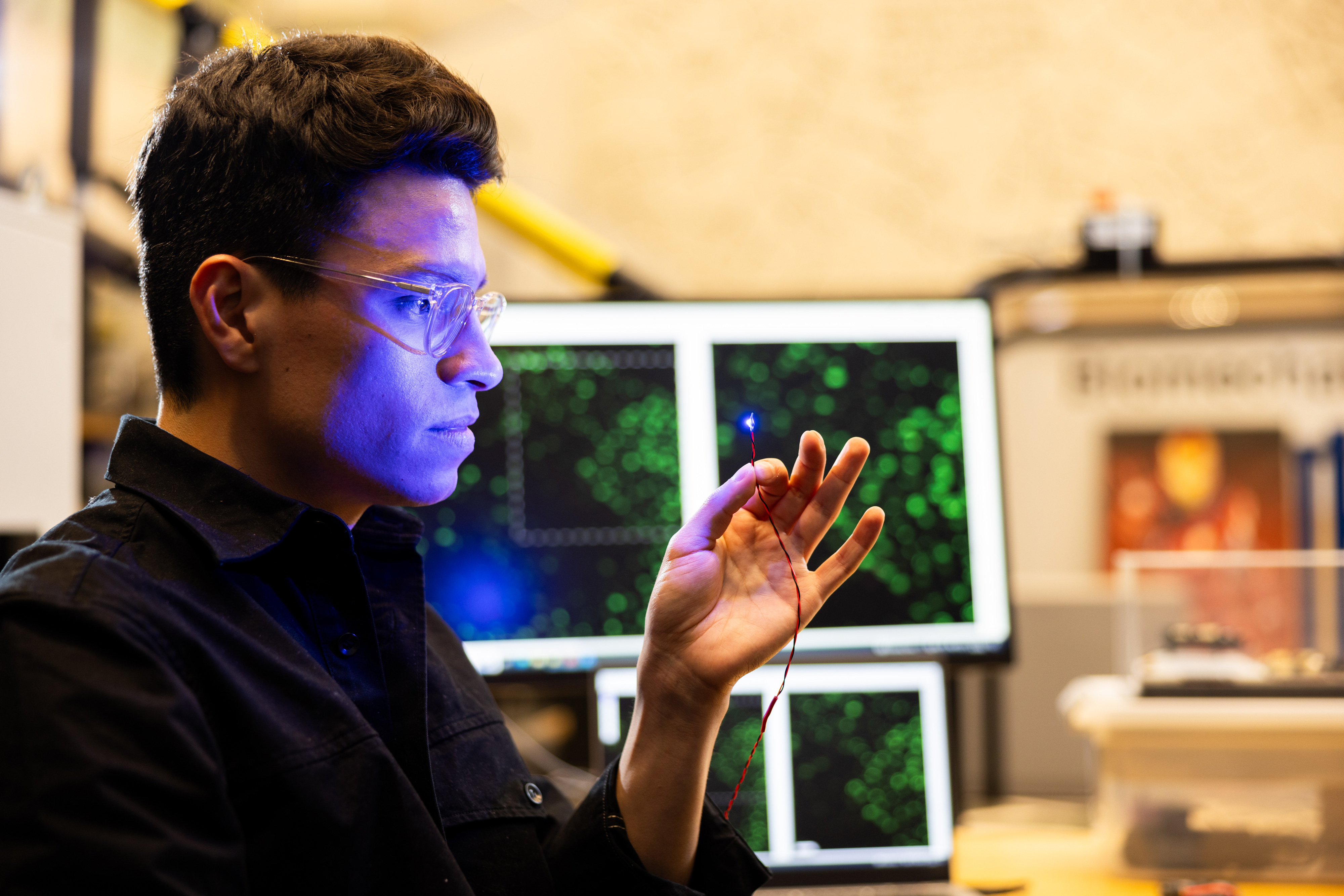
MIT researchers have developed a new approach that they hope could someday offer better muscle control with less fatigue. Instead of using electricity to stimulate muscles, they used light. In a study in mice, the researchers showed that this optogenetic technique offers more precise muscle control, along with a dramatic decrease in fatigue.

“It turns out that by using light, through optogenetics, one can control muscle more naturally. In terms of clinical application, this type of interface could have very broad utility,” says Hugh Herr, a professor of media arts and sciences, co-director of the K. Lisa Yang Center for Bionics at MIT, and an associate member of MIT’s McGovern Institute for Brain Research.

Optogenetics is a method based on genetically engineering cells to express light-sensitive proteins, which allows researchers to control activity of those cells by exposing them to light. This approach is currently not feasible in humans, but Herr, MIT graduate student Guillermo Herrera-Arcos, and their colleagues at the K. Lisa Yang Center for Bionics are now working on ways to deliver light-sensitive proteins safely and effectively into human tissue.

Herr is the senior author of the study, which appears today in Science Robotics. Herrera-Arcos is the lead author of the paper.

Optogenetic control

For decades, researchers have been exploring the use of functional electrical stimulation (FES) to control muscles in the body. This method involves implanting electrodes that stimulate nerve fibers, causing a muscle to contract. However, this stimulation tends to activate the entire muscle at once, which is not the way that the human body naturally controls muscle contraction.

“Humans have this incredible control fidelity that is achieved by a natural recruitment of the muscle, where small motor units, then moderate-sized, then large motor units are recruited, in that order, as signal strength is increased,” Herr says. “With FES, when you artificially blast the muscle with electricity, the largest units are recruited first. So, as you increase signal, you get no force at the beginning, and then suddenly you get too much force.”

This large force not only makes it harder to achieve fine muscle control, it also wears out the muscle quickly, within five or 10 minutes.

The MIT team wanted to see if they could replace that entire interface with something different. Instead of electrodes, they decided to try controlling muscle contraction using optical molecular machines via optogenetics.

Using mice as an animal model, the researchers compared the amount of muscle force they could generate using the traditional FES approach with forces generated by their optogenetic method. For the optogenetic studies, they used mice that had already been genetically engineered to express a light-sensitive protein called channelrhodopsin-2. They implanted a small light source near the tibial nerve, which controls muscles of the lower leg.

The researchers measured muscle force as they gradually increased the amount of light stimulation, and found that, unlike FES stimulation, optogenetic control produced a steady, gradual increase in contraction of the muscle.

“As we change the optical stimulation that we deliver to the nerve, we can proportionally, in an almost linear way, control the force of the muscle. This is similar to how the signals from our brain control our muscles. Because of this, it becomes easier to control the muscle compared with electrical stimulation,” Herrera-Arcos says.

Fatigue resistance

Using data from those experiments, the researchers created a mathematical model of optogenetic muscle control. This model relates the amount of light going into the system to the output of the muscle (how much force is generated).

This mathematical model allowed the researchers to design a closed-loop controller. In this type of system, the controller delivers a stimulatory signal, and after the muscle contracts, a sensor can detect how much force the muscle is exerting. This information is sent back to the controller, which calculates if, and how much, the light stimulation needs to be adjusted to reach the desired force.

Using this type of control, the researchers found that muscles could be stimulated for more than an hour before fatiguing, while muscles became fatigued after only 15 minutes using FES stimulation.

One hurdle the researchers are now working to overcome is how to safely deliver light-sensitive proteins into human tissue. Several years ago, Herr’s lab reported that in rats, these proteins can trigger an immune response that inactivates the proteins and could also lead to muscle atrophy and cell death.

“A key objective of the K. Lisa Yang Center for Bionics is to solve that problem,” Herr says. “A multipronged effort is underway to design new light-sensitive proteins, and strategies to deliver them, without triggering an immune response.”

As additional steps toward reaching human patients, Herr’s lab is also working on new sensors that can be used to measure muscle force and length, as well as new ways to implant the light source. If successful, the researchers hope their strategy could benefit people who have experienced strokes, limb amputation, and spinal cord injuries, as well as others who have impaired ability to control their limbs.

“This could lead to a minimally invasive strategy that would change the game in terms of clinical care for persons suffering from limb pathology,” Herr says.

The research was funded by the K. Lisa Yang Center for Bionics at MIT.