Home Blog Page 621

Maximize School Web Filter Potential

Here is the rewritten article:

School Web Filters: More Than Just Blocking Content

Web filters were initially intended to protect students from harmful websites and content, and this remains a critical function. However, many web filters in use today haven’t evolved past this basic capability. This is a missed opportunity.

Because a web filter is a fundamental part of the school’s network and consumes so much data, it has the potential to do much more. A school web filter can help schools teach digital citizenship, give parents’ access to device controls, and create a data-driven school culture.

Here are 7 ways a school web filter with advanced capabilities helps you get the most from your filter investment.

1. Introduce AI Responsibly with Your School Web Filter

Did you know that a school web filter can be equipped with a generative AI chatbot? AI Chat for Securly Filter is a filter-enabled AI chatbot that helps schools introduce generative AI, while maintaining visibility and control over how students are using it. Customizable to your requirements, AI Chat lets you provide guardrails so students learn to use AI responsibly and ethically.

2. Identify Security & Safety Gaps

A school web filter helps students learn how to use the internet safely by preventing them from accessing inappropriate and harmful content. However, a filter alone isn’t enough to teach students how to be responsible digital citizens. Furthermore, they’re bound to misstep sometimes, whether knowingly or innocently. With Securly Filter, you gain insight when students are trying to circumvent the filter or are engaging in risky cybersecurity behaviors.

3. Provide Families with Device Controls

Keeping children safe online isn’t just a school issue; families are also looking for ways to ensure their children have guardrails around technology use. Giving families visibility and control over their child’s school device at home is a game changer for many schools. With the Securly Home app, families can monitor and limit their students’ screen time. They can also view their child’s recent searches, sites visited, and videos watched on their school-owned device.

4. Gain Real-time Insight into Edtech Usage

An advanced school web filter can even provide insights into how education technology is being used. When you know which edtech apps are used most or not at all, you can make data-backed decisions to optimize your technology budget. Securly Reveal is a data analytics tool provided with Securly Filter that analyzes usage data and trends for student apps, websites, and devices.

5. Proactively Monitor Student Wellness

A school web filter provides a first line of defense against online safety threats. Student wellness monitoring builds on this by helping schools know when students are demonstrating risk signals of bullying, suicidal ideation, depression, violence, and other risk factors. Securly Aware is AI-powered student wellness monitoring software that analyzes students’ online activities 24/7 for indicators of safety and wellness risks.

6. Enable Data-Driven Decision Making with Your School Web Filter

District and school administrators need data to inform their decision-making and measure progress against strategic priorities and school improvement plans. Their school web filter can help, acting as an always-on data collector. By harnessing this power, schools can gain deep data insights and take proactive steps to improve students’ safety, wellness, and learning outcomes. Securly Discern is a revolutionary AI that automates data collection and analysis.

7. Provide a Holistic System of Student Support

By harnessing the data collection potential of your school web filter, you can go beyond blocking content to gaining the insights and actionable intelligence needed to make informed decisions that support student success. Securly Filter is so much more than a content blocker—it’s the heart of an integrated ecosystem designed to help K-12 districts and schools holistically support their students’ safety, wellness, and engagement.

Isn’t It Time Your School Web Filter Did More than Block Content?

You need web filtering to comply with CIPA. But that’s not all you should expect from a school web filter. Much more than a content blocker, your school web filter should be an integral tool that helps you create a secure, supportive, and enriching educational environment.

In addition to being one of the easiest to use and customize school web filters, Securly Filter also helps schools:

  • Prepare students for the future with an AI chatbot designed for K-12 education
  • Detect filter circumvention and cybersecurity risks
  • Give families control and visibility when school devices go home
  • Make smarter edtech decisions and investments based on usage data
  • Build the foundation to prevent student suicide, bullying, and school violence
  • Create a data-driven culture to drive meaningful improvements
  • Provide a holistic support system so students thrive and reach their highest potential

Certification for Trustworthy AI

The UK Government’s Approach to AI Regulation

The UK government’s recently published approach to AI regulation sets out a proportionate and adaptable framework that manages risk and enhances trust while also allowing innovation to flourish.

Promoting Dialogue on Potential Paths to an Accountable AI Assurance Profession

Certification holds promise as one of a wider set of tools for trustworthy AI. In building an accountable AI assurance profession, assurance providers (both the organisations as a whole and the individual professionals themselves) could be certified to evidence their expertise and therefore their trustworthiness.

Lessons Learned from Other Certification Models

Early in 2023, we spoke to experts across a broad range of sectors to understand what works and doesn’t work in other certification models. We sought views to reflect the varied subject matter and unique challenges of different domains, including cybersecurity, aerospace, sustainability, nuclear safety, bioethics, and medical devices.

Main Takeaways

• Context is key: drivers like regulation and market forces, and governance elements like assurance standards and techniques, will influence the role of certification and how it matures over time.
• Broad community building is crucial for reliable, accountable certification.
• In a changing environment, balance between flexibility and robustness is essential.
• Therefore, existing effective certification schemes are adaptable, managing this balance appropriately. They are also transparent and interoperable.
• To be effective, certification schemes require a broad range of stakeholder views.
• Continual monitoring and evaluation can manage complexity.

Lesson One: Context is Key

Certification is one of many governance tools, so it is important to consider it within its broader context. The wider governance landscape, including principles, standards, and conformity assessment techniques, must develop before certification can be effective. Across the range of sectors and schemes we considered, certification was consistently one of the final governance elements to mature.

Governance Context for Certification

Certification is one of many governance tools, so it is important to consider it within its broader context. The wider governance landscape, including principles, standards, and conformity assessment techniques, must develop before certification can be effective. The development and adoption of certification may be driven by a combination of factors, including regulation and market forces.

Questions About Certification

There are some important questions about what role voluntary certification schemes should play in both the long and short term. Certification evaluates whether something meets a certain standard. However, many standards for AI are still being developed and agreed upon. As such, for the time being "soft" voluntary certification schemes may not be sufficiently developed for establishing and communicating trust.

Conclusion

The broader context for certification will continue to emerge and develop further over time. However, in the immediate term, we should consider and seek consensus on whether encouraging voluntary certification now can help create and mature effective schemes that can be used in the future—taking an iterative approach to certification, aligned with the UK government’s adaptable approach to AI regulation.

FAQs

Q: What is the role of certification in AI assurance?
A: Certification holds promise as one of a wider set of tools for trustworthy AI.

Q: Why is context important in AI certification?
A: Certification is one of many governance tools, so it is important to consider it within its broader context.

Q: How do market forces influence certification in AI?
A: Market forces can encourage certification, as differentiation and brand recognition create competitive advantages and incentives for voluntary certification to demonstrate compliance with good practice, norms or standards, positively affecting consumers’ trust.

Q: Can voluntary certification schemes be effective in AI?
A: Voluntary certification schemes can be effective, but only if they are developed and adopted in a way that takes into account the unique challenges of AI and the need for alignment with emerging assurance techniques and technical standards.

School of Engineering welcomes new faculty | MIT News

0

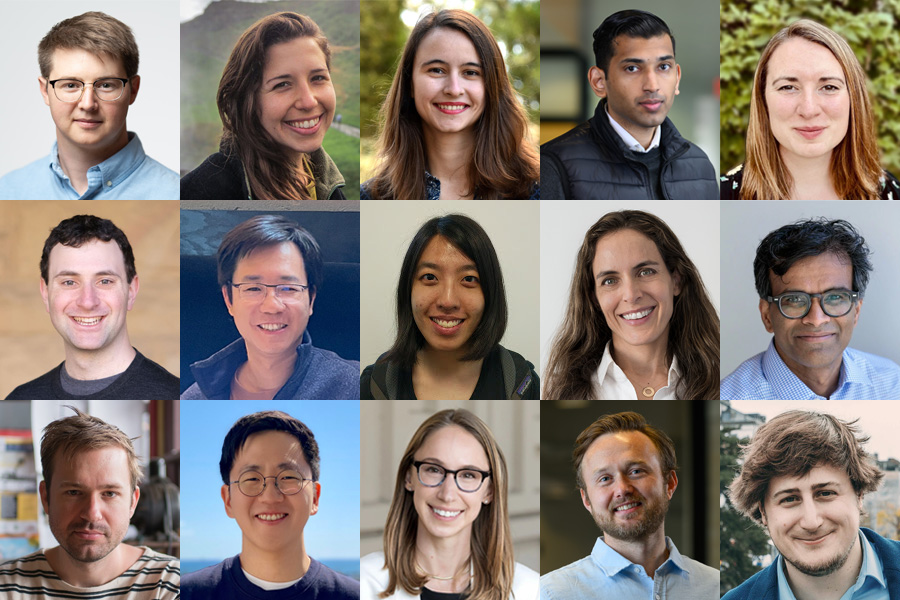
The School of Engineering welcomes 15 new faculty members across six of its academic departments. This new cohort of faculty members, who have either recently started their roles at MIT or will start within the next year, conduct research across a diverse range of disciplines.

Many of these new faculty specialize in research that intersects with multiple fields. In addition to positions in the School of Engineering, a number of these faculty have positions at other units across MIT. Faculty with appointments in the Department of Electrical Engineering and Computer Science (EECS) report into both the School of Engineering and the MIT Stephen A. Schwarzman College of Computing. This year, new faculty also have joint appointments between the School of Engineering and the School of Humanities, Arts, and Social Sciences and the School of Science.

“I am delighted to welcome this cohort of talented new faculty to the School of Engineering,” says Anantha Chandrakasan, chief innovation and strategy officer, dean of engineering, and Vannevar Bush Professor of Electrical Engineering and Computer Science. “I am particularly struck by the interdisciplinary approach many of these new faculty take in their research. They are working in areas that are poised to have tremendous impact. I look forward to seeing them grow as researchers and educators.”

The new engineering faculty include:

Stephen Bates joined the Department of Electrical Engineering and Computer Science as an assistant professor in September 2023. He is also a member of the Laboratory for Information and Decision Systems (LIDS). Bates uses data and AI for reliable decision-making in the presence of uncertainty. In particular, he develops tools for statistical inference with AI models, data impacted by strategic behavior, and settings with distribution shift. Bates also works on applications in life sciences and sustainability. He previously worked as a postdoc in the Statistics and EECS departments at the University of California at Berkeley (UC Berkeley). Bates received a BS in statistics and mathematics at Harvard University and a PhD from Stanford University.

Abigail Bodner joined the Department of EECS and Department of Earth, Atmospheric and Planetary Sciences as an assistant professor in January. She is also a member of the LIDS. Bodner’s research interests span climate, physical oceanography, geophysical fluid dynamics, and turbulence. Previously, she worked as a Simons Junior Fellow at the Courant Institute of Mathematical Sciences at New York University. Bodner received her BS in geophysics and mathematics and MS in geophysics from Tel Aviv University, and her SM in applied mathematics and PhD from Brown University.

Andreea Bobu ’17 will join the Department of Aeronautics and Astronautics as an assistant professor in July. Her research sits at the intersection of robotics, mathematical human modeling, and deep learning. Previously, she was a research scientist at the Boston Dynamics AI Institute, focusing on how robots and humans can efficiently arrive at shared representations of their tasks for more seamless and reliable interactions. Bobu earned a BS in computer science and engineering from MIT and a PhD in electrical engineering and computer science from UC Berkeley.

Suraj Cheema will join the Department of Materials Science and Engineering, with a joint appointment in the Department of EECS, as an assistant professor in July. His research explores atomic-scale engineering of electronic materials to tackle challenges related to energy consumption, storage, and generation, aiming for more sustainable microelectronics. This spans computing and energy technologies via integrated ferroelectric devices. He previously worked as a postdoc at UC Berkeley. Cheema earned a BS in applied physics and applied mathematics from Columbia University and a PhD in materials science and engineering from UC Berkeley.

Samantha Coday joins the Department of EECS as an assistant professor in July. She will also be a member of the MIT Research Laboratory of Electronics. Her research interests include ultra-dense power converters enabling renewable energy integration, hybrid electric aircraft and future space exploration. To enable high-performance converters for these critical applications her research focuses on the optimization, design, and control of hybrid switched-capacitor converters. Coday earned a BS in electrical engineering and mathematics from Southern Methodist University and an MS and a PhD in electrical engineering and computer science from UC Berkeley.

Mitchell Gordon will join the Department of EECS as an assistant professor in July 2025. He will also be a member of the MIT Computer Science and Artificial Intelligence Laboratory. In his research, Gordon designs interactive systems and evaluation approaches that bridge principles of human-computer interaction with the realities of machine learning. He currently works as a postdoc at the University of Washington. Gordon received a BS from the University of Rochester, and MS and PhD from Stanford University, all in computer science.

Kaiming He joined the Department of EECS as an associate professor in February. He will also be a member of the MIT Computer Science and Artificial Intelligence Laboratory (CSAIL). His research interests cover a wide range of topics in computer vision and deep learning. He is currently focused on building computer models that can learn representations and develop intelligence from and for the complex world. Long term, he hopes to augment human intelligence with improved artificial intelligence. Before joining MIT, He was a research scientist at Facebook AI. He earned a BS from Tsinghua University and a PhD from the Chinese University of Hong Kong.

Anna Huang SM ’08 will join the departments of EECS and Music and Theater Arts as assistant professor in September. She will help develop graduate programming focused on music technology. Previously, she spent eight years with Magenta at Google Brain and DeepMind, spearheading efforts in generative modeling, reinforcement learning, and human-computer interaction to support human-AI partnerships in music-making. She is the creator of Music Transformer and Coconet (which powered the Bach Google Doodle). She was a judge and organizer for the AI Song Contest. Anna holds a Canada CIFAR AI Chair at Mila, a BM in music composition, and BS in computer science from the University of Southern California, an MS from the MIT Media Lab, and a PhD from Harvard University.

Yael Kalai PhD ’06 will join the Department of EECS as a professor in September. She is also a member of CSAIL. Her research interests include cryptography, the theory of computation, and security and privacy. Kalai currently focuses on both the theoretical and real-world applications of cryptography, including work on succinct and easily verifiable non-interactive proofs. She received her bachelor’s degree from the Hebrew University of Jerusalem, a master’s degree at the Weizmann Institute of Science, and a PhD from MIT.

Sendhil Mullainathan will join the departments of EECS and Economics as a professor in July. His research uses machine learning to understand complex problems in human behavior, social policy, and medicine. Previously, Mullainathan spent five years at MIT before joining the faculty at Harvard in 2004, and then the University of Chicago in 2018. He received his BA in computer science, mathematics, and economics from Cornell University and his PhD from Harvard University.

Alex Rives will join the Department of EECS as an assistant professor in September, with a core membership in the Broad Institute of MIT and Harvard. In his research, Rives is focused on AI for scientific understanding, discovery, and design for biology. Rives worked with Meta as a New York University graduate student, where he founded and led the Evolutionary Scale Modeling team that developed large language models for proteins. Rives received his BS in philosophy and biology from Yale University and is completing his PhD in computer science at NYU.

Sungho Shin will join the Department of Chemical Engineering as an assistant professor in July. His research interests include control theory, optimization algorithms, high-performance computing, and their applications to decision-making in complex systems, such as energy infrastructures. Shin is a postdoc at the Mathematics and Computer Science Division at Argonne National Laboratory. He received a BS in mathematics and chemical engineering from Seoul National University and a PhD in chemical engineering from the University of Wisconsin-Madison.

Jessica Stark joined the Department of Biological Engineering as an assistant professor in January. In her research, Stark is developing technologies to realize the largely untapped potential of cell-surface sugars, called glycans, for immunological discovery and immunotherapy. Previously, Stark was an American Cancer Society postdoc at Stanford University. She earned a BS in chemical and biomolecular engineering from Cornell University and a PhD in chemical and biological engineering at Northwestern University.

Thomas John “T.J.” Wallin joined the Department of Materials Science and Engineering as an assistant professor in January. As a researcher, Wallin’s interests lay in advanced manufacturing of functional soft matter, with an emphasis on soft wearable technologies and their applications in human-computer interfaces. Previously, he was a research scientist at Meta’s Reality Labs Research working in their haptic interaction team. Wallin earned a BS in physics and chemistry from the College of William and Mary, and an MS and PhD in materials science and engineering from Cornell University.

Gioele Zardini joined the Department of Civil and Environmental Engineering as an assistant professor in September. He will also join LIDS and the Institute for Data, Systems, and Society. Driven by societal challenges, Zardini’s research interests include the co-design of sociotechnical systems, compositionality in engineering, applied category theory, decision and control, optimization, and game theory, with society-critical applications to intelligent transportation systems, autonomy, and complex networks and infrastructures. He received his BS, MS, and PhD in mechanical engineering with a focus on robotics, systems, and control from ETH Zurich, and spent time at MIT, Stanford University, and Motional.

Unlock Operational Excellence with Amazon Bedrock Generative AI

0

Operational Excellence for Generative AI Workloads

Large enterprises are building strategies to harness the power of generative artificial intelligence (AI) across their organizations. However, scaling up generative AI and making adoption easier for different lines of businesses (LOBs) comes with challenges around making sure data privacy and security, legal, compliance, and operational complexities are governed on an organizational level.

The AWS Well-Architected Framework

The AWS Well-Architected Framework was developed to allow organizations to address the challenges of using Cloud in a large organization, leveraging the best practices and guides developed by AWS across thousands of customer engagements. AI introduces some unique challenges, including managing bias, intellectual property, prompt safety, and data integrity, which are critical considerations when deploying generative AI solutions at scale.

Amazon Bedrock

Amazon Bedrock plays a pivotal role in this endeavor. It’s a fully managed service that offers a choice of high-performing foundation models (FMs) from leading AI companies like Anthropic, Cohere, Meta, Mistral AI, and Amazon through a single API, along with a broad set of capabilities to build generative AI applications with security, privacy, and responsible AI.

Scalability, Security, and Operational Efficiency

With Amazon Bedrock, enterprises can achieve:

  • Scalability – Scale generative AI applications across different LOBs
  • Security and compliance – Enforce data privacy, security, and compliance with industry standards and regulations
  • Operational efficiency – Streamline operations with built-in tools for monitoring, logging, and automation, aligned with the AWS Well-Architected Framework
  • Innovation – Access cutting-edge AI models and continually improve them with real-time data and feedback

What’s Different About Operating Generative AI Workloads?

The operational excellence pillar of the Well-Architected Framework helps your team to focus more of their time on building new features that benefit customers, in our case, the development of GENAI solutions in a safe and scalable manner. However, if we were to apply a generative AI lens, we would need to address the intricate challenges and opportunities arising from its innovative nature.

Policy, Guardrails, and Mechanisms

Any generative AI lens therefore needs to combine the following elements, each with varying levels of prescription and enforcement, to address these challenges and provide the basis for responsible AI usage:

  • Policy – The system of principles to guide decisions
  • Guardrails – The rules that create boundaries to keep you within the policy
  • Mechanisms – The process and tools

Organizing Teams Around Business Outcomes

We start this post by reviewing the foundational operational elements defined by the operational excellence pillar:

  • Organize teams around business outcomes: The ability of a team to achieve business outcomes comes from leadership vision, effective operations, and a business-aligned operating model. Leadership should be fully invested and committed to a CloudOps transformation with a suitable cloud operating model that incentivizes teams to operate in the most efficient way and meet business outcomes.
  • Implement observability for actionable insights: Gain a comprehensive understanding of workload behavior, performance, reliability, cost, and health. Establish key performance indicators (KPIs) and leverage observability telemetry to make informed decisions and take prompt action when business outcomes are at risk.
  • Safely automate where possible: In the cloud, you can apply the same engineering discipline that you use for application code to your entire environment. You can define your entire workload and its operations (applications, infrastructure, configuration, and procedures) as code, and update it. You can then automate your workload’s operations by initiating them.

Managing Data

Managing data through standard methods of data ingestion and use is imperative for LLMs to provide more contextual answers without the need for extensive fine-tuning or the overhead of building a specific corporate LLM. Managing data ingestion, extraction, transformation, cataloging, and governance is a complex, time-consuming process that needs to align with corporate data policies and governance frameworks.

Providing Managed Infrastructure Patterns and Blueprints

There are a number of ways to build and deploy a generative AI solution. AWS offers key services such as Amazon Bedrock, Amazon Kendra, OpenSearch Service, and more, which can be configured to support multiple generative AI use cases, such as text summarization, Retrieval Augmented Generation (RAG), and others.

Conclusion

By focusing on the operational excellence pillar of the Well-Architected Framework from a generative AI lens, enterprises can scale their generative AI initiatives with confidence, building solutions that are secure, cost-effective, and compliant. Introducing a standardized skeleton framework for generative AI runtimes, prompts, and orchestration will empower your organization to seamlessly integrate generative AI capabilities into your existing workflows.

FAQs

Q: What are the challenges of scaling up generative AI?
A: The challenges of scaling up generative AI include ensuring data privacy and security, legal, compliance, and operational complexities are governed on an organizational level.

Q: What is the AWS Well-Architected Framework?
A: The AWS Well-Architected Framework is a set of best practices and guides developed by AWS to help organizations build and run workloads in the cloud.

Q: What is Amazon Bedrock?
A: Amazon Bedrock is a fully managed service that offers a choice of high-performing foundation models (FMs) from leading AI companies like Anthropic, Cohere, Meta, Mistral AI, and Amazon through a single API, along with a broad set of capabilities to build generative AI applications with security, privacy, and responsible AI.

Q: What are the key elements of a generative AI lens?
A: The key elements of a generative AI lens are policy, guardrails, and mechanisms, which are used to address the intricate challenges and opportunities arising from the innovative nature of generative AI.

Optimize Focus: Structured Code Matters

0

About Shafayet Hossain


Shafayet Hossain

Summary

Web developer and aspiring IT engineer dedicated to creating innovative, responsive websites and robust IT solutions. Skilled in HTML, CSS, JavaScript, frontend technologies, and network security.

Background

Conclusion

Shafayet Hossain is a dedicated web developer and IT engineer with a passion for creating innovative solutions. With skills in HTML, CSS, JavaScript, and network security, he is well-equipped to tackle a wide range of projects.

FAQs

Q: What are Shafayet’s areas of expertise?
A: Shafayet has expertise in web development, IT engineering, and network security.

Q: What is Shafayet’s location?
A: Shafayet is based in Dhaka, Bangladesh.

Q: What is Shafayet’s education background?
A: Shafayet graduated from Shere Bangla School & College.

Q: What are Shafayet’s pronouns?
A: Shafayet’s pronouns are He/him.

Q: When did Shafayet join?
A: Shafayet joined on May 31, 2024.

Transform Files into Automated Workflows with AI

0

Box Wants to Make Sense of Your PDFs, Contracts, and Images with AI

Content management platform Box wants to make sense of all your PDFs, contracts, and images so your business can work more seamlessly — using, of course, artificial intelligence (AI).

Box Apps

Available in beta now, Box Apps is intended to streamline "content-centric business processes" across all kinds of teams within an organization. Content can include anything file-based, from contracts to marketing campaigns. The feature is designed to extract valuable metadata from that previously unstructured content to help intelligently automate workflows.

"90 percent of the data in an enterprise is unstructured — and the vast majority of that data is content," CEO Aaron Levie said in the release. In an interview with ZDNET, Levie explained that Box’s goal with Apps is to tap into that unstructured data to help teams achieve "all the things people don’t solve today."

Box envisions nearly every department using Apps: HR can build policy-specific apps, legal departments can use it for efficient contract review, and marketing teams can create customized asset management systems for graphics and video. Levie emphasized that Apps will be more affordable than competitors in order to be accessible to smaller-scale businesses, but he did not specify a cost.

Box AI Studio

Several enterprise software companies now offer an AI agent builder, from Salesforce to Asana. But Box says that a "mix-and-match" approach to large language models (LLMs) is what sets its offering apart.

Rather than using a single language to build every agent across the board, Box AI Studio lets users build with different models for different use cases. "With AI Studio, admins can select their preferred AI model from Box’s list of trusted providers to create tailored Box AI agents with custom prompts and parameters to match their specific industry needs and workflows—no coding required," the release states.

Box AI Studio, which won’t roll out until January, will integrate several competing large language models (LLMs), including models from Microsoft Azure, AWS, Claude, and Google’s Vertex AI. The company plans to add more in the future, and you can see the full list of currently available models here.

Increased Security

Box also announced two new security measures, slated to roll out in beta in January: Box Archive, which improves archival content management for better compliance, and Content Recovery, which helps businesses recover their content after a ransomware attack in "hours instead of days."

"Our core platform itself is focused on data compliance and security," Levie explained to ZDNET, noting that these features build AI governance into a strong security foundation.

Conclusion

Box’s latest announcements aim to make content management more efficient and secure, leveraging AI to automate workflows and provide better compliance and security. With Box Apps and Box AI Studio, businesses can streamline processes and create customized AI agents without coding, while the new security features aim to help recover content quickly and securely.

FAQs

Q: What is Box Apps?
A: Box Apps is a new feature that helps businesses build no-code apps for processes like onboarding, invoicing, and more.

Q: What is Box AI Studio?
A: Box AI Studio is a new product that lets users build customized AI agents with different large language models (LLMs) for different use cases.

Q: When will Box Apps and Box AI Studio be available?
A: Box Apps is available in beta now, while Box AI Studio will roll out in January.

Q: What are the new security features announced by Box?
A: Box announced two new security features: Box Archive, which improves archival content management for better compliance, and Content Recovery, which helps businesses recover their content after a ransomware attack in "hours instead of days."

SmartThings Blog

0

This FAQ provides essential information about the SmartThings Hub Groups and Hub Backup features, including compatibility, functionality, and troubleshooting. For more detailed insights, visit our blog here.

Which Samsung/SmartThings hubs support Hub Groups and Hub Backup?

Aeotec Smart Home Hub, Samsung SmartThings Hub 2018 (Hub v3), SmartThings Station, Samsung Smart TVs*, Family Hub refrigerators*, Samsung Smart Monitors*, Samsung Soundbar

* Hub Groups and Hub Backup currently only support models with Thread/Zigbee radios built-in. Models that require Zigbee/Thread radio dongles are not supported, even if a dongle is installed.

What happens if a primary hub is more capable than the secondary hub, specifically if the primary hub supports Z-Wave devices and the secondary “backup” hub does not?

If “Auto Hub Backup” is enabled in Hub Manager, and SmartThings determines that the best available secondary hub is one that is less capable than the primary hub, the devices and routines will still be automatically transferred to the secondary hub, and Z-Wave devices will be offline.

If “Auto Hub Backup” is disabled when the primary hub goes offline, the user will be prompted and given a choice to change their primary hub selection to one of the secondary hubs. They will be told about the limitations of the candidate secondary hub before they confirm the change. If they choose to proceed, then the Z-Wave devices will be offline.

If a less-capable secondary hub is made into a primary hub, and the original primary hub comes online (now secondary), will it automatically reclaim its primary status, and if not, will its capabilities enhance the Hub Group as a secondary hub?

If “Auto Hub Backup” and “Preferred Hub” were both set prior to the original primary hub going offline, then it will reclaim primary status automatically when it comes back online, and all previous device connections will be restored. If “Preferred Hub” was not enabled, then the original primary hub will not automatically reclaim its primary status when it comes back online. The user would need to manually make the original primary hub the primary hub again using Hub Manager. Until the user makes the change manually, the hub will remain secondary. As a secondary hub, its advanced capabilities will not enhance the Hub Group, as connectivity and device capacity of a Hub Group are determined by the primary hub’s capabilities. To regain the original primary hub’s capabilities, the user would need to manually make their original primary hub the primary hub again, and their Z-Wave devices would be restored. The user always has control over which hub is their primary hub with Hub Manager.

How soon after the primary hub goes offline will the transfer of devices and routines to the backup hub take place?

At initial launch, the transfer will take place ten minutes after the primary hub goes offline. We may continue to optimize this number in future releases.

Does this Hub Backup feature replace the “Hub Replace” feature, or affect it in any way?

Hub Backup will not replace the Hub Replace feature or change it. Hub Replace is intended to help users permanently transfer their devices and routines to a new hub when the user wants to upgrade their hub or their hub no longer functions. Hub Backup is a feature that is limited to hubs in a Hub Group, while Hub Replace can be used with hubs that are not part of a Hub Group.

If I have multiple secondary hubs, is there a way for me to choose the best hub that can be promoted as a primary? How can I make that determination?

The user cannot choose which secondary hub will become primary if the primary hub goes offline. The best possible secondary hub is determined automatically based on device/protocol support and other technical considerations.

Is there anything that is permanently changed when the user allows a hub change via Hub Backup?

Nothing is permanently changed or lost. Records of hub state are preserved across primary hub transitions.

How many Hub Groups can be in one location?

A location can only have one Hub Group at a time.

Effective Multipurpose Robots

Combining Disparate Datasets to Train Multipurpose Robots

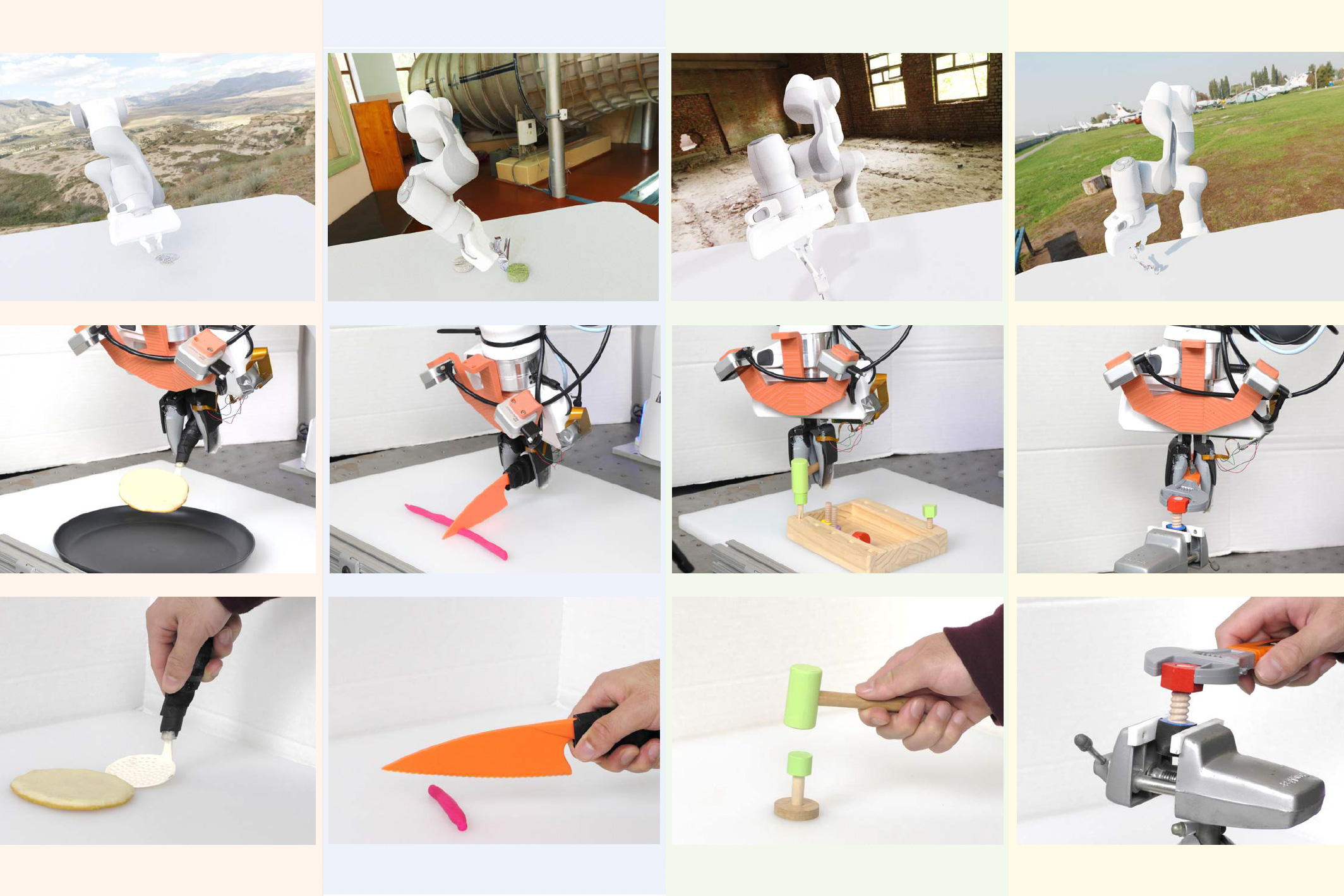
Let’s say you want to train a robot so it understands how to use tools and can then quickly learn to make repairs around your house with a hammer, wrench, and screwdriver. To do that, you would need an enormous amount of data demonstrating tool use.

Existing Robotic Datasets

Existing robotic datasets vary widely in modality — some include color images while others are composed of tactile imprints, for instance. Data could also be collected in different domains, like simulation or human demos. And each dataset may capture a unique task and environment.

Challenges in Combining Data

It is difficult to efficiently incorporate data from so many sources in one machine-learning model, so many methods use just one type of data to train a robot. But robots trained this way, with a relatively small amount of task-specific data, are often unable to perform new tasks in unfamiliar environments.

Policy Composition: A New Approach

In an effort to train better multipurpose robots, MIT researchers developed a technique to combine multiple sources of data across domains, modalities, and tasks using a type of generative AI known as diffusion models.

How Policy Composition Works

They train a separate diffusion model to learn a strategy, or policy, for completing one task using one specific dataset. Then they combine the policies learned by the diffusion models into a general policy that enables a robot to perform multiple tasks in various settings.

Results and Future Directions

In simulations and real-world experiments, this training approach enabled a robot to perform multiple tool-use tasks and adapt to new tasks it did not see during training. The method, known as Policy Composition (PoCo), led to a 20 percent improvement in task performance when compared to baseline techniques.

In the future, the researchers want to apply this technique to long-horizon tasks where a robot would pick up one tool, use it, then switch to another tool. They also want to incorporate larger robotics datasets to improve performance.

Conclusion

The Policy Composition technique developed by MIT researchers offers a promising approach to combining disparate datasets and training multipurpose robots. By combining policies learned from different datasets, robots can adapt to new tasks and environments, and perform a wide range of tool-use tasks.

FAQs

Q: What is Policy Composition?

A: Policy Composition is a technique that combines multiple sources of data across domains, modalities, and tasks using a type of generative AI known as diffusion models.

Q: What are the benefits of Policy Composition?

A: Policy Composition allows robots to adapt to new tasks and environments, and perform a wide range of tool-use tasks. It also enables the combination of policies learned from different datasets, which can improve performance.

Q: What are the limitations of Policy Composition?

A: Policy Composition is still a developing technique, and there are limitations to its current implementation. For example, it may not be suitable for all types of tasks or environments.

Q: What are the potential applications of Policy Composition?

A: Policy Composition has the potential to be used in a wide range of applications, including robotics, artificial intelligence, and machine learning. It could be used to train robots to perform complex tasks, such as assembly or repair, and to adapt to new environments and situations.

Unlocking the Power of Data and AI

SolixEmpower 2024: Exploring the Future of Cloud Data Management and Enterprise AI

We’re just a day away from SolixEmpower 2024, a conference that will bring hundreds of Solix customers, leading academic researchers, and business leaders together to discuss the latest developments in cloud data management and enterprise AI.

The Importance of Clean Data

As AI technology advances, it’s highlighting the importance of having clean, well-managed data to train and drive AI models, which in turn is exposing many gaps in companies’ data management strategies. That dynamic has caught the attention of Solix Technologies, the developer of the Solix Common Data Platform (CDP).

SolixEmpower 2024

Solix is hosting two events at UCSD, including its user conference on Wednesday November 13 and SolixEmpower on Thursday November 14. SolixEmpower is sponsored by PARK AI and the Halıcıoğlu Data Science Institute (HDSI) and will deliver about 15 sessions by Solix employees as well as data and AI experts in academia on various topics relating to data management and enterprise AI trends.

Keynote Speakers

Thursday’s keynote speakers include Rajesh Gupta, Interim Dean of the College of Computing, Information and Data Science at the University of California San Diego; Frank Wuerthwein, the Director of the San Diego Supercomputer Center; and Sai Gundavelli, Solix founder and CEO.

What to Expect

"This is our sixth SolixEmpower conference, and this year we’ll be addressing pressing topics with a new urgency, including the future of AI, privacy protection and data management," Gundavelli said in a press release. "We are particularly proud to join with industry partnership programs at both SPARK AI and HDSI and look forward to working with customers, partners, faculty and students in developing the latest insights and data practices together."

Event Details

Tickets are still available to the event. It will also be live streamed for free. You can find more information at empower.solix.com/2024-san-diego.

Conclusion

SolixEmpower 2024 promises to be an exciting event, bringing together industry leaders and experts to discuss the latest developments in cloud data management and enterprise AI. With keynote speakers from academia and industry, this event is not to be missed.

FAQs

Q: What is SolixEmpower 2024?
A: SolixEmpower 2024 is a conference hosted by Solix Technologies, bringing together customers, academic researchers, and business leaders to discuss the latest developments in cloud data management and enterprise AI.

Q: Who are the keynote speakers?
A: The keynote speakers include Rajesh Gupta, Interim Dean of the College of Computing, Information and Data Science at the University of California San Diego; Frank Wuerthwein, the Director of the San Diego Supercomputer Center; and Sai Gundavelli, Solix founder and CEO.

Q: Will the event be live streamed?
A: Yes, the event will be live streamed for free.

Q: How can I get more information?
A: You can find more information at empower.solix.com/2024-san-diego.

Math Benchmark Stumps AI and PhDs

0

Epoch AI’s FrontierMath Benchmark: A Challenge for AI Models

Challenging Problems for AI Models

Epoch AI recently allowed Fields Medal winners Terence Tao and Timothy Gowers to review portions of the FrontierMath benchmark. The benchmark consists of challenging problems that require a combination of a semi-expert in the area, a modern AI, and lots of other algebra packages to solve.

The Design of FrontierMath Problems

To aid in the verification of correct answers during testing, the FrontierMath problems must have answers that can be automatically checked through computation, either as exact integers or mathematical objects. The designers made problems "guessproof" by requiring large numerical answers or complex mathematical solutions, with less than a 1 percent chance of correct random guesses.

Differences from Traditional Math Competitions

Mathematician Evan Chen, writing on his blog, explained how he thinks that FrontierMath differs from traditional math competitions like the International Mathematical Olympiad (IMO). Problems in that competition typically require creative insight while avoiding complex implementation and specialized knowledge, he says. But for FrontierMath, "they keep the first requirement, but outright invert the second and third requirement," Chen wrote.

Embracing Specialized Knowledge and Complex Calculations

While IMO problems avoid specialized knowledge and complex calculations, FrontierMath embraces them. "Because an AI system has vastly greater computational power, it’s actually possible to design problems with easily verifiable solutions using the same idea that IOI or Project Euler does—basically, ‘write a proof’ is replaced by ‘implement an algorithm in code,’" Chen explained.

Future Plans

The organization plans regular evaluations of AI models against the benchmark while expanding its problem set. They say they will release additional sample problems in the coming months to help the research community test their systems.

Conclusion

The FrontierMath benchmark presents a unique challenge for AI models, requiring a combination of specialized knowledge and complex calculations to solve. The organization’s efforts to design "guessproof" problems and release sample problems for testing will help advance the development of AI models in mathematics.

FAQs

Q: What is the purpose of the FrontierMath benchmark?
A: The purpose of the FrontierMath benchmark is to challenge AI models in mathematics and provide a platform for evaluating their performance.

Q: How do the problems in FrontierMath differ from those in traditional math competitions?
A: Problems in FrontierMath require specialized knowledge and complex calculations, whereas traditional math competitions like the IMO aim to test creative insight and problem-solving skills.

Q: Will the organization release additional sample problems?
A: Yes, the organization plans to release additional sample problems in the coming months to help the research community test their systems.

Q: What is the significance of the "guessproof" design of the problems?
A: The "guessproof" design ensures that correct answers can be automatically checked through computation, making it more challenging for AI models to cheat or make random guesses.