Home Blog Page 9

What Gartner’s 2026 Hype Cycle Tells Us About Where the Talent Tech Market Is Headed

0

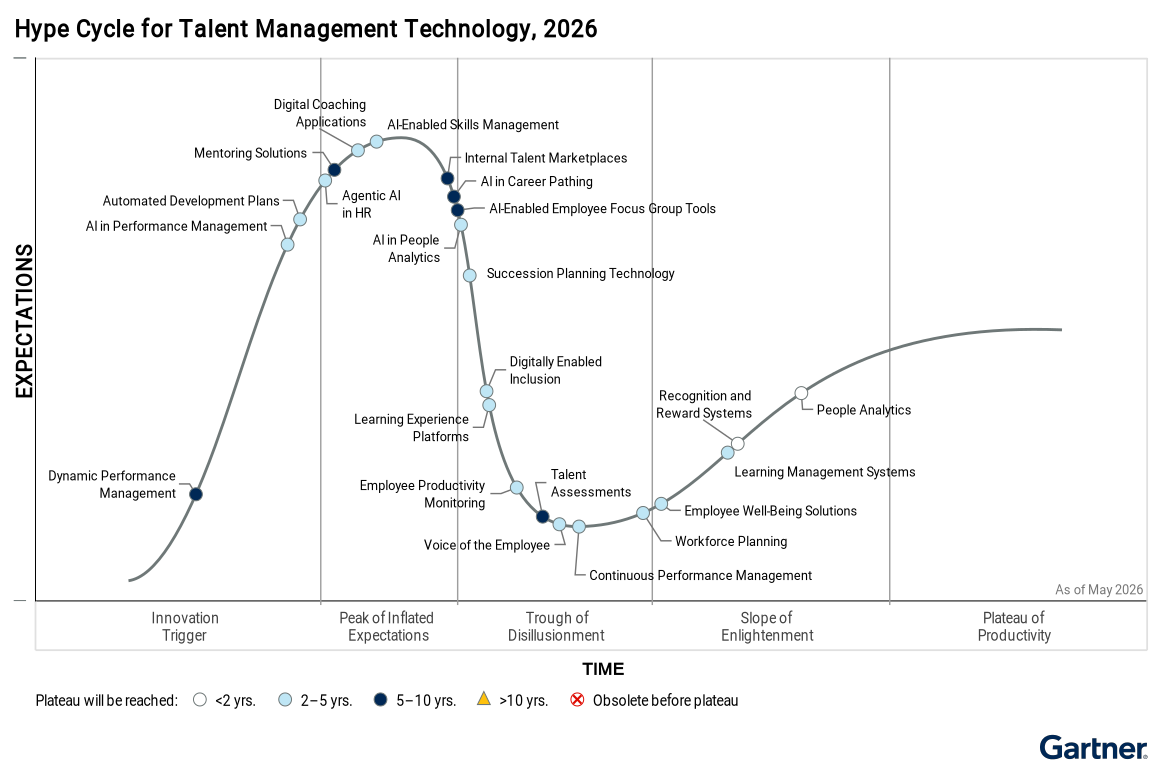
Gartner just released its 2026 Hype Cycle for Talent Management Technology. If you’re an HR leader trying to figure out where to invest, it’s a must read. The report maps 20+ talent technologies across maturity stages, from early-stage innovations to established, plateau-of-productivity workhorses.

Here’s the honest headline: most talent management technologies are clustered in the Trough of Disillusionment. Not because they don’t work—but because the infrastructure to make them work is missing. Gartner points to limited data integration between tools and poor data quality as two of the top reasons leaders are dissatisfied with what they have.

Quantum Workplace is named across five categories in this year’s report—AI in Performance Management, Continuous Performance Management, Voice of the Employee, Succession Planning Technology, and Recognition and Reward Systems.

Here’s why that breadth matters for how you evaluate your own tech stack.


The state of HR tech: what most stacks look like right now

Most HR teams are running a patchwork of tools—an HRIS for records, a survey tool for engagement, a separate platform for performance, maybe a recognition app someone purchased a few years ago. These tools don’t talk to each other. The data lives in silos. And the people who need to act on that data—people managers and HR leaders—rarely see it in time or with helpful context to do anything useful.

Data backs this up: HR leaders report using between two to four HR solutions from different providers, but only 39% say they are usefully integrated with each other.

Gartner names this problem directly. HR leaders struggle with these technologies due to changing needs for agile people management, limited data integration, and poor-quality data that erodes trust in what the systems produce.

The shift forward-thinking HR teams are making is from scattered data points to connected insight and action—turning what used to sit in silos into a clear picture leaders can actually act on.


AI in performance management: now a market reality

Gartner classifies AI in performance management as early mainstream—meaning the technology works and organizations are actively adopting it. The definition covers AI used to improve the quality and efficiency of performance processes: writing goals, drafting feedback, summarizing check-ins, and preparing for calibration.

The business case is clear. Gartner notes that managers are overburdened and that performance processes are resource-heavy, while the quality of feedback across organizations is inconsistent. AI can help close that gap—but Gartner is direct about the requirement: organizations need to provide training for managers on how to effectively use AI-generated feedback.

That’s exactly the problem Quantum Workplace’s NEW Insights Hub is designed to solve at scale. Rather than handing HR a dashboard, Insights Hub analyzes your engagement, performance, and development data to surface graded insights with confidence signals—and delivers them directly to leaders, framed in coaching language rather than data jargon. As Insights Hub is connecting these signals across your people data, it’s learning what matters most to your organization along the way — giving your leaders the clarity and context needed to make better business decisions.

Continuous performance management: the foundation is mature, but adoption still varies 

Continuous performance management has officially reached the trough of disillusionment. Gartner defines it as an ongoing iterative process where managers and employees track and update goals, capture informal and evaluative feedback, and use regular check-ins throughout the year. The technology is robust, methodologies are proven, and market penetration is above 50%.

The challenge isn’t whether Continuous performance management works. Gartner is clear that a strong feedback culture is needed to support the ongoing feedback continuous performance management requires. Without that cultural foundation, even the best platform becomes shelf-ware.

Quantum Workplace’s Performance Management software supports the full CPM cycle—goal setting, check-ins, feedback, and formal reviews—in a single connected experience. And because it lives on one connected platform, performance data doesn’t sit in a silo. Goals inform 1-on-1s, feedback feeds into reviews, and everything connects to engagement and development—giving managers the full picture instead of a fragmented one. The result: leaders spend less time chasing scattered data and more time coaching, aligning, and helping their teams do their best work.

Recognition and reward systems: maturing fast, but still underutilized as a strategic lever  

Recognition and reward systems have also reached the slope of enlightenment Gartner’s definition covers solutions that enable employees, managers, and business leaders to express gratitude for achievements and behaviors aligned with organizational goals and values. Modern solutions use AI and analytics for personalized, timely recognition—integrated with collaboration tools.

Gartner’s recommendation is for organizations to explore integrating recognition systems with performance management and voice of employee systems for a comprehensive employee view. Most organizations are still treating recognition as a gifting tool rather than a culture-building engine, and that’s where the gap is.

Quantum Workplace’s recognition and rewards software—now powered by Assembly—connects recognition directly to the engagement and performance signals HR cares most about. When a manager recognizes a team member, that moment becomes part of a connected talent picture, one that can shape retention decisions, performance conversations, and development plans down the line.

Voice of the Employee solutions collect and analyze worker sentiment through surveys, feedback tools, and other data sources—and they deliver insights with actionable guidance to help improve employee engagement, experience, and performance.

The obstacle Gartner calls out most clearly is one most HR leaders know well: organizations often struggle to take timely action in response to VoE results, only one-third of employees believe their organization acts on their feedback. This is commonly due to lack of leader accountability and difficulties identifying solutions to the issues surfaced.

That’s the survey-to-action gap. Quantum Workplace’s Employee Engagement software is built to close it. We connect engagement survey data with performance and development signals, so what employees are feeling never gets siloed from what managers are doing about it.

One of the features is Action Planning, where guidance turns into real momentum. Team reports walk managers through key terms and metrics, preset focus areas keep everyone aligned around company-wide goals, and AI-powered discussion starters and action ideas help leaders turn conversations into concrete next steps grounded in best practice. From there, built-in tracking and nudges keep plans on track, so action doesn’t stall once the survey closes.


Succession planning technology: scaling beyond the top 5%

Even though succession planning should be a top CHRO priority—the technology often falls short. Only 57% of organizations have a formal process for identifying high-potential talent. Gartner notes that many HCM succession modules fail to meet customer expectations for data visualization, process automation, and secure cross-functional data sharing. They work as data repositories but don’t build connections across HR silos.

The ambition most organizations have is to scale succession planning beyond the top 5–7% of positions. Gartner identifies growing interest in scaling and integrating succession planning with development and workforce management to support this goal.

Quantum Workplace was built for exactly this shift. Instead of a static, top-down spreadsheet exercise, our succession planning tools invite any leader to nominate potential successors, add context on strengths and skill gaps, and own their piece of the talent pipeline—so planning scales past a handful of C-suite roles. Readiness tracking, integrated performance data, and diversity visibility keep every plan grounded in real signals, not guesswork. And when it’s time to share progress, board-ready insights update in real time, so you’re never scrambling to pull together a snapshot. It’s succession planning that works the way your organization actually grows.

What this means for HR leaders making tech buying decisions  

Gartner’s 2026 Hype Cycle delivers a clear strategic message: the technologies that drive the most value aren’t always the newest ones. They’re the ones that connect your data, get used by your leaders, and give you the confidence to act.

Before evaluating any new talent tech, it’s worth asking yourself a few honest questions:

  • Do we have clean, connected data across engagement, performance, development and recognition?
  • Are managers seeing insights in the tools they already use?
  • Can HR trace a survey finding to a specific action a leader took?
  • Is recognition connected to performance and retention data?
  • Are succession plans informed by real-time talent signals—not just annual reviews?

If most of those answers are “not yet,” it’s not that your tech is outdated—it’s that it isn’t talking to each other.

Download the Gartner 2026 Hype Cycle for Talent Management Technology

Gartner does not endorse any vendor, product, or service depicted in its research publications and does not advise technology users to select only those vendors with the highest ratings or other designation. Gartner research publications consist of the opinions of Gartner’s research organization and should not be construed as statements of fact.


How machine learning can reveal the workers official statistics cannot see

0

Labour market statistics have served governments and researchers well for decades. But they were designed to answer the ‘how many?’ question. They count the unemployed, the employed, those economically inactive. What they cannot answer is the more difficult and more consequential question: which workers are most at risk right now, and what can we do about it before it is too late? For example, the unemployment rate is, by definition, a retrospective measure. It counts people who have already lost their jobs. As a tool for prevention, it is close to useless.

The combination of machine learning and linked data offers a fundamentally different approach – one that shifts the unit of analysis from the aggregate rate to the individual worker, and the temporal orientation from the retrospective to the anticipatory. The data architecture underpinning this approach brings together data sources that are rarely used in combination (i.e. labour data, macro data, Google, search data, remote sensing and geospatial data, among others). For example, national household surveys, such as the Labour Force Survey, provide rich individual-level information: hours worked, contract type, occupation, qualifications, job satisfaction and the subjective experience of work that administrative records can never fully capture. On the other hand, administrative data such as tax records, payroll information and benefit claims provide information that surveys routinely miss. Used separately, each has significant blind spots. Linked together using anonymised identifiers, they create a picture of individual working lives with a resolution that neither dataset alone can approach.

Machine learning works on this linked data by learning from history. A model is trained on records where the outcome is already known: Which workers experienced job loss in the following year? Which moved into in-work poverty? Which left the labour market entirely? The model identifies which combinations of individual, job, employer and local labour market characteristics are predictive of each outcome, drawing on dozens of variables simultaneously in ways that conventional regression analysis cannot. Applied to available data, it produces a risk score for each worker. This is not a categorical label, but a probability that reflects the full complexity of their circumstances.

This is a qualitatively different kind of knowledge. First, it reveals who is at risk in ways that aggregate statistics and even standard cross-tabulations miss. The risk profile of a 45-year-old, part-time, mid-skilled worker in a contracting local industry is distinct from that of a 25-year-old in the same occupation in a growing one. Conventional analysis flattens these distinctions. Machine learning preserves them and can detect interactions between characteristics that no analyst would think to test. Second, it reveals where risk is located. Risk can be mapped at fine geographic levels, uncovering local concentrations of vulnerability that disappear inside regional or national averages. Third, it reveals when risk emerges. Because the model is trained on longitudinal data and applied prospectively, it functions as an early warning system, generating signals of emerging distress before they crystallise into the headline figures that currently trigger intervention.

What this looks like in practice is a shift in the kind of intelligence available to policy makers. Instead of a quarterly statistical release showing that unemployment in a given region is running at a particular rate, decision makers would have access to a map identifying the workers currently carrying the highest predicted risk characterised by employment profile and ranked by vulnerability. Active labour market programmes, skills support and in-work assistance can reach people before they lose their jobs rather than after. This is not a trivial change. The difference between early intervention and crisis response is, for many workers, the difference between a temporary setback and long-term scarring.

None of this comes without caveats. The approach is only as good as the data underlying it. Informal work, unpaid care and gig arrangements remain poorly captured in both surveys and administrative records, which means the workers least protected by existing institutions may also be those least visible to these methods. Also, linking national survey and administrative data to generate individual risk scores raises serious questions about consent, transparency and the potential for harm. Beyond the legal questions sit deeper ones about power. Risk scores generated to support workers could, under different institutional conditions, be repurposed by employers to identify those worth investing in or those worth letting go. Who controls this data, who has access to its outputs and under what conditions are questions that demand active involvement from trade unions, civil society and the workers whose working lives the data represents.

There is also the question of what risk scores cannot tell us. A model can flag that vulnerability is concentrated in a particular postcode or occupational group. It cannot explain why, and explanation is what policy ultimately requires. Techniques that decompose the contribution of individual variables to a model’s predictions now make it possible to explain, in accessible terms, why a given worker carries a particular risk score. However, these are not enough by themselves. Hybrid approaches that combine machine learning risk profiling with targeted qualitative research can bridge the gap between pattern and cause. The model tells you where to look while ethnographic and participatory methods tell you what is actually happening there.

The solutions lie in governance, not in abandoning the approach. Statutory purpose limitation should prevent data assembled for worker support from ever being accessed by employers or parties with adverse interests. Workers identified as high-risk should have a legal right to understand, in plain terms, what has driven their assessment and to challenge it. Independent algorithmic oversight bodies, with authority to audit model deployment and investigate misuse, would provide the institutional check that self-regulation cannot. Mandatory fairness audits can catch the reproduction of historical inequalities before they shape resource allocation. Worker data trusts, governed through trade unions or civil society bodies, offer a mechanism for genuine collective stewardship rather than individual consent that power imbalances easily overwhelm. The workers being modelled must have a structural role in how these tools are built, governed and held to account.

Luis D. Torres is an Associate Professor at Nottingham University Business School in the UK and the Universidad del Desarrollo in Chile. He is also a Data Science Consultant for the United Nations, Finance Director for the European Academy of Occupational Health Psychology and co-founder of Sustaina Value.

Image credit: Claudio Schwarz via Unsplash

Futures of Work ~ Modern slavery and knowledge production: Lived experience as expertise

0

Since the 2015 Modern Slavery Act (MSA) passed, companies with a turnover of £36 million or above have been obliged to produce an annual statement that details the steps they are taking to address the presence of exploitative practices within any part of their business operations or supply chains.

On the tenth anniversary of the implementation of the MSA, the government issued an updated version of its Statutory guidance on transparency in supply chains. A notable development in this revised guidance is its stronger emphasis on engaging people with lived experience (PWLE) of modern slavery and exploitation, alongside workers, suppliers and relevant civil society organisations, in the development of corporate responses.

This creates a significant implementation gap. While engagement with lived experience is positioned as good practice within the guidance, it remains underspecified in terms of method, safeguarding, ethics and power dynamics. As a result, organisations are left to interpret not only whether such engagement should take place, but also how it can be conducted safely and meaningfully in practice. This raises two interconnected questions: what constitutes meaningful engagement with lived experience in corporate modern slavery governance, and who is authorised to define its boundaries?

Given the centrality of knowledge production to academia, researchers are, of course, always keen to identify a gap and attempt to develop a response. For some questions, however, the academic’s usual toolbox might not be sufficient or even appropriate. The above twofold question is one such example. Producing an answer without consulting the people who have been subjected to exploitation would be to omit the voices of those who the measures are intended to help. And using more conventional data collection methods, such as surveys or interviews, risks being extractive.

What is required, then, is an approach to producing knowledge about how organisations should operationalise engagement with PWLE in the absence of detailed guidance on method and safeguarding. A project led by national anti-slavery charity Unseen UK has aimed to respond to this implementation and knowledge gap by working in collaboration with several major businesses, an academic (first author of this article) and a network of survivor consults. Through a series of workshops, meetings and consultations, the project aims to coproduce practical guidance for businesses on how to identify, understand and respond to modern slavery risk in ways that do not produce – or reproduce – harms.

One of the key ways of achieving this is by positioning lived experience as a form of expertise, rather than a data source to be extracted. Experience therefore becomes central to shaping how knowledge and responses to modern slavery are produced, interpreted and applied. This forms a central component of the method of addressing the gap between high-level policy expectations around engagement and the lack of clear, safe and practical methods for implementing this in corporate settings.

This form of expertise is embodied in the survivor consults working on Unseen’s project, as PWLE of exploitation. They play a central role in shaping how engagement with lived experience should be understood and operationalised. While researchers have long recognised the value of designing methods that draw on lived experience, it is only in recent years that this has been applied specifically to modern slavery. Best practice around how to engage and involve people with lived experience of modern slavery is therefore a burgeoning and important field of knowledge.

In this context, knowledge as expertise is not limited to the disclosure or narration of personal experience. Some survivors choose to give insight informed by how exploitation is experienced at an individual level. But lived experience can also function as a form of analytical and contextual knowledge that does not require recounting personal histories. This may include understanding how exploitation is facilitated through specific mechanisms used to trick or trap people, the failings of corporate assumptions put in place to mitigate risks, or the shortcomings of law enforcement and other authorities. Consequently, there are several issues that must be addressed if experience is to be treated meaningfully as expertise.

To begin with, it is important to avoid re-exploiting people. After all, survivors are being asked to take part because of their expertise, and this means they should be compensated accordingly. It is somewhat common to offer limited renumeration, or forms of payment that place restrictions on how remuneration can be used. While in some cases the latter may be derived from Home Office restrictions for those not permitted to work while they wait for asylum claims to be processed, it is important to discuss the options available with the survivors themselves.

Additionally, if not properly managed, survivors’ input can be tokenistic. This could take the shape of, say, bringing in PWLE late in a project’s development, or even after it has begun and the main objectives and parameters are already set. Doing so would mean PWLE would be unable to help meaningfully shape the project’s aims or methods, or to challenge elements of the project that can no longer be changed. Tokenistic approaches therefore limit the impact PWLE can have on a project, resulting in superficial input.

Trying to incorporate PWLE from the beginning of a research project also presents challenges, especially for funding applications. It is possible – as the first author knows from experience – to be caught in a catch-22 situation, whereby the funder (understandably) requires a full research proposal with specific and well-defined objectives, research questions and projected outcomes, before funding is granted. However, incorporating survivors into the process of research design costs money due to the safeguarding, support structures and remuneration they will require. How, then, is it possible to raise funds to pay for PWLE to take part in research design unless funds are available before the project is fully fleshed out? Doubtless there are some routes available, but including PWLE from the beginning presents a barrier to the conventional process of submitting a funding application.

It is also imperative to avoid retraumatising PWLE. Certain topics can trigger very powerful memories and feelings related to their experiences. Discussing these topics can produce feelings of frustration, anger and loss. It is therefore necessary to make appropriate support available. However, experience also forms the basis of the expertise that contributes irreplaceable value. Emotions that accompany experience can therefore be viewed not as a barrier to engagement, but as a way of enriching and humanising what might otherwise be viewed as a purely technical problem-solving exercise.

Addressing these challenges can result in a win–win for those collaborating on a project of the kind run by Unseen. In contrast to extractive research practices, treating lived experience as expertise enables PWLE to contribute to, and benefit from, the process in which they are involved. Being meaningfully included in projects that inform how businesses understand and respond to modern slavery risk can be empowering for PWLE. Meaningful inclusion is a way of recognising experience as a legitimate form of expertise that carries practical, strategic value. As one survivor consultant put it, lived experience contributes ‘a missing lens to corporate governance’.

While including experience as expertise might be challenging, particularly if experience involves having been through a traumatic experience, the rewards are also clear. Meaningful, non-tokenistic engagement can, and should, create opportunities for upskilling, professional development and progression for PWLE. Projects concerned with producing knowledge or developing solutions gain a form of expertise that only PWLE can offer. Through projects like Unseen’s, the hope is that businesses develop survivor-informed methods of responding to and preventing harm, rather than basing responses on corporate assumptions, and that survivors are given the opportunity to thrive.

Christopher Pesterfield is a Lecturer in Management at the University of Bristol Business School.

Image credit: Hermes Rivera via Unsplash

Audi Nuvolar

0

„Vorsprung durch Technik“ in seiner eindrucksvollsten Form.
Das schnellste und leistungsstärkste Serienfahrzeug, das Audi je entwickelt hat.

Unfassbare Kraft – mit 736 kW (1001 PS)
Systemleistung

Lässt Herzen höherschlagen – mit über 350 km/h
Höchstgeschwindigkeit

Antrieb mit Vorwärtsdrang – 6,8 Sekunden
von 0 – 200 km/h

Beschleunigung unter spezifischen Bedingungen (Batterie-Anfangstemperatur > 28 °C und ein Ladezustand (SoC) von über 80 %)

Die Neudefinition des Supersportwagens.
Der Audi Nuvolari markiert den nächsten Schritt der technologischen Transformation von Audi. Er vereint Hybrid-Performance, hochentwickelte Aerodynamik und eine völlig neue Designphilosophie in einem ganzheitlichen Konzept.

Draufsicht auf den Audi Nuvolari, die seine markante Karosserieform und die Proportionen des Mittelmotors hervorhebt.
Vorderansicht des Audi Nuvolari, die seine markante Lichtsignatur und sein aerodynamisches Design hervorhebt.
Heckansicht des Audi Nuvolari, die die über die gesamte Breite verlaufende Lichtsignatur und das aerodynamische Heckdesign hervorhebt.
Technologie muss bewegen.
Für Audi ist Technologie nie Selbstzweck. Ihr Ziel ist es, Emotionen zu wecken. Im Audi Nuvolari wird Technologie zum Erlebnis: Eine Performance, die fasziniert und die Grenzen von Mut und Vorstellungskraft neu definiert.

Draufsicht auf den Audi Nuvolari, die seine geformten Oberflächen und aerodynamischen Proportionen hervorhebt.
Vordere Dreiviertelansicht des Audi Nuvolari, die seine tiefe Bauweise, die markante Lichtgestaltung und die plastisch geformte Karosserie hervorhebt.

Klarheit und Kontrolle im Fokus.

Im Interieur des Audi Nuvolari ist alles auf das Fahrerlebnis ausgerichtet. Die reduzierte Architektur bündelt alle Bedienelemente auf die wesentlichen Funktionen und platziert sie direkt im Sichtfeld des Fahrers. Materialien und Oberflächen sind auf das Minimum reduziert – für absolute Klarheit, Kontrolle und Gelassenheit in jeder Sekunde.

Innenansicht des Audi Nuvolari, die eine auf das Fahrerlebnis ausgerichtete, reduzierte Architektur verdeutlicht.
Ein neuer Massstab für Ingenieurskunst und Innovation.

Von der Formel 1® inspirierte Technologien greifen perfekt ineinander, um aussergewöhnliche Leistung, Präzision und Kontrolle zu garantieren. Zusammen erschaffen sie ein Fahrerlebnis, das sich in jedem Moment mühelos, intuitiv und absolut faszinierend anfühlt.

Leichtbau-Architektur für strukturelle Präzision.
Der Audi Space Frame mit Carbon-Aussenhaut verbindet minimales Gewicht mit hoher struktureller Festigkeit. Entwickelt mit Formel-1®-Expertise und modernsten Carbon-Fertigungsverfahren sorgt er für präzises Handling, High-Speed-Stabilität und kompromisslose Performance.

Vorausschauende Fahrdynamik dank Echtzeit-Intelligenz.
Das quattro-Fahrwerk antizipiert wechselnde Bedingungen und koordiniert Drehmomentverteilung, Bremsen und Aerodynamik in Echtzeit. Das Ergebnis: überragende Präzision, Stabilität und maximale Souveränität am Lenkrad.

Vertikaler Rahmen.
Der vertikale Rahmen besteht aus 64 Lamellen, die präzise angewinkelt sind, um den Luftstrom durch einen verdeckten S-Duct zu leiten.

Aktive Aerodynamik.
Adaptive Aerodynamik-Systeme optimieren Abtrieb, Luftwiderstand und Balance. Sie steigern die Effizienz im Alltag und sorgen für maximale Stabilität und Kontrolle, wenn Performance gefordert wird.

Hybrid-Performance für extreme Ansprüche.
Ein High-Performance-Hybridantrieb, der einen V8-Biturbomotor mit drei Elektromotoren kombiniert, liefert 736 kW (1’001 PS). Das System verbindet sofort anliegendes Drehmoment mit ausdauernder Höchstleistung – für vehementen Vortrieb und direktes Ansprechverhalten in jeder Fahrsituation.

Draufsicht auf den Audi Nuvolari, die sein aerodynamisches Design und seine auf Leistung ausgelegten Proportionen verdeutlicht.

Hybrid-Performance für extreme Ansprüche.
Ein High-Performance-Hybridantrieb, der einen V8-Biturbomotor mit drei Elektromotoren kombiniert, liefert 736 kW (1’001 PS). Das System verbindet sofort anliegendes Drehmoment mit ausdauernder Höchstleistung – für vehementen Vortrieb und direktes Ansprechverhalten in jeder Fahrsituation.

„Ein Supersportwagen von Audi muss nicht laut sein, um aufzufallen. Seine Präsenz ist sofort spürbar und wirkt völlig mühelos – markant, aber ohne Exzess. “
Massimo Frascella, Chief Creative Officer

Detailansicht des Hecks des Audi Nuvolari, die ein reduziertes Design zeigt, bei dem Klarheit und Zweckmässigkeit im Vordergrund stehen.

Eine Reduktion auf das Wesentliche.
Kein Element ist dekorativ. Alles hat eine Funktion. Reduziert auf das, was wirklich zählt.

Dreiviertelansicht von hinten des Audi Nuvolari, die die plastisch geformten Heckflächen, den hoch angeordneten Auspuff und die markanten LED-Rückleuchten zeigt.

Ein Meilenstein in der Geschichte von Audi.
Weltweit limitiert auf 499 Fahrzeuge. Geschaffen für alle, die „Vorsprung durch Technik“ in seiner fortschrittlichsten Form erleben wollen.

A novel, creative method for exploring perceptions and understandings of work and employment-related phenomena

0

Most qualitative research involves self-report – asking participants to share their thoughts, feelings, experiences and motivations in their own words (e.g. in an interview or focus group). In this short piece, we introduce a method that involves something radically different – fictional story writing where participants write a short story (of around – ideally – several hundred words) in response to a prompt created by the researcher. The method in question is known as story completion and has a long history in clinical assessment and quantitative research, where responses are scored using quantitative coding systems and the interest is in the meanings presumed to lie behind the stories and what these reveal about the psychology of the story writers.

More recently, however, it has flourished as a qualitative method, with the focus on the rich, narrative detail of the stories, rather than the hidden psychology of the story writers. In qualitative story completion research, instead of designing an interview or focus group guide, qualitative survey questions or solicited diary instructions to elicit self-report, the researcher crafts what is known as a ‘story stem’ or ‘story cue’ related to their topic of interest. The story stem is typically based on a hypothetical scenario, with a central character or protagonist, and sometimes secondary characters – such as in the example we use here from our research on perceptions of the disclosure of negative menopause symptoms in the workplace, where a woman discloses such symptoms to a manager.

Story stems typically require some kind of narrative tension or hook; for fans of the British soap opera EastEnders, this is like the ‘duff duff moment’ at the end of each episode, where drumbeats signal the ‘cliffhanger’ ending. The ‘duff duff moment’ is what guides and propels participants’ story writing. Let’s consider an example of a story stem from our research on menopause in the workplace. The protagonist in this stem is Julie, and the secondary character is her male or female manager. There were two versions of the story stem in our study – one where Julie decides to tell her male manager Mark about her symptoms and their impact, and one where she tells her female manager Ruth. The two versions of the stem are identical apart from the name of the manager and their gendered pronouns. This is the male manager version of the stem:

Julie is 52 years old and has been working in her current job for 12 years. For the last few months Julie has been feeling overwhelmed; most nights she struggles to sleep and at work she struggles to concentrate – her brain feels like it’s in a permanent fog. Julie feels anxious most of the time and no longer feels like herself. Julie didn’t used to be someone who struggled to get her work done but recently she has been working extra hours to try and keep up. Yesterday Julie had an appointment with her doctor who confirmed that these are all common symptoms of menopause but couldn’t say how long they might last. After the appointment Julie couldn’t help but wonder what the future of her work might look like. Julie decides that she needs to tell her manager that she is menopausal and explain the impact it is having on her work. Mark, her manager, is in the office today so she meets with him to discuss…

The ‘duff duff moment’ in this stem is Julie’s meeting with her manager to disclose her symptoms. The two versions of the stem, written by Kara in consultation with Gemma, Victoria and Vanessa, was given to research participants who were instructed to decide what happens next, writing a story of at least 300 words in length; they were also instructed not to spend too much time thinking about and preparing their story so we could access the meanings readily available to participants. This stem illustrates many of the characteristics and strengths of story completion as a qualitative method.

When combined with other methods such as interviews or focus groups, story completion can be used to explore participants’ lived experiences, but in contemporary qualitative research, it is primarily used as a standalone method to explore perceptions, understandings and discourses surrounding the topic of interest. In this type of research, story completion is assumed to tap into either how participants understand and perceive the world, and the social contexts that shape these understandings and perceptions (a ‘contextualist lens’), or the social discourses through which social phenomena are constituted and made meaningful (a ‘social constructionist lens’). The precise theorisation of what story completion gets at will depend on the researcher’s theoretical commitments and assumptions.

Story completion is argued to be particularly useful for exploring meaning-making around topics that are socially sensitive or taboo, such as menopause in the workplace, because the topic is addressed indirectly through story telling rather than participants being asked directly for their views. Third-person story completion especially – such as in this example where participants are asked to write about Julie and her manager from the perspective of an omniscient narrator – is thought to encourage a wide range of responses, including socially undesirable responses, because participants are less directly accountable for the views expressed (“it’s just a story”!). Although first-person completion is used – where participants are instructed to imagine themselves as the protagonist in the story – it is far less common in contemporary qualitative story completion research than third-person completion (see this example of first-person completion).

Story completion is also useful when participants may not have direct experience or knowledge of the topic of interest – as was the case in our perceptions of menopause in the workplace study. The stem can be written in a way – as it was here – that highlights pertinent information (such as the age menopause is experienced, the nature of negative menopause symptoms and their impact on Julie’s wellbeing and working life) that some or all participants may be unaware of but is essential context for exploring their views. The participants in this study were recruited through one workplace and were simply required to be aged 18 years or older; they didn’t need to have any prior knowledge or experience of menopause. Our interest was in general perceptions across the workforce rather than the perceptions of a particular group of employees such as women with lived experience of the menopause transition.

Story completion originated as a ‘projective technique’ in the first half of the 20th century. Projectives are clinical assessment tools designed to tap into unconscious thoughts and feelings, and circumvent barriers of awareness (people lacking conscious awareness of their thoughts and feelings) and barriers of admissibility (people not wanting to admit to certain thoughts and feelings because of shame or fear of the very real consequences of disclosing something taboo). Projectives such as deliberately ambiguous inkblots, pictures or story openings require people to ‘fill in the blanks’ of the stimulus, and in doing so project their unconscious thoughts and feelings onto the stimulus, and reveal these to the test taker.

It’s rare for qualitative researchers to use story completion in this way (an ‘essentialist psychological truths and inner worlds lens’). Instead, they are mainly interested in the potential of story completion to access dominant meanings, assumptions and social norms. Deliberate ambiguity in the story stem – not a significant feature of the menopause in the workplace stem, although certain details were left unspecified (e.g. Julie’s job role) – is argued to tap into normative sense making. For example, not specifying the protagonist’s gender (through using gender-neutral character names and pronouns), age or sexuality can reveal participants’ dominant or normative assumptions about the likely characteristics of people in particular scenarios.

Another distinctive feature of qualitative story completion is the potential for comparative designs; something highly unusual in ‘Big Q’ qualitative research, where most contemporary qualitative story completion research is located, and where the use of open-ended, relatively unstructured and participant-responsive data generation doesn’t provide the structure necessary for comparison. Big Q qualitative research combines the use of qualitative techniques for generating and analysing qualitative data with research values and philosophies distinctive to the qualitative tradition (e.g. interpretivism or naturalistic enquiry). A useful way of characterising such research is as ‘artfully interpretative’, recognising multiple meanings and subjective realities and the central role of the researcher in generating and interpreting data. Big Q is distinct from small q or ‘scientifically descriptive’ qualitative research, which aligns with scientific research values and where quantification and comparison are accepted.

When story completion is used in comparative designs, stems are identical apart from the features related to the focus of the comparison. In the menopause in the workplace study, this was the gender of the manager. We sought to compare perceptions of disclosure to a male versus female manager, and gender is a common theme in comparative designs to date (e.g. comparing perceptions and constructions of female versus male in infidelity, sexual refusal and weight loss motivations, although other comparisons are possible (e.g. perceptions of working-class versus middle-class chronic pain patients or young women with anorexia versus bulimia. The aim of comparative designs is to explore how the element of interest shapes perceptions. In our study, the responses suggested that female and male managers were perceived differently, with male managers presented as less likely to understand and provide appropriate support to Julie as a menopausal employee.

One of the exciting things about story completion is its unpredictability – sometimes differences in perceptions are strongly evident, and sometimes not, but both the presence and absence of differences are informative. Story completion can also be used to compare the perceptions and constructions of different groups of participants – gender is a common focus of such comparisons in existing research, although other groups have been compared (e.g. psychology students and therapists, and university students and the urban poor.

Qualitative researchers tend to approach the analysis of story completion data in a similar way to the analysis of self-report data such as that from interviews, focus groups, qualitative surveys and solicited diaries, focusing on the development of recurrent and important themes and patterns across the data. This type of analysis has been dubbed a ‘horizontal’ approach. Some form of thematic analysis (such as reflexive thematic analysis) is common.

In our perceptions of menopause in the workplace study, we developed themes across the data such as ‘the burden of menopause’, which captured the idea that menopause is a burden in the workplace, and a burden for everyone, not just those experiencing symptoms. Story completion researchers have also used thematic analysis to develop patterning in relation to particular story elements such as the depiction of the protagonist and the story resolutions or endings. Braun and Clarke proposed an analytic approach unique to story completion called ‘story mapping’, where the focus is on patterning in how the stories are temporarily structured and organised, the main story events and the (moral) resolution of the story. Their research on male body hair depilation provides an example of this technique. The advantage of story mapping and other ‘vertical’ approaches to analysis is that they retain something of the storied character of the data rather than pulling them apart and flattening them out into themes.

Various other approaches have been used to analyse story completion data in the burgeoning qualitative story completion literature including narrative analysis – an obvious choice perhaps for narrative data! – discourse analysis, poetic enquiry and rhizomatic data analysis.

Interest in story completion as a qualitative method continues to grow – researchers are using it in new ways, experimenting, in the broadest sense, with new modes for presenting and completing the stem, and new combinations of story completion with other data generation methods (we combined story completion with the vignette technique in our perceptions of menopause in the workplace study to develop a new technique we call the ‘story question and continuation method’), new analytic approaches (such as rhizomatic and narrative analysis and poetic enquiry) and introducing story completion to different disciplines and research fields. We invite and encourage researchers in the field of work and employment to consider adding story completion to their methodological toolkit.

Victoria Clarke is an Associate Professor in Qualitative and Critical Psychology at the University of the West of England, Bristol. She is a co-founder and member of the Story Completion Research Group, an international network of qualitative researchers interested in using, developing and promoting story completion as a qualitative method.

Kara Daly earned an MSc in Occupational Psychology from the University of the West of England, Bristol, in 2022. She received the 2023 Division of Occupational Psychology Student Award for her dissertation, which used story completion and vignette techniques, supervised by Gemma Pike with input from Vanessa Beck and Victoria Clarke.

Gemma Pike is a Senior Lecturer in Occupational Psychology at the University of the West of England, Bristol, and a practitioner Occupational Psychologist. She specialises in workplace wellbeing and uses a range of innovative qualitative research methods, including story completion, vignette techniques and photo‑elicitation. She supervises MSc and doctoral research in psychology, applying story completion to work and organisational studies.

Vanessa Beck is Professor in Employment Studies at the University of Bristol Business School. Her research focuses on individuals on the margins of the labour market, including those experiencing unemployment or underemployment and older workers, especially those who transition through menopause while in employment.

Image credit: Etienne Girardet via Unsplash

Automate 2026 sets attendance record for robotics and automation

0

Automate, North America’s largest robotics and automation event, celebrated its most successful show to date, drawing more than 50,000 registrants and 1,230 exhibitors to McCormick Place in Chicago from June 22-25.

Hosted by the Association for Advancing Automation (A3), Automate 2026 filled 425,000 square feet of show floor space with the latest technologies in robotics, artificial intelligence, machine vision, motion control and industrial automation.

The record-setting event reflected the continued growth of automation across industries as companies look for practical ways to improve productivity, address workforce challenges, strengthen supply chains and remain competitive.

“Automate 2026 was the strongest show we have ever had, not just in size, but in the quality of the technology, conversations and connections taking place across the show floor,” said Jeff Burnstein, president of A3.

“The energy in Chicago was incredible. From humanoid robots and industrial AI to machine vision, motion control, autonomous mobile robots and industrial automation systems, attendees saw firsthand how quickly this industry is moving and how much opportunity lies ahead.”

The scale and energy of the event could be felt throughout McCormick Place. Keynotes were packed throughout the week, the show floor featured product launches and live technology demonstrations, and programs focused on women, students, educators and emerging professionals drew strong participation.

The Latin America Networking event and Women’s Empowerment Forum attracted hundreds of attendees, underscoring the industry’s growing focus on leadership, inclusion and the next generation of talent.

The conference program also reached a new high, with more than 1,600 registrants and 140+ sessions focused on industrial AI, robotics adoption, workforce transformation, US competitiveness, supply chain resilience and the expanding use of automation beyond traditional manufacturing.

Key highlights from Automate 2026

  • Humanoid Robot Pavilion: Humanoid robotics was one of the major draws at Automate 2026. The new Humanoid Robot Pavilion, sponsored by Nvidia, gave attendees a close look at humanoid robots and the enabling technologies behind them.
  • Humanoid Robot Forum: For the first time, A3’s popular Humanoid Robot Forum was hosted during Automate, running June 23-24 and attracted 1,100+ registrants.
  • Automate Startup Challenge: Early-stage robotics and automation companies competed for $10,000 and the title of Startup Challenge Champion. Mbodi was named the 2026 winner for its platform that allows users to teach industrial robots new tasks through natural language and simple demonstrations.
  • Automate Innovation Awards: The Automate Innovation Awards recognized new products and technologies introduced to the market in 2025. The 2026 winners were CeiliX InfinityCrane and SkyRunner in Automation Systems; Standard Bots’ Flux AI in Vision, AI and Software; and Synapticon ACTILINK-JD featuring POSITRON Safety AI in Components, Hardware and Enabling Technologies.
  • Joseph F. Engelberger Robotics Awards: The robotics industry’s most prestigious honor was presented during a dinner and ceremony recognizing Hiroshi Fujiwara, Executive Director of the Japan Robot Association (JARA), and Robert Little, co-founder of ATI Industrial Automation. Find details on both winners online.
  • Students and Educators: Automate 2026 continued to expand its focus on the next generation of automation talent through the Education Pavilion, A3 NextGen Theater, Student Challenge, A3 NextGen Student Tours and programming focused on curriculum, career pathways, hiring and workforce development.

Automate Rewind

For those unable to attend Automate 2026, Automate Rewind is now available. This digital library features recordings of keynote sessions, theater talks, Automate LIVE interviews, and exhibitor spotlights, ensuring the wealth of knowledge shared at the event remains accessible.

Automate Heads to Las Vegas in 2027

Automate 2027 will take place in Las Vegas, May 10-13, 2027, at the Las Vegas Convention Center.

Generate single title from this title Insilico Medicine advances AI drug for IPF to Phase III trials in 100 -150 characters. And it must return only title i dont want any extra information or introductory text with title e.g: ” Here is a single title:”

Write an article about

Insilico Medicine is advancing to Phase III human trials for testing a drug identified by AI targeting idiopathic pulmonary fibrosis (IPF). This progression supplies the computational drug discovery sector with empirical test cases, advancing an AI medicine past early safety evaluations into late-stage efficacy validation.

IPF destroys respiratory capacity through severe lung tissue scarring. Patients typically present a median survival rate reaching two to four years post-diagnosis. The AI-identified drug, rentosertib, inhibits the TRAF2- and NCK-interacting kinase to address underlying disease mechanisms when administered orally.

A randomised trial evaluated 71 patients across 22 Chinese clinical sites, separating participants into placebo and active treatment cohorts. Investigators administered 30 mg or 60 mg daily doses over a 12-week observation window.

Patients assigned to the 60 mg once-daily regimen demonstrated a mean forced vital capacity gain of +98.4 mL, contrasting sharply with the 20.3 mL capacity loss recorded in the placebo group. Safety profiles remained manageable, with adverse events mirroring expected baseline rates across all trial arms. Regulatory authorities at the U.S. Food and Drug Administration (FDA) granted ‘Orphan Drug Designation’ to the asset in February 2023.

Algorithmic target prioritisation through multi-omics

The development relies entirely on Pharma.AI, the proprietary computational pipeline operating at Insilico Medicine. The workflow segments into distinct engines handling specific biological and chemical engineering tasks.

PandaOmics executes the initial target discovery phase. The system ingests vast biological datasets, processing genomics, clinical trial outcomes, academic literature, and patent intelligence to construct comprehensive biological network models. The algorithms apply causal inference mechanisms to identify novel disease links hidden within the data architecture.

PandaOmics isolated TNIK as the primary biological target regarding IPF intervention. The computational system bypassed the receptor tyrosine kinase pathways targeted by existing antifibrotic medications.

The software mapped TNIK as a central node regulating fibrosis and inflammation via Wnt, TGF-β, Hippo/YAP-TAZ, JNK, and NF-κB signalling channels. The target selection process integrated a hallmarks-of-aging framework, scoring biological targets based on their implication in multiple aging mechanisms, chronic inflammation, and extracellular matrix remodelling.

Feng Ren, PhD, Co-CEO and Chief Scientific Officer of Insilico Medicine, said: “IPF is one of the clearest clinical examples of an age-related disease in which fibrosis, chronic inflammation, extracellular matrix remodeling, and cellular senescence intersect.

“Rentosertib was not discovered by starting from a conventional target and simply screening more compounds. It came from a biology-first, ageing-informed AI workflow that connected TNIK to fibrotic and inflammatory disease mechanisms, and then used generative chemistry to create a drug candidate with the properties required for clinical development.”

Generative molecular engineering execution

Following target selection, the Chemistry42 engine executes generative molecular design. The system departs from traditional high-throughput screening methodologies. Chemistry42 does not search existing compound libraries—instead, the system applies Generative Tensorial Reinforcement Learning to build molecules that physically align with the target protein pocket. This algorithmic engineering process balances structural fit against required pharmacological properties.

The computational generation phase synthesised exactly 79 physical molecules to undergo testing. The engineering team selected the 55th iteration to advance into preclinical testing. This targeted generation protocol reduced the timeline from project initiation to preclinical candidate nomination to 18 months.

The foundational architecture stems from the 2019 publication of the company’s GENTRL methodology in Nature Biotechnology. The platform establishes reproducible systems regulating molecular generation, avoiding the capital-intensive trial-and-error processes defining standard pharmaceutical chemistry.

Validating biological impact through proteomic analysis

Clinical assessment integrates complex proteomic analysis to validate the algorithmically-predicted biological interactions. Insilico Medicine deploys internal proteomic aging-clock frameworks within the IPF trial to capture exploratory geroscience readouts.

Chronological-age proteomic clocks – including ProtAge, OrganAgechrono, ipfP3GPT, and PAOPAC – track predicted biological-age changes resulting from the intervention. Researchers apply UK Biobank age-associated trajectories as external comparison datasets, contextualising treatment-responsive proteins against broad population data.

Mortality-risk-related proteomic clocks, including PAC and OrganAgemortality, provide orthogonal analytical streams alongside standard clinical endpoints. The clinical teams execute SenMayo and CellAge signature analyses to evaluate senescence and senescence-associated secretory phenotype biology within cellular models.

Peer-reviewed research published in Aging and Disease confirmed that pharmacological TNIK inhibition produces senomorphic activity, generating observable reductions in extracellular matrix remodelling indicators.

Documenting the computational pipeline

The transition of rentosertib through the clinical pipeline provides a documented, peer-reviewed data trail essential to verifying AI capabilities in life sciences. Nature Biotechnology published the complete discovery-to-clinic progression. The publication details the algorithmic TNIK target prioritisation, the generative chemistry outputs, preclinical efficacy data, and human Phase I pharmacokinetics.

The Journal of Medicinal Chemistry published the structural biology validation, detailing the discovery of the novel TNIK inhibitor chemotypes and supplying structural backing via the TNIK kinase domain co-crystal structure. Nature Medicine documented the Phase IIa safety and lung-function data, providing empirical validation of the computational predictions.

Alex Zhavoronkov, PhD, Founder and CEO of Insilico Medicine, commented: “Rentosertib is a defining program for Insilico because it represents the full arc of our mission: using AI not only to move faster, but to originate new biology, new chemistry, and new therapeutic opportunities.

“This program began with the hypothesis that ageing biology could help identify powerful targets for major diseases. It has now advanced through target discovery, molecular design, preclinical validation, Phase I safety, randomised Phase IIa clinical data, and into Phase III development. For the AI drug discovery field, this is no longer only a speed story—it is a clinical translation story.”

Adoption of AI in biopharma requires verifiable data regarding human outcomes. The Phase III trial subjects the generative algorithms to the definitive test of clinical efficacy.

See also: NVIDIA BioNeMo accelerates Anthropic Claude Science

Want to learn more about AI and big data from industry leaders? Check out AI & Big Data Expo taking place in Amsterdam, California, and London. The comprehensive event is part of TechEx and is co-located with other leading technology events including the Cyber Security & Cloud Expo. Click here for more information.

AI News is powered by TechForge Media. Explore other upcoming enterprise technology events and webinars here.

.Organize the content with appropriate headings and subheadings ( h2, h3, h4, h5, h6). Include conclusion section and FAQs section with Proper questions and answers at the end. do not include the title. it must return only article i dont want any extra information or introductory text with article e.g: ” Here is rewritten article:” or “Here is the rewritten content:”

Humanoid unveils KinetIQ Ascend reinforcement learning system for industrial robots

0

UK-based robotics and AI company Humanoid has introduced KinetIQ Ascend, the company’s reinforcement learning approach designed to reach 99.9 percent manipulation reliability at human speed and beyond.

KinetIQ Ascend builds on the previously announced KinetIQ platform with trial-and-error learning, helping the company’s robots improve directly on industrial tasks.

The new system was tested on several tasks, including picking parts from bins, handing objects to humans, and lifting and moving containers using both arms. It has proven effective across a range of manipulation scenarios.

In a machine-feeding application where a robot picks steel bearing rings from a bin and places them onto a conveyor, KinetIQ Ascend increased throughput by 42 percent, enabling the robot to operate at 1.5× the speed of the human demonstrations it originally learned from.

In a very different task involving picking items from a cluttered tote and handing them to a person, the same approach increased throughput by 85 percent while improving success rates from 80 percent to 98 percent.

Across increasingly complex manipulation scenarios, KinetIQ Ascend continued to deliver significant improvements. In a third bimanual tote handling task where the robot lifts a tote from a table using both arms, throughput more than doubled, and success rates rose from 78 percent to 99 percent, representing a roughly twentyfold reduction in failures, with all results achieved after only a few days of training.

The results demonstrate that KinetIQ Ascend shows a new way of developing robot capabilities, proving effective across a range of real-world operational tasks, from high-speed single-arm picking to complex bimanual handling.

KinetIQ Ascend also demonstrated that robot performance improves predictably as training time increases. It’s similar to how large language models improve as more compute and data become available. The observed scaling trend, supported by simulation experiments, suggests that the company’s method scales all the way to 100 percent reliability.

A new approach also revealed two additional findings: improving only the hardest part of a workflow can improve the entire task, and robots were able to generalise to objects they had not seen during training.

Jarad Cannon, chief technology officer at Humanoid, said: “The humanoid race is becoming a question of scale, and real-world RL can be a core part of the answer. Robots that once required months of manual tuning are now outperforming human demonstrations within days.

“KinetIQ Ascend, our real-world RL method, offers a new approach to developing robot capabilities. Instead of spending months collecting data and manually tuning every new skill, we can start with a basic behavior and allow RL to refine it into a deployment-ready capability – a process we describe as building a ‘capability factory’, which marks how humanoid robots move from impressive demos to tools that industry can actually rely on.”

Humanoid outlined all these findings in a new technical report, which covers the full methodology behind KinetIQ Ascend, including the training infrastructure, algorithmic solutions, and a deeper analysis of the results.

Generate single title from this title Chevy built an all-American EV truck — why is nobody buying it? in 100 -150 characters. And it must return only title i dont want any extra information or introductory text with title e.g: ” Here is a single title:”

0

Write an article about

Although I grew up shifting my dad’s Chevrolet S-10 pickup truck from the passenger seat, I’m not exactly Chevy’s target market. I favor hatchbacks over cargo beds. But after tooling around Detroit for a day in the Silverado EV, I  realized that Chevy might make a truck guy out of me yet.

The Silverado EV drives, well, almost like a car. Yet the bed is massive, its frunk, cavernous. The back seat has enough room for me to cross my cursedly long legs, and the cabin is quiet. It’ll power your house in case of a hurricane, and it’ll haul, tow, and navigate down the freeway without a finger on the steering wheel. Plus it travels over 400 miles on a charge. That should be a dream combination for an American pickup lover.

And yet, it hasn’t exactly been flying out of showrooms. GM sold about 14,000 last year in the U.S. and Canada. The fossil fuel Silverado sells 10 times that in a quarter. After my drive, I’m kind of stumped. GM might have made the perfect American EV, but nobody’s buying it.

The Silverado EV’s frunk is sizable, able to swallow several roller bags.Image Credits:Tim De Chant

Maybe it’s the looks? At a glance, the Silverado EV resembles the old Chevy Avalanche, and whether that’s a good thing depends on how you felt about the original. Like the Avalanche, the Silverado EV has four doors, a short bed that can be extended into the cabin, and a “sail” between the cabin and the bed, a stylistic flourish that helps minimize drag. I thought the EV looked fine, but then, I’m not a truck guy.

The Silverado EV poses at GM's Tech Center.The Silverado EV is a polished full-size truck, literally.Image Credits:Tim De Chant

Getting in requires a big step up, but once inside, it’s spacious and comfortable. Press the brake and the Silverado EV springs to life, with crisp screens dominating the lower third of your vision. The seats are great, and like many EVs, it’ll surge forward when poked with your right foot. At almost 20 feet long, no one will call the Silverado EV small, but thanks to rear-wheel steering, it’ll wind its way through a parking lot like a tidy hatchback. That is, until you try to wedge it into a narrow parking space.

A screen shows 80% inside an electric pickup truck.The cockpit should look familiar to anyone who has sat in a recent Chevrolet EV.Image Credits:Tim De Chant

The Google-powered infotainment system is crisp and clear and commendably responsive. It’s not quite as speedy as an iPhone, but it’s darn close, and the voice commands work well. There are volume and temperature knobs and some HVAC buttons below the vents, which can also be manually directed. Chevy still remembers how to make physical controls, thankfully.

The nav is a Google service, so it works well. When I spoke my destination, it offered a selection of routes, just like Google Maps does on your phone, but with a twist: Below the usual time-to-destination readout, another estimates how long you’ll be able to use Super Cruise, GM’s hands-free driving option. Don’t feel like driving much? Pick the route to maximize time spent in Super Cruise. Over the years, GM has offered many reasons why it excised CarPlay from its EVs, and this might be one of its better arguments. Doesn’t mean I fully agree with that decision, though.

A folding partition separates the cabin from the bed.The Silverado EV borrows the mid-gate feature from the old Chevy Avalanche.Image Credits:Tim De Chant

Speaking of Super Cruise, the hands-free, Level 2 advanced driver-assistance system is as good as they say. In March, I drove the Bolt with Super Cruise and came away impressed, though my time with it was short. With the Silverado EV, I traversed the Detroit metro area during peak commuting hours. In a truck of this size, Super Cruise is almost a requirement, making the drive relatively stress free.

It had its downsides, though. Keeping it in its lane can be a bit of a chore. Similar to my time in the Bolt, Super Cruise could be caught off guard by cars speeding up and cutting in from the right. 

There was one particular nerve-wracking Super Cruise moment when the Silverado EV nearly plowed into a dirty paint mixer trailer. Perhaps the paint-splattered taillights threw the system? Really, though, the radar should have caught it. 

Overall, though, Super Cruise helped keep the ride smooth, though a lot of credit should go to the 205 kilowatt-hour battery pack sitting midships. It’s one hell of a ballast. But also kudos to the ride and handling engineers, who clearly had their work cut out. As trucks go, this one is smooth.

Perhaps more impressive was the efficiency. I clocked about 2.1 miles per kilowatt-hour, which is about 10% to 20% less than I average in my Audi e-tron, a smaller vehicle with much less frontal area pushing against the wind.

So why the slow sales? 

Some observers have blamed the Silverado EV’s high price, but I’m doubtful. Full-size pickup buyers shell out an average of $66,000, just $5,000 shy of the list price of a Silverado EV LT Extended Range, which nets 410 miles on a full-charge. (The LT Max Range I tested will go another 68 miles but costs $20,000 more.)

People also blame the EV’s mediocre towing range, which is 60% shorter. Again, that shouldn’t be a dealbreaker. The vast majority of full-size truck owners, about 75%, tow at most once per year, according to Strategic Vision. There should be 400,000 fossil fuel-powered Silverado buyers ready to make the switch. And yet those sales figures!

It appears that GM and other automakers misjudged the truck market, which tends to suffer from inertia, and not the kind that comes from piloting a 4.5 ton vehicle. Potential buyers fret about range, about charging, and probably a few other things I’m not aware of. It has held back EVs generally — and EV pickups especially.

It’s too bad, really. Most of those concerns melt away after owning an EV for a while, and the Silverado EV is a solid first draft of an electric pickup truck. With a little more engineering, could the automaker wring some weight out of it? That would boost payload and towing capacity while also allowing it to slim down the battery, cutting costs.

A view of the Silverado EV's bed.The “sail” behind the cabin of the Silverado EV helps with aerodynamics.Image Credits:Tim De Chant

GM might address the cost issue sooner rather than later. The automaker has heavily hinted that the Silverado EV will receive an entirely new battery chemistry, lithium-manganese-rich (LMR), that will slash costs by about $6,000 while preserving the range sometime later this decade. If those savings carry through to the consumer, that would bring the EV to price parity with the fossil fuel version.

If such revisions come and do lower the price a bit, I could even see myself considering the Silverado EV. Too bad it’s too big for my 1950s-era two-car garage. I’d need a bigger house to fit my truck. And what could be more American than that?

When you purchase through links in our articles, we may earn a small commission. This doesn’t affect our editorial independence.

.Organize the content with appropriate headings and subheadings ( h2, h3, h4, h5, h6). Include conclusion section and FAQs section with Proper questions and answers at the end. do not include the title. it must return only article i dont want any extra information or introductory text with article e.g: ” Here is rewritten article:” or “Here is the rewritten content:”

The 4 Questions HR Needs to Answer If They Want Teams to Actually Thrive

0

I spend a lot of time sitting with the tensions HR leaders are navigating right now. Not just reading about them—actually talking to HR teams, digging into data, and trying to understand what’s making this moment so uniquely challenging. And what I keep coming back to is this: the organizations feeling stuck aren’t lacking effort or intention. They’re caught in a structural pull—where solving for the business can feel like it comes at the expense of the employee, and vice versa.

The business needs speed. Employees need clarity.

The business needs future-ready talent. Employees want growth that actually means something.

The business needs sustained performance. Employees want to feel like their contributions register.

HR sits in the middle of all of it—and the instinct is to optimize for one at the expense of the other. That’s why so many strategies stall.

“What if we stopped trying to resolve these tensions and started building the conditions where both sides become possible?”

That’s the better question. And it’s not a reframe—it’s a different job entirely.


What does a thriving team actually look like?


Here’s how we define it: a thriving team has strong performance and strong connection—not one or the other. Teams that perform without connection are straining. Teams that connect without performing are drifting. Neither holds for long.

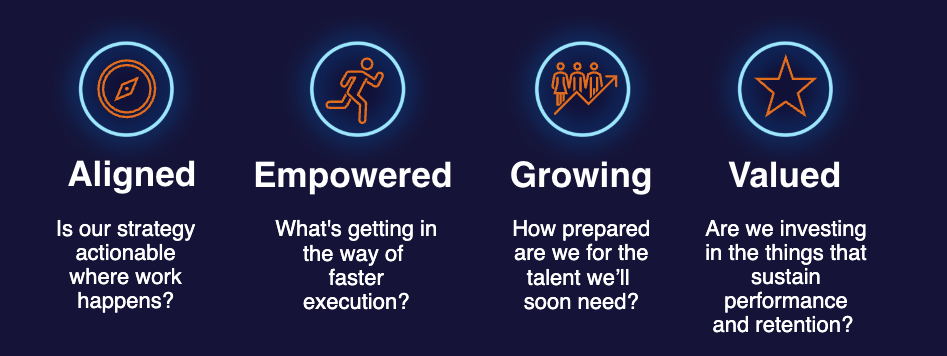
At Quantum Workplace, we think about thriving across four conditions: Aligned, Empowered, Growing, and Valued. Each one maps to a real tension HR leaders are already managing. And for each one, there’s a diagnostic question that, if you can answer it honestly, changes what you do next.

The 4 questions HR needs to answer

Screenshot 2026-07-02 at 10.13.54


1. Aligned — Is our strategy actionable where work happens?

The tension: Organizations need speed; employees need clarity.

Screenshot 2026-07-02 at 10.10.25


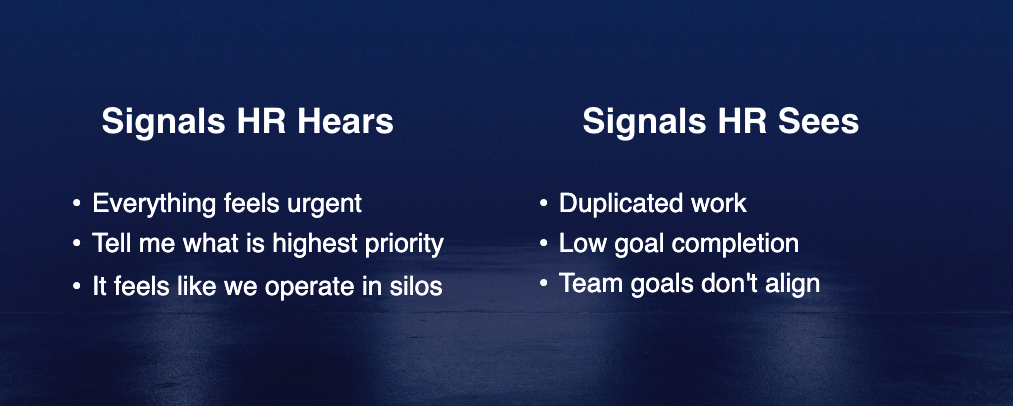
When I talk to HR leaders about alignment, they almost always nod at the same things. “Everything feels urgent.” “We operate in silos.” “Tell me what’s highest priority.” On the data side, you see duplicated work, low goal completion, team goals that just don’t connect.

The diagnostic question I always push people toward isn’t “do employees know the strategy?” It’s whether clarity differs by performance level. When solid performers lack clarity, that’s a coaching opportunity—managers can close that gap. But when your top performers are unclear too? That’s an org-wide problem, and no amount of manager coaching will fix it on its own.

The second question goes deeper: do teams actually feel accountable for the strategy, or does it feel handed down to them? That distinction matters enormously. Response patterns from a survey question are designed to reveal where employees are genuinely aligned versus where they’ve quietly disconnected. And those same responses can segment other outcomes—engagement scores, turnover risk—so you’re not just naming the gap, you’re understanding what it costs you.

What action looks like:

  • Strengthen how strategy shows up in the day-to-day work
  • Equip managers to translate strategy into clear goals and expectations— alignment needs to be a manager capability, not just a communication exercise
  • Audit and remove competing or non-aligned priorities that undermine alignment and speed

2. Empowered — What’s getting in the way of faster execution?

The tension: Organizations need faster execution; employees need fewer barriers.

Screenshot 2026-07-02 at 10.11.10


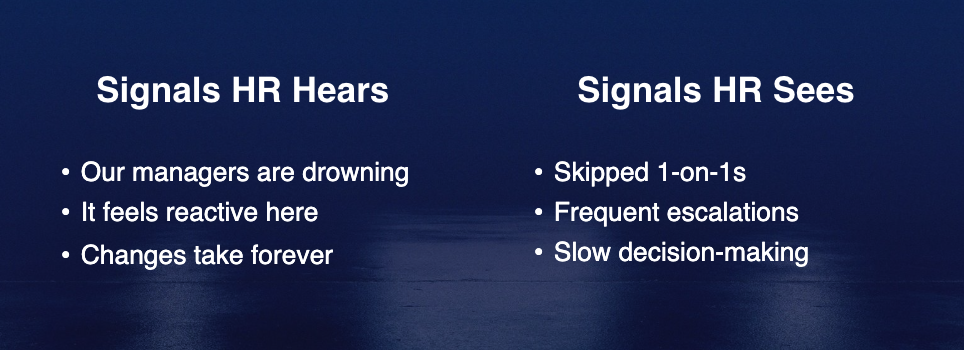
The signals here are pretty consistent: managers are drowning, things feel reactive, changes take forever. Skipped 1-on-1s. Frequent escalations. Decisions that should take a day taking a week.

One of the most interesting things I’ve seen in our data is what happens when you connect business KPIs—like on-time delivery—to employee feedback. The barriers become visible in ways that are genuinely surprising. In one case, having the right materials and equipment wasn’t what differentiated on-time delivery. AI adoption was. That’s the kind of specific, counterintuitive signal that only surfaces when you connect data across systems.

But here’s the thing I think gets missed most often: the manager experience gap. Look at this data from one organization and let it sink in:

Metric

Managers

Non-Managers

Gap

If I contribute to the org’s success, I know I will be recognized.

57%

87%

-30%

I clearly understand how my performance is measured.

57%

83%

-26%

I know how I fit into the organization’s future plans.

50%

73%

-23%

I have opportunities to learn new skills that will help me succeed.

57%

80%

-23%

It would take a lot to get me to leave this organization.

71%

87%

-16%

Managers are scoring 23 to 30 percentage points lower than non-managers on recognition, performance clarity, and knowing how they fit into the organization’s future. Managers can’t empower others when they don’t feel empowered themselves. This is a structural problem, not a personality one.

What action looks like:

  • Identify and remove the highest-friction barriers to execution—not everything, but what actually slows teams most
  • Clarify what decisions managers have authority to make and equip them to make effective ones
  • Streamline decision-making by clarifying ownership, reducing approval chains, and trusting teams

3. Growing — How prepared are we for the talent we’ll soon need?

The tension: Organizations need future-ready talent; employees want meaningful growth.

Screenshot 2026-07-02 at 10.12.06

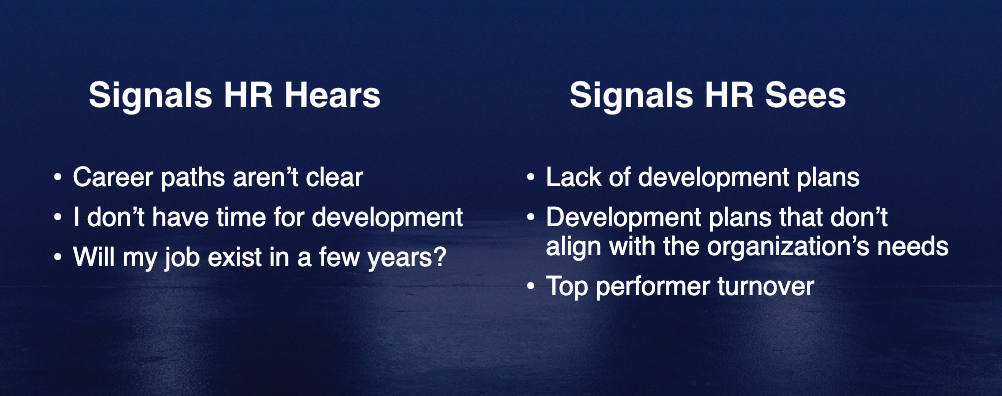
Career paths aren’t clear. There’s no time for development. And increasingly, I’m hearing employees ask a question that HR can’t afford to ignore: “Will my job even exist in a few years?”

The diagnostic question I find most useful here isn’t “do we have development plans?” It’s whether those plans are active and connected to employees’ day-to-day experience. An employee with a documented growth plan that nobody looks at isn’t growing. An employee with a stretch project that builds the skills the business needs in two years? That’s a different story entirely.

Succession planning data adds another layer. When you connect candidate status to survey feedback, you can see whether you’re intentionally developing the talent most critical to your future—or just assuming it’s happening. You can also flip it: the feedback from a candidate’s team tells you how effectively they’re actually leading.

“Shift growth from a periodic process to an everyday experience embedded in work — using projects, challenges, and real priorities as the primary vehicle.”

What action looks like:

  • Shift growth from a periodic process to something embedded in everyday work
  • Align individual development to the skills the organization will actually need next—not just the comfortable ones
  • Invest in top talent through stretch opportunities, not just formal programs that check a box

4. Valued — Are we reinforcing what matters most?

The tension: Organizations need sustained performance; employees want to feel valued.

Screenshot 2026-07-02 at 10.12.28


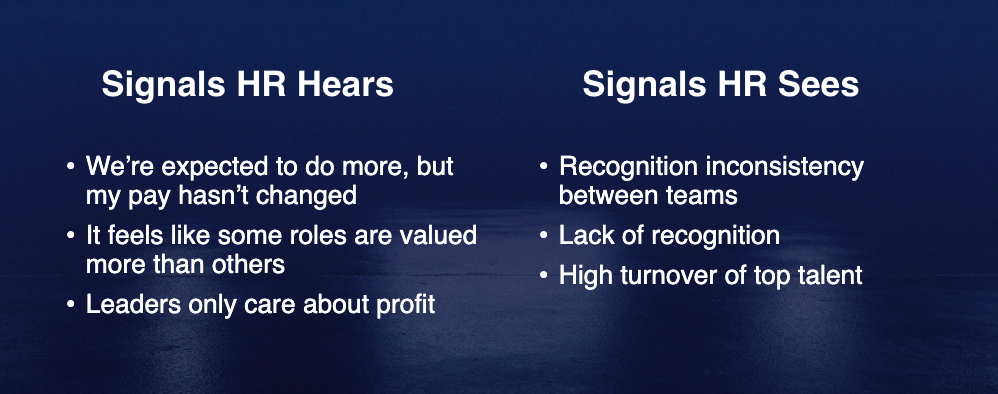
“We’re expected to do more, but my pay hasn’t changed.” “It feels like some roles matter more than others.” “Leaders only care about profit.” I hear these a lot. And on the data side, you see recognition that varies wildly between teams — and high turnover of the people you most wanted to keep.

The diagnostic question that reframes this conversation is about ROI. If your turnover is being driven by employees not feeling valued, recognition becomes a financial conversation, not just a culture one. When you can connect retention risk directly to recognition data, you can show exactly what lack of feeling valued is costing the organization.

The other thing worth mentioning: feeling valued isn’t only a top-performer problem. Solid contributors—often the largest population in any organization—need to feel their impact matters too. Recognition programs designed only for stars miss most of the workforce. When you connect talent reviews or performance ratings to employee feedback, you start to see those patterns clearly.

What action looks like:

  • Pair everyday recognition of meaningful behaviors and outcomes with milestone moments—you need both, not one or the other
  • Individualize recognition, even when the rewards are modest
  • Make recognition easy and embedded in the flow of work, not a separate system people have to remember to use
  • Design recognition as a signal—to reveal high-impact contributions and show where development is actually happening


HR doesn’t have to choose sides 

Each of these four tensions looks different on the surface. But they share the same structure: what the business needs and what employees need are pulling in opposite directions, and HR is caught in the middle.

The instinct is to pick a side. The better move—the one I believe in—is to build the conditions where both become possible. Teams that are aligned, empowered, growing, and valued aren’t a compromise. They’re what sustainable business performance actually looks like.

“HR’s role isn’t to personally solve every tension. It’s to help the organization ask and answer smarter questions.”

That’s what the right talent platform makes possible. Quantum Workplace connects insights across engagement, performance, development, and recognition into a single, connected view—so every leader has the clarity and confidence to act on what matters most. Not just HR. Every manager, at every level, in every team.

The questions I’ve outlined here are a starting point. The data to answer them already exists in your organization. We help you connect it.

Thriving or Held Back AMA with Quantum Workplace (3)