Home Blog Page 12

Generate single title from this title AI Bots Keep Overloading Servers. Should Website Owners Keep Paying? in 100 -150 characters. And it must return only title i dont want any extra information or introductory text with title e.g: ” Here is a single title:”

0

Write an article about

AI bots are increasingly affecting website performance, analytics, infrastructure costs, and content visibility. New research and infrastructure data suggest that the challenge is no longer simply scraping, but managing how automated traffic interacts with websites and the businesses that depend on them.

Scraping Is The Least Of The Problems

Many discussions among SEOs and site owners center on AI bots scraping. It’s a valid concern that AI systems harvest content for LLM training with virtually zero attribution when the content is remixed into an AI answer.

  • Site owners worry about intellectual property.
  • Search marketers worry about how AI systems use their content.

But infrastructure teams are increasingly seeing different and equally consequential problems.

The Banality Of Bots Getting Lost And Scraping Things

The issue is increasingly that many bots are creating unnecessary load, consuming resources, and sometimes becoming trapped in inefficient loops.

According to the report, one recurring pattern involved Meta’s meta-externalagent crawler following URL variations for days on end before mitigation systems caught on.

This kind of behavior is not malicious. It is automation operating with poor coding practices or insufficient guardrails.

Cloudflare’s David Belson illustrated the banality of lost bots draining resources:

“There’s the person who didn’t know what the hell they were doing yesterday, but vibe coded a bot today and let it loose. They’re not even bothering to check robots.txt.”

That observation captures an important reality. Today’s infrastructure problems now derive from poorly designed automation operating at scale.

Bots Are Consuming Resources Without Creating Value

The consequence of this behavior is that websites spend resources serving automated traffic that may provide little or no business value in return.

This is a big problem for ecommerce sites. Unlike requests for static pages, cart-related requests typically bypass caching and require the server to use resources. Depending on the site’s architecture, those requests can trigger PHP execution, database queries, session handling, and other resource-intensive processes.

Seen in this light, scraping is the least of a website’s problems. A crawler that repeatedly triggers expensive application logic and consumes server resources degrades performance for legitimate visitors.

The economic impact should not be ignored. According to the report, roughly 80% of AI crawling activity is associated with model training, eclipsing search or user-driven crawls.

For many businesses, the question is: Is there value returned by that traffic to justify the resources being consumed?

Businesses Are Trapped Between Visibility And Cost

If the solution were simply blocking bots, the problem would be solved. Unfortunately, many automated systems consuming resources are also connected to discoverability and visibility.

Some bots help search engines discover content. Some may contribute to AI citations and visibility in AI-generated answers. Others may simply consume content and resources without producing directly measurable business benefits.

Businesses are being asked to absorb the costs of automated traffic while simultaneously evaluating whether that traffic contributes enough visibility to justify those costs.

The Question Now: Which Bots Are Worth Paying For?

The report argues that site owners should ask this question:

Which bots, on which parts of my site, under what conditions?

Bot management affects visibility, infrastructure costs, and site performance. The goal is aligning automated traffic with business objectives.

Traffic Numbers May Already Be Affected

Automated traffic also affects website analytics. According to the report, AI bot traffic increased 300% over the past year. By the end of 2025, approximately one in every 31 visits on TollBit’s network originated from an AI bot.

As automated traffic grows, traffic volume alone becomes a less reliable indicator of audience growth.

A site can show rising visit counts while experiencing no corresponding increase in customers, subscribers, conversions, or revenue. In some cases, the additional traffic may be automated.

The report argues that the most meaningful signals come from metrics tied to actual business outcomes, including branded search demand, direct traffic, engagement quality, and revenue.

As automated systems account for a larger share of overall traffic, raw visit counts become less useful as a standalone measure of success.

Solutions And Mitigation Tactics

The report advocates a deliberate approach to bot management.

The first step is visibility.

Before making changes, site owners should understand what automated traffic is actually doing. The goal is not identifying every individual bot but identifying patterns such as repeated requests, loops, and activity focused on dynamic endpoints.

The second step is protecting high-cost site functions.

Cart URLs, checkout paths, internal search pages, filtered product pages, and parameter-heavy URLs often consume significantly more resources than standard content pages. Restricting unnecessary crawler access to those areas can reduce waste without affecting important content.

The report also recommends separating search crawlers from AI crawlers.

Not every bot provides the same value. Search crawlers contribute directly to discoverability and deserve broader access than AI training crawlers or unknown scrapers.

A single policy applied to every automated system can no longer be justified as the ecosystem grows more complex. That’s why the report advocates targeted changes rather than broad restrictions.

The goal is not eliminating automated traffic. The goal is managing it in a way that supports business objectives while reducing unnecessary costs. One way is to decide which bots can access specific parts of a site and under what circumstances.

Takeaways

Bot traffic is no longer primarily a scraping issue. The data suggests it has become an infrastructure, visibility, analytics, and business-management issue.

The biggest challenge is that many bots are consuming resources, triggering expensive functionality, inflating traffic metrics, and creating costs that site owners must absorb.

Bot management is not about blocking the most bots. It’s about managing bots according to what the site is optimizing for by distinguishing between valuable and wasteful automated traffic.

Read Kinsta’s data-backed report:

The AI & bot traffic reality check

Featured Image by Shutterstock/DC Studio

.Organize the content with appropriate headings and subheadings ( h2, h3, h4, h5, h6). Include conclusion section and FAQs section with Proper questions and answers at the end. do not include the title. it must return only article i dont want any extra information or introductory text with article e.g: ” Here is rewritten article:” or “Here is the rewritten content:”

MIT affiliates win 2026 Hertz Foundation Fellowships | MIT News

0

The Hertz Foundation announced that it awarded 2026 fellowships to three current MIT students as well as an incoming graduate student. They are: Annika Marschner, Alvin Q. Meng, Zachary S. Siegel, and Matthew Wanta.

The prestigious science and technology award provides each recipient with five years of financial support — a stipend and full tuition equivalent — which gives them an unusual measure of autonomy to pursue ground-breaking research in their graduate work.

“What particularly impresses me about this cohort is their fearlessness in taking on new challenges and advancing the frontiers of science,” says Philip Welkhoff, a Hertz Fellow and director of the malaria program at the Gates Foundation, who co-led the selection process. “Each has exhibited tremendous creativity, grit, and vision, and I cannot wait to see what each accomplishes with the freedom to innovate provided by the Hertz Fellowship.”

In addition to funding, fellows receive lifelong access to Hertz Foundation programs including events, mentoring, and networking opportunities, with the over 1,300 fellows named since the fellowship was established in 1963. The connections forged among these individuals have sparked collaborative startups, research, and commercialization in a range of technology, science, and engineering fields. Hertz Fellows have contributed to breakthroughs in such areas as advanced medical therapies, global defense networks, and the James Webb Space Telescope.

This year’s MIT-affiliated recipients are among a total of 19 Hertz Foundation Fellows scholars selected from across the United States. 

Annika Marschner ’26 majored in mechanical engineering and will begin her PhD at MIT in the fall. Her undergraduate research centered on the development of novel technologies for both biointerfacing and bio-inspired systems, including a custom benchtop stereoscope-compatible incubator and extrusion-based desktop bioprinter for MIT’s Raman Lab, a light-based filamented bioprinting system for ETH Zürich’s Tissue Engineering and Biofabrication Lab, and large-scale hardware designs for robotic systems in MIT’s Biomimetic Robotics Lab. Marschner’s undergraduate thesis focused on improving the speed and dexterity of dynamic motions in bio-inspired robotic limbs. As a graduate student, she plans to continue her work on both hardware and control system design in biologically relevant settings, especially in the areas of assistive medical technology and surgical robotics. 

Alvin Q. Meng is doctoral student in inorganic chemistry focusing on understanding the fundamental interactions underlying chemical structure and reactivity. He is currently studying iron-sulfur clusters under the guidance of Professor Daniel L.M. Suess. Born in Tianjin, China, Meng immigrated to the United States at the age of 10. He received undergraduate degrees in chemistry and mathematics from the University of Virginia, where he worked in the research group of Professor W. Dean Harman. His research involved the synthesis and characterization of dihapto-coordinated tungsten complexes of cyclopentadiene, focusing on a class of unusual binuclear species containing a carbon–carbon bond linking two metal-bound five-membered rings.

Zachary S. Siegel is an electrical engineering and computer science graduate student pursuing a PhD in the Computer Science and Artificial Intelligence Laboratory, where he works at the intersection of robotics, cognitive science, and artificial intelligence. He graduated summa cum laude from Princeton University with a BSE in computer science and a minor in philosophy, receiving honors including Tau Beta Pi, Sigma Xi and the Outstanding Computer Science Independent Work Prize. His senior thesis, advised by Tom Griffiths and Jacob Andreas, investigated how humans infer the goals of others in open-ended, real-world environments. Siegel demonstrated how Bayesian inference serves as an accurate model of people’s goal predictions by comparing partial observations to a learned library of possible plans weighted by their prior likelihood. His doctoral research goal is to build machines that learn and reason more like people — systems that can learn from limited data and generalize to new situations by combining robot planning and Bayesian inference. Siegel is particularly interested in combinatorial generalization: the human capacity to compose known skills in novel ways to solve previously unseen problems without additional demonstrations. At MIT, he is advised by Leslie P. Kaelbling, Tomás Lozano-Pérez, and Joshua B. Tenenbaum.

Matthew Wanta is an incoming doctoral student who will begin operations research at MIT in the fall. He is a class of 2026 graduate of the United States Military Academy at West Point with a bachelor’s degree in computer science and mathematical sciences, both with honors. His work centered on machine learning for autonomous systems, integrating probabilistic modeling and computer vision into cooperative drone search and swarm control frameworks. In collaboration with DEVCOM Armaments Center, Wanta developed computer vision models for detecting energetic defects in artillery munitions, enabling rapid, nonintrusive quality control in defense manufacturing. His work with U.S. Special Operations Command and Army C5ISR organizations focused on autonomous aerial search and sensing, where he built simulation architectures for probabilistic target localization and multi-agent coordination. Wanta served as company commander for Bravo Company, 2nd Regiment; president of Upsilon Pi Epsilon; and vice president of Phi Kappa Phi. He is an Astronaut Scholar and Sapper School graduate, and commissioned as an Army officer in the Cyber Corps.

New imaging system sees through murky waters | MIT News

0

For remotely operated underwater vehicles, cloudy and turbulent waters are often a no-go. When vehicles settle on the seafloor or dig through a sandbed, they can kick up clouds of sediment that make it tough for onboard cameras to see through. Often, the only thing to do is to wait until the marine dust settles before a vehicle can safely proceed. 

But a new underwater mapping technique developed by engineers at MIT and the Woods Hole Oceanographic Institution (WHOI) may allow vehicles to see through murky, low-visibility waters. 

The method fuses visual images from optical cameras with acoustic data from sonar sensors. The combination enables a vehicle to quickly map the general shape of its surroundings using sonar, even in low-visibility waters. A vehicle can move toward certain shapes in the sonar-mapped environment, coming close enough for optical cameras to visually resolve specific objects in detail. 

The technique is akin to pairing a dolphin’s echolocation with a sea turtle’s close-range vision to see and navigate through murky water, in real-time. 

The researchers tested the method in tank experiments where they could control the water’s degree of visibility. Even in the cloudiest conditions, the system was able to see through the sediment to map the tank’s environment and visualize centimeter-scale details of objects in the tank. 

The team is further improving the technique, which they’ve named Sonar-MASt3R. They envision that the mapping method could safely guide underwater vehicles through murky environments for a range of applications, including scientific exploration, underwater construction and maintenance, and deep-sea recovery. 

“We hope that this work enables us to do more operations in those challenging, low-visibility environments, and helps provide more coverage in areas that are difficult to operate in today,” says Amy Phung, a graduate student in MIT’s Department of Aeronautics and Astronautics, who led the work. 

Phung presented a paper detailing Sonar-MASt3R this week at the IEEE International Conference on Robotics and Automation (ICRA). The paper’s co-author is Richard Camilli, senior scientist of applied ocean physics and engineering at WHOI. 

The best of both

To see underwater, scientists have generally taken an either/or approach, using either optical cameras or sonar sensors to guide the way. Optical cameras can provide detailed visual imagery of a scene, but only in waters that are relatively clear and well-lit. In contrast, sonar sensors perform just as well in clear and murky water; by emitting acoustic waves and measuring the time and angle at which they return, sonar sensors can determine the exact shape, distance, and depth of objects in the environment, though a sonar map lacks any visual detail. 

To get the best of both modes, scientists have looked to combine the two in a new approach known as “opti-acoustic fusion.” In a handful of prior works, research groups have merged sonar and optical data in mapping techniques that are mostly geared toward object recognition and reconstructing workplace environments. Most techniques require time to sync and process the data and therefore do not work in real-time, while only a few can map an environment in 3D. None have been applied to high-resolution mapping underwater in murky, turbid conditions. 

Phung, who is a student in the MIT-WHOI Joint Program, and Camilli, her advisor, aimed to develop an opti-acoustic fusion technique that would generate detailed 3D maps of underwater environments in real time and in low-visibility conditions. The team was motivated, in part, by challenges in safely recovering unexploded underwater mines.

“There can be old explosives in areas that make it unsafe for ships to be in, and the ability to get rid of those safely is best done by robotics,” Camilli says. “But a lot of these explosives are set in surf zone environments where visibility adds to the challenge of doing this safely. That’s one of many applications that our technique can be used for.”

Cloudy, with a chance of mapping

The new method, Sonar-MASt3R, builds on an existing technique, MASt3R, that was developed by researchers in France. MASt3R is an image matching algorithm that is trained to take in visual images of the same scene and quickly estimate the relative depth of each pixel in the scene. In this way, MASt3R can generate a 3D map of the environment in real-time, based on a camera’s 2D images. 

“The downside is that there is no sense of scale,” Phung says. “It will say ‘this pixel is five units closer than this pixel,’ but it can’t say whether that’s 5 meters or 5 feet.”

Luckily, sonar provides absolute measurements of scale. The timing of sonar reflections can be translated directly into a specific depth and distance of objects that the signals bounced off, as well as their shape and contour. 

In their new work, Phung and Camilli used sonar data to correct MASt3R’s scaling and generate precise 3D maps of underwater environments. Even in murky water, the method’s sonar-corrected map would enable a vehicle to know the precise location of objects, and therefore how far to safely move in for a closer inspection, which the vehicle could then do using conventional optical cameras.

The team tested Sonar-MASt3R in experiments with a tank that they filled with water, sediment, and a variety of objects such as a small boulder, a coffee mug, and a packing crate. Inside the tank, they also set up a robotic arm, onto which they mounted an underwater camera, and a sonar sensor. 

For each experimental run, they first carried out a sweep trajectory, in which the robotic arm slowly swept from one side of the tank to the other to capture sonar and visual data. With this first sweep, Sonar-MASt3R quickly creates a coarse sonar-based map of the shapes and contours of the tank and its objects. The coarse map is then used to record close-up camera images of the objects, which are used to improve the map resolution. A “keyframe” approach quickly compares each new image frame to the last keyframe. If a frame provides new information not contained in the last keyframe, the image is added as a new keyframe to the map. If it is similar, it is immediately discarded. In this way, the approach can quickly fill in the map with relevant visual detail, in real-time. 

The researchers tested their new approach underwater, testing eight different levels of turbidity, which they created by stirring up the tank’s sediment. Compared with other opti-acoustic fusion approaches, Sonar-MASt3R generated more accurate 3D maps and resolved smaller, centimeter-scale details, and in cloudier conditions. In the cloudiest condition, which the robotic arm’s cameras could not see through, its sonar sensors were able to generate a rough map of the tank’s hidden objects. This initial map enabled the arm to move safely through the murk and closer to specific objects, which its underwater camera could then visualize in more detail. 

“An analogy would be if you were to go into a china shop in the dark, and try to pick your way around to find a specific coffee mug without knocking things over,” Camilli offers. “This would allow you to do that.”

The team plans to test the approach in natural underwater conditions, where they suspect that the mapping task should be more straightforward. 

“In a tank, it’s like an echo chamber,” Camilli says. “It’s like trying to do this in a funhouse mirror setting where you get all these distortions and reverberations and ghost images that really complicates the processing. If you put it in the real world, it should be easier.”

Then, they say, Sonar-MASt3R could help scientists safely explore in cloudy, turbid, and murky underwater regions.

“The real value in this effort is so we can use this technology in mission scenarios that are untractable right now,” Phung says. “And there are plenty of untractable missions because we don’t have the observational or perception capabilities.”

This research was supported, in part, by NASA, and the National Science Foundation.

Generate single title from this title How C3 AI agents will automate predictive maintenance for Shell in 100 -150 characters. And it must return only title i dont want any extra information or introductory text with title e.g: ” Here is a single title:”

Write an article about

Shell will use agents from C3 AI to shift from basic anomaly detection towards fully-automated predictive maintenance.

The global energy giant is building on their current use of the C3 AI Reliability Suite, which already keeps tabs on more than 30,000 crucial pieces of equipment across upstream and downstream operations. Shell now intends to lean heavily into autonomous AI agents, putting them in charge of the entire maintenance lifecycle.

Going from that first warning sign all the way to a completed repair, this level of automation strips away the need for constant human oversight and makes sure the company’s resources are pointed exactly where they are needed most.

“This expanded partnership with Shell proves what’s possible when enterprise AI is fully operationalised at global scale for predictive maintenance—reducing unplanned downtime and delivering hundreds of millions of dollars in economic value,” said Stephen Ehikian, President of C3 AI.

“Shell has built mature AI predictive maintenance programs on our platform, and together we’re now pushing into agentic AI, advancing how this technology can further transform reliability, safety, efficiency, and operational performance.”

C3’s AI agents help Shell move past basic anomaly detection

In the beginning, Shell used machine learning simply to spot odd patterns in sensor data, giving engineers an early heads-up before things broke. To pull this off, the system ingests a massive amount of real-time operational technology (OT) data and mixes it with business context from ERP platforms such as SAP.

The next step introduces AI agents built for actual reasoning and independent action. While older systems stopped at pinging an engineer when things looked unusual, this next-generation framework independently investigates why an alert fired in the first place.

Once it pinpoints the root cause, the agent steps up to draft precise work orders, confirm part availability in the inventory, and generate procurement requests.

C3 AI’s platform handles the heavy lifting, providing a model-driven space to easily integrate high-frequency sensor feeds with structured financial and maintenance logs. These AI capabilities are trained to learn the normal operating baselines for specific gear, like pumps, turbines, and compressors.

The agentic layer sits on top of this foundation. Operators configure an individual agent for a given piece of equipment by defining its objectives and permitted responses. If the core machine learning models detect a deviation from normal operations, this agent activates, gathering extensive contextual data to build a complete picture of the situation. This context usually includes recent maintenance history, environmental conditions, and upstream process variables.

Using all that information, it suggests a fix backed by solid evidence. Human operators can then easily approve or override the plan. As the system proves itself over time, Shell can fully automate its responses to certain types of alerts. Connecting straight into systems like SAP is critical here, allowing the agent to work inside the exact same workflows that human planners already use.

The real impact of agentic AI for predictive maintenance

Putting agentic AI to work at this scale tackles the classic “last mile” headache in predictive maintenance. Many industrial companies can predict failures just fine, but turning those insights into fast, efficient action remains a challenge. Usually, engineers still have to manually dig through alerts, investigate the causes, and write up the work orders themselves.

Shell wants to shrink that timeline. By letting AI handle root cause analysis and work orders, the delay between a predicted failure and the actual fix drops. That directly improves equipment uptime and protects production.

Moving to a model where repairs only happen when the equipment condition actually demands it naturally saves money, simply because nobody is wasting time tinkering with perfectly fine machinery. Leaving healthy hardware alone also means it lasts much longer.

On top of the cost savings, stepping in before a catastrophe hits makes the whole operation much safer and cuts down on environmental risks, which is always top of mind in the energy sector.

“What Shell and C3 AI have built on Azure over the past several years is exactly what enterprise AI should look like—real applications, running in production, delivering measurable value at global scale,” commented Sandy Gupta, VP GISV, Software Development Companies at Microsoft.

This expanded rollout shows that we are finally talking about practical industrial AI production workflows instead of just algorithms. Rather than just the prediction itself, the real value comes from the system’s ability to act on it with barely any human oversight.

See also: Meta Business Agent drives AI-powered conversational commerce

Want to learn more about AI and big data from industry leaders? Check out AI & Big Data Expo taking place in Amsterdam, California, and London. The comprehensive event is part of TechEx and is co-located with other leading technology events including the Cyber Security & Cloud Expo. Click here for more information.

AI News is powered by TechForge Media. Explore other upcoming enterprise technology events and webinars here.

.Organize the content with appropriate headings and subheadings ( h2, h3, h4, h5, h6). Include conclusion section and FAQs section with Proper questions and answers at the end. do not include the title. it must return only article i dont want any extra information or introductory text with article e.g: ” Here is rewritten article:” or “Here is the rewritten content:”

Generate single title from this title The Impact of Generative AI in Business: Key Insights in 100 -150 characters. And it must return only title i dont want any extra information or introductory text with title e.g: ” Here is a single title:”

Write an article about

As we become a more developed, techno-savvy world, businesses increasingly adopt generative AI to their processes. Generative AI is not just a technology. It is a powerful tool that can turn the whole world on its head. It goes beyond usual combinations of current information, creating original content customized for the user.

McKinsey and Company stated in a report, “Generative AI’s impact on productivity could add trillions of dollars in value to the global economy.” Businesses can benefit not only in terms of resources but also in terms of cost. From programming to customer support to data analytics—generative AI in business can do it all. Its ability to immediately generate tailored, high-quality content with just user prompts enables companies to unleash new prospects for innovation and enhance their operations by automating their processes.

While generative AI’s impact on the business landscape is undeniable, it is still crucial to have a comprehensive understanding of this technology before using it. If you want to learn more about adopting generative AI for business, this blog is for you.

Below, we will explain generative AI, explore its benefits for companies, and share generative AI enterprise use cases. We’ll also share the challenges and limitations associated with its use so you are aware of both sides of generative AI before making any decision.

Generative AI in a Nutshell

Commonly called GenAI, generative AI is a kind of artificial intelligence that can craft seemingly new, realistic content like text, audio, images, and video, similar to what we can create. It is a set of algorithms that uses training data to create this content and perform several kinds of tasks like recognizing patterns, features, and structures and classifying and reorganizing data. Its unmatched ability to compose music, write text, and create art has turned heads and made ventures use generative AI business ideas.

Generative AI text models can be utilized for generating texts based on natural language instructions, such as:

  • Shortening long documents

  • Searching internal documents to augment knowledge transfer within a business

  • Summing up text to allow detailed listening

  • Providing conversational SMS support with no waiting time

  • Producing job descriptions and marketing copy

  • Searching for common bugs in a code

  • Writing scripts for testing code

  • Creating software

  • Tracking consumer feedback

  • Evaluating large amounts of data

  • Conducting data entry

Generative AI business is formed using huge machine learning models that identify patterns in massive datasets and form novel content from the recognized relationships and patterns. The best GenAI algorithms are trained on a large quantity of unclassified data in a self-supervised manner to identify underlying patterns for numerous tasks.

Get custom ML solutions to optimize your business operations.

Our ML services

For instance, GPT-3.5 is a foundation model trained on huge volumes of text that can be used for sentiment analysis, text summarization, and answering questions. Another multimodal foundation model named DALL-E is a text-to-image model capable of creating images, creating variations of existing paintings, and expanding pictures beyond their size.

Models such as GPT-3.5, Bard, and DALL-E are potent enough to substantially boost the adoption of generative AI for business intelligence, even in companies that lack deep data science or AI proficiency. Even though remarkable modifications require expertise, adopting a generative model for a particular task can be attained by low data quantities, prompt engineering, or via APIs.

Now, if you are wondering about the technology behind generative AI, it’s not that complicated. As its name suggests, generative AI allows computers to produce content based on machine learning and artificial intelligence algorithms applied to numerous data sources. These models use a wide variety of techniques like variational auto-encoders, generative adversarial networks (GANs), and transformer models.

Generative AI for Business

Benefits of Generative AI in Business

Numerous generative AI ideas are beneficial not only for companies but also for their employees due to the extent to which they help a business prosper. Mentioned below are some of the key benefits of generative AI for business.

Enhanced Creativity and Innovation

As stated earlier, generative AI is capable of creating images from text, which is beneficial for product design. In fact, GenAI can craft unique, new outputs across a range of modalities, such as video advertisement.

Generative AI solutions generate growth and revenue by creating new products and boosting their market introduction. The technology encourages creativity within product development teams, further avoiding any downturns. According to research by Thoughtworks, the generative AI business is capable of streamlining the entire process of product development, from defining the product to its launch to evolution.

Additionally, some examples of AI-generated art, music, and content are given below:

  • Art: DALL-E and DeepArt can form original visual art pieces, usually combining elements and styles that may be difficult or unexpected for human artists to imagine.

  • Music: If you are wondering how are companies using generative AI, look no further. AI programs such as OpenAI’s MuseNet and Jukedeck can compose unique music in various genres, forming everything from contemporary pop tracks to classical symphonies. Businesses can use these pieces for customer engagement, branding, and marketing without hiring traditional composers.

  • Content: Tools such as Editpad AI Paragraph Generator can craft high-quality paragraph pieces for social media, emails, text messages, etc.

Efficiency and Productivity Improvements

Generative AI can augment the efficiency of various industries exponentially. A study by Nielsen Norman Group found that technology enhanced employee productivity by 66%. In addition to this, it is capable of:

  • Automating Repetitive Tasks and Processes: Generative AI business use cases involve accelerating repetitive or manual, time-consuming tasks, like summarizing lengthy documents, coding, data entry, report generation, customer service responses, and writing emails. This helps employees focus on more creative and strategic tasks, resulting in better productivity.

  • Streamlining Operations and Reducing Costs: GenAI can recognize inefficiencies and recommend improvements. This can save costs, particularly in industries where operational efficiency is necessary.

Personalization and Customer Experience

  • Tailoring Products and Services: GenAI can analyze customer data to comprehend behaviors and preferences, enabling businesses to offer highly customized products and services. This can result in better customer loyalty and satisfaction.

  • Enhancing Customer Interactions: AI can offer real-time insights during customer interactions, allowing companies to create a more satisfying and engaging customer experience, solve problems faster, and provide more relevant recommendations. This is particularly impactful in sales, marketing, and customer support.

Data-Driven Decision Making

Generative AI for business intelligence is extremely helpful for strategic decisions, predictive analysis, and forecasting. By providing predictive modeling and data-driven insights and automating complex data analysis, GenAI boosts the process of decision-making. It unleashes underlying trends and patterns and offers reliable forecasting, allowing businesses to plan for growth, manage risks, optimize inventory, predict market changes, and thus make better decisions.

Generative AI for Business

5 Key Generative AI Business Use Cases

Generative AI business applications span numerous industries, including entertainment, education, finance, banking, retail, and healthcare. All sectors can benefit from generative AI for particular use cases, like scenario modeling, data analysis, content creation, and personalized customer experiences.

Marketing and Advertising

Generative AI tools introduce a faster option to produce product images and write product descriptions in the marketing and e-commerce industries. For instance, Copy.ai provides bulk content production and customization at scale. Additionally, Synthesia enables businesses to generate marketing videos.

Overall, generative AI enterprise use cases for marketing and advertising include:

  • Performing rapid, accurate, and comprehensive market research to aid in a business’s overall stance and marketing strategy

  • Producing informative web content with consistency, making sure that the website is always updated, further improving search engine ranking

  • Crafting brand-compliant and engaging social media posts to boost frequency and enhance quality, leading to audience engagement.

  • Writing SEO-optimized blog posts on topics related to the business’s target audience

Thus, using generative AI, companies can maintain an engaging and consistent online presence. Apart from this, generative AI can also analyze customer data to curate tailored ad campaigns that relate to specific audiences. It can create personalized content for social media posts and email marketing campaigns, sum up the present state of the market, and keep the ads updated with the transforming market. By offering personalized content, ventures can boost their conversion rates.

Product Design and Development

Due to the technology’s ability to create unique content, other generative AI business applications include product design and development. It can bring new perspectives to product designs, enabling manufacturing teams to explore options further and speed up prototyping.

As a matter of fact, GenAI can form detailed models and prototypes, which leads to faster product iterations and marketing. Real-time feedback from these tools aids in the quick detection of the strengths and weaknesses of these prototypes. This is why product designers are increasingly adopting generative AI for designing concepts.

In consumer goods, automotive, and fashion industries, GenAI can drive innovation by crafting new product features, materials, and designs. This allows companies to stay ahead of trends and ever-rising consumer demands.

Customer Support and Engagement

Generative AI-powered chatbots trained on real-world encounters can help deliver customized customer support experiences across sectors. When you look up generative AI use cases by industry, you will find that GenAI for customer support is used across all industries adopting this technology. The reason is that these AI agents can engage in conversations like humans, understand customer needs, and provide customized real-time solutions.

Furthermore, generative AI chatbots provide round-the-clock availability and can possess multilingual capabilities. This makes them an ideal addition for ventures in the education, healthcare, finance, and retail sectors seeking the enhancement of user experience and planning to reach people across the globe.

You may be wondering why GenAI chatbots if AI chatbots already exist. Other than engaging in a conversation with the customer, GenAI can automate customer service and support tasks entirely, tailoring to the customers’ needs, modeling complex situations, and enhancing businesses’ analytics capabilities. These advancements help the chatbots indulge in conversations that flow naturally and allow them to comprehend nuance and context, just like human customer representatives.

Finance and Risk Management

Among the several generative AI enterprise use cases are finance and risk management. GenAI can augment the intelligence and security of data analytics by generating synthetic data (deepfake technology) that takes care of statistical features. This is priceless when a business owner has to conduct data analysis on sensitive information while ensuring privacy.

For example, if a company is a part of the finance industry, generative AI can form synthetic transaction data that maintains actual consumer behavior patterns, enabling the company to train its AI models for detecting fraud without compromising customer information. If you’re planning to build a superior AI model, consider these 5 must-follow steps.

Apart from detecting fraud and preventing it, GenAI can aid enterprises in the following ways:

  • Generative AI businesses can rapidly draft reports and update content to improve and manage investor relations. It can automate reporting for internal controls and document creation like receipts, purchase orders, and invoices. This helps improve the financial analyst team’s productivity.

  • Generative AI can manage contracts with suppliers. This will ensure compliance with any obligations and reduce the risk of potential legal issues and disputes. Not only will this save the company time and resources, it will also enhance accountability and transparency.

  • GenAI can generate financial scenarios and forecasts more frequently than the analysts’ team and keep them up to date according to new data.

  • Lastly, generative AI for business intelligence is also useful for recognizing market trends from external sources of data for risk management as well as financial planning.

Healthcare and Pharmaceuticals

Similar to the finance industry, generative AI’s capability to produce synthetic transaction data is beneficial for the healthcare industry, where the confidentiality of data is a top priority. In addition to this, generative AI business use cases in healthcare and pharmaceuticals also surpass human ability in the following ways:

  • Drug Discovery and Development: Generative AI can substantially boost the drug discovery process by anticipating molecular structures, identifying potential individuals for novel medications, and simulating biological interactions. What’s more, GenAI can produce data on millions of candidate molecules for a specific disease and test their application. This will significantly accelerate research and development cycles and reduce the cost and time it takes to introduce new drugs.

  • Personalized Medicine and Treatment Plans: GenAI can recognize and evaluate patient data to create customized treatment plans personalized to a person’s unique lifestyle, medical history, and genetic formation. Such an approach improves the effectiveness of treatment and reduces the possibility of adverse reactions.

Generative AI for Business

Challenges and Limitations of Generative AI

Today, the adoption of generative AI in business is becoming increasingly popular. However, like any other technology, generative AI has its challenges and limitations. From data to data management – risks associated with GenAI keep increasing exponentially.

As businesses continue to adopt generative AI, new challenges continue to emerge. Some ventures have opened new positions for chief customer protection officers to stay ahead of potential risk scenarios.

If you are a business owner considering generative AI ideas, you might already be convinced about adopting GenAI. However, before you make the final decision, we would like to share some of the challenges and limitations of generative AI. While these may differ from one company to another, most apply to all generative AI enterprise use cases.

Technical Challenges

Two significant technical challenges associated with generative AI are:

  • Data Quality and Availability Issues: Generative AI domain models need massive amounts of data for effective training. Collecting or acquiring data can be challenging, limiting the model’s effectiveness and scope. Additionally, high-quality data may be limited, noisy, and biased, and incomplete data may result in poor accuracy and performance. Thus, businesses must consider the quality and availability of data to operate and train GenAI systems.

  • Computational Requirements and Scalability: The necessity for technical expertise is a key barrier to adopting generative AI for business. Forming AI models is a complex process that requires expert skills in the sector. Training generative AI models, particularly deep learning models, requires substantial resources and computer power. This can be highly time-consuming and costly, especially for ventures that need to scale their solutions across complex issues or large datasets.

Implementation Barriers

Adopting generative AI in established business systems requires considerable resources and effort. The organization is required to ensure system compatibility and data quality for maximum AI performance. The key implementation barriers associated with introducing GenAI are:

  • Integrating Generative AI into Existing Systems: Inculcating generative AI business into established technology stacks and workflows can be challenging. Possible disruptions to ongoing operations, custom integration requirements, and compatibility issues can lead to significant complexities while implementing GenAI. Which technologies must be in place to use large-scale generative AI for business?

    • APIs and Integration tools

    • DevOps and MLOps Tools

    • Security and Privacy Technologies

    • Data Management and Governance Tools

    • Machine Learning Frameworks

    • Data Infrastructure

    • GPUs and TPUs

    • Scalable Cloud Platforms

  • Cost and Resource Considerations: Generally, the deployment of GenAI solution requires significant financial investment, including skilled personnel, hardware, and software. Furthermore, existing costs regarding updates, training, and maintenance can be huge. This can be a barrier for small businesses with limited resources and budgets.

Ethical and Societal Concerns

Generative AI is trained on existing data based on availability. Any inaccuracy and bias in the training data can amplify or perpetuate the output, resulting in unsafe, legally risky, or discriminatory outcomes. Moreover, incorrect answers due to irrelevant or outdated data can result in unanticipated consequences.

The key ethical considerations for using generative AI comprise avoiding bias in AI models, safeguarding user privacy, prioritizing data protection, ensuring generated content accuracy, enforcing strict measures related to cybersecurity, and following industry norms.

Wrapping Up

Generative AI’s ability to streamline business processes and create new, unique content has grabbed people’s attention. From designing artwork to producing blogs, GenAI can do it all. Its benefits for organizations encompass improved efficiency and productivity, enhanced innovation and creativity, personalized customer experience, and data-driven decision-making.

Hence, generative AI business applications include marketing and advertising, product design and development, customer support and engagement, finance and risk management, and healthcare and pharmaceuticals. Nevertheless, like all other technologies, GenAI has its challenges, like implementation barriers, technological challenges, and ethical and societal concerns.

If you want to stay competitive and innovative in today’s business landscape, adopting generative AI is a must. If you are unsure how to get started, LITSLINK is here for you. We are experts in AI that can help your business to build and adopt AI solutions. What are you waiting for? Try our AI services today!

.Organize the content with appropriate headings and subheadings ( h2, h3, h4, h5, h6). Include conclusion section and FAQs section with Proper questions and answers at the end. do not include the title. it must return only article i dont want any extra information or introductory text with article e.g: ” Here is rewritten article:” or “Here is the rewritten content:”

Generate single title from this title The most interesting startups right now want to get you off your phone in 100 -150 characters. And it must return only title i dont want any extra information or introductory text with title e.g: ” Here is a single title:”

0

Write an article about While the AI fundraising machine keeps breaking its own records, some founders are building in the other direction.  Mirror founder Brynn Putnam just raised money for Board, a startup focused on bringing people together through in-person games and social experiences. Cyberdeck creators are going viral crafting whimsical DIY computers that literally encourage users to touch grass. Unlike the AI-free browser crowd, this doesn’t just feel like backlash, […] .Organize the content with appropriate headings and subheadings ( h2, h3, h4, h5, h6). Include conclusion section and FAQs section with Proper questions and answers at the end. do not include the title. it must return only article i dont want any extra information or introductory text with article e.g: ” Here is rewritten article:” or “Here is the rewritten content:”

Generate single title from this title My students need real connection, not AI feedback in 100 -150 characters. And it must return only title i dont want any extra information or introductory text with title e.g: ” Here is a single title:”

Write an article about

Key points:

As I wrapped up my student conferences, one conversation stuck with me. Steven had barely touched his final project for our computer science course, a virtual simulation of a piano, despite showing real promise earlier in the year. I knew he was capable of more, so I began our conference by telling him this. Slowly, he opened up. Instead of talking about coding, his project, or his grades, Steven spent most of our time describing the anxiety and insomnia he was experiencing because his mom was sick. At that moment, the final project and the skills I wanted to assess didn’t matter. Steven needed to talk and I needed to listen. 

The conversation also brought to the forefront my complicated feelings about AI in schools. I have 130 11th graders in my computer science classes at the Chicago High School for the Arts. Feeding their projects into an AI tool could save me a lot of time. But if I had done that, I would have missed the details that made Steven who he was. No algorithm can replace the human dialogue that helps my students feel seen, challenged, and understood.

Over the past year, I’ve been exploring AI tools that can help me plan more creative lessons, leave detailed comments on student work, and respond more effectively to a wide range of learning and language needs. But Steven keeps coming to mind. I can easily imagine a near future where AI systems deliver instruction and feedback more efficiently than I ever could. What I struggle to imagine is how an algorithm could have responded to Steven if I had fed it his incomplete final project. Would it have recognized anxiety or would it have called his poor performance apathy? 

While AI promises incredible efficiency, we should use it in ways that strengthen instruction without weakening the human connections between teachers and students. The Teach Plus Illinois Policy Fellowship, where I am a Fellow, recently surveyed Illinois educators about their attitudes and practices around AI. In our report, educators shared real examples of using AI to save time on routine tasks and improve their lesson planning while protecting more time for connection with students. 

In my own classroom, I am reinvesting any time AI saves me into real dialogue with my students. Especially when evaluating student work, I’ve found that talking with them–not just grading an assignment or outsourcing feedback to an AI tool–gives me a more accurate picture of what students know and what they need. Those conversations also create space for the stories they share. Understanding students deeply and giving them meaningful feedback takes time, but that is exactly the kind of human work worth protecting.

Schools have always been places where students do more than absorb content and learn skills; they also learn how to relate to others, manage conflict, and find mentors and role models. That human connection is so important, and in an era when 12 percent of students report using AI chatbots for emotional support, protecting our interactions is especially urgent. We cannot respond to this moment by handing off teacher-student connection to AI.

One way we can approach the AI era is to embrace conferencing as a core part of assessment. Not only does this build connections, it’s also necessary to truly know what students can do. When students have increasing access to AI tools, a nice polished assignment tells me less and less about student abilities. When a student in my class can’t explain why their code does what it does, I know they still have work to do. 

At the system level, schools need to build schedules and staffing models that protect genuine connections between teachers and students. That means treating conference time as non-negotiable, not something teachers carve out on their own. As districts begin factoring AI into staffing decisions, we need explicit policies that protect small class sizes and dedicated time for human connection.

I think a lot about Steven when I try new AI tools. Schools will change in the coming years, but the relationships that are the heartbeat of great classrooms must remain. There are so many students, like Steven, who don’t need quick and efficient feedback from AI. They need a teacher who will listen and care. 

Andrew Rodgers, Chicago High School for the Arts in Chicago & 2025-2026 Teach Plus Illinois Policy Fellow

Andrew Rodgers is an 11th-grade computer science teacher at the Chicago High School for the Arts in Chicago and 2025-2026 Teach Plus Illinois Policy Fellow.

Latest posts by eSchool Media Contributors (see all)

.Organize the content with appropriate headings and subheadings ( h2, h3, h4, h5, h6). Include conclusion section and FAQs section with Proper questions and answers at the end. do not include the title. it must return only article i dont want any extra information or introductory text with article e.g: ” Here is rewritten article:” or “Here is the rewritten content:”

Startup helps retailers track their products in real-time | MIT News

0

When you picture a worker at a retail store, you probably think of someone at a cash register or helping a customer. But employees also spend a lot of their time combing through stockrooms and shop floors, fulfilling requests or online orders and generally trying to keep track of all their inventory.

Keeping track of inventory takes so much time, in part, because retailers don’t always know where everything is located. That’s why when you ask a store associate to check if they have a shirt in your size, it may take them 20 minutes to get back to you.

Cartesian is helping retailers keep track of inventory with a technology invented at MIT. The system uses wireless signals from radio frequency identification (RFID) tags attached to items to find their precise location in a store, from the stockroom to the shop floor.

Last year, Cartesian did a study with a retailer and found its platform delivered meaningful annual savings at the store level by streamlining inventory tracking, optimizing workflows, and improving customer experiences.

“The big problem we’re solving is that about 50 percent of working hours in retail stores go to managing inventory,” says co-founder Fadel Adib SM ’13, PhD ’17, an associate professor at MIT. “That is roughly a $15 billion problem in the U.S. alone. We use algorithms to decipher indoor locations using wireless signals. The core technology enables a new level of indoor localization.”

Cartesian is already deployed in more than 700 stores across 15 countries and is working with one of the world’s largest fashion groups, Inditex, which is the parent company to brands like ZARA, Pull&Bear, and Oysho.

Beyond retailers and warehouses, Cartesian’s platform could also improve indoor location tracking for manufacturers, logistics operators, and robotics companies.

“The broad vision for what we are doing is spatial AI,” says Adib. “Today, AI does extremely well in the digital world. Now it has to move into the physical world. That means allowing machines to perceive their environment in such a way that they can interact with it. That’s where spatial AI comes in and where Cartesian sits.”

From technology to product

Adib, who holds a joint appointment in MIT’s Media Lab and Department of Electrical Engineering and Computer Science, has been studying wireless signals at the Institute for more than 15 years, dating back to research during his master’s degree.

“My group today researches how to use wireless signals to sense the world in ways that were not possible before,” Adib says. “We develop the fundamental technology and then we build systems around them. Our goal is to see these systems deployed in the real world for impact.”

When Adib joined MIT’s faculty, the first project he worked on was indoor localization using RFID tags. Isaac Perper ’20, MEnG ’21 later joined his lab as a student, and together they developed machine-learning algorithms to process RFID data to translate them into location patterns, with an initial focus on helping robots locate RFIDs indoors.

In 2021, Adib went through the National Science Foundation’s I-Corps program, which challenges researchers to interview potential customers to find the right problems to solve with their technologies. That’s when he realized how big of a problem inventory management is for retailers.

Cartesian was officially founded by Adib and Perper in the beginning of 2023, after they received a small business award from the National Science Foundation. The pair worked with MIT’s Technology Licensing Office to license patents from Adib’s lab. They also received support from MIT’s Venture Mentoring Service.

“Our goal was to reduce the cost of the technology to make it scalable,” Adib recalls. “Isaac focused on simplifying the product, leveraging progress in machine learning, and making it fast. It was a lot of iterating and testing early on.”

Retail workers spend much of their time locating items for a number of reasons. They might get an online order to fulfill, need to restock store shelves, or get a customer inquiry about items in the back.

Stores differ in how they organize their inventory. Most separate items by categories in specific shelves and bins then use barcodes or inventory systems that tend to get outdated fast.

“It’s a big problem for stores because customers may just leave before asking an employee to look for their size, or customers may get frustrated and leave if it takes too long,” Adib says. “The associate also wastes time looking for items they could spend doing higher-value work.”

Cartesian’s platform works with retailers’ existing handheld RFID readers, which store associates already use to manage inventory. Each store installs Cartesian’s software into their existing inventory apps or uses a custom app for employees to access directly.

“The RFID readers are how stores tell what’s in stock and what’s out of stock,” Perper says. “We figured out a way to leverage the same scans they’re already using with the reader, put the data they generate into our machine-learning algorithms, and generate maps of where all the items are.”

Customers can build analytics on top of Cartesian’s technology to keep track of inventory levels, show customers maps of where each item is located, and create other services.

“They use our location intelligence platform and build different products on top,” Adib says. “We can work with any device, any store, any type of RFID. It’s a simple interface. All the sophisticated location algorithms sit in the cloud.”

Beyond retail

Cartesian signed its first big contract in 2025 and soon expanded to several hundred stores. One of Cartesian’s advantages is its ability to quickly scale. Perper says they can add a store in about one minute. Cartesian’s team doesn’t even have to travel to a new store to turn on its system if it’s already working with the company.

“It’s as simple as flipping a switch, preparing the data, and sending it to our customers,” Perper says. “One of our first big bets was, ‘Can we build this entirely on existing hardware?’ That bet is starting to pay off.”

Cartesian’s models can also work with Wi-Fi and Bluetooth signals, which the company plans to use with customers in other verticals.

“Right now, we’re focused on applications in retail, but this technology has a lot of value in manufacturing, warehouses, and other locations,” Adib says.

Cartesian’s team aims to be deployed in tens of thousands of stores over the next year and then begin expanding beyond retail into industries like manufacturing and robotics.

“What’s most exciting about Cartesian to me is we’ve built a lot of the technology foundation, and now that we have the fundamentals in place, we hope to build specific application layers,” Perper says. “Then we can ask customers in different verticals about their problems and apply our technology in different ways to solve it.”

Generate single title from this title Dozens of Red Hat packages backdoored through its official NPM channel in 100 -150 characters. And it must return only title i dont want any extra information or introductory text with title e.g: ” Here is a single title:”

Write an article about

The worm, dubbed Shai-Hulud, has all the hallmarks of malware released last month as freely available open source. TeamPCP was the first group to use Shai-Hulud, and it promoted a competition that promised a $1,000 payment to the hacker who carried out the biggest supply-chain attack using the malware. TeamPCP has also been behind a rash of previous supply-chain attacks. Now that the worm is in the hands of many other threat groups, supply-chain attacks may ramp up further.

The malware devotes considerable attention to CI/CD (continuous integration/continuous delivery) systems, which allow for faster and more reliable software releases by automating the building, testing, and deploying of code changes. The malware spread in Monday’s attack was published through GitHub Actions OIDC (OpenID Connect), indicating that Red Hat’s CI/CD pipeline was compromised. OIDC is a security measure designed to interact with cloud services through the use of temporary credentials.

Once installed, the malware targets other organizations’ CI/CD credentials. The compromise of Red Hat’s GitHub Actions OIDC was very possibly the result of a previous supply-chain attack that infected an employee’s machine.

In an email sent after this post went live, Red Hat said it has removed the malicious packages.

“The packages are strictly limited to internal development, and the malicious code was never published for customer consumption via the console.redhat.com system,” the email said. “While our investigation is ongoing, we have not identified any impact to customer or partner environments or Red Hat production systems.”

Given the success of other recent supply-chain attacks, anyone who touched one of the affected packages in the past 36 hours should assume compromise of their workstations, CI/CD pipelines, and all credentials for cloud services and repositories. That means employees should drop whatever they’re doing at the moment and investigate thoroughly.

In a recent supply-chain attack that hit Checkmarx, the security firm failed to fully drive out the party responsible. Checkmarx was then hit two more times. The Checkmarx credentials used in the first attack came from a supply chain attack on the Trivy software developer. The pivot to Checkmarx and its failure to fully remediate the initial breach demonstrates the difficulty of completely recovering from such security lapses and the risks that result.

Both Socket and Aikido have lists of affected Red Hat packages and other indicators of compromise that any potentially affected person or organization should make use of promptly.

Story updated to add Red Hat comment.

.Organize the content with appropriate headings and subheadings ( h2, h3, h4, h5, h6). Include conclusion section and FAQs section with Proper questions and answers at the end. do not include the title. it must return only article i dont want any extra information or introductory text with article e.g: ” Here is rewritten article:” or “Here is the rewritten content:”

Ambassadors of STEM | MIT News

0

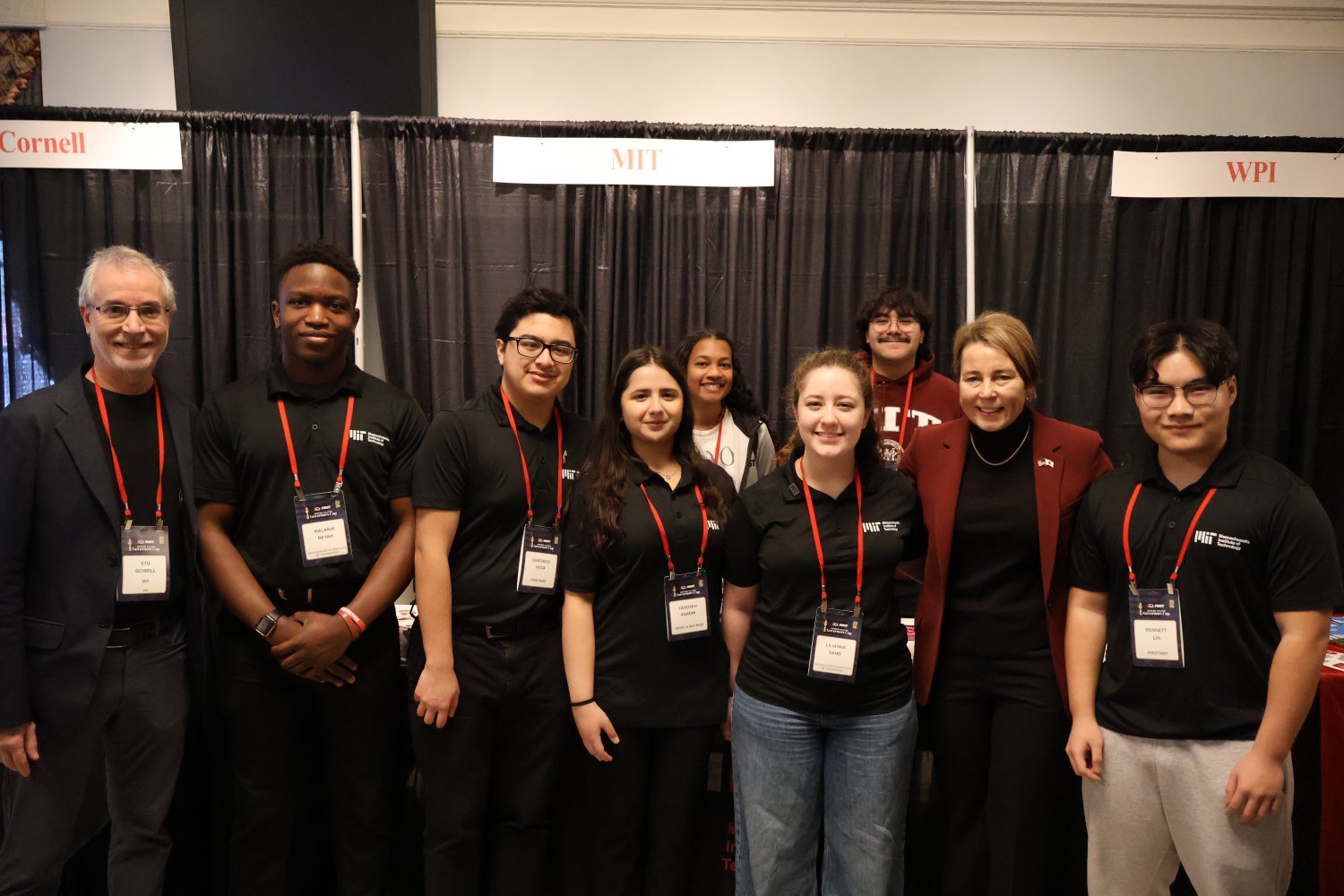
When a team of MIT students turned up at a national robotics tournament, their robot — aptly named Timbot — wouldn’t work. They’d been invited to demonstrate Timbot at the inaugural United States Governors Cup in Washington, D.C., a March Madness-like competition for high school robotics teams from all 50 states.

Troubleshooting on the fly is par for the course at robotics tournaments. Timbot had a few technical issues, mostly with Wi-Fi, so the team sat cross-legged on the floor and set to work. Meanwhile, high school students started gathering around and asking questions about wiring and subsystems. After about an hour, Timbot was up and running again, scooping up and throwing foam balls as it was designed to do.

“It actually turned into a great moment,” says first-year student Lily Sand. “We ended up tethering the robot with a long Ethernet cable, instead of using wireless, and a lot of students were like, ‘whoa, we do that too!’ It was a nice connection point.”

Leveraging a cultural touchstone for good

Connecting younger students to robotics is one of the MIT students’ goals as members of a new club, FIRSTxMIT, which launched at the beginning of the academic year. Members are all alumni of programs offered by FIRST Robotics (FIRST), a nonprofit that aims to inspire interest in STEM for K-12 students worldwide through team-based robotics programs and competitions.

FIRST has deep roots at MIT. Inventor Dean Kamen collaborated with the late MIT Professor Woodie Flowers, a pioneer in hands-on engineering design education, to establish the FIRST Robotics Competition in 1992. The competition was modeled after the novel robotics competition Flowers had developed for his iconic mechanical engineering class 2.70 (Introduction to Design), which is now 2.007 (Design and Manufacturing I).

Through FIRST, students learn about more than designing, building, and programming robots. The program emphasizes the ethos of “gracious professionalism,” a term coined by Flowers for high-quality work, respect, and cooperation, even in the context of competition. Students also build self-confidence, gain leadership experience, and hone communication skills, as well as technical expertise. 

Many FIRST alumni feel deep gratitude for the program and a strong desire to stay involved. Debbie Ang, co-founder of FIRSTxMIT, still mentors her high school’s team in New Hampshire. Yet, there are few FIRST alumni clubs at universities. Ang and co-founder Perry Han, also a sophomore, met in high school through FIRST and reconnected at MIT. “We noticed that FIRST was founded here, and yet there wasn’t anything organized on campus, even though we kept running into people who had done FIRST and still cared about the community,” she explains.

In fact, participation in FIRST is somewhat of a cultural touchstone among MIT students. MIT associate director of admissions Trinidad Carney, a liaison to FIRST Robotics, estimates that 15-20 percent of undergraduates have participated in the program.

Han and Ang collaborated with Carney to launch FIRSTxMIT, under the auspices of the Edgerton Center, to foster connections among the MIT FIRST community and provide a way for members to channel their passion for FIRST into outreach and public service. Their hunch about the untapped potential an alumni club was spot-on: the kickoff event drew 185 students, and there are about 200 on their Discord channel.

Sharing the “power of FIRST”

Now the club is off and running. They have hosted a gathering for New England FIRST alumni; collaborated with the Josiah Quincy Elementary School in Boston to launch a LEGO Robotics league; volunteered as judges at local competitions; and helped the MIT Admissions Office with outreach. Carney, who advises the club, says, “We’ve actually had other universities reach out to us to say, ‘How did MIT manage to launch a club that’s so successful and compelling?’”

One of the club’s most ambitious undertakings to date was building Timbot, in three days, during Independent Activities Period in January. Robot in 3 Days (Ri3D) is a collegiate challenge in which students build a FIRST Robotics Competition-level robot in 72 hours, a feat that would take about six weeks for a high school team. Experiential Robotics, a consortium that leverages an experiential robotics platform to promote engineering and public service, provided support for MIT’s Ri3D challenge and invited the team to act as STEM ambassadors at the Governors Cup.

In addition to the robotics competition, the two-day event brought together governors and leaders from government, education, industry, and others to underscore the crucial role that states play in supporting STEM education.

To that end, the FIRSTxMIT team demonstrated Timbot, chatted with high schoolers, staffed the MIT Admissions booth, and mingled with VIPs, sharing the value of project-based STEM enrichment opportunities like FIRST. “Having MIT students tell the story of the power of FIRST is incredibly compelling,” says Carney. “They can say: I did this in high school, it shaped who I am, and now I’m at MIT continuing to build and give back.”

A number of governors stopped by the MIT Admissions booth to chat with the students, including Massachusetts Governor Maura Healey. “She talked about the importance of K-12 STEM education and was very supportive,” says Sand, FIRSTxMIT’s logistics coordinator. 

In addition to inspiring others, the MIT students drew inspiration themselves at the Governors Cup. Han recalls speaking to a state senator from Ohio, a former teacher and strong advocate for programs like FIRST. “It really showed me that, when you have people in government that are excited about STEM education, it can really go places.”

Building a better future

Looking forward, Han and Ang plan to take some time to further refine the club’s organization and future goals. Hands-on outreach figures prominently in their plans. “FIRST places a big focus on starting new teams, supporting underserved communities, and spreading awareness,” says Ang. “A lot of us feel that FIRST played a major role in shaping our academic and career paths, so we want to give that opportunity to others.”

“Part of our goal is, we want to put a robot in as many students’ hands as possible to kind of give them a sense that, STEM isn’t just reading the AP Physics C-Mechanics textbook,” Han adds. “It’s actually putting these ideas into practice and building something useful.”

They have no shortage of new ideas they are kicking around, as well. Han is particularly interested in advocating for students to earn Undergraduate Research Opportunities Program or class credit for projects like Ri3D, or for those in the Gordon Engineering Leadership Program to get leadership credit by mentoring a robotics team. He also wants to explore how to leverage FIRST alumni networks to help students with professional development.

Whatever path they take, Carney has no doubt they make an impact. She saw their potential on full display when they built Timbot.

“These students, many of whom hadn’t met before, came from all kinds of backgrounds: different schools, different regions, different life experiences,” she says. “But they worked together with respect, curiosity, and generosity. They’re collaborative, mission-driven, and passionate about making opportunities for others. They make MIT better, and they will make the future better.”