Home Blog Page 14

Generate single title from this title Forward deployed engineer role in AI Adoption in 100 -150 characters. And it must return only title i dont want any extra information or introductory text with title e.g: ” Here is a single title:”

Write an article about

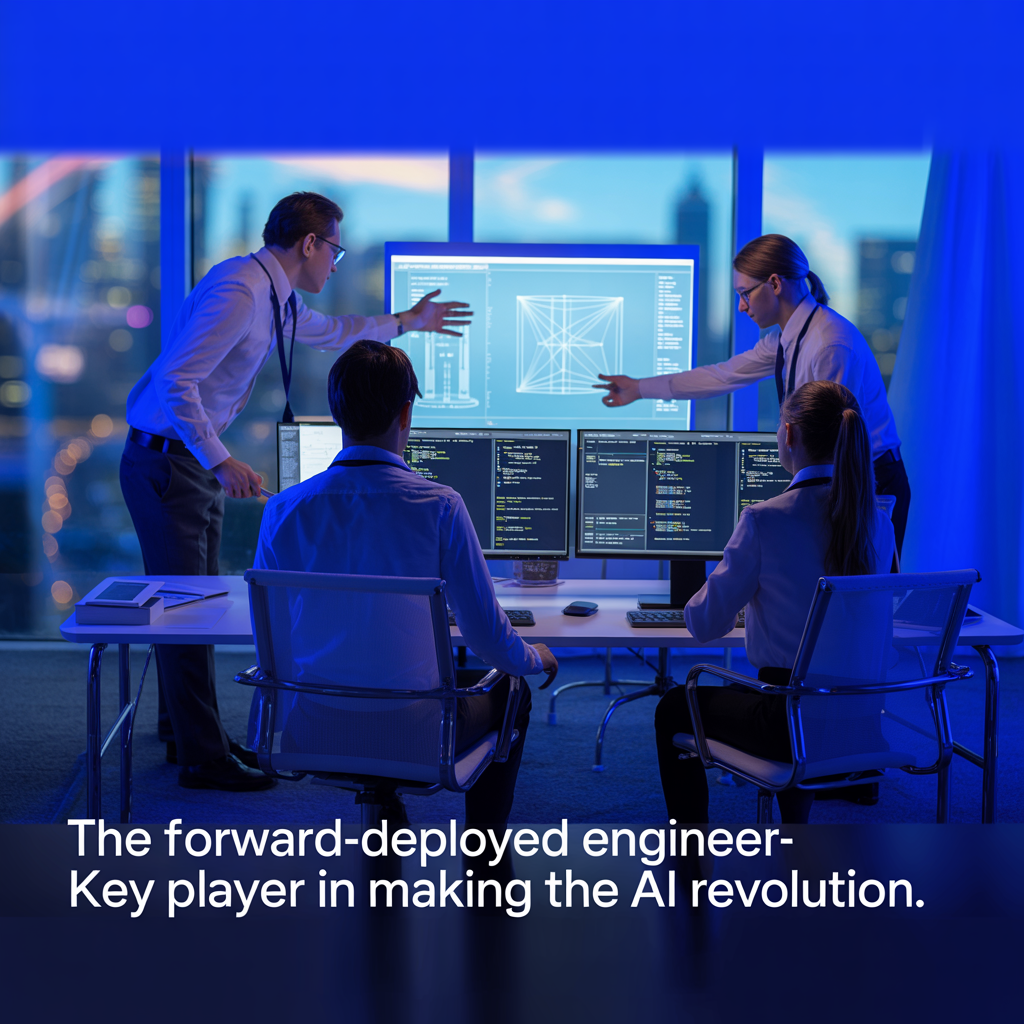
One of the key players in making the AI revolution is the forward-deployed engineer. These engineers, in contrast to traditional developers, collaborate closely with clients, personalising and implementing cutting-edge AI systems locally. Forward-deployed engineers make sure that artificial intelligence produces measurable business outcomes more quickly, intelligently, and effectively by bridging the gap between innovation and implementation.

They stand for a new breed of engineers who not only create solutions but also ensure their success in actual business settings. Forward deployment offers agility, alignment, and a quicker return on investment as businesses depend more and more on AI to remain competitive.

Want to hire forward-deployed engineers?

Contact us!

What Is a Forward-Deployed Engineer?

A highly qualified software specialist who is integrated into client teams directly is known as a forward-deployed engineer. They work at the forefront of innovation, transforming complex AI models into useful solutions that suit particular corporate settings.

Unlike remote or siloed developers, forward-deployed software engineers work hand-in-hand with clients to understand their infrastructure, workflows, and business logic. They adapt algorithms, fine-tune data pipelines, and deploy AI in ways that immediately drive measurable impact.

At its core, this role blends technical expertise with on-the-ground collaboration.

Key responsibilities include:

  • Analyzing client challenges and translating them into actionable technical plans
  • Building and deploying scalable, secure, and efficient AI solutions
  • Collaborating closely with stakeholders for seamless system integration
  • Monitoring AI performance and implementing continuous improvements

By facilitating communication between operations, development, and research, the forward-deployed engineer makes sure that each deployment benefits actual users.

Learn more about our AI-as-a-Service solutions that empower organizations to scale AI efficiently.

The Role and Responsibilities

The role of the forward-deployed engineer is distinct and revolutionary. They make sure that the most cutting-edge AI technologies are translated into useful, dependable, and scalable products by serving as both a strategist and a hands-on developer.

Their business savvy is what distinguishes them, even though their experience usually includes data science, machine learning, and software architecture. These engineers comprehend client objectives, market dynamics, and operational limitations in addition to writing code.

Typical responsibilities include:

  • Designing production-ready systems optimized for performance
  • Creating pipelines for machine learning and analytics workloads
  • Maintaining scalability and security in deployment environments
  • Providing continuous feedback to refine core algorithms

They are engineers with both creative and practical problem-solving skills. The forward-deployed software engineer makes sure that innovation swiftly and efficiently makes it to production rather than becoming stuck in the lab.

When you collaborate with LITSLINK’s Machine Learning Engineers, you gain the expertise of embedded specialists who ensure AI initiatives reach full operational maturity.

Industry Demand and Trends

As businesses transition from experimental AI projects to enterprise-wide adoption, there is an increasing need for a forward-deployed AI engineer. Companies are beginning to understand that the success of AI requires more than just research; it also requires highly qualified individuals who can transform prototypes into scalable products.

Why the Surge in Demand?

Reason Explanation
Complex AI Integration Engineers who comprehend AI’s technical and strategic aspects are highly sought by businesses.
Customization Over Templates FDEs adapt AI technology to complex workflows that pre-made tools cannot handle.
Speed to Market Being embedded with clients helps FDEs shorten delivery timelines and remove communication bottlenecks.
ROI Accountability FDEs align AI deployments with business performance metrics to ensure measurable outcomes.


Businesses such as Palantir and OpenAI have shown that this model works. While the OpenAI forward-deployed engineer incorporates generative AI into everyday operations, such as intelligent analytics and automated customer support, the Palantir forward-deployed software engineer concentrates on establishing safe data ecosystems for big businesses, like Gotham and Foundry.

This hybrid approach, combining technical expertise and field collaboration, is setting new standards in the AI industry.

Why the Role Is Critical for AI Adoption

This role has become essential to organizations seeking to transform through AI. They operate at the crossroads of technology, business strategy, and innovation.

Key Benefit Description
Bridging Innovation and Execution FDEs convert laboratory prototypes and scholarly research into scalable production systems that yield quantifiable benefits.
Accelerating Time to Market Businesses shorten iteration cycles and accelerate the release of AI solutions when embedded engineers detect problems early.
Customizing for Real Environments Each AI deployment is adapted to fit the client’s infrastructure, data security, and compliance standards.
Improving Model Accuracy and Performance Forward-deployed engineers can adjust models for accuracy in the real world through ongoing feedback loops.
Driving ROI By aligning engineering priorities with KPIs, these engineers make sure investments in AI produce tangible returns.


By bridging the gap between vision and value, the forward-deployed engineer turns AI from a concept into a fundamental business advantage.

Benefits of Hiring Forward-Deployed Engineers

Organizations choosing to hire such engineers gain agility, innovation, and precision in AI delivery.

Key benefits include:

  • Faster Implementation: Rapid transition from prototype to production.
  • Domain Expertise: Tailored solutions aligned with specific business challenges.
  • Enhanced Collaboration: Direct engagement between engineers and decision-makers.
  • Sustained Innovation: Systems evolve continuously through real-world insights.
  • Risk Mitigation: Early issue detection and ongoing optimization reduce deployment risks.

When you hire forward-deployed AI engineers from LITSLINK, you get more than technical experts — you get partners invested in your success.

Forward-Deployed Engineers at LITSLINK

Our forward-deployed engineers at LITSLINK are partners in embedded innovation. We assign professionals who collaborate closely with your team to comprehend problems, incorporate AI solutions, and enhance performance after launch.

Our teams specialize in:

  • AI development for startups and enterprises
  • Machine learning and predictive analytics
  • AI chatbot development for automation and engagement
  • Scalable cloud architectures for continuous learning systems

Our engineers offer:

  • Deep expertise in frameworks like TensorFlow, PyTorch, and Scikit-learn
  • Agile collaboration with transparent progress tracking
  • End-to-end delivery from ideation to optimization

LITSLINK’s forward-deployed software engineers have produced game-changing outcomes that increase operational efficiency and propel business growth across a variety of industries, including healthcare, fintech, logistics, and manufacturing.

Discover our AI Chatbot Development Services to see how AI-driven automation can elevate customer experience.

Industries Leveraging Forward-Deployed Engineers

Forward-deployed engineering is revolutionizing industries by ensuring AI works seamlessly in real-world operations.

Healthcare & Wellness

Healthcare professionals can make quicker, more accurate decisions thanks to AI-driven diagnostics, real-time patient monitoring, and predictive treatment systems developed by forward-deployed engineers. These systems use predictive modelling and patient history to tailor care recommendations, identify abnormalities before they become more serious, and analyse enormous volumes of clinical data in real time. FDEs improve operational efficiency and patient outcomes by ensuring smooth data flow between medical devices, analytics platforms, and electronic health records through direct integration into hospital IT infrastructure.

Fintech & Banking

Forward-deployed engineers create secure, compliant platforms for fraud detection, risk assessment, and intelligent automation that redefine efficiency and trust in the financial sector. These solutions leverage advanced AI algorithms and machine learning models to analyze transactional data in real time, identifying anomalies that signal potential fraud or security risks. FDEs also ensure adherence to financial regulations and data privacy standards, integrating encryption, audit trails, and automated reporting. By embedding directly into client systems, they optimize workflows, minimize false positives, and enable faster, data-driven decision-making that safeguards both institutions and customers.

Retail & E-commerce
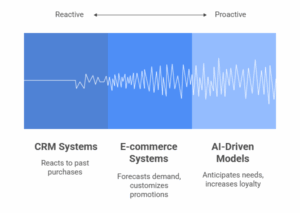
Retail personalization ranges from reactive to proactive

Forward-deployed engineers help companies increase sales, optimise inventory, and provide outstanding customer experiences by implementing AI-driven personalisation and demand forecasting models. In order to make real-time product recommendations, forecast changes in demand, and customise promotions, these systems examine consumer behaviour, past purchases, and market trends. FDEs make sure that these models are easily incorporated into CRM and e-commerce systems, enabling companies to foresee client needs before they materialise. By making the shopping experience more relevant and interesting, this proactive approach not only increases conversion rates but also fortifies customer loyalty.

Manufacturing & Logistics

Predictive maintenance, robotics, and intelligent routing systems are integrated by engineers to improve overall efficiency and lower operating costs and downtime. Forward-deployed engineers help businesses identify possible failures before they happen by using AI-driven analytics to track production data and equipment health in real time, reducing production cycle interruptions. In order to increase productivity and safety, they also design and implement robotic automation for dangerous or repetitive tasks. Intelligent routing systems, on the other hand, simplify logistics by maximising delivery routes, cutting fuel usage, and guaranteeing quicker order fulfilment, leading to more intelligent and environmentally friendly industrial operations.

Energy & Utilities

Forward-deployed engineers deploy advanced smart grid analytics, optimizing resource consumption, reducing operational waste, and driving sustainability across industries. By leveraging AI models that analyze energy flow, demand fluctuations, and equipment performance in real time, FDEs help organizations predict usage patterns and dynamically adjust distribution systems for maximum efficiency. These intelligent systems can detect anomalies, prevent overloads, and balance renewable energy sources to create more resilient and eco-friendly infrastructures.

Through forward-deployed AI engineers, organizations achieve scalable automation, data-driven energy management, and a measurable competitive advantage. By integrating predictive insights with IoT-enabled sensors and automated control systems, FDEs empower companies to lower energy costs, meet sustainability targets, and unlock new opportunities for innovation in the clean technology sector.

Explore LITSLINK’s AI Solutions designed for every industry.

The Future of Forward-Deployed Engineering

The forward-deployed engineer’s meaning is changing from hands-on deployment to strategic AI leadership as AI technologies advance.

Emerging Trends

  • Autonomous AI Agents
    Engineers will supervise self-learning systems capable of independent decision-making.
  • Cross-Disciplinary Collaboration
    Teams will blend data science, business strategy, and user experience.
  • Responsible AI
    FDEs will play a key role in developing transparent and ethical systems.
  • Cloud-Native and Edge Computing
    AI deployment will move closer to data sources for real-time insights.
  • Human-AI Synergy
    Engineers will ensure AI enhances human expertise instead of replacing it.

From development to governance, the forward-deployed engineer’s role responsibilities will keep growing, guaranteeing that innovation stays consistent with human values. FDEs will serve as a link between cutting-edge technology and human oversight as artificial intelligence becomes more integrated into vital systems, such as national infrastructure, healthcare, and finance. They design, implement, and oversee AI systems that must meet safety, transparency, and equity standards in addition to writing code.

Forward-deployed engineers will play a key role in AI governance in this changing environment, assisting organisations in balancing technological innovation with social norms and legal requirements. They will assist groups in creating frameworks that encourage the responsible adoption of AI while striking a balance between accountability and efficiency. These experts ensure that the upcoming wave of AI transformation not only speeds up advancement but also upholds trust and human values at its core by fusing technical know-how with ethical vision.

Seeking a trusted development partner?

Contact us!

How LITSLINK Supports AI Transformation

By collaborating with LITSLINK, you can get access to a group of skilled, forward-deployed engineers who will precisely and scalably implement your AI strategy.

We provide comprehensive AI development services that address all of the demands of contemporary artificial intelligence. The goal of our artificial intelligence development service is to build intelligent systems that improve decision-making, automate business procedures, and extract insightful information from data.

We create and train predictive models through our Machine Learning Solutions, enabling businesses to recognise patterns, project results, and make more informed decisions.

By offering scalable and reasonably priced AI capabilities, AI-as-a-Service enables companies to incorporate cutting-edge technologies without requiring sophisticated infrastructure or internal knowledge.

Lastly, intelligent conversational agents that enhance customer service, expedite communication, and boost engagement are provided by our AI Chatbot Development service.

When combined, these solutions give businesses of all sizes a competitive edge through intelligent automation, lower operating costs, and speed up innovation.

Why companies choose LITSLINK:

  • Over 1,000 projects successfully delivered
  • Proven track record across multiple industries
  • Scalable engagement models and flexible cooperation formats
  • Transparent communication and measurable outcomes

With LITSLINK’s forward-deployed software engineers, you can expect AI that’s efficient, reliable, and built for growth.

Final Thoughts

A significant change in how companies develop, implement, and scale AI systems is represented by the emergence of the forward-deployed engineer. Businesses go from experimentation to execution by directly integrating expertise into teams, which leads to quicker innovation and more enduring effects.

Our engineers at LITSLINK transform concepts into scalable, intelligent solutions. We guarantee success at every level, whether you’re a startup testing your first AI model or an enterprise automating worldwide operations.

Luckily, we have great experience in Custom AI Software Development. We can do that for you, too. Just contact us and let’s get started!

Kick off your project growth journey today!

Contact us now!


.Organize the content with appropriate headings and subheadings ( h2, h3, h4, h5, h6). Include conclusion section and FAQs section with Proper questions and answers at the end. do not include the title. it must return only article i dont want any extra information or introductory text with article e.g: ” Here is rewritten article:” or “Here is the rewritten content:”

Generate single title from this title Stop Treating AI Visibility As One Problem. It’s Actually Three, On Three Different Layers in 100 -150 characters. And it must return only title i dont want any extra information or introductory text with title e.g: ” Here is a single title:”

0

Write an article about

When a brand stops appearing in ChatGPT, or when its share of voice in Perplexity drops by half over a quarter, the typical response from the marketing org is to write more content. Sometimes a lot more. The thinking goes that if AI systems aren’t surfacing the brand, the fix is to feed them more material to work with. That instinct is a misdiagnosis. It’s a retrieval-layer fix being applied to what is increasingly a different kind of problem entirely, and the cost shows up as wasted budget, missed quarters, and a creeping sense that the work isn’t connecting to the outcomes anymore.

The mistake is treating AI visibility as a single problem when it isn’t. There are three structurally different layers between your brand and the answer a user receives, each with its own failure modes, its own fixes, and increasingly its own organizational owner. Diagnose the wrong layer, and the fix doesn’t land.

Where Most Of The Conversation Has Been Living

The first layer is retrieval. This is where the AI search optimization conversation has spent most of the last two years. The mechanics are familiar in shape if not in detail. When a model needs to answer a question grounded in real-world content, it pulls relevant material from external sources and uses that material to construct the response. The technical name is retrieval-augmented generation, or RAG, and the layer it operates on is the gateway between your content and the model’s output.

This is where crawlability, parseability, and chunk-friendliness do their work. If your content can’t be retrieved cleanly, nothing downstream matters. The visibility tracking platforms most marketing teams have evaluated this year measure outcomes that depend on this layer functioning, which is why they tend to reward the same disciplines that produced good results in classical search: structured content, schema markup, self-contained answers, clean technical implementation.

But retrieval has a structural limit, and Microsoft Research has been unusually direct about it. Plain RAG, in their words, struggles to connect the dots. It retrieves chunks of text that look relevant to the question, but it cannot reason about how those chunks relate to each other. When the answer requires synthesizing information across multiple sources, or when the question is broad enough that the right answer depends on understanding patterns across an entire dataset, retrieval alone breaks down. The model gets the chunks and has to guess at the relationships, and guessing is where hallucinations enter.

The discipline question this layer asks is straightforward. Can the model retrieve our content at all, and is it retrieving the right content for the right query? Most marketing teams have some version of this work in flight already, even if the specific tactics have shifted from classical SEO. But retrieval is only the gateway. Even when a model retrieves your content correctly, what it does with it depends on whether you exist as a recognized thing in the layer above.

Where Entity Recognition Does The Real Work

The second layer is the relationship layer, and the dominant structure on it is the knowledge graph. The major search infrastructures all maintain one. Google’s Knowledge Graph, Microsoft’s Satori, and the open knowledge graph built on Wikidata and schema.org collectively define how your brand is represented as an entity, what category you sit in, and which other entities you’re connected to.

This is the layer that decides whether AI Overviews and large language model responses treat you as a recognized member of your category, or as one fuzzy candidate string among many. Brands that exist as clean, well-defined entities get cited consistently. Brands that exist as undifferentiated tokens scattered across the open web get pattern-matched against fifty other candidates and lose more often than they win.

Knowledge graphs have been around long enough that the discipline is reasonably mature. Schema markup on owned properties, consistent naming and identifiers across the open web, structured presence on the high-trust nodes like Wikidata entries and review platforms, and the slow accumulation of brand mentions in contexts that the graph treats as authoritative. This is where the unlinked brand mentions conversation lives, because consistent contextual mentions strengthen the entity even without a hyperlink attached. The fix at this layer is structural rather than volume-based. Writing more content does almost nothing if the entity definition underneath it is fuzzy.

The discipline question here is harder than the retrieval-layer question. Are we a clean, defensible entity in our category, or are we still being pattern-matched against fifty other candidate strings? A brand that can’t answer that question affirmatively is going to lose ground in AI search, regardless of how much content it produces, because the second layer is where the model decides what your content is actually about.

The knowledge graph tells the model what your brand is. But increasingly, your brand has to function inside a third layer that most marketing teams haven’t met yet, where the model isn’t just understanding you, it’s being asked to reason about you on behalf of someone making a decision.

The Layer Enterprise Companies Are Quietly Building Right Now

The third layer is the context graph, and this one needs a careful introduction because most of the marketing conversation hasn’t reached it yet.

A context graph has the same structural shape as a knowledge graph, with entities, relationships, and typed connections, but it’s grounded differently. A knowledge graph models the world. It tells you what things are and how they relate in general. A context graph models a specific organization’s data, decisions, policies, and operational reality. The cleanest framing I’ve seen calls a knowledge graph the library and a context graph the operating manual written by the people who actually run the place. The library tells you what exists. The operating manual tells you what’s relevant, what’s authorized, and what to do about it right now. The library is read-only semantic infrastructure. The operating manual is a living operational layer that grows every time a business process executes.

What separates a context graph from anything that came before it is that governance lives inside the graph rather than alongside it. Policies, permissions, validity windows, and authorization rules are nodes the graph itself queries, not external documentation applied at the edges. When an agent retrieves something from a context graph, the result has already been filtered through what’s currently authorized, currently valid, and currently applicable. The graph is also continuously evolving, so what it knows about you this week is not necessarily what it knew last quarter. That’s where the word “governed” comes from when people in this space talk about governed retrieval. It isn’t a frame, but rather the architecture.

That architecture used to be invisible to anyone outside the organization that built it, which is why marketers haven’t had to think about it. That changed at Google Cloud Next ’26, when Google introduced the Knowledge Catalog inside its new Agentic Data Cloud. Google’s own description of the product, written in their own first-party blog content, says the Knowledge Catalog constructs a unified, dynamic context graph of your entire business, enabling you to ground agents in all of your business data and semantics. That sentence is the moment the term left the data-engineering blogs and entered enterprise procurement vocabulary.

The reason this matters for marketing is that context graphs are what’s going to power the next generation of agents inside your enterprise customers. Gartner projects that 40% of enterprise applications will be integrated with task-specific AI agents by the end of 2026, up from less than 5% in 2025. Procurement agents, competitive intelligence agents, content strategy agents, vendor evaluation agents. These agents won’t be reasoning about your brand from the open web. They’ll be reasoning about your brand from inside their company’s context graph, and what that graph says about you depends on what got ingested into it.

That ingestion is where the work for marketing lives. The brand that arrives at the context graph fragmented arrives weak. If your category positioning is inconsistent across owned and earned media, the graph picks up the contradictions and represents you ambiguously. If your entity data is fuzzy on the second layer, it stays fuzzy when it gets pulled into the third. If your third-party signal is thin or contradictory, the graph has nothing solid to anchor to. The work is upstream of the graph, but the consequences land downstream of it, inside an agent’s reasoning process that you’ll never see directly.

I think of this discipline as governed visibility. The practice of making sure your brand arrives at the context graph in a state that holds up under governed retrieval. Clean entity definition, consistent third-party representation, reliable structured data, and a category position that doesn’t fall apart when an agent traverses the relationships around it. Governed visibility isn’t a new tactic stack. It’s the result of doing the second-layer work well enough that the third layer has something solid to ingest.

The discipline question at this layer is the one most marketing teams haven’t started asking yet. When an agent inside our customer’s company is reasoning about us, what does it find, and is the version of us it finds the version we’d want it to act on?

Three layers, three different problems, three different fixes. But also three different responsibility zones, and that’s where most teams are quietly losing ground.

The Reason Most Teams Will Lose This Even Though They’re Working Hard

Each layer maps to a different organizational responsibility, and most marketing teams only own one of the three cleanly.

  • The retrieval layer is shared with web, dev, and sometimes IT. Marketing influences what gets published, but the infrastructure that makes content retrievable sits in someone else’s domain.
  • The knowledge graph layer is genuinely marketing’s territory. Schema discipline, entity definition, third-party signal, brand consistency, the slow structural work that compounds over years.
  • The context graph layer is where IT owns the infrastructure inside the customer’s organization, but marketing has to influence what gets ingested. The work is upstream, and the consequences land downstream, often invisibly.

The teams that win in 2026 are the ones that figured out how to operate across all three responsibility zones rather than perfecting their work on just one. Most teams I see are still optimizing their owned content, which is the retrieval layer, while losing ground on entity definition, which is the knowledge graph layer, and remaining completely absent from the context graph conversation, which is the layer where some enterprise businesses are quietly standing up right now.

The work isn’t writing more content. The work is figuring out which layer the problem actually lives on, and building the disciplines to operate on all three. Governed visibility is the third-layer discipline that marketing is going to have to develop, whether or not the term sticks. The brands that build it now will look prepared in eighteen months. The brands that don’t will be wondering why their content investments stopped producing the visibility they used to.

If any of this lands or contradicts what you’re seeing inside your own teams, I want to hear about it. Drop a comment about which layer your work has been concentrated on, where you’re seeing the gaps, or where the responsibility zones break down inside your organization. The patterns are still forming, and the conversations in the comments tend to be fresher than anything else.

A lot of the measurement frameworks for this kind of work sit in The Machine Layer, which expands the original 12 KPIs for the GenAI era into something teams can actually run against.

The State of AEO/GEO Report Conductor 2026

More Resources:

This was originally published on Duane Forrester Decodes.

Featured Image: Master1305/Shutterstock; Paulo Bobita/Search Engine Journal

.Organize the content with appropriate headings and subheadings ( h2, h3, h4, h5, h6). Include conclusion section and FAQs section with Proper questions and answers at the end. do not include the title. it must return only article i dont want any extra information or introductory text with article e.g: ” Here is rewritten article:” or “Here is the rewritten content:”

Two from MIT named 2026 Knight-Hennessy Scholars | MIT News

0

MIT master’s student Sunshine Jiang ’25 and Rupert Li ’24 are recipients of this year’s Knight-Hennessy Scholarship. Now in its ninth year, the highly competitive scholarship provides up to three years of financial support for graduate studies at Stanford University. 

Sunshine Jiang  ’25

Sunshine Jiang, from Hangzhou, China, graduated from MIT in 2025 with a bachelor’s degree as a double major in physics and electrical engineering and computer science, along with minors in mathematics and economics. She will receive her master of engineering degree this month and will start her PhD in computer science at Stanford School of Engineering this fall. 

Jiang researches embodied artificial intelligence and robotics, developing data-efficient, adaptive systems for general-purpose robots that broaden accessibility. She has presented her research at major conferences, including the Conference on Robot Learning, the International Conference on Robotics and Automation, and the International Conference on Learning Representations. 

Jiang led the development of AI-powered systems that provide access to traditional Chinese art in rural classrooms, founded cross-country programs that expand girls’ access to STEM education, and created a Covid-19 documentary amplifying community voices, which was featured on China Daily.

Rupert Li ’24

Rupert Li, from Portland, Oregon, is currently pursuing a PhD in mathematics at Stanford School of Humanities and Sciences. He graduated from MIT in 2024 with a bachelor’s degree, double majoring in mathematics and computer science, economics, and data science. Along with his bachelor’s degree, he also received a master’s degree in data science. Li then traveled to the United Kingdom as a Marshall Scholar, where he earned a master’s degree in mathematics from the University of Cambridge.

Li’s research interests lie in probability, discrete geometry, and combinatorics. He enjoys serving as a mentor for MIT PRIMES-USA, a high school math research program, and previously served as an advisor for the Duluth REU, an undergraduate math research program. In addition to the Knight-Hennessy Scholarship and the Marshall Scholarship, he has been awarded the Hertz Fellowship, P.D. Soros Fellowship, and the Goldwater Scholarship, and he received honorable mention for the Frank and Brennie Morgan Prize.

Generate single title from this title In Illinois, charting a path for responsible AI use in 100 -150 characters. And it must return only title i dont want any extra information or introductory text with title e.g: ” Here is a single title:”

Write an article about

Key points:

AI is a daily reality in the nation’s schools, and in Illinois, it shapes how students research, problem-solve, and create. Now, Teach Plus Illinois and the Illinois Digital Educators Alliance (IDEA) are releasing “From ‘Rules and Tools’ to Schools,” a follow-up to the 2024 report that first sounded the alarm on AI’s “Wild West” conditions in schools.

Built on a new statewide educator survey and the momentum of Senate Bill 1920, the legislation that directs the Illinois State Board of Education (ISBE) to establish statewide AI guidance this summer, the report gives policymakers a clear, classroom-grounded roadmap for getting this right.

“In 2025, Illinois teacher leaders led the way on artificial intelligence by passing SB 1920 and directing the Illinois State Board of Education to issue state-level guidance on AI. Today, teacher leaders are providing the roadmap ISBE needs to ensure that guidance is grounded in classroom realities,” said Bill Curtin, Teach Plus Illinois Policy Director. “Because AI is always evolving, Illinois policy must be as adaptive as the technology itself, and teachers must have a permanent seat at the table to ensure AI technology enhances student learning and human connection rather than replacing it.”

Teach Plus Illinois and IDEA drew on a statewide survey conducted with a broad coalition of 15 organizations. While 58 percent of responding educators use AI for lesson planning and nearly half use it to tailor instruction to individual students, access to training remains uneven across the state. Teachers see real promise, particularly for multilingual learners and students with disabilities, but are clear that AI must never replace the human judgment and relationships at the heart of good teaching.

“Educators are navigating both the promise and the challenges of AI in real time. This report elevates what teachers are learning from their classrooms: AI can be a powerful tool for innovation and access, but only if it is implemented in ways that protect student thinking, academic integrity, and human connection,” said Kelly Torres, Bensenville history teacher and Illinois Policy Fellow who is a lead author of the report.

The findings are:

  1. Many educators are finding effective ways to use AI to enhance their work. Teachers are using AI to build more creative lessons, tailor content for multilingual learners and students with disabilities, give faster feedback on writing, and streamline administrative tasks.
  2. AI is changing schools faster than schools are developing guidance around using it well. Access to training has grown since 2024 but remains deeply uneven, with one in four educators reporting no AI professional development at all.

The recommendations for ISBE are:

  1. Provide concrete examples of best practices and inappropriate use. Teachers need specific, real-world examples of what responsible AI use looks like in an Illinois classroom.
  2. Leverage teacher leaders to support effective AI implementation. Trained teacher leaders can translate state guidance into everyday practice based on what students need.
  3. Establish a statewide framework for vetting AI tools. All schools, regardless of size or budget, should be able to choose products based on instructional value, student privacy, and equity.
  4. Position AI as a tool to support, not replace human connection. Guidance must be explicit that AI cannot substitute for the mentorship, relationships, and human judgment at the core of teaching.

“Education is changing at a fast pace right now, and it will be important for teachers to focus on the processes and critical thinking that accompany learning rather than the end result. It is critical that teachers are trained on how to make that shift, and ISBE is perfectly positioned to help all educators navigate AI and its uses for education. This report creates a solid picture of what is happening in schools right now, and it gives us an opportunity to learn and grow from educators from across the state,” said Dr. Traci Johnson, Executive Board President of Illinois Digital Educators Alliance.

“This report reflects exactly what we hear from educators: AI is already reshaping teaching and learning in classrooms across Illinois. The state’s educators and students are ready to embrace AI as a tool for innovation and they deserve guidance that keeps pace with its rapid advancement. AI can also reimagine what student engagement looks like and shows that when educators are supported and trusted, AI becomes a catalyst for the kind of future-ready learning every student deserves. This report gives policymakers honest, classroom-grounded insights into what’s working, what’s missing, and where opportunity exists for Illinois to become a national leader in responsible, equitable, human-centered AI,” said Scott Fraunheim, Chief Executive Officer of LEAP Innovations

Teach Plus aims to empower excellent, experienced, and diverse teachers to take leadership over key policy and practice issues that affect their students’ success. Since 2009, Teach Plus has developed thousands of teacher leaders across the country to exercise their leadership in shaping education policy and improving teaching and learning for students. 

This press release originally appeared online.

eSchool Media staff cover education technology in all its aspects–from legislation and litigation, to best practices, to lessons learned and new products. First published in March of 1998 as a monthly print and digital newspaper, eSchool Media provides the news and information necessary to help K-20 decision-makers successfully use technology and innovation to transform schools and colleges and achieve their educational goals.

eSchool News StaffLatest posts by eSchool News Staff (see all)

.Organize the content with appropriate headings and subheadings ( h2, h3, h4, h5, h6). Include conclusion section and FAQs section with Proper questions and answers at the end. do not include the title. it must return only article i dont want any extra information or introductory text with article e.g: ” Here is rewritten article:” or “Here is the rewritten content:”

Generate single title from this title In a new survey, AI scores high as a math learning tool in 100 -150 characters. And it must return only title i dont want any extra information or introductory text with title e.g: ” Here is a single title:”

Write an article about

Key points:

AI plays a supportive educational role for nearly 70 percent of top-performing math students asked about their study habits, according to a new survey.

The survey, conducted by Philadelphia-based Society for Industrial and Applied Mathematics (SIAM)surveyed more than 1,300 11th and 12th grade students from across the U.S. and sixth form students in England and Wales–comprising some of each country’s top young math minds–to get a glimpse into the motivation and practices behind their academic success.  

The students are participants in this year’s MathWorks Math Modeling Challenge (M3 Challenge), an annual internet-based, intensive math modeling contest organized by SIAM.  

Survey results

According to the survey, 68 percent of the students turn to AI tools for math assignments or exams, with 10 percent using them daily, 20 percent weekly, and 38 percent using them once in a while.

Why do they use AI for math? Almost half (48 percent) of respondents said it helps them understand concepts or subjects without having to get a tutor, and a third use AI to quickly check answers before handing in assignments or homework. Nearly a quarter (24 percent) turn to AI for help with assignments and homework.  

Still, 49 percent of those queried said that while they believe there’s a place for AI in math education, it’s best used in coordination with human education from teachers to help them create a bridge between prior and new knowledge.  

Other findings of the survey:

When it comes to studying in general, 75 percent of students do their homework in a room by themselves.

Fifty-seven percent of respondents said their love of the thrill of problem solving sparked their interest in math, while 41 percentsaid the interest came from an inspiring teacher. A third of students were incentivized by better university and career prospects.

Fifty-eight percent of students reach out to a teacher for help when grappling with a math problem, half of respondents say they ask a friend or classmate, and almost 40 percent turn to AI for help.

Learnings for national math scores

“The survey results give us a glimpse into the students’ practices and how they are engaging with the technology. These insights may be helpful to guide other students,” said Dr. Suzanne Weekes, SIAM Chief Executive Officer, noting recent studies that show declining math rankings in both the U.S. and U.K.

“In today’s data-driven world, the next generation must be competitive and innovative to thrive and research shows that math and analytical skills are key to securing career opportunities in high-growth sectors–from technology and finance to healthcare,” she said.  

The majority of those surveyed suggest students can improve their math scores by practicing questions regularly (67 percent) and keeping up with homework (58 percent). Other tips they shared include tackling complex math problems in small, manageable steps, applying math to real life situations to better understand concepts, and meeting regularly with the teacher to review material. Additionally, 40 percent of those queried believe AI tools have the potential to revolutionize math education by reducing math anxiety among students and increasing depth of knowledge.

“I certainly believe that AI has a role to play if integrated thoughtfully and in the right way,” Weekes said.  

Teachers weigh in

In a parallel SIAM survey, 250 U.S. and U.K. math teachers echoed the students’ views on ways math scores can be improved. Educators’ top suggestions include doing practice questions regularly (62 percent), avoiding falling behind with homework (59 percent), and taking a step-by-step approach to tackling complex math problems (45 percent). A quarter of teachers recommended doing puzzles or playing cards and board games that involve using math skills.

What can strengthen students’ interest in math? The majority (79 percent) of educators cite an effective and engaging teacher, while more than half recommend exposing students to challenges, games, and puzzles that promote the thrill of problem solving as well as making math fun and relevant in the classroom by connecting concepts to real-life applications. Encouragement from a parent or mentor was cited as being key by 41 percent of teachers.

Now in its 21st year, M3 Challenge involves high school juniors and seniors, and sixth form students, working in small teams for 14 consecutive hours to devise a solution to a real-world problemusing mathematical modeling. Of the hundreds of participating teams, nine finalist teams were selected from across the U.S., England, and Wales, after having their submissions judged by an international panel of mathematicians. Finalist teams will receive an all-expenses-paid trip to New York City to participate in the competition’s final judging event, which will take place on April 27.

Sponsored by MathWorks, developer of mathematical computing software, M3Challenge spotlights applied mathematics and technical computing as powerful problem-solving tools and viable, exciting professions. This year’s competition – which will award more than US$100,000 (~£75,000) in scholarship prizes – asked students to use math modeling to assess the personal, societal and financial effects of online and mobile sports gambling, which has exploded in popularity across the U.S. and U.K. over the past decade. It drew the participation of more than 3,400 students on 770 teams.

This press release originally appeared online.

eSchool Media staff cover education technology in all its aspects–from legislation and litigation, to best practices, to lessons learned and new products. First published in March of 1998 as a monthly print and digital newspaper, eSchool Media provides the news and information necessary to help K-20 decision-makers successfully use technology and innovation to transform schools and colleges and achieve their educational goals.

eSchool News StaffLatest posts by eSchool News Staff (see all)

.Organize the content with appropriate headings and subheadings ( h2, h3, h4, h5, h6). Include conclusion section and FAQs section with Proper questions and answers at the end. do not include the title. it must return only article i dont want any extra information or introductory text with article e.g: ” Here is rewritten article:” or “Here is the rewritten content:”

Generate single title from this title AI helping ease the UK’s NHS burden in 100 -150 characters. And it must return only title i dont want any extra information or introductory text with title e.g: ” Here is a single title:”

Write an article about

Doccla is a company providing remote patient monitoring and virtual wards to NHS trusts. The Doccla model is “designed both to support earlier discharge and to prevent avoidable admissions, particularly for those with long-term conditions.”

There is already evidence for Doccla’s effectiveness, with the NHS seeing a 61% reduction in bed days, an 89% reduction in GP appointments, and a 39% drop in non-elective admissions. Not only has this AI-driven software improved efficiency, it is also reportedly saving the NHS approximately £450 a day compared with the cost of a hospital bed, the company says. Figures suggest that for every £1 spent on such technology, the NHS saves an estimated £3 compared with non-tech models.

Mr Macdonnell said, “At Doccla, we use machine learning to identify patients at risk of deterioration before they reach crisis point. Continuous data from clinical-grade wearables like oxygen saturation, blood pressure and ECGs, are analysed with medical records to detect early warning signs.”

The insights are allowing clinical teams to intervene sooner and manage larger caseloads compared with more traditional systems. AI may also be having a positive effect on clinician’s mental states, helping reduce administrative burden. For instance, large language models (LLMs) are being used to streamline clinical notes and present complex information to patients in a more accessible way. AI is not expected to replace clinicians, only make them more effective, so clinicians reading this can breathe a sigh of relief.

Clinical trust in this technology remains low and this will only grow through transparency and further evidence of success. Predictive models must also deliver accurate and fair outcomes in diverse patient groups before being deployed at scale in real-world clinical settings.

As the UK’s NHS works to move more care away from hospitals and into the community, with its “Fit for the Future: 10 Year Health Plan for England,” AI stands at the forefront of this transformation. The future of AI healthcare is set to allow patients to remain more independent and receive the care they need in familiar surroundings.

(Image source: Pixabay under licence.)


Want to learn more about AI and big data from industry leaders? Check out AI & Big Data Expo taking place in Amsterdam, California, and London. The comprehensive event is part of TechEx and co-located with other leading technology events. Click here for more information.

AI News is powered by TechForge Media. Explore other upcoming enterprise technology events and webinars here.

.Organize the content with appropriate headings and subheadings ( h2, h3, h4, h5, h6). Include conclusion section and FAQs section with Proper questions and answers at the end. do not include the title. it must return only article i dont want any extra information or introductory text with article e.g: ” Here is rewritten article:” or “Here is the rewritten content:”

Generate single title from this title Data Science • AI • Advanced Analytics in 100 -150 characters. And it must return only title i dont want any extra information or introductory text with title e.g: ” Here is a single title:”

Write an article about

At BigDATAwire we have covered how the race to deploy agentic AI is already heavily contested. However, the real question is whether enterprise data infrastructure is ready for it. It appears it is struggling to keep pace.

Fivetran’s 2026 Agentic AI Readiness Index found that while 41% of organizations are already using agentic AI in production, only 15% believe they are fully prepared to support it with the necessary data foundation. What can enterprises do about this?

To get to that, let’s understand the key issues. That AI readiness gap becomes more important as AI systems move beyond generating recommendations and begin operating autonomously across enterprise workflows. Agentic AI systems increasingly rely on access to trusted and governed data in order to trigger actions and make operational decisions in real time.

The report argues that the next major enterprise AI challenge is whether organizations can build interoperable and reliable data environments capable of supporting autonomous AI at scale.

Enterprises are entering a more difficult phase of AI adoption – one where deployment speed by itself is not an issue, but it is beginning to outpace operational maturity. Organizations seem to steam ahead as they continue investing aggressively. Nearly 60% report multimillion dollar commitments toward agentic AI initiatives. Meanwhile, many others are still in the phase of evaluation and pilots before broader rollout.

What complicates that transition is the condition of the underlying data environment itself. Many enterprises continue operating with brittle integrations. They face siloed systems, inconsistent governance standards, and limited visibility into how operational data moves across the organization. Those weaknesses matter as more AI systems operate autonomously.

Simply getting AI into production is not enough anymore. It is equally if not more important to make sure the surrounding infrastructure can support autonomous systems safely and consistently once they arrive there.

According to the report, organizations further ahead on readiness are approaching data movement differently, and this could offer you a clue on what you can do. These organizations are prioritizing continuously refreshed pipelines instead of periodic updates and improving observability across systems. They are also consolidating trusted data into centralized warehouse and lakehouse environments.

The report emphasizes that scaling autonomous AI requires scaling reliable infrastructure first. That takes us to our next finding that the biggest obstacles to scaling agentic AI are no longer centered around model performance.

Fivetran’s report reveals that the most common blockers are data quality and lineage issues (42%), followed closely by regulatory compliance and sovereignty concerns (39%), which is tied with security and privacy risks (39%).

We’ve seen these challenges as part of a broader shift happening across enterprise AI. For years, most organizations focused on experimentation, proof of concepts, and access to increasingly capable models. Agentic AI changes the equation because these systems are expected to operate inside real business environments, often with the ability to trigger actions automatically.

In that environment, poor governance is not a technical inconvenience – it becomes an operational problem. An autonomous AI system operating on incomplete or poorly governed data does not gradually improve over time. It simply scales mistakes faster and across more systems.

(Bishop Iuliia/Shutterstock)

That concern is already shaping enterprise purchasing decisions. The report found that 65% of organizations would either heavily restrict or completely reject vendors unable to meet governance and sovereignty requirements, including 25% that would reject those vendors outright.

The report recommends that organizations should start treating governance as production infrastructure. Many still think of it as compliance paperwork. What they need to do is to build stricter access controls around what AI agents can see or modify and improve end to end lineage and auditability. They should also work on enforcing regional sovereignty controls. It would help to clearly define which systems agents are allowed to interact with before deployment.

Interoperability is highlighted by the report as a growing strategic priority for enterprises deploying agentic AI – especially for those deploying at scale. An overwhelming majority (86%) of organizations consider platform interoperability and extensibility important or critical, while many increasingly worry about becoming locked into rigid data integration ecosystems. In fact, respondents ranked data integration platforms as a larger vendor lock-in concern than cloud providers or enterprise applications.

That concern becomes understandable once agentic AI moves beyond isolated pilots. Autonomous systems increasingly require access across warehouses, operational environments, analytics platforms, and enterprise software – all at the same time. If those environments remain disconnected, the AI systems operating on top of them become harder to scale consistently.

The report argues enterprises should focus on flexibility now before infrastructure complexity becomes harder to unwind later.

One of the recommended approaches is to include adopting vendor neutral integration layers, centralizing governed data access, and building around open formats such as Apache Iceberg and Delta Lake can also help. These would enable organizations to move across tools and platforms more easily over time.

(Iurii-Motov/Shutterstock)

Enterprises are also being encouraged to design infrastructure in ways that allow models and AI services to evolve without repeatedly rebuilding core pipelines underneath them.

It is becoming increasingly evident that the next phase of the enterprise AI race may depend heavily on which organizations can build infrastructure that can actually support autonomous systems across what appears to be increasingly complex environments. The recommendations in the report could be a good starting point for organizations to overcome these challenges.

If you want to read more stories like this and stay ahead of the curve in data and AI, subscribe to BigDataWire and follow us on LinkedIn. We deliver the insights, reporting, and breakthroughs that define the next era of technology.

.Organize the content with appropriate headings and subheadings ( h2, h3, h4, h5, h6). Include conclusion section and FAQs section with Proper questions and answers at the end. do not include the title. it must return only article i dont want any extra information or introductory text with article e.g: ” Here is rewritten article:” or “Here is the rewritten content:”

Generate single title from this title RingCentral adds Shopify, Calendly, and WhatsApp to AI Receptionist in 100 -150 characters. And it must return only title i dont want any extra information or introductory text with title e.g: ” Here is a single title:”

Write an article about

RingCentral has expanded its AI Receptionist product with new links to Shopify, Calendly and WhatsApp, as the communications software company tries to push the product beyond basic call answering and into more routine customer service tasks.

The company said AI Receptionist, known as AIR, can now handle some order enquiries through Shopify, arrange appointments through Calendly, and respond to inbound WhatsApp messages. AIR is also being added to shared SMS inboxes and call queues, so it can answer texts and step in when phone lines are busy or staff are not available.

RingCentral said more than 11,800 businesses now use AIR.

The product is aimed mainly at smaller and mid-sized organisations that receive regular inbound enquiries, and RingCentral cited healthcare, financial services, legal, hospitality, and construction as areas where customers are using AIR for front-desk tasks and after-hours cover.

Keller Interiors, an installation company working for Lowe’s Home Improvement, said it deployed AIR in 33 locations. Beth Owens, chief of staff, said the company had a routing problem that was difficult to solve with staff. “RingCentral AIR solved a problem we didn’t have a good human answer for, how do you route every inbound call correctly, 24/7, across 33 locations, without building a call centre?” Owens said. She said Keller Interiors had reduced waiting times from 12 minutes to 90 seconds and saw customer satisfaction scores rise by three points in the course of four months.

Tara Breaux, vice-president of operations at Maple Federal Credit Union, said it used AIR to reduce hold times in branches. “We’ve reduced hold times by 90%, enabling faster service, less strain on staff, and more focus on the conversations that matter most.”

The new Shopify link is designed to let AIR answer basic questions about orders and customer support over the phone. The Calendly interface lets AIR schedule appointments using tools from Calendly, and using WhatsApp extends into the messaging app used widely by consumers and small businesses.

RingCentral is also adding automatic language detection. The company said AIR can recognise a caller’s language and continue the conversation in that language, offering 10 languages, including English, Spanish, French, Italian, German, and Portuguese.

Michelle Morgan, research manager for AI-enabled sales, customer service and contact centre strategies at IDC, said the update was an example of applied AI in daily business. “RingCentral’s expansion of AIR into Shopify, Calendly, WhatsApp, and intelligent call queues shows what applied AI should look like: every feature tied to a clear pain point,” she said.

Joe Fahrner, RingCentral’s vice-president of growth for AI products, gave the company’s more expansive view of the product, saying AIR is becoming a “digital employee” for small and mid-market businesses.

RingCentral said AIR is now available as a standalone product starting at $49 a month, including 100 minutes. Existing RingEX customers can add AIR starting at $39 a month, also including 100 minutes.

(Image source: Pixabay, under .)


Want to learn more about AI and big data from industry leaders? Check out AI & Big Data Expo taking place in Amsterdam, California, and London. The comprehensive event is part of TechEx and co-located with other leading technology events. Click here for more information.

AI News is powered by TechForge Media. Explore other upcoming enterprise technology events and webinars here.

.Organize the content with appropriate headings and subheadings ( h2, h3, h4, h5, h6). Include conclusion section and FAQs section with Proper questions and answers at the end. do not include the title. it must return only article i dont want any extra information or introductory text with article e.g: ” Here is rewritten article:” or “Here is the rewritten content:”

Generate single title from this title US defense contractor who sold hacking tools to Russian broker ordered to pay $10M to former employers in 100 -150 characters. And it must return only title i dont want any extra information or introductory text with title e.g: ” Here is a single title:”

0

Write an article about

Peter Williams, a veteran cybersecurity executive who was the head of the hacking and surveillance tech division of U.S. defense contractor L3Harris, has been ordered to pay $10 million to his former employer. Williams was the central figure in one of the worst leaks of advanced hacking tools in the history of the United States and its closest allies.

On Wednesday, a judge ordered Williams to pay that amount in restitution on top of the $1.3 million he had already been ordered to pay to L3Harris. Williams, a 39-year-old Australian citizen who previously worked in one of Australia’s intelligence agencies, was until last year the general manager of Trenchant. Born out of the acquisition of two sister startups, Trenchant is L3Harris’ division that develops advanced spyware and hacking tools and sells them to the U.S. government and its allies in the Five Eyes intelligence alliance, a coalition of five English-speaking nations that share classified intelligence with one another. In addition to the U.S., the alliance includes Australia, Canada, New Zealand, and the United Kingdom.

Veteran cybersecurity reporter Kim Zetter first reported the new order to pay restitution in her newsletter. 

Williams’ lawyers did not respond to a request for comment.

Last year, Williams was arrested and accused of stealing seven unspecified trade secrets — almost certainly cyber exploits, which is code that hijacks software vulnerabilities, and surveillance technology — from Trenchant and then selling them to Operation Zero. The Russian firm acts as a broker, buying and selling hacking tools, and it says it works exclusively with the Russian government and local companies.

Williams pleaded guilty and was sentenced to more than seven years in prison. 

Williams made $1.3 million selling the trade secrets, which he used to buy luxury watches, a house near Washington D.C., and family vacations. Trenchant told prosecutors that it suffered losses of up to $35 million due to Williams’ theft. 

Techcrunch event

San Francisco, CA
|
October 13-15, 2026

U.S. prosecutors said Williams “betrayed” the United States and its allies by giving Operation Zero, which the U.S. government calls “one of the world’s most nefarious exploit brokers,” tools that could have been used to hack “millions of computers and devices around the world.” 

As TechCrunch previously reported, Williams took advantage of his privileged “full access” to Trenchant’s internal network to siphon the tools out of the company’s offices. After Williams sold the hacking tools to Operation Zero, some of them ended up being used by Russian government spies in Ukraine, and later Chinese cybercriminals, according to former L3Harris employees who recognized the stolen code in cybersecurity research that Google published after investigating the cyberattacks in which those tools were deployed.

Williams also tried to frame one of his employees for the theft.

When you purchase through links in our articles, we may earn a small commission. This doesn’t affect our editorial independence.

.Organize the content with appropriate headings and subheadings ( h2, h3, h4, h5, h6). Include conclusion section and FAQs section with Proper questions and answers at the end. do not include the title. it must return only article i dont want any extra information or introductory text with article e.g: ” Here is rewritten article:” or “Here is the rewritten content:”

SmartThings Blog

0

The Easy Steps for Partners to Update Brand and Product Pages

We’re happy to share an exciting new feature that lets Works with SmartThings (WWST) partners manage their brand and certified product pages, seen by millions of SmartThings users.

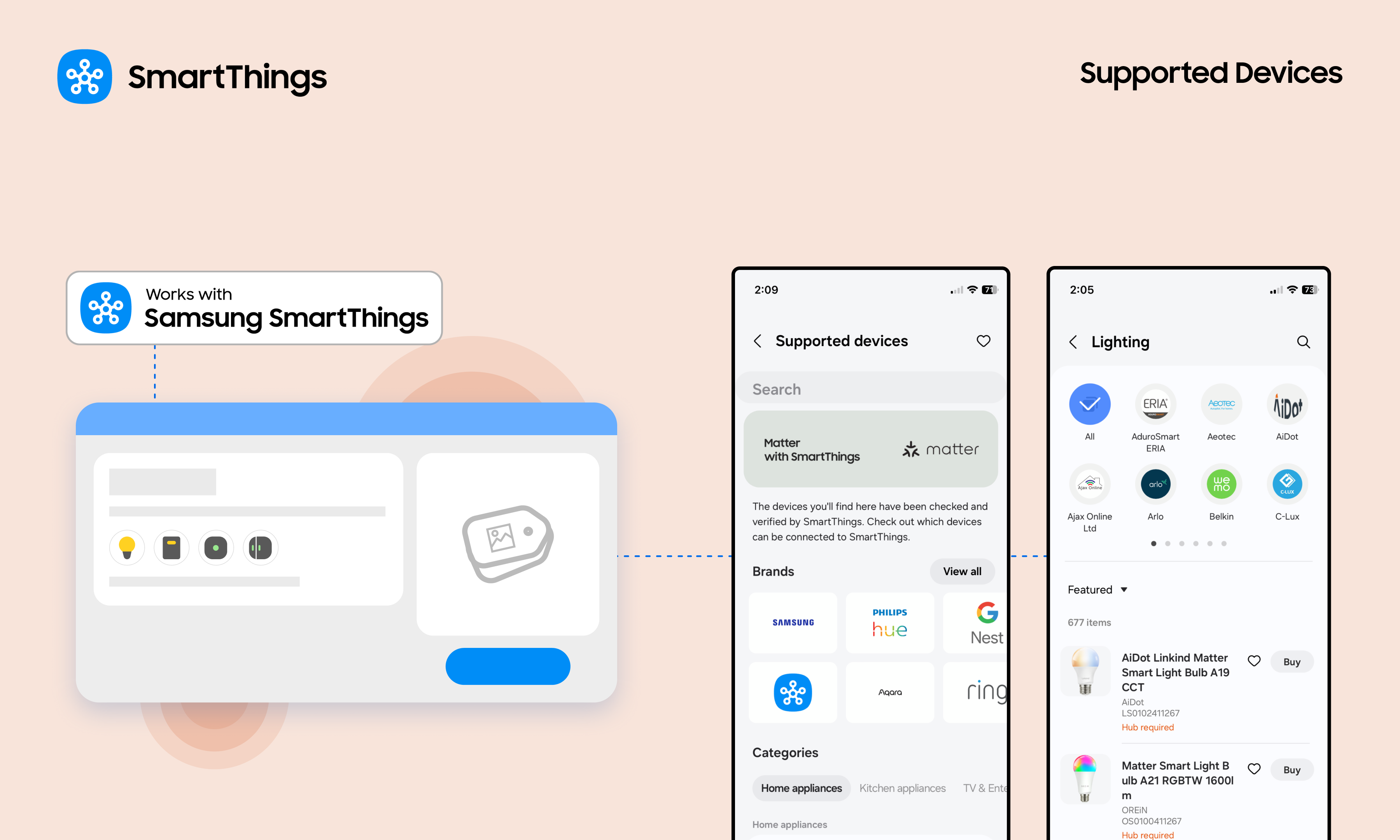
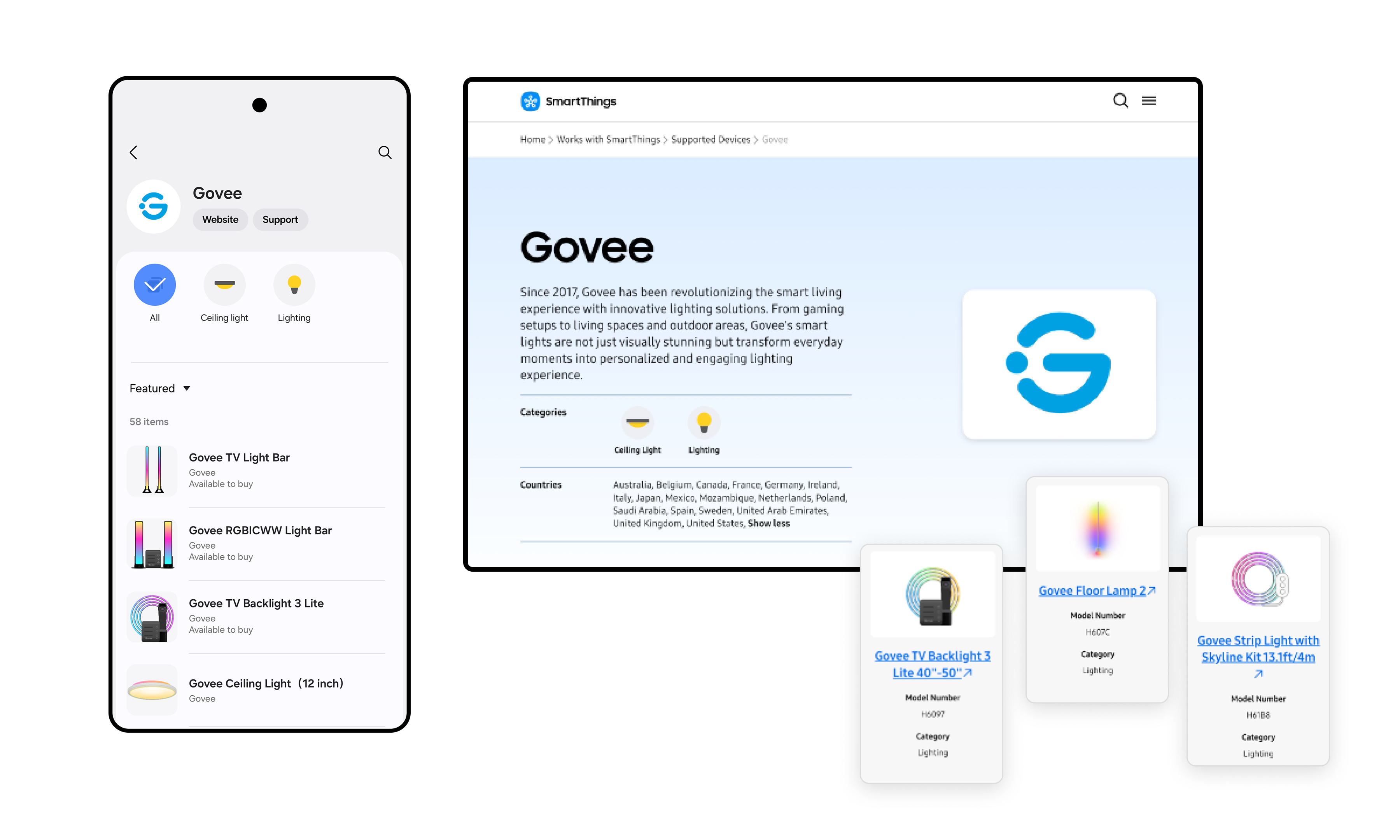
Partner brand pages, found on Partners.SmartThings.com and in the SmartThings app, are some of the most frequently visited resources. These pages are often the first place users go to discover new brands and confirm product compatibility before making a purchase. Additionally, because they are visible to everyone across the entire web, they expand partner’s reach and strengthen search engine optimization (SEO) for their brand and products.

Now, partners can manage their brand and product pages to showcase offerings and encourage user purchases.

Partners can follow these simple steps to update brand and product pages.

SmartThings Partner Brand and Product Pages - Govee

An Easy Way to Showcase Brands and Certified Products

This new feature is a key benefit of the Works with SmartThings (WWST) program. It enables partners to easily keep their brand and product information current, including the latest purchase links, for SmartThings users.

The WWST program offers many benefits, such as:

  • Opportunities to promote products to 450 million global SmartThings users
  • Brand and product placement on the SmartThings website and within the app
  • Use of the WWST badge
  • Co-marketing opportunities
  • Access to user engagement analytics
  • Increased discoverability and trust from SmartThings users

What Partners Can Update

For Brands:

  • Brand Name
  • Brand URL
  • Brand Description 
  • Logo
  • Customer Support Information 
  • Company Contact Information 
  • Contact Name

For Products:

  • Product Name
  • Product Description 
  • Model Number
  • Product Images
  • Product Category
  • Purchase Links
  • Product Distribution Locations

How to Update: A Step-by-Step Guide

For partners that already have an account linked to brands in the SmartThings Console, partners can start updating information immediately. 

For partners without an account or if the brands are not linked, please contact the SmartThings team at partners@smartthings.com.

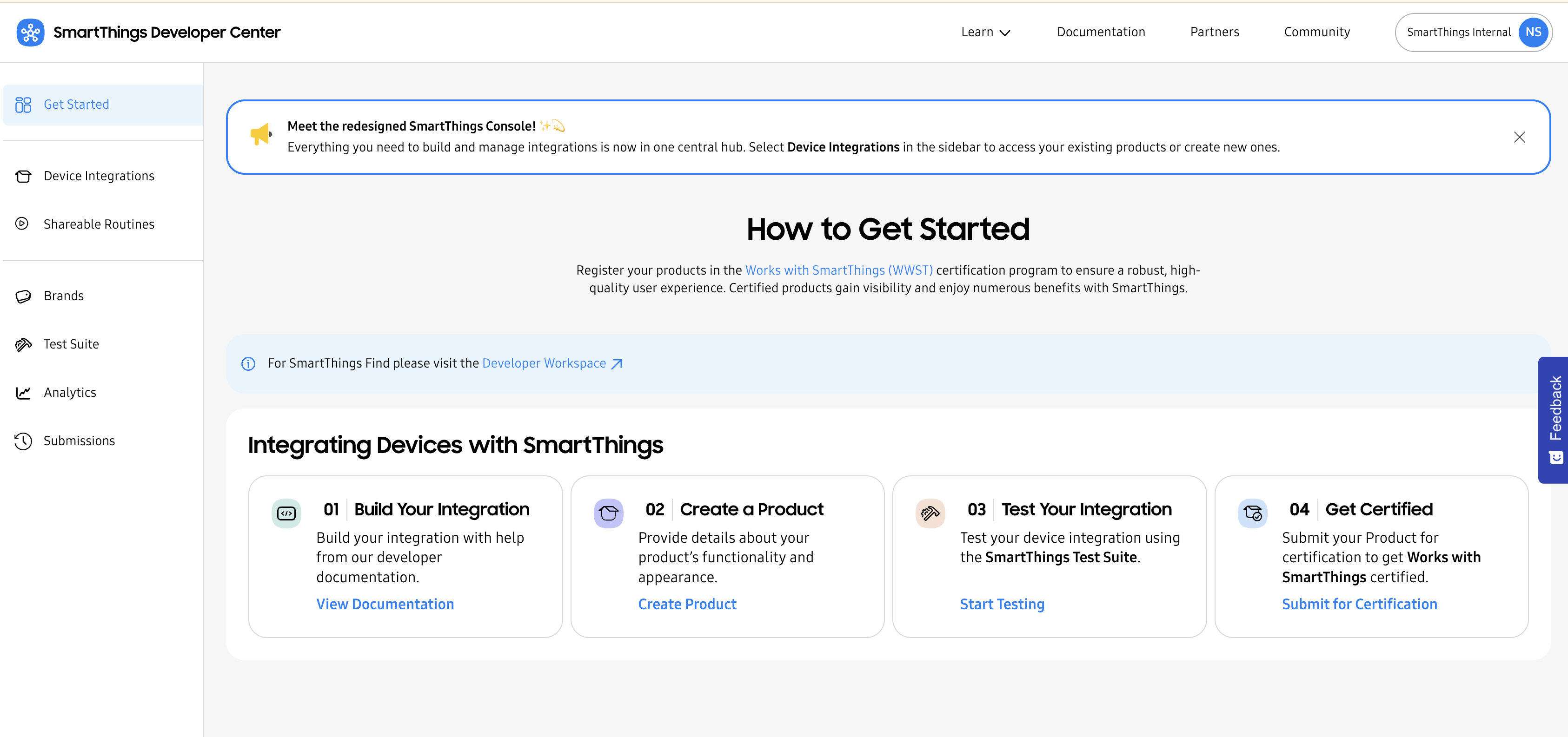
SmartThings Developer Center Console

1. Access the SmartThings Console

Access the Console by signing in to the SmartThings Developer Center. From the homepage, use the left-hand navigation to choose the path: Brands, for updating brand information, or Device Integrations for updating product information. 

2. Refresh Brand Information

  • Navigate: Click the Brands tab.
  • Edit: Click the brand and select Edit Brand at the bottom right. 
  • Make Updates: Update brand details, including logos, customer support information, and more.
  • Submit: Update the details, check the permission box in the “Ready to submit?” section, and click Update Brand.

3. Update Product Information

  • Navigate: Click the Device Integrations tab.
  • Select: Click on the specific product name to edit.
  • Refine: Update product details, including product names, model numbers, product images, purchase links, and more.
  • Submit: Update the details, check the permission box in the “Ready to submit?” section, and click Update Product.

4. Review and Approval

Once approved, the updated brand and product details will go live in the SmartThings app (please note a brief delay may occur due to caching). Updates will typically appear on the web-based partner brand page within 5-7 business days.

Update Brand and Product Pages Today

Partners can now make these updates in the SmartThings Developer Center today!