Home Blog Page 604

New Horizon

0

AI Art Competitions: Redefining Creativity and Pushing Boundaries

Art has always been a testament to human ingenuity, a canvas for the soul to express its myriad emotions and ideas. And as we stand on the cusp of a technological revolution, a new kind of artist is emerging, one that is not bound by flesh and bone but coded in algorithms and data sets. Welcome to the era of AI art competitions, where creativity is redefined, and the boundaries of artistic expression are being pushed to unprecedented heights.

The Rise of AI Art Competitions

AI art competitions are rapidly gaining traction, drawing the attention of technologists, artists, and enthusiasts alike. They are taking place all over the world, from top UK universities to internet forums. These contests are not just about pitting machines against each other; they are about exploring the synergy between human creativity and artificial intelligence. By fostering a collaborative spirit between man and machine, these competitions are pioneering a new frontier in the world of art.

Democratizing Creativity

One of the most significant aspects of AI art competitions is their ability to democratise creativity. Traditional art forms often require years of training and a certain level of inherent skill. AI, however, can level the playing field, allowing anyone with Midjourney and an idea to create something extraordinary. This shift is opening up the art world to a broader and more diverse audience, encouraging participation from those who might have previously felt excluded from the community.

The Rise of Platforms

A striking example of this democratisation is the rise of platforms like Artbreeder. These tools enable users to generate stunning visuals by blending and tweaking existing artwork using AI algorithms. The results are often breathtaking, combining the familiar with the fantastical in ways that challenge our perceptions of art. Making these tools accessible fosters a new wave of artists who aren’t bound by traditional techniques or training.

Philosophical Implications

Yet, it’s not just the technical aspect that makes AI art competitions intriguing. It’s the philosophical implications that truly captivate. These competitions force us to confront fundamental questions about the nature of creativity and authorship. If an AI generates a masterpiece, who is the true artist? Is it the programmer who wrote the code, the machine that produced the image, or the person who curated the dataset? These questions do not have easy answers, but they are essential for understanding the evolving landscape of art in the digital age.

Pushing Boundaries

Moreover, AI art competitions push the boundaries of what we consider possible in art. Traditional art forms are often constrained by physical limitations, but AI can transcend these barriers, creating works that are otherworldly and surreal. This is evident in the success of projects like the AI-created portrait “Edmond de Belamy,” which sold for a staggering $432,500 at auction. Such achievements are a testament to the potential of AI to redefine art and captivate audiences in ways previously unimaginable.

Concerns and Controversies

Despite the excitement surrounding AI art competitions, there are also valid concerns. Critics argue that AI could devalue human creativity, reducing art to mere algorithmic outputs. There are fears about the loss of the human touch, the emotional depth that comes from lived experiences. However, proponents counter that AI is not here to replace human artists but to augment their abilities, offering new tools and perspectives that can enhance the creative process.

Conclusion

AI art competitions are pioneering a new era in creativity, one that is characterised by collaboration, innovation, and inclusivity. They challenge our traditional notions of art and creativity, opening up new possibilities and prompting us to rethink the role of technology in our lives. As we continue to explore this brave new world, one thing is sure: the future of art is not just human; it is a harmonious blend of human and machine, a testament to the endless possibilities of the creative spirit.

FAQs

Q: What is the purpose of AI art competitions?
A: The purpose of AI art competitions is to explore the synergy between human creativity and artificial intelligence, pushing the boundaries of artistic expression and democratizing creativity.

Q: How do AI art competitions work?
A: AI art competitions typically involve a combination of human input and AI-generated content. Participants may submit their own artwork, and AI algorithms may generate new pieces based on existing artwork or user input.

Q: What are the benefits of AI art competitions?
A: AI art competitions offer a range of benefits, including democratizing creativity, pushing the boundaries of artistic expression, and fostering innovation and inclusivity.

Q: What are the concerns about AI art competitions?
A: Concerns about AI art competitions include the potential devaluation of human creativity, the loss of the human touch, and the risk of AI-generated content being mistaken for human-generated work.
Monotype and Kittl Unite for Design Platform Upgrade

0

Monotype Collaborates with Kittl to Bring High-Quality Typography to Graphic Designers

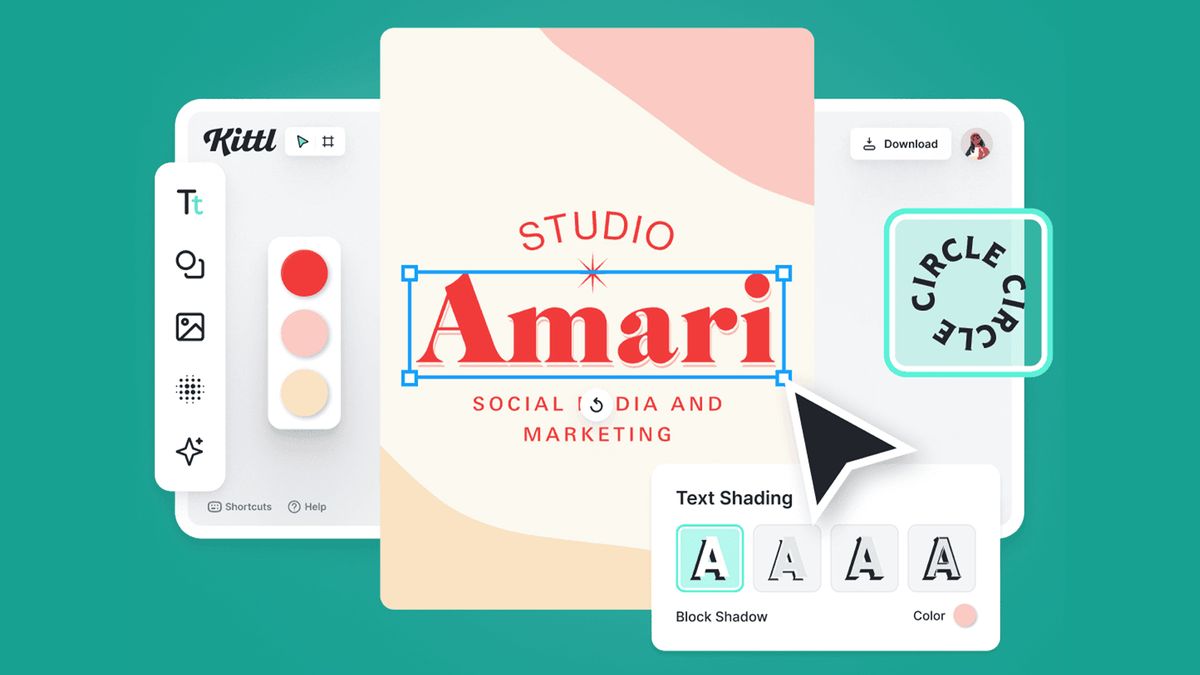
Monotype has announced a new collaboration with graphic design platform Kittl, bringing its cutting-edge fonts to Kittl’s creative user base. As one of the fastest-growing AI startups in Europe, Kittl is set to unlock new creative potential thanks to the professional standard of Monotype’s high-quality typography.

About Kittl

While there are countless graphic design software options, Kittl’s focus on creating an accessible and user-friendly platform is increasingly making it a go-to tool for creatives of all levels. With typographical design at its core, Kittl’s new collaboration is a welcome evolution that brings a new level of creative empowerment to its users.

The Collaboration

As part of the collaboration, Kittl will now integrate 135 Monotype fonts onto its platform, with project-ready design templates and assets. With popular styles like Avenir, Next, Futura and Helvetica, users can now access high-quality fonts with ease, adding a professional-level refinement to their projects. The partnership also opens up new growth opportunities, as Kittl will work with Monotype to develop its own dynamic type library.

Executive Insights

For Monotype’s executive creative officer Phil Garnham, the partnership is shaped by a mutual passion for quality typography. “Kittl’s cofounder Tobias Saul, with his background as a lettering artist and type designer, emphasizes that typography is key to Kittl’s identity. This love for type has shaped Kittl’s development and its dedication to offering high-quality typography tools” says Phil. “We share Kittl’s passion for the power of type in design and their belief that high quality typefaces are fundamental to good design practice,” he adds.

What’s Next?

It’s not just Kittl that’s getting a boost from Monotype – the font designer’s new partnership with Picsart could suggest the design platform has ambitions to take on big names like Adobe and Canva. For more typographical news, take a look at the biggest typography trends set to take over in 2025.

Conclusion

The collaboration between Monotype and Kittl marks a significant milestone in the world of graphic design, bringing high-quality typography to a wider range of designers. With the integration of 135 Monotype fonts onto the Kittl platform, users can now access a vast array of professional-level fonts, taking their designs to the next level.

FAQs

Q: What is the purpose of the Monotype and Kittl collaboration?

A: The collaboration aims to bring high-quality typography to Kittl’s user base, unlocking new creative potential and offering a professional-level refinement to their projects.

Q: What fonts are being integrated onto the Kittl platform?

A: Kittl will integrate 135 Monotype fonts onto its platform, including popular styles like Avenir, Next, Futura and Helvetica.

Q: What are the benefits of the collaboration for Kittl?

A: The partnership opens up new growth opportunities for Kittl, as it will work with Monotype to develop its own dynamic type library and expand its offerings to users.

Q: What are the benefits of the collaboration for Monotype?

A: The partnership allows Monotype to expand its reach and offer its high-quality typography to a wider range of designers, further solidifying its position in the design industry.

NVIDIA and Partners Boost AI Adoption in Japan

0

NVIDIA Partners with Consulting Giants to Accelerate AI Adoption in Japan

Consulting giants including Accenture, Deloitte, EY Strategy and Consulting Co., Ltd. (or EY Japan), FPT, Kyndryl and Tata Consultancy Services Japan (TCS Japan) are working with NVIDIA to establish innovation centers in Japan to accelerate the nation’s goal of embracing enterprise AI and physical AI across its industrial landscape.

Accelerating AI Adoption

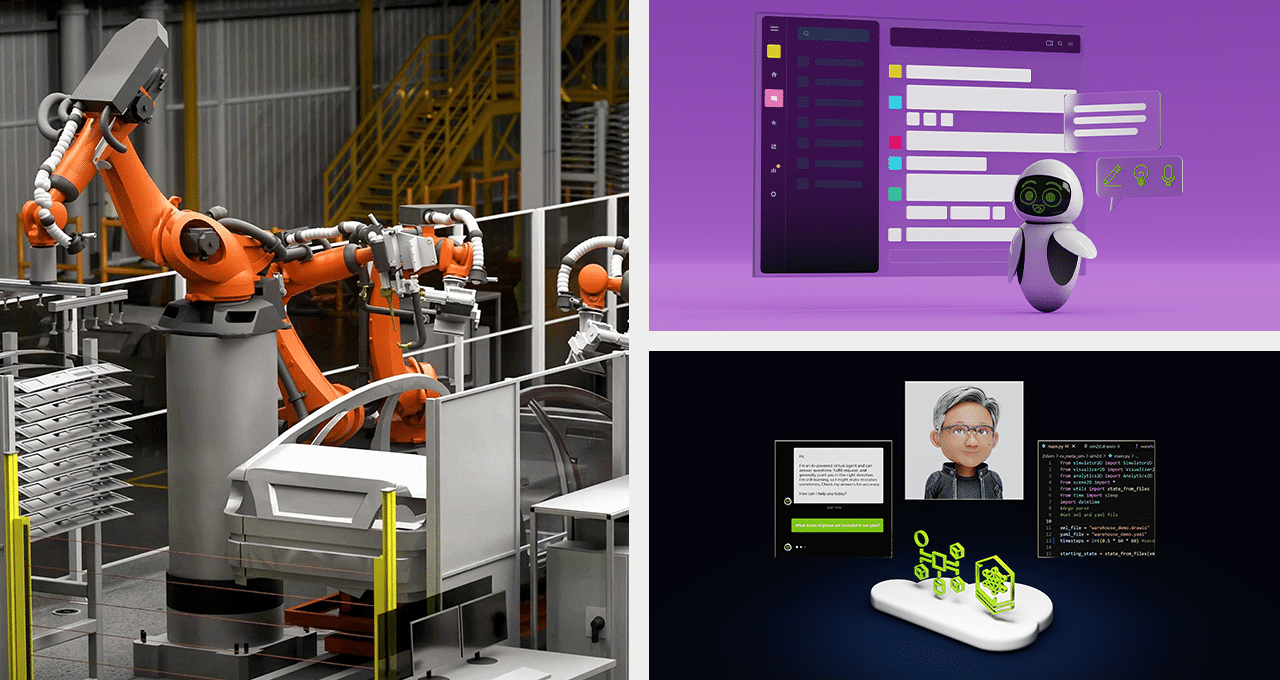
The centers will use NVIDIA AI Enterprise software, local language models and NVIDIA NIM microservices to help clients in Japan advance the development and deployment of AI agents tailored to their industries’ respective needs, boosting productivity with a digital workforce.

Using NVIDIA Omniverse Platform

Using the NVIDIA Omniverse platform, Japanese firms can develop digital twins and simulate complex physical AI systems, driving innovation in manufacturing, robotics and other sectors.

Japanese Government’s Ambition to Become “The World’s Most AI-Friendly Country”

Like many nations, Japan is navigating complex social and demographic challenges, which is leading to a smaller workforce as older generations retire. Leaning into its manufacturing and robotics leadership, the country is seeking opportunities to solve these challenges using AI.

The Japanese government in April published a paper on its aims to become “the world’s most AI-friendly country.” AI adoption is strong and growing, as IDC reports that the Japanese AI systems market reached approximately $5.9 billion this year, with a year-on-year growth rate of 31.2%.

Consulting Giants’ Initiatives

Accenture

Accenture has established the Accenture NVIDIA Business Group and will provide solutions and services incorporating a Japanese large language model (LLM), which uses NVIDIA NIM and NVIDIA NeMo, as a Japan-specific offering. In addition, Accenture will deploy agentic AI solutions based on Accenture AI Refinery to all industries in Japan, accelerating total enterprise reinvention for its clients. In the future, Accenture plans to build new services using NVIDIA AI Enterprise and Omniverse at Accenture Innovation Hub Tokyo.

Deloitte

Deloitte is establishing its AI Experience Center in Tokyo, which will serve as an executive briefing center to showcase generative AI solutions built on NVIDIA technology. This facility builds on the Deloitte Japan NVIDIA Practice announced in June and will allow clients to experience firsthand how AI can revolutionize their operations. The center will also offer NVIDIA AI and Omniverse Blueprints to help enterprises in Japan adopt agentic AI effectively.

EY Strategy and Consulting Co., Ltd (EY Japan)

EY Strategy and Consulting Co., Ltd (EY Japan) is developing a multitude of digital transformation (DX) solutions in Japan across diverse industries including finance, retail, media and manufacturing. The new EY Japan DX offerings will be built with NVIDIA AI Enterprise to serve the country’s growing demand for digital twins, 3D applications, multimodal AI and generative AI.

FPT

FPT is launching FPT AI Factory in Japan with NVIDIA Hopper GPUs and NVIDIA AI Enterprise software to support the country’s AI transformation by using business data in a secure, sovereign environment. FPT is integrating the NVIDIA NeMo framework with FPT AI Studio for building, pretraining and fine-tuning generative AI models, including FPT’s multi-language LLM, named Saola. In addition, to provide end-to-end AI integration services, FPT plans to train over 1,000 software engineers and consultants domestically in Japan, and over 7,000 globally by 2026.

Kyndryl

IT infrastructure services provider Kyndryl has launched a dedicated AI private cloud in Japan. Built in collaboration with Dell Technologies using the Dell AI Factory with NVIDIA, this new AI private cloud will provide a controlled, secure and sovereign location for customers to develop, test and plan implementation of AI on the end-to-end NVIDIA AI platform, including NVIDIA accelerated computing and networking, as well as the NVIDIA AI Enterprise software.

TCS Japan

TCS Japan will begin offering its TCS global AI offerings built on the full NVIDIA AI stack in the automotive and manufacturing industries. These solutions will be hosted in its showcase centers at TCS Japan’s Azabudai office in Tokyo.

Conclusion

The new consulting centers in Japan offer hands-on experience with NVIDIA’s latest technologies and expert guidance — helping accelerate AI transformation, solve complex social challenges and support the nation’s economic growth.

FAQs

Q: What is the goal of the consulting giants’ initiatives in Japan?

A: The goal is to accelerate the nation’s goal of embracing enterprise AI and physical AI across its industrial landscape.

Q: What technologies will the consulting centers use?

A: The centers will use NVIDIA AI Enterprise software, local language models and NVIDIA NIM microservices, as well as the NVIDIA Omniverse platform.

Q: What is the growth rate of the Japanese AI systems market?

A: According to IDC, the Japanese AI systems market reached approximately $5.9 billion this year, with a year-on-year growth rate of 31.2%.

Q: What is the aim of the Japanese government in becoming “the world’s most AI-friendly country”?

A: The aim is to leverage AI to solve complex social challenges, including a smaller workforce due to demographic changes.

Content Creator’s Solution

0

What is a Content Creator?

A content creator is someone who makes stuff for people to enjoy online. This could be anything from videos on YouTube, posts on Instagram, funny tweets, blog articles, podcasts, or streaming games on Twitch. They come up with ideas, create the content, and share it with their audience, usually trying to entertain, inform, or inspire. Think of them as modern-day storytellers, entertainers, and educators all rolled into one. They can work independently or as part of a team, and they often engage with their followers to build a community around their content.

AI Image Generators: A New Tool for Content Creators

AI image generators represent a fascinating intersection where technology and creativity meet. For content creators, they offer exciting possibilities and practical solutions to some of the challenges faced in producing visual content. While ethical and quality concerns must be carefully navigated, the potential benefits of AI in this space are too significant to ignore. As with any tool, the key lies in how it is used—wisely, ethically, and creatively.

For content creators, the greatest potential benefit of AI image generators is a significant reduction in the time and effort required to produce high-quality visuals. Traditional methods, such as hiring photographers or graphic designers, can be costly and time-consuming. AI tools can generate images in minutes, providing a quick and cost-effective alternative.

AI image generators can also enhance creativity by offering a virtually limitless pool of inspiration. Content creators can experiment with different styles, themes, and concepts without the constraints of human limitations. This can lead to more diverse and innovative content, keeping audiences engaged and entertained.

Ethical and Quality Concerns

Integrating AI into creative processes has its controversies. One major concern is the potential loss of jobs in creative industries. As AI tools become more sophisticated, there is a fear that they could replace human artists and designers, leading to significant economic and social repercussions. Could content creators themselves be replaced by AI, especially as computers have access to and can process huge amounts of data regarding the content we’re actually most engaged with online?

Additionally, there are quality concerns. While AI-generated images can be impressive, they are not infallible. The technology is still in its developmental stages, and the results can sometimes be inconsistent or lack the nuanced touch of a human creator. Although technology is advancing rapidly, there are still obvious signs of an AI image, such as strange hands with too many fingers! There is also the risk of over-reliance on AI, which could stifle genuine creativity and result in homogenised content.

What’s Next for AI in Content Creation?

Despite these challenges, we wholeheartedly believe that AI image generators have a role to play in the future of content creation. As the technology continues to improve, it is likely to become an invaluable tool for creators, offering new ways to innovate and engage with their audiences.

To harness the full potential of AI image generators, creators need to approach the technology with a balanced perspective. AI isn’t coming in as a replacement, it should be seen as a complementary tool—one that can enhance human creativity rather than diminish it. By integrating AI into their workflow, content creators can focus on what they do best: storytelling, ideation, and connecting with their audience.

Conclusion

AI image generators are an exciting innovation that can revolutionize the way content creators work. While there are ethical and quality concerns to consider, the benefits of AI in this space are undeniable. By embracing AI as a tool that can enhance their creativity rather than replace it, content creators can unlock new possibilities and create more engaging and innovative content for their audiences.

FAQs

Q: Can AI replace human content creators?

A: No, AI is designed to augment human creativity, not replace it. AI can assist in generating ideas, but it lacks the emotional intelligence and nuance that human creators bring to their work.

Q: Are AI-generated images always of high quality?

A: No, AI-generated images can be inconsistent and sometimes lack the quality of human-created images. However, the technology is rapidly advancing, and AI-generated images are becoming increasingly sophisticated.

Q: Is AI the future of content creation?

A: Yes, AI has the potential to revolutionize the way content creators work. By automating tasks and providing new sources of inspiration, AI can free up creators to focus on what they do best: storytelling, ideation, and connecting with their audience.

Naturally Occurring Equivariance in Neural Networks

0

Equivariance in Neural Networks

This article is part of the Circuits thread, an experimental format collecting invited short articles and critical commentary delving into the inner workings of neural networks.

Curve Detectors
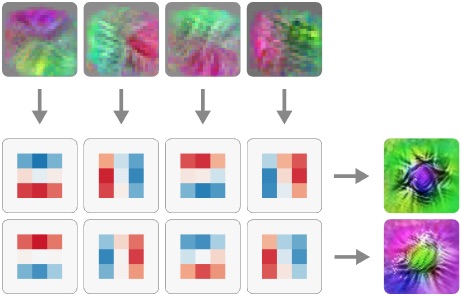
High-Low Frequency Detectors

Convolutional neural networks contain a hidden world of symmetries within themselves. This symmetry is a powerful tool in understanding the features and circuits inside neural networks. It also suggests that efforts to design neural networks with additional symmetries baked in (e.g. ) may be on a promising track.

To see these symmetries, we need to look at the individual neurons inside convolutional neural networks and the circuits that connect them. It turns out that many neurons are slightly transformed versions of the same basic feature. This includes rotated copies of the same feature, scaled copies, flipped copies, features detecting different colors, and much more. We sometimes call this phenomenon “equivariance,” since it means that switching the neurons is equivalent to transforming the input.

Before we talk about the examples introduced in this article, let’s talk about how this definition maps to the classic example of equivariance in neural networks: translation and convolutional neural network nets. In a conv net, translating the input image is equivalent to translating the neurons in the hidden layers (ignoring pooling, striding, etc). Formally, gZ2g\in Z^2

Now let’s consider the case of curve detectors (the first example in the Equivariant Features section), which have ten rotated copies. In this case, gZ10g\in Z_{10}

Conclusion

Equivariance has a remarkable ability to simplify our understanding of neural networks. When we see neural networks as families of features, interacting in structured ways, understanding small templates can actually turn into understanding how large numbers of neurons interact. Equivariance is a big help whenever we discover it.

We sometimes think of understanding neural networks as being like reverse engineering a regular computer program. In this analogy, equivariance is like finding the same inlined function repeated throughout the code. Once you realize that you’re seeing many copies of the same function, you only need to understand it once.

But natural equivariance does have some limitations. For starters, we have to find the equivariant families. This can actually take us quite a bit of work, poring through neurons. Further, they may not be exactly equivariant: one unit may be wired up slightly differently, or have a small exception, and so understanding it as equivariant could leave gaps in our understanding.

FAQs

Q: What is equivariance in neural networks?
A: Equivariance in neural networks refers to the ability of a network to preserve the symmetry of its input data under certain transformations, such as rotations, translations, or scaling.

Q: Why is equivariance important in neural networks?
A: Equivariance is important because it allows us to simplify our understanding of neural networks by identifying patterns and symmetries that exist within the data.

Avoid Dead Butt Syndrome

0

01. Plug in and take a walking meeting

This will allow you to transition from a static, low blood flow posture to one that provides increased blood flow. This allows the tissues of the body to combat would-be discomforts from lack of position change. Getting up from your desk and going outside helps you energize and refocus. The fresh air, change of scenery, and sunlight have a healing and energizing effect on body and mind. Try it. You may find your walking meetings are shorter in length and more efficient compared to a standard seated virtual meeting.

02. Stretch and flex on the hour

Make your smartphone work for you and download an app like Get Moving, which helps to set reminders to move. Other apps to check out include Stretchy, Stand Alarm, Stand Tracker, Stand Up Reminder, Standetch, STandUp: Sedentary Helper, Standing desk Reminders, GetUp and Move, Mova… there’s also the alarm feature on your phone, if you want to keep it simple. Bottom line: structure times to move into your day, and you’ll feel the benefits.

03. Have some exercises at the ready

Open a stretch video on YouTube or have several desk-friendly exercises printed and posted on the wall in your work area. You could even have a few TheraBands at the ready, connected to doorknobs and heavy furniture, to allow for quick and easy strengthening exercises. Or invest in desk-friendly exercise equipment like under-desk elliptical pedals, a desk treadmill, or balance board. The main tip here is to be prepared to actually do something when that movement alarm goes off… otherwise, you’ll just snooze it and carry on with your day.

04. Buy an ergonomic office chair and standing desk

Since we spend significant amounts of time sitting at desks, ergonomic seating design – or the lack thereof – can be a game changer in managing discomforts throughout the body. I recommend investing in a quality ergonomic chair (and you don’t have to spend big bucks to get one of the best budget office chairs). Consider a contoured seat to provide a stable base of support, designed to reduce rotation of your upper leg bone at the hip joint. Try different chairs to determine the most comfortable material for the seat, which could range from mesh, or gel, or fabric. Work with a quality vendor, like BodyBilt, who are US-based and offer a variety of component sizes fitting most statures and body types, as well as a variety of materials, and configurations.

Conclusion

By incorporating these simple tips into your daily routine, you can reduce the risk of developing Dead Butt Syndrome and other musculoskeletal discomforts. Remember to take breaks, stretch, and move throughout the day. Invest in an ergonomic office chair and standing desk to provide optimal support for your body. And don’t be afraid to get creative with your exercises and movement reminders.

FAQs

Q: What is Dead Butt Syndrome?
A: Dead Butt Syndrome, also known as glute amnesia, is a condition where the glutes become numb and inactive due to prolonged sitting.

Q: Why is it important to take breaks and move throughout the day?
A: Taking breaks and moving throughout the day helps to increase blood flow, reduce muscle fatigue, and prevent discomforts and injuries.

Q: What are some good exercises to do at my desk?
A: Some good exercises to do at your desk include chair squats, desk push-ups, leg raises, and wrist extensions.

Q: What is an ergonomic office chair?
A: An ergonomic office chair is a chair designed to provide optimal support and comfort for your body, reducing the risk of discomforts and injuries.

Q: How can I get started with incorporating movement into my day?
A: Start by setting reminders on your phone to take breaks and move throughout the day. Try incorporating short exercises into your daily routine, such as stretching or desk exercises.

Humanizing Design: Balancing Touch and Technology

0

Artificial Intelligence in Visual Design: Balancing Precision and Creativity

Artificial intelligence has made significant strides in the realm of visual design, with tools like Adobe’s Sensei revolutionising how designers conceptualise and create. AI-powered tools can analyse vast amounts of data to predict trends, automate repetitive tasks, and even generate design suggestions that align with brand aesthetics in the blink of an eye. The benefits are clear: increased efficiency, cost savings, and the ability to explore a multitude of design options in a fraction of the time it would take a human.

The Double-Edged Sword of AI

AI excels in handling the grunt work, liberating designers from mundane tasks such as resizing images, choosing colour palettes, and laying out templates. This allows creatives to focus on what they do best: originality and storytelling. However, the efficiency of AI is a double-edged sword. The ease with which AI can churn out designs raises concerns about originality and the potential homogenisation of visual content.

The Essence of Compelling Visual Design

Experts agree that the essence of compelling visual design lies in its ability to connect with human emotions. A machine might be able to replicate a Mondrian grid or a Michelangelo brushstroke, but it cannot comprehend the emotional resonance behind these works. The nuances of human experience, cultural context, and personal expression are elements that AI cannot fully grasp or replicate. At best, it can imitate; at worst, it just makes a mess.

Striking a Balance

Human designers bring empathy, intuition, and a deep understanding of their audience to the table. These qualities enable them to create designs that not only look good but also tell a story, evoke emotions, and build connections. The challenge, then, is to leverage AI’s strengths while maintaining the unique perspective that only human creativity can provide. Achieving the perfect balance between AI and human input in visual design requires a strategic approach. Rather than viewing AI as a replacement, see it as a collaborator. Use AI tools to handle time-consuming tasks, generate initial drafts, or provide inspiration. Then, apply your creative judgment to refine and personalise the designs.

Conclusion

For now, the integration of AI in visual design is not about choosing between machine and human, but about finding a way to work together in harmony. The key lies in embracing AI as a powerful tool while preserving the irreplaceable qualities that define human artistry. By striking this balance, designers can push the boundaries of what is possible, creating works that are not only efficient and innovative but also deeply resonant and uniquely human.

Frequently Asked Questions

Q: How can designers balance the use of AI with their own creativity?

Designers can balance the use of AI with their own creativity by using AI tools to handle time-consuming tasks, generate initial drafts, or provide inspiration, and then applying their creative judgment to refine and personalise the designs.

Q: What are the benefits of using AI in visual design?

The benefits of using AI in visual design include increased efficiency, cost savings, and the ability to explore a multitude of design options in a fraction of the time it would take a human.

Q: Can AI replace human designers?

No, AI cannot replace human designers. While AI can handle repetitive tasks and generate designs, it lacks the creativity, empathy, and intuition that human designers bring to the table.

Q: How can designers ensure that AI-generated content is original and not copied from human designs?

Designers can ensure that AI-generated content is original by using AI tools to generate initial drafts and then applying their creative judgment to refine and personalise the designs. They should also be mindful of how AI-generated content is used and ensure that it complements rather than supplants original human creations.

Bitcoin Heist Hacker Sentenced to 5 Years

0

Technology News and Updates

Innovative Hacking for Good

In perhaps the most adorable hacker story of the year, a trio of technologists in India found an innovative way to circumvent Apple’s location restrictions on AirPod Pro 2s so they could enable the earbuds’ hearing aid feature for their grandmas. The hack involved a homemade Faraday cage, a microwave, and a lot of trial and error.

AI-Enabled Machine Gun

On the other end of the tech-advancements spectrum, the US military is currently testing an AI-enabled machine gun that is capable of auto-targeting swarms of drones. The Bullfrog, built by Allen Control Systems, is one of several advanced weapons technologies in the works to combat the growing threat of cheap, small drones on the battlefield.

Swatting Attacks

The US Department of Justice announced this week that an 18-year-old from California has admitted to making or orchestrating more than 375 swatting attacks across the United States.

Government Surveillance

Then, of course, there’s the Donald Trump of it all. This week, we published a practical guide to protecting yourself from government surveillance. WIRED has covered the dangers of government surveillance for decades, of course. But when the president-elect is explicitly threatening to jail his political enemies—whoever that may be—now’s probably a good time to brush up on your digital best practices.

Cybersecurity News

In addition to potential dragnet surveillance of US citizens, US Immigration and Customs Enforcement started ramping up its surveillance arsenal the day after Trump won reelection. Meanwhile, experts are expecting the incoming administration to roll back cybersecurity rules instituted under president Joe Biden while taking a harder line against adversarial state-sponsored hackers. And if all this political upheaval has you in the mood to protest, beware: An investigation copublished by WIRED and The Marshall Project found that mask bans instituted in several states add a complicated new layer to exercising freedom of speech.

Weekly Roundup

And that’s not all. Each week, we round up the privacy and security news we didn’t cover in depth ourselves. Click the headlines to read the full stories, and stay safe out there.

Crypto Heist

In August 2016, approximately 120,000 bitcoin—at the time worth around $71 million—were stolen in a hack on the Bitfinex cryptocurrency exchange. Then in 2022, as the value of cryptocurrency had rocketed skywards, law enforcement officials in New York arrested husband and wife Ilya Lichtenstein and Heather Morgan in relation to the hack and laundering the much-inflated $4.5 billion of stolen cryptocurrency. (At the time, $3.6 billion of the funds were recouped by law enforcement investigators.) This week, after pleading guilty in 2023, Lichtenstein was sentenced to five years of jail time for conducting the hack and laundering the profits. With subsequent cryptocurrency spikes and additional seizures related to the hack, the US government has now been able to recover more than $10 billion in assets.

AI-Fueled Scams

Scammers are increasingly adopting AI as part of their criminal toolkits—using the technology to create deepfakes, translate scripts, and make their operations more efficient. But artificial intelligence is also being turned against the scammers. British telecoms firm Virgin Media and its mobile operator O2 have created a new "AI granny" that can answer phone calls from scammers and keep them talking. The system uses different AI models, according to The Register, that listen to what a scammer says and respond immediately. In one case, the company says it kept a scammer on the line for 40 minutes and has fed others fake personal information.

Commercial Spyware Lawsuit

In a new legal strategy for those attempting to hold commercial spyware vendors responsible, lawyer Andreu Van den Eynde, who was allegedly hacked with NSO Group spyware, is directly accusing two of the company’s founders, Omri Lavie and Shalev Hulio, and one of its executives, Yuval Somekh, of hacking crimes in a lawsuit. The Barcelona-based human rights nonprofit Iridia announced this week that it filed the complaint in a Catalan court. Van den Eynde was reportedly a victim of a hacking campaign that used NSO’s notorious Pegasus spyware against at least 65 Catalans.

Mac Malware

Research published this week by the mobile device management firm Jamf found that hackers who have been linked to North Korea have been working to implant malware inside macOS applications built with a particular open-source software development kit. The campaigns focused on cryptocurrency-related targets and involved infrastructure similar to systems that have been used by North Korea’s notorious Lazarus Group.

Conclusion

As we continue to navigate the ever-evolving landscape of technology and cybersecurity, it’s essential to stay informed about the latest developments and innovations. From innovative hacking for good to AI-enabled machine guns, and from crypto heists to AI-fueled scams, there’s no shortage of fascinating and sometimes alarming stories in the world of tech.

FAQs

Q: What is the "AI granny" system?
A: The "AI granny" system is a new technology developed by Virgin Media and O2 that uses artificial intelligence to answer phone calls from scammers and keep them talking.

Q: What is the purpose of the "AI granny" system?
A: The purpose of the "AI granny" system is to help prevent scammers from successfully carrying out their operations by keeping them on the line and providing fake personal information.

Q: What is the status of the "AI granny" system?
A: The "AI granny" system is currently in use and has been successful in keeping scammers on the line for extended periods of time.

Q: What is the significance of the Mac malware discovered by Jamf?
A: The Mac malware discovered by Jamf is significant because it indicates that hackers linked to North Korea are targeting macOS applications built with a particular open-source software development kit.

Create Your Own Stock Photo

0

Bringing Your Image to Life with AI

Brands, newsrooms, and other content creators often turn to stock images to bring their projects to life. Despite the robust library of images on marketplaces like Getty Images, sometimes the perfect image just isn’t there –and that’s where AI can help.

Getty Images Launches AI Features

This week, Getty Images launched Product Placement and Reference Image features in its Generative AI by Getty Images and Generative AI by iStock offerings, which are commercially safe generative AI tools that transform text prompts into images.

Product Placement Feature

With the Product Placement feature, users can input proprietary product images and generate backgrounds that seamlessly blend into the product to create a realistic visualization of what the product would look like in different environments. Ultimately, this feature should help brands streamline their marketing efforts with less work and time involved.

Reference Image Feature

Users can now also upload their own reference images, which the tools will then use to create new images, keeping the same qualities as the original photo’s color palette and composition, and making it easier for brands to generate content that aligns with their guidelines and style without having to generate new content from scratch.

Benefits of AI-Generated Images

"Our customers are seeking efficiency in their creative process without sacrificing quality or taking on risk. With these new features, we’re empowering businesses to create high-quality, custom visuals at scale," said Grant Farhall, chief product officer of Getty Images.

Other Companies Offering Similar Features

Other companies, including Meta, have unveiled similar marketing tools for advertisers, enabling users to automate tasks such as swapping backdrops for their product images, automatically adjusting creative assets to different aspect ratios, and generating multiple ad text options from an advertiser’s original copy.

Getting Started with Getty Images AI

To get started with either plan, visit the Getty Images AI offerings page for details on price. The plan starts at $49 per 25 generations, with the biggest advantage being commercially safe image generation that Getty claims comes with "automatic legal protection of up to $50,000 USD per image." Should the self-service options not suffice, custom enterprise solutions are also available.

Conclusion

Getty Images’ new AI features aim to revolutionize the way brands and content creators work with images. By leveraging AI-generated images, users can streamline their creative process, reduce costs, and produce high-quality visuals at scale.

FAQs

Q: What is the Product Placement feature?
A: The Product Placement feature allows users to input proprietary product images and generate backgrounds that seamlessly blend into the product to create a realistic visualization of what the product would look like in different environments.

Q: What is the Reference Image feature?
A: The Reference Image feature allows users to upload their own reference images, which the tools will then use to create new images, keeping the same qualities as the original photo’s color palette and composition.

Q: How much does the Getty Images AI plan cost?
A: The plan starts at $49 per 25 generations, with the biggest advantage being commercially safe image generation that Getty claims comes with "automatic legal protection of up to $50,000 USD per image."

Q: Are there other companies offering similar features?
A: Yes, other companies, including Meta, have unveiled similar marketing tools for advertisers, enabling users to automate tasks such as swapping backdrops for their product images, automatically adjusting creative assets to different aspect ratios, and generating multiple ad text options from an advertiser’s original copy.

Monte Carlo Brings GenAI to Data Observability

Monte Carlo Unleashes Generative AI for Data Observability

Monte Carlo has made a name for itself in the field of data observability, where it uses machine learning and other statistical methods to identify quality and reliability issues hiding in big data. With this week’s update, which it made during its IMPACT 2024 event, the company is adopting generative AI to help it take its data observability capabilities to a new level.

Introducing GenAI Monitor Recommendations

That’s where the new GenAI Monitor Recommendations that Monte Carlo announced yesterday can make a difference. In a nutshell, the company is using a large language model (LLM) to search through the myriad ways that data is used in a customer’s database, and then recommending some specific monitors, or data quality rules, to keep an eye on them.

How GenAI Works

Here’s how it works: In the Data Profiler component of the Monte Carlo platform, sample data is fed into the LLM to analyze how the database is used, specifically the relationships between the database columns. The LLM uses this sample, as well as other metadata, to build a contextual understanding of actual database usage.

The Power of LLMs

While classical ML models do well with detecting anomalies in data, such as table freshness and volume issues, LLMs excel at detecting patterns in the data that are difficult if not impossible to discover using traditional ML, says Lior Gavish, Monte Carlo co-founder and CTO. "GenAI’s strength lies in semantic understanding," Gavish tells BigDATAwire. "For example, it can analyze SQL query patterns to understand how fields are actually used in production, and identify logical relationships between fields (like ensuring a ‘start_date’ is always earlier than an ‘end_date). This semantic comprehension capability goes beyond what was possible with traditional ML/DL approaches."

Real-World Applications

The new capability will make it easier for technical and non-technical employees to build data quality rules. Monte Carlo used the example of a data analyst for a professional baseball team to quickly create rules for a "pitch_history" table. There’s clearly a relationship between the column "pitch_type" (fastball, curveball, etc.) and pitch speed. With GenAI baked in, Monte Carlo can automatically recommend data quality rules that make sense based on the history of the relationship between those two columns, i.e. "fastball" should have pitch speeds of greater than 80mph, the company says.

Conclusion

Thanks to its human-like capability to grasp semantic meaning and generate accurate responses, GenAI tech has the potential to transform many data management tasks that are highly reliant on human perception, including data quality management and observability. Monte Carlo’s integration of GenAI into its data observability platform marks a significant milestone in the company’s mission to provide data teams with the tools they need to ensure data reliability and quality.

Frequently Asked Questions

Q: What is GenAI?
A: GenAI is a large language model (LLM) that uses semantic understanding to analyze data and recommend specific monitors or data quality rules.

Q: How does GenAI work?
A: GenAI uses a sample of data to analyze how the database is used, specifically the relationships between database columns, and then builds a contextual understanding of actual database usage.

Q: What are the benefits of GenAI?
A: GenAI excels at detecting patterns in data that are difficult or impossible to discover using traditional ML, and can automatically recommend data quality rules based on the history of relationships between data fields.

Q: How does Monte Carlo plan to use GenAI?
A: Monte Carlo plans to integrate GenAI into its data observability platform to provide data teams with the tools they need to ensure data reliability and quality.